
Castle Defenses Guide
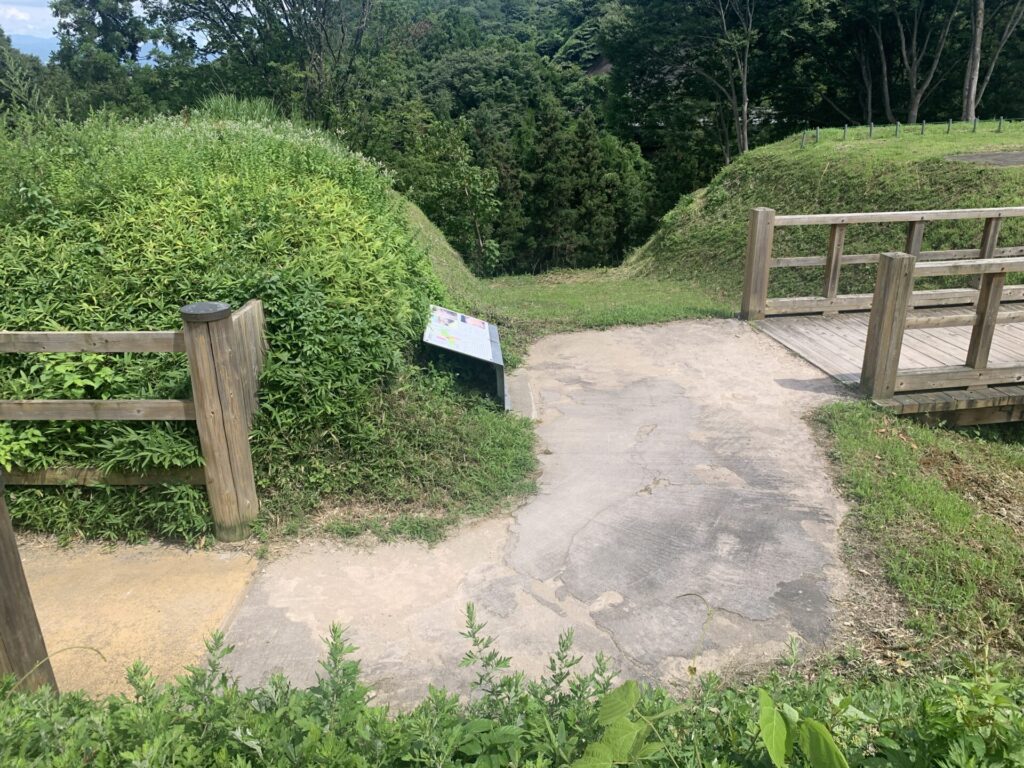
Before I began exploring castle sites seriously, my perspective was no different from that of an ordinary tourist.
To me, a “castle” meant a grand structure with an impressive keep.
However, as I started reading books and studying the remains of Japanese castles, my view slowly changed.
Hills that once seemed completely ordinary began to look entirely different — almost as if I had slipped back into the Sengoku period.
Since then, even when I pass by an unremarkable park, I sometimes find myself wondering:
Could this mound have once been an earthen rampart?
On this page, I have gathered simple explanations of the defensive structures found at Japanese castle sites, in the hope that you too might experience the same small moment of discovery that changed the way I see the landscape.
Let us step together into Japan’s distant past ! 🏯
【曲輪(郭) – Kuruwa : Enclosure 】
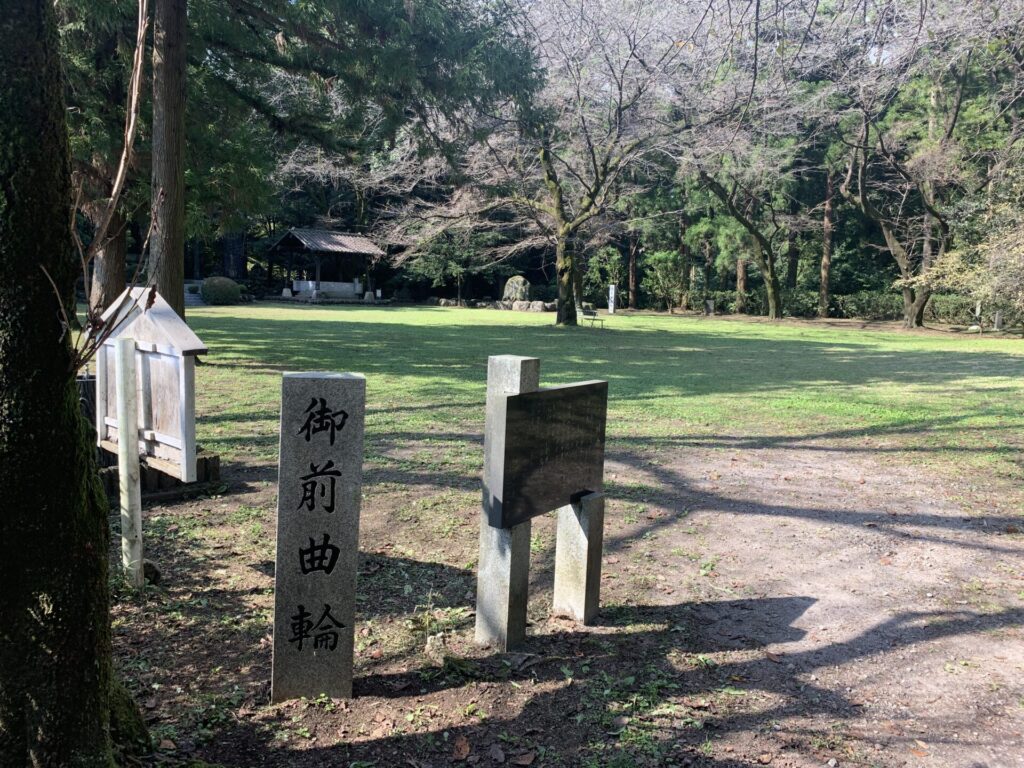
A Japanese castle is composed of multiple kuruwa, each serving a defensive, residential, or strategic role.
Honmaru ( First Kuruwa ), Ninomaru ( Second Kuruwa ), and Sannomaru ( Third Kuruwa ) are all types of kuruwa.
A kuruwa is a flattened area enclosed by defensive features such as moats and ramparts, forming a basic unit of defense within a Japanese castle.
【土塁 – Dorui : Earthen Rampart 】
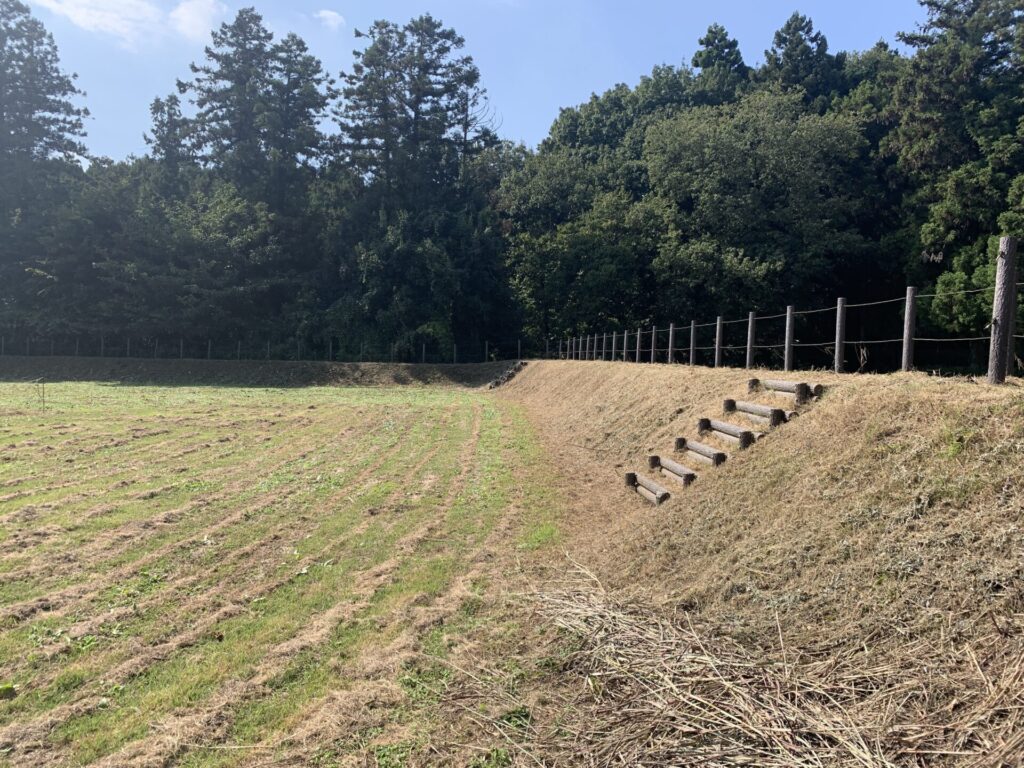
A dorui is an earthen rampart formed by piling up soil to create a defensive barrier.
Before stone walls became widespread, dorui were one of the most important defensive features of Japanese castles.
Dorui are closely connected to kuruwa (enclosures).
Rather than standing alone, they usually mark the edges of a kuruwa, defining its boundaries and protecting the space within.
By raising the ground level, a dorui:
- Blocks direct access to a kuruwa
- Forces attackers to climb while exposed
- Works together with moats to strengthen defense
At many castle sites, what appears to be a simple mound of earth is actually the remains of a carefully shaped rampart.
Once you recognize a dorui, you can begin to see how each kuruwa was separated, protected, and linked to the next.
In Japanese castles, defense was not created by walls alone, but by the relationship between earthworks and enclosed spaces.
【石垣 – Ishigaki : Stone Wall 】
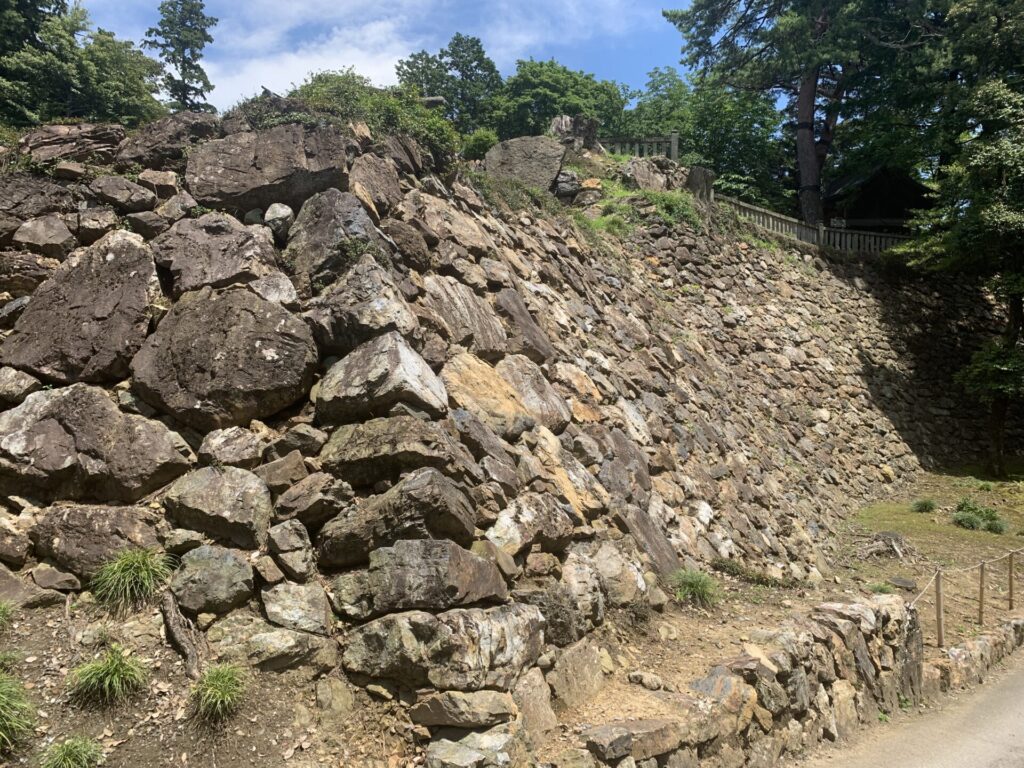
Ishigaki are stone walls built to strengthen and stabilize a kuruwa (enclosure).
They are most commonly associated with castles from the late Sengoku period onward, when stone construction became more widespread.
Rather than enclosing a castle completely, ishigaki often reinforce slopes, terrace edges, or key points within a castle layout.
At castle sites where stone walls remain, they often indicate:
- Important enclosures such as the honmaru
- Later phases of construction
- Areas meant to display authority as well as strength
Even when partially collapsed, ishigaki reveal how Japanese castles evolved from purely earthen defenses into more complex systems that balanced earth, stone, and terrain.
【空堀 – Karabori : Dry Moat 】
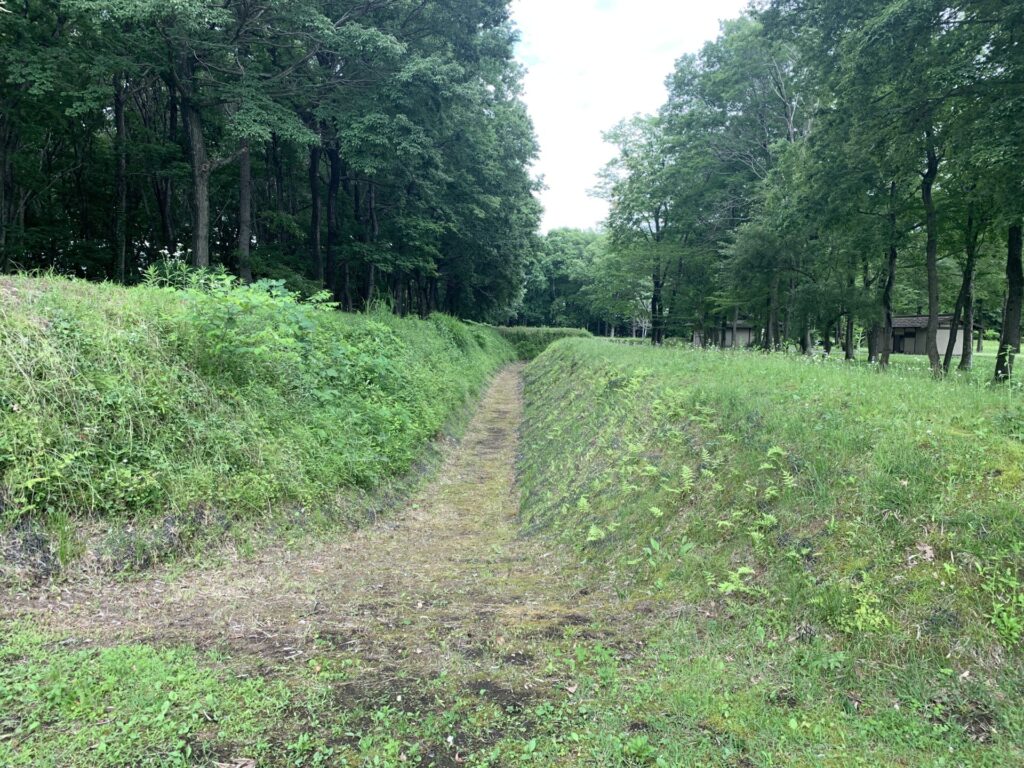
A dry moat is a defensive ditch surrounding a Japanese castle or fortification, designed without water.
Instead of relying on water, steep slopes and depth were used to slow down or trap invading forces.
During the Sengoku period, dry moats were often dug deeper and wider, and combined with tall, heavily built earthen ramparts.
This design made it extremely difficult for enemy soldiers to climb out of the moat.
While attackers struggled inside the ditch, they were frequently targeted by defending troops positioned on the ramparts, using bows, arrows, and later firearms.
【水堀 – Mizubori : Water-filled Moat 】
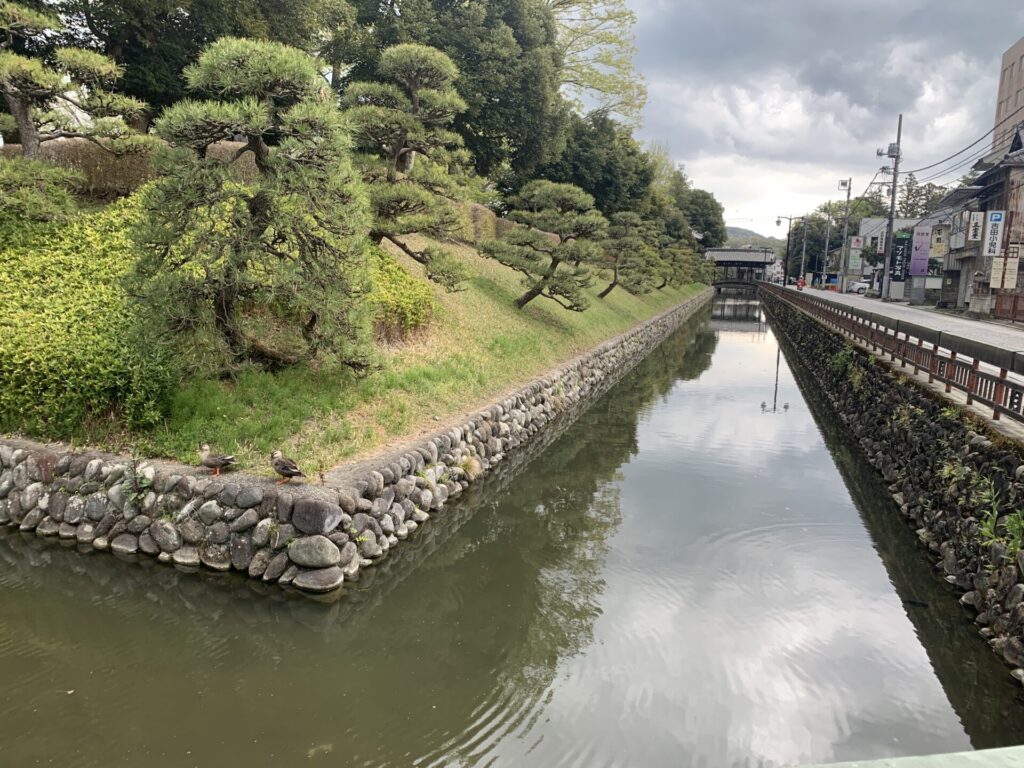
A water-filled moat is a defensive ditch surrounding a castle that is intentionally filled with water.
In Japanese castles, water moats were often created by redirecting rivers, using natural wetlands, or controlling water flow, making it difficult for enemy forces to cross or approach the castle walls.
In early modern Japanese castles, natural rivers often served as defensive features in place of artificial water-filled moats.
Rivers functioned as natural barriers, while also playing a strategic and economic role by allowing essential supplies—such as food and ammunition—to be transported by boat.
For this reason, many Sengoku-period warlords deliberately constructed their castles along large rivers, using the river itself as a powerful line of defense on one side of the fortress.
Castles built on river islands or within delta regions offered especially strong strategic advantages, and such key strongholds were often contested among Sengoku-period warlords.
【堀切 – Horikiri :Ridge-Cut Defensive Trench】
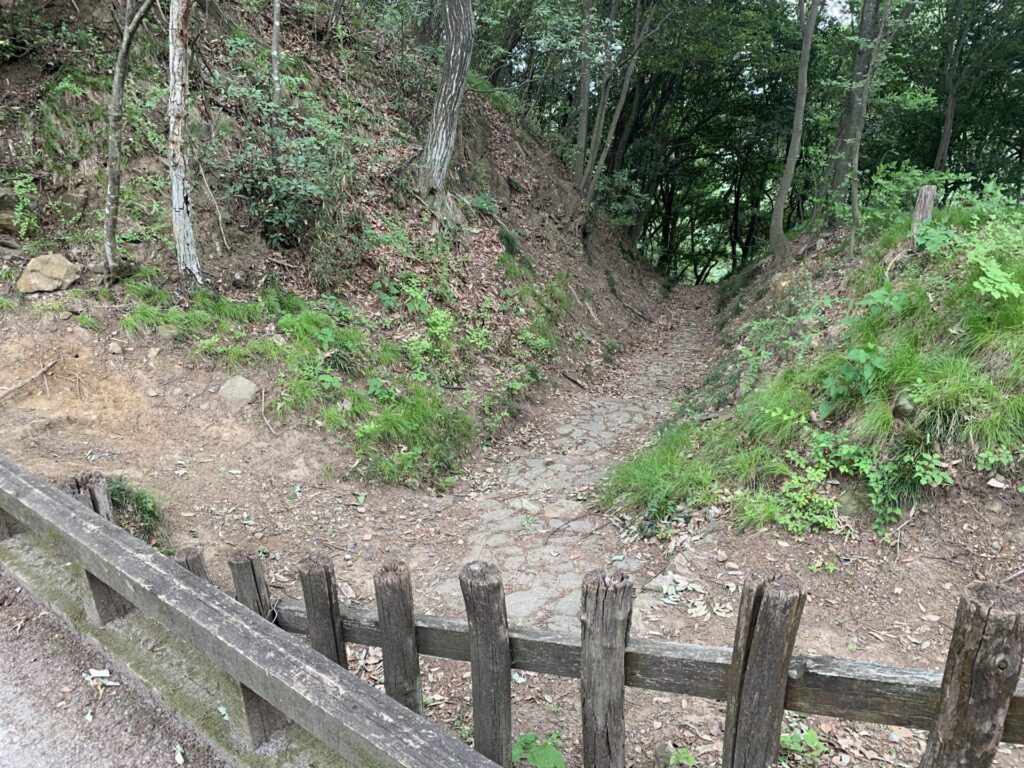
Horikiri is a type of defensive trench commonly found in Japanese mountain castles, created by cutting across a ridge or narrow landform to block enemy movement.
Unlike a conventional moat that surrounds a castle horizontally, a horikiri functions as a topographical barrier, severing the natural ridge lines that attackers would otherwise use to approach the fortification.
By interrupting these routes, defenders could prevent enemies from advancing directly along the terrain’s easiest paths.
Typically dry and steep-sided, horikiri were designed to be difficult to cross under fire.
Attackers descending into the trench would lose speed and formation, while those climbing out would be fully exposed to defenders positioned above.
In many cases, horikiri were paired with earthen ramparts (dorui) or vertical cuts to increase their effectiveness.
During the Sengoku period, horikiri became one of the most fundamental defensive elements of mountain castles, reflecting a strategic emphasis on terrain manipulation rather than massive stone structures.
Their presence demonstrates how Japanese castle builders transformed natural landscapes into layered defensive systems.
【比高二重土塁 – Hikō Nijū Dorui : Tiered Double Earthen Ramparts 】
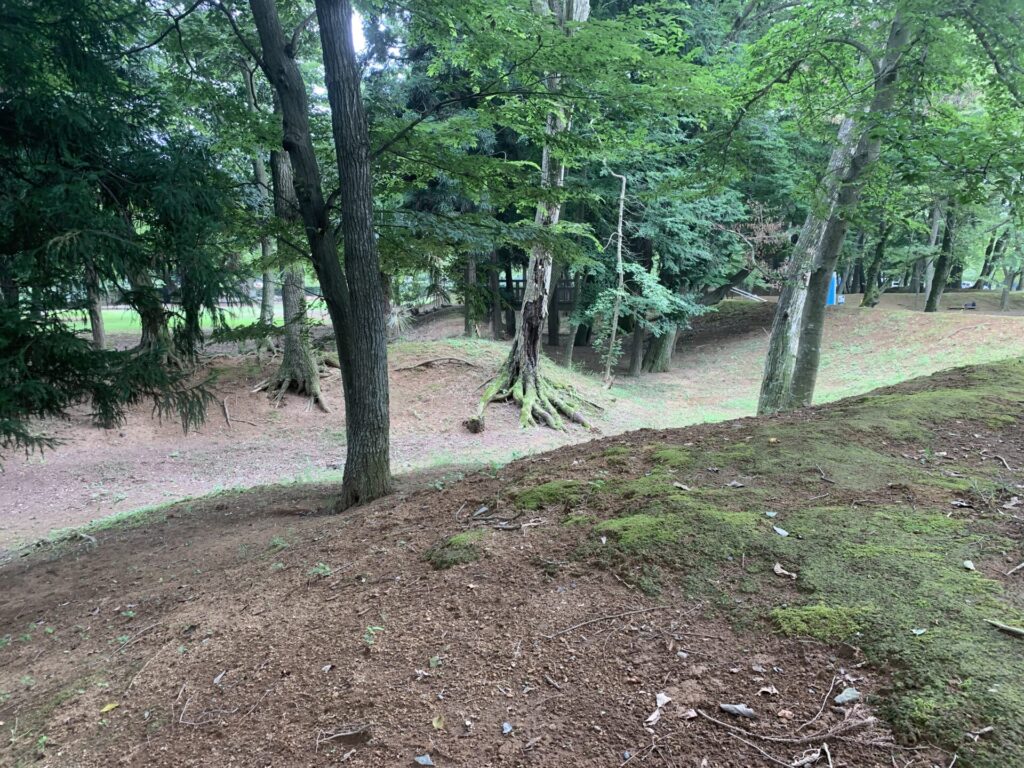
Tiered double earthen ramparts are a defensive structure consisting of two earthen walls built at different heights.
Even if attackers overcome the outer rampart, they must then face a higher inner rampart, slowing their advance and exposing them to concentrated defensive fire.
Tiered double earthen ramparts were a castle-building technique unique to the Hōjō clan, a Sengoku-period warlord family that controlled much of the Kantō region.
This advanced defensive design is believed to have been developed and employed under the direction of Hōjō Ujiteru, who is often regarded as a “military engineering genius” among Sengoku warlords.
【角馬出し – Kaku-Umadashi :Square Barbican 】
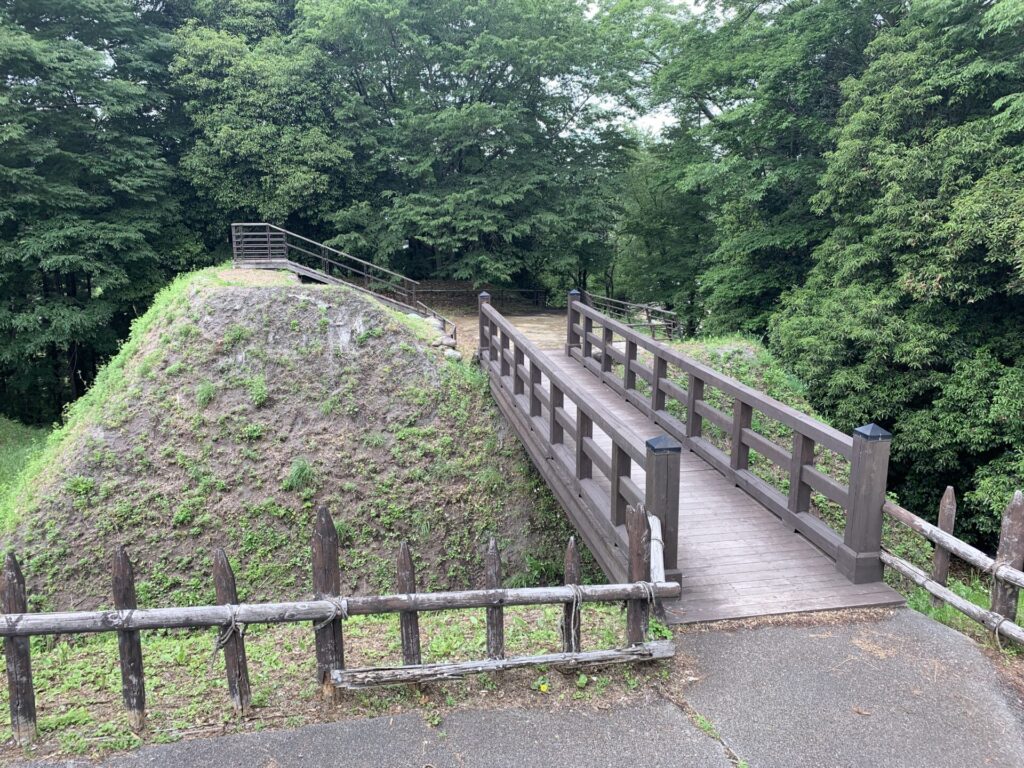
Kaku-Umadashi is a type of umadashi—an advanced outer defensive structure placed in front of a castle gate—characterized by its angular, square-shaped layout.
Unlike the more widely known round umadashi, which were commonly used by the Takeda clan, the kaku-umadashi is widely regarded as a distinctive fortification technique developed by the Hōjō clan, who dominated much of the Kantō region during the Sengoku period.
The square geometry of the kaku-umadashi was not merely a stylistic choice.
Its sharp angles and straight lines created effective killing zones, allowing defenders to launch crossfire attacks from multiple directions while restricting the attacker’s movement.
Enemies attempting to breach the main gate would be forced into narrow spaces, where their numbers and momentum were neutralized.
This structure reflects the Hōjō clan’s pragmatic and highly systematic approach to castle design, emphasizing terrain adaptation, layered defense, and prolonged resistance rather than decisive open-field battles.
【虎口 – Koguchi :Gate Complex/Defensive Gate Entrance】
Koguchi refers to the fortified entrance area of a Japanese castle, serving as the primary point of access while also functioning as a critical defensive system.
Rather than being a simple gate, a koguchi was a carefully engineered space designed to control, delay, and weaken enemy forces attempting to enter the castle.
It often incorporated multiple elements such as earthen walls (dorui), dry moats (karabori), narrow passages, sharp turns, and elevation changes.
The name koguchi—literally meaning “tiger’s mouth”—symbolizes an entrance that appears open but becomes deadly once an enemy steps inside.
Attackers advancing through a koguchi would be forced to slow down, change direction, and break formation, exposing them to concentrated attacks from defenders positioned above and on both sides.
During the Sengoku period, koguchi designs became increasingly sophisticated, reflecting each clan’s tactical philosophy.
In many Kantō-region castles, especially those influenced by the Hōjō clan, koguchi were often integrated with structures such as umadashi and multi-layered earthworks, forming a deep, multi-stage defensive zone rather than a single line of defense.
【土橋 – Dobashi :Earthen Bridge / Defensive Land Bridge】
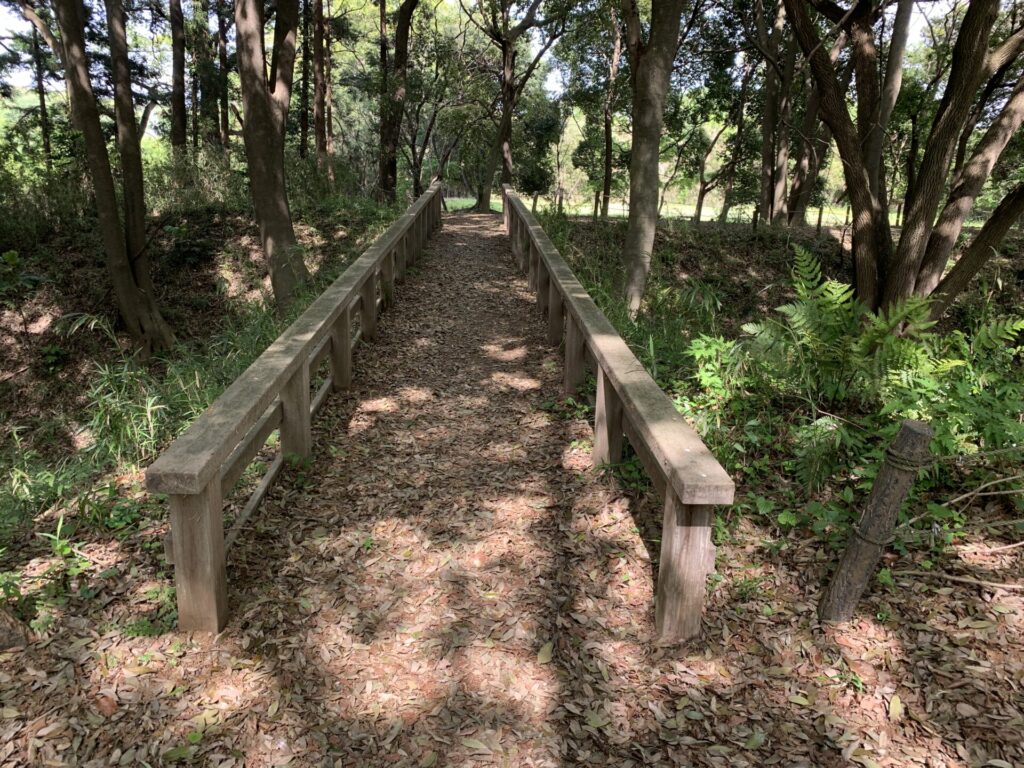
Dobashi refers to an earthen bridge-like structure that connects sections of a castle, most commonly spanning dry moats (karabori) or trenches (horikiri).
Unlike wooden or stone bridges intended for ease of passage, a dobashi was deliberately designed as a controlled choke point.
Narrow, elevated, and often exposed on both sides, it forced attackers to advance in single column while leaving them vulnerable to attacks from above and from the flanks.
In many Japanese castles—especially mountain and hilltop fortifications—dobashi functioned as an integral part of a layered defensive system.
Crossing a dobashi was never a neutral act; it meant stepping into a space where movement was restricted, balance was precarious, and retreat was difficult.
Some dobashi were straight, while others incorporated bends or elevation changes to further disrupt enemy momentum.
Their design reflects the Sengoku-period emphasis on slowing, isolating, and exhausting attackers rather than stopping them outright.
【物見櫓 – Monomi-Yagura :Observation Tower】
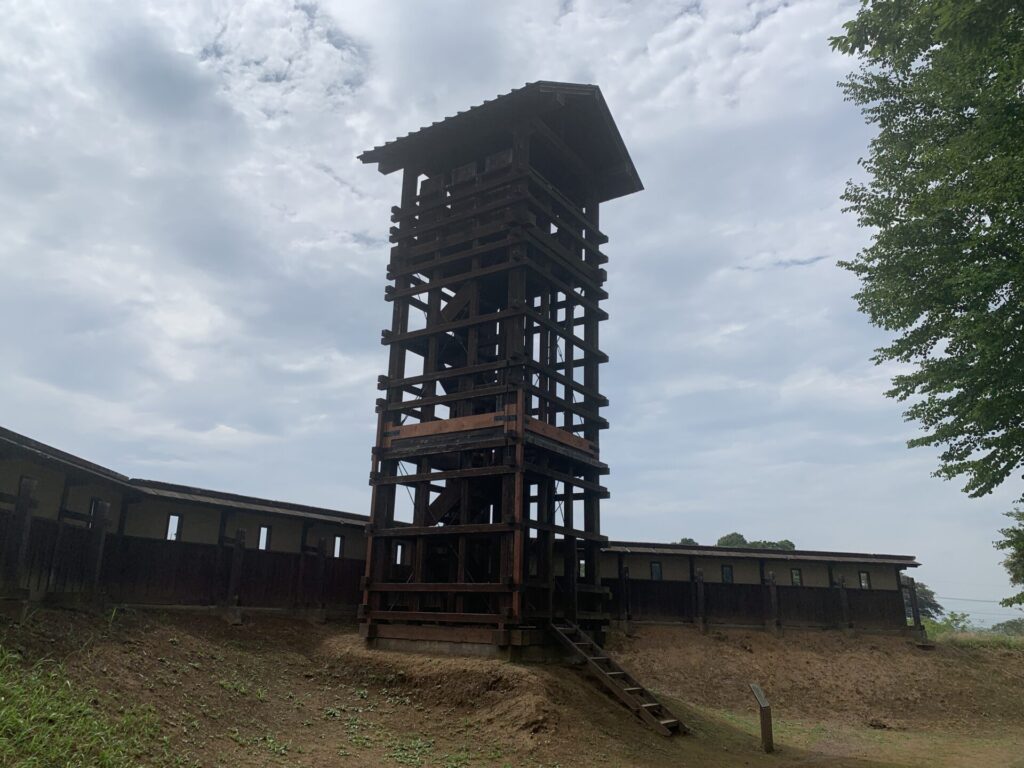
Monomi-yagura refers to a watchtower built for observation and surveillance, used to detect enemy movement, monitor surrounding terrain, and relay information within a castle.
Unlike main keeps or residential towers, a monomi-yagura was primarily a functional military structure.
Positioned on high ground, ridgelines, or the outer edges of a castle complex, it provided wide visibility over approach routes such as valleys, roads, rivers, and plains.
From these towers, defenders could spot approaching forces at an early stage and respond accordingly—closing gates, manning defenses, or sending warning signals to allied positions.
In many cases, monomi-yagura worked as part of a network of lookout points, emphasizing communication and early detection rather than direct combat.
During the Sengoku period, when surprise attacks and rapid troop movements were common, monomi-yagura played a crucial role in maintaining situational awareness.
Their presence highlights how Japanese castles functioned not only as fortresses, but as information hubs embedded within the landscape.
➡️ Sitemap