
Akayama-jo (Kawaguchi city, Saitama)|Only Modest Remains of Earthen Ramparts and Moats
A layout map remains, but there are almost no visible ruins.
Hi, this is Shin.
May 31, 2023 (Wed).
Today, I’ve come to Akayama-jo in Kawaguchi City, Saitama 🚙
Akayama-jo was built in the early Edo period by the Ina clan, retainers of the Tokugawa.
◉ Castle Type
Flatland castle ( Hirajiro:平城 )
◉ Cultural Heritage Highlights
◉ Defensive Features & Fortifications
◉ Exploration Difficulty
🟡 Moderate Castles
◉ Estimated Time to walk around
: about 1 hour
◉ Parking / Access
There are about 10 parking spaces available at the Akayama Castle Ruins visitor parking lot.
As for the parking lot here…
you have to go down a very narrow road—barely wide enough for one car 💦
Because of that, I initially missed the road itself and it took some time to find the location.
If you’re visiting by car, be careful not to overlook the road, and watch out for oncoming vehicles when passing.
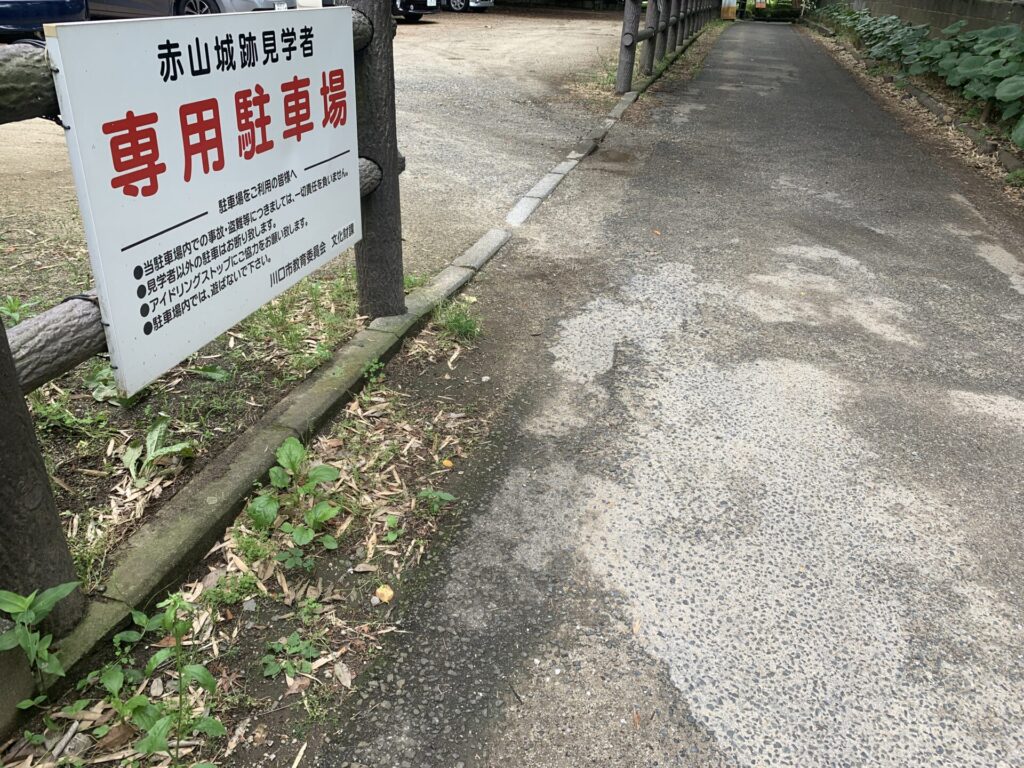
This is the designated parking lot.
As you can see, the road is quite narrow…
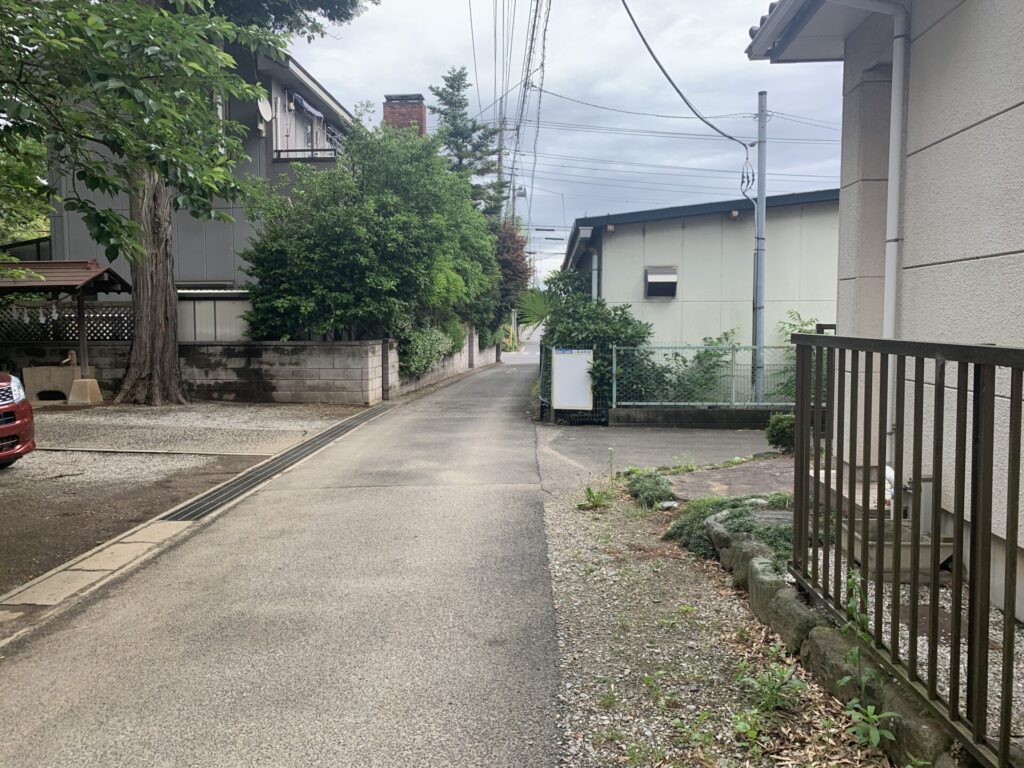
The road just before the parking lot looks like this.
You’ll need to turn into this side road from the road visible in the distance.
Across from the parking lot, there’s a small park,
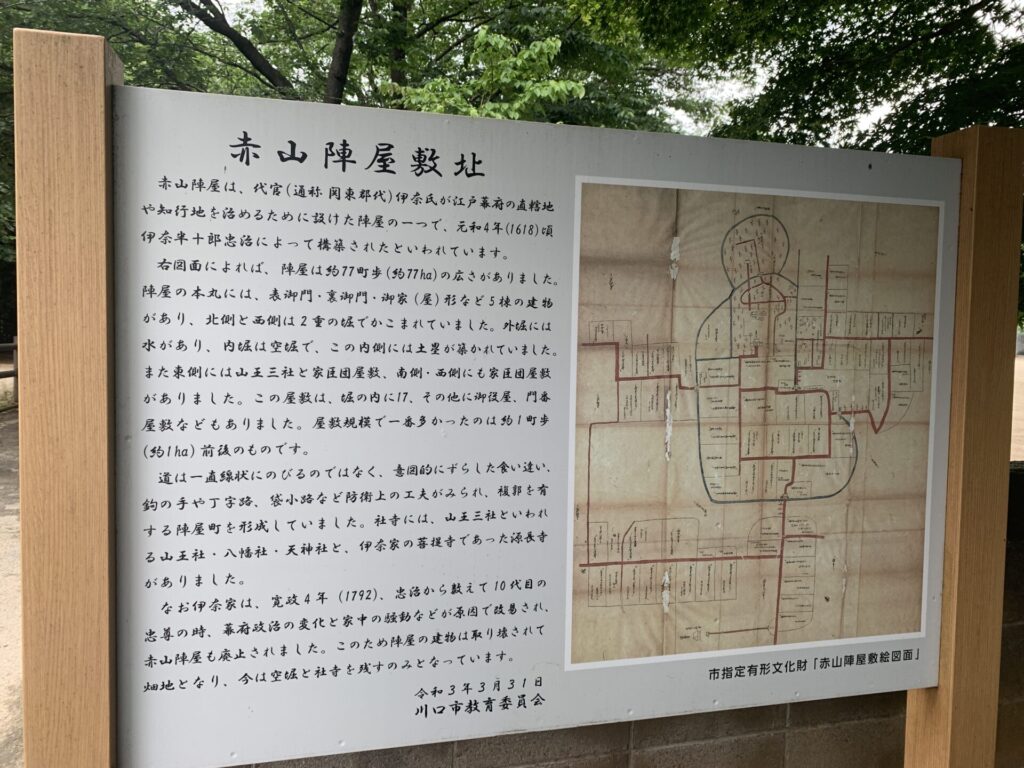
and nearby you’ll find this information board.
Akayama-jo was also known as “Akayama Jinya”(赤山陣屋).
It has been designated as a cultural property by Saitama Prefecture.
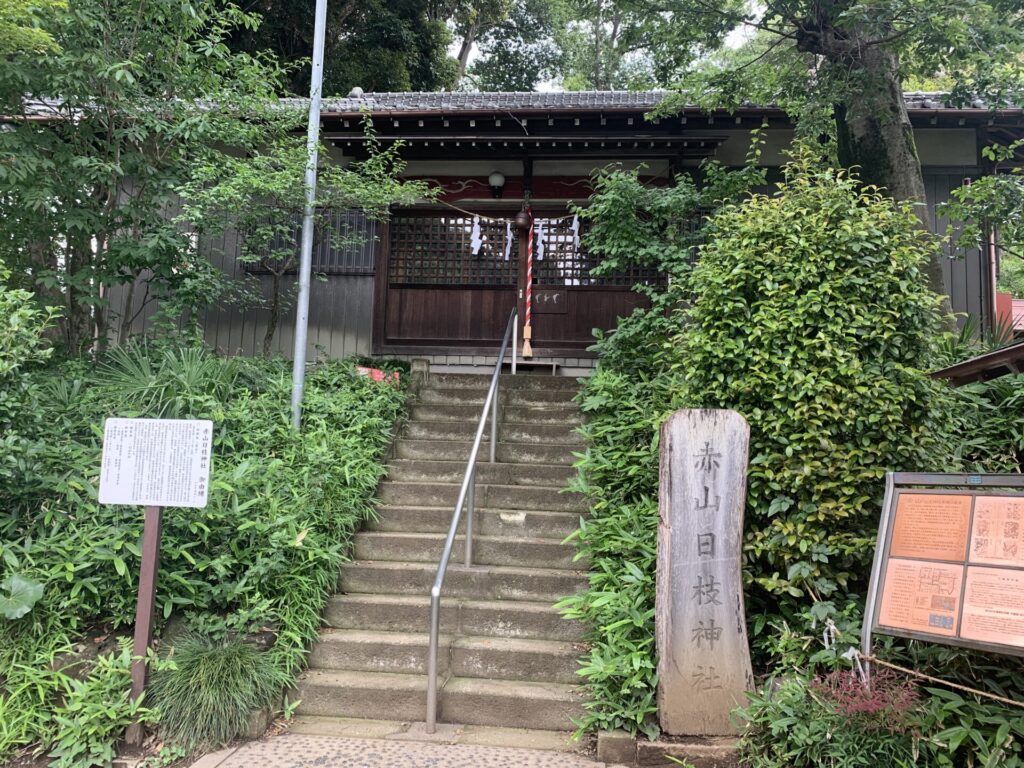
Also, within view from the parking lot,
you can see “Akayama Hie Shrine(赤山日枝神社)”.
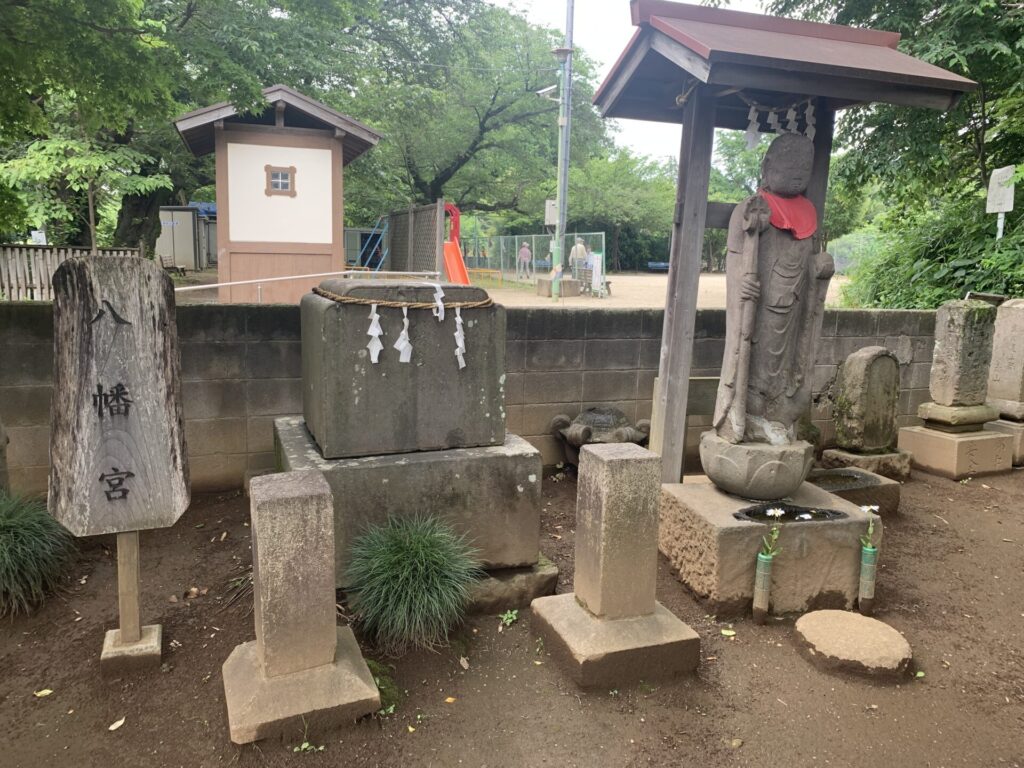
The park across from the parking lot is visible just beyond here.
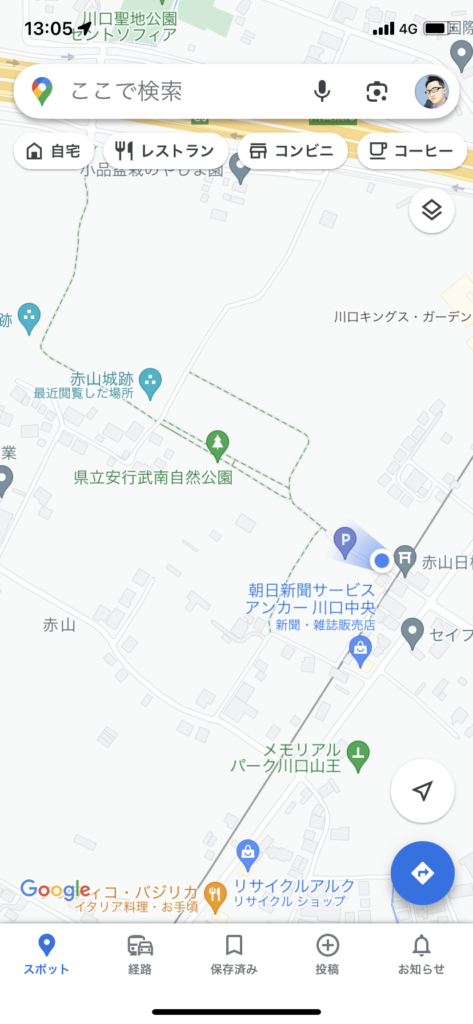
Now then, as always,
I’ll use Google Maps to guide me as I walk toward the Akayama-jo ruins.
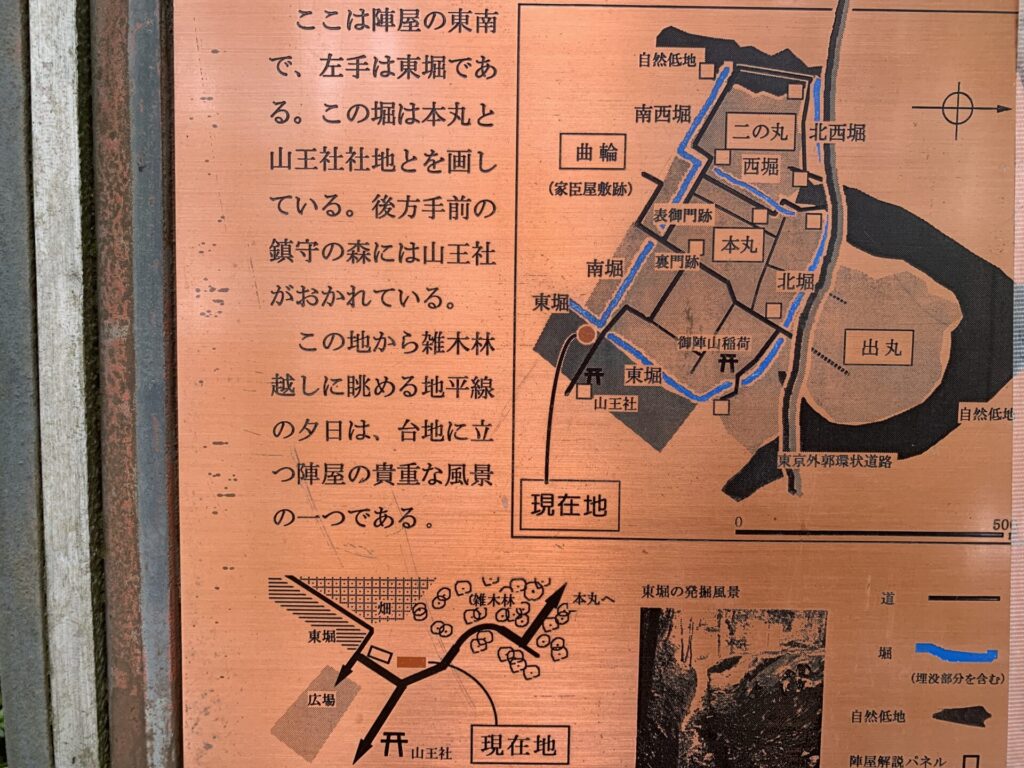
Walking further in, you’ll eventually come across this information board.
Judging from the layout map, the castle clearly had defined sections as expected,
but unfortunately, aside from a few traces of moats, there are almost no visible remains…
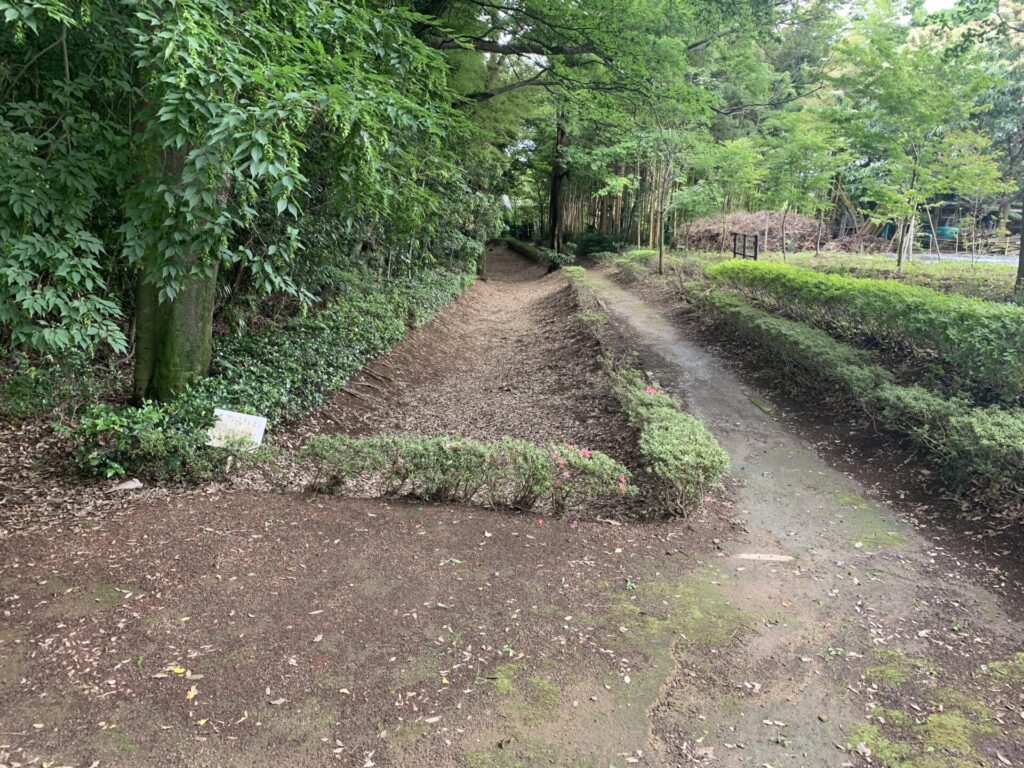
Here is a moat trace located near that information board.
Whether it was naturally filled in or intentionally altered,
it appears quite shallow for a moat.
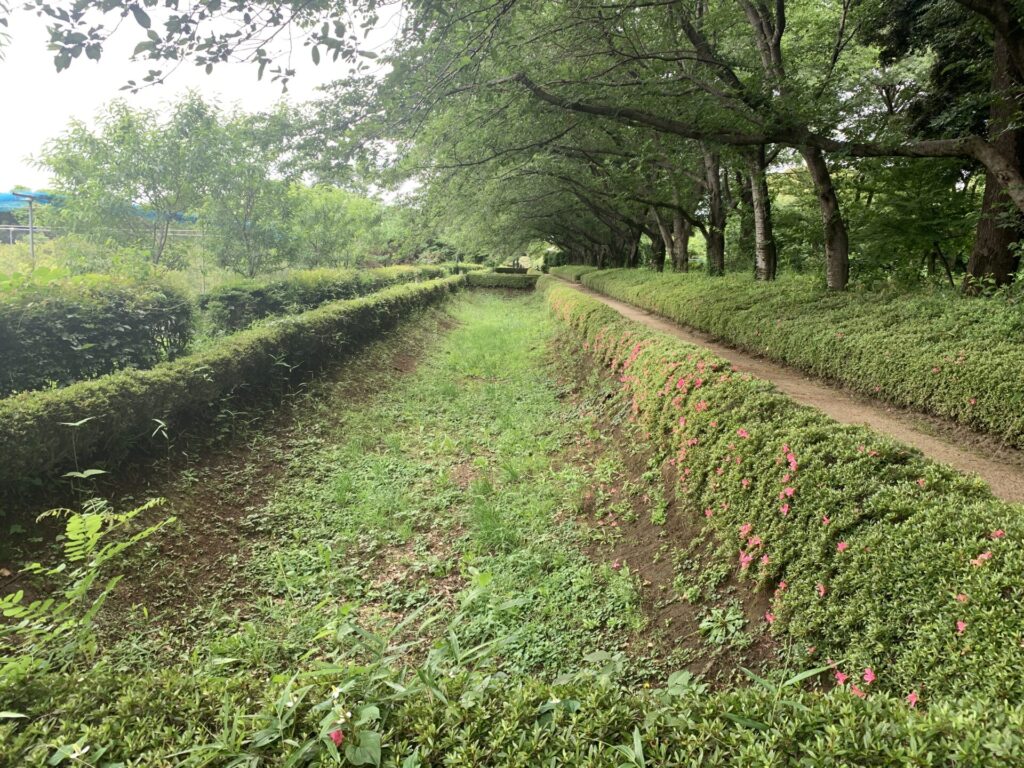
As you walk further in, you’ll also come across something like this—possibly another moat trace.
It stretches quite a long way into the distance,
and without features like this, it would be hard to truly feel that this is a castle site.
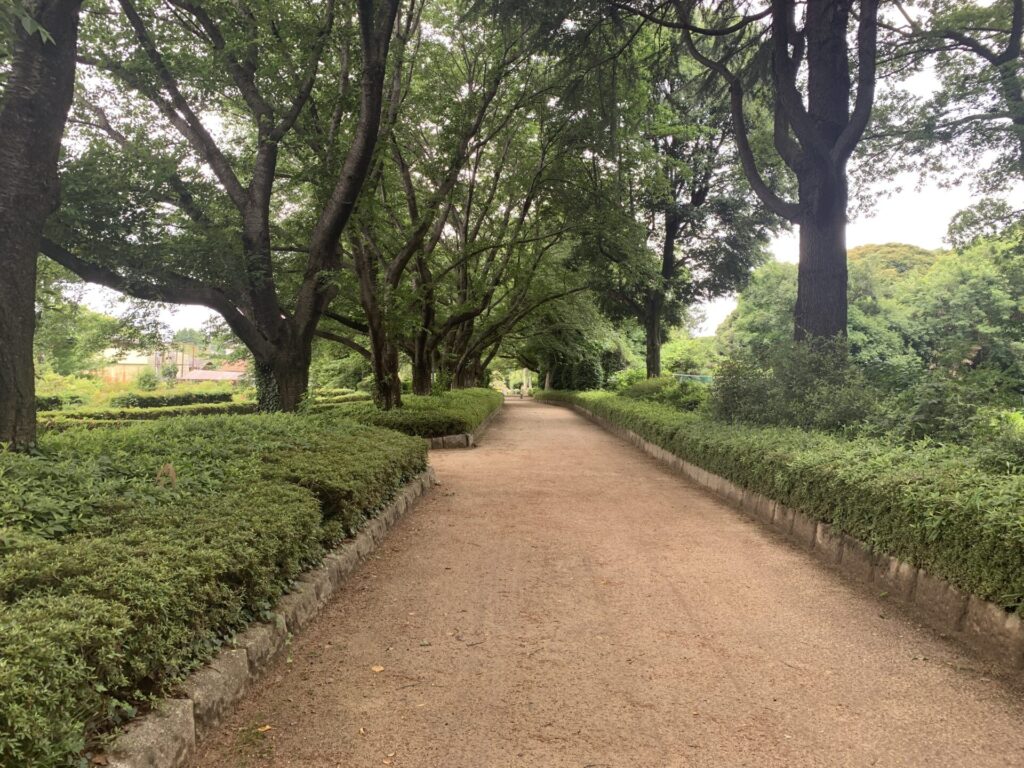
Next to what appears to be that moat trace,
a path like this continues alongside it.
I’ll keep walking all the way to the back.
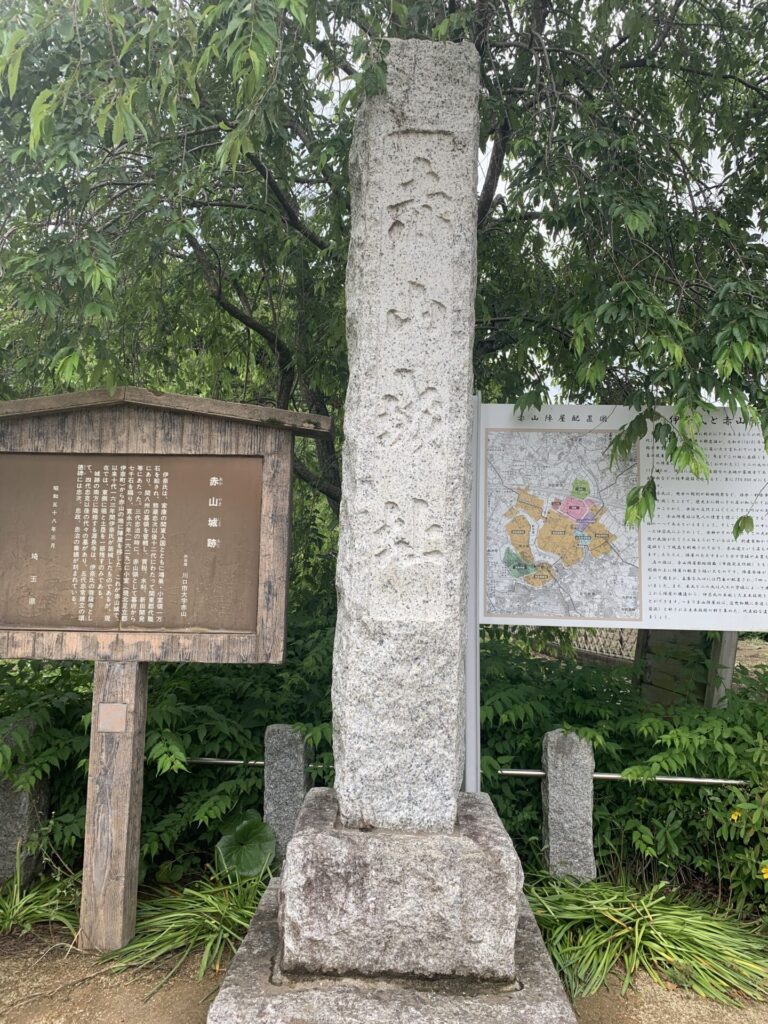
At the end of that path,
you’ll find this stone monument marking the “Akayama-jo Ruins(赤山城址)”.
Beyond this point, there are hardly any remains left, aside from a few traces of moats.
Exploring the “Akayama Jinya Ruins” and a small shrine
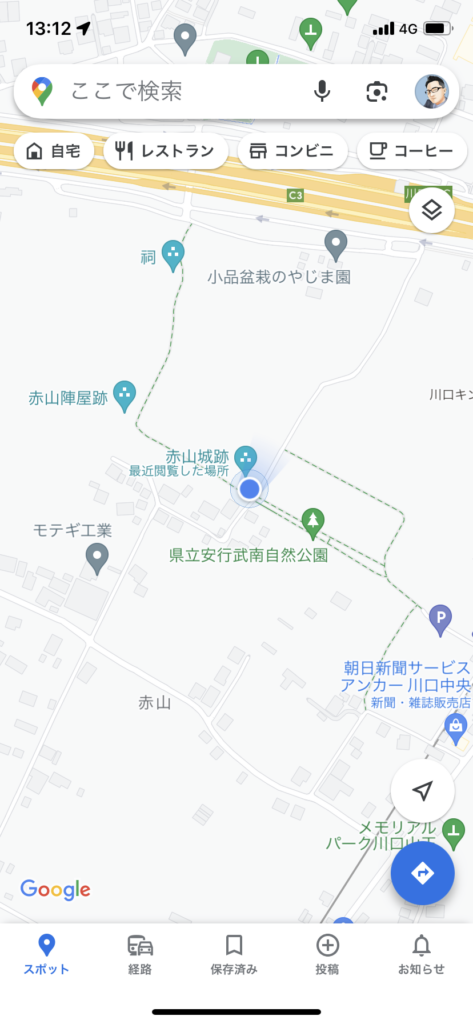
Checking Google Maps,
it seems that further ahead there are the “Akayama Jinya Ruins(赤山陣屋跡)” and a small shrine.
I’ll go take a look.
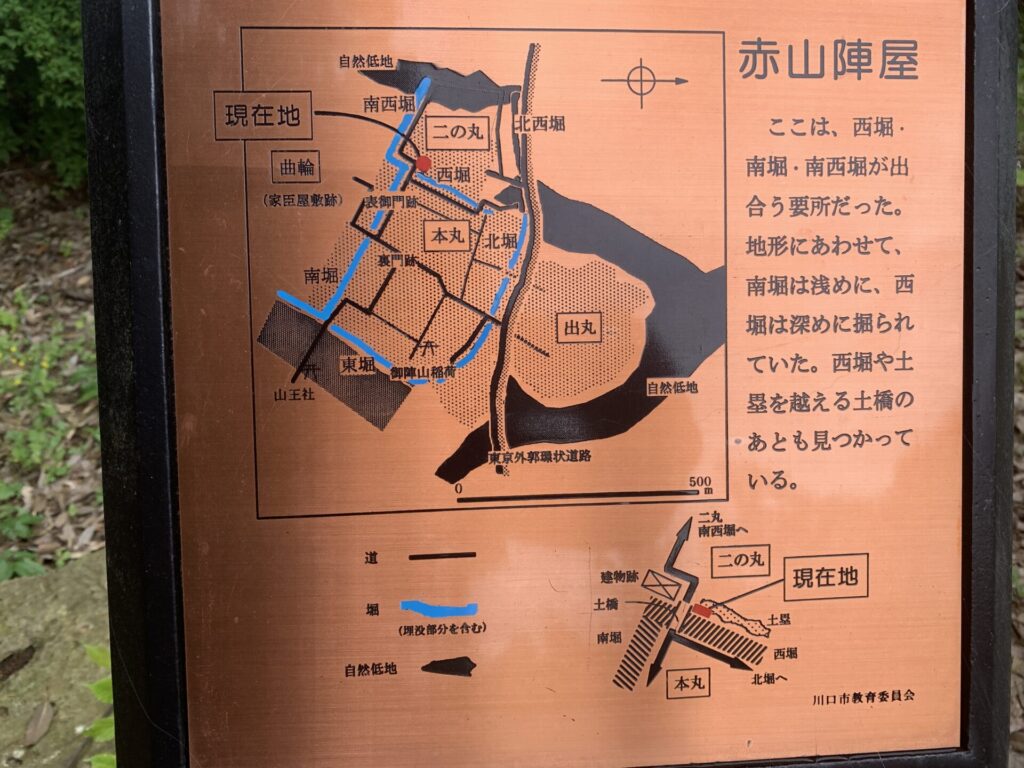
Found it—this is the information board for “Akayama Jinya Ruins(赤山陣屋跡)”.
It mentions remains of moats and even a Dobashi (土橋:earthen bridge) crossing over the embankments.
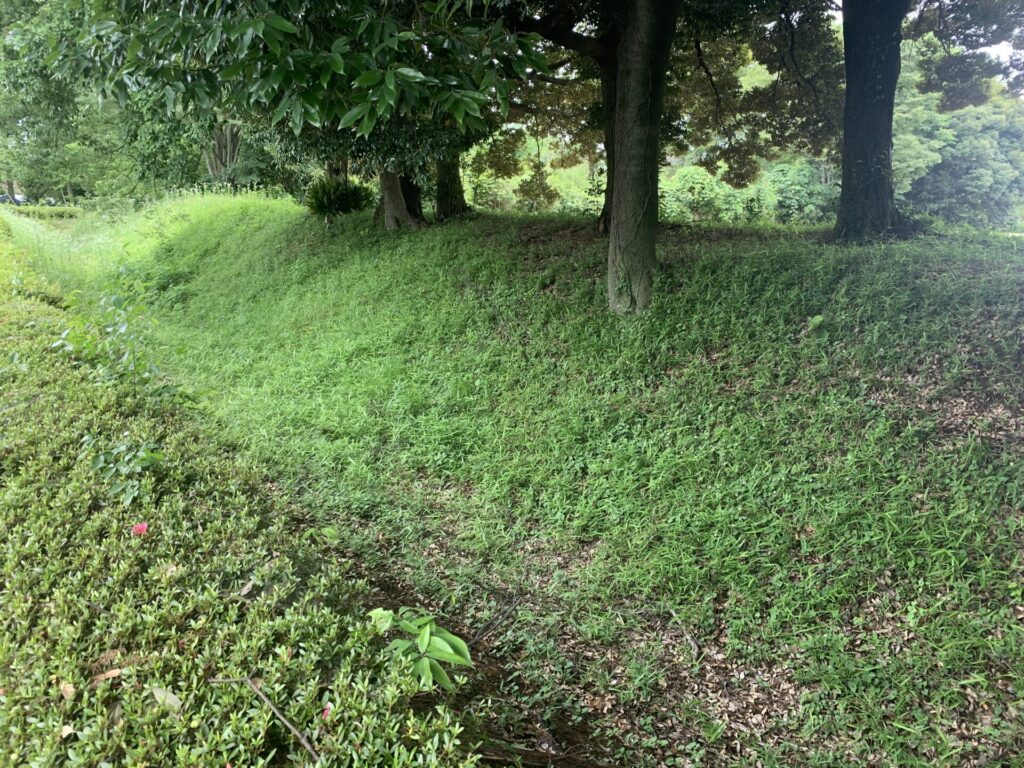
It’s quite shallow,
but you can still make out traces of earthen ramparts and moats.
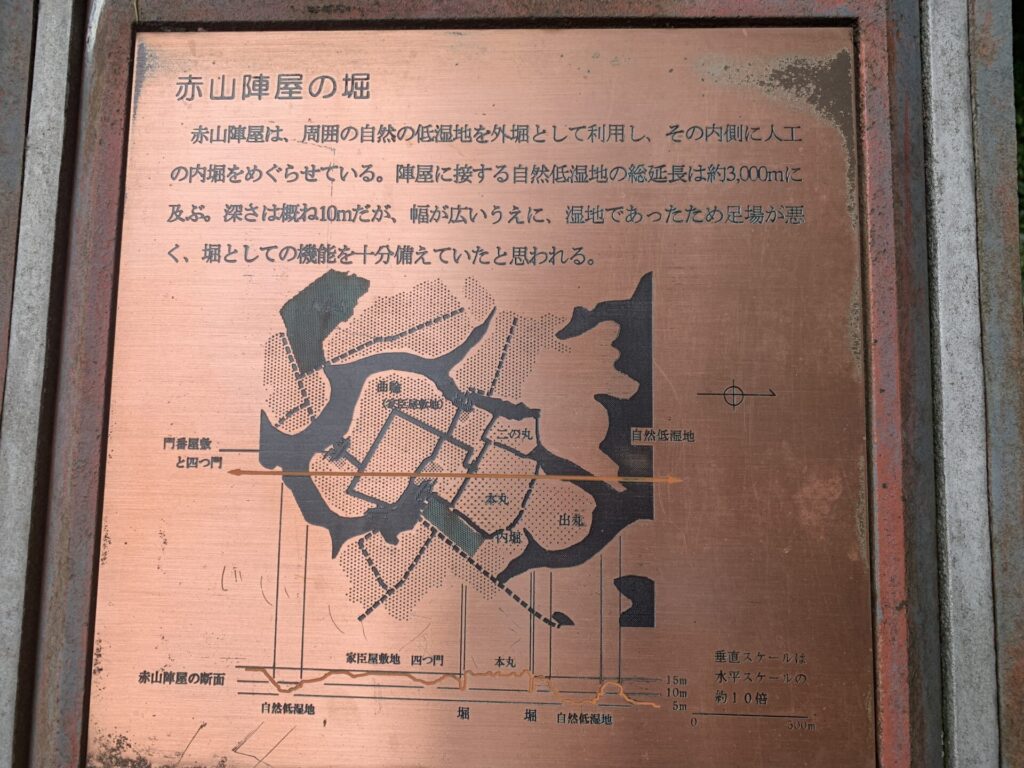
I see.
Back then, they made use of the natural low-lying wetlands as an outer moat.
What we can see now is probably the inner moat that was artificially constructed.
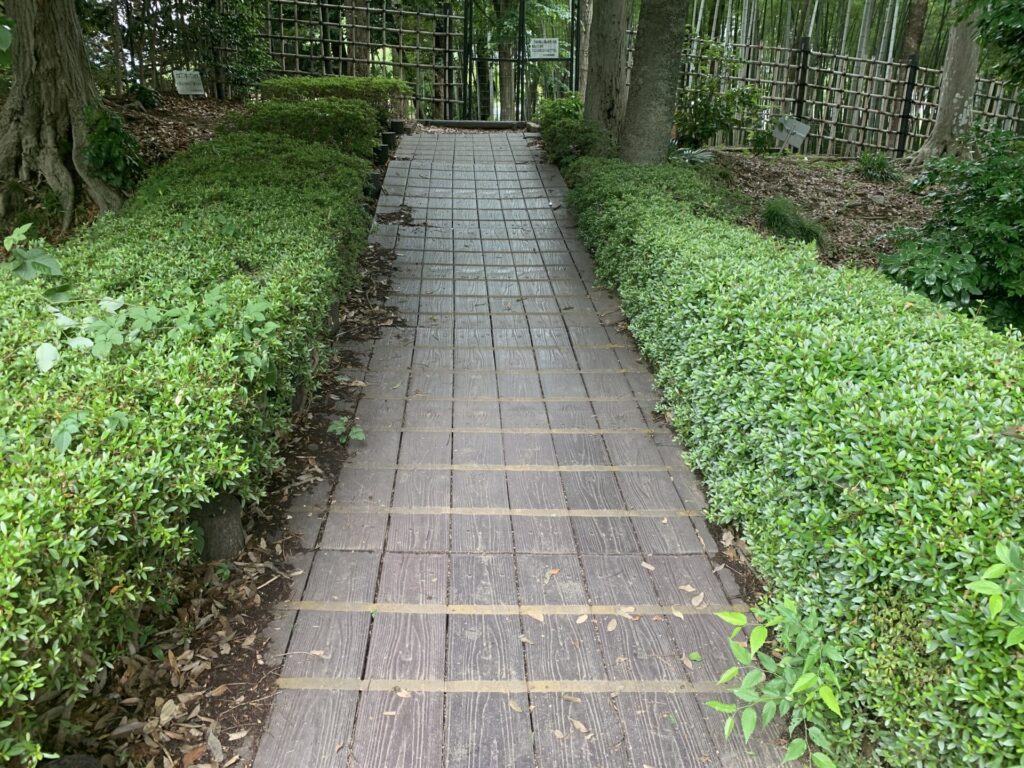
And perhaps this is the “earthen bridge crossing the rampart.”
Though, it does look a bit too neat and well-maintained for that.
The small shrine seems to be just across this bridge.
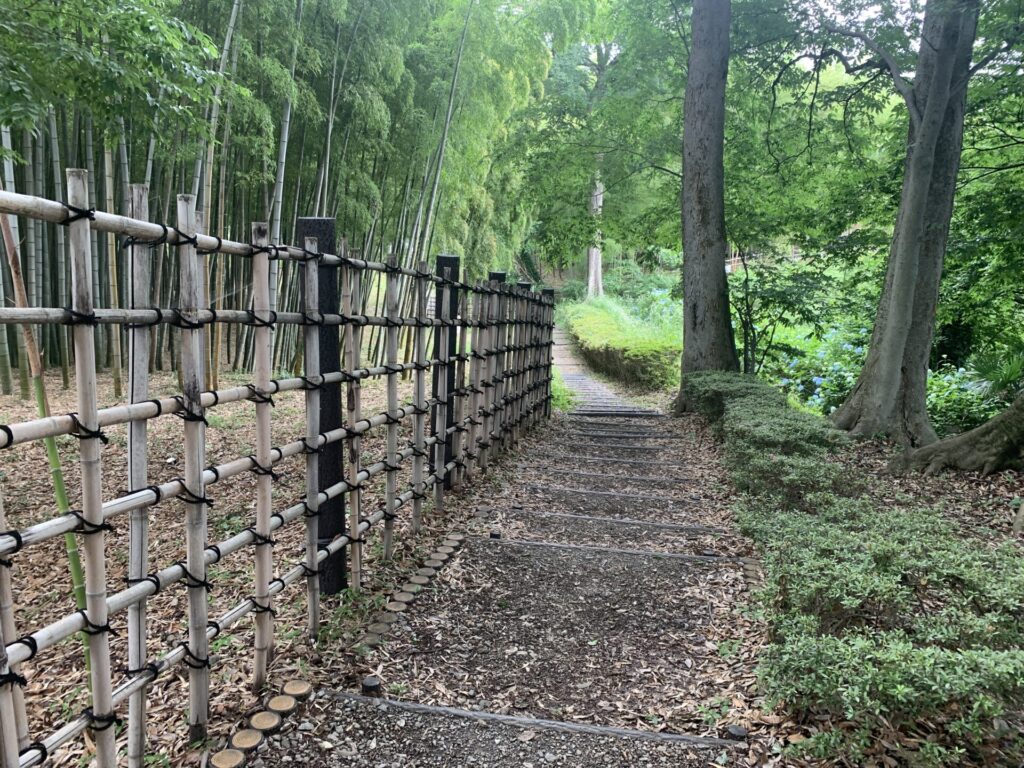
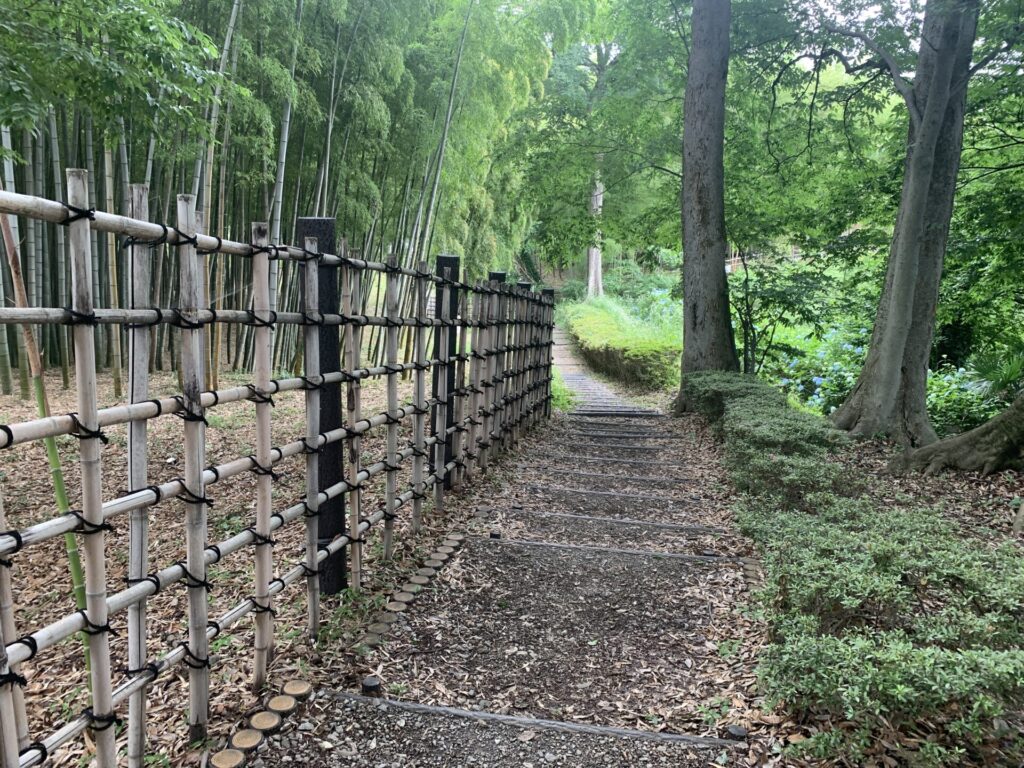
A bamboo grove stretches along the left side.
Paths like these narrow, stepped trails really give off that “castle ruins” atmosphere.
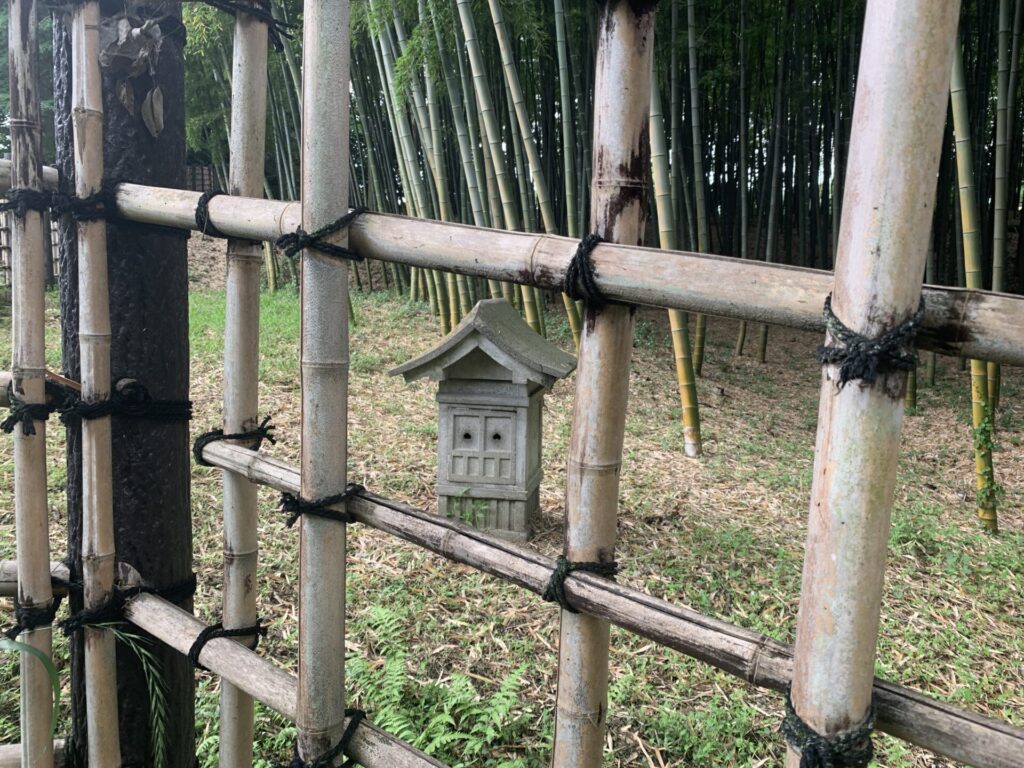
There it is—the small shrine!
This marks the end of what can be seen as the Akayama-jo ruins.
To sum it up, aside from traces of moats and earthen ramparts, there weren’t any particularly distinctive remains.
Unfortunately, that’s all for this visit.
See you in the next article!