
Shimazaki-jō (Itako city, Ibaraki)|A Terrifyingly Intimidating Defensive Structure!
- 1. I Was Surprised by the Defensive Structures—Far More Impressive Than Expected!!
- 2. Starting from the Honmaru, I Headed Straight to the Ninomaru—Then Examined the Koguchi Gate and Earthen Ramparts!
- 3. Examining the Sannomaru — The Watchtower Platform Is More Than Tall Enough!!
- 4. A Massive Moat So Deep It Almost Made Me Want to Turn Back in Fear…
- 5. Finally, I made my way back via the East Second Enclosure and the Umadashi Enclosure.
I Was Surprised by the Defensive Structures—Far More Impressive Than Expected!!
Hello, this is Shin.
Sunday, May 21, 2023.
This was my second castle visit of the day, to Shimazaki-jo, in Namegata District, Ibaraki Prefecture. 🚙
The Shimazaki clan, who built the castle, were assassinated by Satake Yoshinobu, and the castle eventually fell.
In that sense, it shares the same fate as Kashima-jo, which I visited earlier on the same day.
You can read the article about Kashima-jo here 👇
 https://sengokucastle.com/kashima-jo/
Just like Kashima-jo, I had assumed it would be an easy place to explore—but I had underestimated it…💦

◉ Castle Type
Hilltop castle ( Hirayamajiro:平山城 )
◉ Cultural Heritage Highlights
◉ Defensive Features & Fortifications
◉ Exploration Difficulty
🟡 Moderate Castles
◉ Estimated Time to walk around
: about 2 hours
◉ Parking
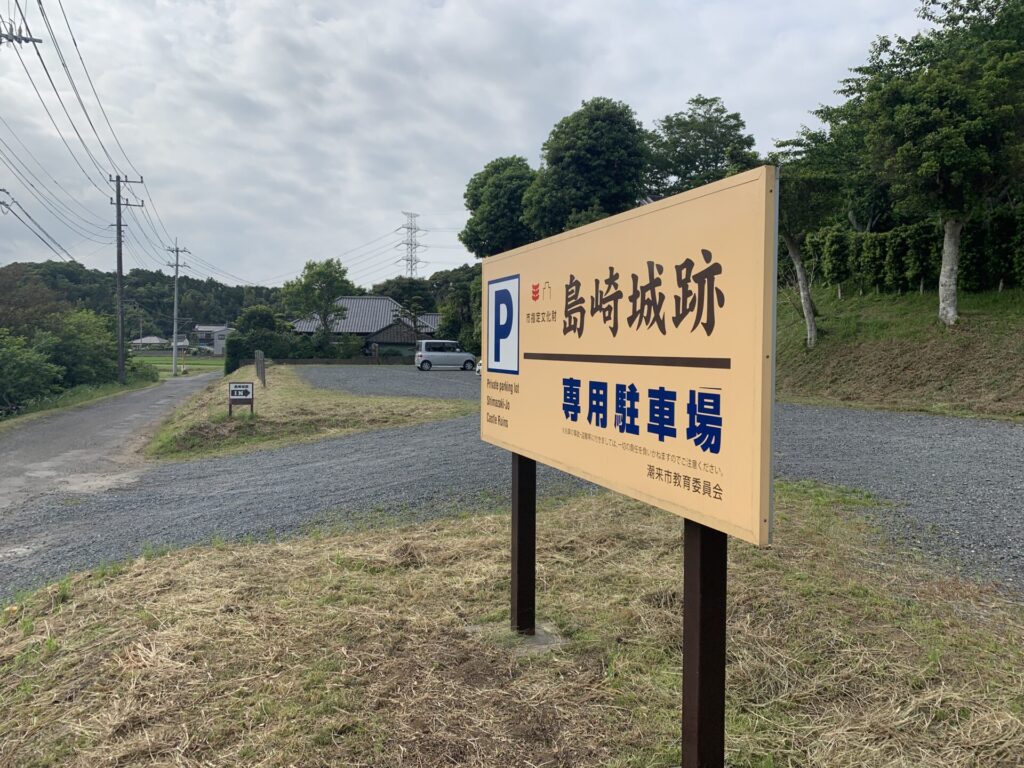
There is a dedicated parking lot with space for about 5–6 cars.
I really underestimated it…
After finding the parking lot, I looked at the site map nearby and…
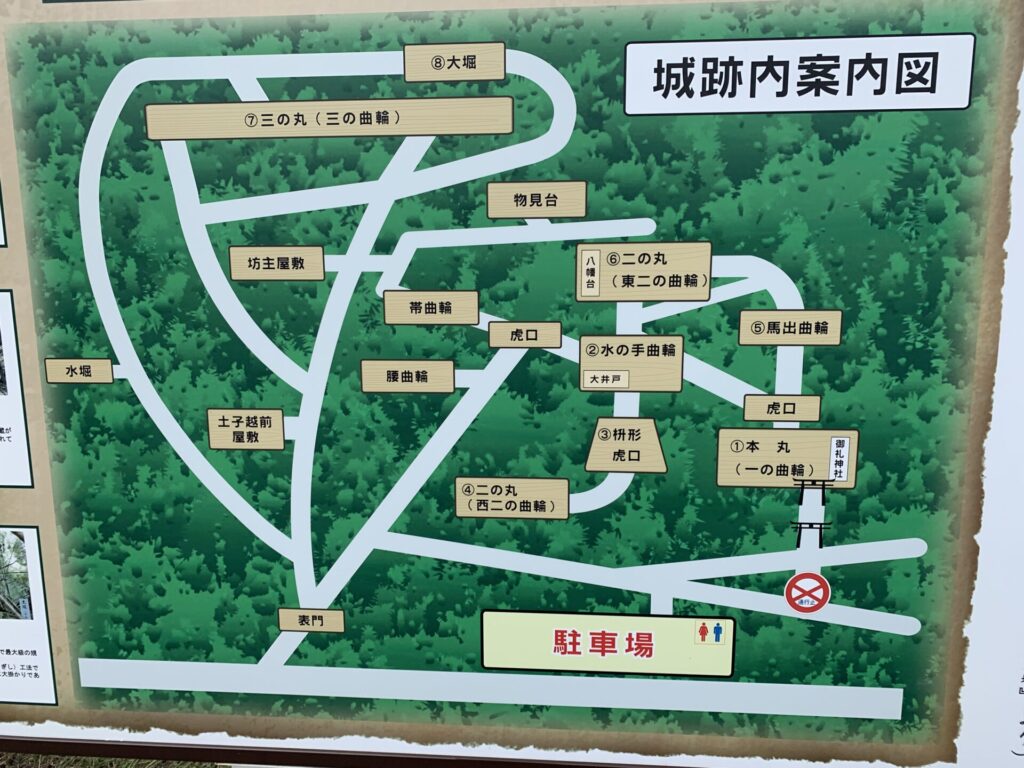
The castle clearly had a honmaru, ninomaru, and sannomaru,
and on top of that, a large number of kuruwa (enclosures)!
For a castle enthusiast, it should normally be the kind of solid structure that makes you cry with joy. 😭
But perhaps it was punishment for my rather disrespectful thought of,
“I’ll just take a quick look and head back.”
Instead, I found myself thinking,
“Alright! I’ve come this far—let’s see what it’s got!” 🔥🔥🔥
However, that burning enthusiasm gradually faded as I continued walking around the mountain. 😓
I’ll explain the reason for that in more detail later…
Starting from the Honmaru, I Headed Straight to the Ninomaru—Then Examined the Koguchi Gate and Earthen Ramparts!
What surprised me first was
the steep stone steps leading up to the Honmaru (本丸:main enclosure ).
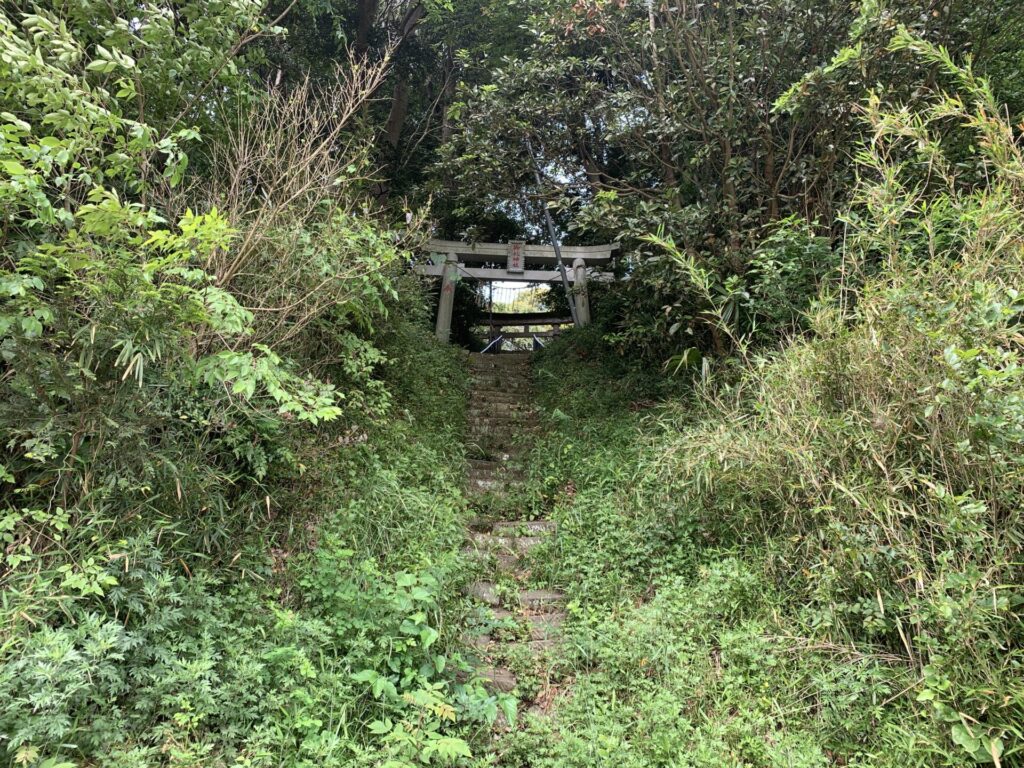
From this photo alone, it’s honestly hard to convey just how steep it is,
but if you’re not careful, you might even lose your balance and fall backward.
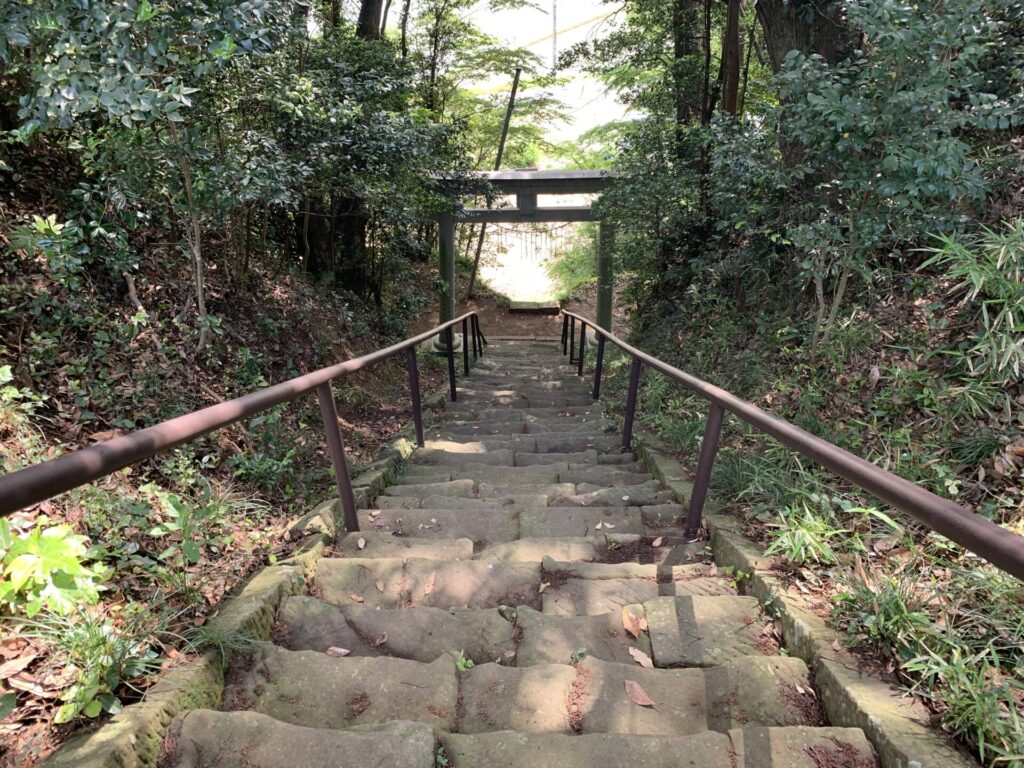
Here is a photo looking down from the top.
Perhaps this gives a better sense of just how steep the slope is.
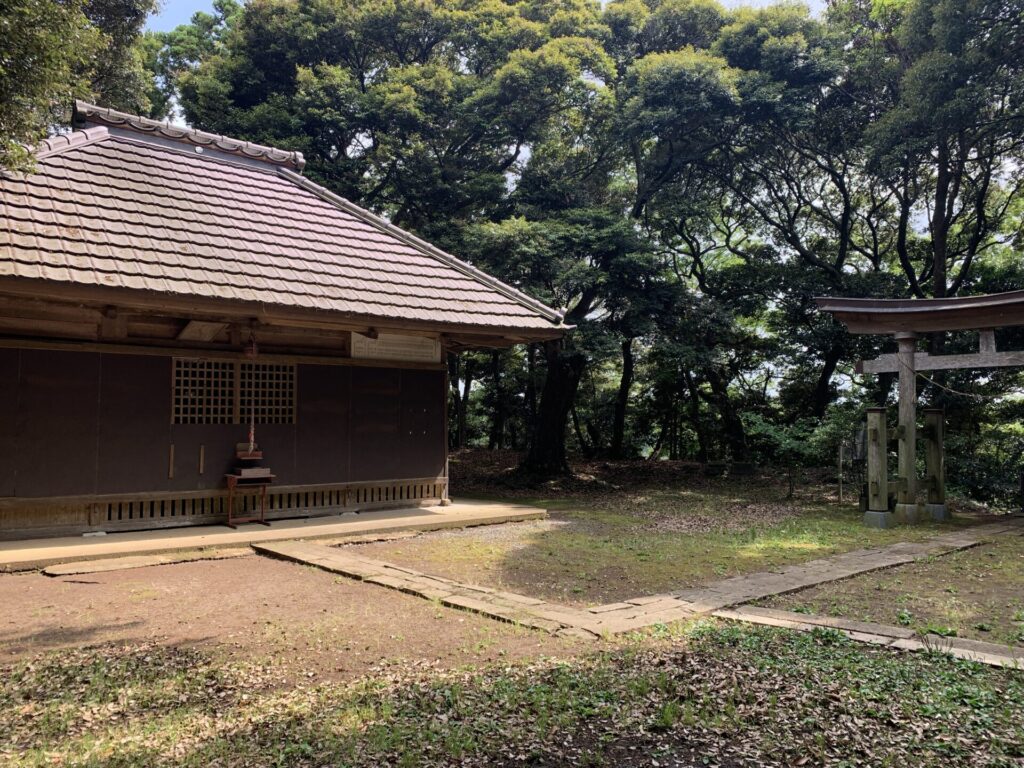
Passing through the torii gate, I headed to the remains of a shrine near the Honmaru (本丸:main enclosure ).
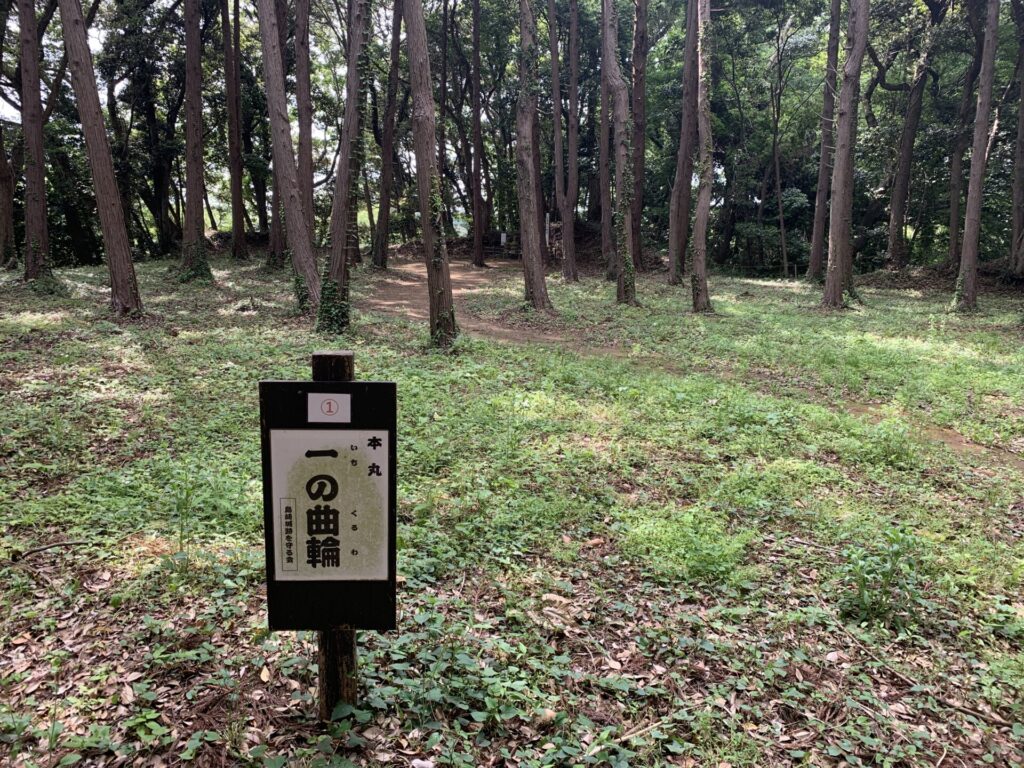
This is the honmaru, or rather, the Ichi-no-kuruwa (一の曲輪:first enclosure ).
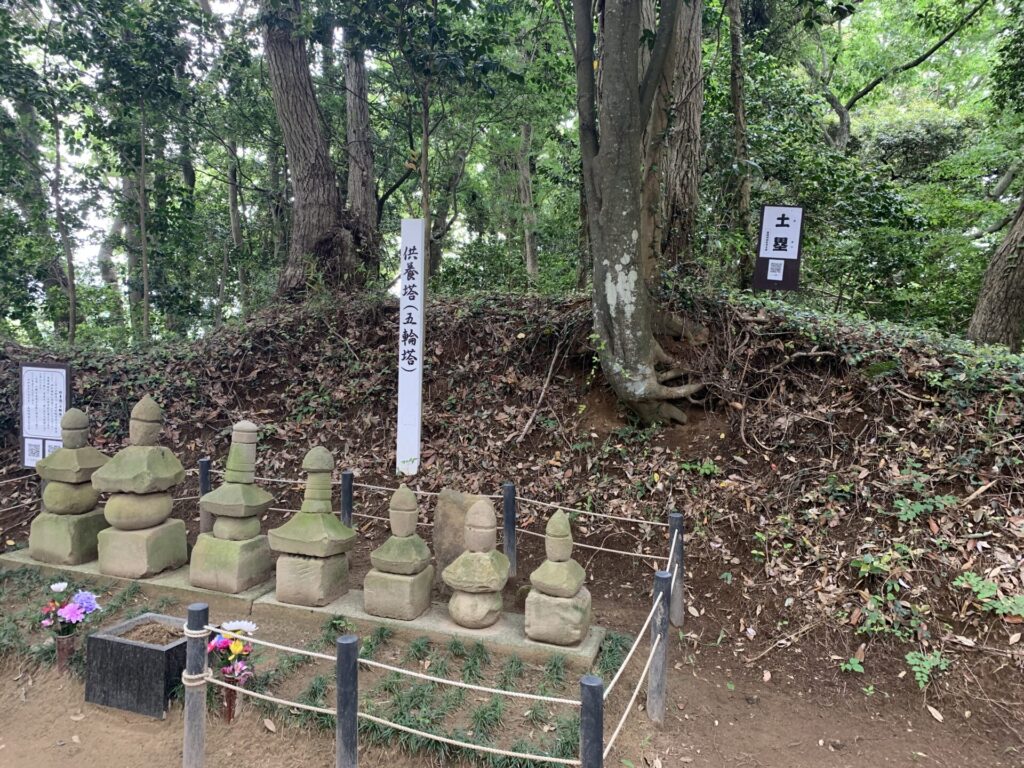
Near the Dorui (土塁:earthen ramparts ) of the honmaru, there was even a memorial tower like this.
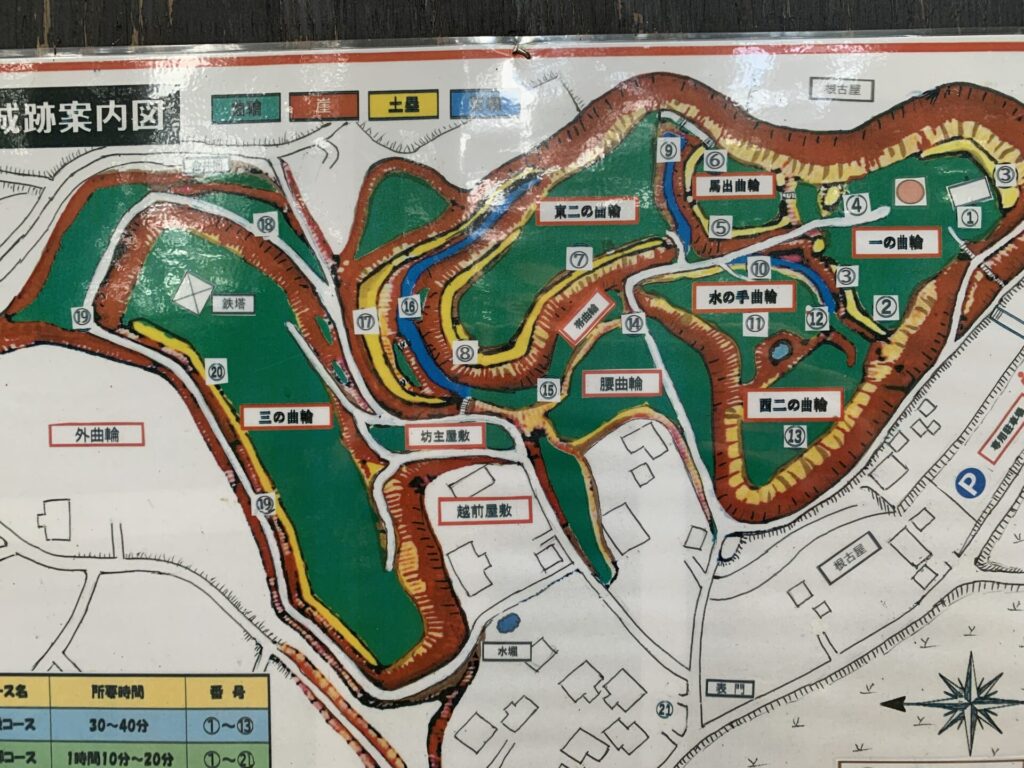
Throughout this castle hill, there are site maps like this placed in many spots,
so you can roughly understand the layout and relative positions.
If these guide boards were not here at all,
I would probably have been left wondering,
“Where exactly am I within the castle grounds right now?”😥
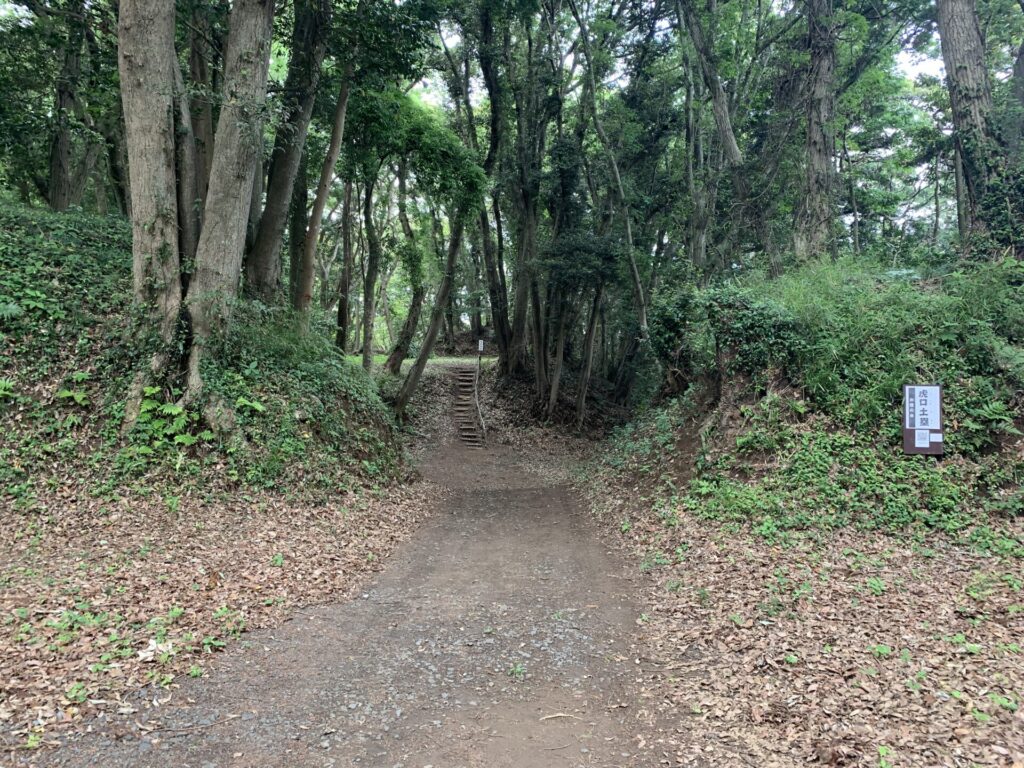
The entrance to the honmaru (first enclosure) is designed as a Koguchi (虎口:defensive gateway).
With earthen ramparts on both sides, it was structured so that enemy soldiers could not easily enter.
For more about koguchi, please refer to the article below as well.
Here, please take a look at the video I recorded near the koguchi.
Leaving the koguchi from the honmaru,
I next headed to the Mizunote Kuruwa (水の手曲輪:water-source-enclosure ).
As you can see, there are remains of a well within the enclosure,
suggesting that this area was used to secure a water source.
Nearby, there are also moats and another koguchi,
and eventually the path leads to the Nishi-Ninokuruwa (西二の曲輪:West Second Enclosure).
It’s quite surprising—these defensive features remain so clearly preserved, making the site truly impressive to explore!!
Examining the Sannomaru — The Watchtower Platform Is More Than Tall Enough!!
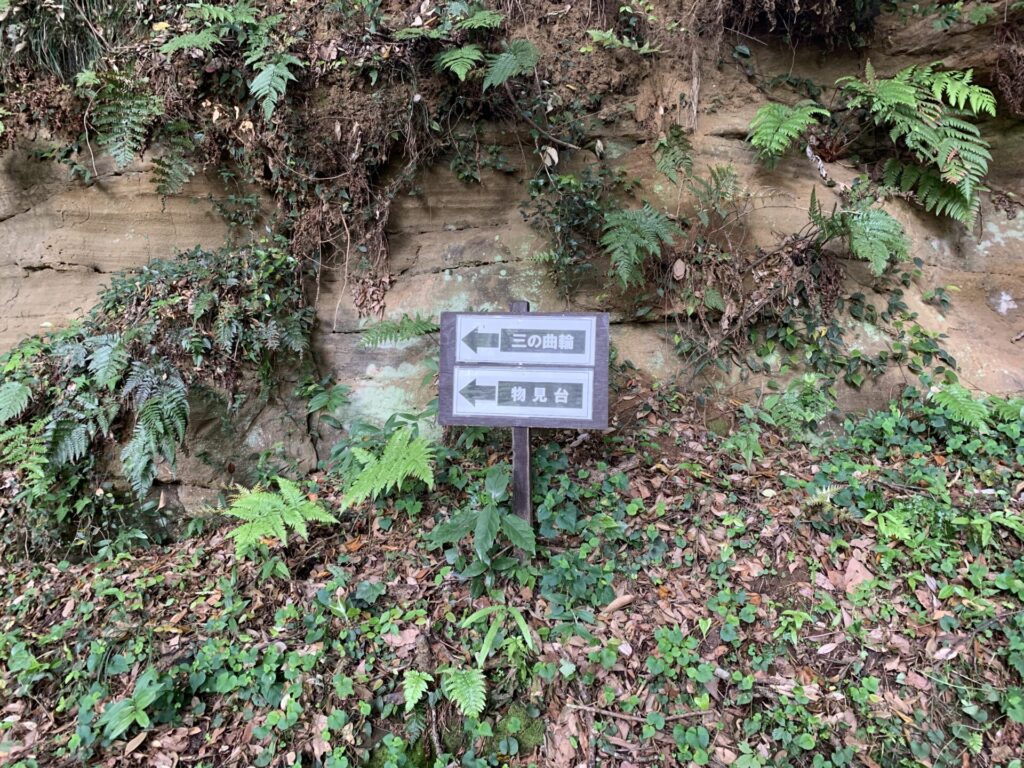
Next, I headed toward the Sannokuruwa (三の曲輪:third enclosure ) and the Monomidai (物見台:watchtower platform ).
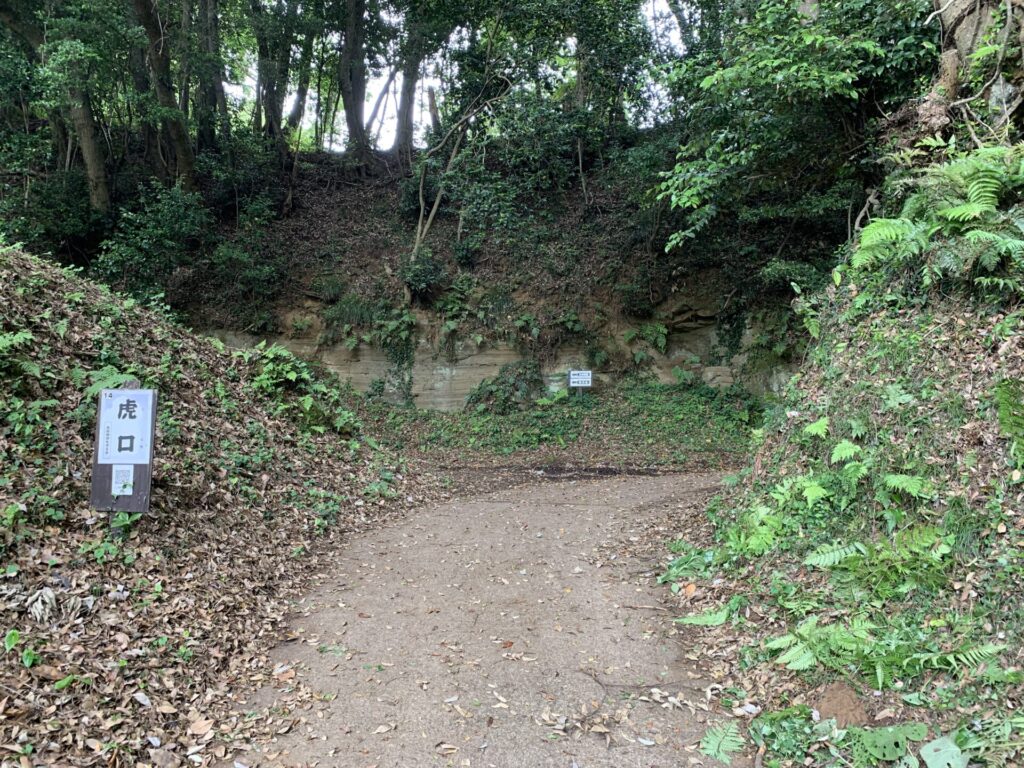
Here again, I passed through a Koguchi (虎口:defensive gateway).
A koguchi is designed so that the path bends like this,
making it difficult for enemy soldiers to advance easily.
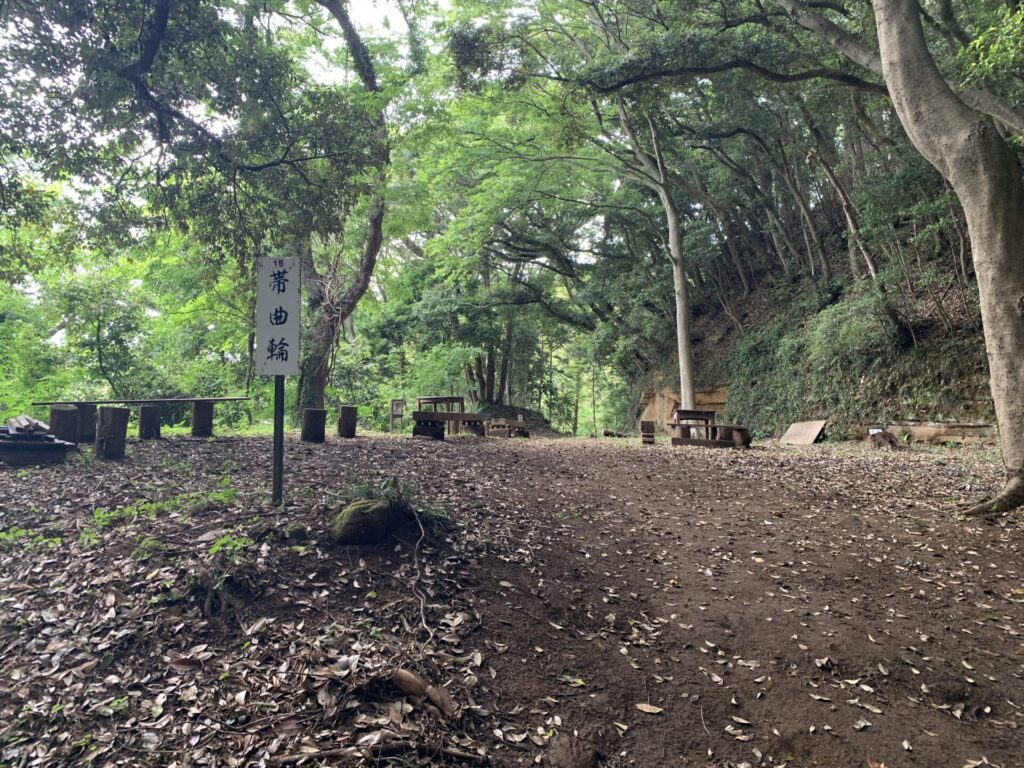
Along the way, there was also an Obikuruwa (帯曲輪:belt-shaped enclosure).
For a typical example of an obikuruwa, Sakura-jo preserves one very well.
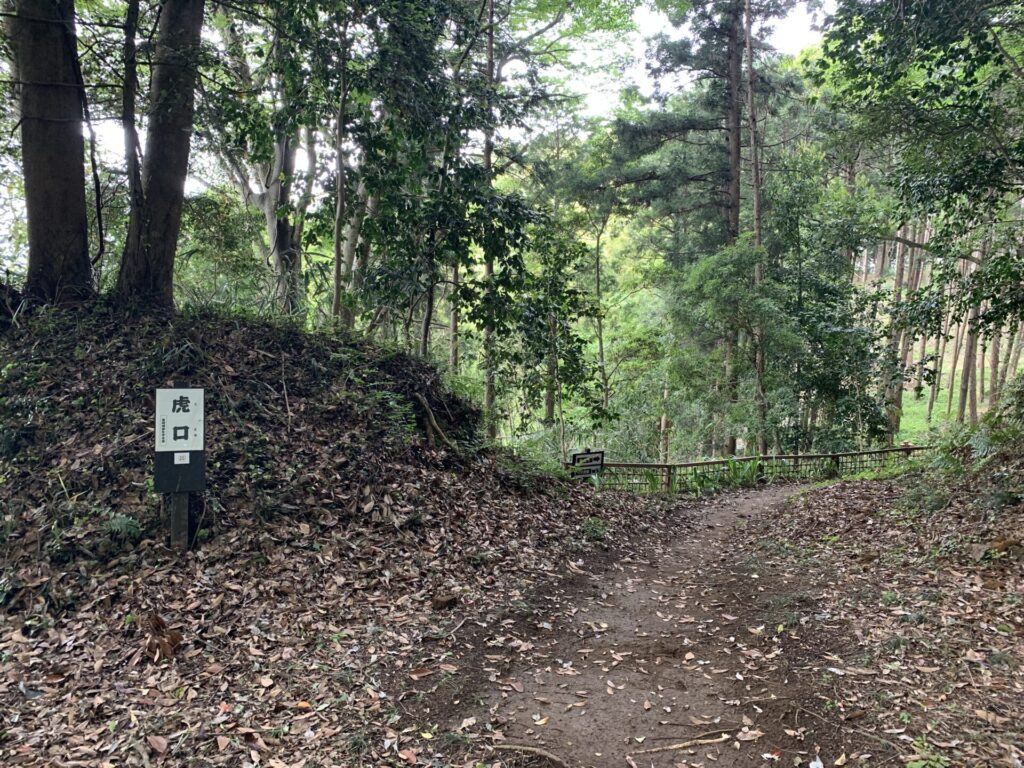
Yet another Koguchi (虎口:defensive gateway)!!
Even this alone shows just how strong the defenses of Shimazaki-jo were.
However, there was still something frightening waiting further ahead…
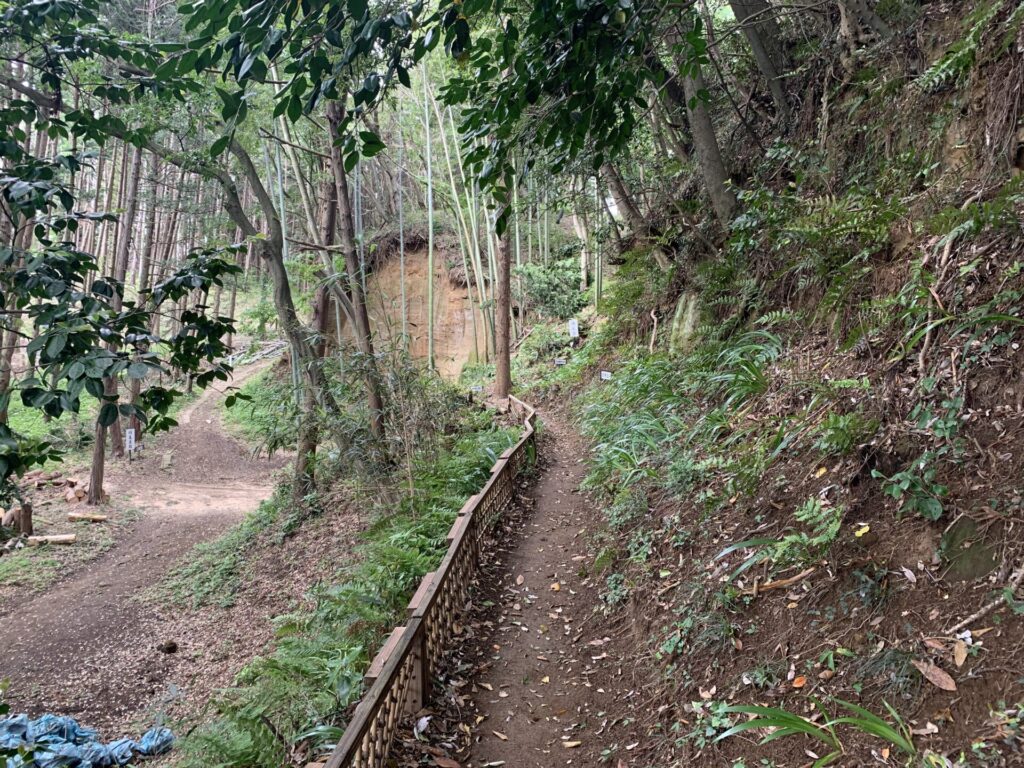
This narrow path—so tight that only one person can barely pass through.
In fact, this is…
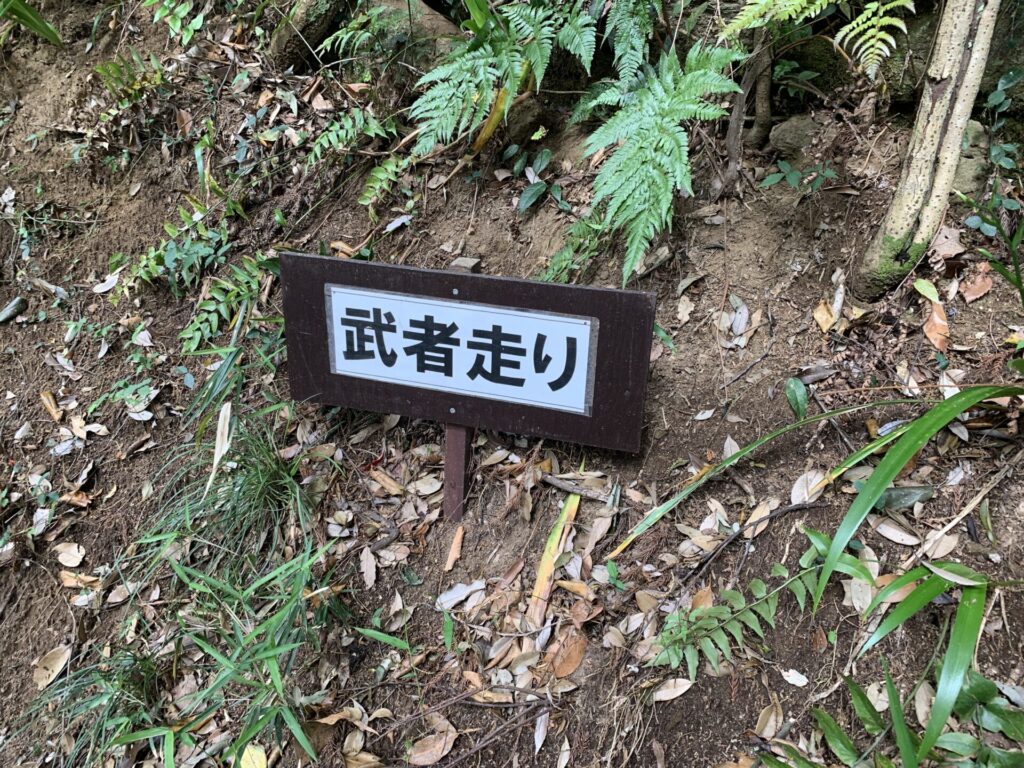
I see—so this was a Musha-bashiri (武者走り).
A musha-bashiri is a passage used by castle soldiers to quickly carry urgent messages,
and it was often built on the rear side of mountain castles.
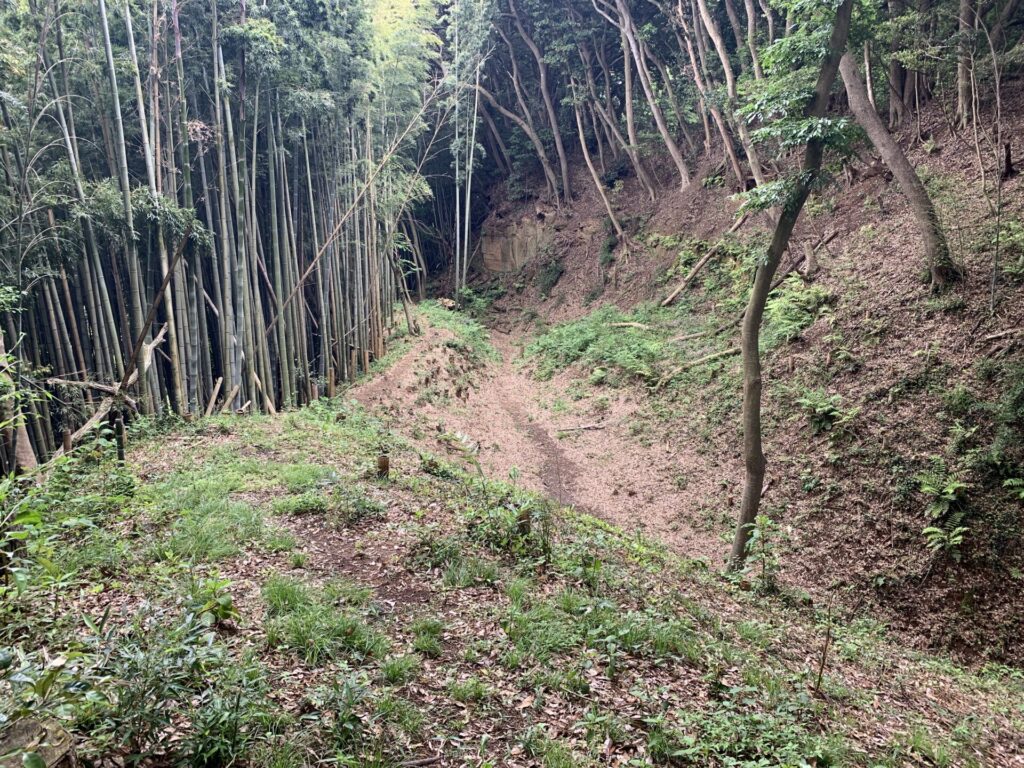
This is the view looking down from the Monomidai (物見台:watchtower platform ).
From this height, you could clearly see every movement of the enemy.
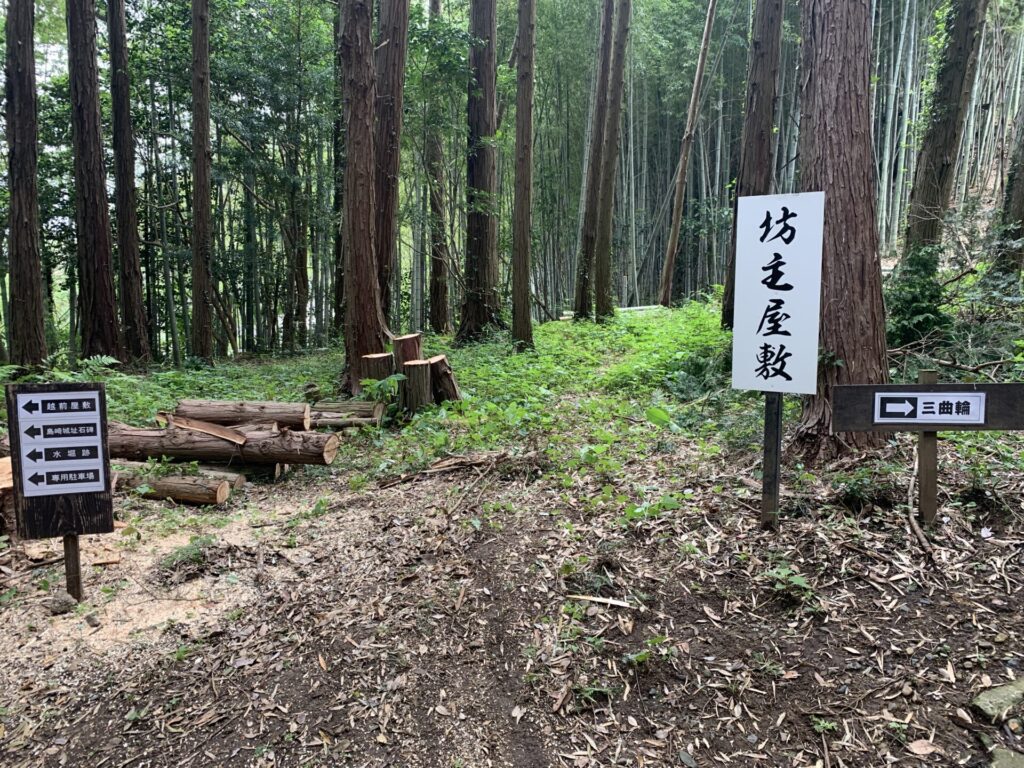
After coming down from the Monomidai (物見台:watchtower platform ),
I passed through this Bōzu Residence area and headed toward the San-no-Kuruwa (三の曲輪:third enclosure ) on the right.
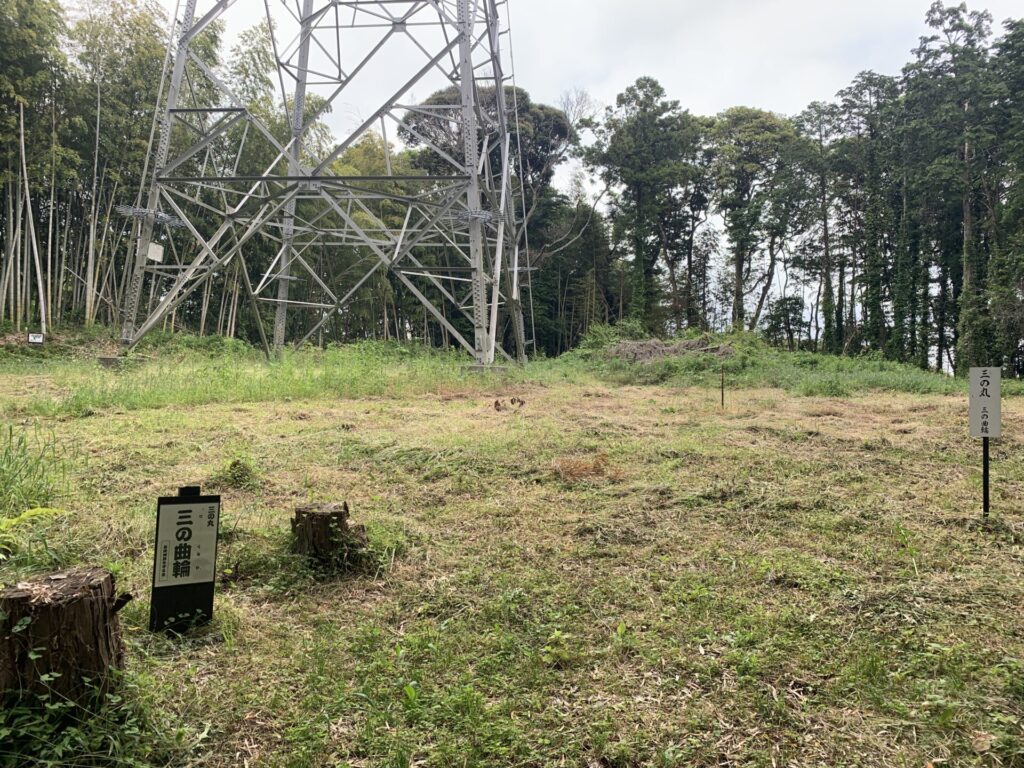
Not long after that, I reached the San-no-Kuruwa (三の曲輪:third enclosure ).
As you can see, a transmission tower now stands there.
A Massive Moat So Deep It Almost Made Me Want to Turn Back in Fear…
From this third enclosure, you can look down into the nearby large moat…
and it was honestly quite frightening. 😱
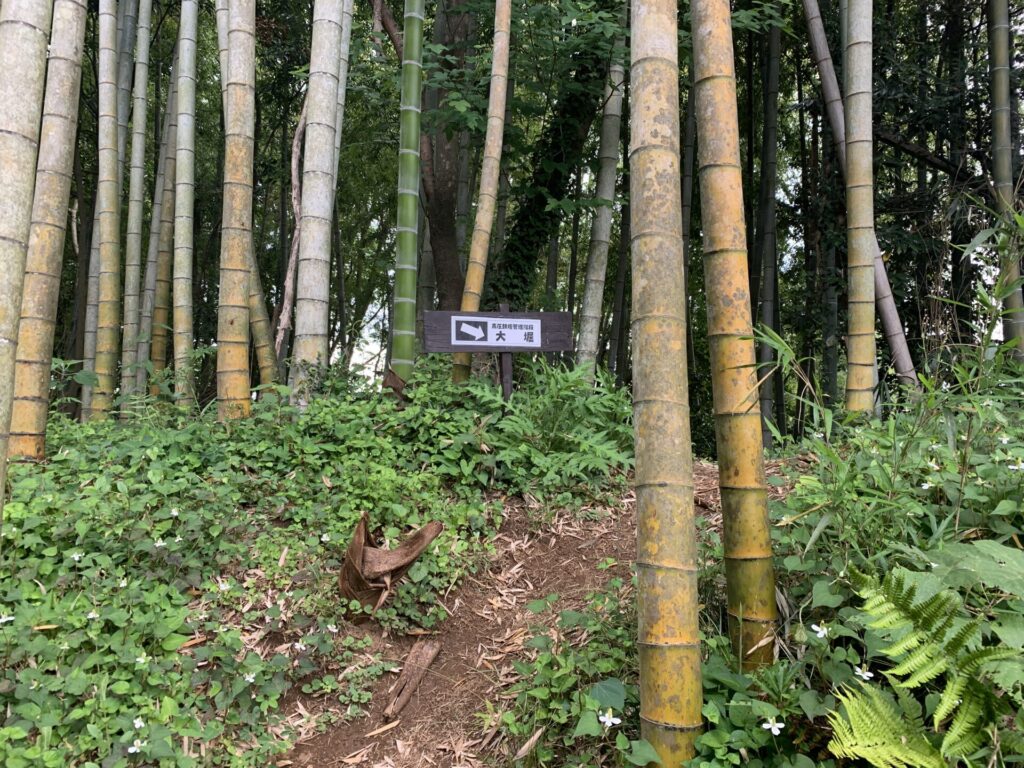
As I proceeded deeper into the San-no-Kuruwa (三の曲輪:third enclosure ),
I came across a sign that read “Ōhori (大堀:Large Moat).”
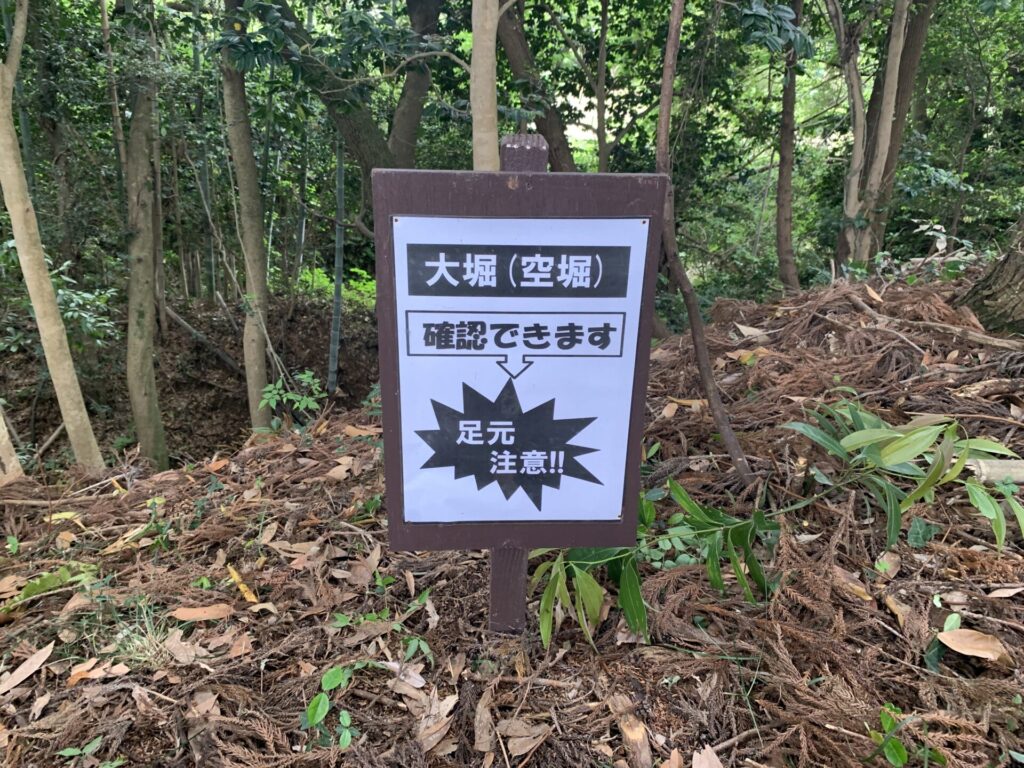
Following the long earthen rampart that surrounds the third enclosure,
it seems you can look out over the Ōhori (大堀:Large Moat) from this spot.
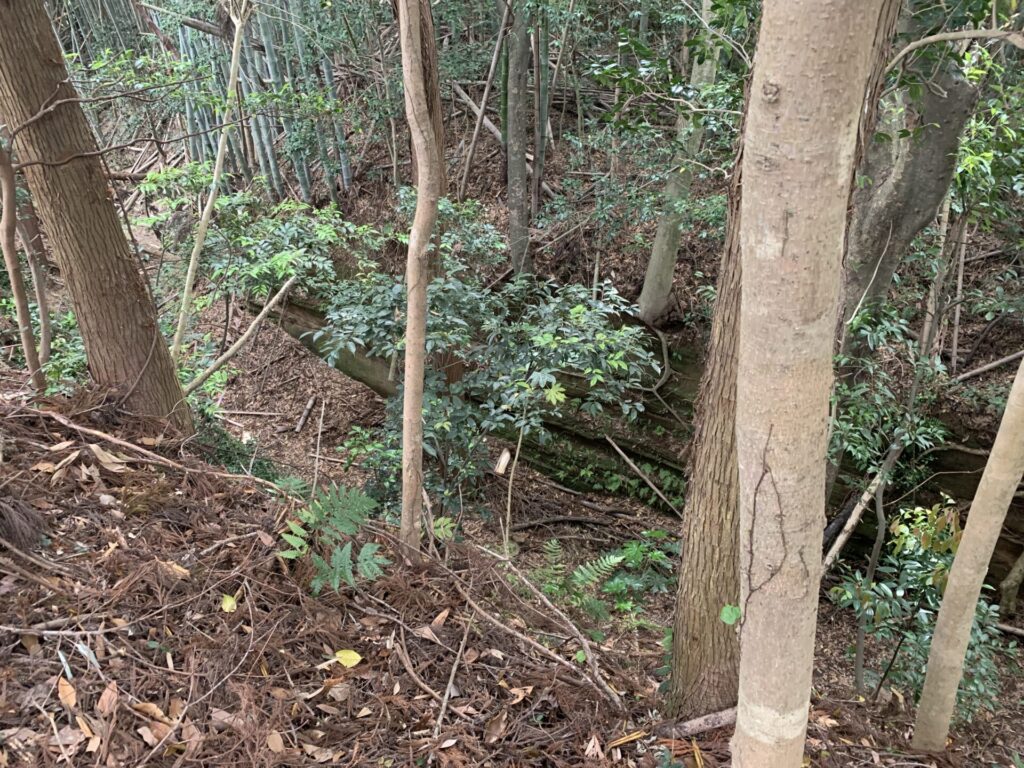
This is the view looking down from that spot,
but the height probably doesn’t come across very well in the photo.
In reality, it was high enough to make my legs feel a bit weak…
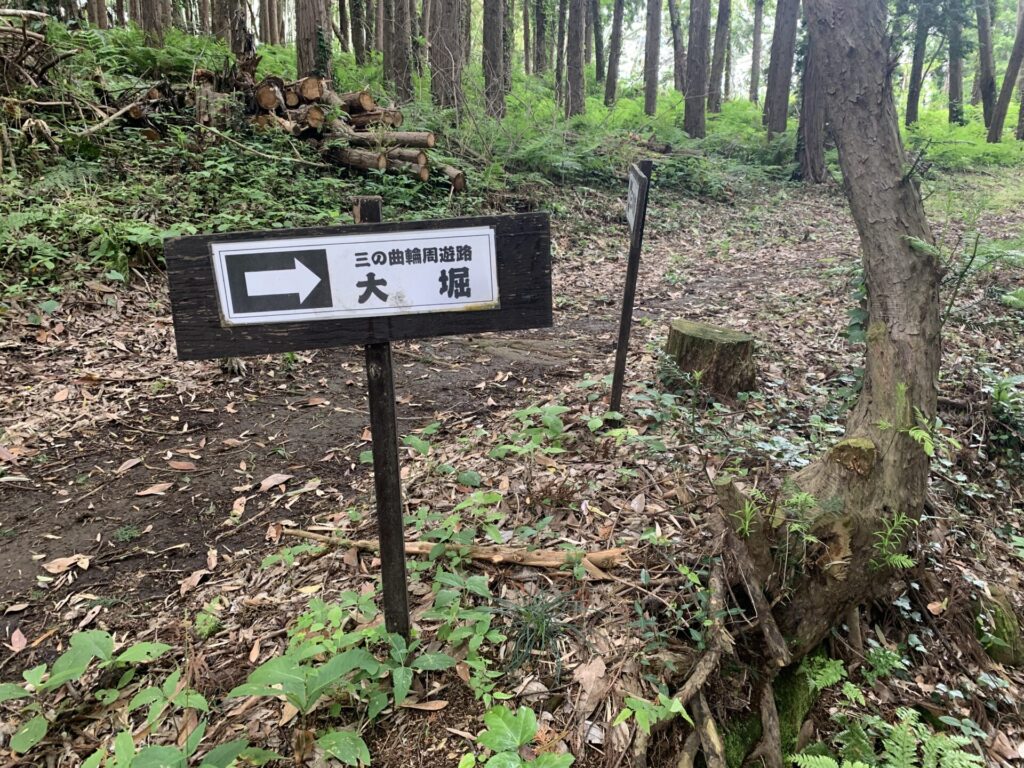
I went down once,
and then proceeded through the Ōhori (大堀:Large Moat) from below.
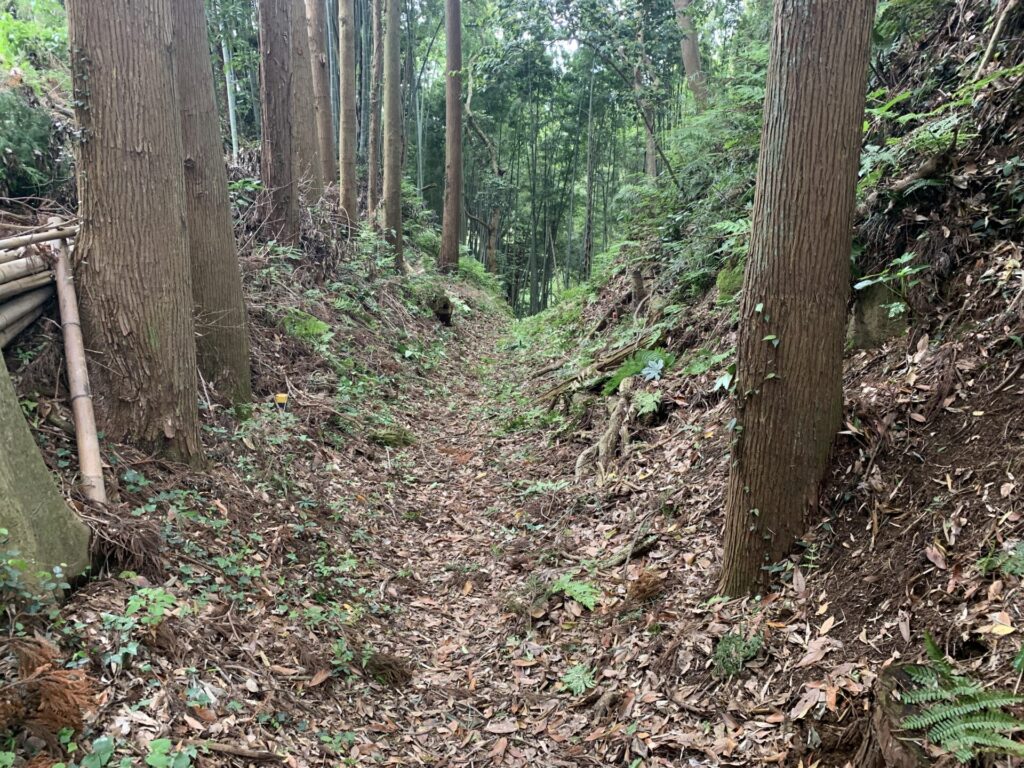
The entrance looks like this.
And this is only the beginning…
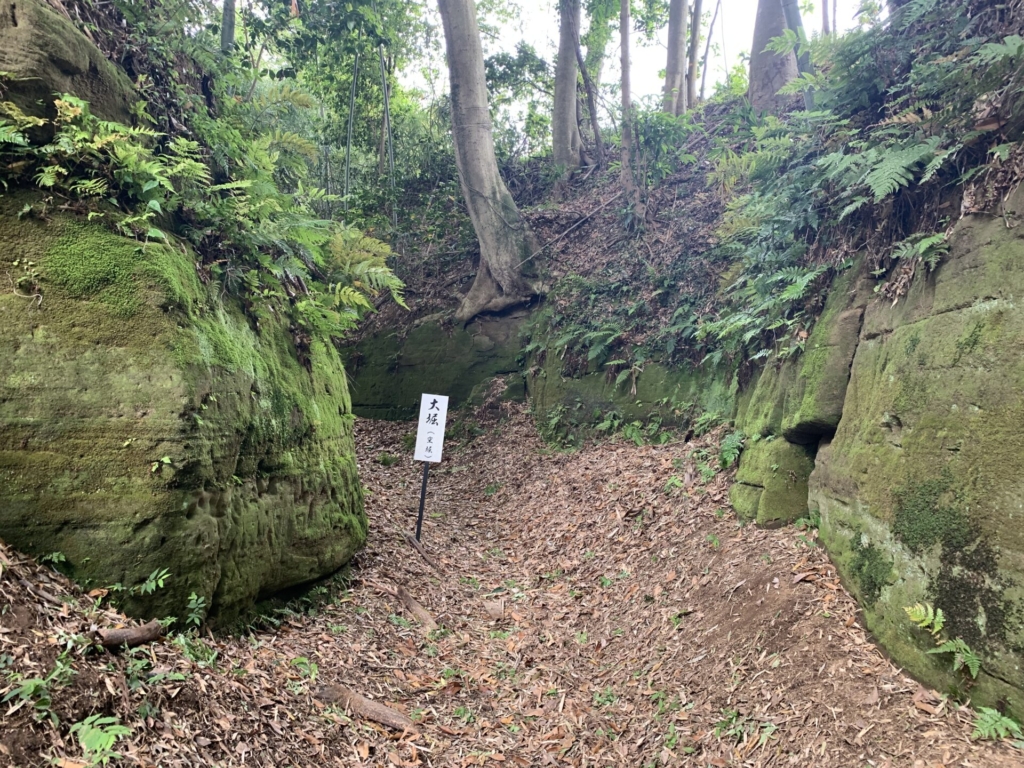
By the time I had walked about halfway…
an unexpected sense of fear suddenly came over me.😱
It was still bright outside,
but the deep (high) moat and surrounding bamboo grove made the area dim and enclosed.
And I was the only one walking through this mountain.
(It’s a rural area, and I didn’t see a single other person in these woods.)
The humid heat was also taking its toll, and as fatigue built up,
an indescribable fear began to creep in….
If it weren’t for the site maps placed here and there,
it would have been much easier to lose my way.
“I just want to get back soon…”
That was honestly how I felt.
Finally, I made my way back via the East Second Enclosure and the Umadashi Enclosure.
After walking through the Ōhori (大堀:Large Moat), my fatigue had increased quite a bit,
so I decided to finish by visiting the Higashi Ni-no-Kuruwa (東二の曲輪:East Second Enclosure ) and the Umadashi Kuruwa (馬出し曲輪) before heading back.
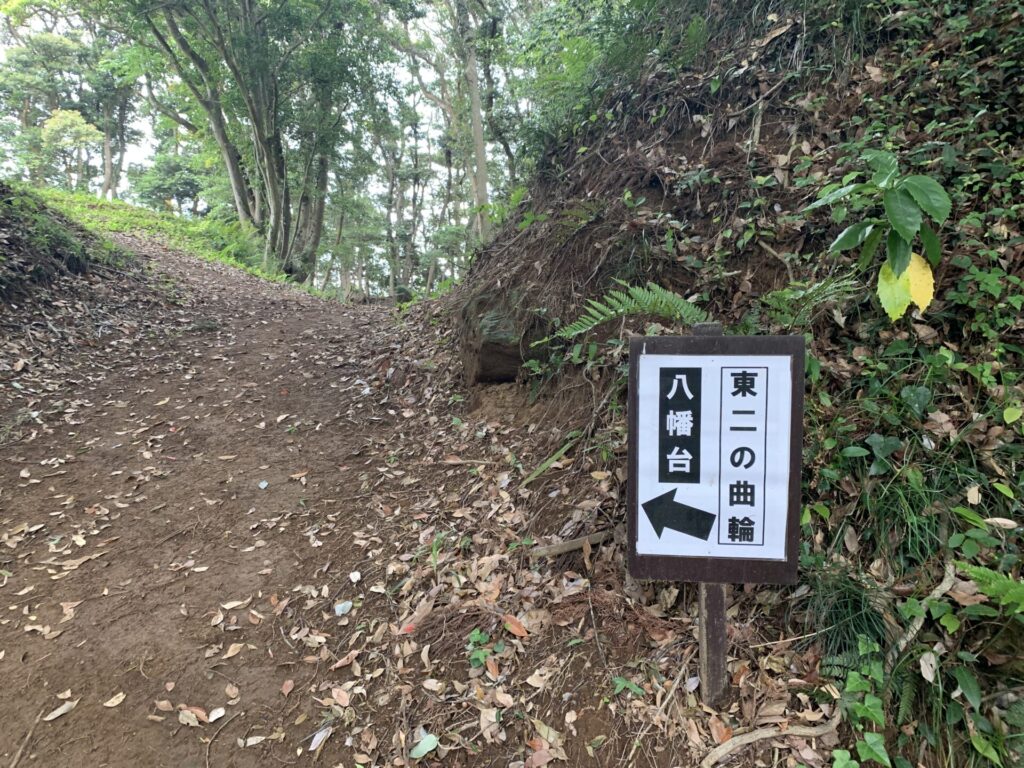
Relying on the site maps placed throughout the area,
I made my way toward the Higashi Ni-no-Kuruwa (東二の曲輪:East Second Enclosure ).
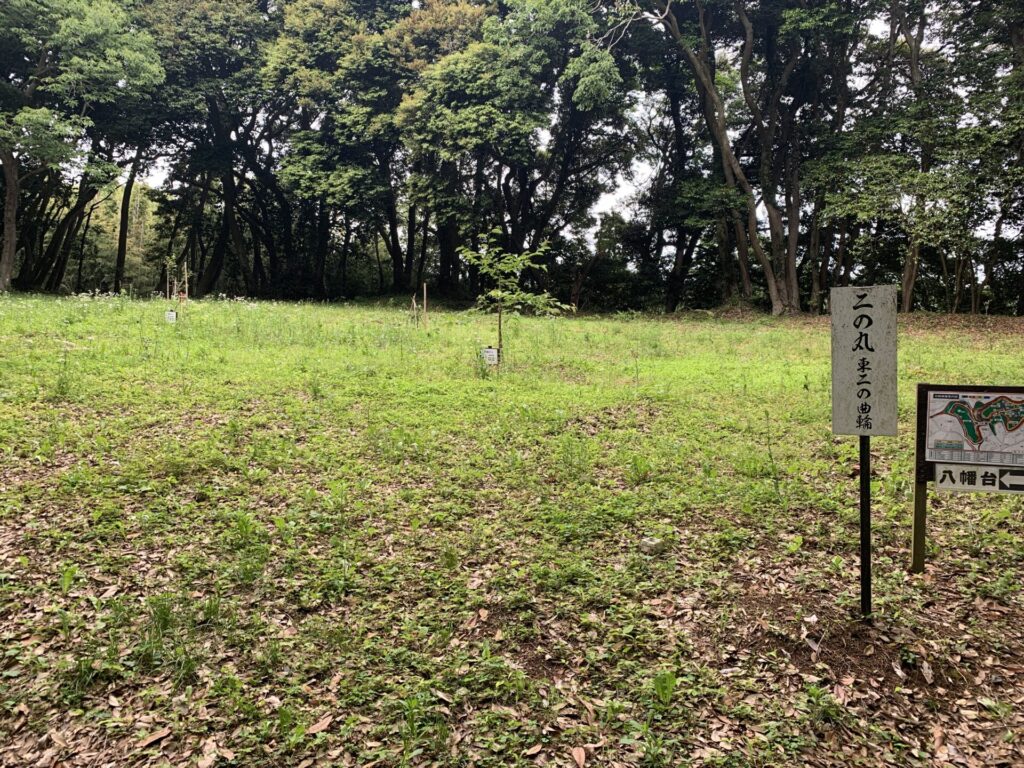
This is the other Ninomaru, the Higashi Ni-no-Kuruwa (東二の曲輪:East Second Enclosure ).
It was also a fairly spacious area.
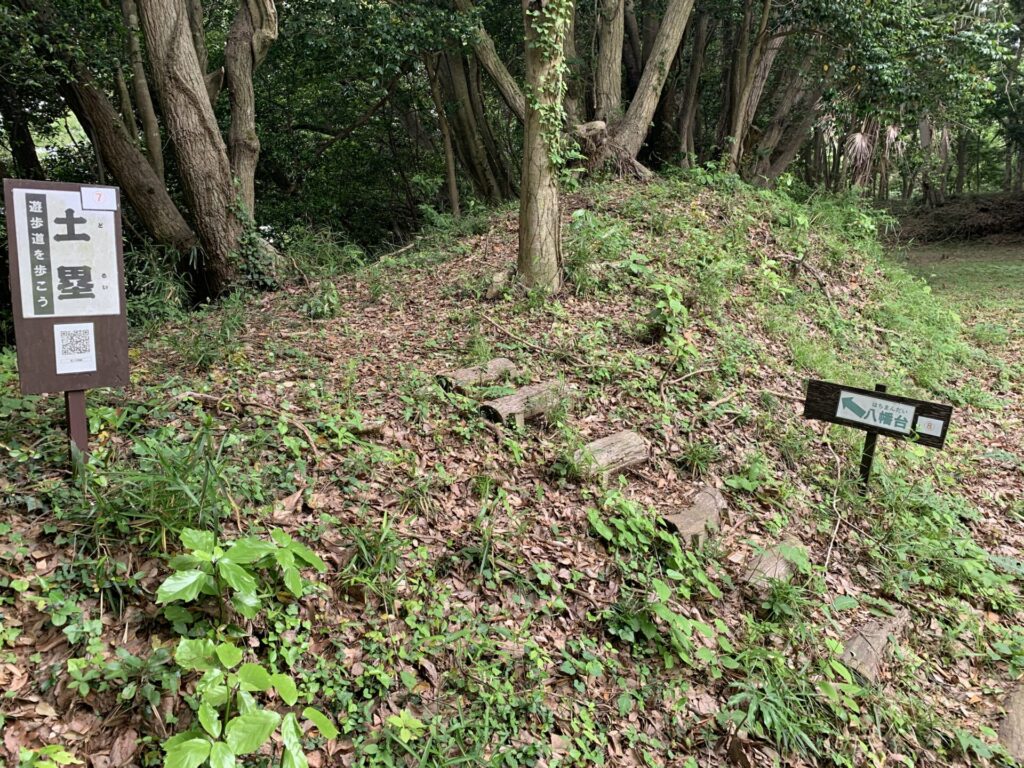
I climbed up onto the earthen rampart that runs around the East Second Enclosure.
On the opposite side, it connects to a Dobashi (土橋:earthen bridge), and beyond that lies the Umadashi Kuruwa (馬出し曲輪).
Further ahead, the path leads back to the First Enclosure (honmaru), which I passed through at the beginning.
Now, please take a look at the flow of this route in the video.
This brings my exploration of Shimazaki-jo to an end.
Without the site maps placed throughout the mountain, it would have been difficult to understand the positions of the various enclosures,
and I probably would have gotten lost and regretted coming here.
Even so, I was able to fully appreciate just how impressive the defensive structures of this castle are.
In the end, rather than relying only on books or information on the web,
the best way is to actually come here and walk the site yourself.
See you next time!!🏯