
Sekiyado-jo (Noda city, Chiba)|A Key Kanto Stronghold Controlling Water Transport on the Edo and Tone Rivers
A Battleground Fought Over by the Hojo and Uesugi Clans
Hello, this is Shin.
On Monday, June 5, 2023,
I visited Sekiyado-jo in Noda City, Chiba Prefecture 🚙
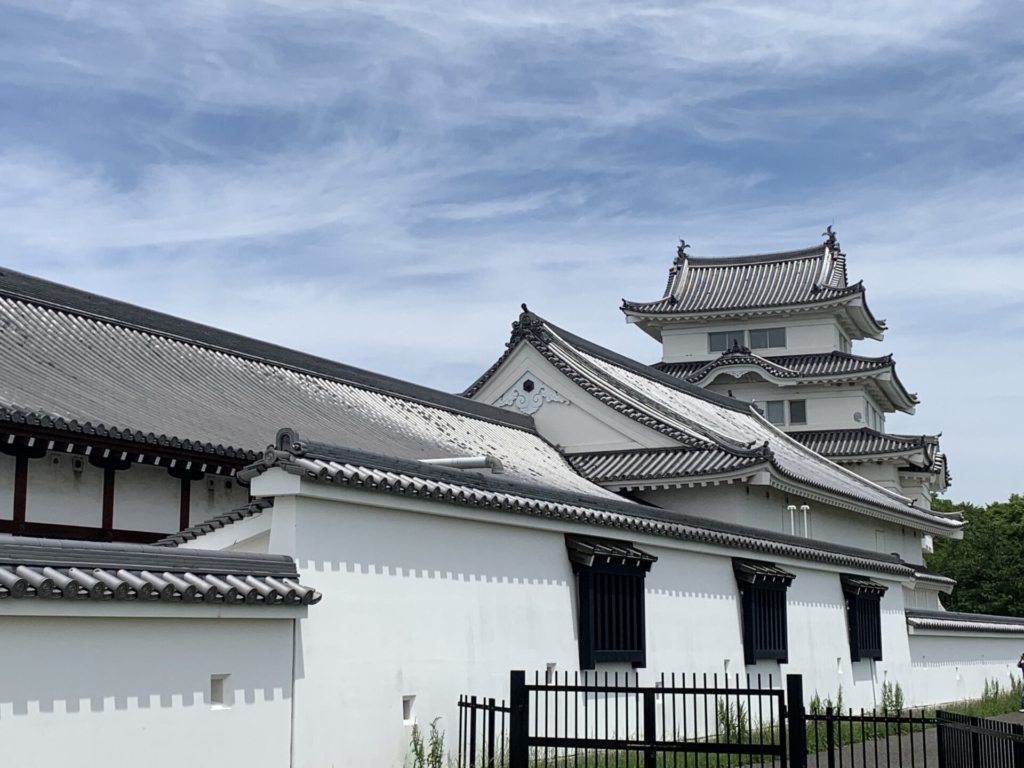
◉ Castle Type
Flatland Castle ( hirajiro:平城 )
◉ Cultural Heritage Highlights
◉ Defensive Features & Fortifications
◉ Exploration Difficulty
🔰 Easy Castles
◉ Estimated Time to walk around
: about 1 hour
◉ Parking / Access
There is parking space for around 20 cars in front of the Sekiyado Castle Museum.
Looking at Sekiyado-jo from above on a map,
it stands right near the borders of Chiba, Saitama, and Ibaraki Prefectures,
at the point where the Tone River branches off from the Edo River.
What this means is…
this castle controlled a vital hub for water transportation throughout the Kanto region.
I have to admit, much of this comes from what I learned on Wikipedia 💦
But even Hojo Ujiyasu, who sought to dominate the Kanto region, is said to have declared:
“To control this land is equal to gaining an entire province.”
In reality, clashes with Uesugi Kenshin, who was also advancing into Kanto, seem to have occurred quite often.
The castle lord Yanada Harusuke must have faced tremendous hardships defending Sekiyado-jo.
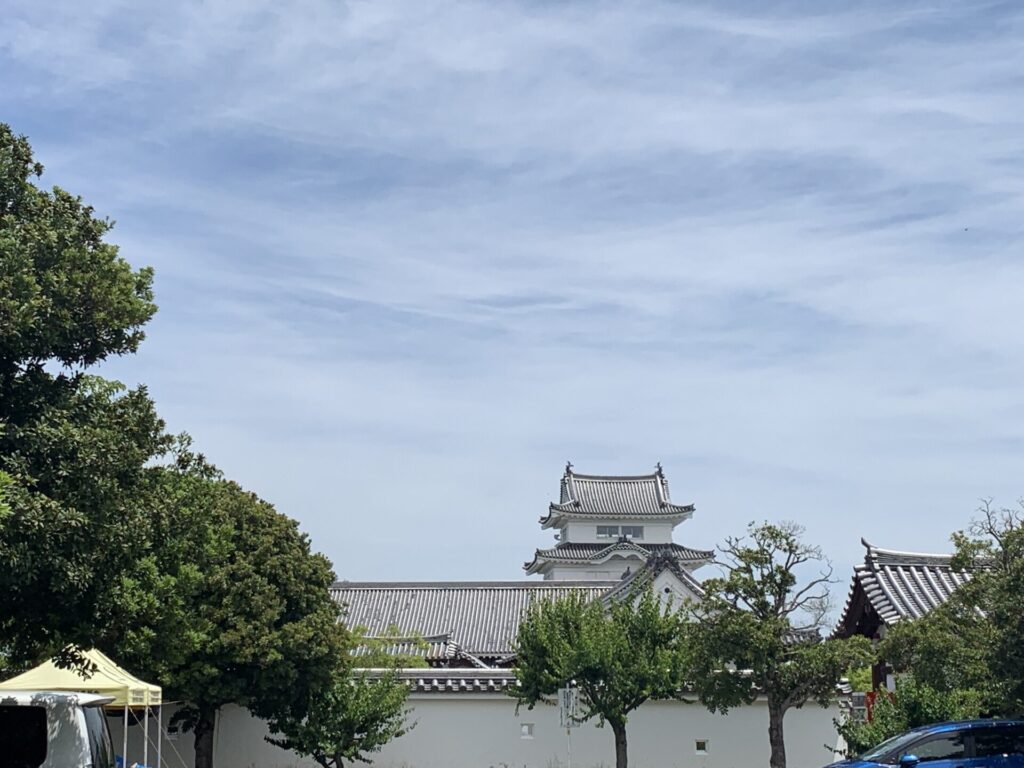
Like many reconstructed castle towers in Japan,
the replica tenshu of Sekiyado-jo now serves as a museum inside.
The photo above was taken from the parking area in front of the museum.
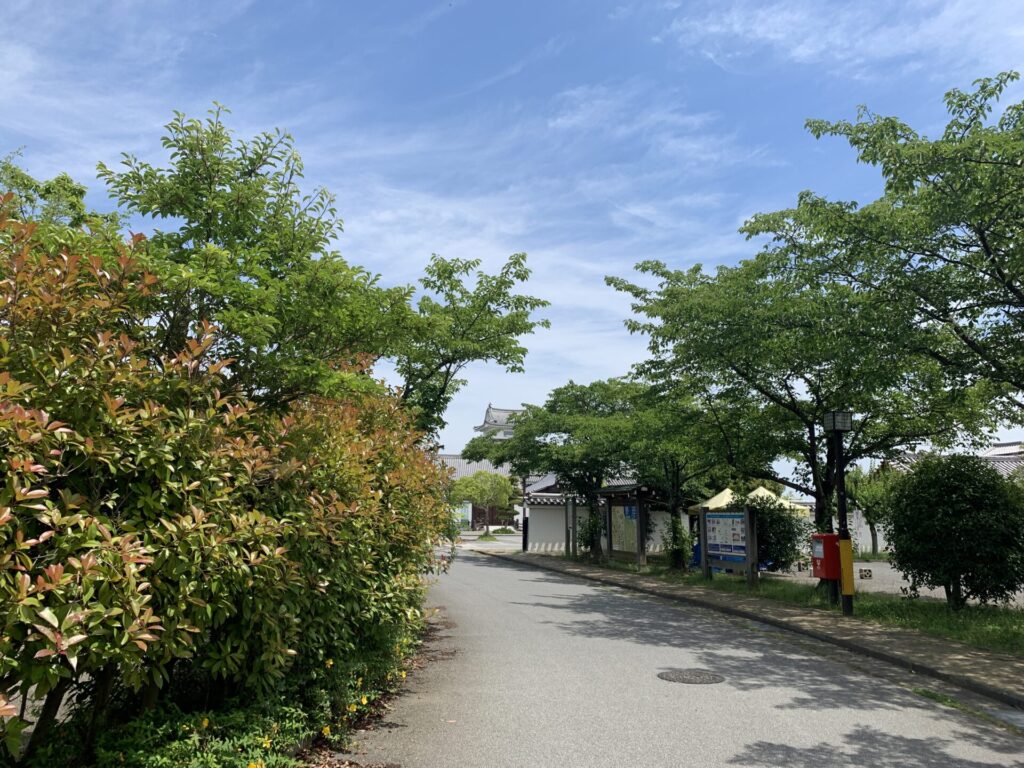
The museum, designed as a replica castle tower, is located just a short walk from the parking area.
Of course, I also walked closer to take some photos.
Even though it is a reconstruction, the silhouette of a castle tower is always captivating to look at.
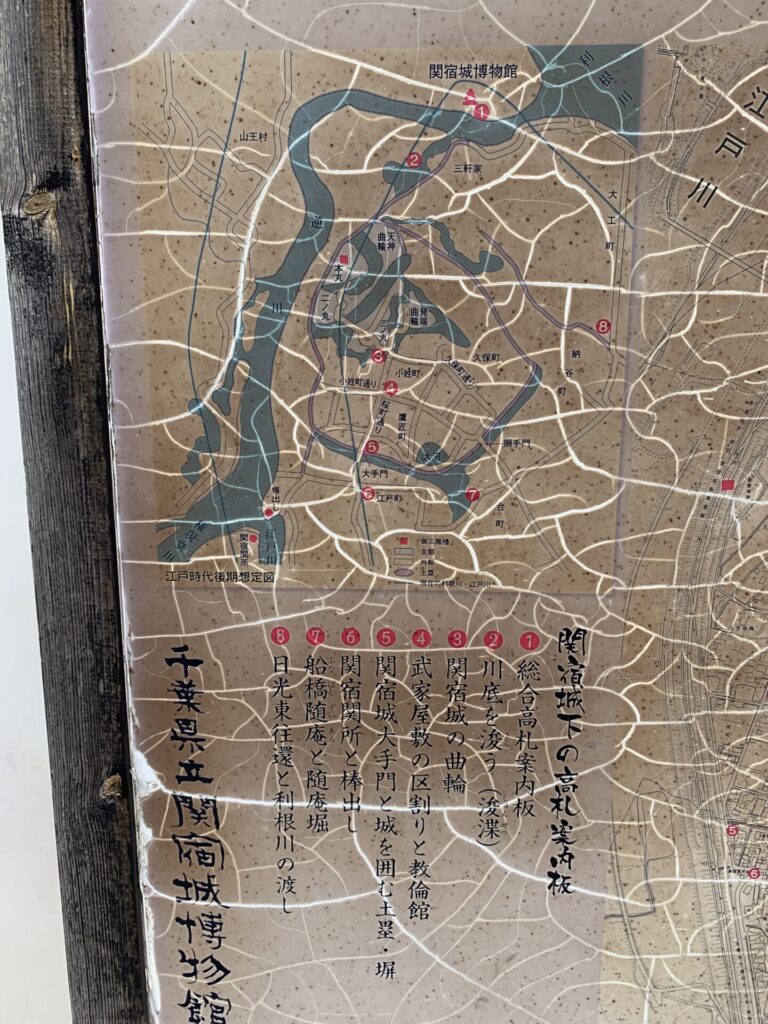
The text is a bit difficult to read in this photo,
but the “Sekiyado Castle Museum(関宿城博物館)” here corresponds to point ❶ on the map.
That means visiting locations such as the samurai residence(武家屋敷)at ❹ and the main gate(大手門)site at ❺ requires traveling quite a distance.
I decided to check those areas out later as well.
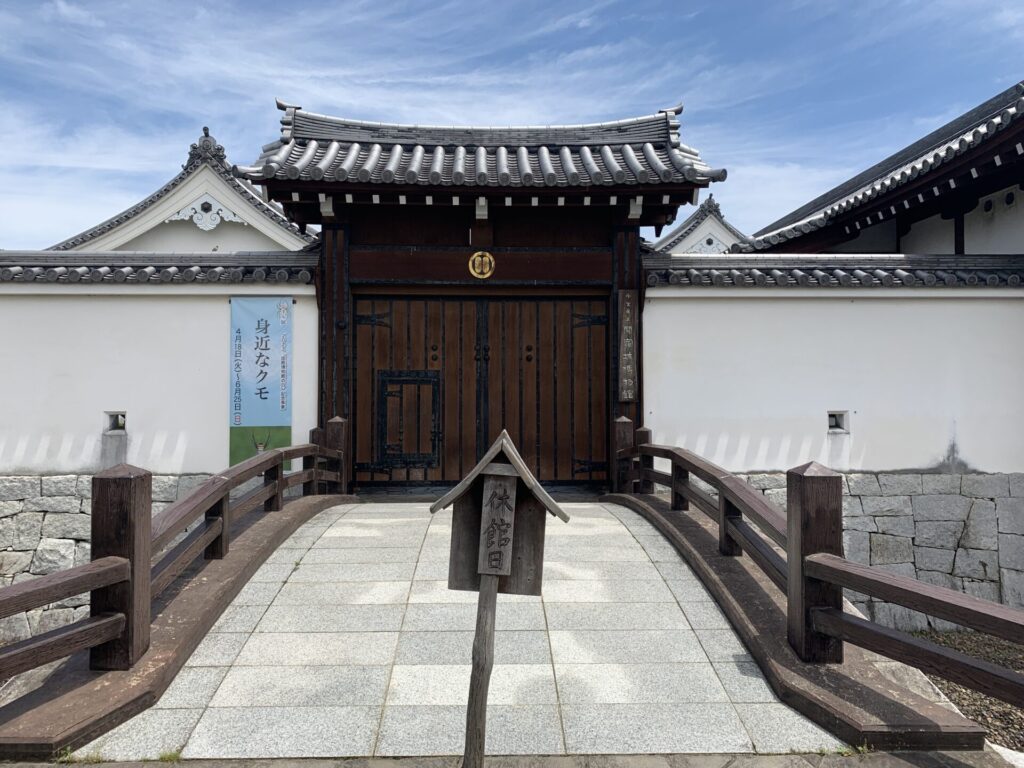
I would have liked to explore the museum inside as well…
but unfortunately, it was closed on the day of my visit.
A bit disappointing, but just being able to see the reconstructed castle tower was satisfying enough.
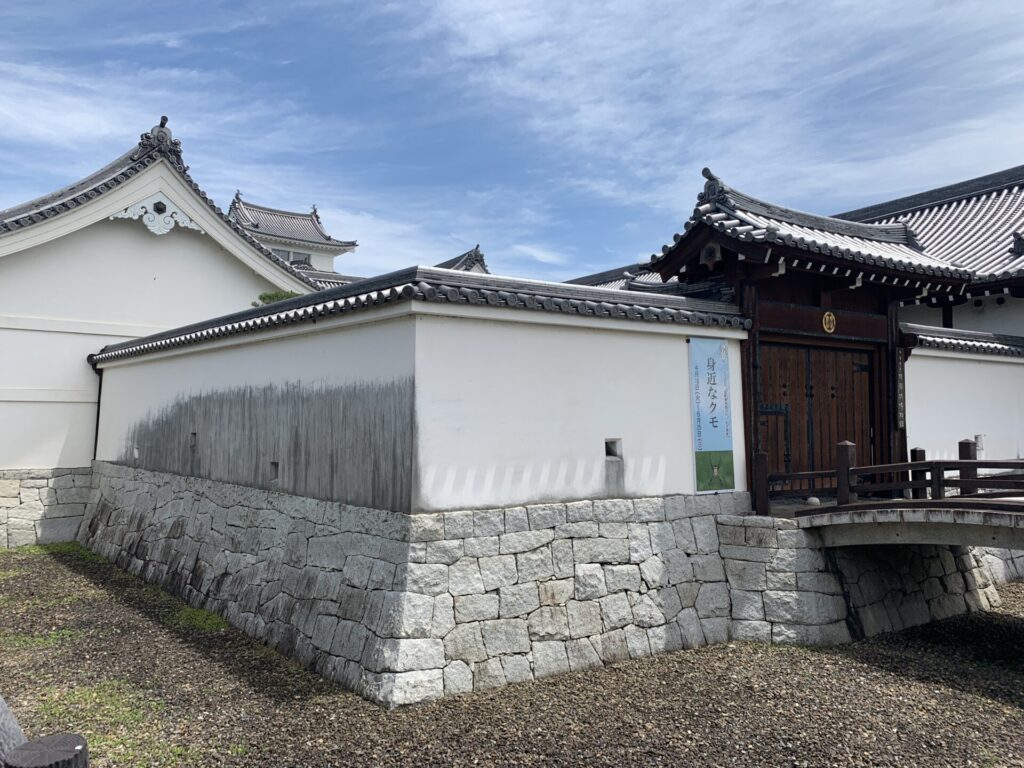
One more shot from a different angle.
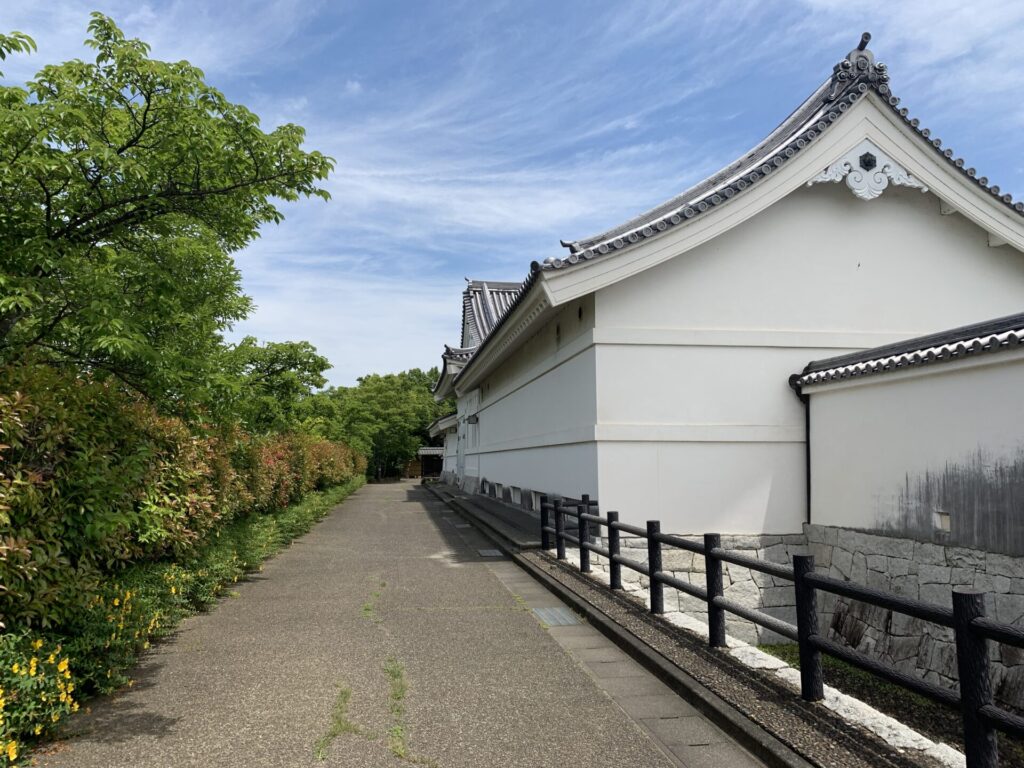
I actually walked all the way toward the back here,
and the grounds extend surprisingly far.
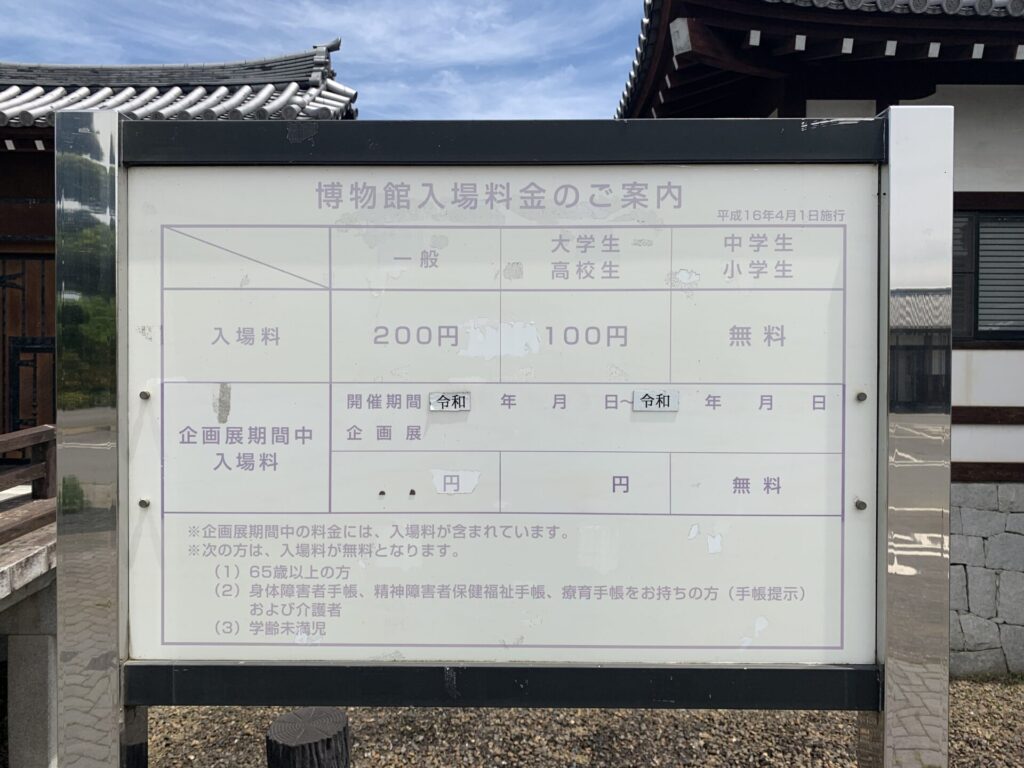
For reference, the museum admission fees are as follows:
Adults: 200 yen
High school & university students: 100 yen
Junior high school students and younger: Free
Exploring the Honmaru Site and the Main Gate Ruins!!
Since I couldn’t even enter the museum,
there was no way I was going home after only seeing the reconstructed tower.
So, I decided to explore the Honmaru site(本丸跡:main enclosure site) and the ruins of the main gate(大手門) as well.
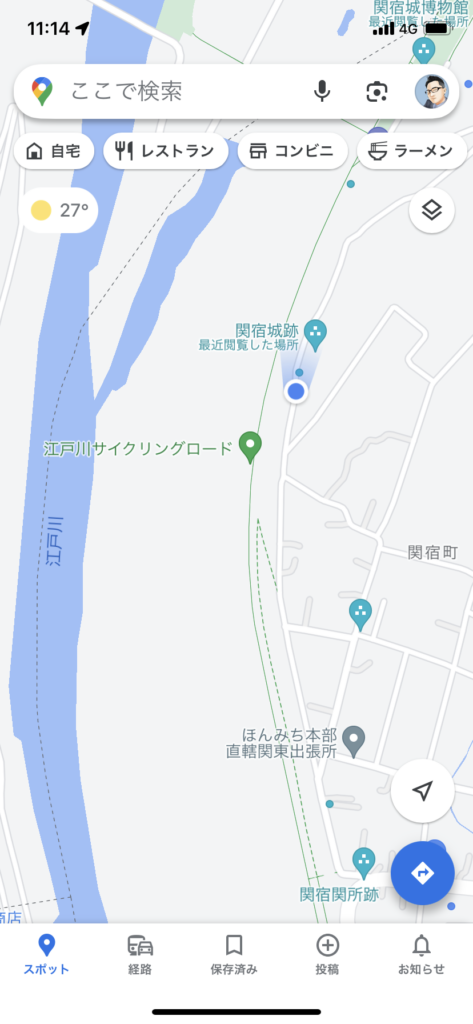
Quite a distance away from the museum, I found the actual ruins of Sekiyado-jo.
It took about 2–3 minutes by car, so on foot it would probably take more than 10 minutes.
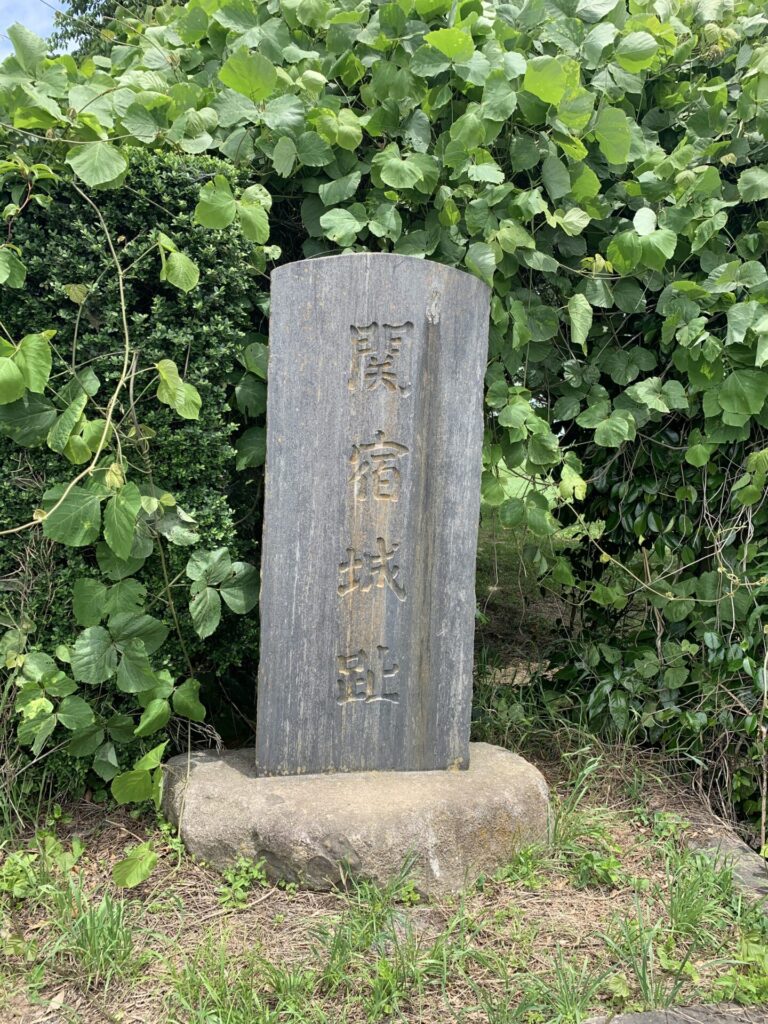
Following Google Maps and getting closer to the “Sekiyado Castle Ruins”…
there it was!!
A magnificent stone monument, just as you can see here!
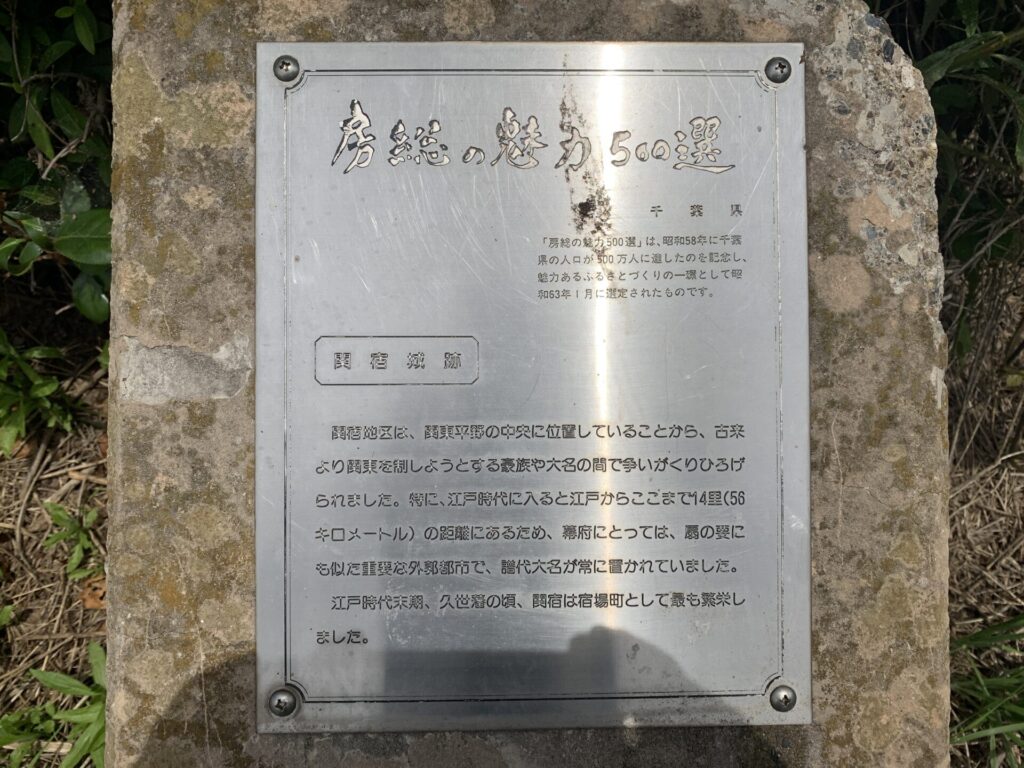
Just to the right of the stone monument stood this information board.
It seems that even during the Edo period, Sekiyado-jo remained an important strategic stronghold.
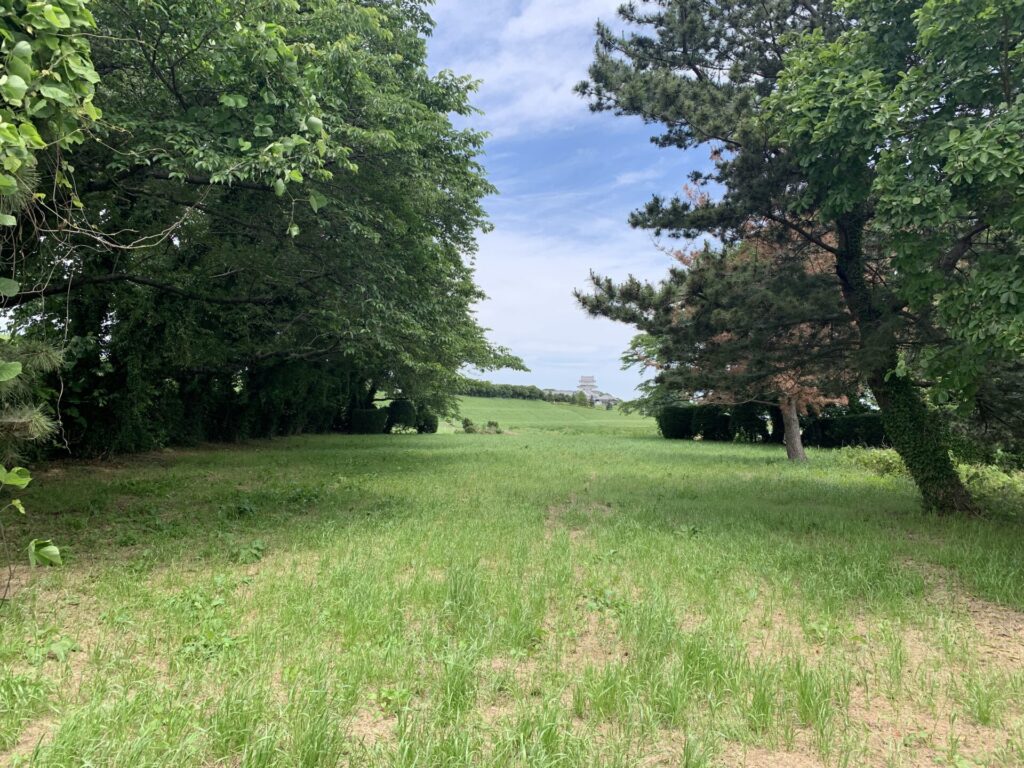
This appears to have been the actual site of the Honmaru(本丸), the castle’s main enclosure.
The reconstructed castle tower can be seen far off in the distance.
Looking at it this way, the area is surprisingly large.
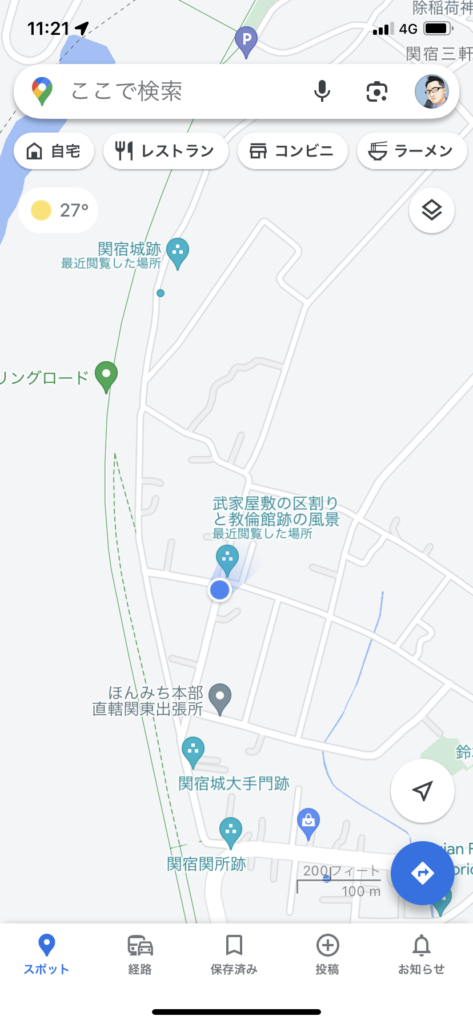
Next, I headed toward an area marked “Division of Samurai Residences(武家屋敷の区割り)…”
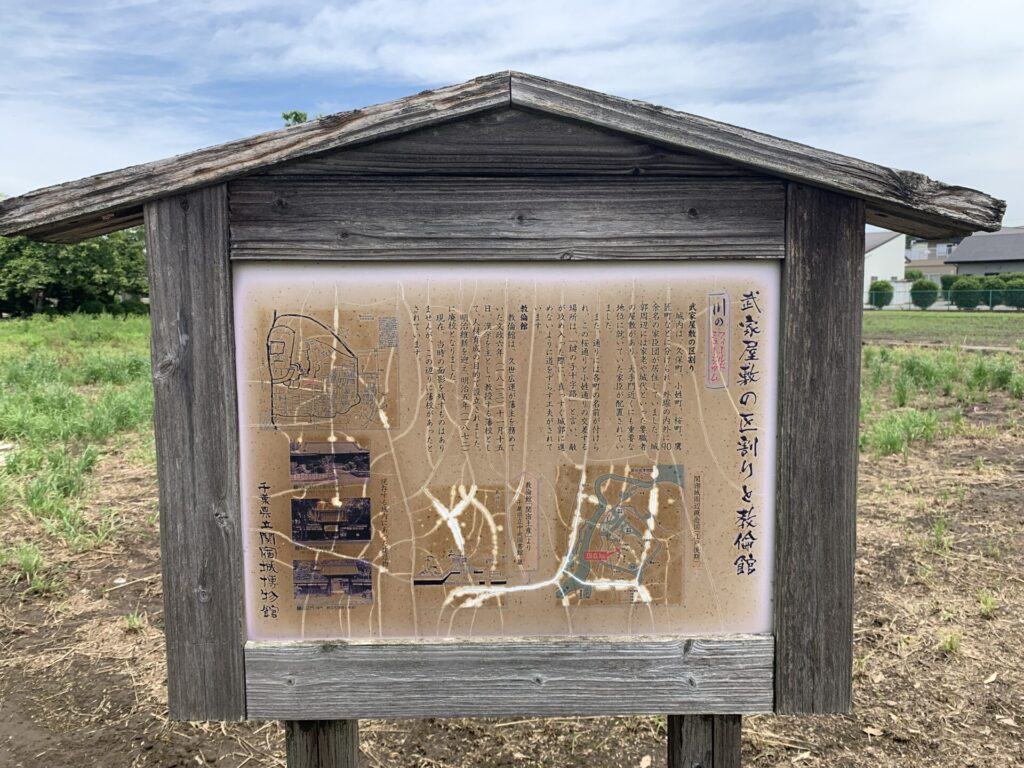
At the site, there was only this kind of signpost,
and no particularly noticeable ruins remained.
It seems the best we can do is simply recognize that “this was once the location.”
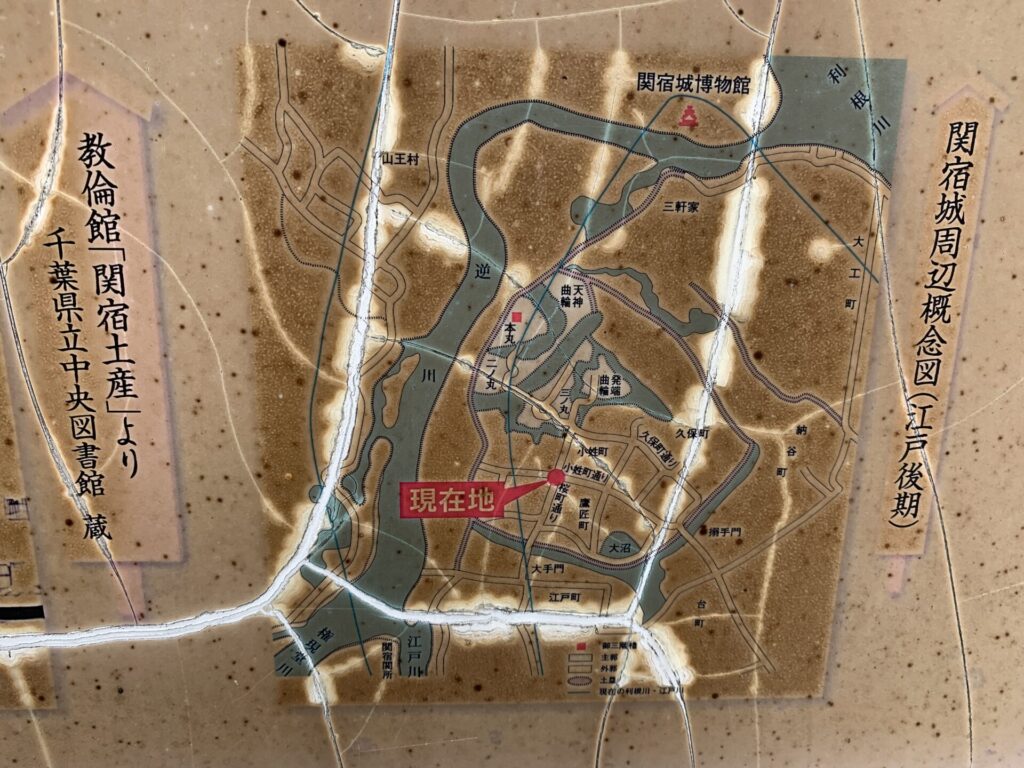
Looking at this conceptual map of the surrounding area,
the Ninomaru(二の丸:second enclosure) and Tenjin Kuruwa(天神曲輪) surrounded the Honmaru(本丸:main enclosure),
while the Sannomaru(三の丸:third enclosure) and Hottan Kuruwa(発端曲輪) formed an even wider outer layer around them.
On top of that, water-filled moats, likely drawn in from the nearby river, served as powerful defensive barriers.
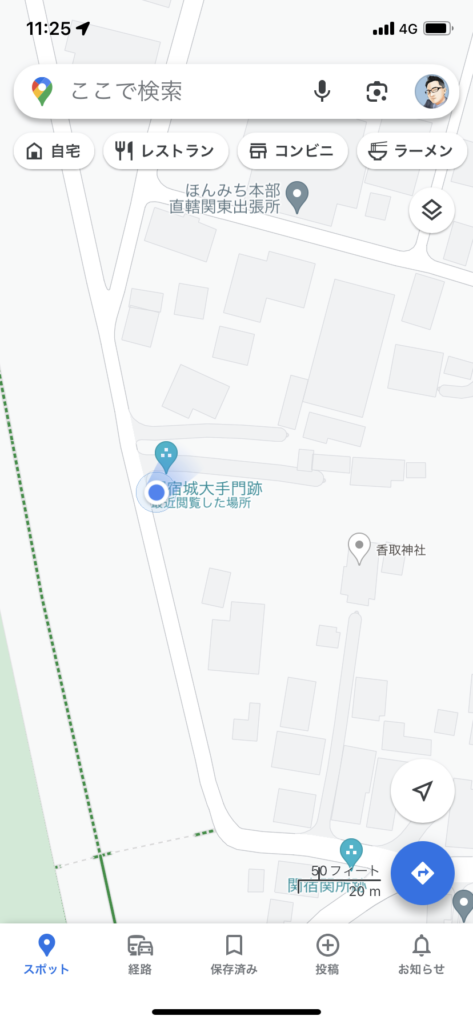
Finally, I went to inspect the ruins of the main gate(大手門).
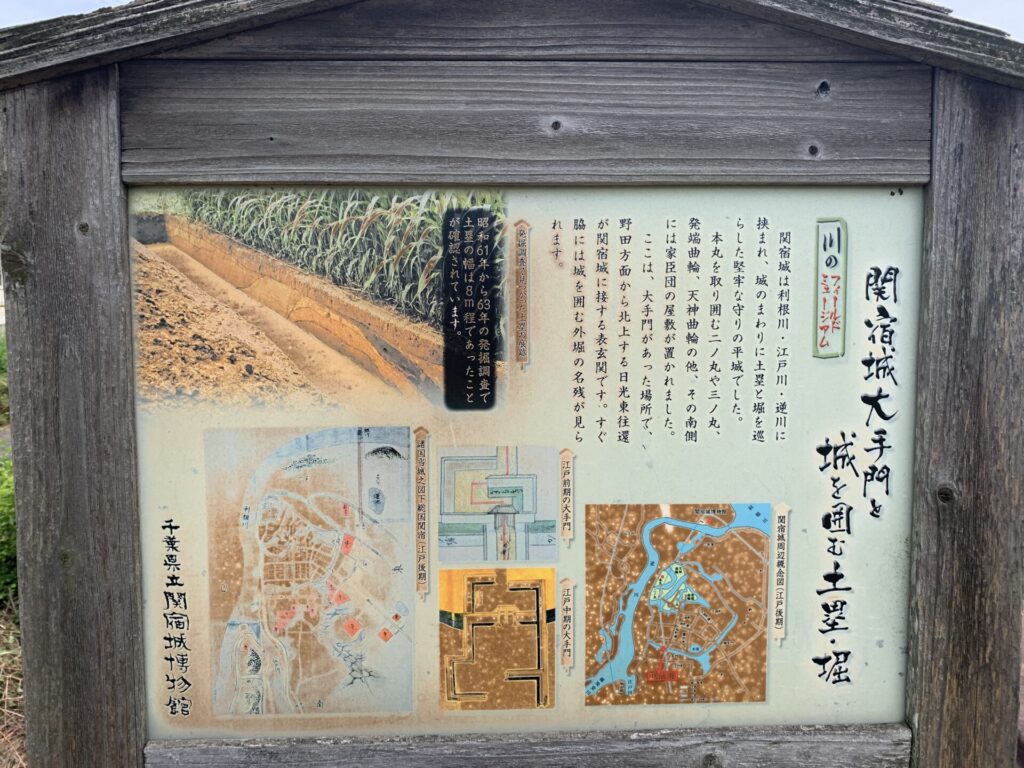
Here as well, there was a signpost like this…
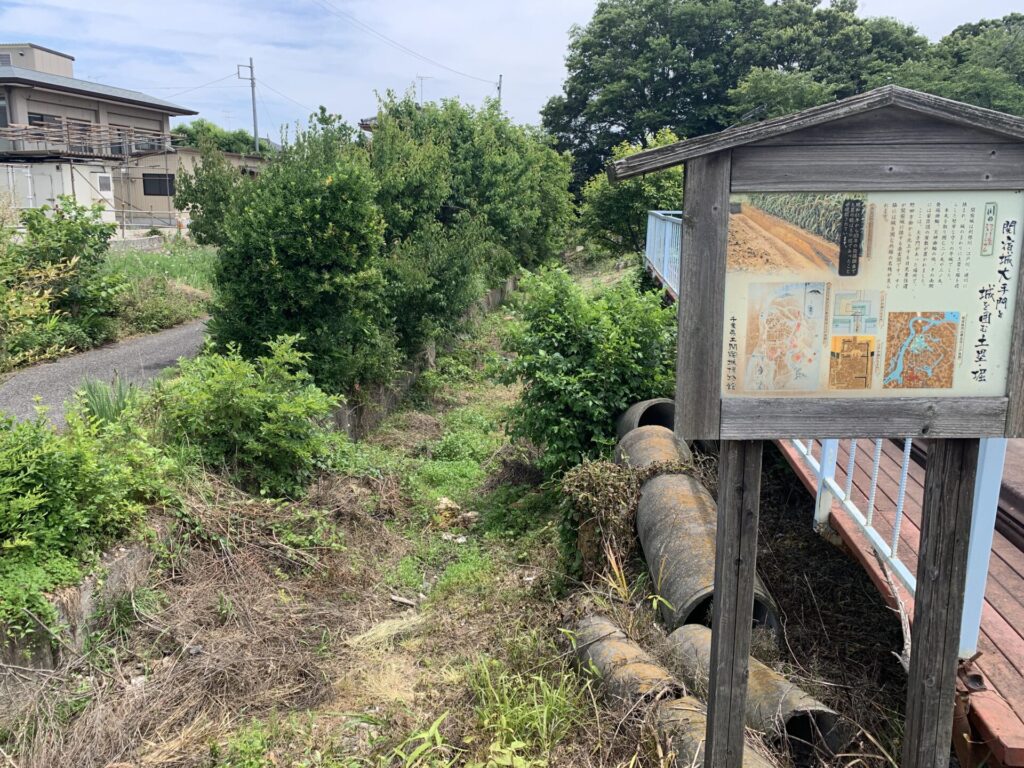
I looked around the surrounding area,
and this seemed to be about the only place that could possibly be identified as a moat.
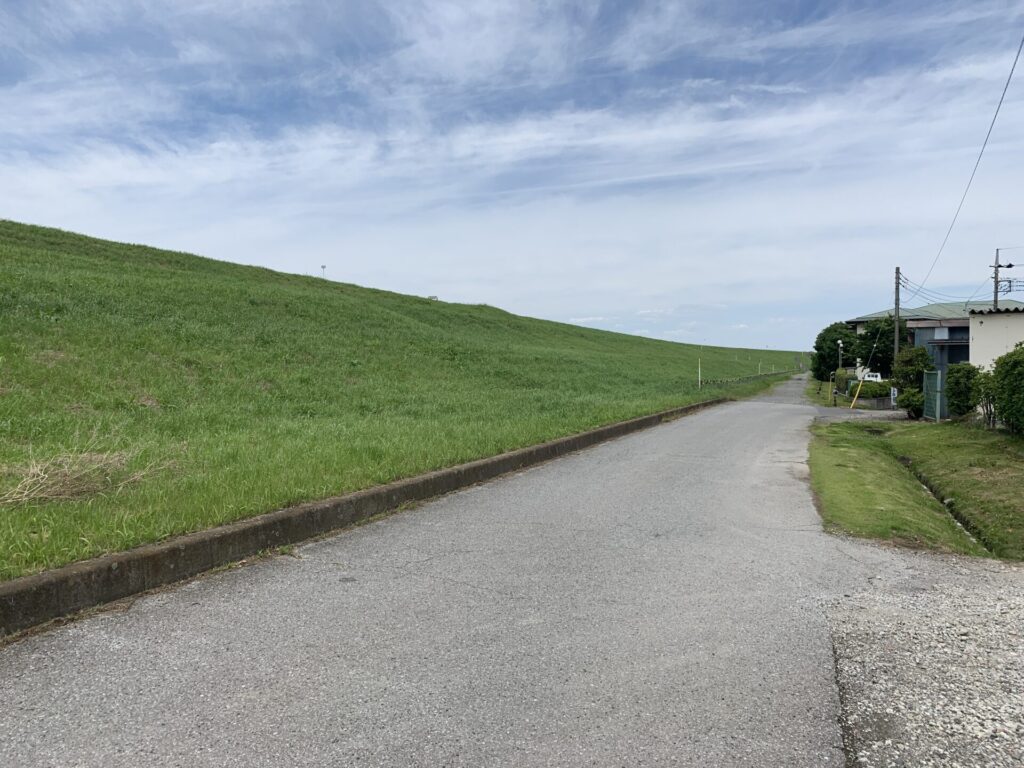
Beyond the embankment on the left flows the Edo River(江戸川).
You can clearly understand how such a massive river served as a natural defensive barrier for the castle.
This time, there were not many striking ruins or defensive structures remaining on site.
Next time, I hope to properly explore the museum as well and learn much more about Sekiyado-jo.
That’s all for this visit!