
Tsuchiura-jo (Tsuchiura city, Ibaraki)|Feeling the weight of history in the weathered Yagura-mon Gate
- 1. One of “The Additional 100 Castles of Japan”,
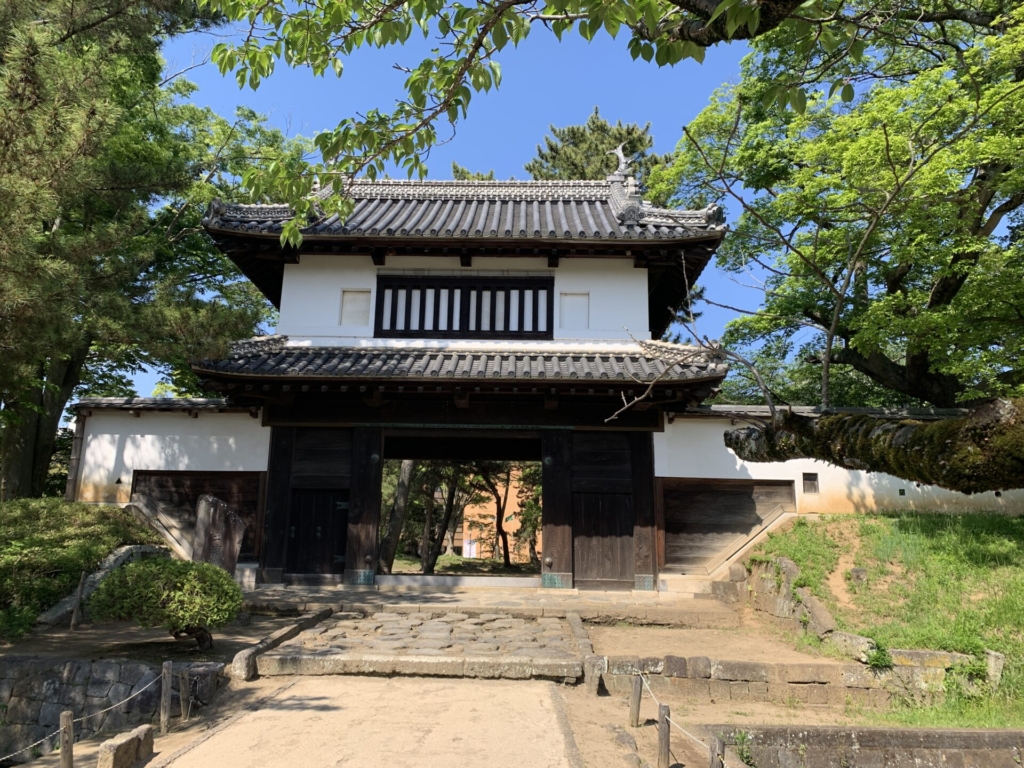
also known by the nickname Kijō (“Turtle Castle”) - 2. Though reconstructed, the East and West Yagura-mon Gates immediately captured my attention!!
- 3. The old Maekawaguchi-mon Gate — so weathered that you can truly feel the weight of history
- 4. From the Ninomaru ruins, I passed through the main Yagura-mon Gate ahead and walked toward the earthen wall
- 5. Finally, Exploring the Karamete-mon, Ōte-mon, and the Masugata Koguchi!
One of “The Additional 100 Castles of Japan”,
also known by the nickname Kijō (“Turtle Castle”)
Hello, I’m Shin.
On Monday, May 1, 2023,
I made my way to Tsuchiura-jo in Tsuchiura City, Ibaraki Prefecture. 🚙
◉ Castle Type
Flatland Castle ( Hirajiro )
◉ Cultural Heritage Highlights
◉ Defensive Features & Fortifications
◉ Exploration Difficulty
🔰 Easy Castles
◉ Estimated Time to walk around
: about 1 hour
◉ Parking
Parking is available at the adjacent Tsuchiura City Museum (approximately 20 spaces in total, including the second lot).
About a 15-minute walk from JR Tsuchiura Station.🚃
The following is based on information cited from Wikipedia:
The Taiko Yagura-mon Gate remains extant, and two turrets—one to the east and one to the west—have been reconstructed. Tsuchiura has frequently suffered from flooding; however, the castle itself was never submerged. Because it appeared like the shell of a turtle floating on the water, it came to be known by the nickname Kijō (“Turtle Castle”).
The site has a long history.
It is said that during the Heian period, Taira no Masakado constructed a fortification here.
In the Sengoku period, Tsuchiura-jo became the residence of the Sugaya clan, retainers of the Sengoku warlord Oda clan.
However, in 1590, during Toyotomi Hideyoshi’s Odawara Campaign, the Sugaya clan fell along with their lord, the Oda clan.
This time, I ventured into Tsuchiura-jo—a castle with such a rich and layered history. 😆
Though reconstructed, the East and West Yagura-mon Gates immediately captured my attention!!
First, I parked at the Tsuchiura City Museum lot,
and just a short walk away, I came across the following site map.
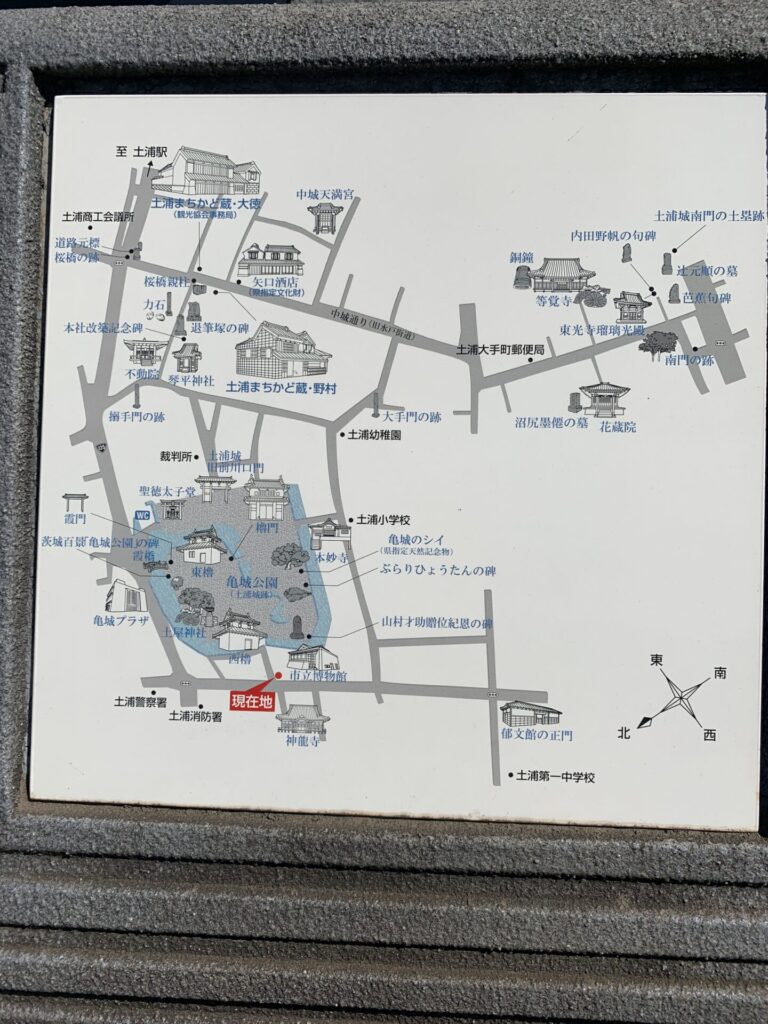
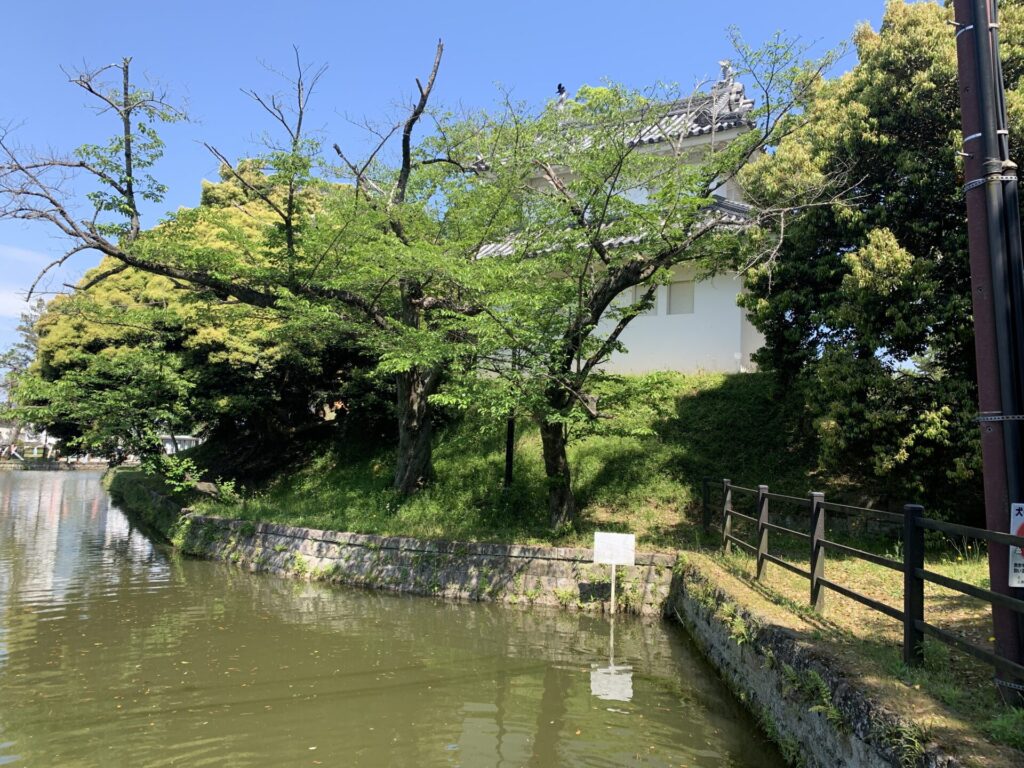
It appears that the main structures are concentrated within Kijō Park (the Tsuchiura-jo Castle Ruins Park).
As I walked further inside, the first structure that came into view was the West Yagura-mon Gate ( 西櫓門 ).
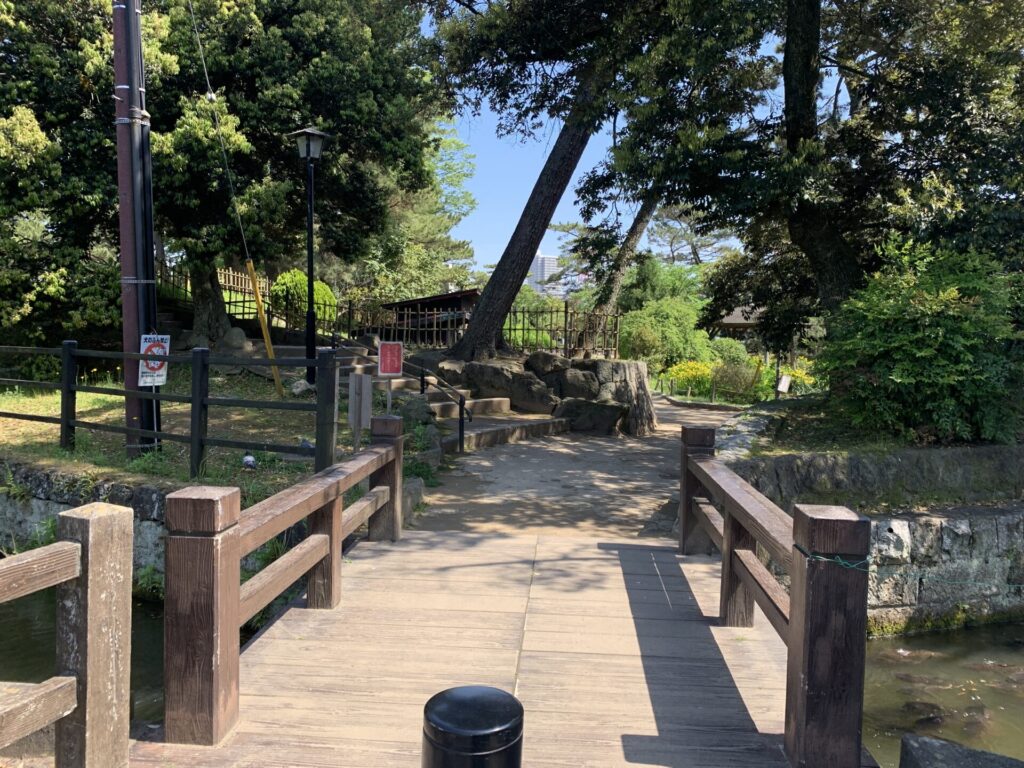
Crossing this bridge, I made my way toward the West Yagura-mon Gate.
On the left, there is a stone staircase leading upward, which connects directly to the gate.
Now, please take a look at this scene in the following video.
Next, I made my way to the East Yagura-mon Gate ( 東櫓門 ), located on the opposite side of the Honmaru ( 本丸:main enclosure ).
Please take a look at it in the following video as well.
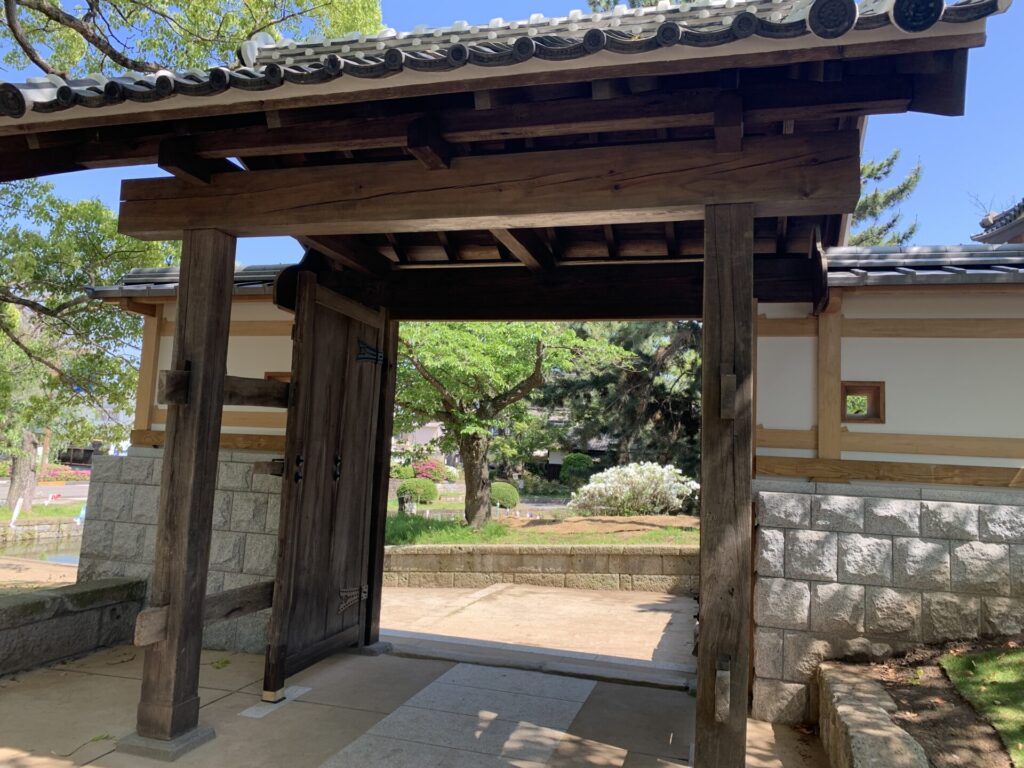
Along the way, the structure visible on the right is the Yagura-mon Gate leading to the Ninomaru ( 二の丸:second enclosure ).
Although the East Yagura-mon Gate has been reconstructed, it is nevertheless an impressive and dignified structure.
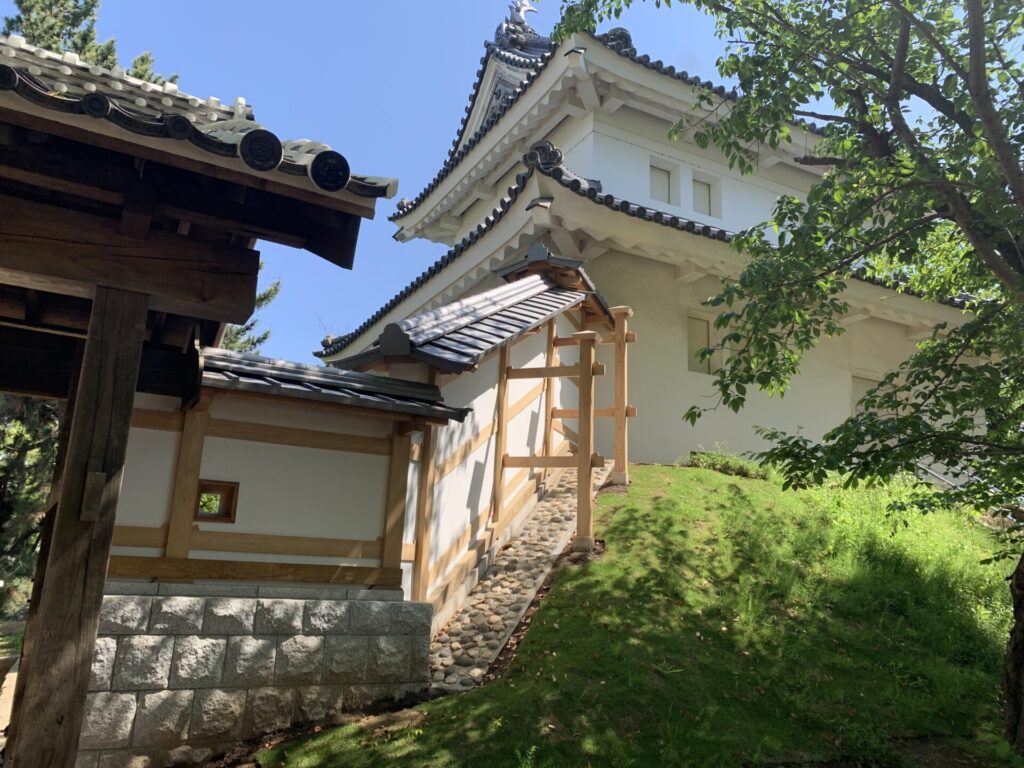
Isn’t this the kind of angle that castle enthusiasts can’t resist?
It truly has a magnificent presence—almost resembling a tenshu (main keep).
The old Maekawaguchi-mon Gate — so weathered that you can truly feel the weight of history
After passing through the East Yagura-mon Gate,
you briefly exit the park grounds.
At one of the park’s entrances, there is a monument bearing the name “Kijō Park”.
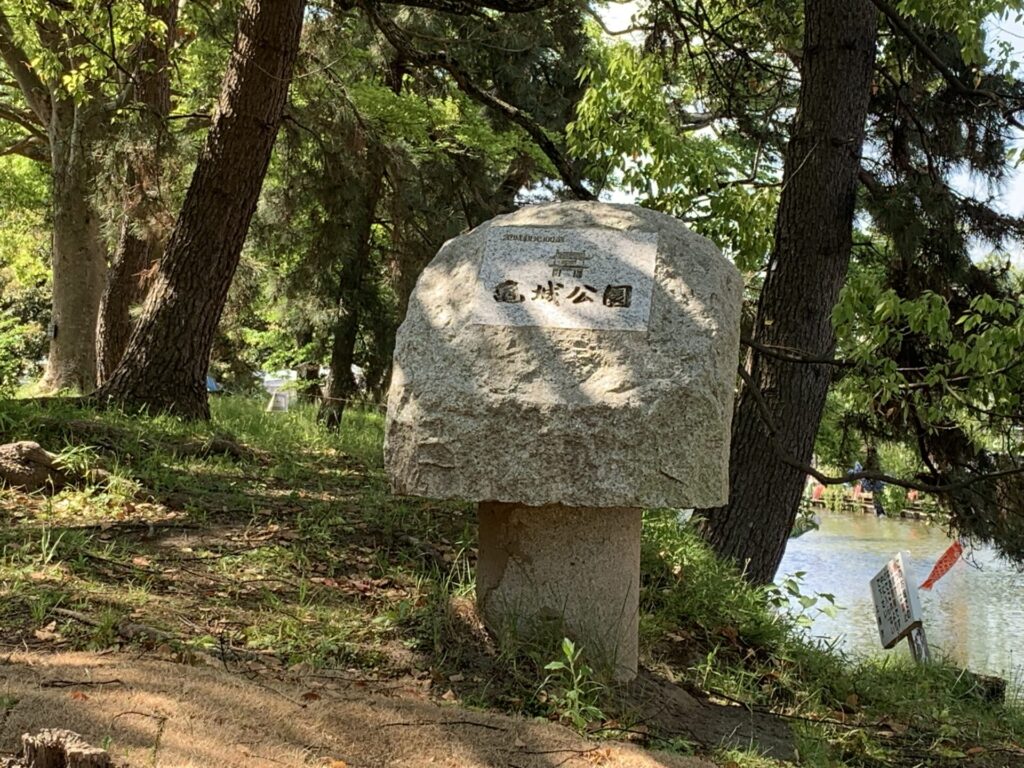
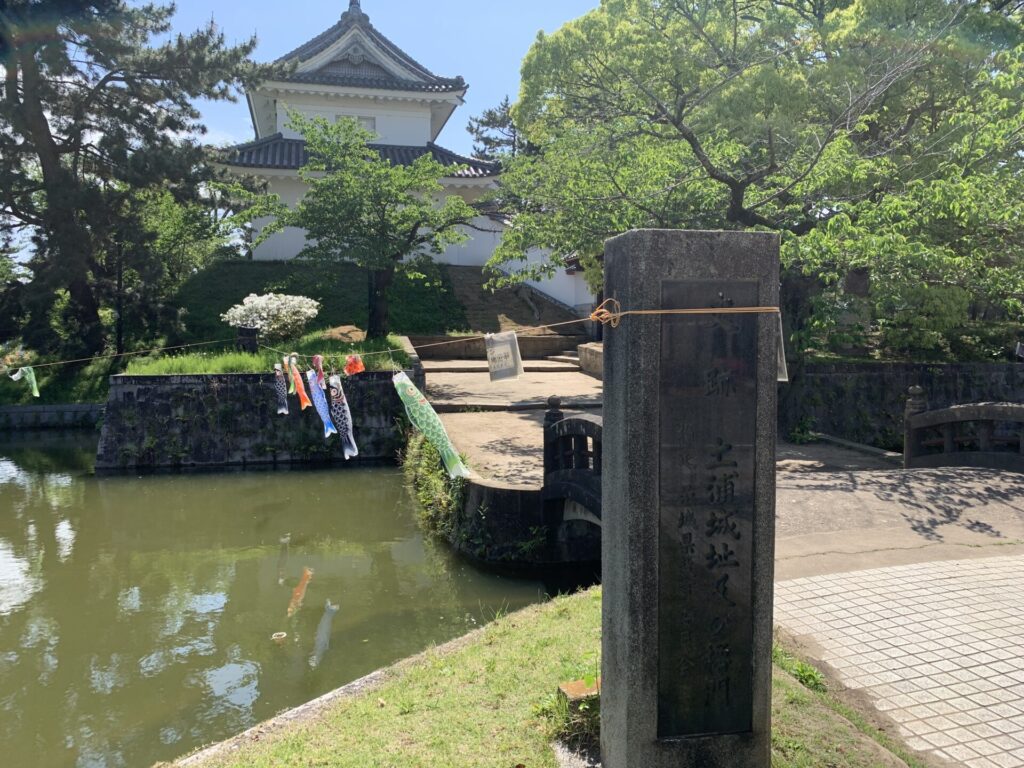
Then I photographed the East Yagura-mon Gate again, this time from a different angle.
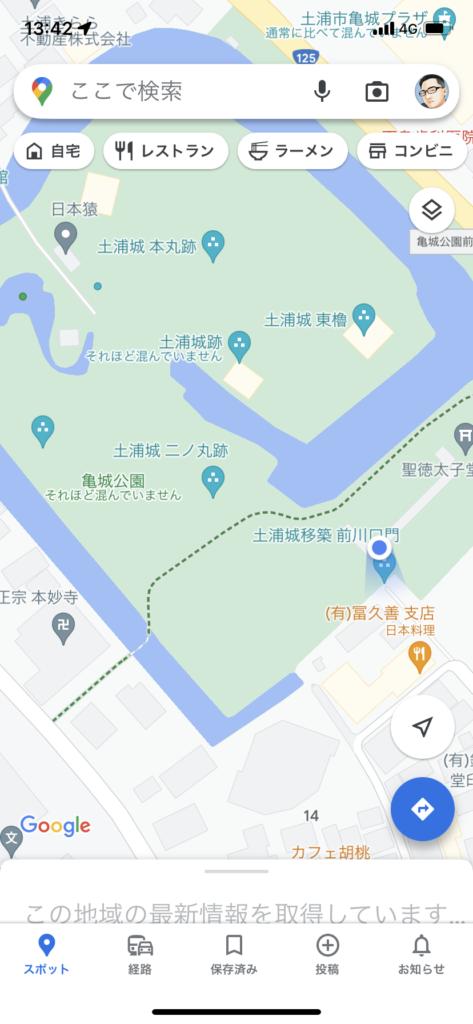
Next, checking Google Maps for reference, I headed toward the Old Maekawaguchi-mon Gate.
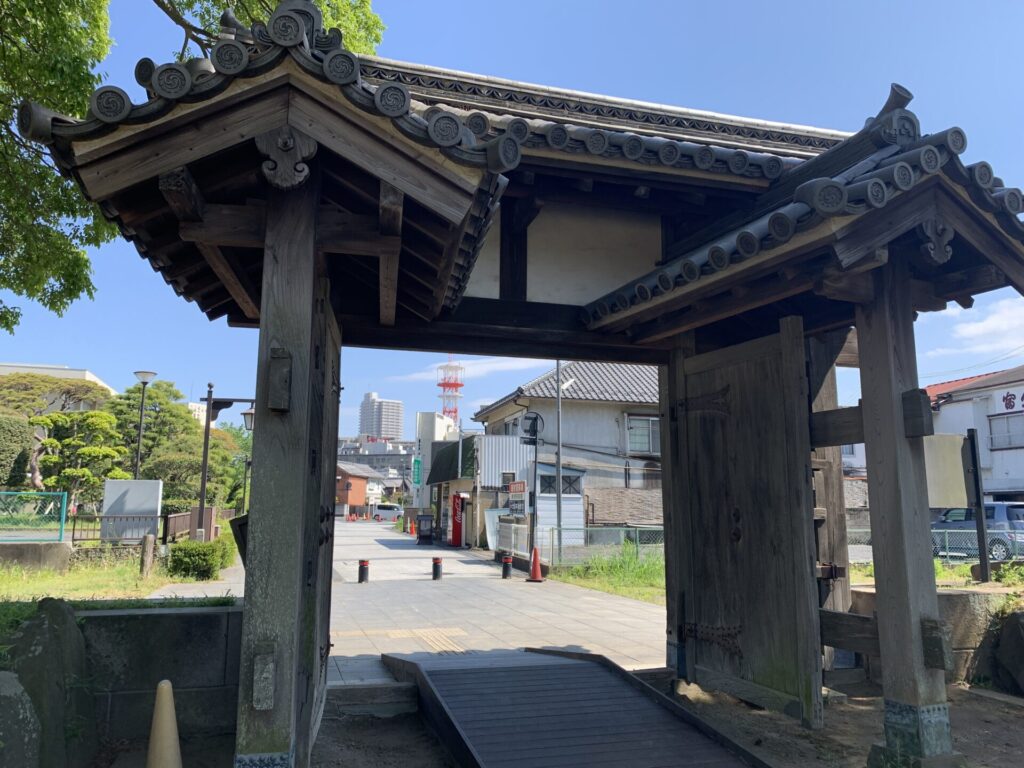
It is located to the left of the Ninomaru ( 二の丸:Second Enclosure ).
There it is—the Old Maekawaguchi-mon Gate ( 旧前川口門 ).
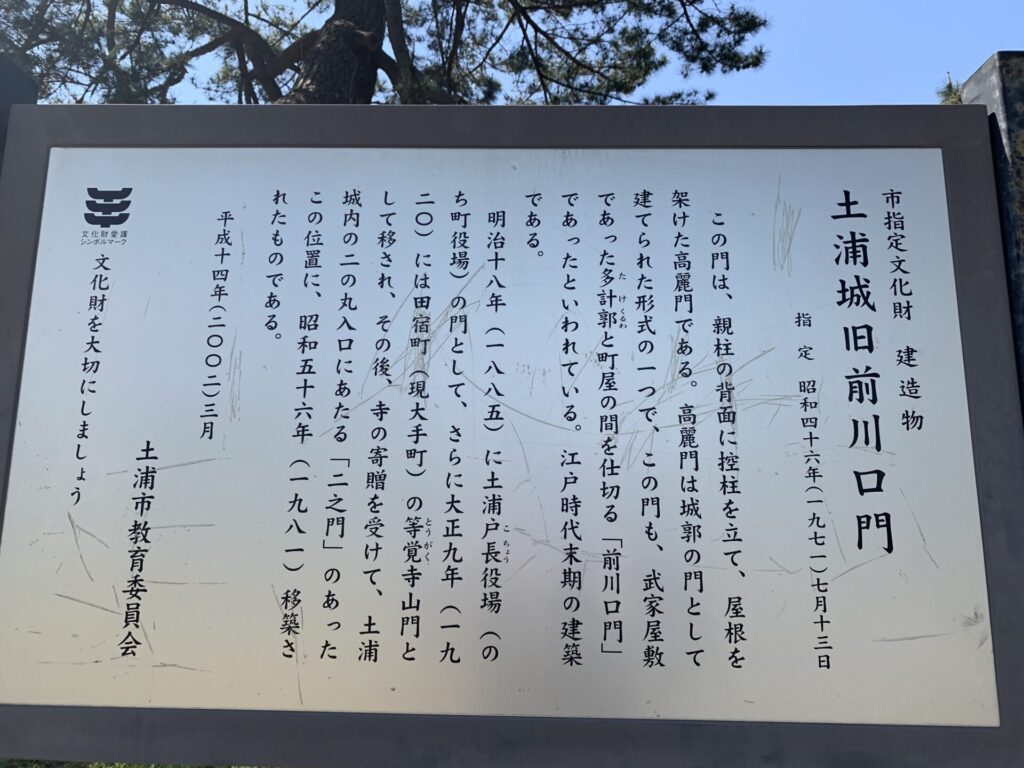
There is also an informational signboard here.
If the description on the signboard is accurate,
this gate was relocated here from its original site in the late Edo period and has survived to the present day !!😳
Judging by the condition of the metal fittings—the degree of rust alone—it certainly appears to be quite old.
Please take a look at the following video to see just how weathered it is.
What do you think?
The texture of the wood, the worn and rusted fittings—every detail conveys a palpable sense of history.
From the Ninomaru ruins, I passed through the main Yagura-mon Gate ahead and walked toward the earthen wall
Next, starting from the Maekawaguchi-mon Gate,
I made my way toward the Ninomaru ( 二の丸:Second Enclosure ).
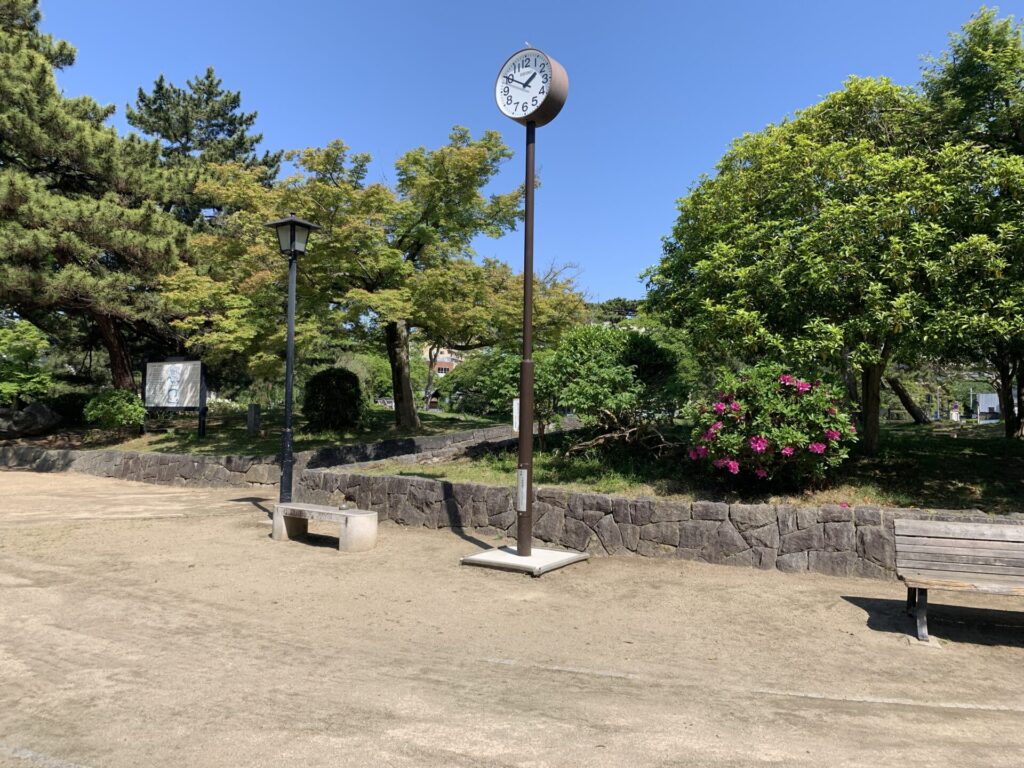
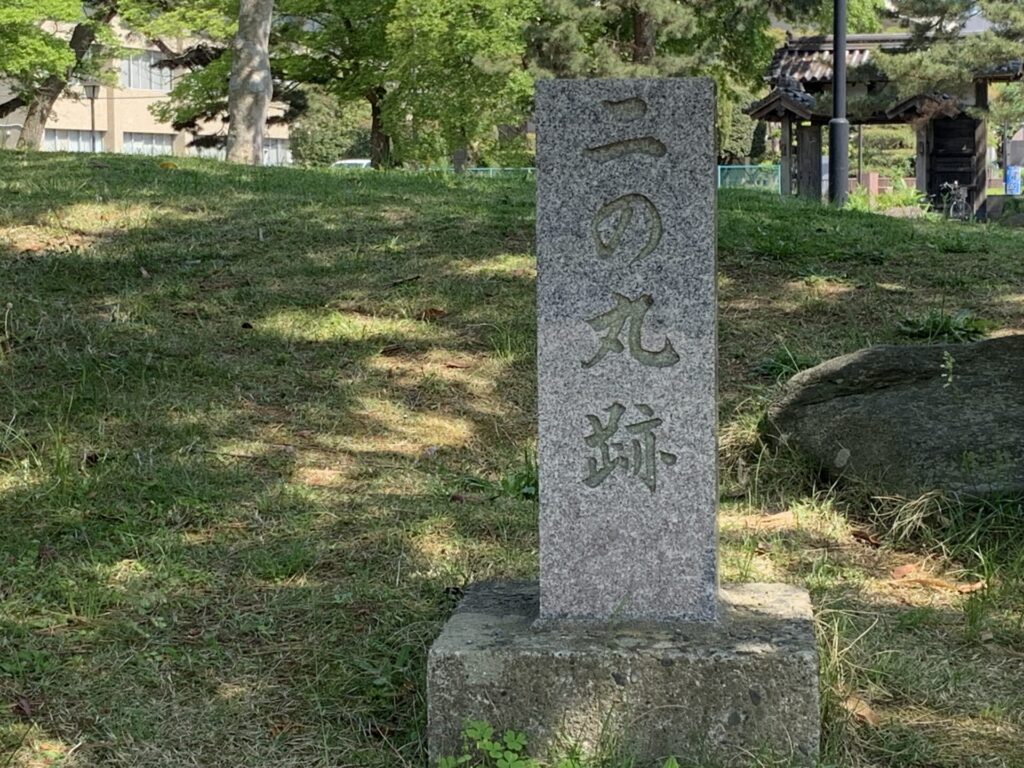
Entering the Ninomaru ( 二の丸:Second Enclosure ).
The structure visible in the back right of the photo is the Old Maekawaguchi-mon Gate we saw earlier.
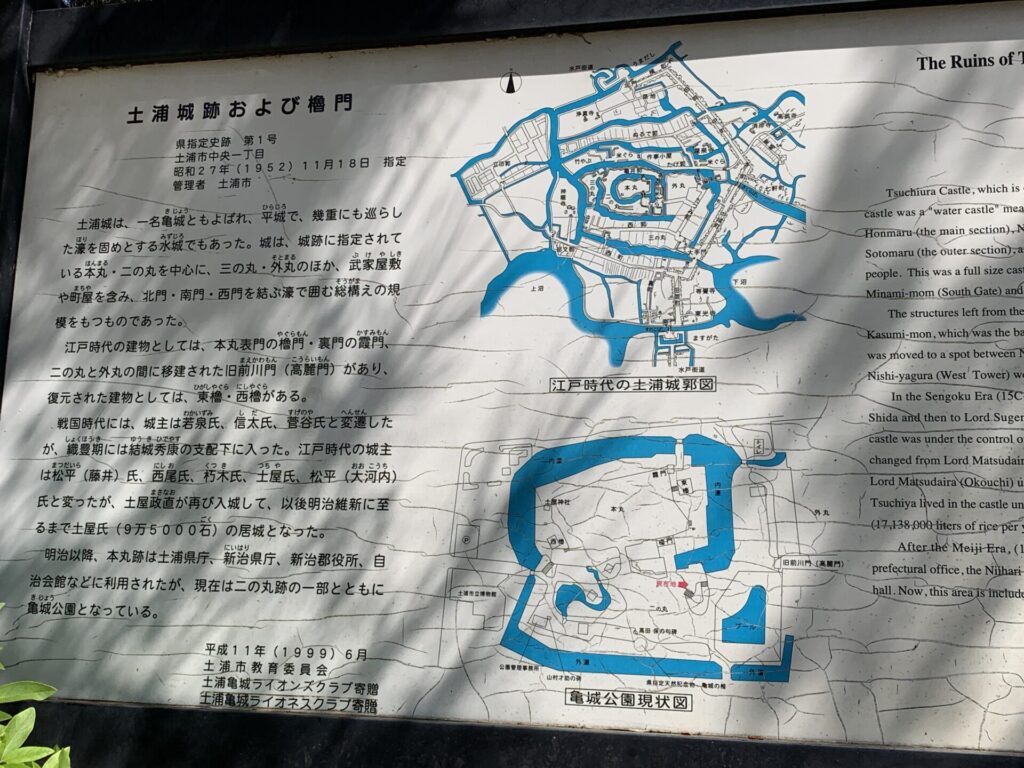
Nearby, I found another informational signboard.
From this explanation, we can understand that Tsuchiura-jo was a sō-gamae style castle—an extensive defensive layout that enclosed not only the Honmaru and Ninomaru, but also the Sannomaru, the Sotomaru (Outer Enclosure), samurai residences, and even townhouses within a surrounding moat system.
Unlike mountain castles, flatland castles lack the natural defensive advantage of elevation.
As a result, they relied heavily on features such as Mizubori ( 水堀:water-filled moats) and large-scale perimeter defenses to compensate for the absence of height.
This is the Yagura-mon Gate connecting the Ninomaru and the Honmaru.
It, too, appears to be quite old.
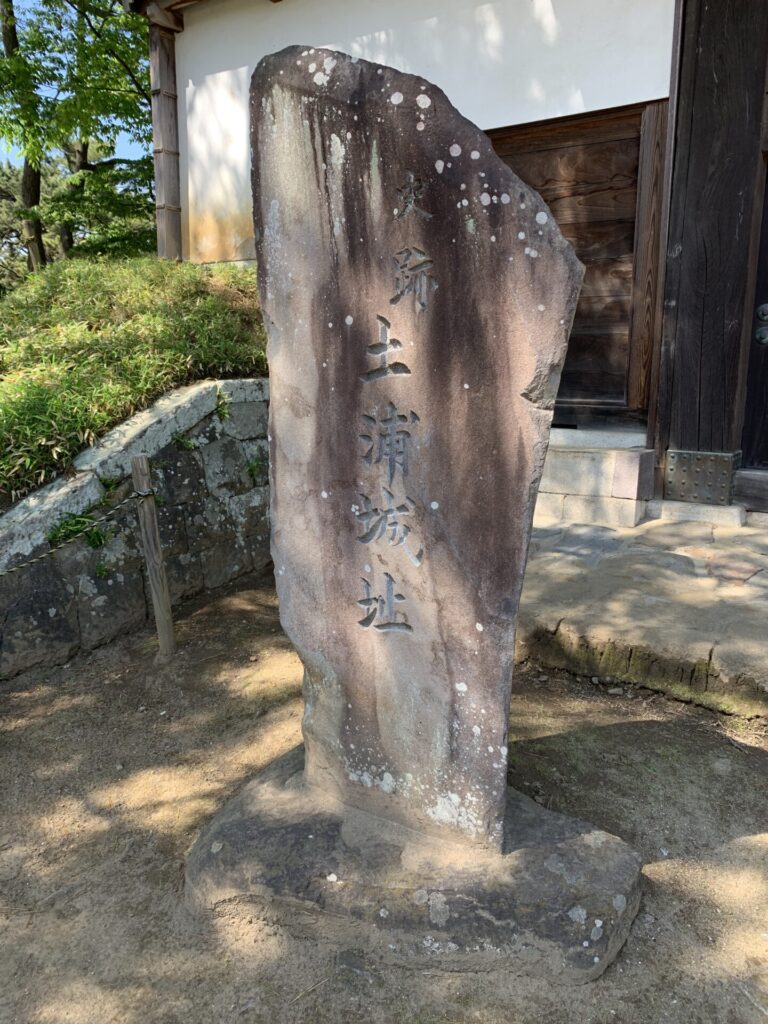
Beside the Yagura-mon Gate stands a stone monument inscribed with the words “Tsuchiura-jo Castle Ruins”.
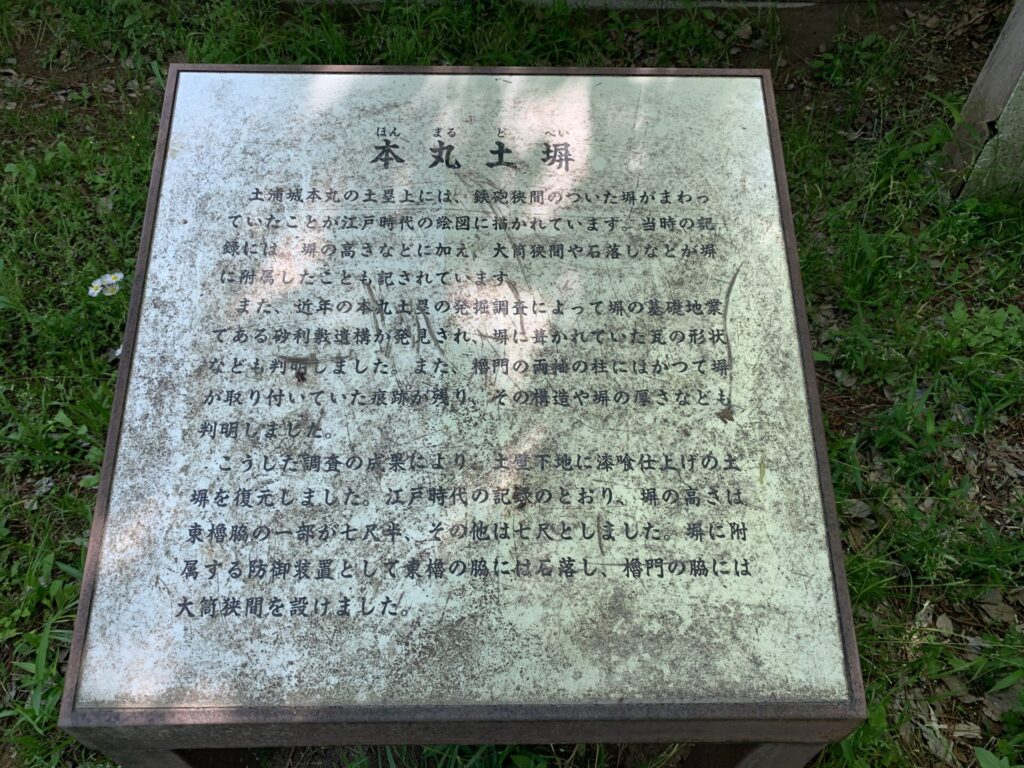
Passing through this Yagura-mon Gate, I reentered the Honmaru.
What immediately caught my attention was the Honmaru Dobei ( 本丸土塀:earthen wall).
The Teppō-hazama ( 鉄砲狭間:gun ports) have been carefully reconstructed.
A Teppō-hazama is a narrow opening—called a hazama—built into castle walls, allowing defenders inside the castle to fire upon approaching enemy soldiers.
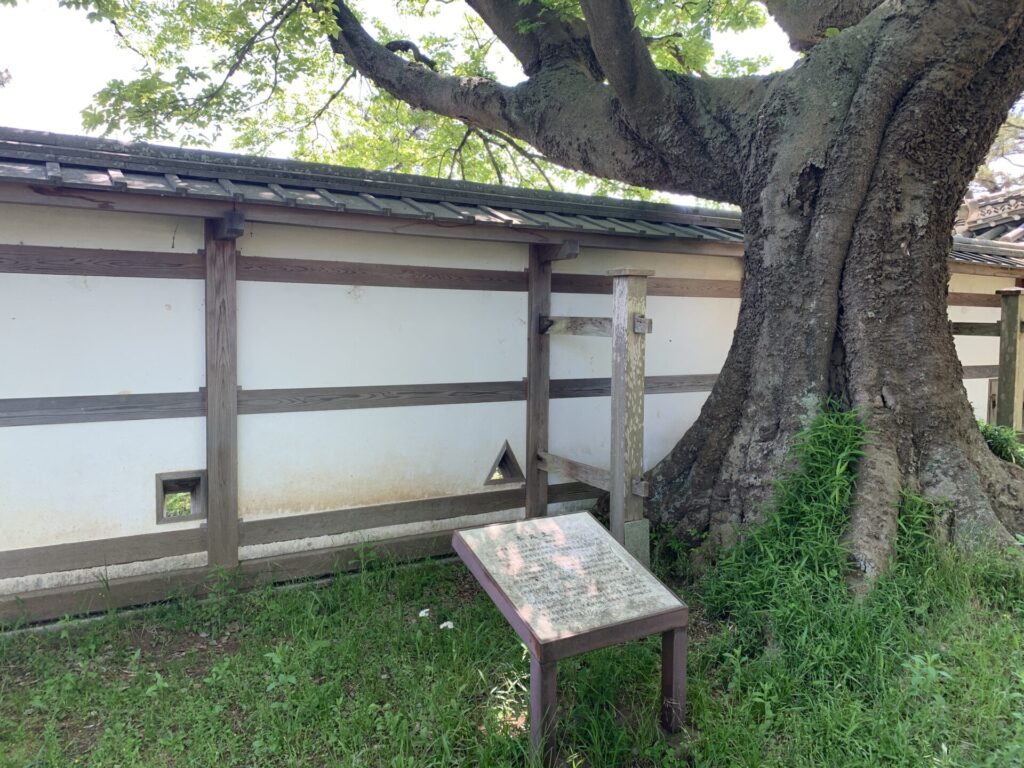
Here you can see the Teppō-hazama ( 鉄砲狭間:gun ports).
There are rectangular and triangular hazama—narrow openings built into the wall for defensive firing.
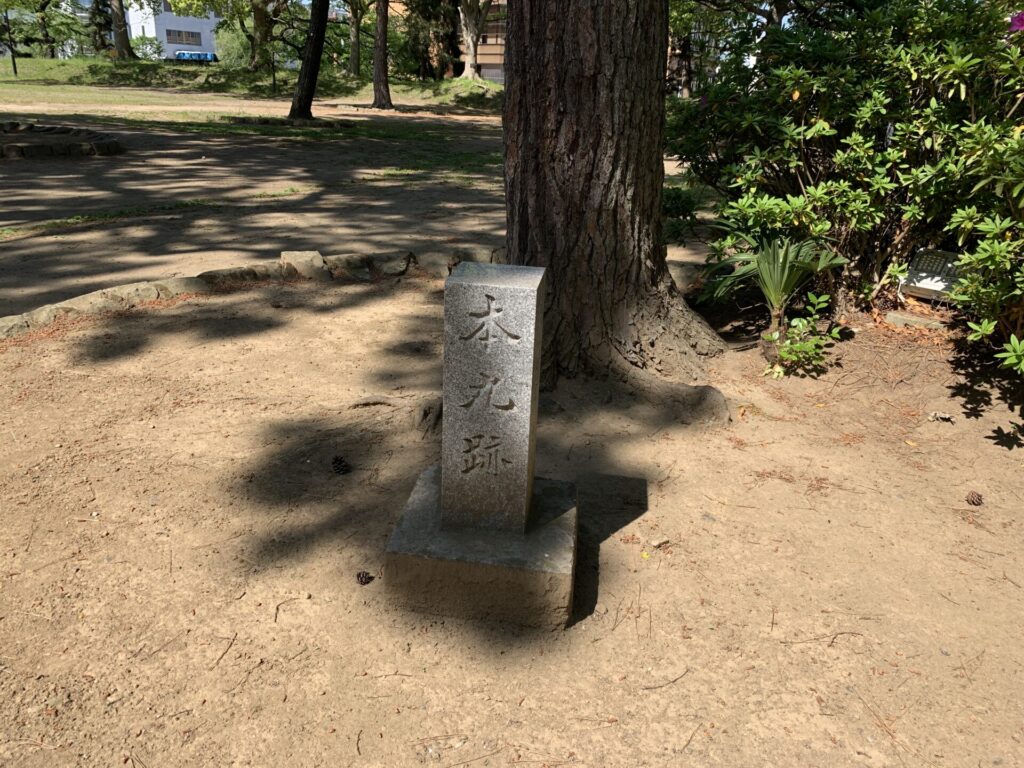
I took another moment to look out over the Honmaru ( 本丸:Main Enclosure ) once more.
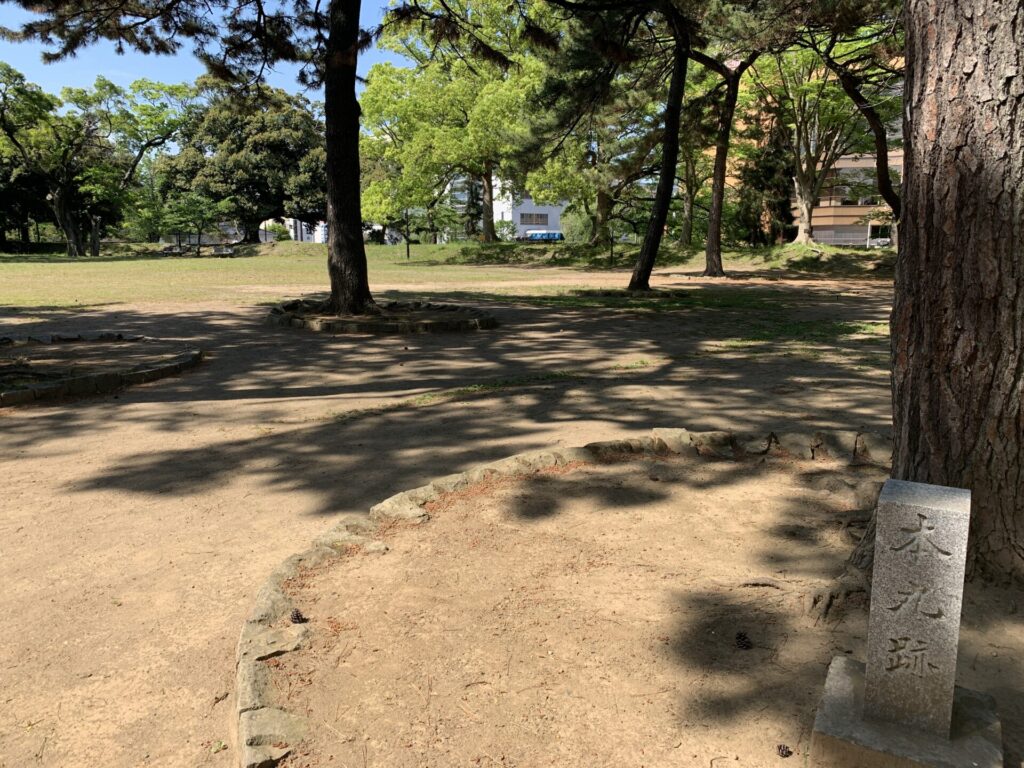
Seen from this perspective, you can really appreciate how spacious the area is.
Next, since the Yagura-mon Gate we passed through earlier also conveyed a strong sense of age, I recorded a video of it as well.
This Yagura-mon Gate also carries a deep sense of history.
After returning once more to the Ninomaru,
I discovered a feature called the “Kijō Spring”.
Here it is in the following video.
Finally, Exploring the Karamete-mon, Ōte-mon, and the Masugata Koguchi!
With that, I had made my way through the main structures within Tsuchiura-jo.
However, after checking Google Maps, I noticed there were still a few intriguing spots left to explore.
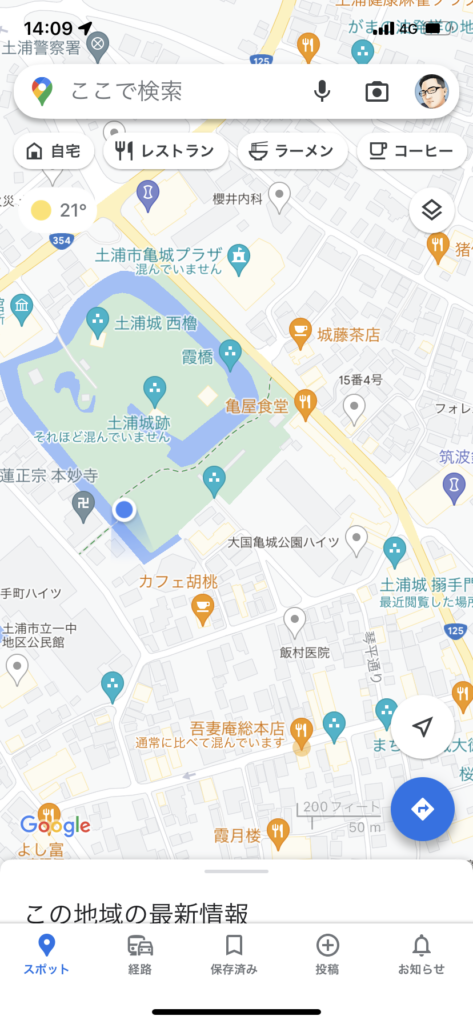
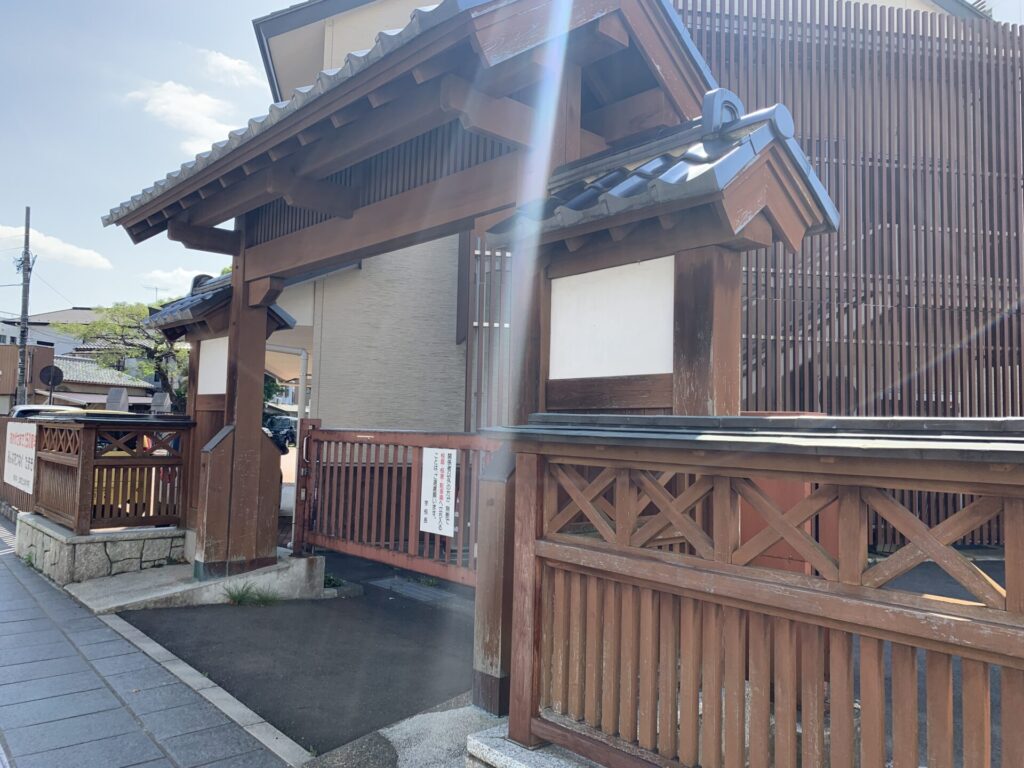
On the right side of the map, I spotted the label for the Karamete-mon ( 搦手門:Rear Gate)!!
Let’s go check it out!!
On the way, I passed by Tsuchiura Elementary School…
It, too, has a rather charming and historic-looking design.
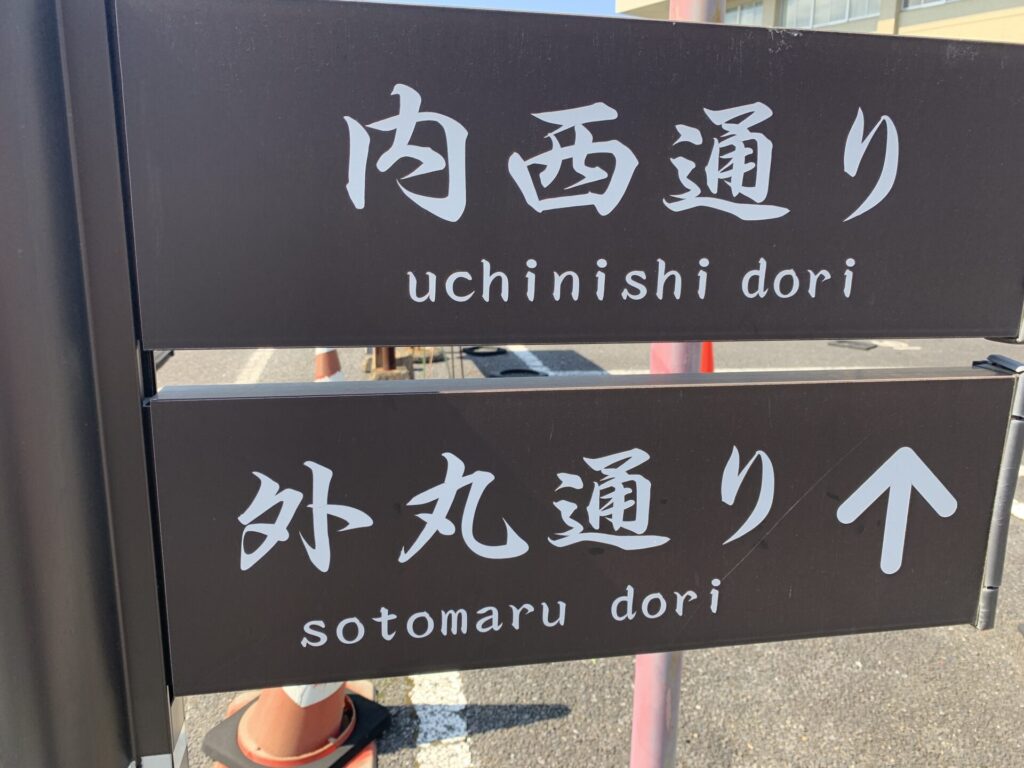
It almost looks as though the design was inspired by a Yagura-mon Gate.
Continuing to walk toward the direction of the Karamete-mon while checking Google Maps…
I came across another sign like this as well.
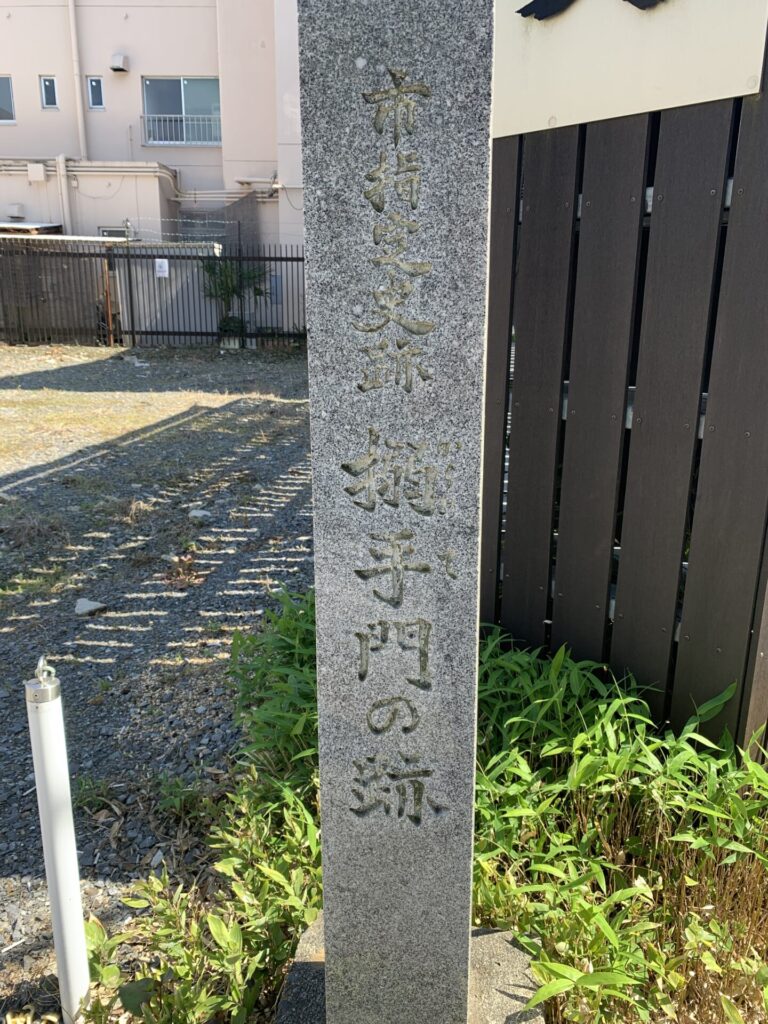
To be honest, I wasn’t very familiar with the term Sotomaru ( 外丸:Outer Enclosure),
but this visit has given me a good reason to remember it. 😅
And finally, I arrived at the Karamete-mon gate.
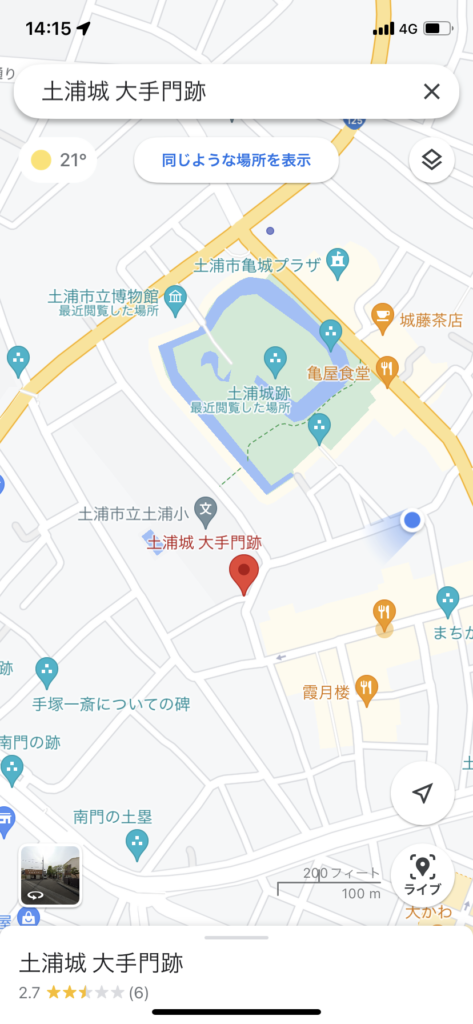
As expected—though perhaps that was inevitable—
only a stone monument remains here.
In the case of flatland castles, it’s quite common for little more than such markers to survive.
Next, I set out to look for the Ōte-mon ( 大手門:Main Gate).
It should be somewhere around the area of Tsuchiura Elementary School we passed earlier.
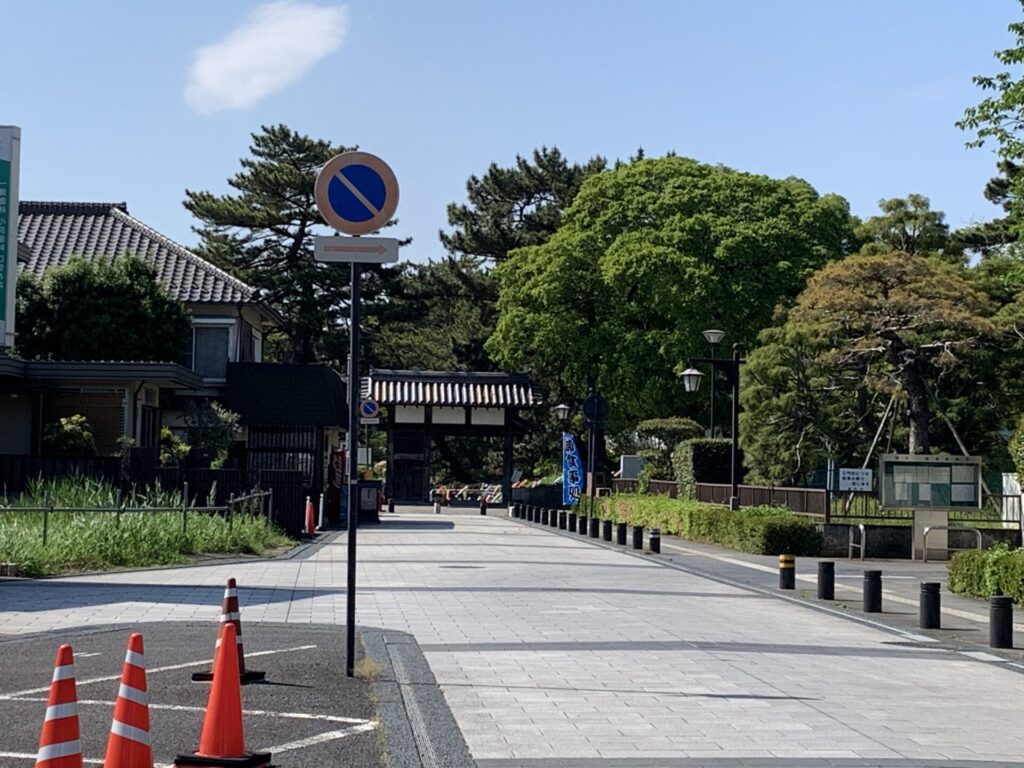
I ended up retracing my steps along the path I had just taken.
As I casually shifted my gaze,
I spotted the Old Maekawaguchi-mon Gate in the distance.
In that moment, I felt as though I could begin to picture the defensive layout of Tsuchiura-jo as it once stood.
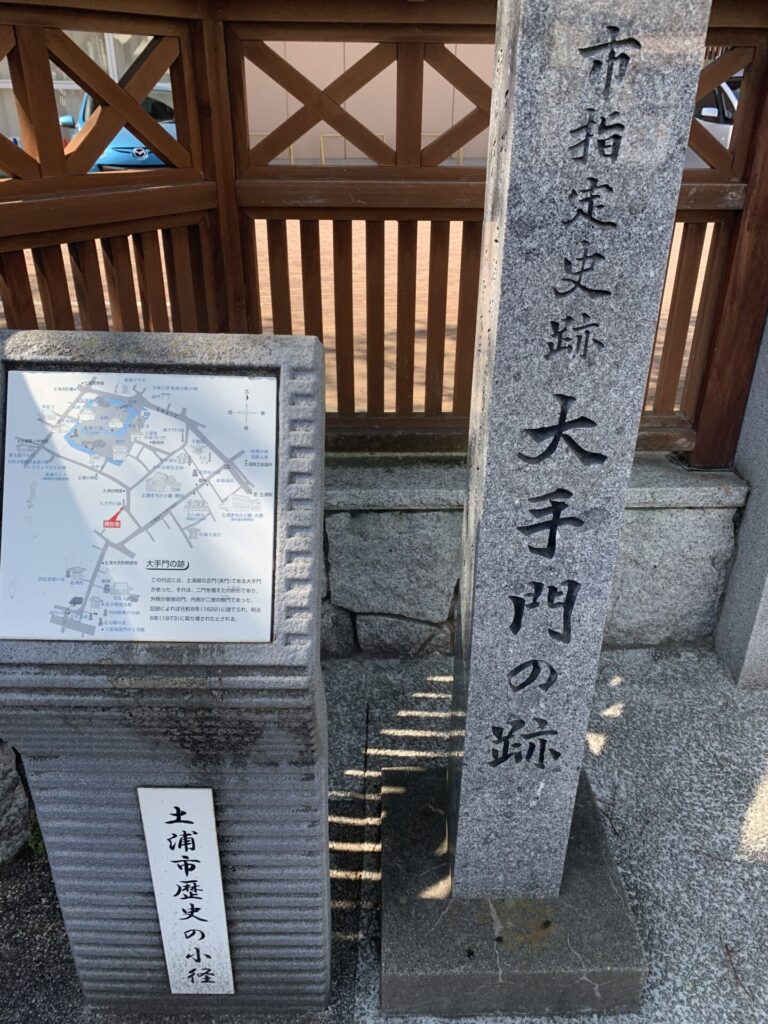
Facing the Old Maekawaguchi-mon Gate, the Karamete-mon would have stood to the front right, while the Ōte-mon would have been positioned to the front left.
And there it was—the site of the Ōte-mon ( 大手門:Main Gate)!
Just as I suspected, it was located near Tsuchiura Elementary School.
Or rather… could it actually be the school gate itself?
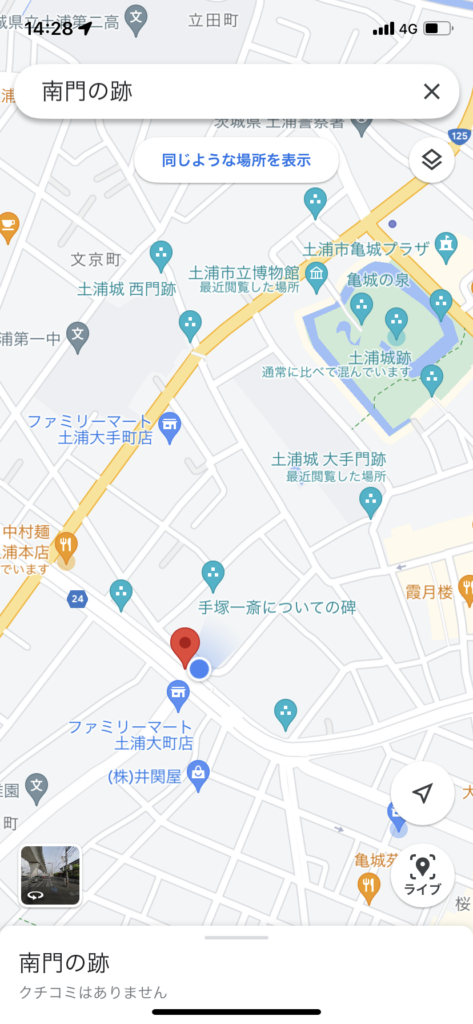
Now, for the final highlight—let’s head to the site of what appears to be the South Gate, believed to have been a Masugata Koguchi ( 枡形虎口:square-typed defensive gate )!
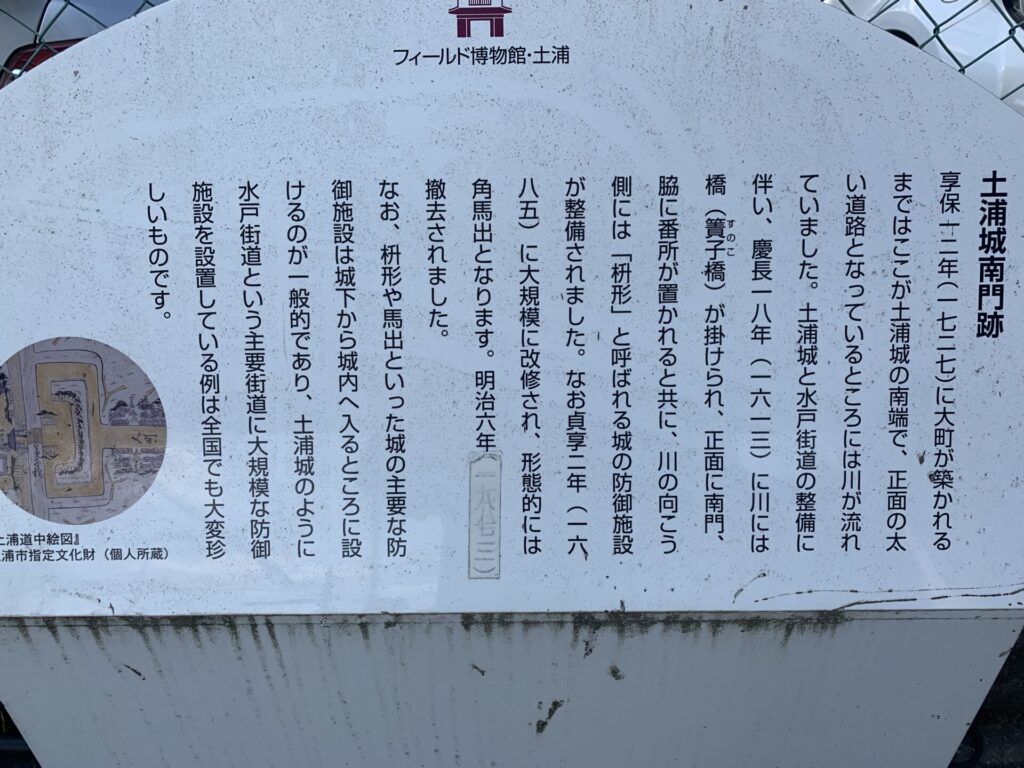
Here, there was a proper informational signboard in place.
This may have been the greatest discovery of the day.
I hadn’t expected to find such a defensive structure at a flatland castle like Tsuchiura-jo.
Or perhaps—it’s precisely because it was a flatland castle.
For a clearer explanation of the Masugata Koguchi ( 枡形虎口:square-typed defensive gate ), I recommend the article on Moriya-jo.
And for a better understanding of the Umadashi, the article on Sakura-jo may be helpful.
 https://sengokucastle.com/moriya-jo/
Today’s castle visit brought many rewarding discoveries once again.
Every time, there are unexpected findings waiting to be uncovered.
That’s exactly why I can’t stop exploring castles.
Until next time!! 🏯