
Tobiyama-jo (Utsunommiya city, Tochigi)|The Haga Clan’s Castle Surrounded by Double Moats and a Total of Six Moats
- 1. Astonishing Double Moats! What an incredibly well-fortified castle…
- 2. The Masugata Koguchi also stands out clearly with its impressive presence!
- 3. The No. 1, No. 2, and No. 3 moats block the path from the north toward the center of the castle!!
- 4. The No. 4 Moat was also a deadly “kill zone” designed to trap invading troops!!
Astonishing Double Moats! What an incredibly well-fortified castle…
Hello, this is Shin.
On Sunday, June 4, 2023,
I visited Tobiyama-jo in Tochigi Prefecture 🚙
This castle once served as the residence of the Haga clan, retainers of the Utsunomiya clan.
◉ Castle Type
Hilltop castle ( Hirayamajiro:平山城 )
◉ Cultural Heritage Highlights
◉ Defensive Features & Fortifications
◉ Exploration Difficulty
🟡 Moderate Castles
◉ Estimated Time to walk around
: about 2 hour
◉ Parking
There is parking space for around 30 cars in front of the Tobiyama History Experience Museum.
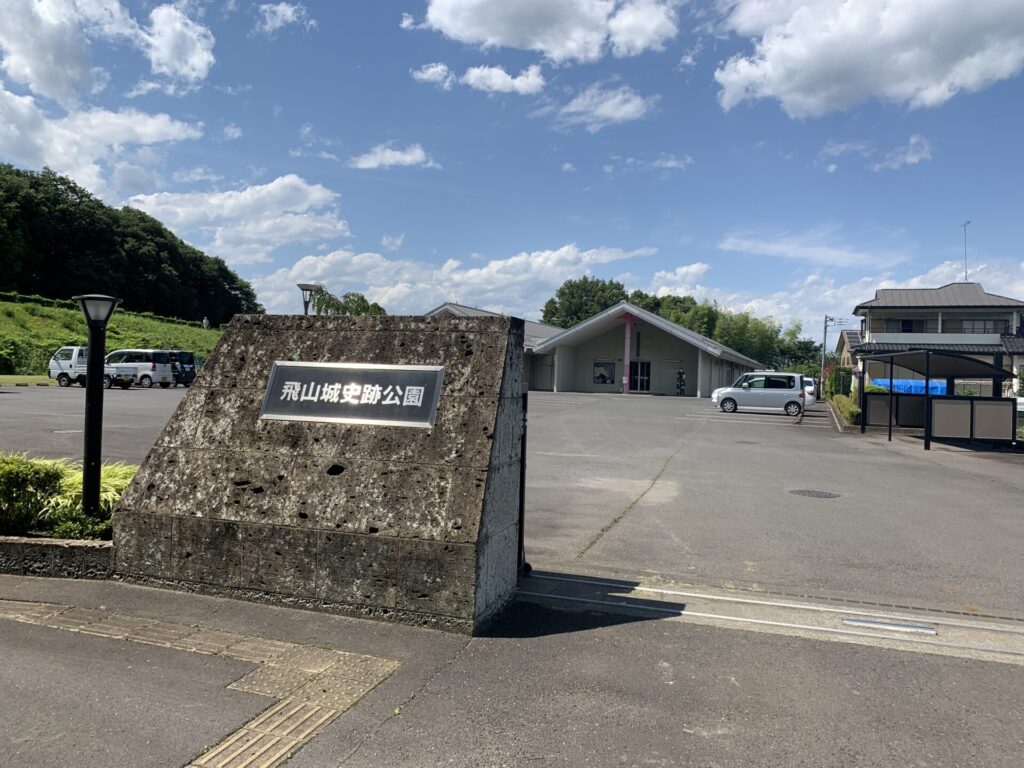
First, I parked my car at the parking lot of Tobiyama Castle Historic Park,
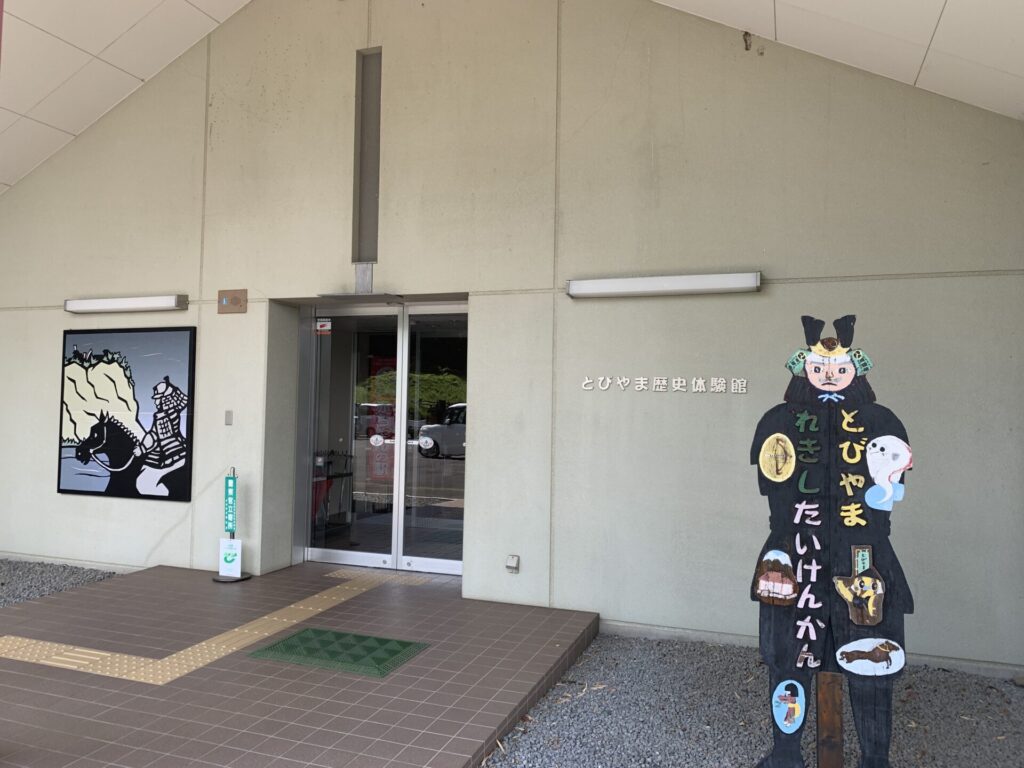
I first visited the Tobiyama History Experience Museum right in front of the parking area.
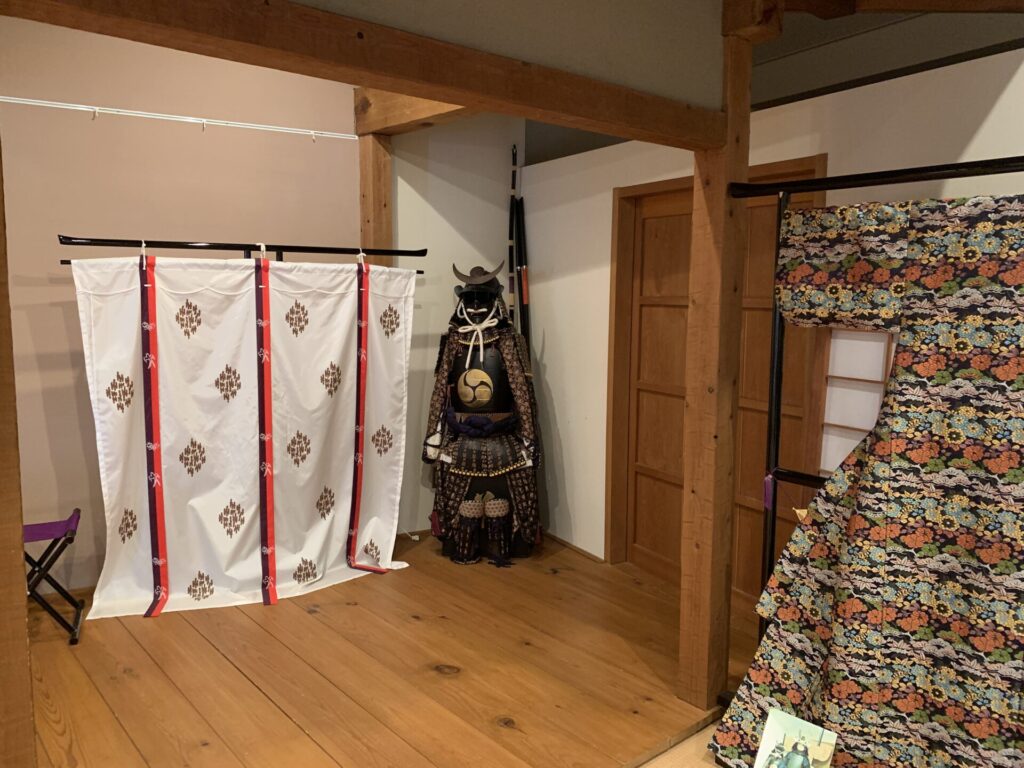
Inside, armor, folding screens, and other historical items were on display.
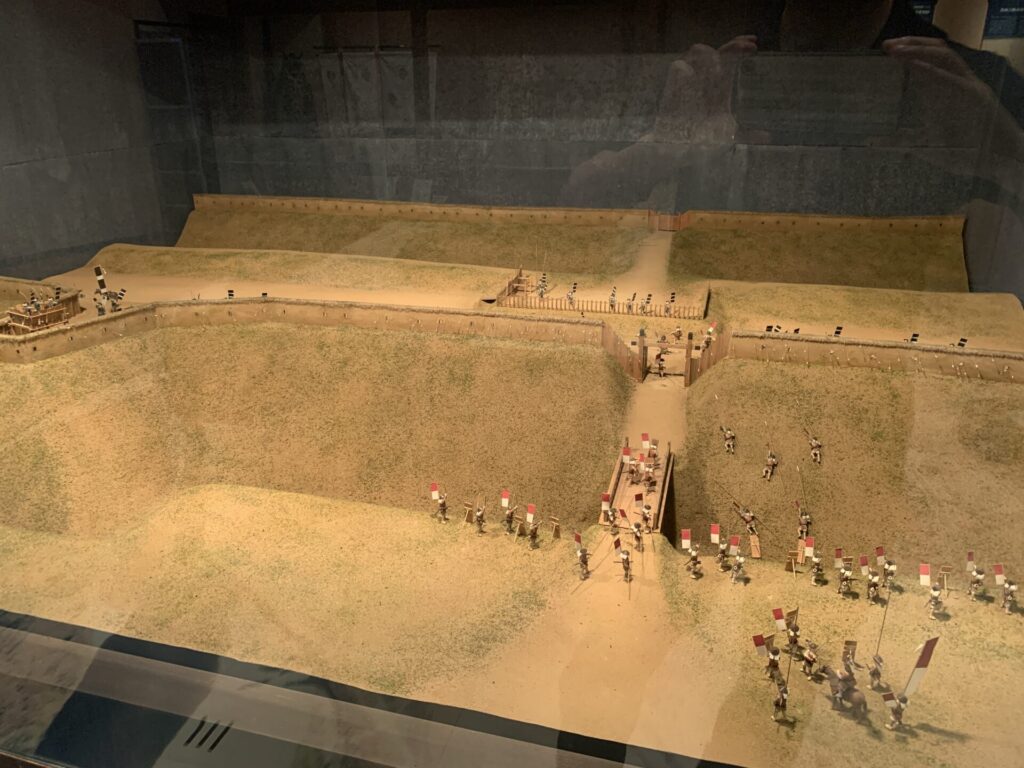
The castle’s defensive structures are displayed here in an easy-to-understand way.
This is called Yokoya-gakari(横矢掛かり) — a defensive design that allowed defenders to fire arrows from the sides at enemy soldiers crossing the bridge.
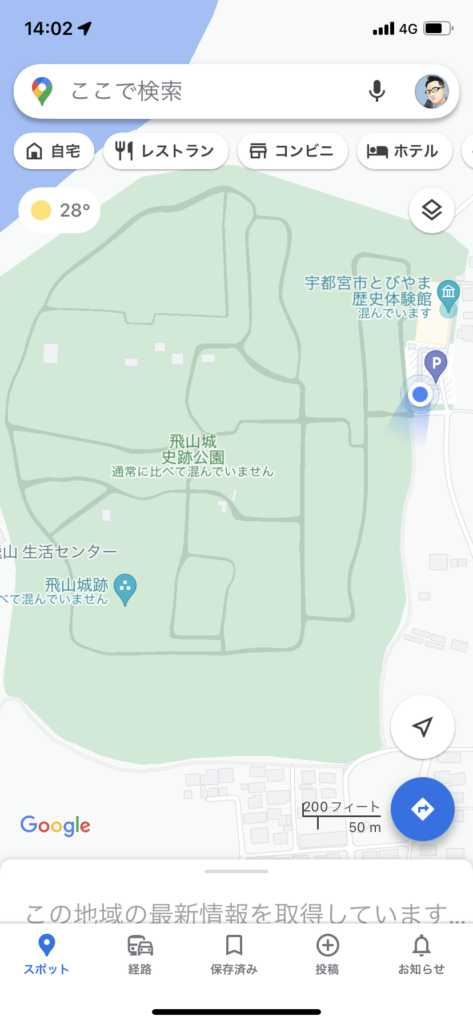
After viewing the exhibits,
I headed out to explore the ruins of Tobiyama-jo ✊
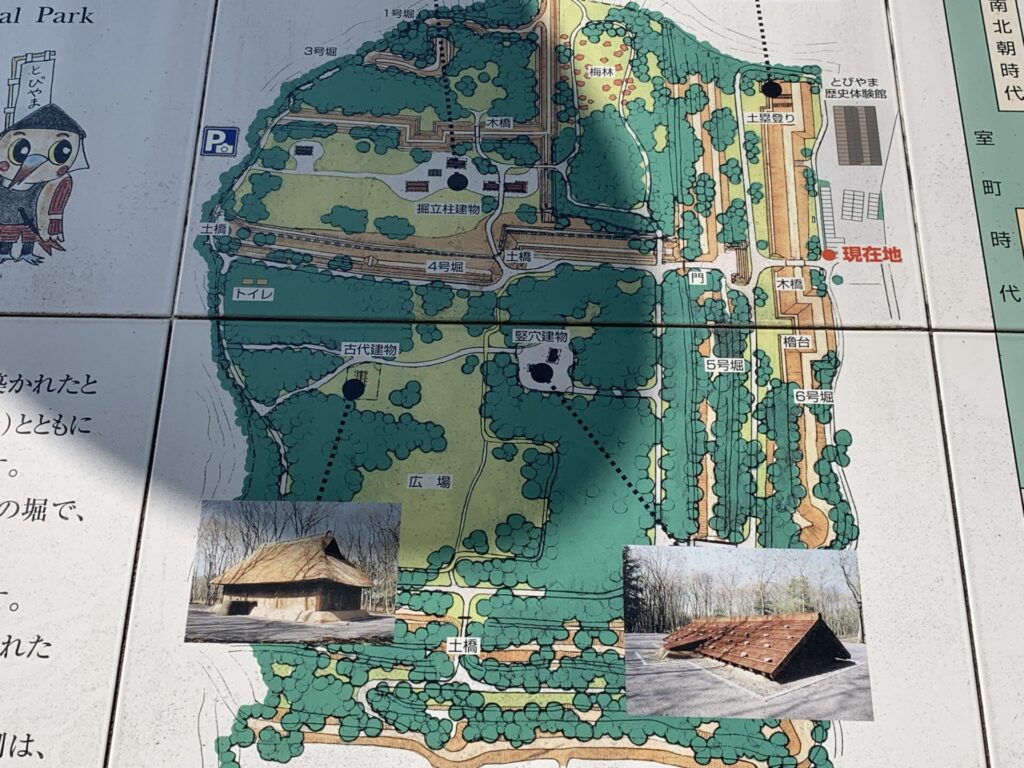
(Sorry the photo is quite shaded and hard to see 💧)
Though difficult to make out, Tobiyama-jo was an extremely well-fortified castle, surrounded by a total of six moats on all four sides.
What’s even more impressive is that many of those moats still remain clearly visible today, despite differences in condition.
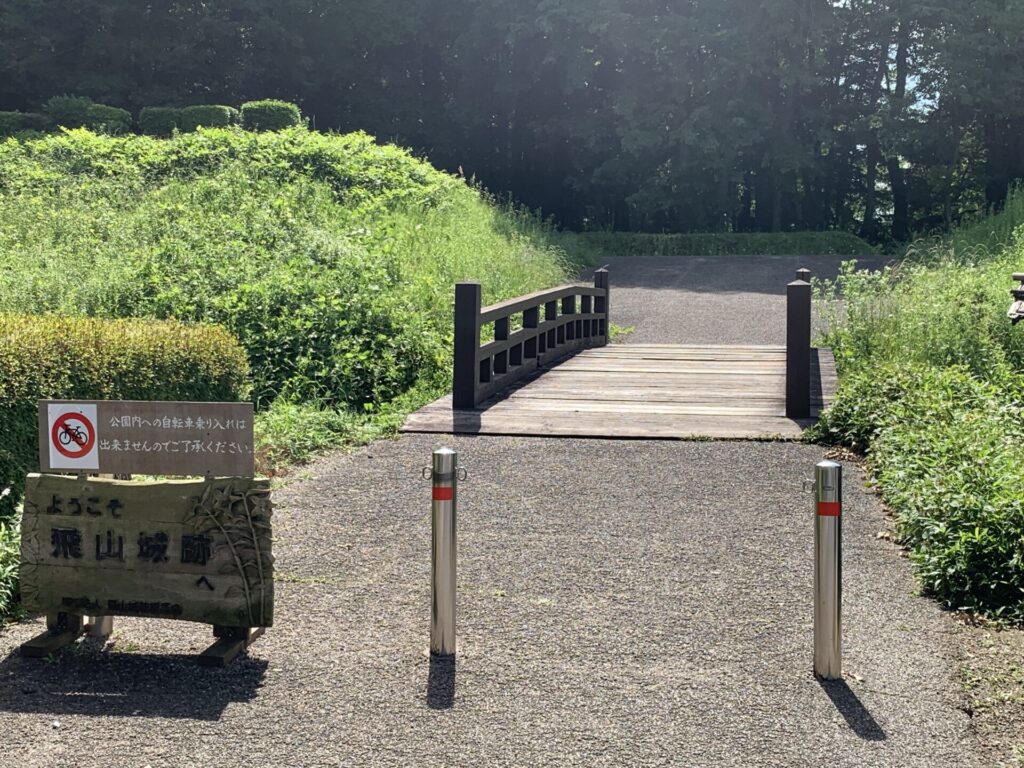
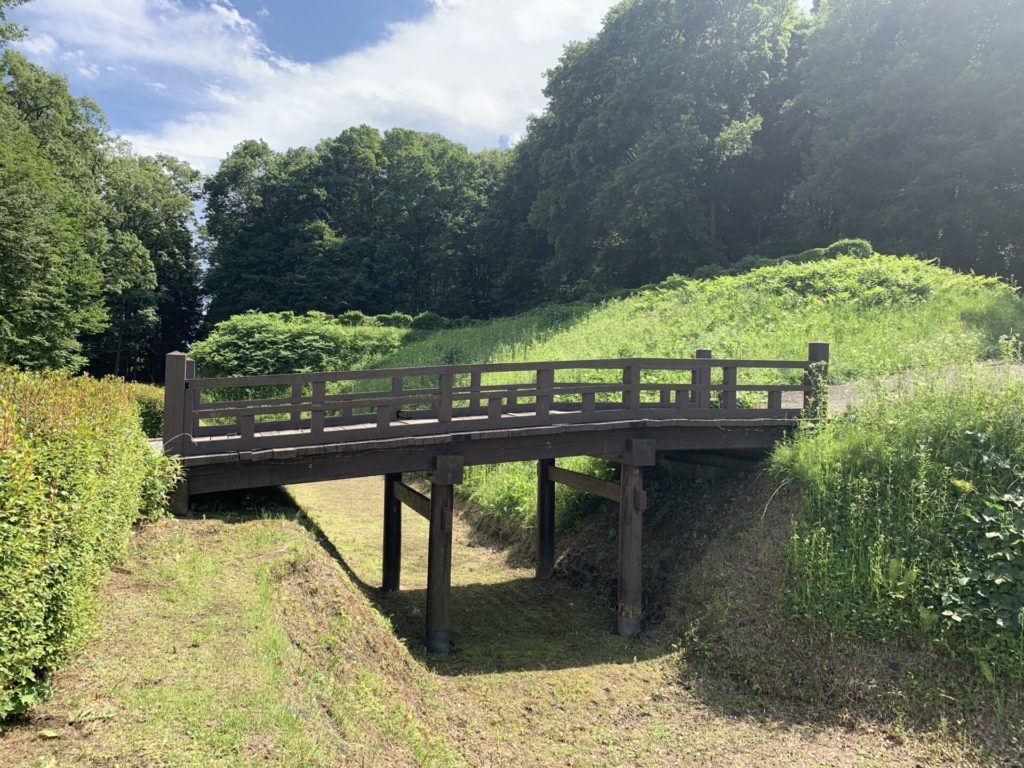
First, I crossed this wooden bridge and began my exploration of Tobiyama-jo.
The moat beneath this bridge is known as the No. 6 Moat(6号堀).
Seen from the side, it looks like this.
The shape of the moat still remains very clearly.
Actually, even on the day of my visit, there were people trimming the grass around the site.
Thanks to those who continue preserving these ruins, castle enthusiasts like me can fully enjoy places like this 🙇
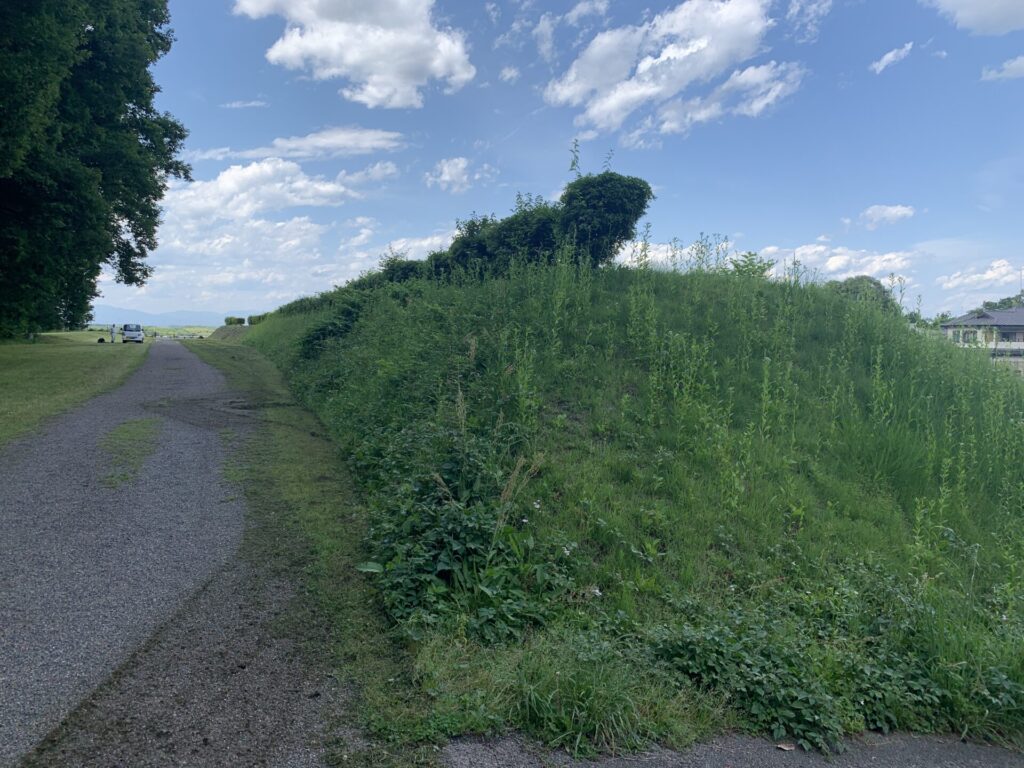
This is a remaining earthen rampart photographed after crossing the wooden bridge.
In the distance, the people working on the grass cutting were taking a short break.
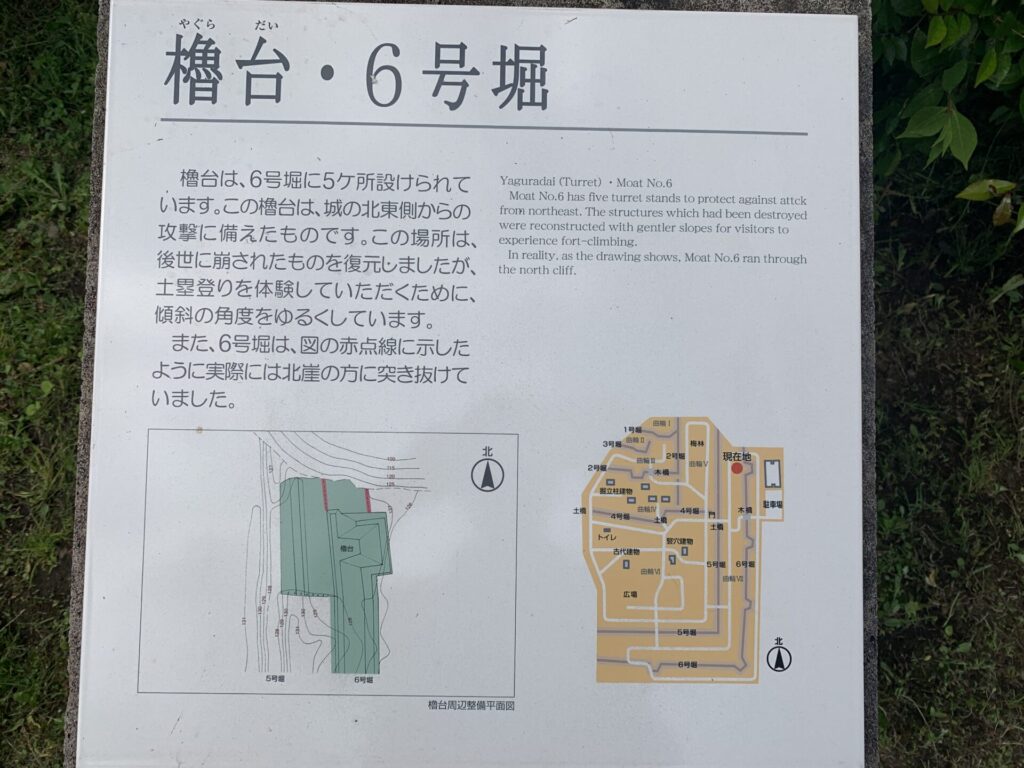
It is said that a turret platform once stood overlooking the No. 6 Moat(6号堀).
Please take a look at the view from the reconstructed turret platform in this video.
When viewed from this turret platform,
the No. 6 Moat(6号堀) makes a sharp turn at the corner and stretches all the way to the wooden bridge we crossed earlier.
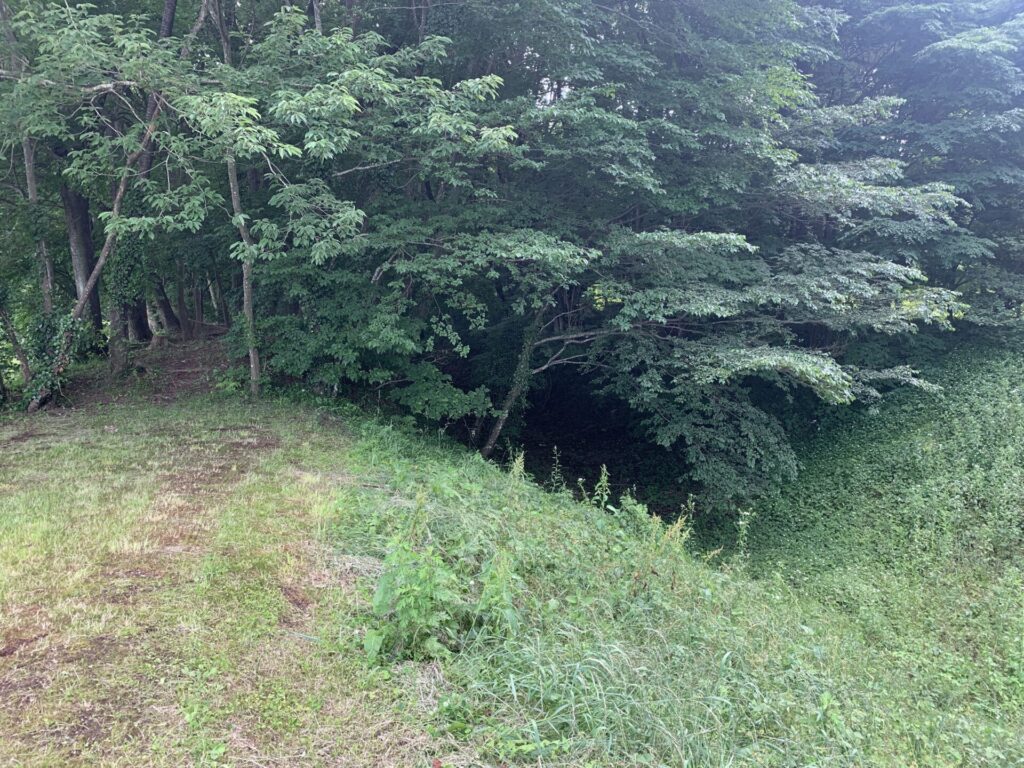
After descending the earthen rampart,
I climbed onto another inner rampart and took this photo.
This is the No. 5 Moat(5号堀).
At this point alone, the double moats would already have slowed the advance of enemy troops.
I also recorded a video from atop the rampart here — please take a look.
There are many trees in the foreground, making the moat a bit difficult to see clearly,
but this No. 5 Moat(5号堀) also remains in remarkably good condition.
And just before crossing this moat lies a Masugata Koguchi(枡形虎口)
— a box-shaped defensive gate structure waiting for invading troops 😱
The Masugata Koguchi also stands out clearly with its impressive presence!
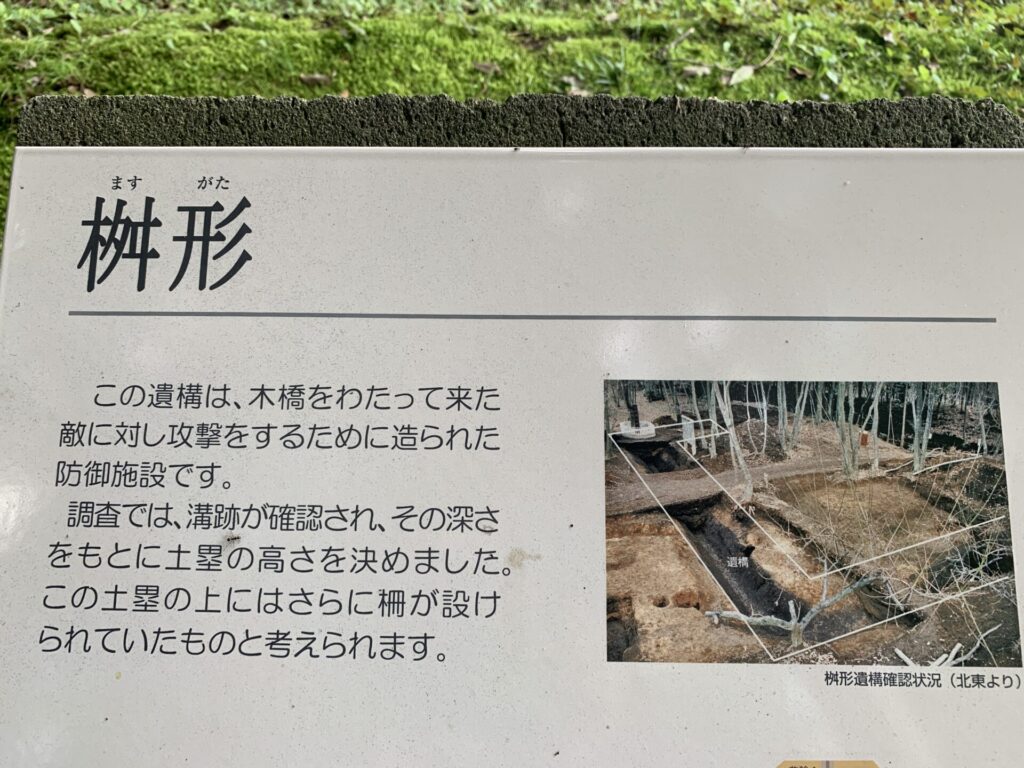
This sign simply says “Masugata,”
but it most likely refers to a Masugata Koguchi(枡形虎口).
A Masugata Koguchi(枡形虎口) was a defensive gate structure that served as an entrance and exit point for the castle’s defenders.
The passage was intentionally designed with sharp turns to prevent enemy troops from charging in directly, while allowing defenders to attack not only from the front, but also from the sides.
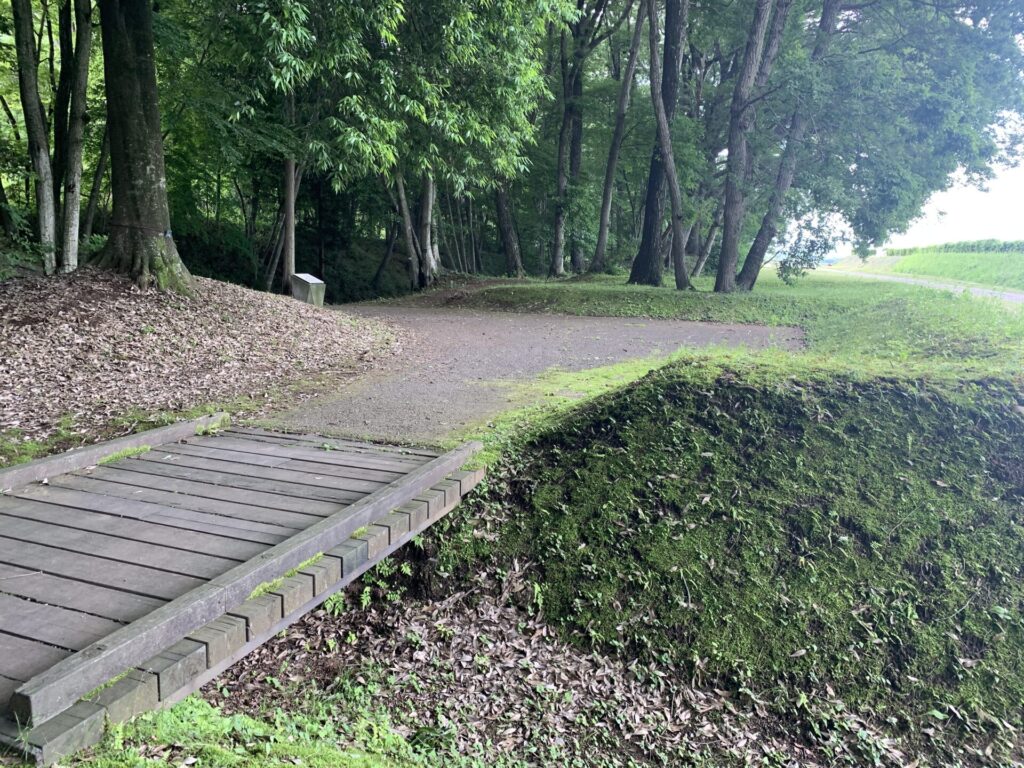
As you can see, enemy soldiers crossing the bridge on the left would have no choice but to advance while turning toward the back left side.
During that movement, they would be exposed to attacks from defenders positioned on the ramparts both in front of them and along the sides…
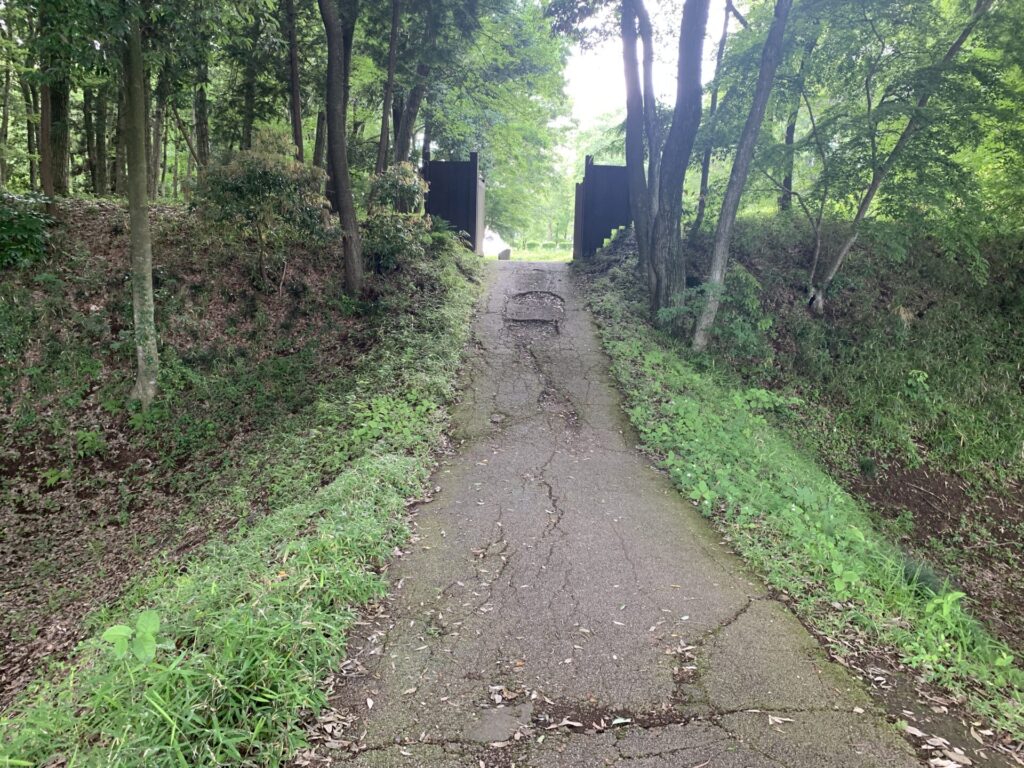
Even if attackers managed to break through the Masugata Koguchi(枡形虎口),
more defensive structures still awaited them deeper inside the castle.
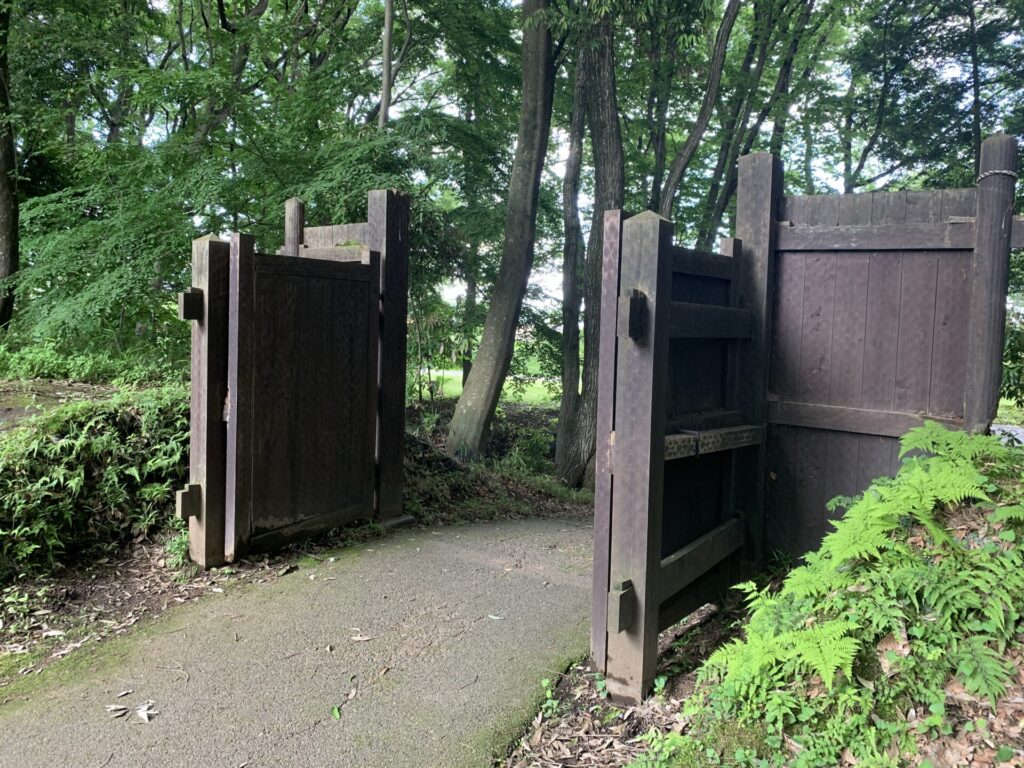
Passing through this gate,
I continued further into the castle grounds.
The No. 1, No. 2, and No. 3 moats block the path from the north toward the center of the castle!!
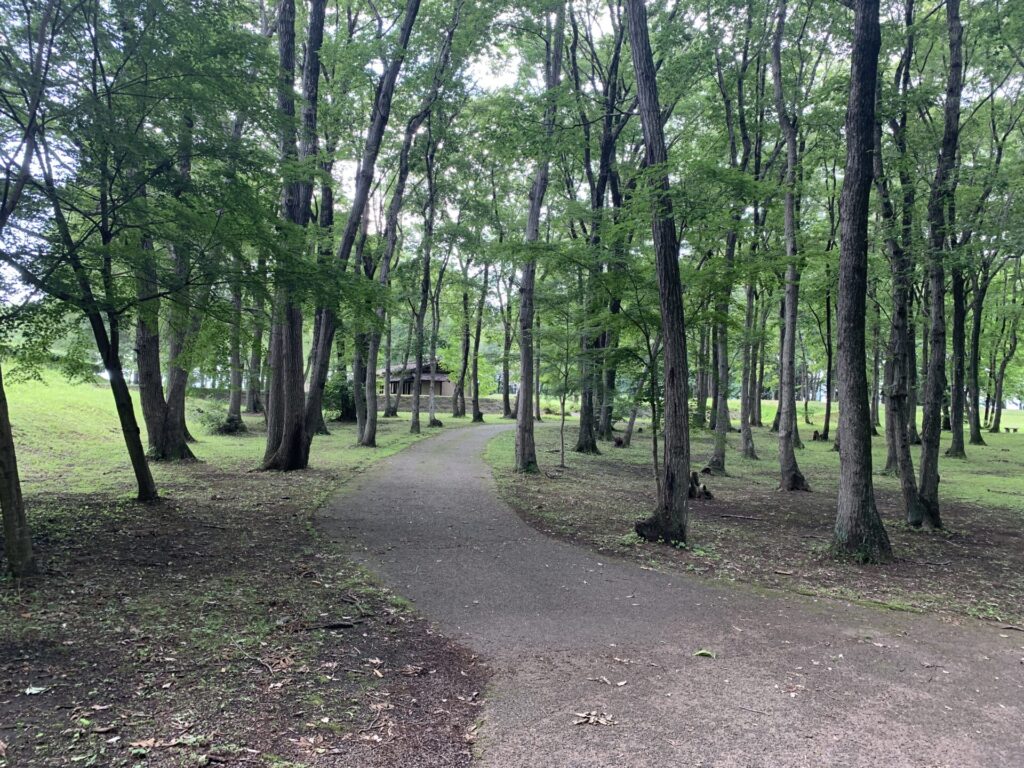
As I moved toward the center of the castle ruins,
a building came into view ahead.
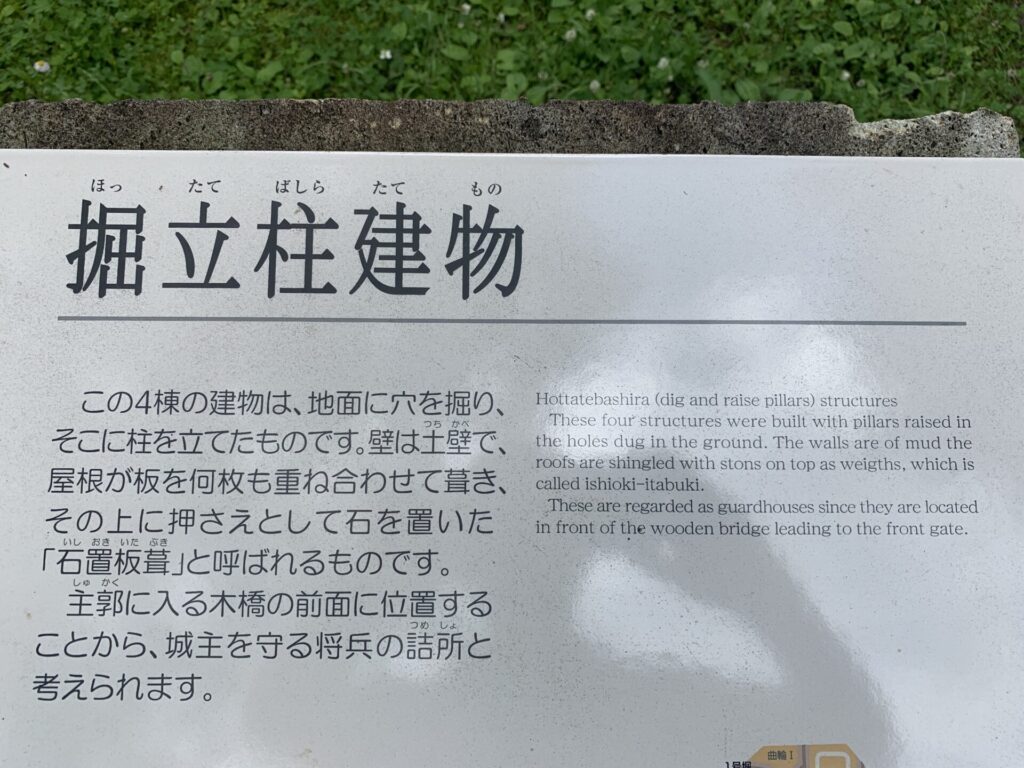
It was a reconstructed Horitatebashira(掘立柱) building.
It seems to have served as a waiting station for soldiers defending the Honmaru(本丸:main enclosure).
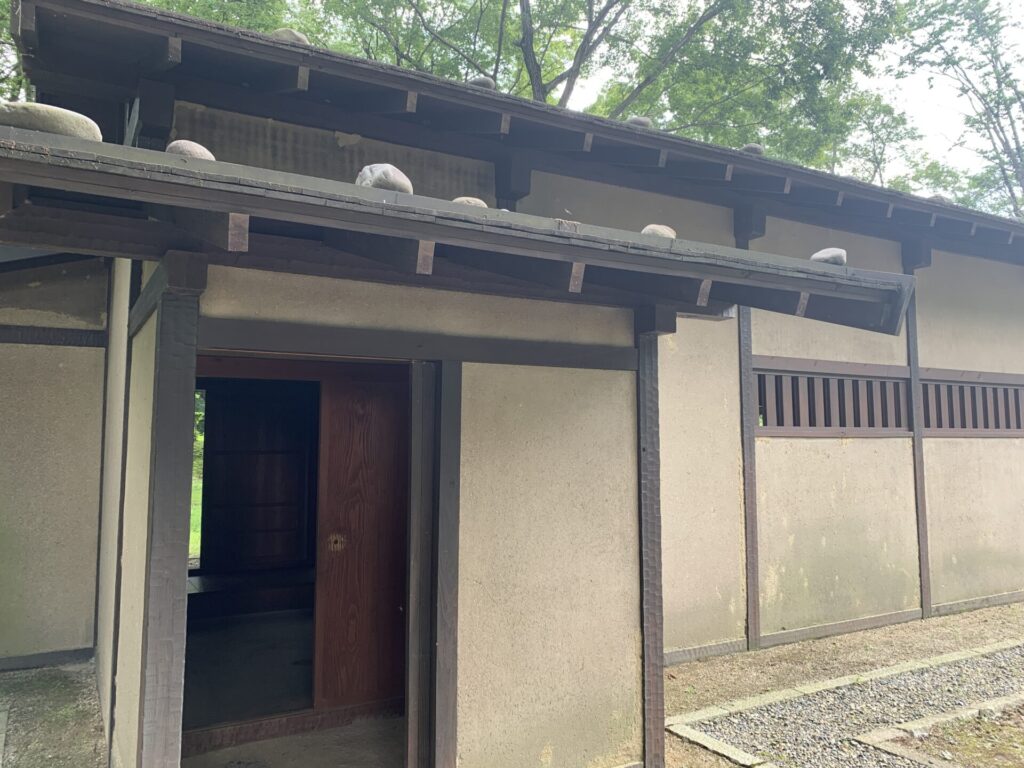
The entrance looks like this.
The stones placed on the roof somehow evoke the atmosphere of the Sengoku era,
giving the structure a nice historical charm.
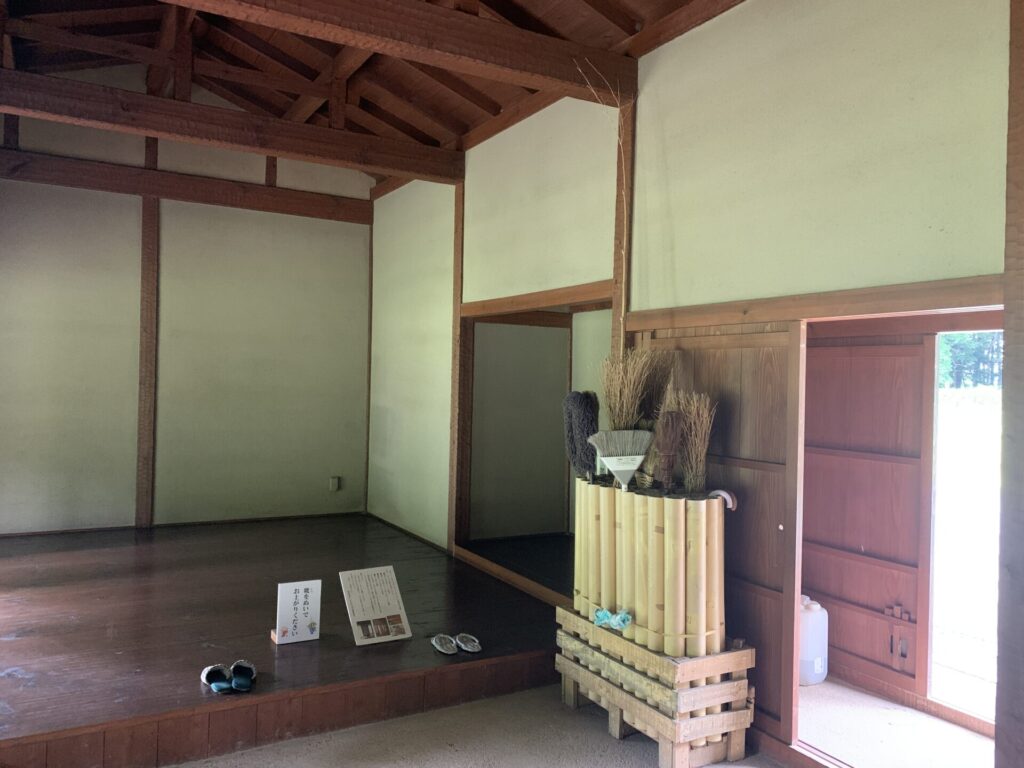
Here is the inside of the building.
Visitors can also take off their shoes and step inside.
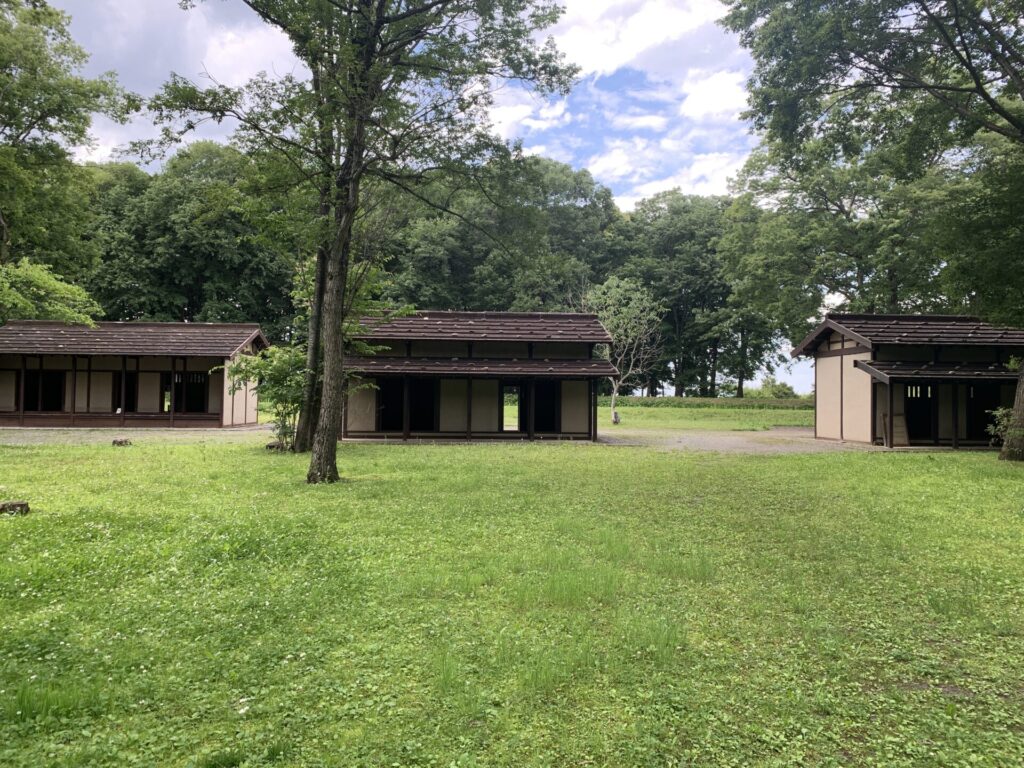
There were several of these Horitatebashira(掘立柱) buildings,
showing that they once stood across a fairly large area within the castle grounds.
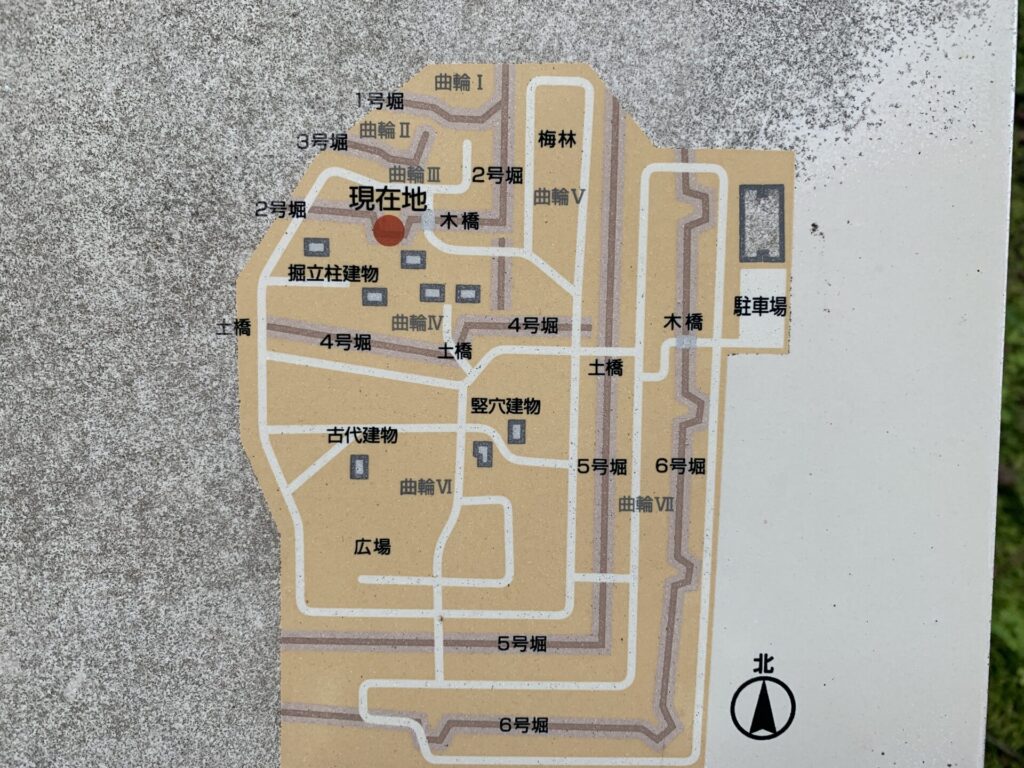
Protecting the northern side of this enclosure (Kuruwa IV) is the No. 2 Moat(2号堀).
This moat is also impressively constructed.
Please take a look at it in the video as well.
The moat bends sharply into an L-shape,
and if enemy soldiers were to fall into it,
they would almost certainly become easy targets for defenders attacking from atop the multiple ramparts and from the sides 😱
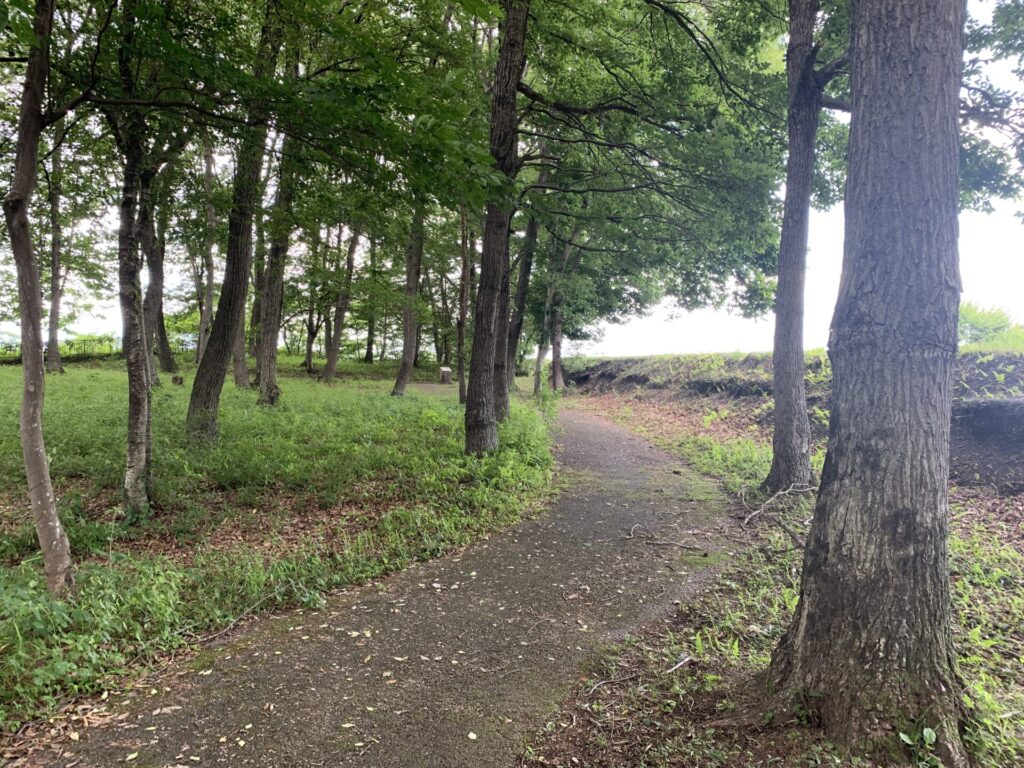
Next, I headed toward the northern side of the castle.
Please also take a look at this video showing the No. 1 Moat(1号堀), which defended the northernmost section of the castle.
Compared to the other moats we’ve seen so far, this one is much shallower,
and at first glance, it can be difficult to recognize it as a moat at all…
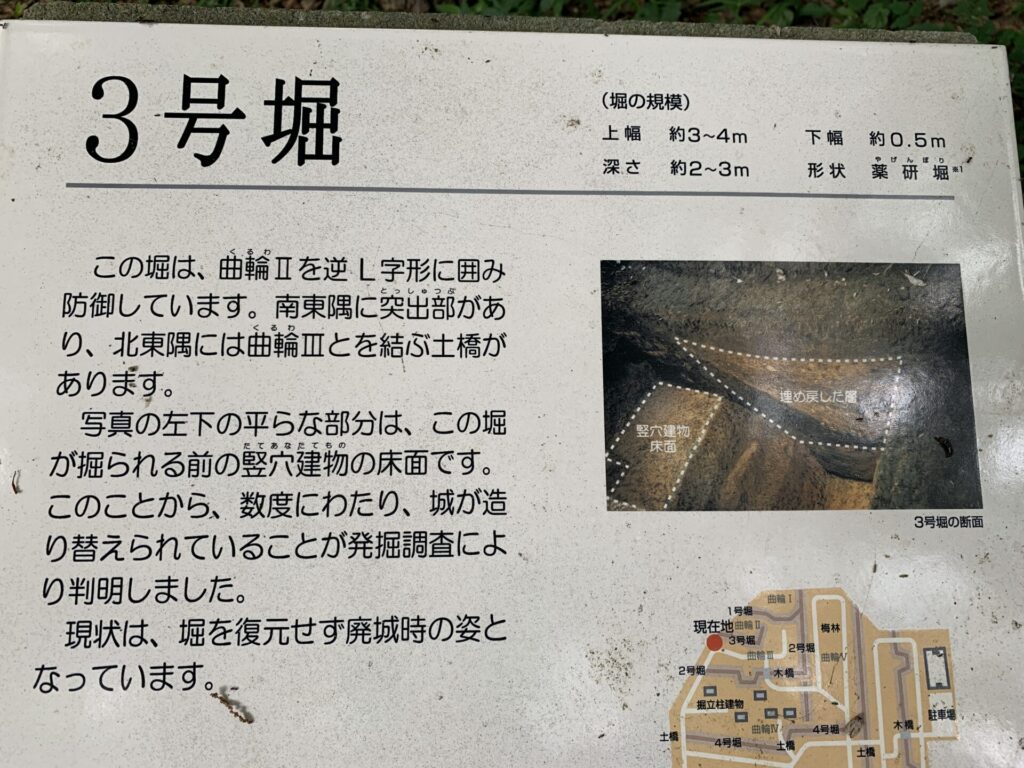
Now we come to the No. 3 Moat(3号堀).
This moat extends from the northwestern side toward the central area of the castle,
blocking enemy advances from that direction.
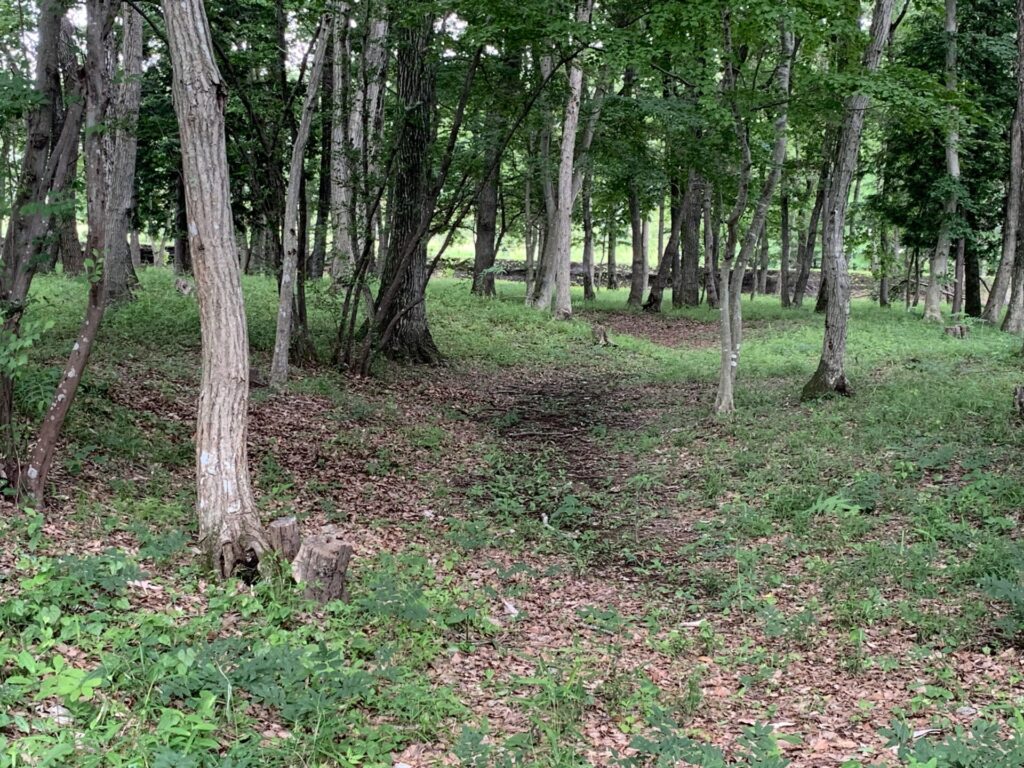
This moat also appears to have been left largely unrestored,
so it is quite shallow and difficult to identify as a moat today.
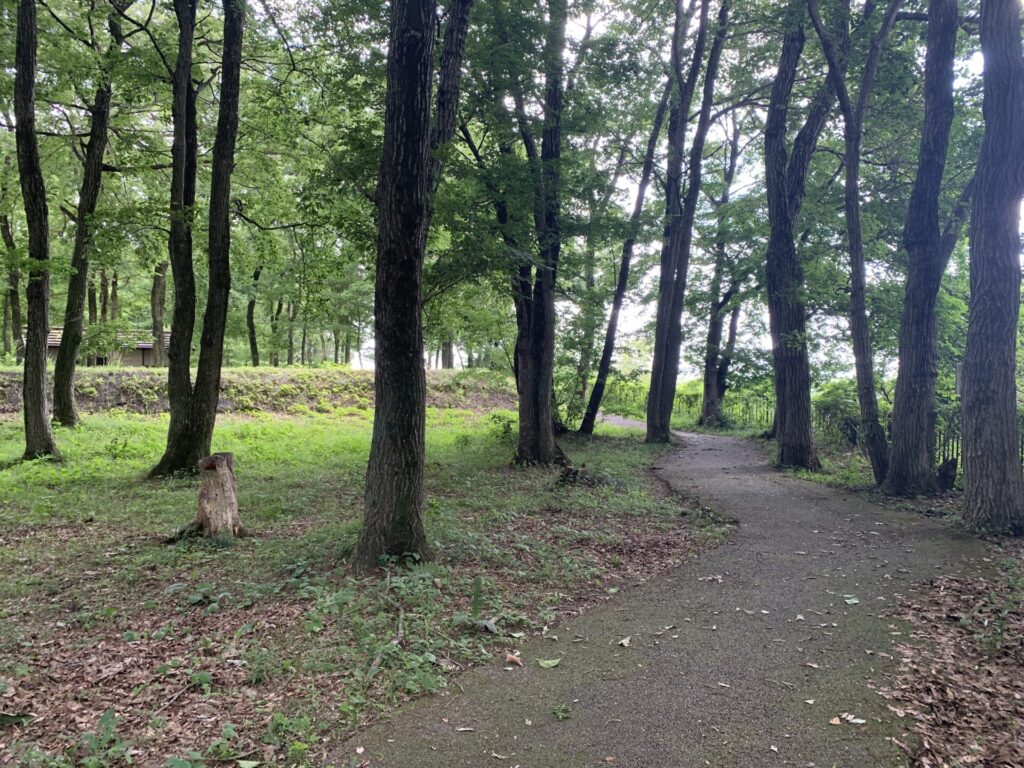
I reached the northwestern section of the castle,
and from here, I began heading southward.
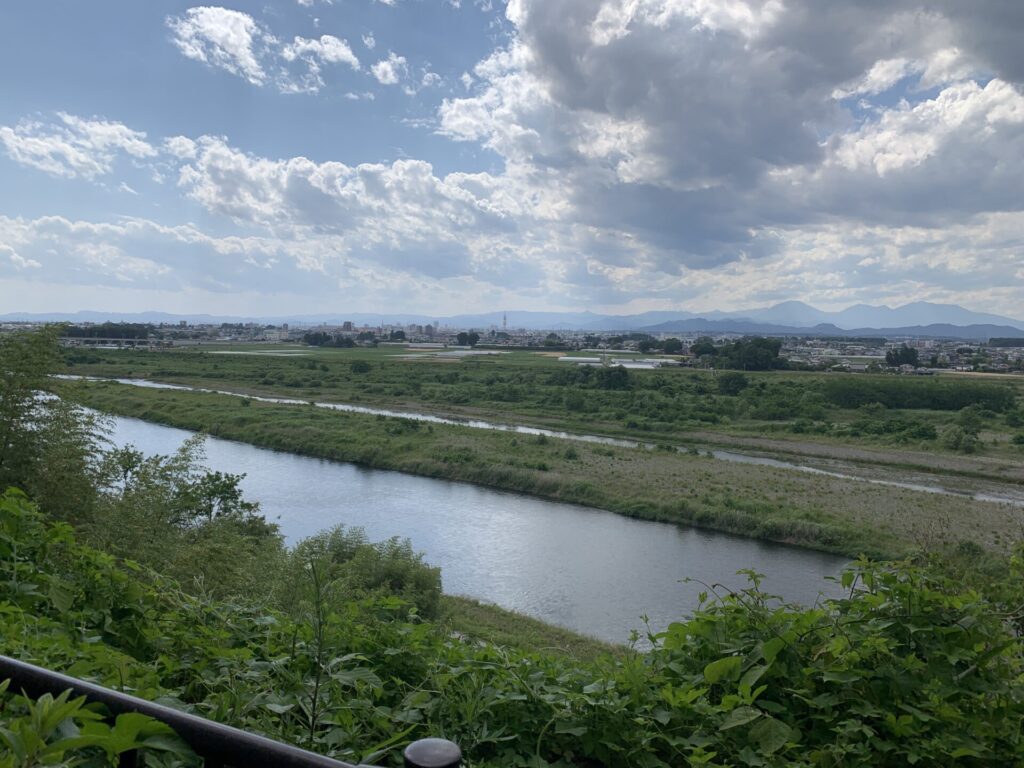
On the western side of the castle flows the Kinugawa River(鬼怒川).
This likely served as a natural defensive barrier protecting the castle from the west.
The No. 4 Moat was also a deadly “kill zone” designed to trap invading troops!!
On the western side of the castle, near the central area, the No. 4 Moat(4号堀) stands out with an imposing presence.
The earthen ramparts are sharply angled, making it easier for defenders to attack enemy soldiers crossing the earthen bridge from the sides.
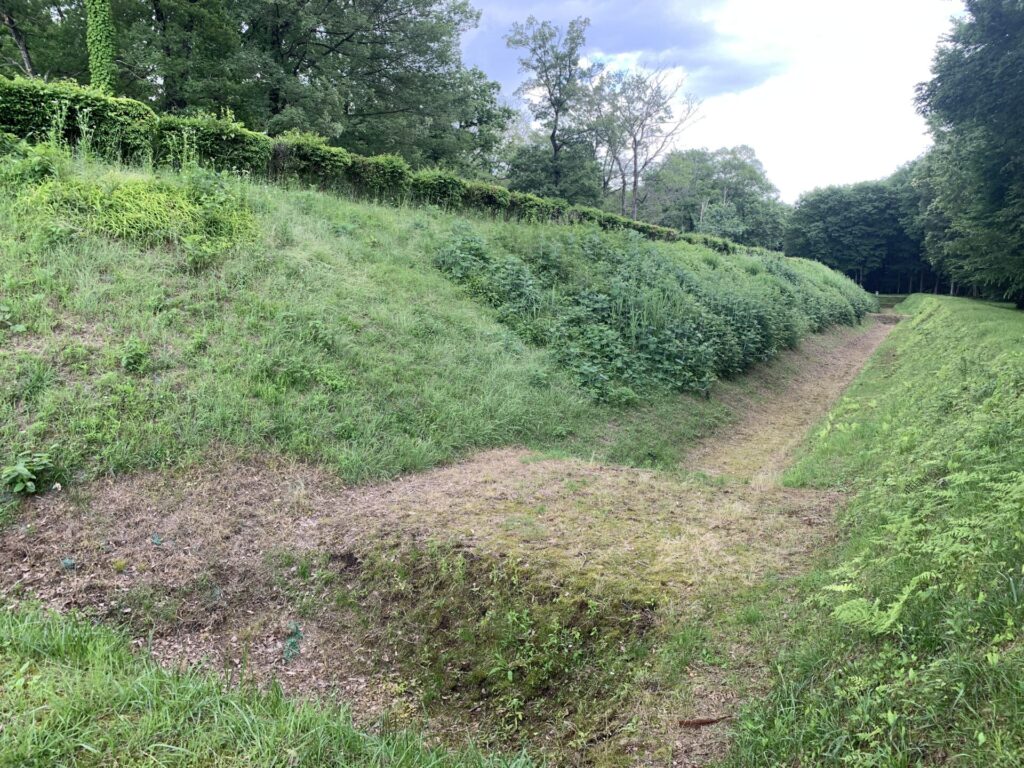
The No. 4 Moat(4号堀) also displays a remarkably impressive shape.
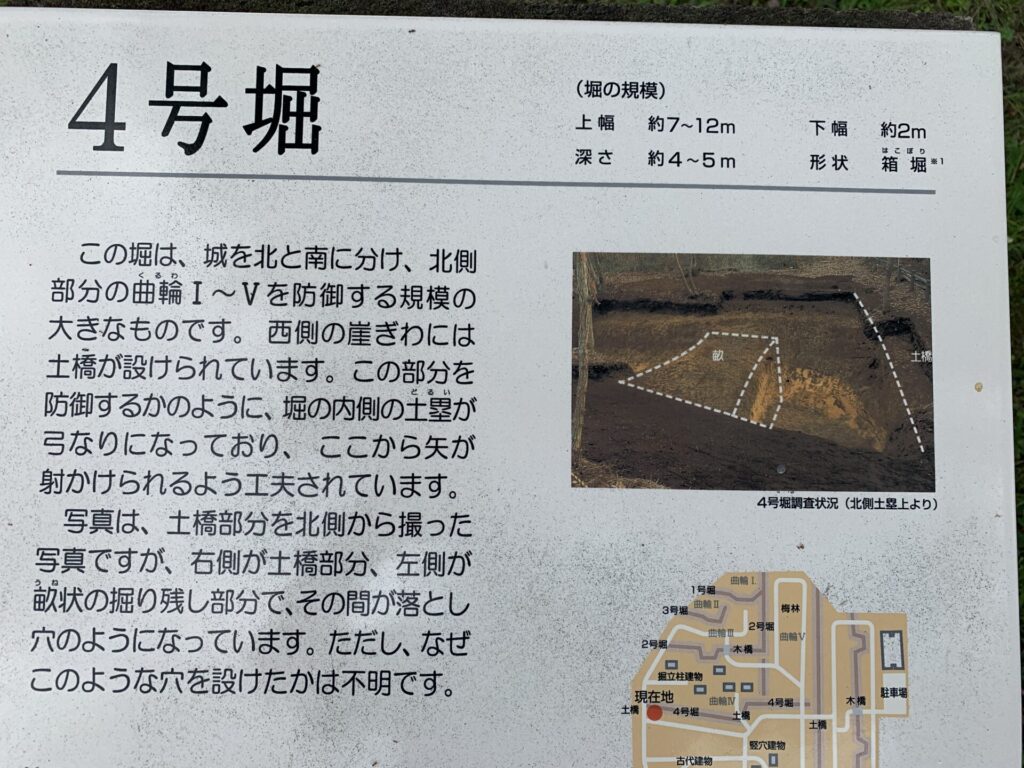
According to the information board, the remaining raised sections within the moat are of unknown purpose,
but they somewhat resemble the Shoji-bori(障子堀)style moats famously associated with the Hojo clan.
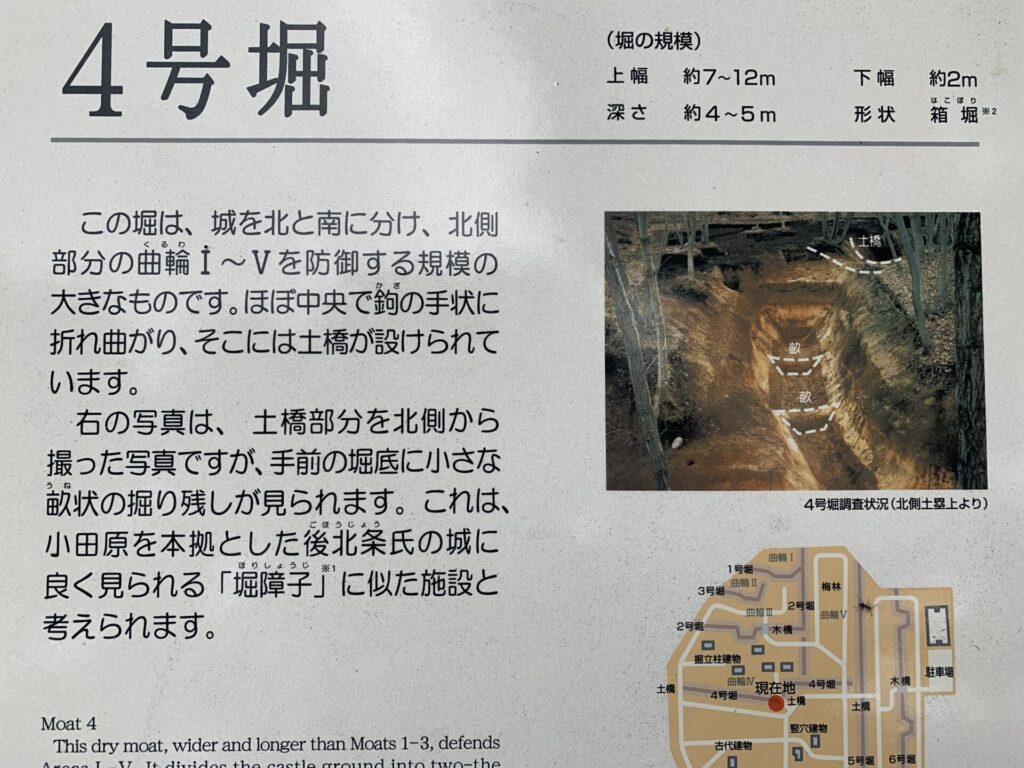
After walking a little farther, I found another information board for the No. 4 Moat(4号堀)!!
And this one clearly mentions the Shoji-bori(障子堀) style moat!
So, I also recorded this No. 4 Moat on video — please take a look.
With the ramparts curved so dramatically like this,
it must have been extremely difficult for enemy troops to attack.
Being targeted from every direction would hardly have left them feeling safe 😅
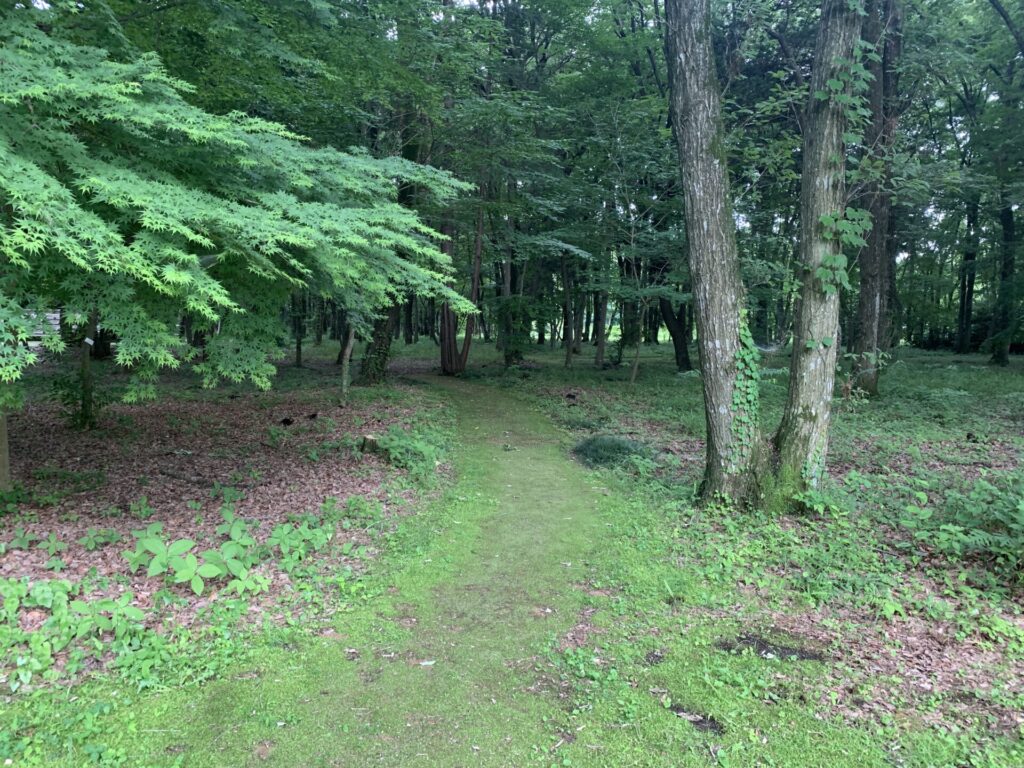
Next, I continued a little farther south.
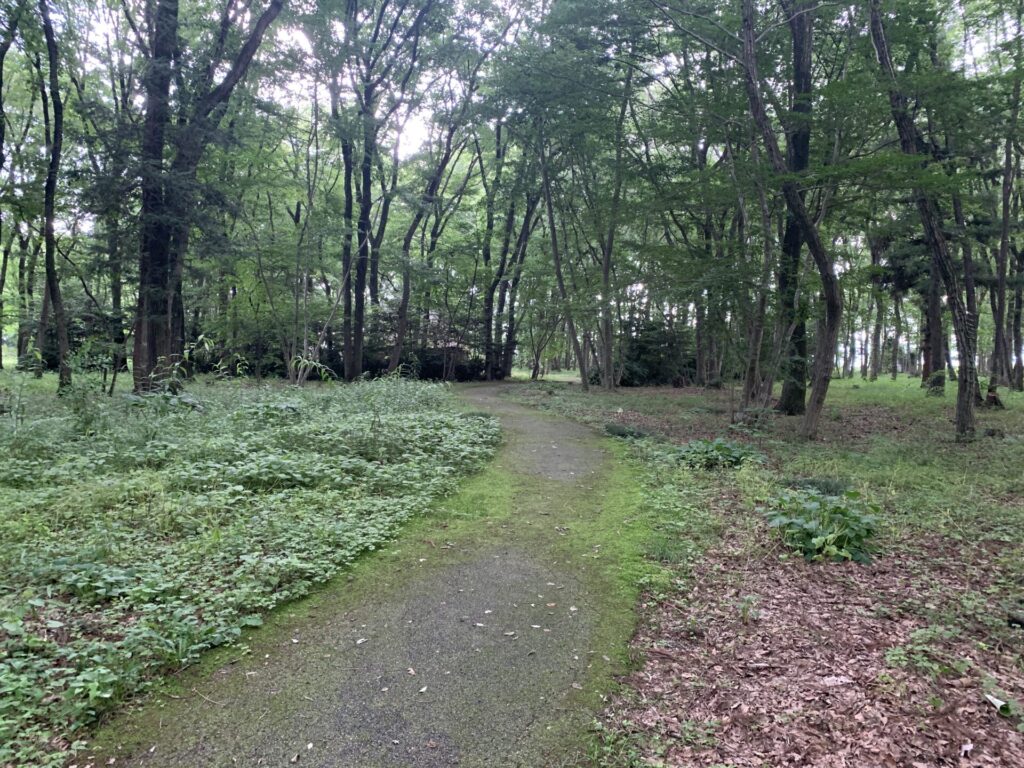
Ahead of me, another different building came into view.
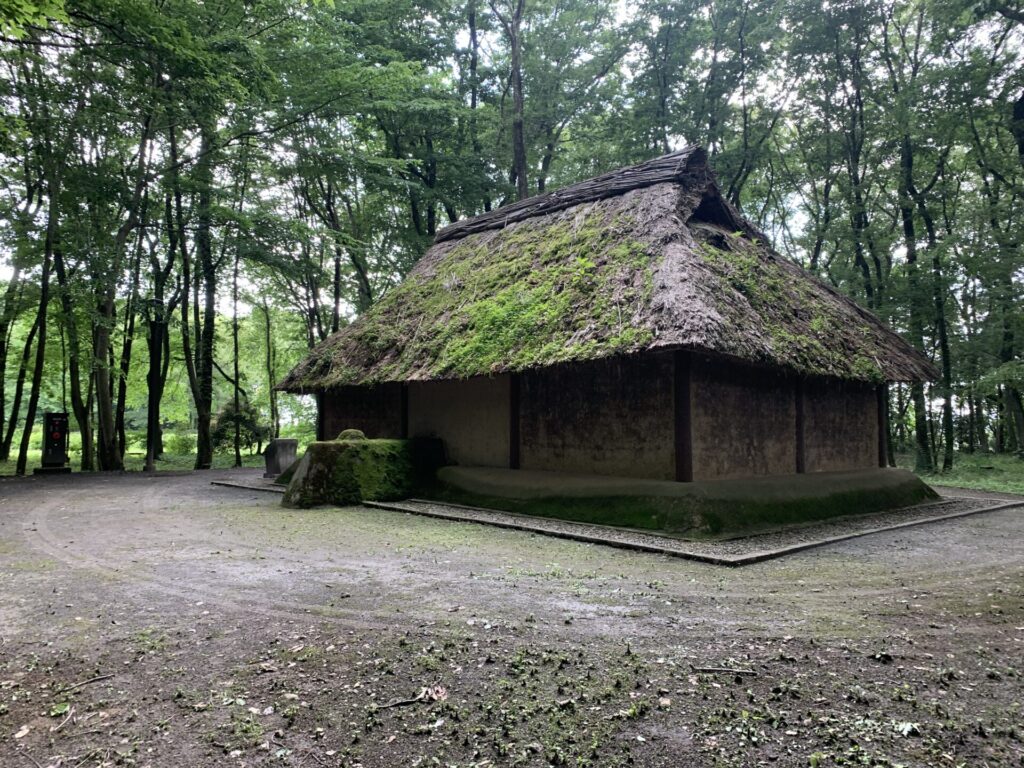
This appears to be an ancient pit dwelling.
It really gives a sense of the site’s long history and age beyond just its time as a castle.
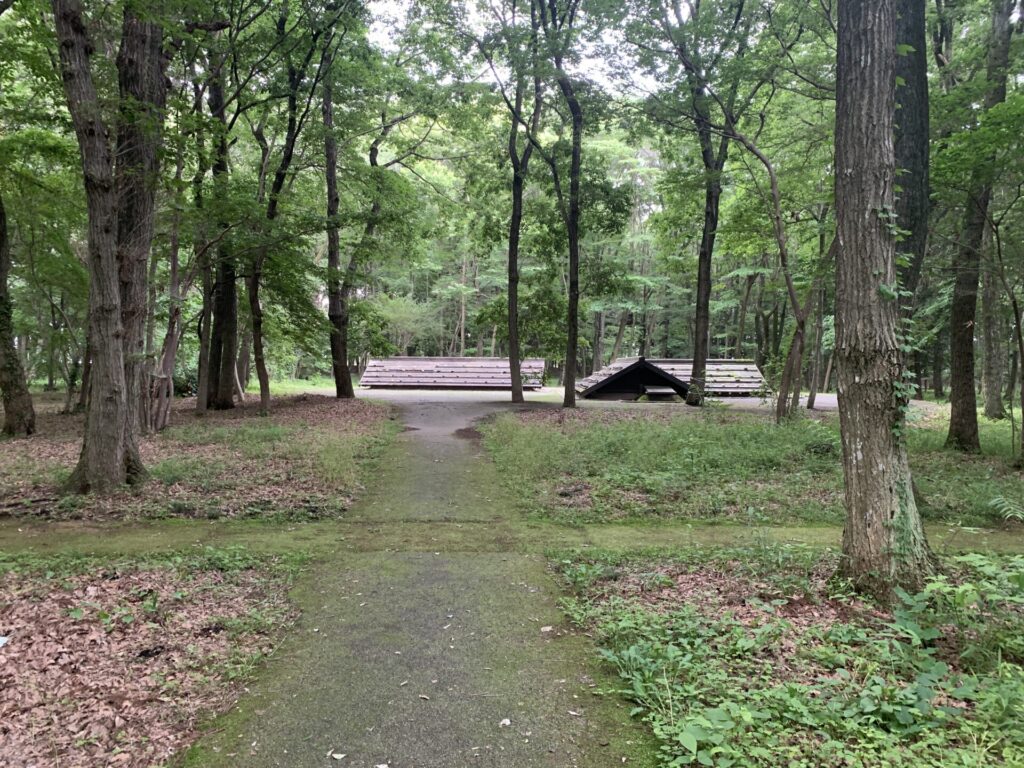
Following the path from the pit dwelling toward the opposite side,
yet another differently shaped building came into view.
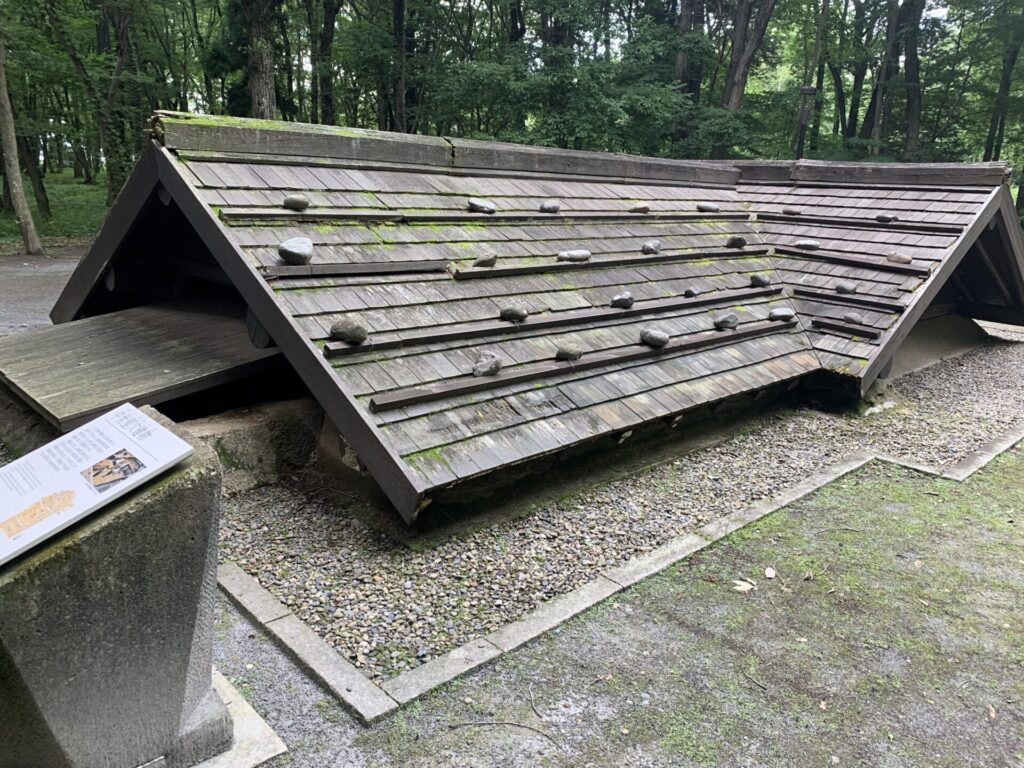
This one is also a pit dwelling, but apparently from the medieval period.
I wonder if people in those days entered it by climbing down into the ground like this.
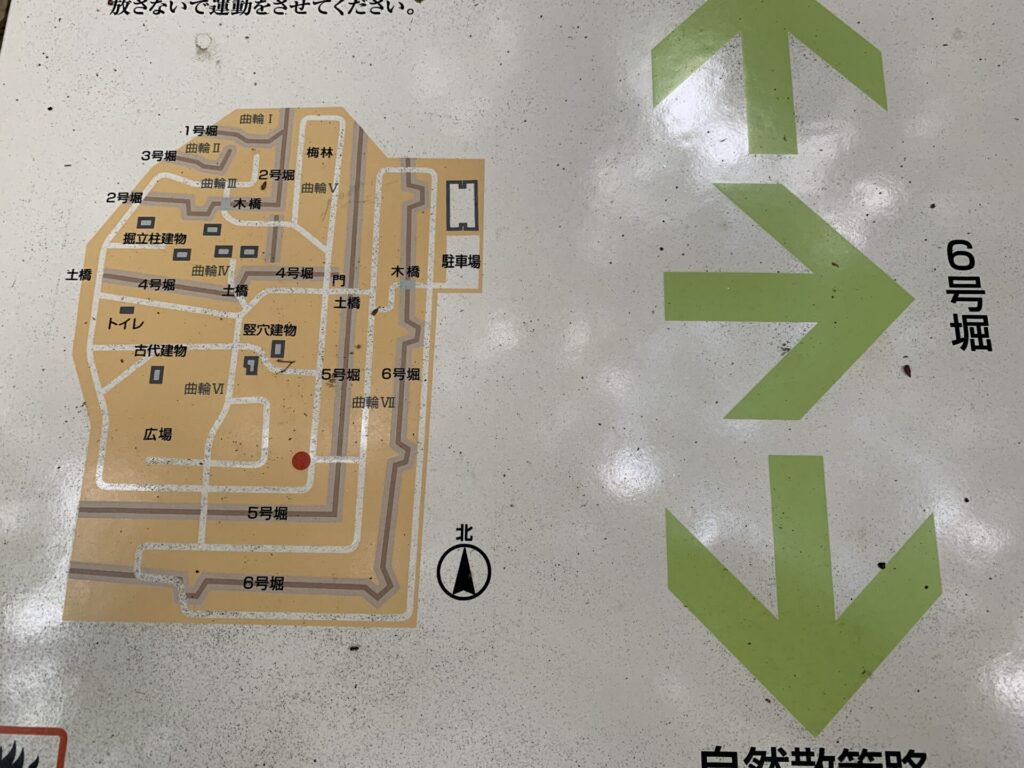
Leaving the group of pit dwellings behind,
I made my way to the southeastern part of the castle.
Before heading home, I took one last look at the No. 5 and No. 6 Moats.
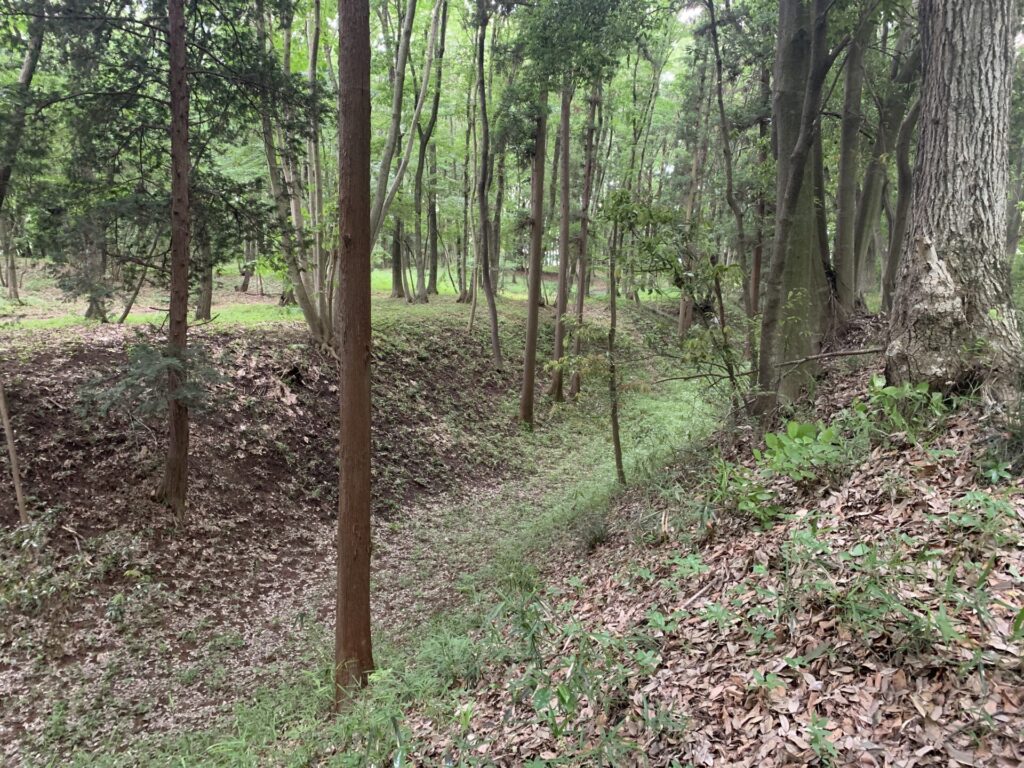
Even so, I was truly impressed by the magnificent series of moats and the sheer strength of the castle’s defensive structures 🙇
Even though this was not a particularly high hilltop castle,
the builders were able to create deadly “kill zones” simply by surrounding it with so many moats.
It really made me appreciate the ingenuity of Sengoku-era castle design.
If you ever have the chance to visit Tochigi Prefecture, I highly recommend stopping by at least once.
See you again!!