
Moroto-jō (Inzai city, Chiba)|An Earthen Fortification with Dry Moats Overlooking Lake Inbanuma
A Hidden Gem of a Castle Within Inbanuma Park
Hello, I’m Shin.
On Thursday, April 20, 2023.
I visited Moroto-jō, a little-known medieval castle site located within Inbanuma Park in Chiba Prefecture 🚙

◉ Castle Type
Hilltop Castle
◉ Cultural Heritage Highlights
◉ Defensive Features & Fortifications
◉ Exploration Difficulty
🔰 Easy Castles
◉ Estimated Time to walk around
: about 1 hour
◉ Parking
Parking is available within Inbanuma Park
(approximately 10 parking spaces)
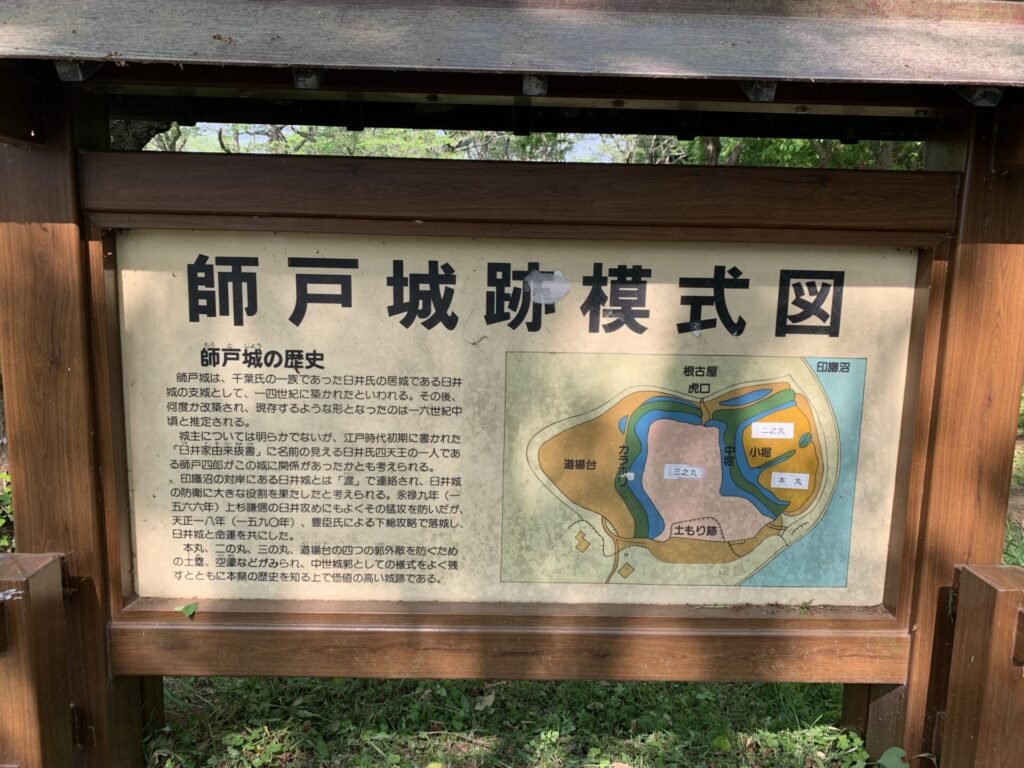
As noted on the informational sign at the site,
Moroto-jō is believed to have served as a subsidiary fortification of Usui-jo, the main stronghold of the Usui clan, a local warrior family based in what is now Inba area.
Usui-jo itself is said to have withstood fierce assaults by Uesugi Kenshin,
one of the most formidable warlords of the Sengoku period—a testament to the strength of the defensive network in this region.
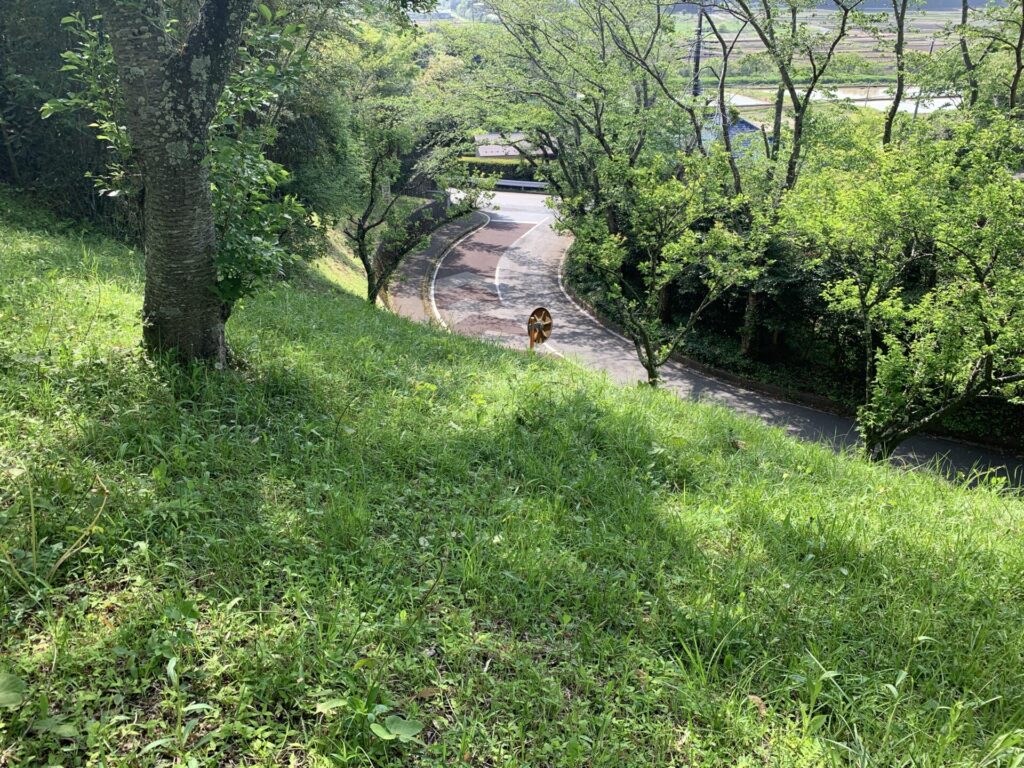
First, this view looks down from the elevated ground within the park.
I actually drove up this slope by car, and as you can see from the photograph, Moroto-jō is situated on terrain with a noticeable elevation—clearly qualifying it as a hilltop castle (okajiro).
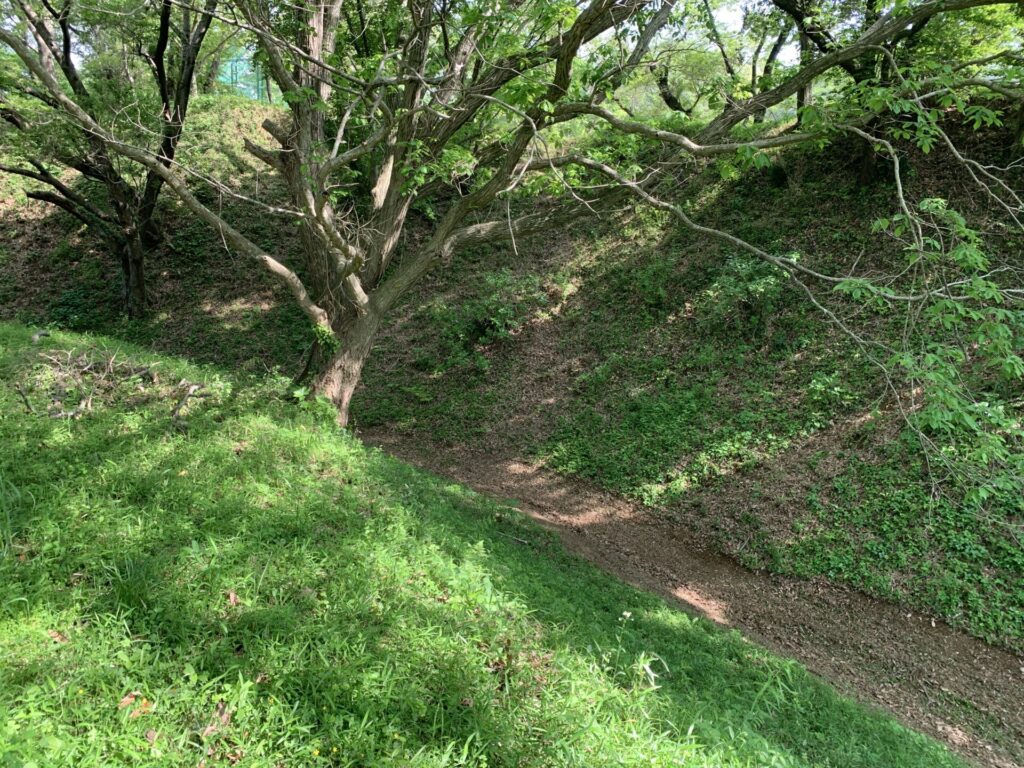
And the very first feature that caught my eye was this—
a clearly defined dry moat (karabori) that reveals itself just before the Third Bailey (San-no-maru).
With a dry moat of this depth, the defensive intent is immediately apparent—
it’s easy to understand at a glance just how formidable this fortification once was.
(For explanations of technical terms such as “dry moat” and other defensive features, please refer to the linked glossary page below.)
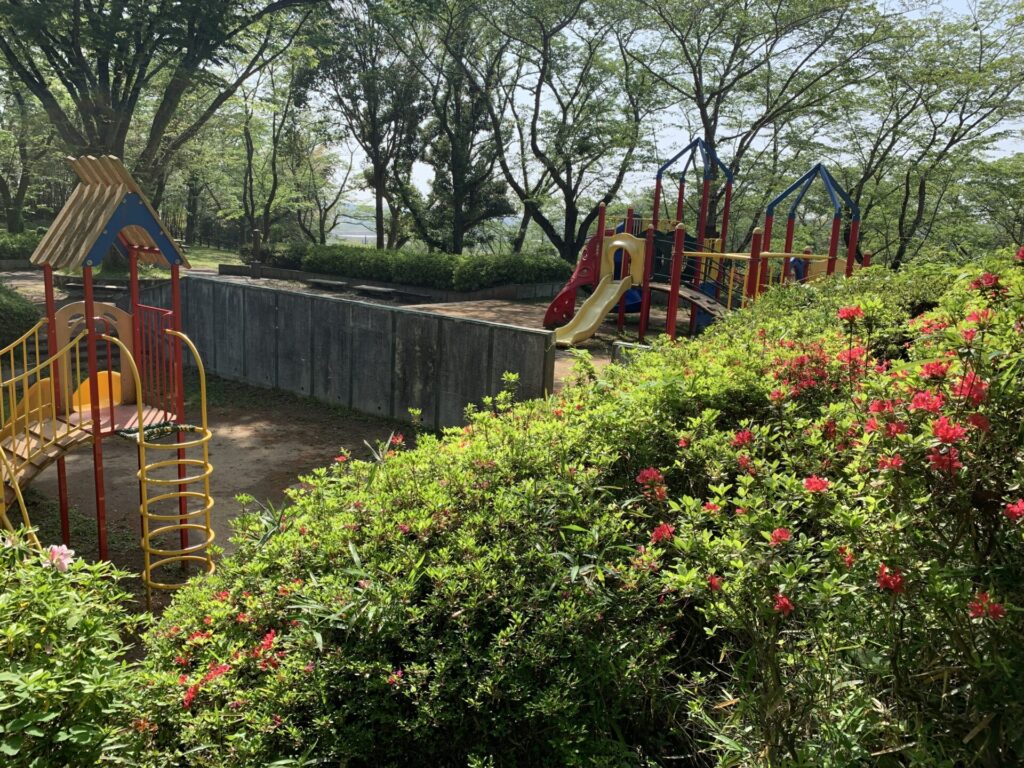
Today, the former castle grounds have been developed into Inbanuma Park,
and the area now includes playground equipment where children can play—adding a peaceful, family-friendly atmosphere to what was once a strategic military site.
Feeling the Depth of the Moat !!
Now, this is where the real highlight begins.
To be honest, before visiting this site, I slightly underestimated it.
I assumed,
“After all, it’s just a subsidiary castle—how impressive could it really be?”
But then…
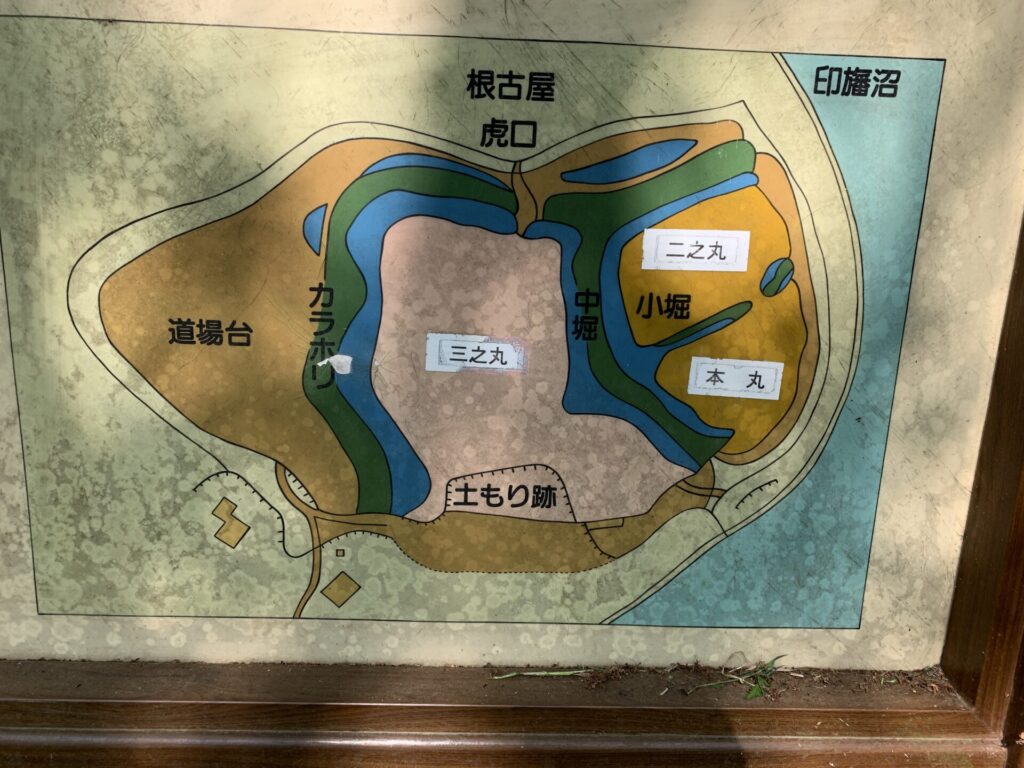
From here, you proceed by crossing the
Karabori (空堀: dry moat) and then walking through the castle in sequence—
from the San-no-maru (三の丸:third enclosure ) to the Ni-no-maru(二の丸:second enclosure), and finally to the Honmaru (本丸:main enclosure ).
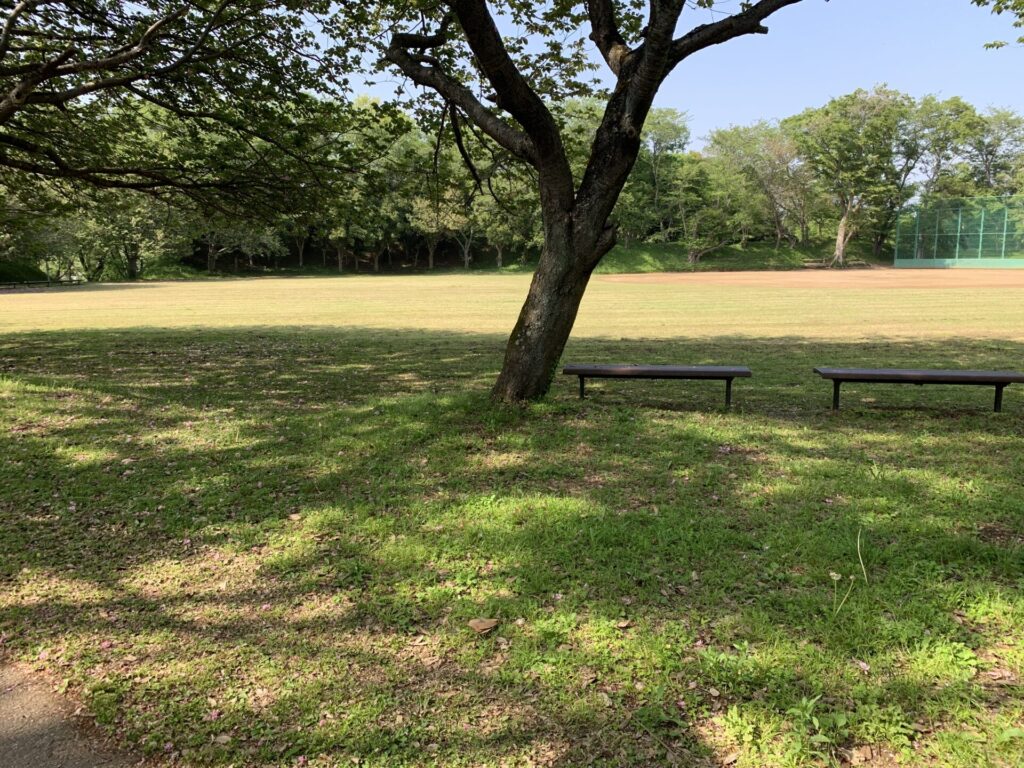
The San-no-maru (三の丸:third enclosure ) is surprisingly spacious and has been maintained as an open, park-like area.
Toward the back, there is even a designated space where people can play baseball.
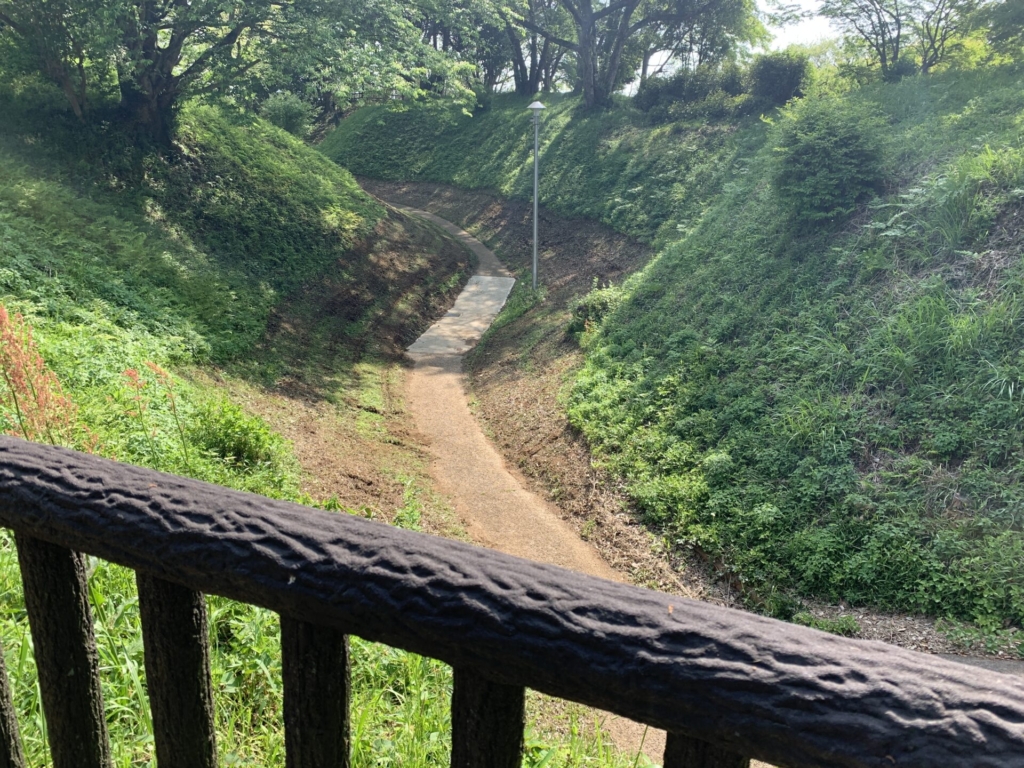
Incredibly deep!! 😵
Separating the San-no-maru (三の丸:third enclosure ) from the Ni-no-maru(二の丸:second enclosure) is an astonishingly deep middle dry moat.
And honestly—
this isn’t even the most surprising part… you’ll see why shortly.
I first made my way to the Honmaru (本丸:main enclosure ) and filmed a video looking down at the middle dry moat from the top of the Dorui(土塁:earthen rampart ).
Across the middle moat lies the San-no-maru (三の丸:third enclosure ),
and beyond the moat to the left is the Ni-no-maru(二の丸:second enclosure).
And did you notice something?
Between the Ni-no-maru and the Honmaru on its right, there is yet another—slightly shallower—moat, along with a gently raised earthen rampart.
Amazingly, you can actually walk along the top of this rampart yourself!! ✨
Honestly…
to see moats and earthen walls preserved this clearly is nothing short of breathtaking.
Spread out before you is the vast expanse of Lake Inbanuma!!
Still lingering on the impression left by the depth of the middle moat,
I continued deeper into the Ni-no-maru(二の丸:second enclosure)—and there it was,
the wide, open waters of Lake Inbanuma stretching out before my eyes.
It’s breathtaking once again…
You almost have to ask yourself—
Is this really a lake?
That’s how vast it feels.
And on the far shore of the lake lies Usui-jō,
said to be the main stronghold associated with Moroto-jō.
I’ll be visiting it later as well—and I’m very much looking forward to it.
Walking Along the Bottom of the Middle Moat…
Having reached the Honmaru (本丸:main enclosure ),
I decided to head back by taking a different route on the opposite side.
As I was walking along, I noticed a narrow path running beside the Honmaru—
and then suddenly…
things took an unexpected turn…!!
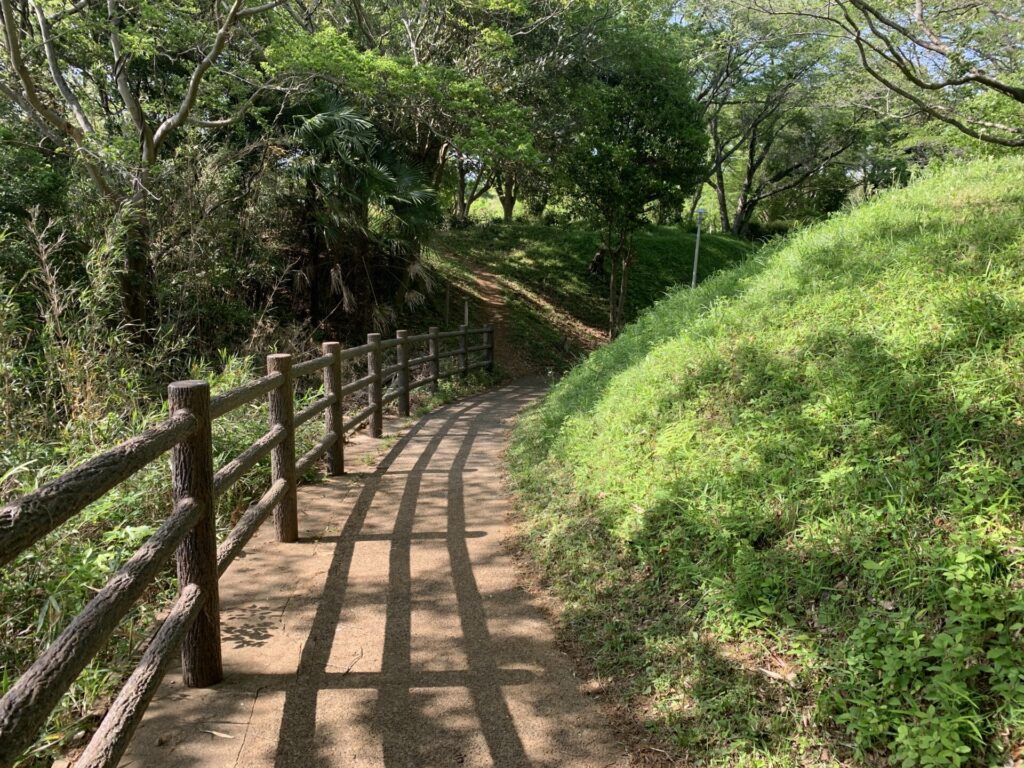
(Could this be…?)
With that thought in mind—and growing anticipation—I moved forward along the path.
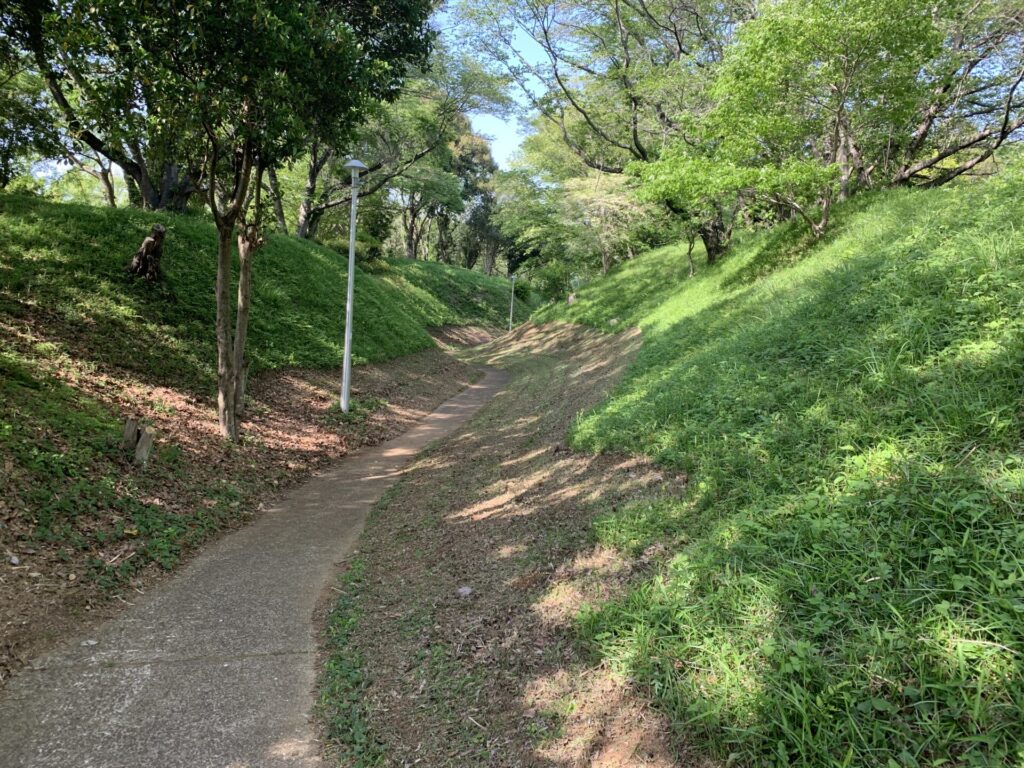
And then—
incredibly, the path leads directly down into the middle moat that separates the San-no-maru (三の丸:third enclosure) and the Ni-no-maru(二の丸:second enclosure)!
At that point, there was only one thing to do:
keep walking and experience the sheer depth of the moat firsthand.
Wow—this is deep. Really deep.
Can you tell just how deep it is from the video?
Roughly speaking, it’s well over three meters.
When you imagine falling down into this moat—
and then being targeted from above with arrows or falling stones—
it sends a real chill down your spine… 😓
The Koguchi Is Terrifying Too!
Just when I felt I’d fully taken in the depth of the middle moat and was ready to head back—
I discovered that beyond the moat lay something even more intimidating:
a Koguchi ( 虎口:Defensive Gate Entrance )!!
Sure enough, just beyond the middle moat, there is a sign marking a 虎口 (koguchi).
A koguchi refers to a fortified entrance used by soldiers to move in and out of the castle interior.
Interestingly, the term is said to have originally been written as “koguchi” (小口), meaning a small opening, before evolving into the more martial character, “虎口" ( Tiger Mouth ).
And as you can see in the photograph, near this koguchi there is also a sign reading 根古屋(Nekoya).
The word nekoya is likewise believed to have originated from “nekoya” (寝小屋)—simple sleeping huts where soldiers stayed while on duty.
Over time, the characters changed, but the function remained the same.
In other words, this area can be understood as a forward staging and waiting zone for troops—right on the front line of the castle’s defenses.
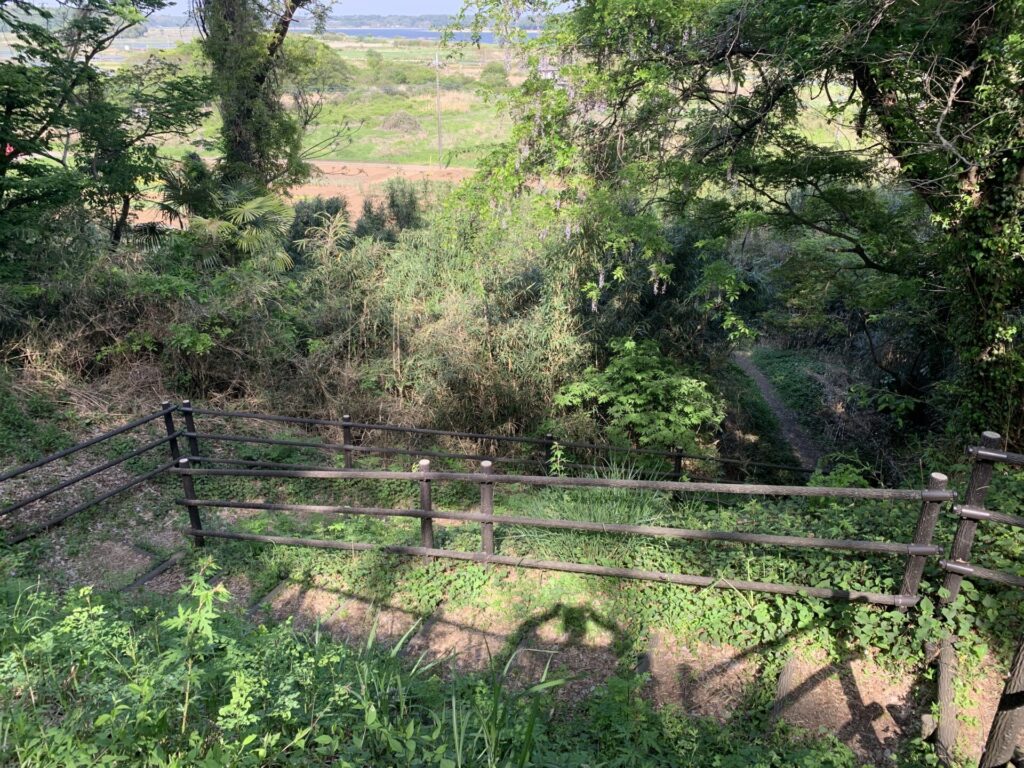
This is the koguchi as seen from above!
At a glance, you can tell how sharply it bends and twists—
clearly designed to prevent enemy soldiers from advancing straight in.
And on top of that, the slope is steep.
Any attacking force trying to push their way up here would have been completely exposed—
easy prey for arrows raining down from above… 🎯
I actually made my way all the way down here as well.
At the foot of the slope, there is a single private house and a small open clearing.
This area was most likely where the castle soldiers’ nekoya—their sleeping huts or quarters—were once located.
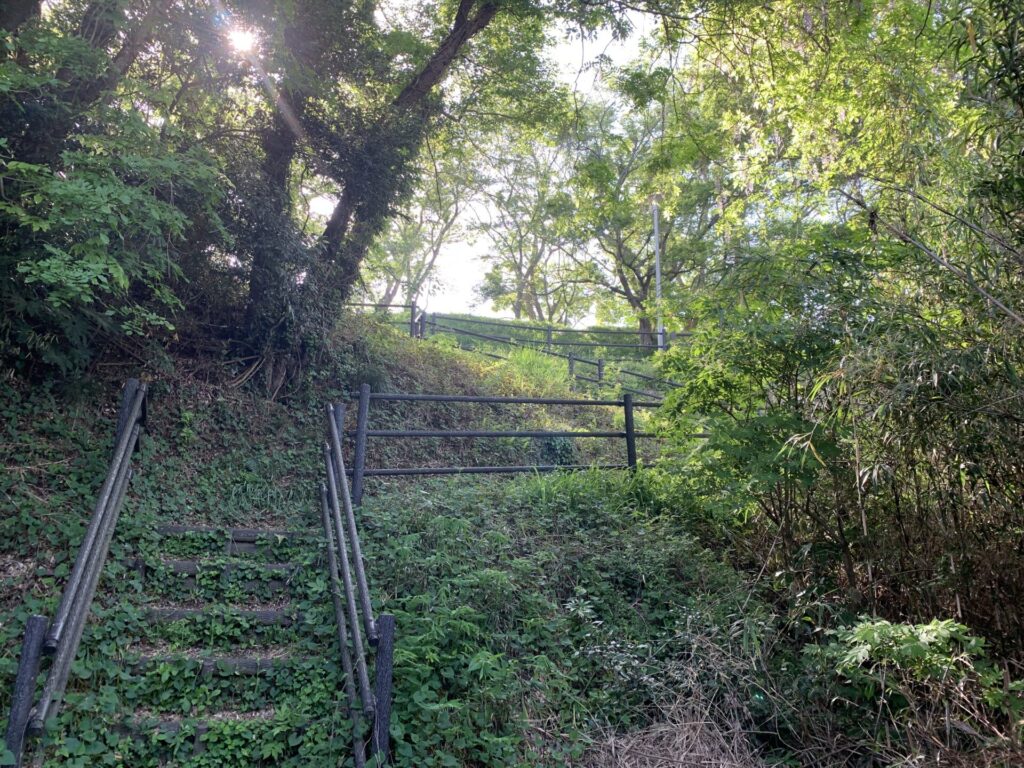
This is the koguchi seen from below.
Even from this angle, you can clearly tell just how steep the slope is.
In fact, climbing up was seriously exhausting—I was completely out of breath by the time I reached the top… 😓
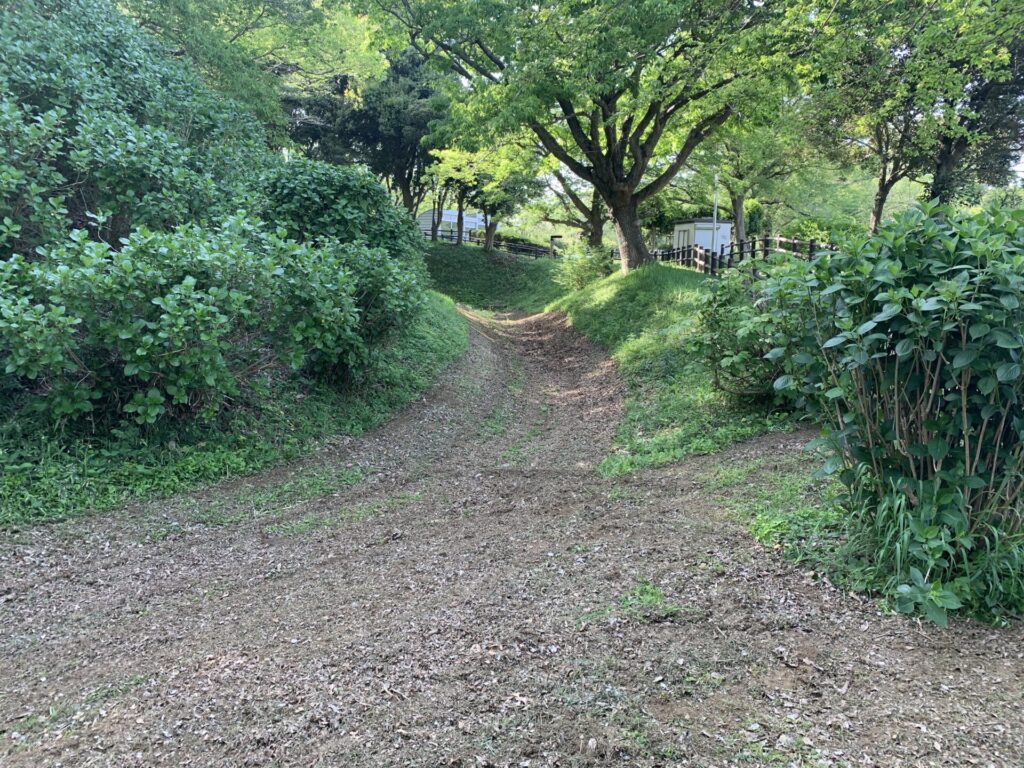
Finally, I headed back while taking one last look at the dry moat surrounding the San-no-maru (三の丸:third enclosure).
Honestly, Moroto-jō far exceeded my expectations and turned out to be an incredibly rewarding site to explore.
To all castle enthusiasts—if you ever find yourself visiting Inba-numa in Chiba,
I highly recommend stopping by and experiencing this hidden gem for yourself.