
Tatebayashi-jo (Tatebayashi city, Gunma)|The Stronghold of Sakakibara Yasumasa, One of the Four Heavenly Kings of Tokugawa
The Main Enclosure Ruins — Easy to Miss Unless You Look Carefully
Hello, I’m Shin.
On May 13, 2023, I visited Tatebayashi-jo in Gunma Prefecture (historically known as Kōzuke Province).
This castle once served as the domain seat of Sakakibara Yasumasa, one of the Four Heavenly Kings of Tokugawa, who ruled here with 100,000 koku. 🚙

◉ Castle Type
Flatland Castle ( Hirajiro )
◉ Cultural Heritage Highlights
◉ Defensive Features & Fortifications
◉ Exploration Difficulty
🔰 Easy Castles
◉ Estimated Time to walk around
: about 1 hour
◉ Parking
A large parking area is available in front of Obikiinari shrine⛩️ ✨
Approximately a 15-minute walk from Tatebayashi Station on the Tobu Isesaki Line🚃
So, what about Tatebayashi-jo—the stronghold granted to Sakakibara Yasumasa, one of the Four Heavenly Kings of Tokugawa?
I had long wanted to visit and arrived with high expectations.
However, at first glance, I couldn’t seem to find any obvious castle remains. 😓
Feeling somewhat disappointed, I began walking around the surrounding area in search of something—anything—that hinted at its past.
As usual, I turned to Google Maps and began walking in search of the “Honmaru Ruins”…
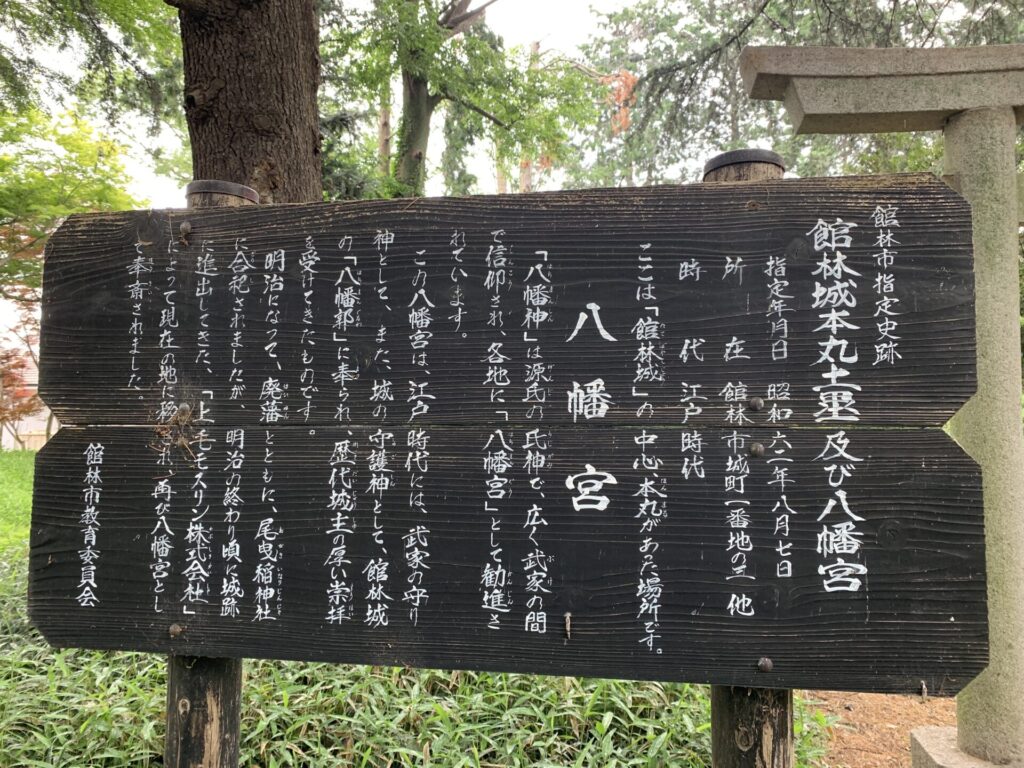
This appears to be the location where the Honmaru(本丸:the main enclosure)—once stood.
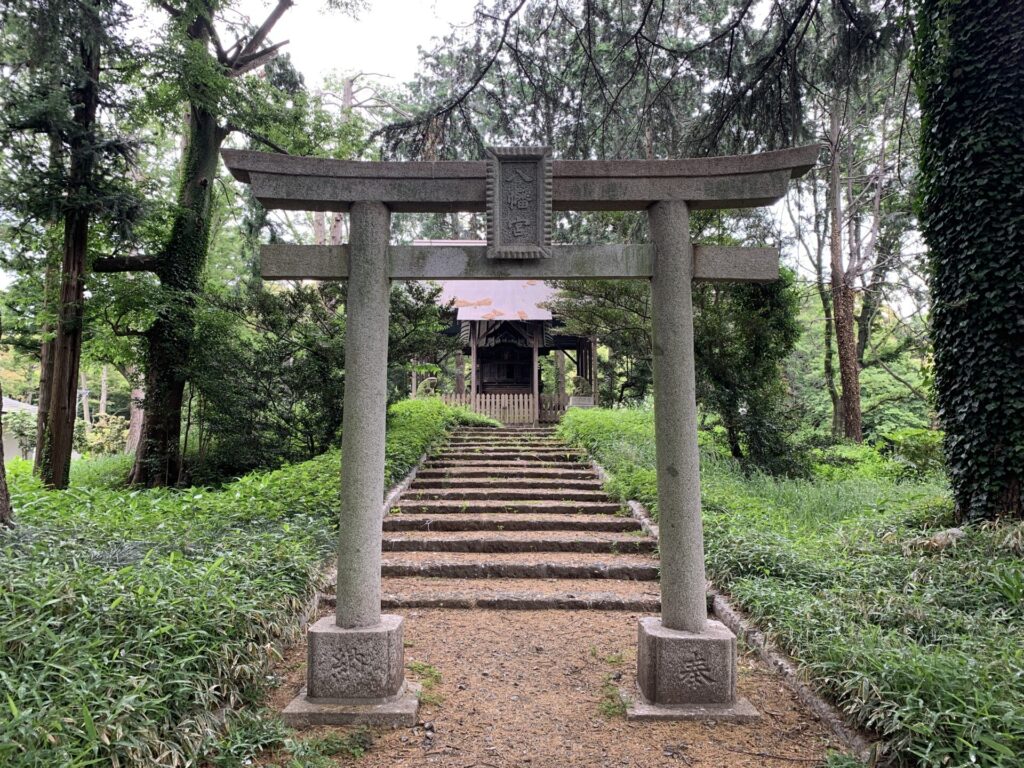
And here stands Hachiman Shrine⛩️.
Although this area is said to preserve traces of the Honmaru’s earthen ramparts, the remains are not particularly distinct—especially when compared to other castle sites I have visited.
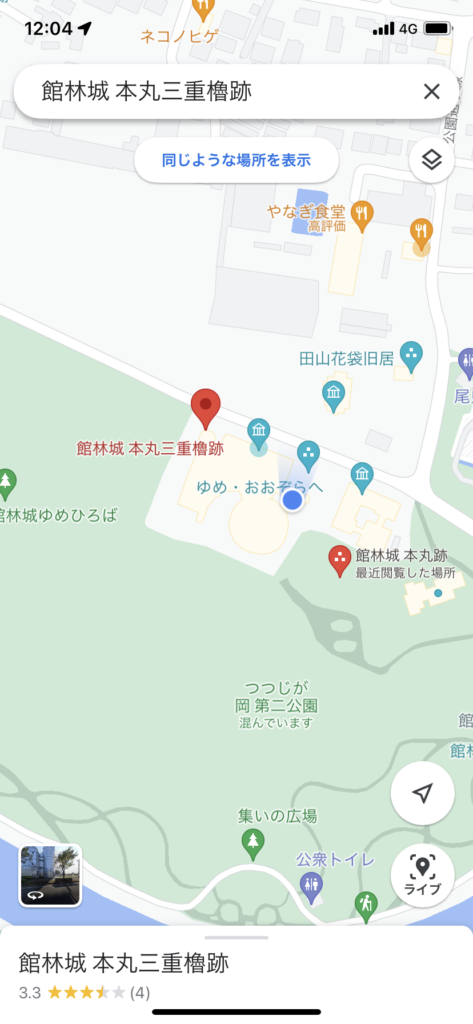
Just to be sure, I walked around the area once more, checking Google Maps again as I went.
This time, I decided to head toward the site marked as the “Honmaru Three-Story Turret Ruins”(本丸三重櫓跡).
Please… let there be something here that sparks a bit of excitement!
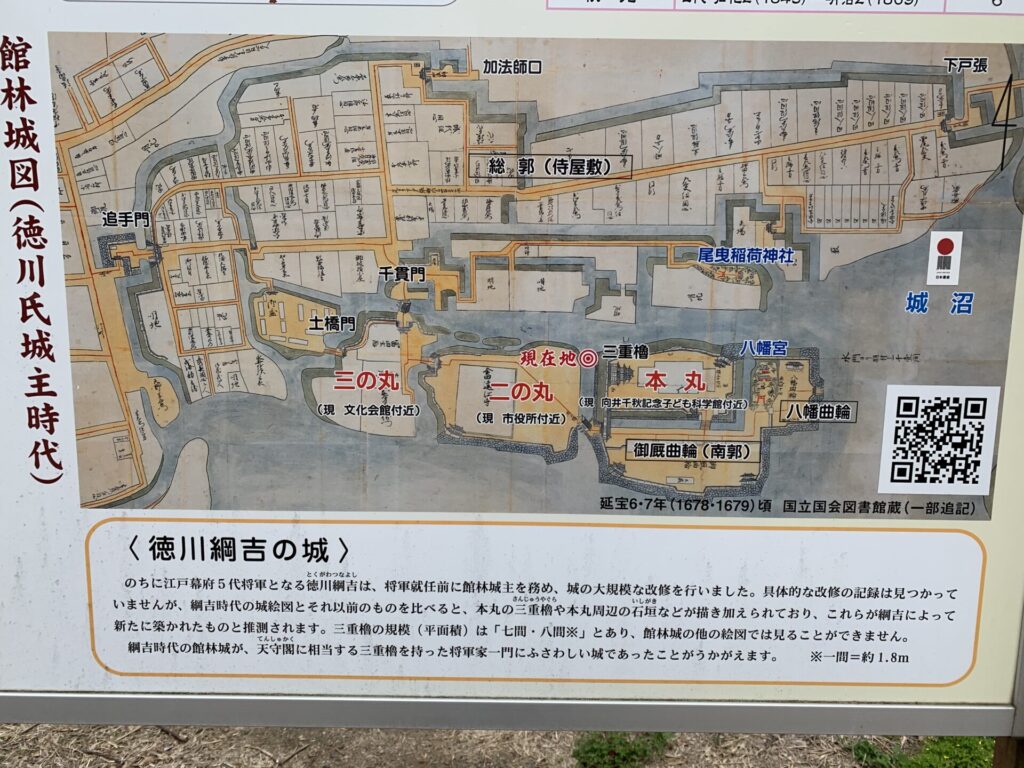
When I arrived at the site marked “Honmaru Three-Story Turret Ruins”(本丸三重櫓跡),
I discovered a layout map of Tatebayashi-jo! 😆
It seems that, more accurately, the Honmaru was located slightly apart from the Hachiman Shrine I had just visited.
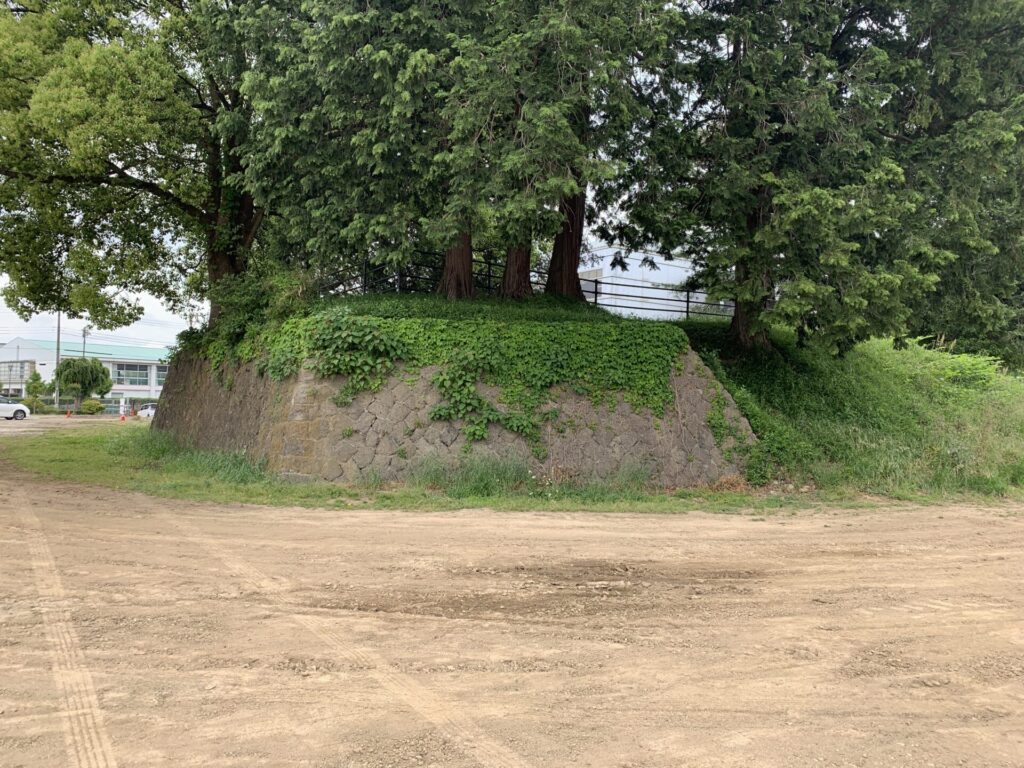
It appears that this is the actual site of the Honmaru(本丸:main enclosure).
Today, the Mukai Chiaki Children’s Science Museum stands here.
Only what seems to be earthen ramparts partially lined with stonework remain visible, and there are no other particularly prominent castle structures to be seen.
Still, even these remnants are valuable traces of the castle’s past. ✨
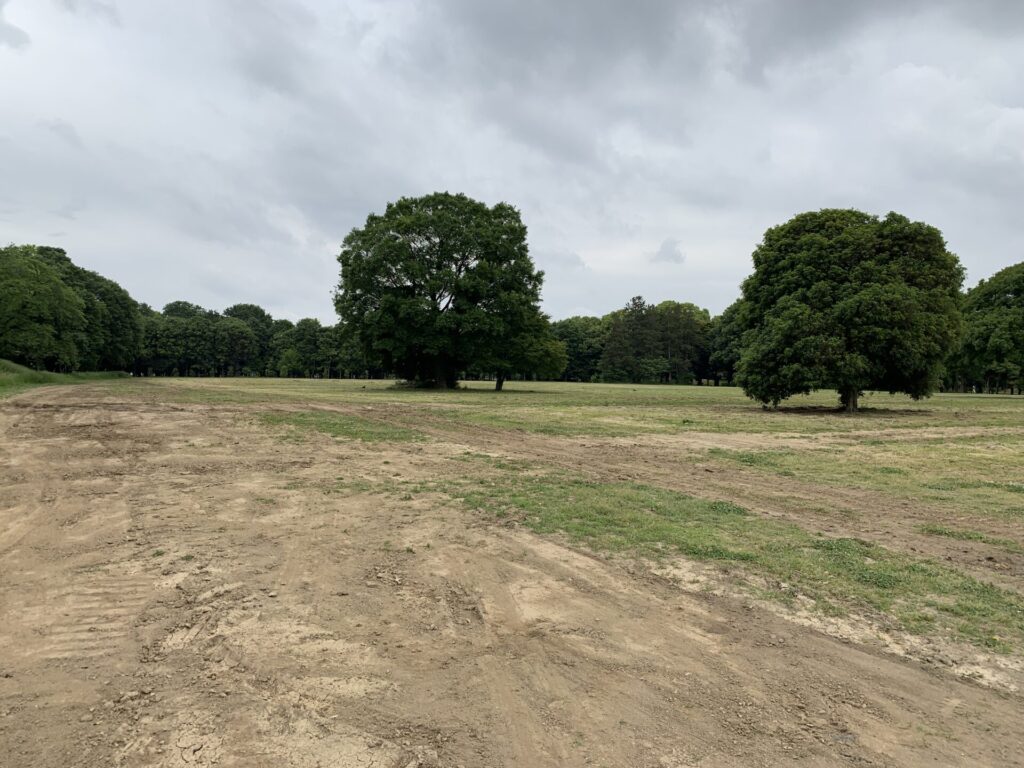
As you can see,
the area directly in front of the Honmaru ruins is quite spacious.
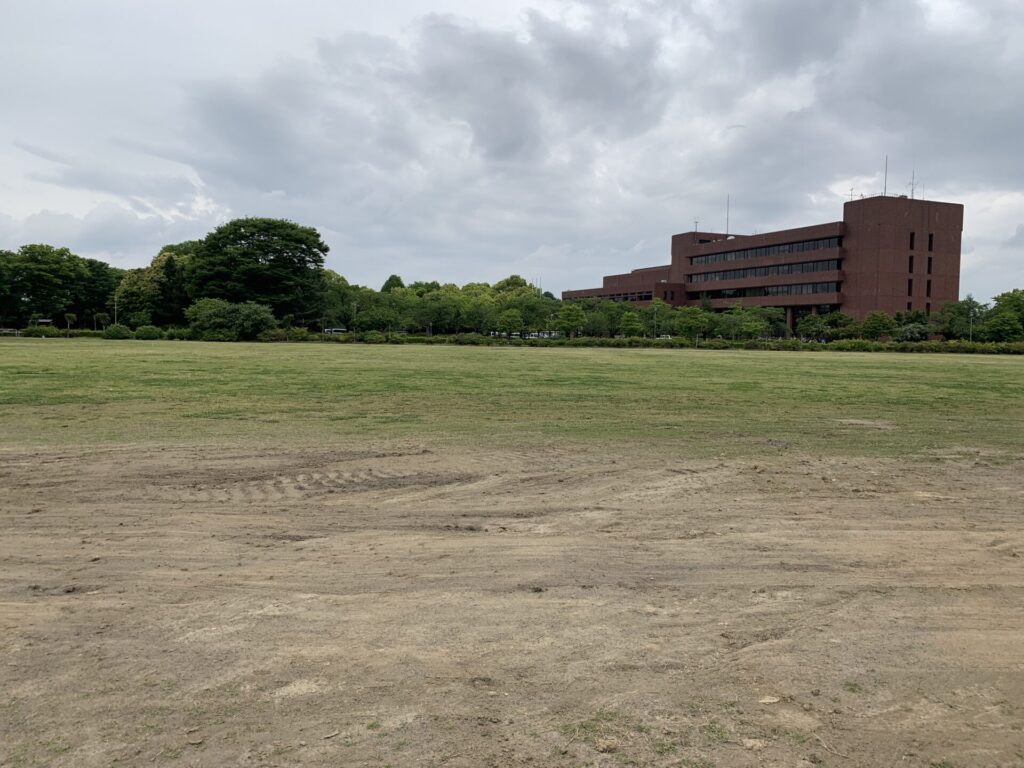
Turning 180 degrees,
you can see Tatebayashi City Hall in the distance to the right.
This area appears to have been the site of the Ninomaru (二の丸:second enclosure).
Naturally, I went to take a look.
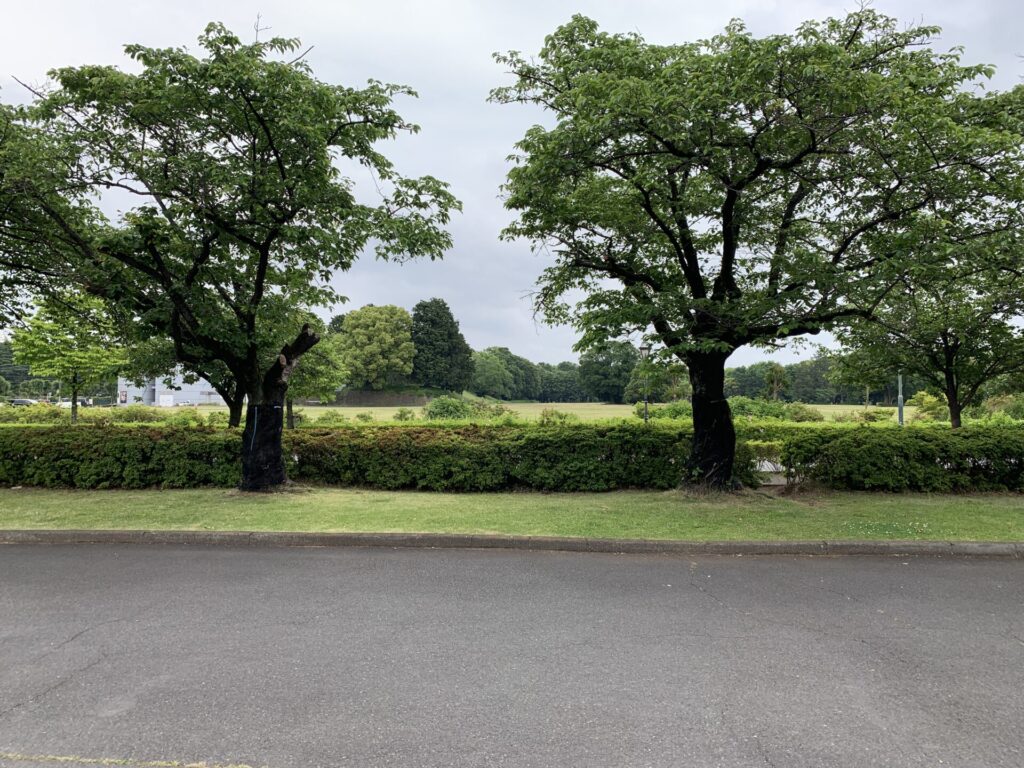
I arrived at the site of the Ninomaru (二の丸:second enclosure)!
Here as well, there were no particularly striking remains to be found.
From the parking area in front of Tatebayashi City Hall, I took a photo looking back toward the Honmaru(本丸:main enclosure)side.
Viewed from this angle, you can get a better sense of the castle’s overall scale.
It was clearly quite large.
This visit also served as a valuable reminder:
Just because a place is labeled as a “castle site” does not necessarily mean that prominent remains will still be visible today.
This Was the Real Highlight !! — The Dobashi Gate Ruins
“There must be more than this…”
Unable to give up, I once again turned to Google Maps and set out in search of the Senkan Gate ruins and the Dobashi Gate ruins.
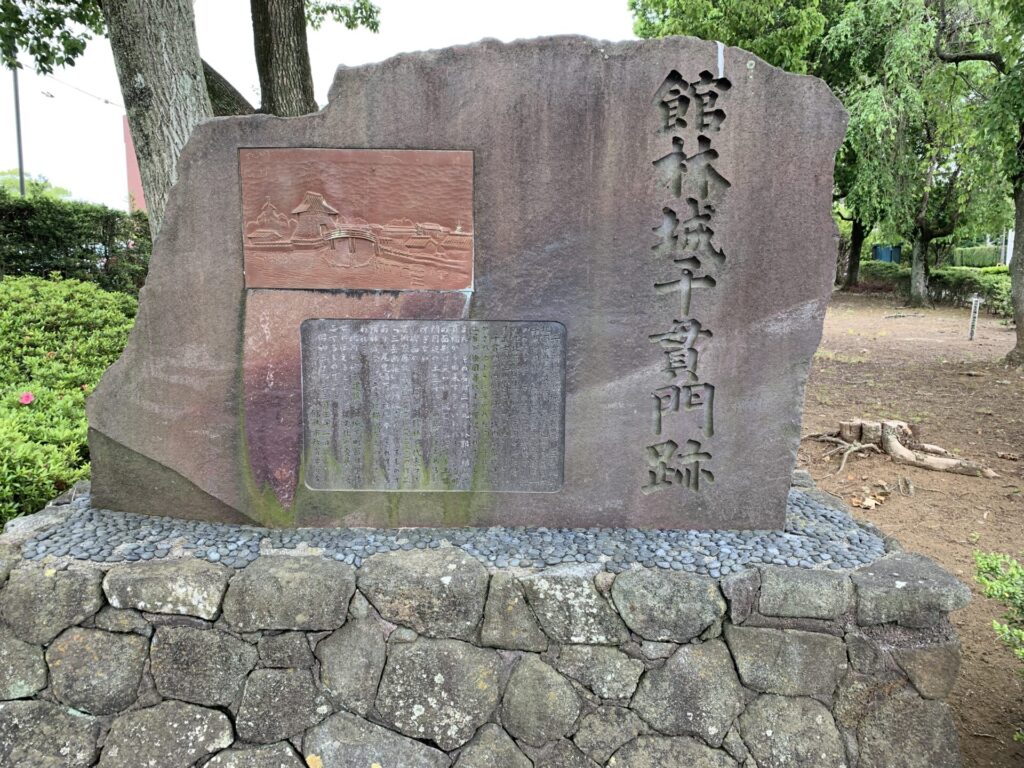
As if to dampen my faint hopes,
the Senkan Gate site was marked only by a stone monument like this.
“Oh… perhaps this visit won’t yield much after all.”
With that sense of resignation, I made one last stop at the Dobashi Gate ruins—and then…
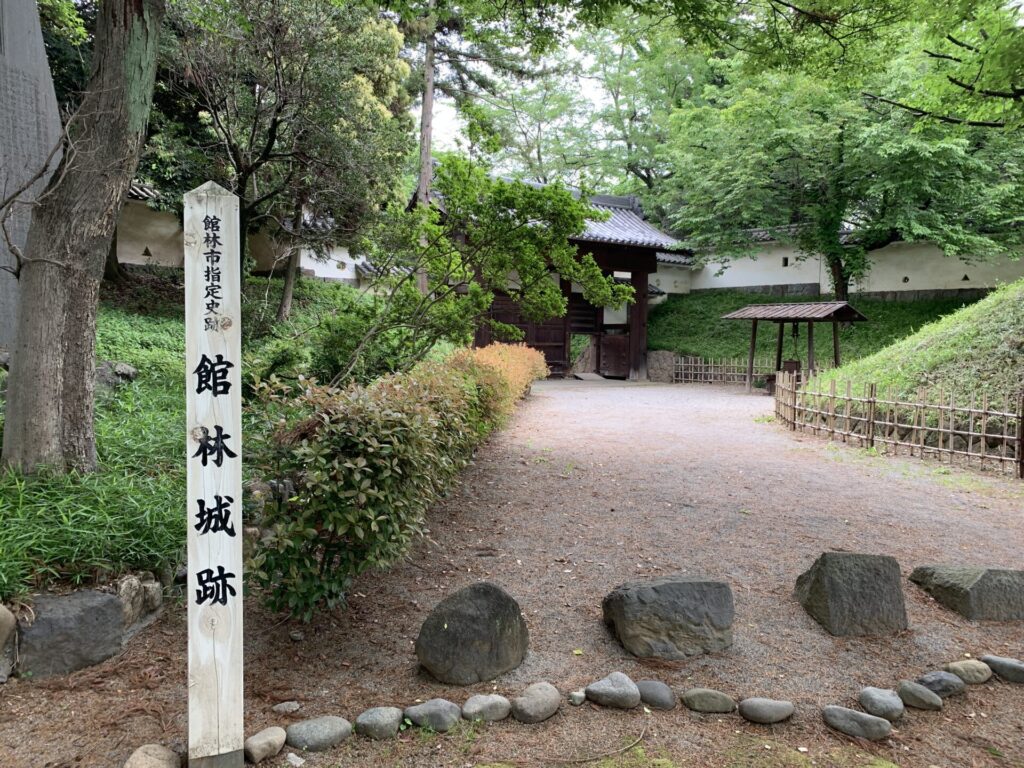
There it was!
And what an impressive structure!
Although this Dobashi Gate appears to be a reconstruction, it is still well worth seeing and gives a strong impression of the castle’s former grandeur.
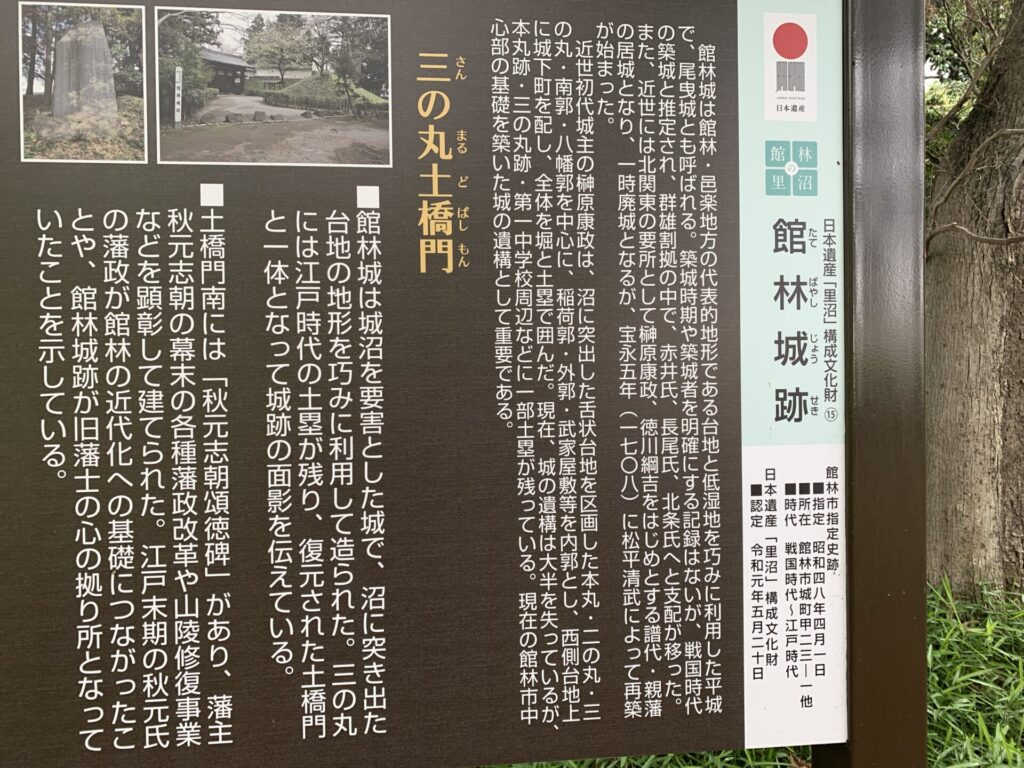
Unfortunately, most of the original castle remains seem to have been lost….
However, I learned that portions of the earthen ramparts still survive.
I went to confirm them—and decided to count that as the true highlight of this visit.
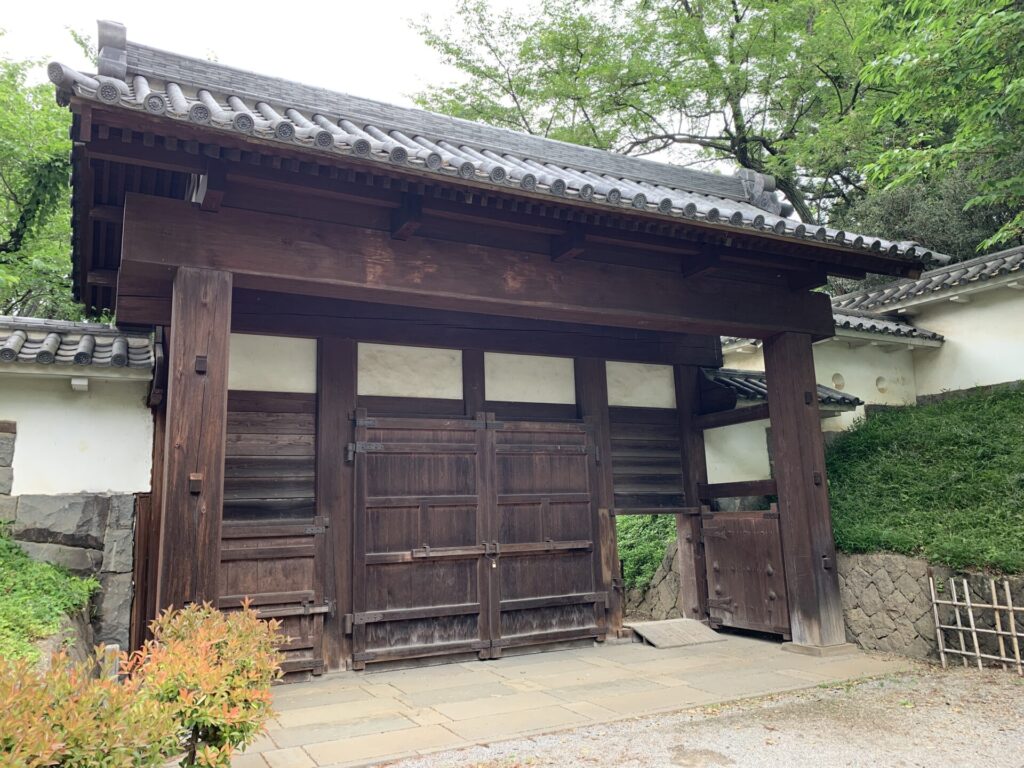
Even so, the gate looks so weathered that you might wonder whether it truly is a reconstruction.
Perhaps it was rebuilt quite some time ago.
Here, I filmed a short video of the Dobashi Gate and its surrounding area.
Please take a look.
On both sides of the gate, Dorui(土塁:the earthen ramparts ) stand out clearly,
and the walls built above them further emphasize their presence.
Truly impressive !!
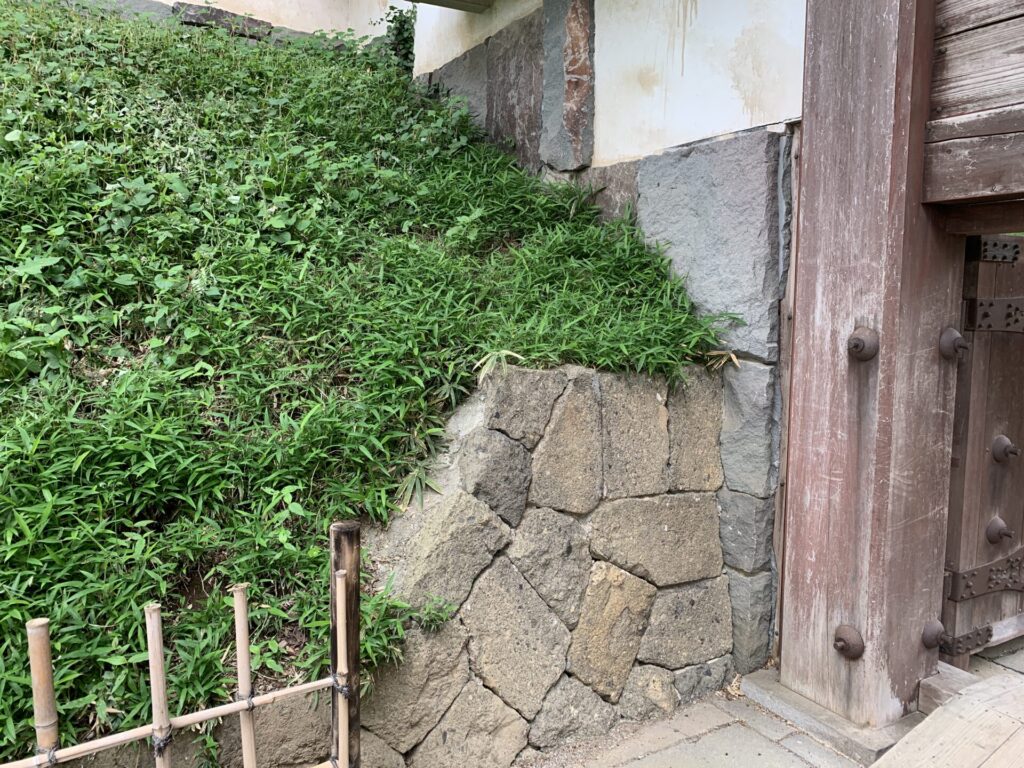
If the earthen ramparts are original,
could this stonework also date back to the castle’s active period?
On second thought… this is likely part of the reconstruction.
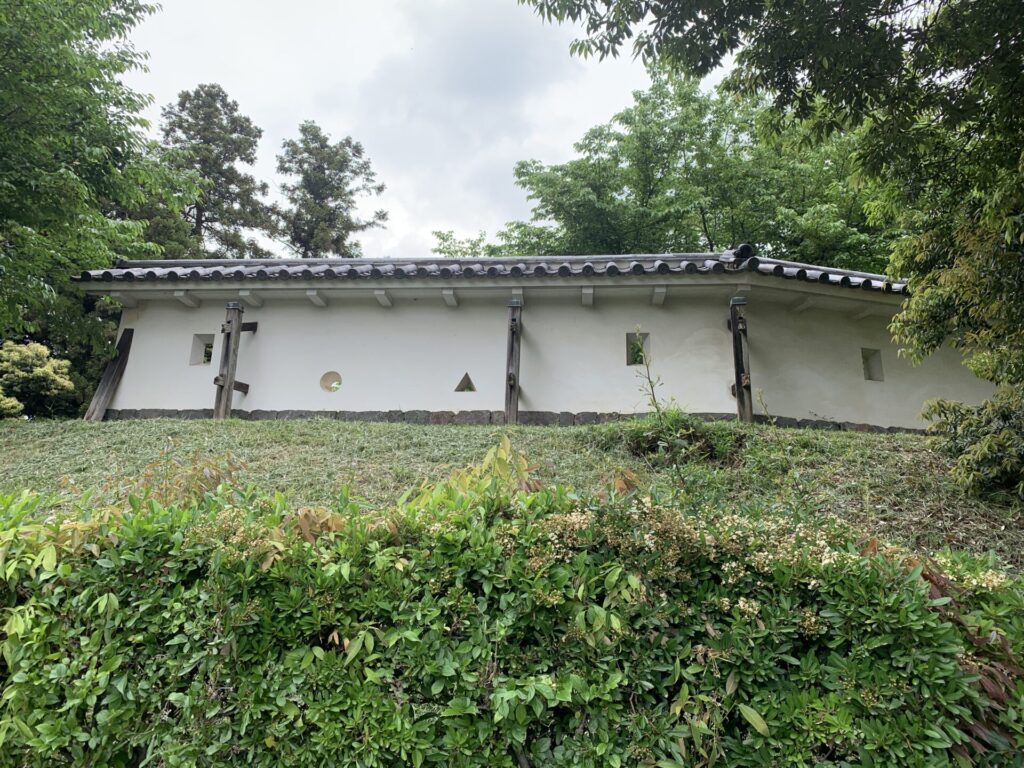
This time, I focused the camera on the walls themselves.
Even if only part of the structure is original, the presence of surviving elements from the castle’s active period—combined with reconstructed features—still makes for a very compelling sight.
Finally, please enjoy a short video of the Sannomaru (三の丸:third enclosure) area, including the Dobashimon (土橋門:Dobashi Gate).
The sheer size of this Sannomaru (三の丸:third enclosure) is impressive in itself.
And the fact that the Dorui(土塁:the earthen ramparts ) are still clearly preserved makes the site all the more appealing—even that alone gives it real character.
This time, simply being able to see the impressive Dobashi Gate and the surviving earthen ramparts made the visit worthwhile.
I’ll see you again in the next article! 🏯