
Kōnodai-jo (Ichikawa city, Chiba)|An ordinary park in full bloom with flowers. But step a little further inside, and you’ll find yourself in the Sengoku period! ⚔️
- 1. A remarkable castle full of highlights, set against the backdrop of the Edo River
- 2. A series of impressive stone walls, earthen ramparts, and dry moats that truly catch the eye…
- 3. A wide open area… perhaps an enclosure ? It’s hard to tell for sure…
- 4. There was even an ancient burial mound within the park!
- 5. Moved by the legend of the “Crying Stone”…
A remarkable castle full of highlights, set against the backdrop of the Edo River
Hello, this is Shin.
May 26, 2023 (Friday).
Lately, I’ve been visiting castles almost every day off 😅
This time, I’ve come to explore Kōnodai-jo, located in Ichikawa City, Chiba 🔥
◉ Castle Type
Hilltop Castle ( hirayamajiro:平山城 )
◉ Cultural Heritage Highlights
◉ Defensive Features & Fortifications
◉ Exploration Difficulty
🔰 Easy Castles
◉ Estimated Time to walk around
: about 1 hour
◉ Parking / Access
Parking is available along the Edo River at Satomi Park (space for about 10 cars).
About a 20-minute walk from Yagiri Station on the Hokuso Line.🚃
As shown on Google Maps, the ruins of Kōnodai Castle are located within Satomi Park.
As usual, I looked for a parking spot in advance before heading there, but…
The space inside the park could barely fit two cars.
So I had no choice but to park at the Satomi Park parking lot a bit further away 💦
This is around the area.
Actually, this is probably the main parking lot for the park.🚙
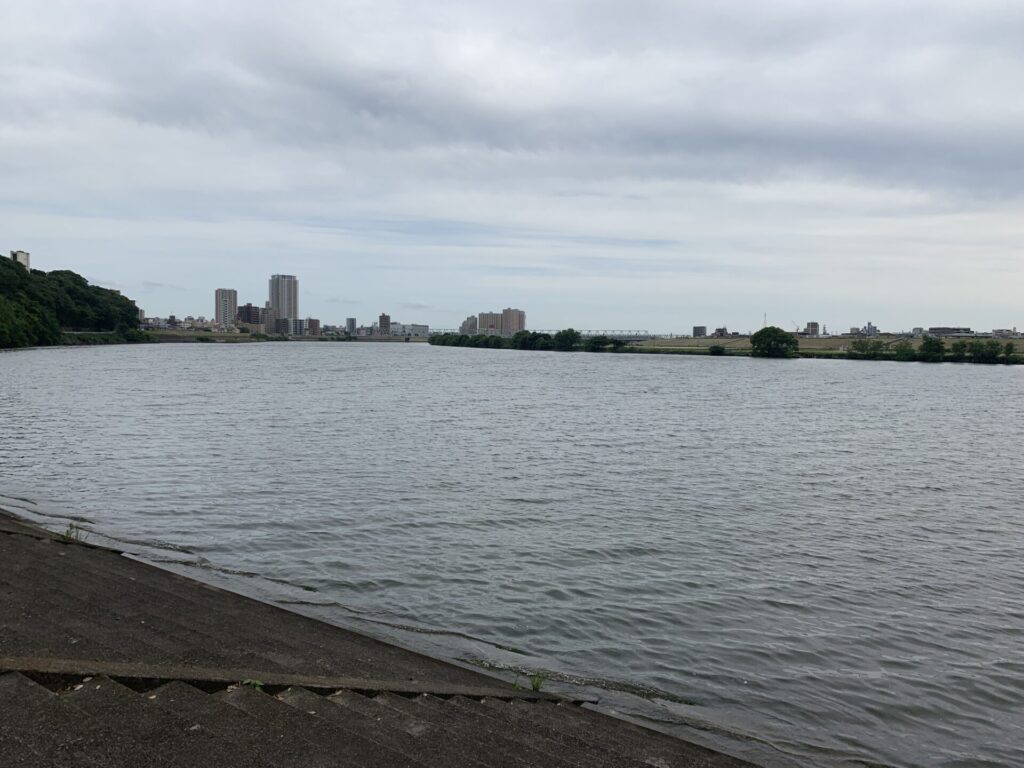
The parking area faces the Edo River.
Kōnodai Castle also overlooked the river, using it as a natural line of defense.
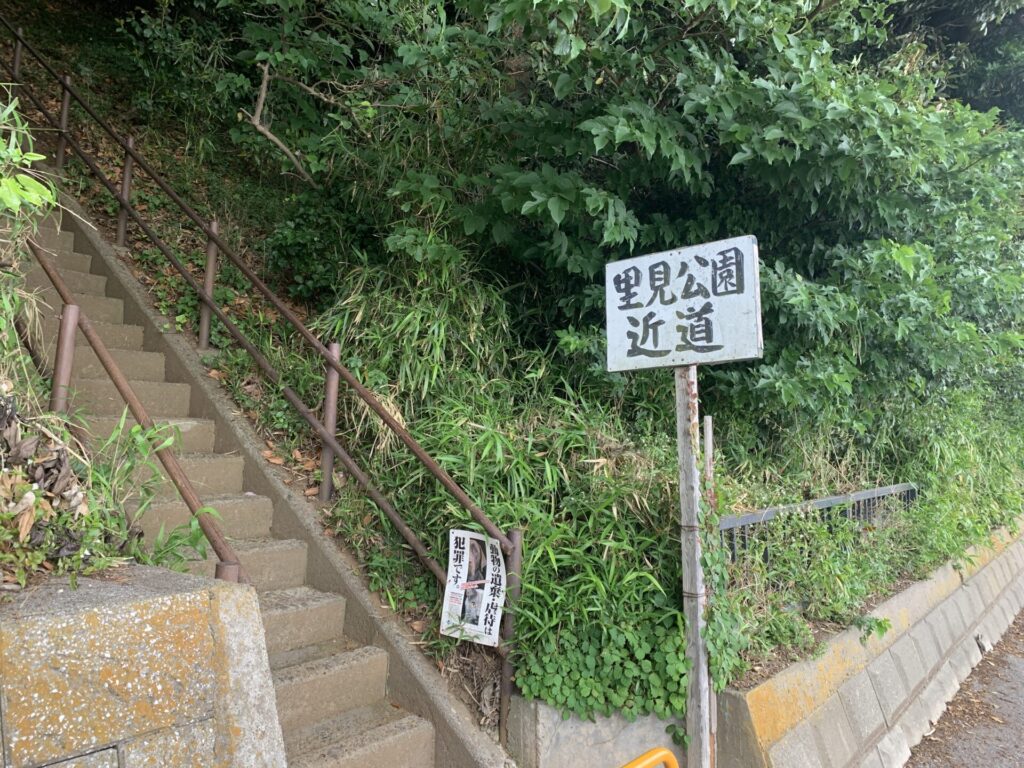
Walking a bit from the parking area along the Edo River toward the park,
I found a shortcut!! 😆
It looks like taking these stone steps will get you there faster.
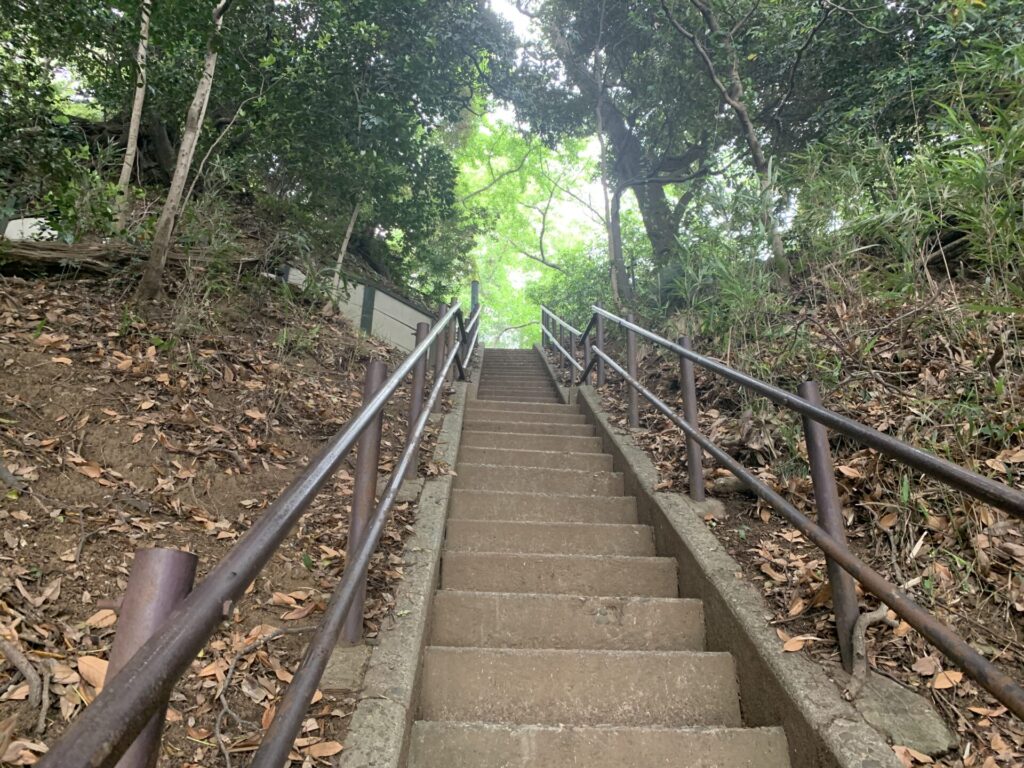
There are quite a lot of stone steps, and they’re steep.
Kōnodai-jo is more of a hilltop castle—built on elevated ground.
Well, compared to a full-fledged mountain castle, this is nothing too challenging.
(Still, I was a bit out of breath by the time I reached the top…)
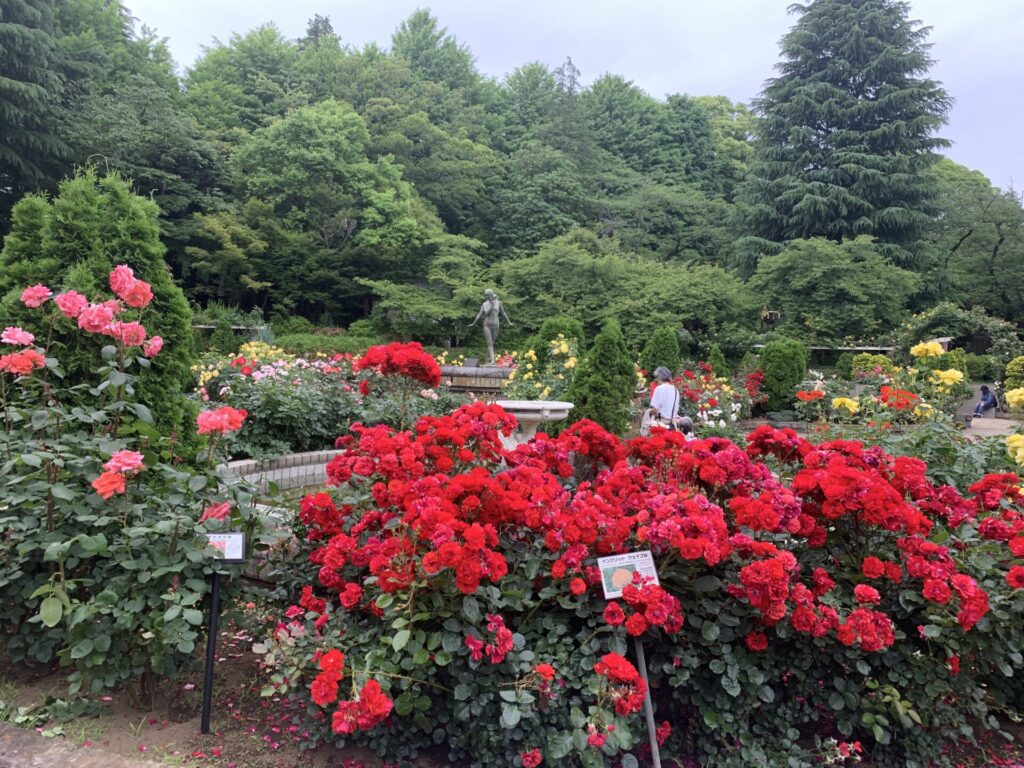
Satomi Park, where the castle ruins are located,
has a fountain plaza and a rose garden, as you can see.
There were quite a few visitors enjoying the scenery on this day as well.
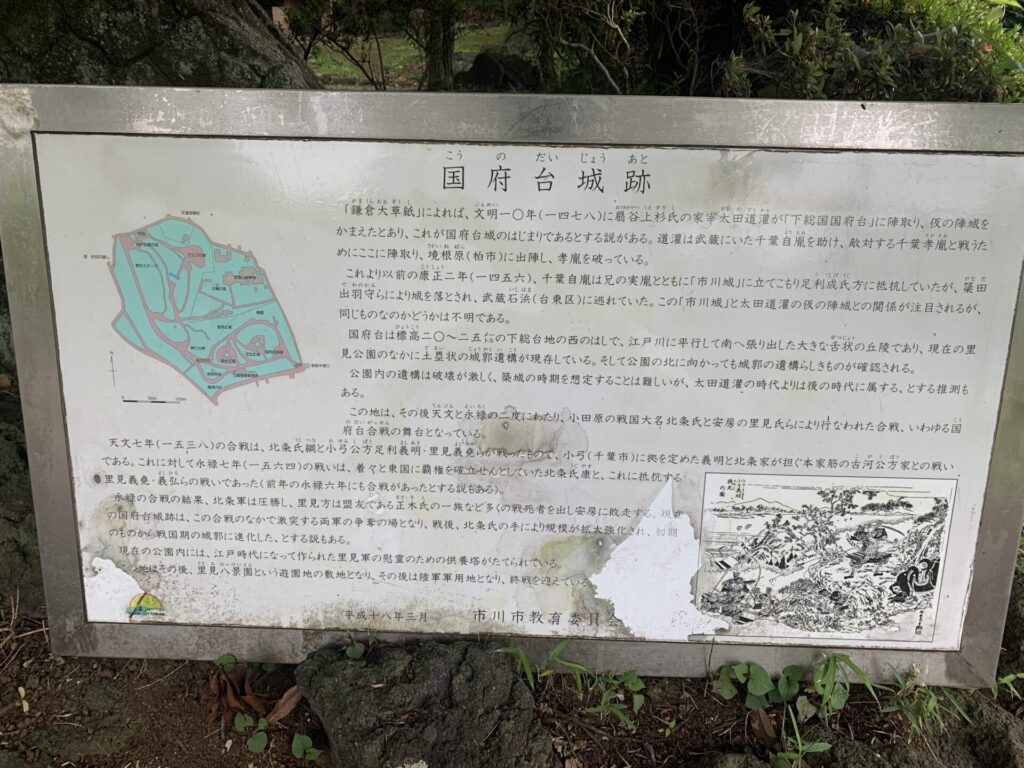
Walking east through the park, I came across this information board.
It seems that Kōnodai-jo was contested between the Hōjō clan and the Satomi clan.
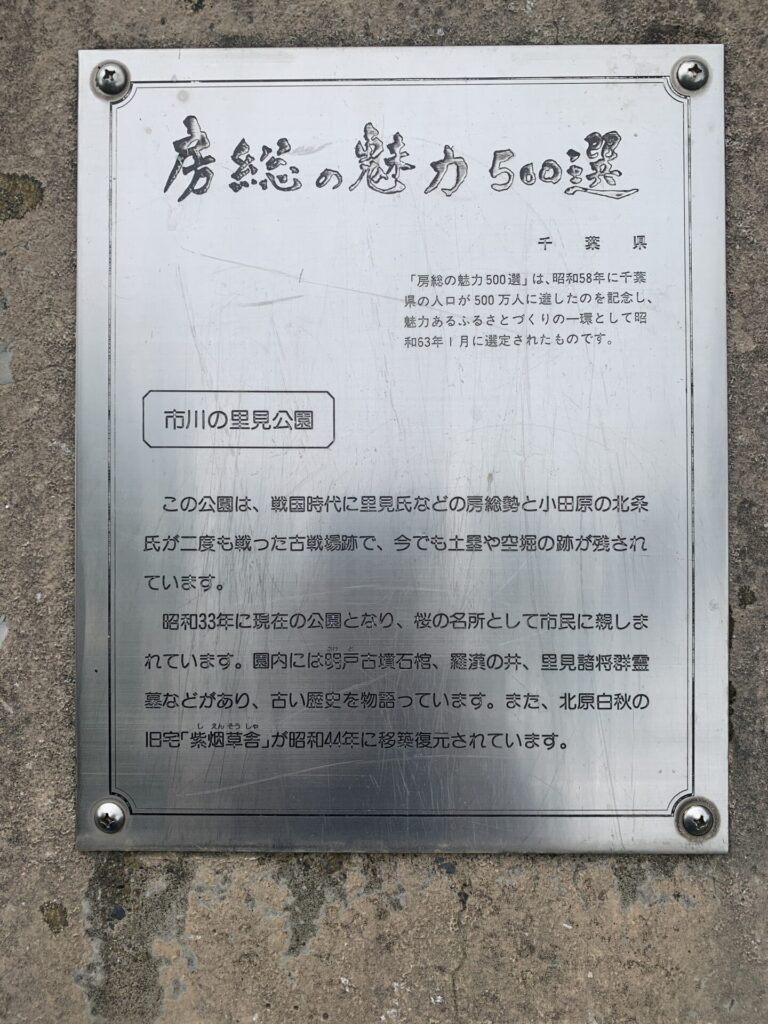
Right nearby, I also found this stone monument.
“Remains of earthen ramparts and dry moats are preserved”!?!
To be honest, before coming here, I didn’t expect to find much in terms of ruins.
But what I saw next honestly surprised me… 😵
A series of impressive stone walls, earthen ramparts, and dry moats that truly catch the eye…
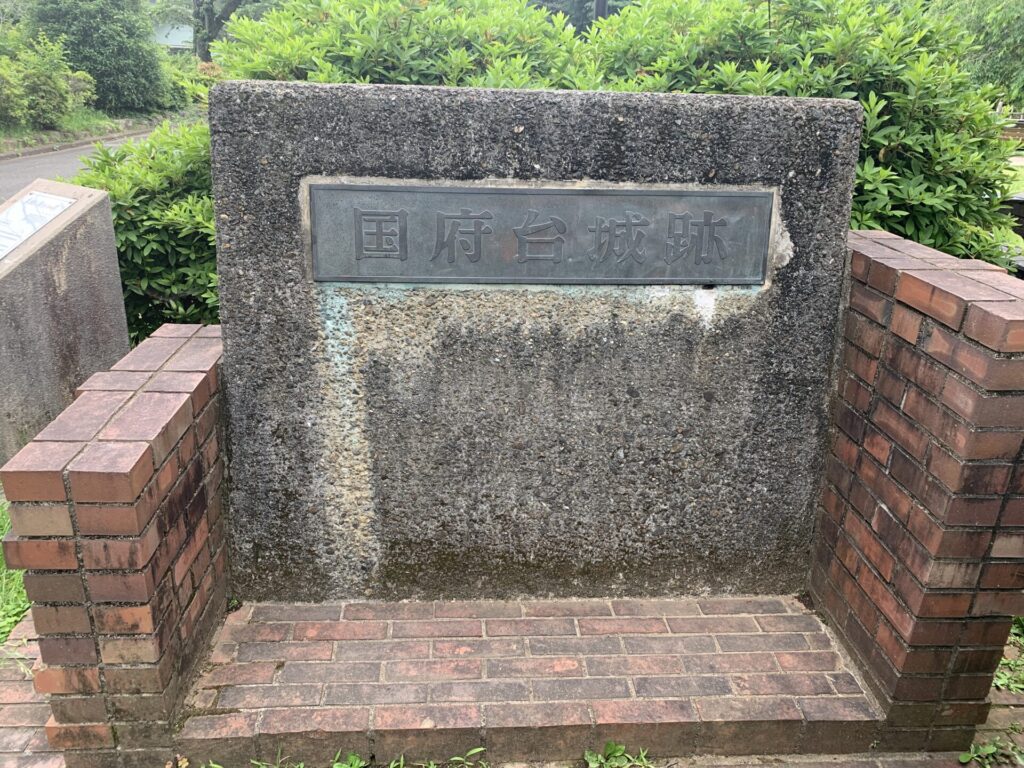
Right next to the stone monument, I found this as well.
It was clear that this was indeed the castle site, but…
Even looking around, I couldn’t spot anything that looked like earthen ramparts or moat remains…🤔
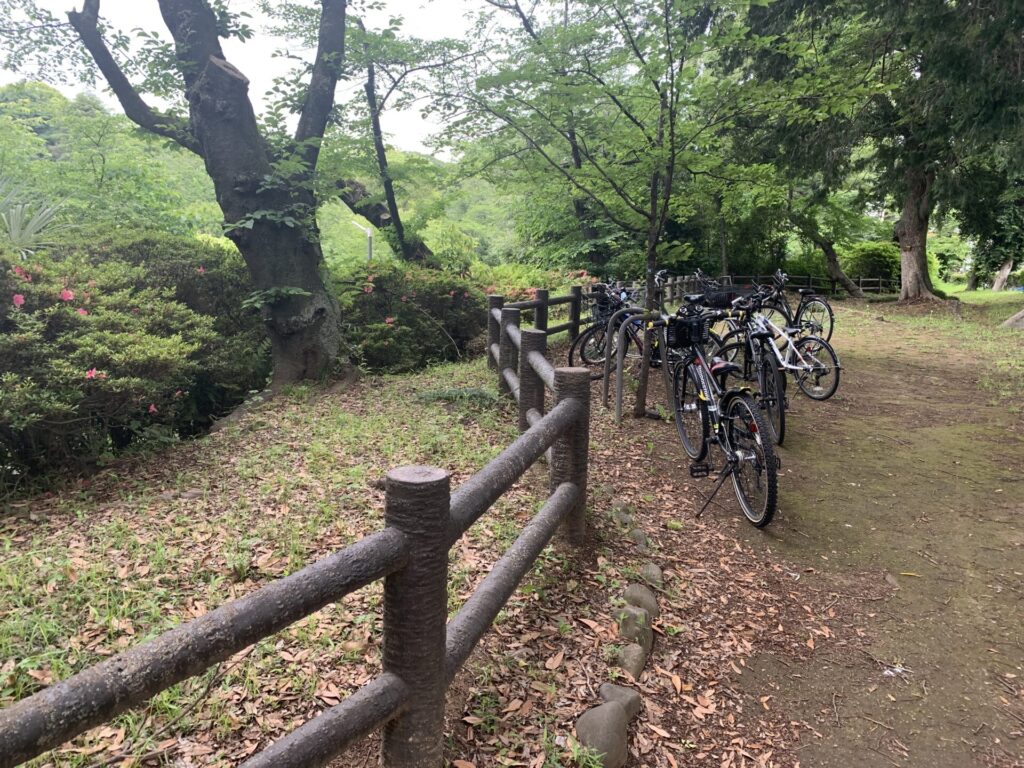
I walked a bit further east and climbed up to a spot that made me think,
“Could this be the remains of an earthen rampart?”
But I couldn’t be sure… (it just had kids’ bicycles parked there…)
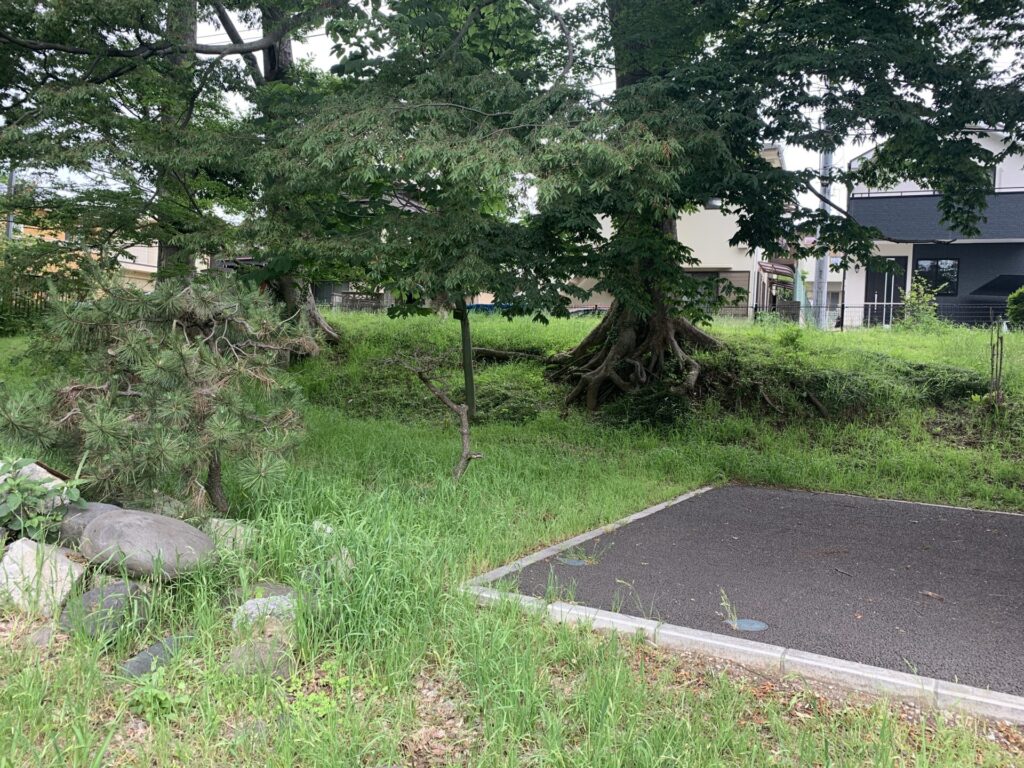
I reached the eastern edge of the park,
so from there, I started walking along the northern side, searching every corner.
This could almost look like an earthen rampart, but…
maybe not after all…
Walking along the northern edge of the park,
I happened to glance beyond the playground where children were playing,
and in the dim woods, I spotted what looked like a small mound and some stones…
“Could that be it!?”
A middle-aged man charges straight into a seemingly empty forest.
(From the outside, I must have looked pretty suspicious 😅)
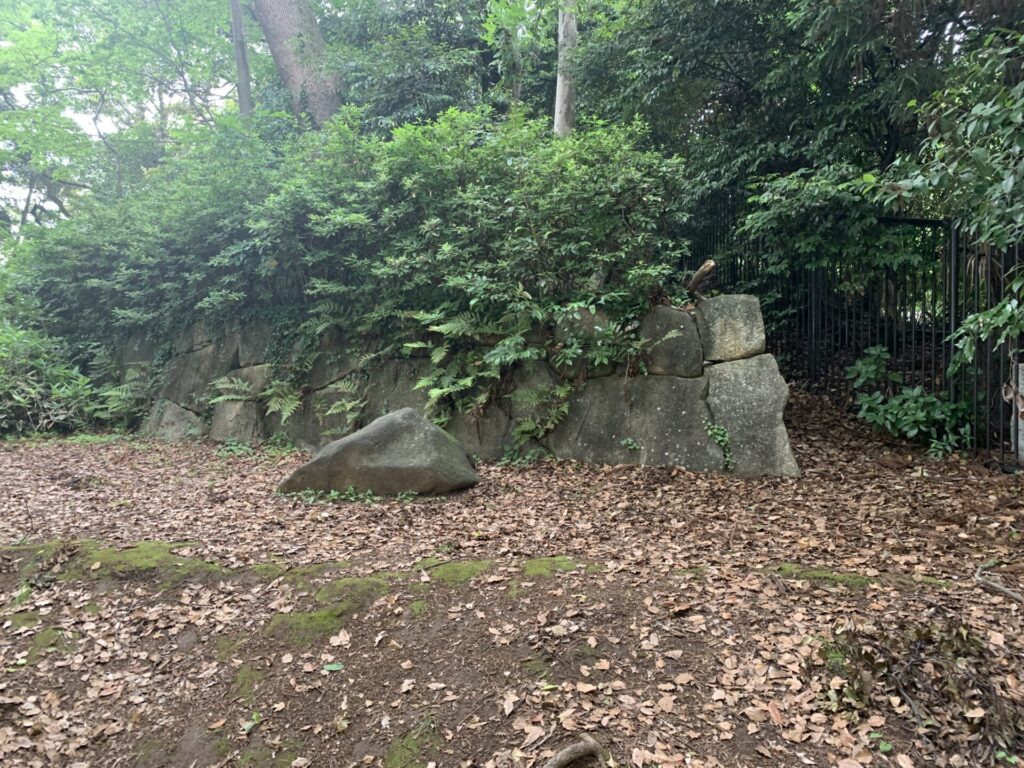
There it was!!
All those castle visits weren’t for nothing!
I felt a bit proud of myself for finding it.
(Though I haven’t explored that many castles yet 💦)
From here, the remains of stone walls and earthen ramparts continue.
Take a look in the video below.
Just when I was about to give up, thinking,
“Maybe there’s nothing to see here after all,”
I was genuinely impressed!!
And this is still just the beginning!!
Let’s head further in.
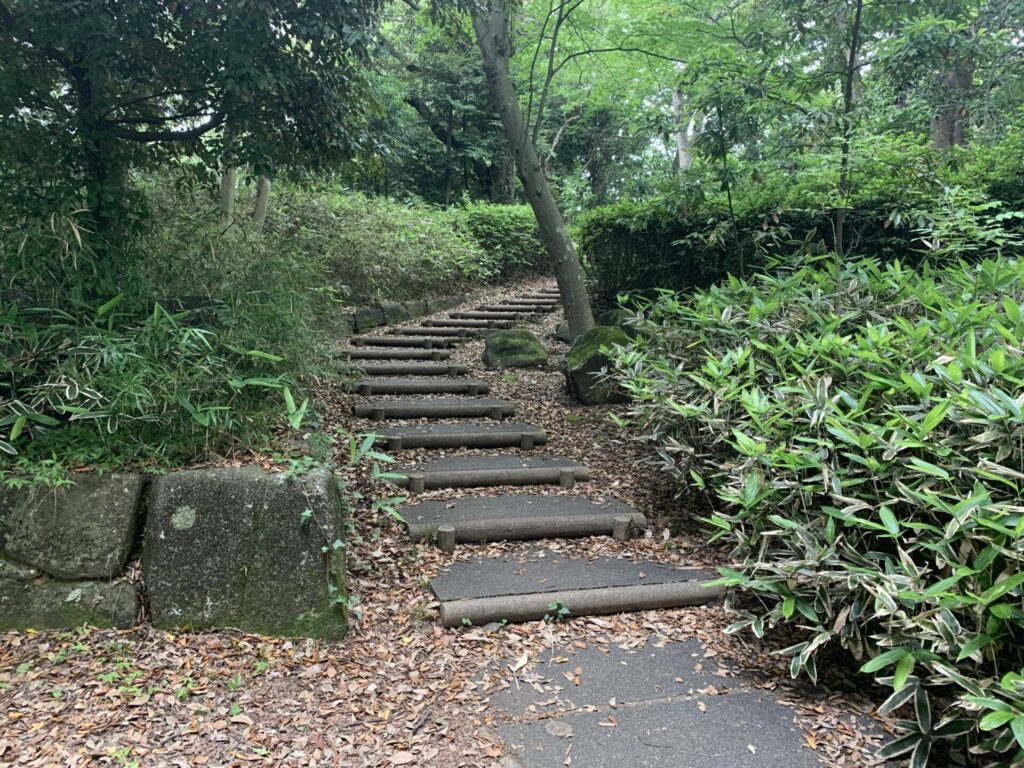
After confirming the remains of stone walls and earthen ramparts,
I spotted more stone steps leading further in…
No choice but to keep going!
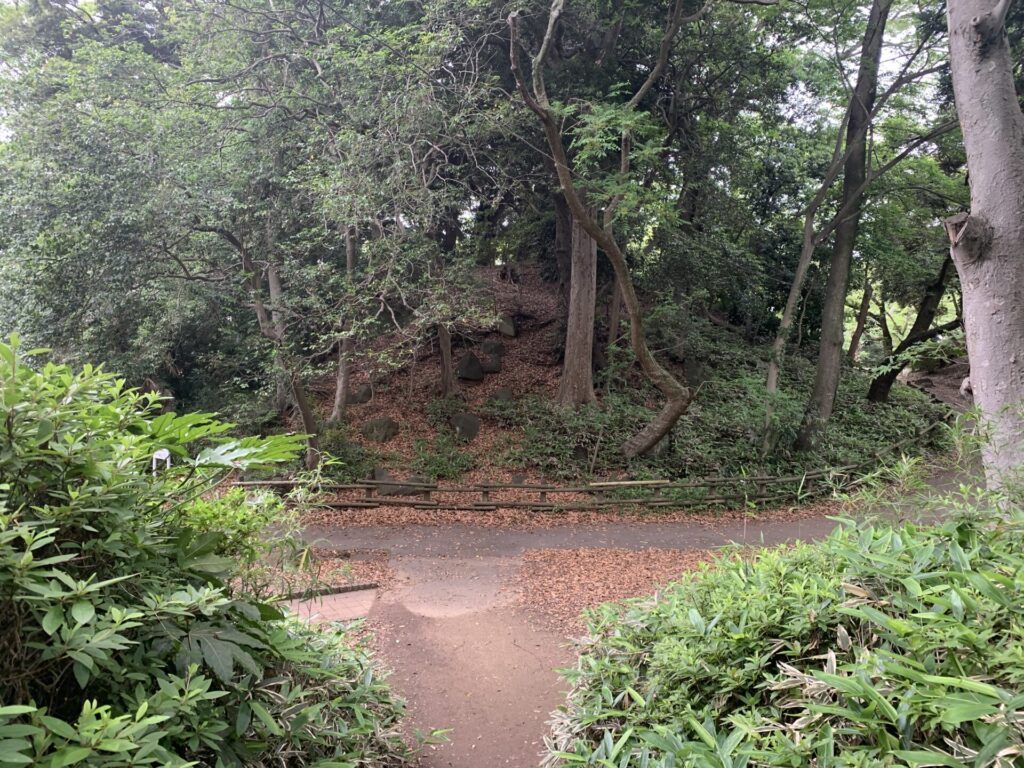
After climbing to the top of the stone steps, I found what looked like more earthen rampart remains further in!
My expectations kept rising.🔥
Now, take a look at what lies ahead in the video, starting from the bottom of these steps.
What do you think?
They’re not that tall,
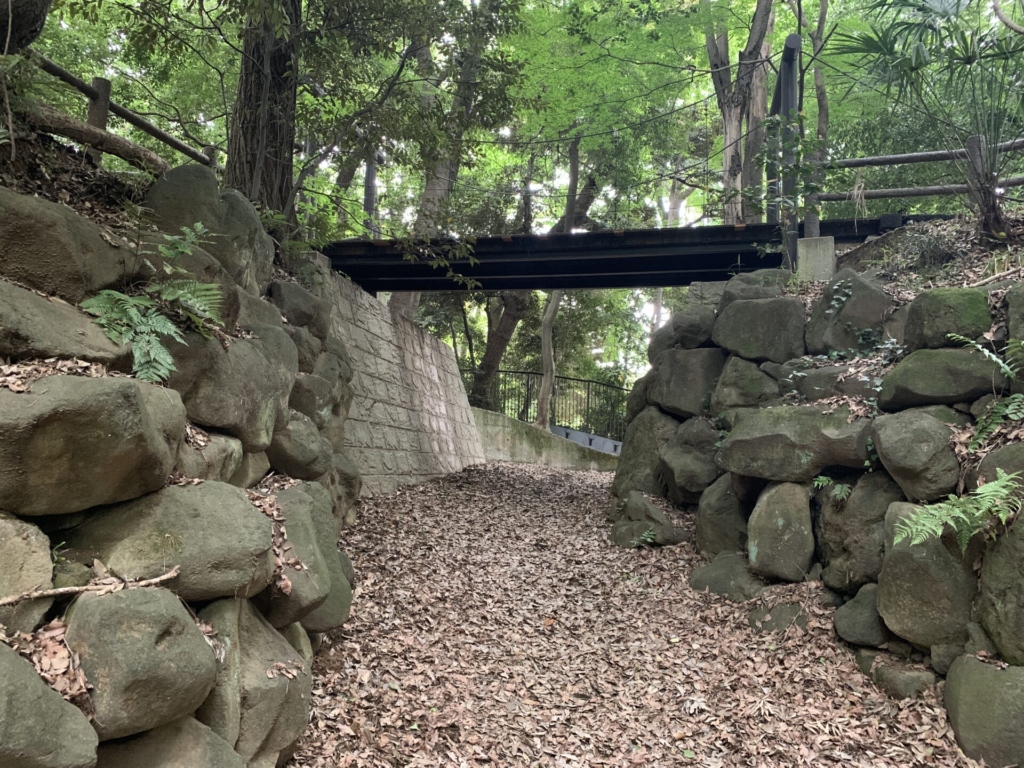
but you can see earthen ramparts and stone walls on both sides, and even a bridge crossing a dry moat further ahead.
With this much preserved, it’s more than enough to appreciate it as castle ruins.
A wide open area… perhaps an enclosure ? It’s hard to tell for sure…
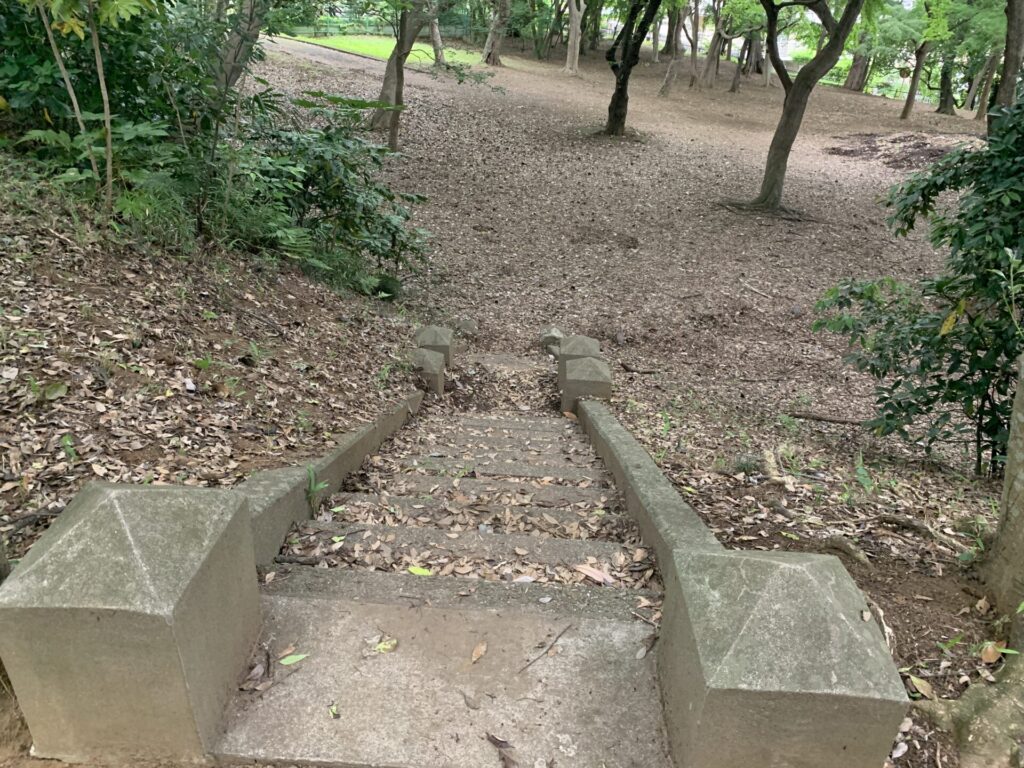
After crossing the bridge,
I came upon a fairly wide open area like this…
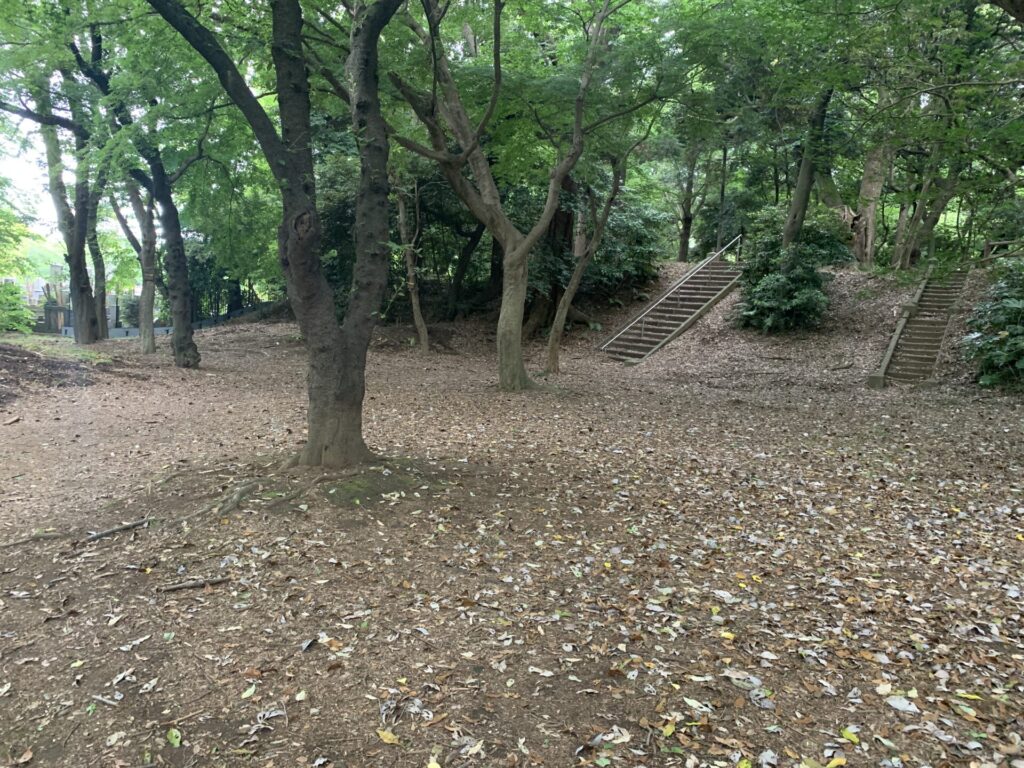
Climbing down, it turned out to be fairly spacious,
so it may have been used as one of the Kuruwa (曲輪:enclosure).
Just speculation, though…
There was even an ancient burial mound within the park!
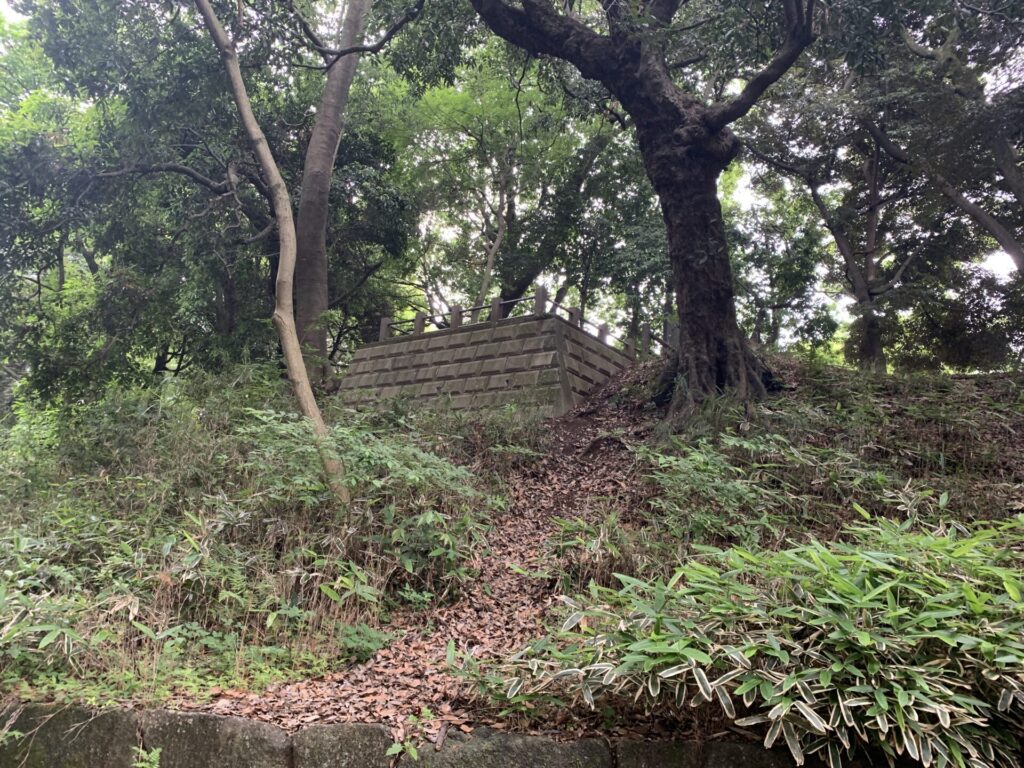
Walking further around the lower part of the park,
I noticed something intriguing up on the elevated ground…
I’ll head over there later.
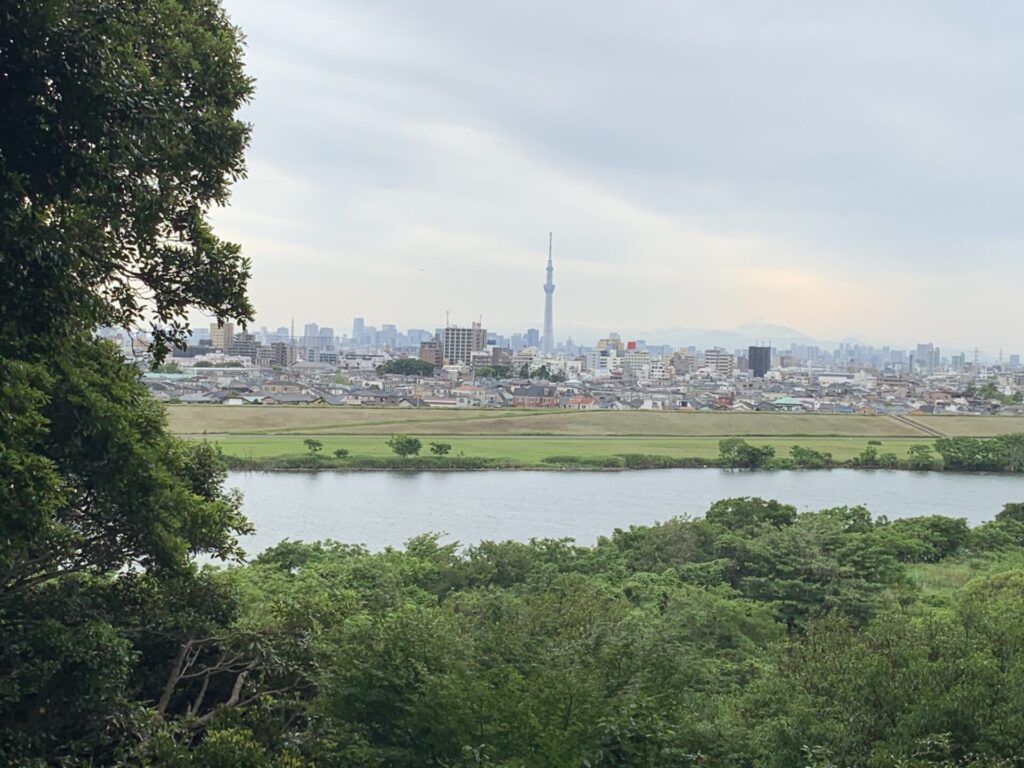
From within the park, there’s a spot where you can overlook Tokyo across the Edo River,
and I could clearly see the Tokyo Skytree as well.
Now, let’s head up to the place that caught my attention earlier.
Take a look in the video.
Climbing up, I found that it was the Aketo Burial Mound.
There was also a stone coffin, suggesting significant cultural value.
Even before that, though, there are quite a number of stone walls and earthen ramparts here, despite their modest height.
Wow… it feels completely different from the lively park area near the entrance.
There are hardly any people here—this spot alone feels like a time slip back to the Sengoku period…
And yet, it’s all within the same park.
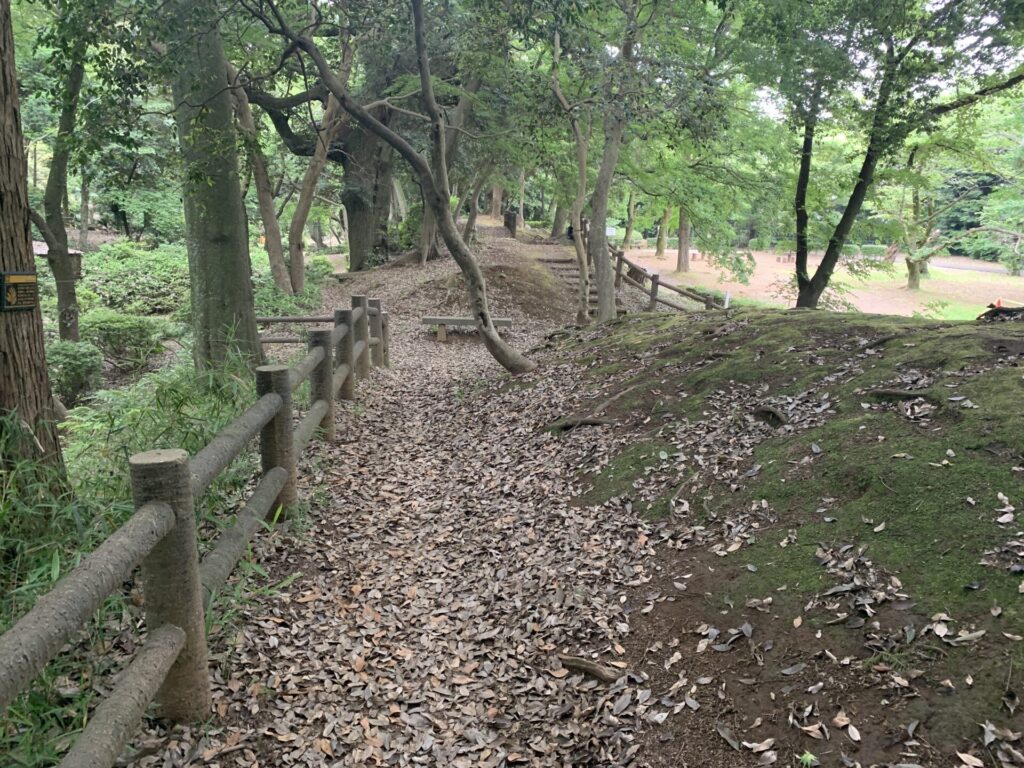
From the burial mound, I walked a bit along the top of the earthen rampart.
It’s fairly elevated here.
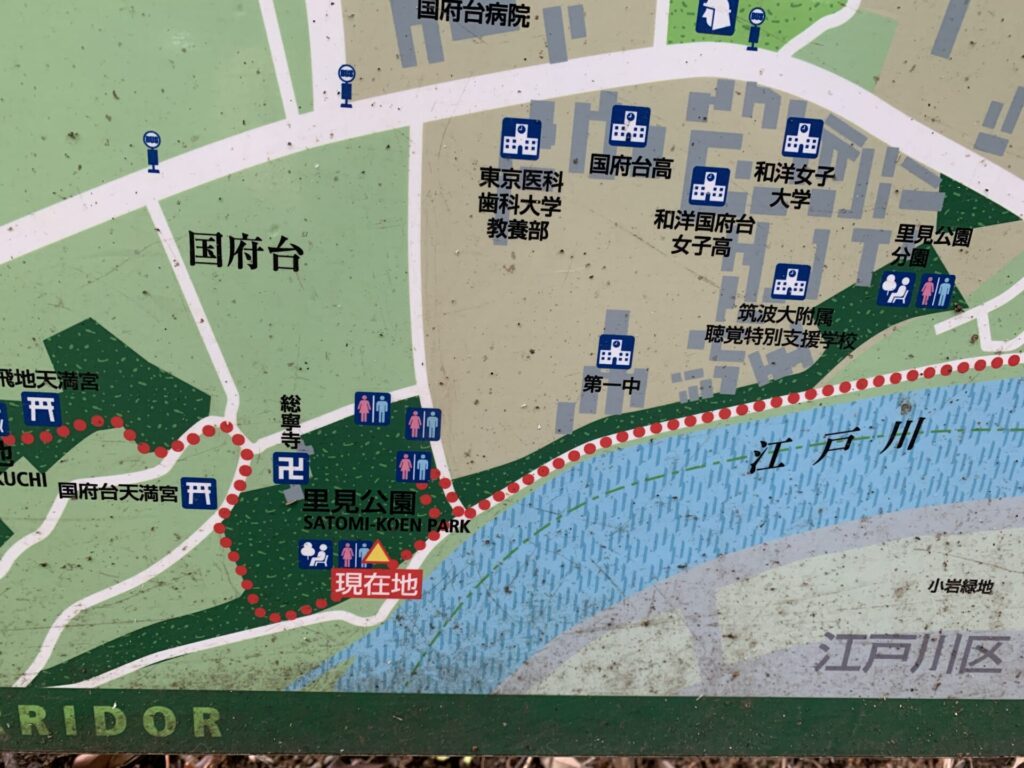
I found this map within the park.
Even from this, you can see that Konodai-jo faces the Edo River.
Next, while taking in a small waterfall below the earthen rampart, I captured a video of a dry moat (or perhaps a trench cut?).
However, since this isn’t a trench dug into flat ground,
it probably wouldn’t be considered a true dry moat.
It could simply be a bridge spanning between earthen ramparts.
Even so, it’s still quite impressive as part of the castle ruins.
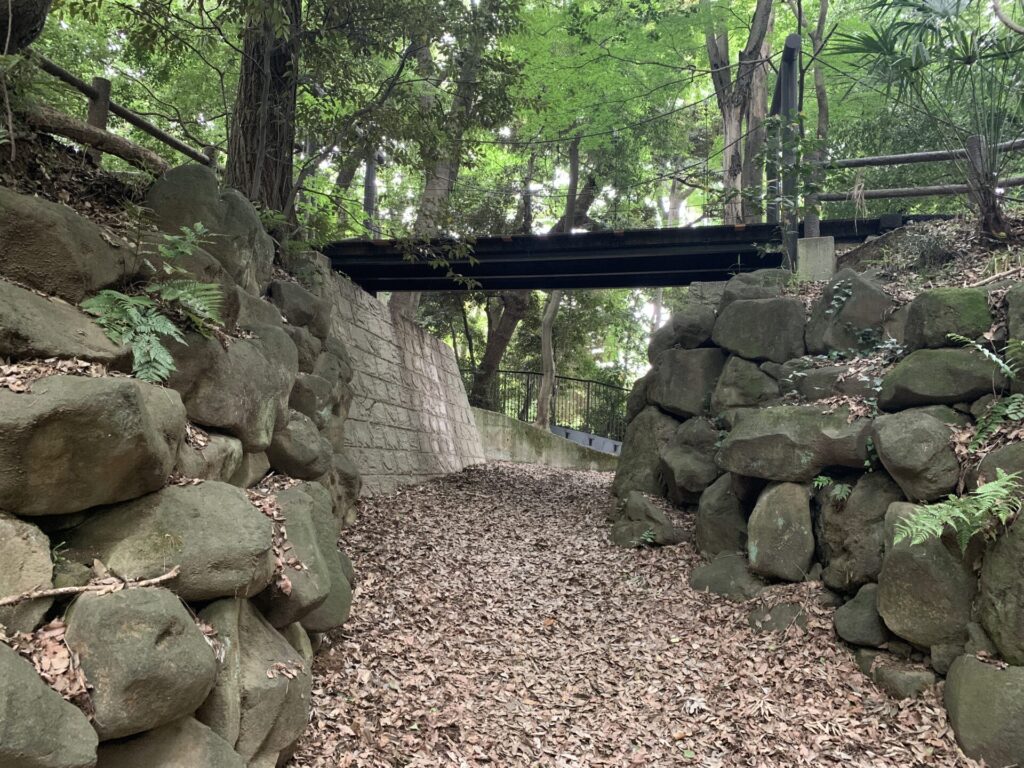
The stone walls on both sides are truly impressive.
I like how the stones vary in size.
Moved by the legend of the “Crying Stone”…
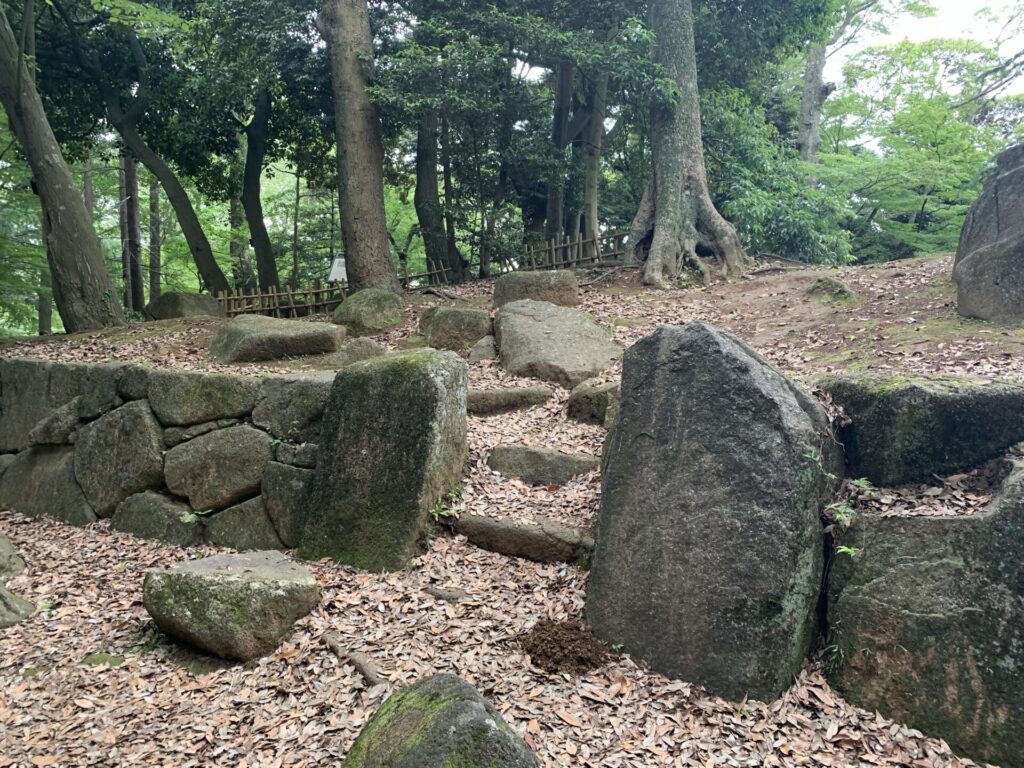
I thought I had seen everything there was to see by now…
but when I checked Google Maps,
I found that something called the “Crying Stone” was still located within the park.
It seems to be around here.
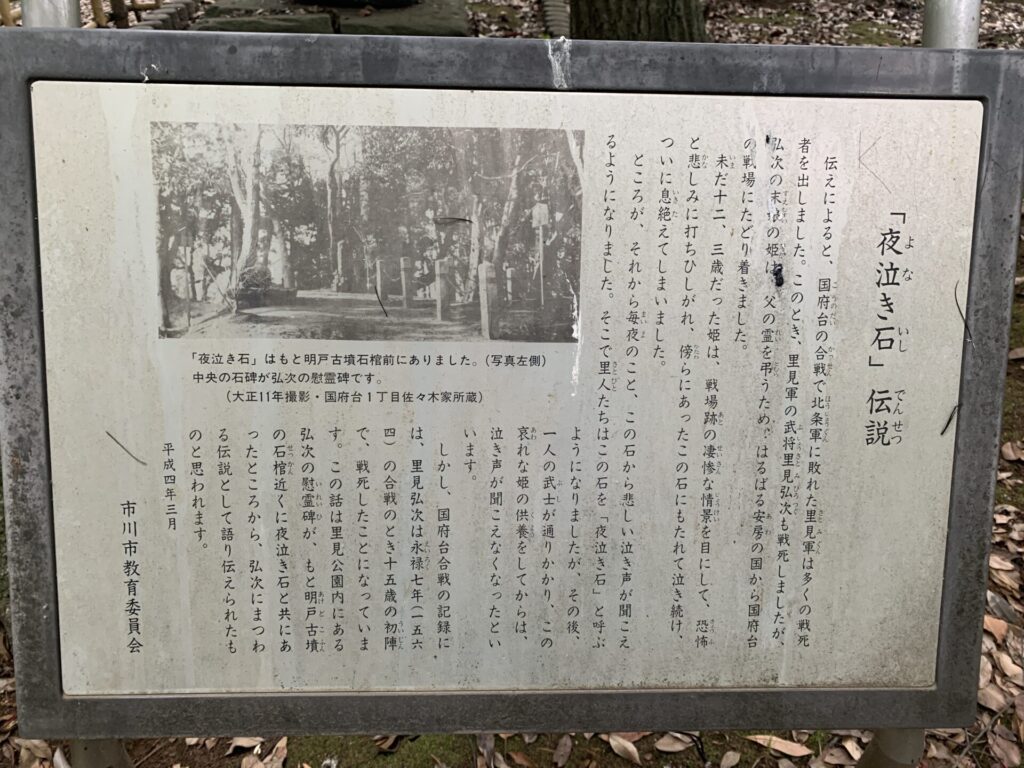
It was just as I thought.
After being defeated by the Hōjō forces in the Battle of Kōnodai, Satomi Hirotsugu lost his life,
and it is said that his daughter came all the way from Awa Province (the southernmost part of present-day Chiba) to mourn him.
She wept until her final breath, and after prayers were offered for her soul…
The legend of the “Crying Stone” is quite moving.
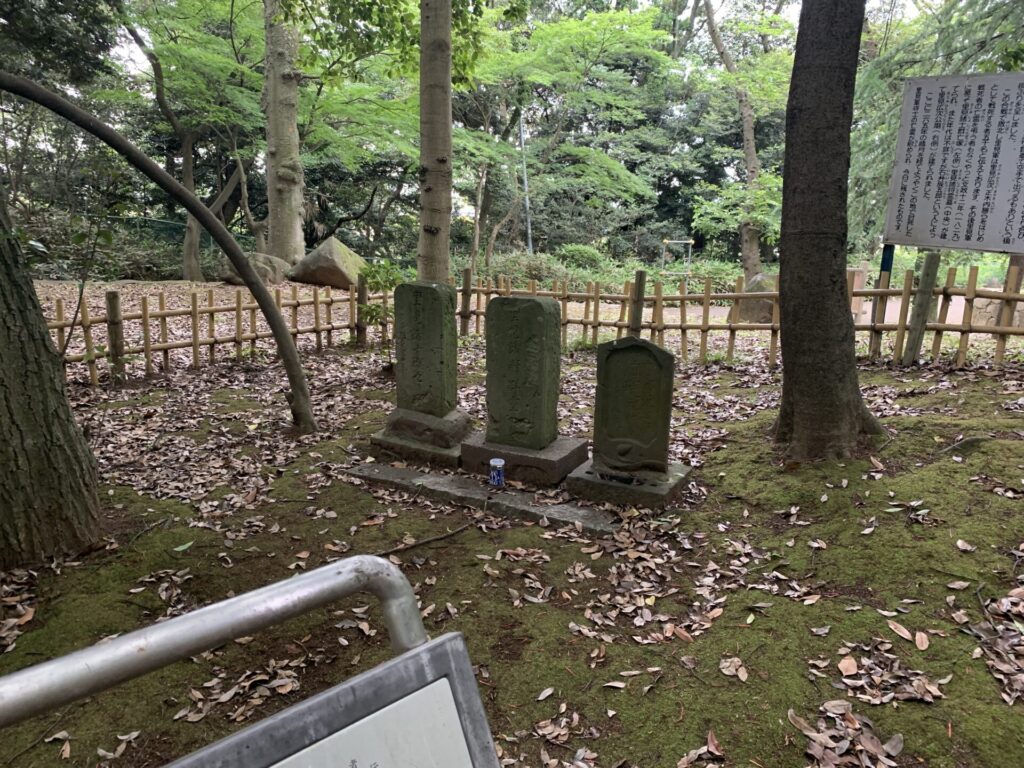
There was a stone grave like this.
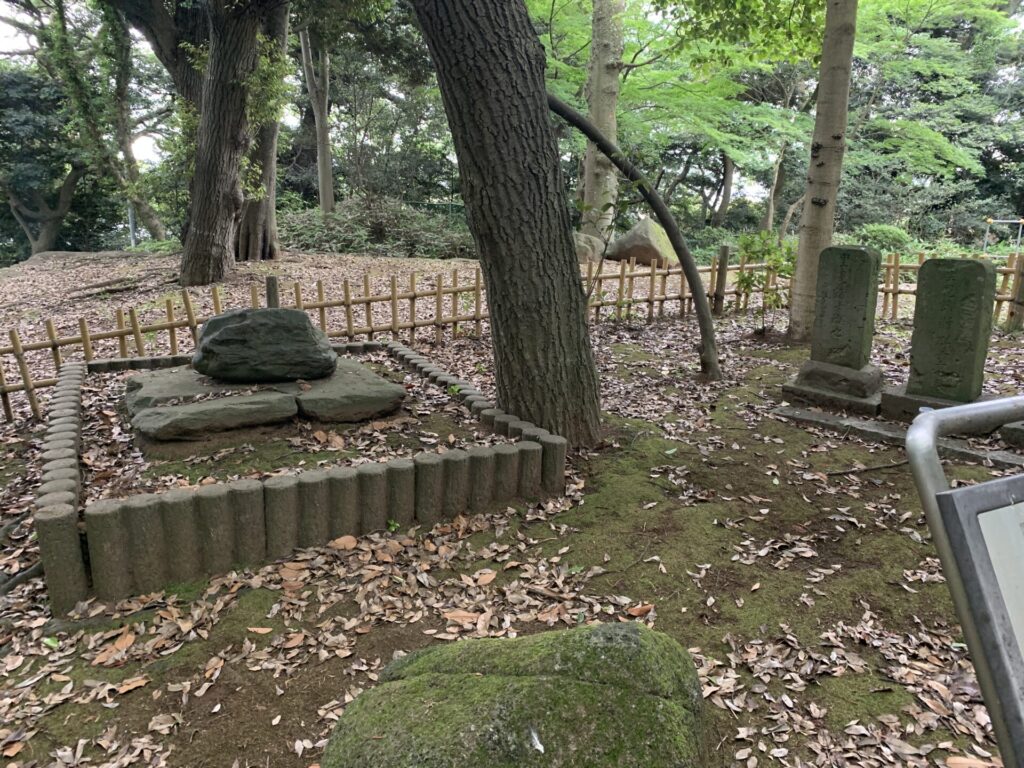
The one on the left appears to be the “Crying Stone.”
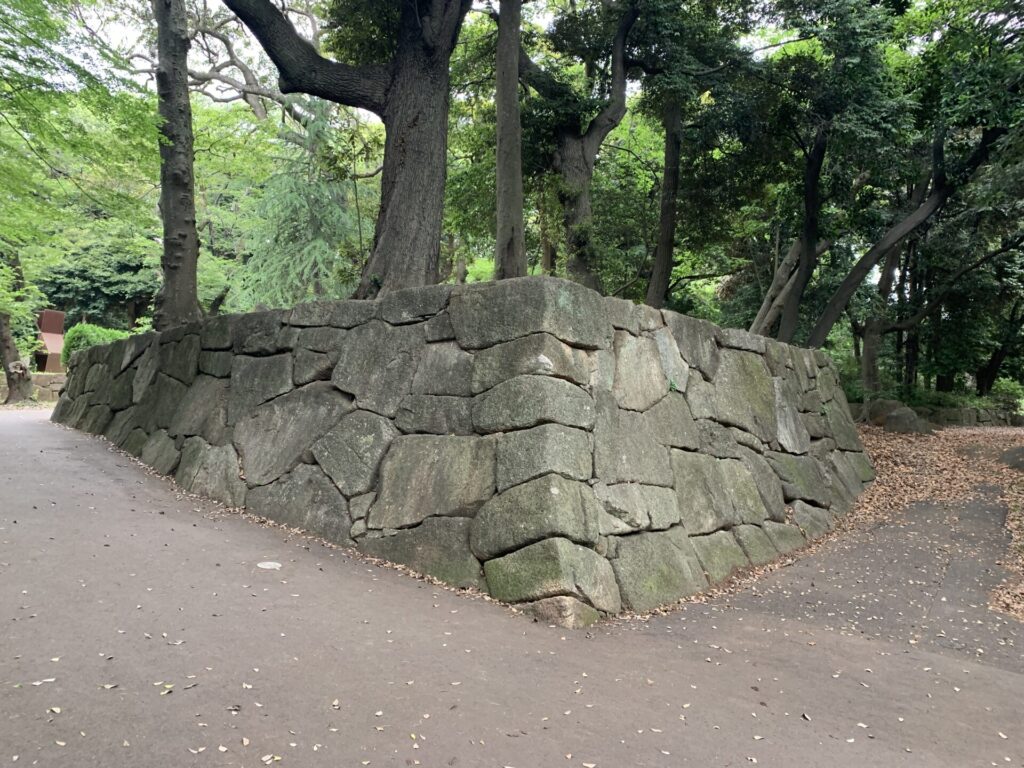
It looked so impressive that I took another photo of the stone walls.
I didn’t expect so many well-preserved remains to still be here.
Konodai-jo is truly a castle site worth seeing!!
That’s all for this time.