
Hachioji-jo (Hachioji city, Tokyo)|A Steep Mountain Fortress That Fell in Just One Day to the Toyotomi Army…
- 1. A steep mountain castle rising to an elevation of about 460 meters!
- 2. Even without their lord present, the Hojo retainers fought bravely to defend the castle!
- 3. After crossing an impressive wooden bridge, I headed toward Goshuden.
- 4. The legend of the “waterfall stained red with blood.”
- 5. I had underestimated this climb…
the path to the Honmaru was quite steep and challenging.
A steep mountain castle rising to an elevation of about 460 meters!
Hello, this is Shin.
May 25, 2023 (Thursday).
This time, I came to Hachioji-jo in Hachioji City, Tokyo, located in the former Musashi Province 🚙
Wow… this place is a serious mountain castle⛰️
I actually came here a bit underprepared, and I immediately regretted it 😓
If you plan to climb such a mountain castle, make sure you bring proper hiking gear 😅

◉ Castle Type
Mountain Castle ( Yamajiro:山城 )
◉ Cultural Heritage Highlights
◉ Defensive Features & Fortifications
◉ Exploration Difficulty
🔴 Advanced Castles
◉ Estimated Time to walk around
: over 3 hours
◉ Parking
There is a designated parking area with space for approximately 30 cars.
About a 10-minute taxi ride from Takao Station on the JR Chuo Line.🚃
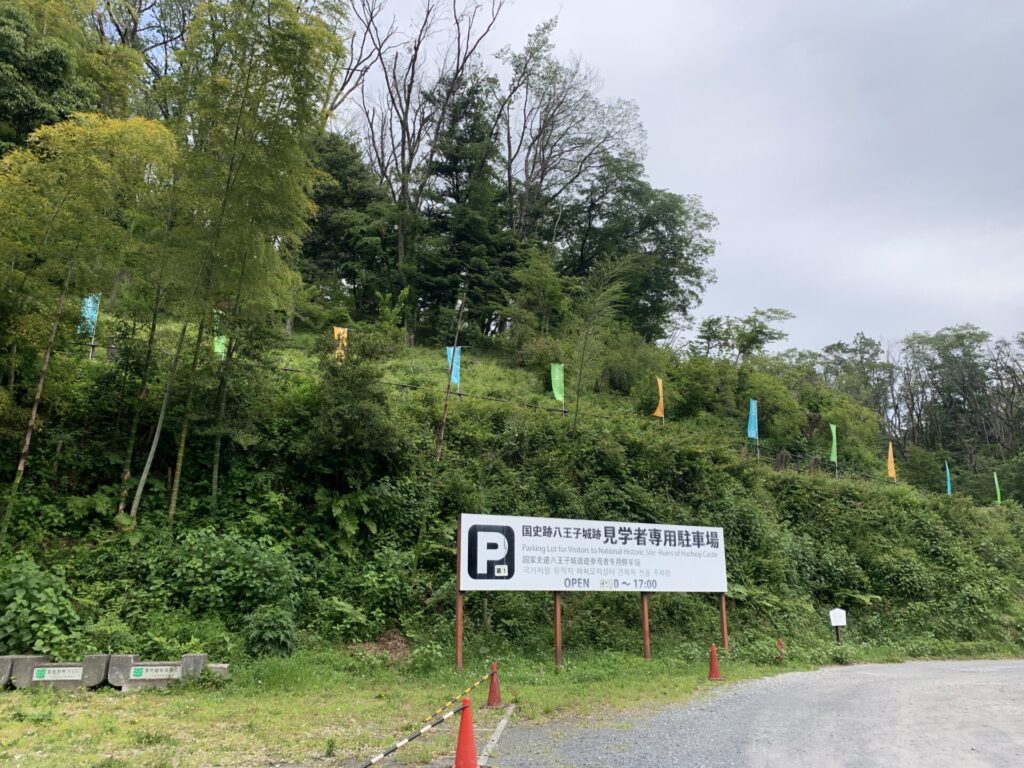
This is the view from the designated parking area.
Many banners were fluttering in the wind, creating an excellent atmosphere 😆
Honestly, my excitement was already building at this point 🔥
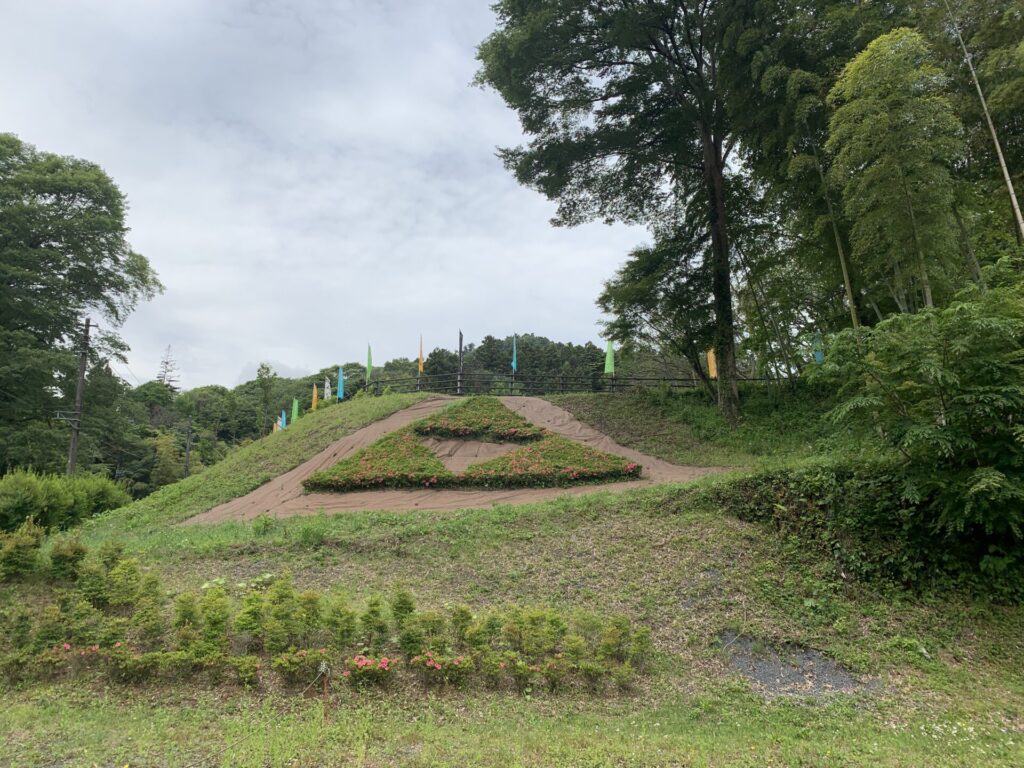
This can also be seen from the parking area.
The Hojo clan crest stands out clearly… it looks really impressive as well 🔥
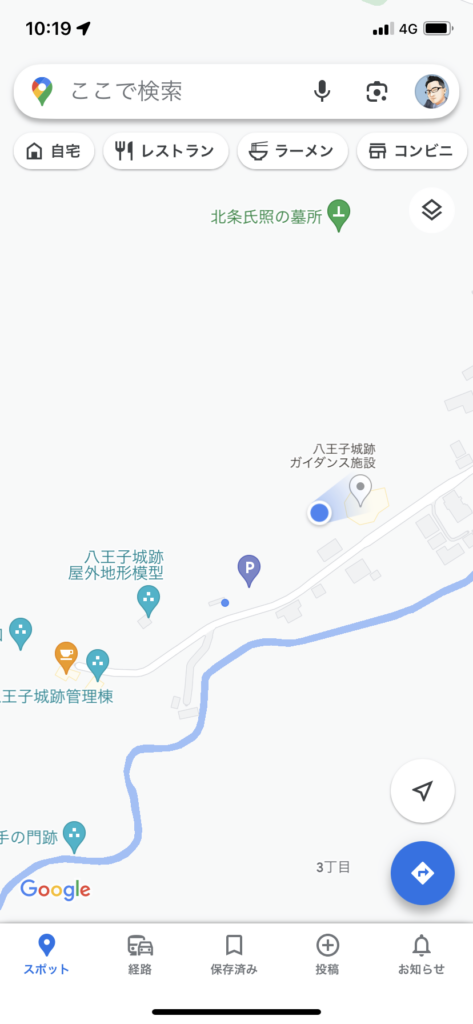
Now, I wondered where I should start exploring.
So I checked Google Maps, and noticed a place called the “Hachioji Castle Guidance Facility.”
Let’s start from there ✊
Even without their lord present, the Hojo retainers fought bravely to defend the castle!
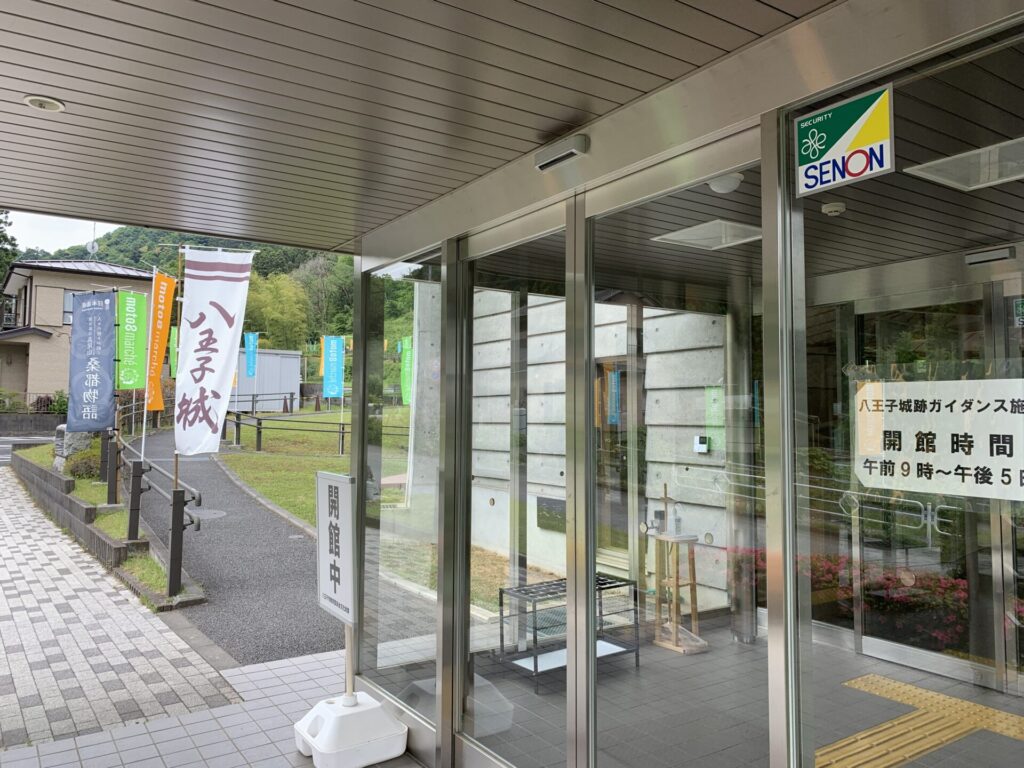
Here it is — the Guidance Facility.
Let’s go inside and take a look.
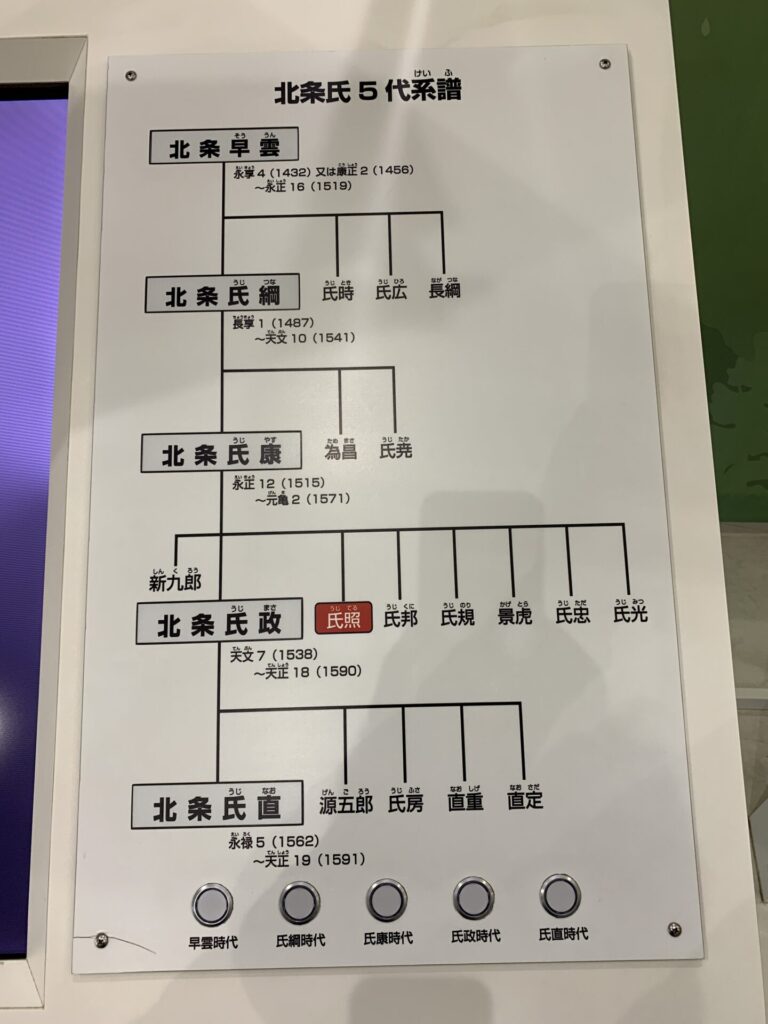
The lord of Hachioji-jo was Hojo Ujiteru, whose name is highlighted in red.
He was known as a skilled military commander, and was also a genius at constructing the various defensive facilities that were considered a hallmark of the Hojo clan.
Hojo Ujiteru was once the lord of Takiyama-jo.
However, after Oda Nobunaga was defeated in the Incident at Honno-ji, he quickly sensed the changing political situation in the Kanto region.
As a result, he decided to build a steep mountain castle in Hachioji, one that could be defended more easily even with a relatively small number of soldiers.
That said, Takiyama-jo itself was also an extremely well-fortified castle.
👇If you are interested, please check out the following article about Takiyama-jo as well.👇
 https://sengokucastle.com/takiyama-jo/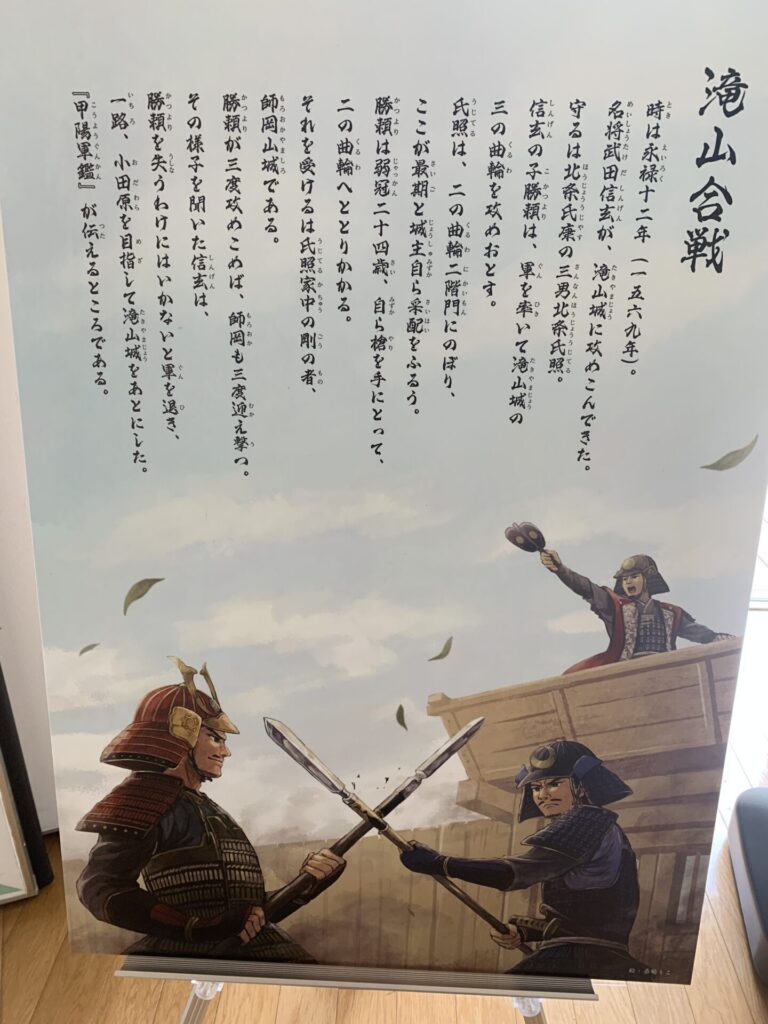
This depicts the time when Takeda Shingen attacked Takiyama-jo.
Hojo Ujiteru fought fiercely and successfully defended the castle.
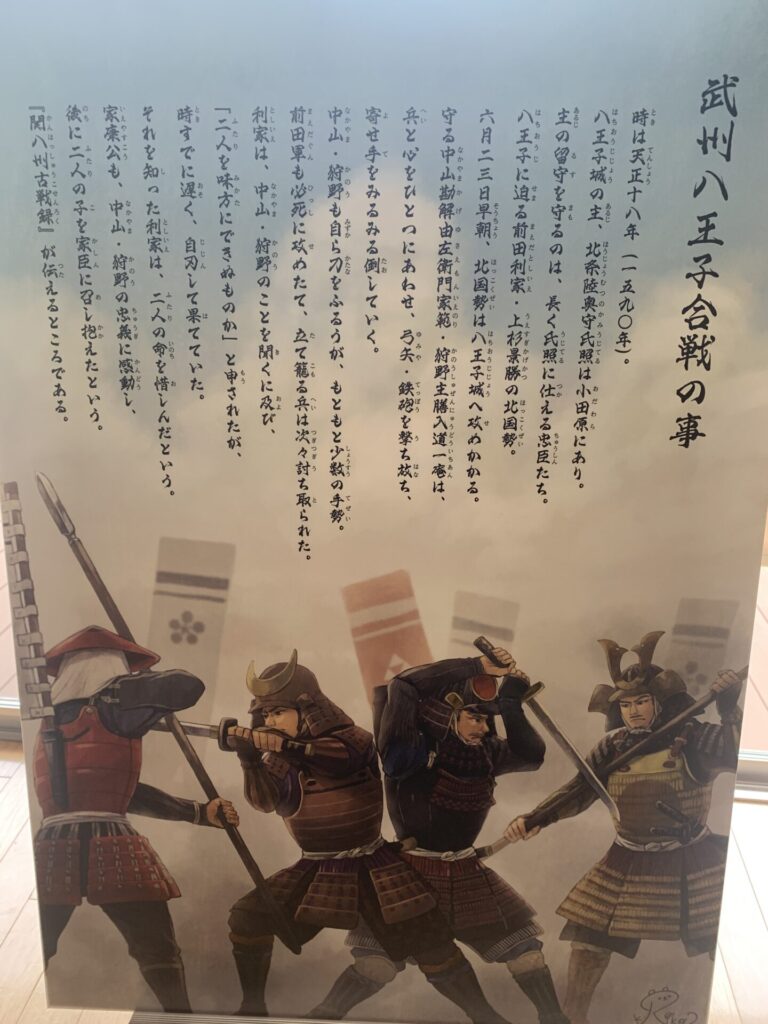
This depicts the moment when Hachioji-jo was attacked and eventually fell to the large Toyotomi army.
At the time, the castle lord Hojo Ujiteru was absent, having gone to Odawara-jo to join the main Hojo forces.
In his absence, the castle was defended mainly by his retainers Nakayama and Kano, who fought bravely until the very end.
It is said that even Maeda Toshiie and Tokugawa Ieyasu lamented their deaths, which suggests just how fiercely they must have fought.
Now, leaving the guidance facility, I will move on to explore the castle’s defensive structures.
After crossing an impressive wooden bridge, I headed toward Goshuden.
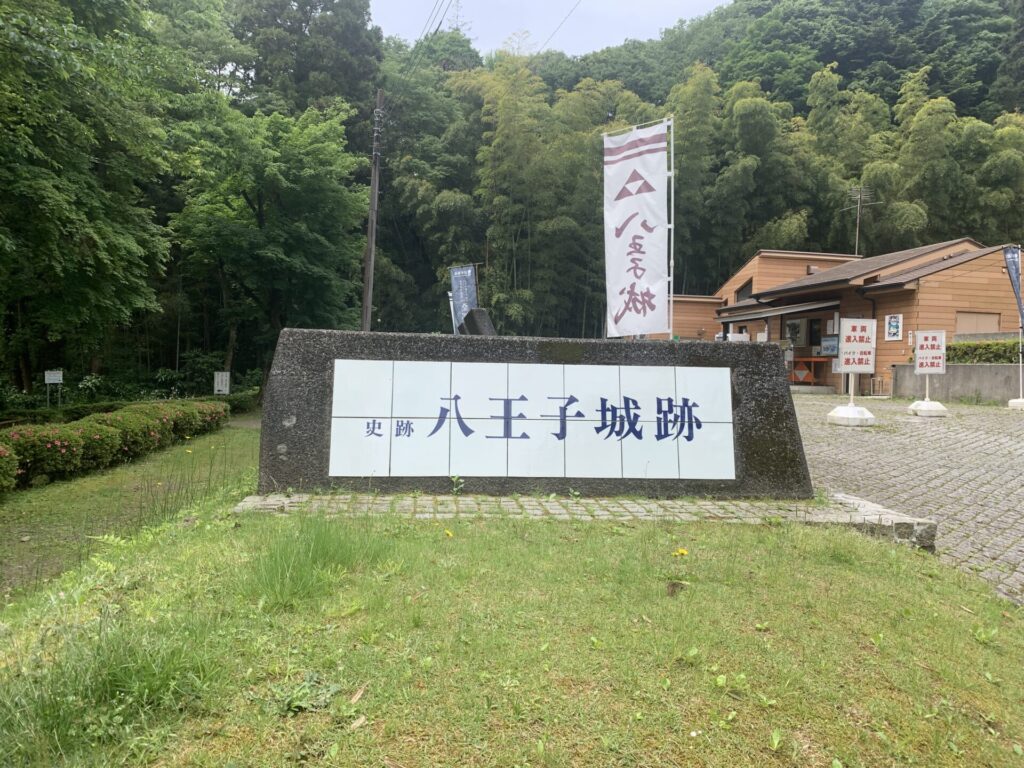
After walking a short distance from the parking area,
there is a rest area where volunteer guides are stationed nearby.
I decided to start exploring from around this area.
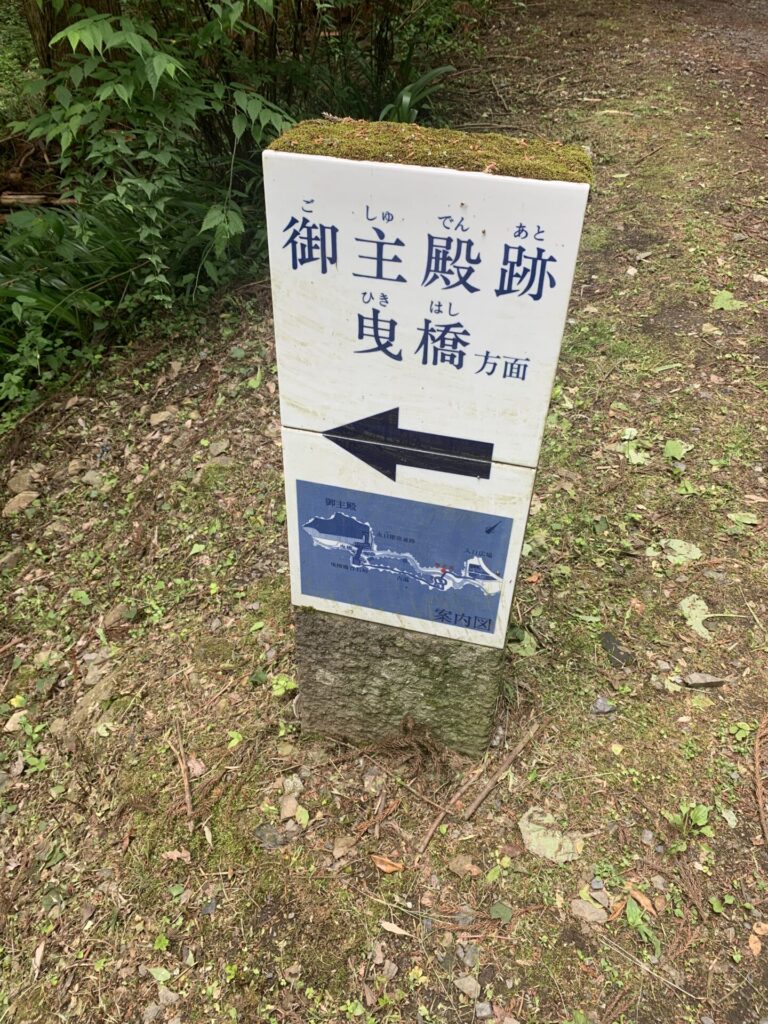
There was also a signboard with directional arrows.
First, I’ll head toward Goshuden (御主殿:the lord’s residence).
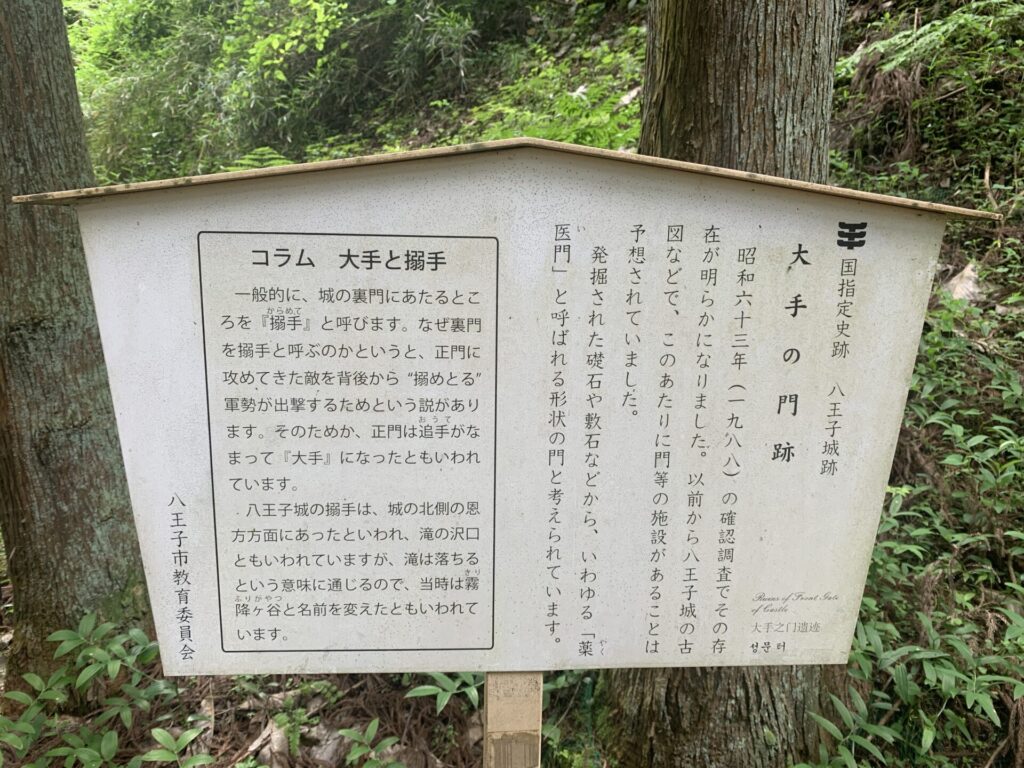
Along the way, I came across the remains of the Otemon (大手門:main gate).
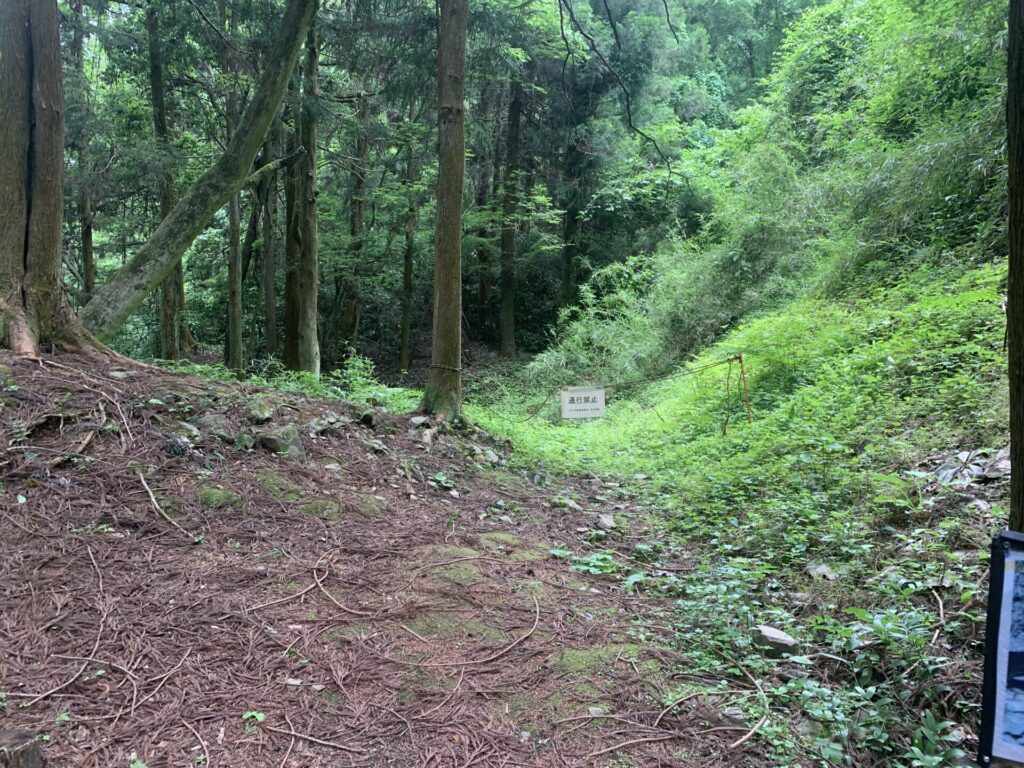
Judging from the surrounding terrain,
the Otemon (大手門:main gate) was likely located somewhere around this area.
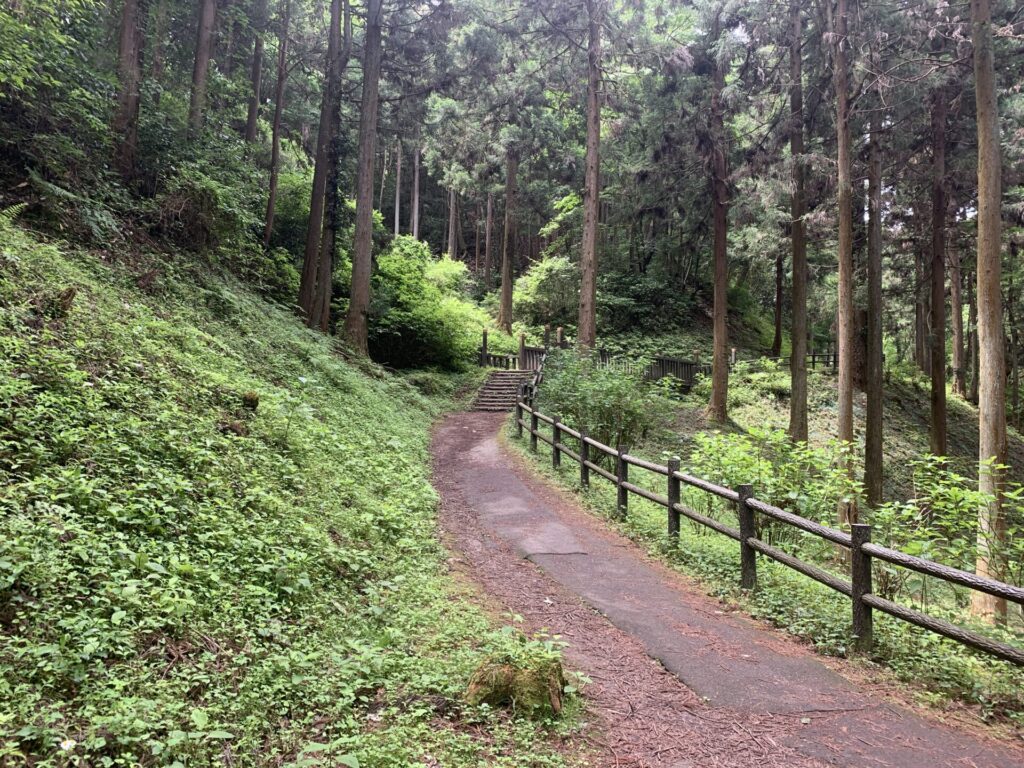
I continued along the mountain path, heading toward Goshuden (御主殿:the lord’s residence ).
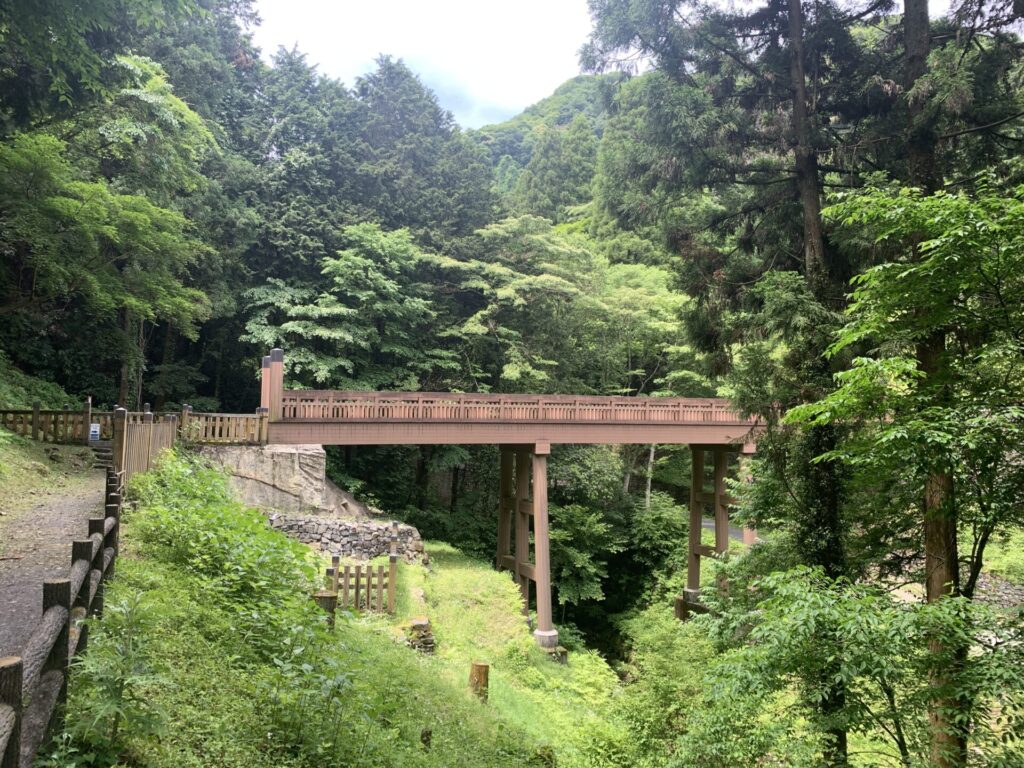
A large wooden bridge soon came into view ahead.
Beneath it lies a massive horikiri (堀切:dry moat cut across a ridge).
My excitement started to build.🔥
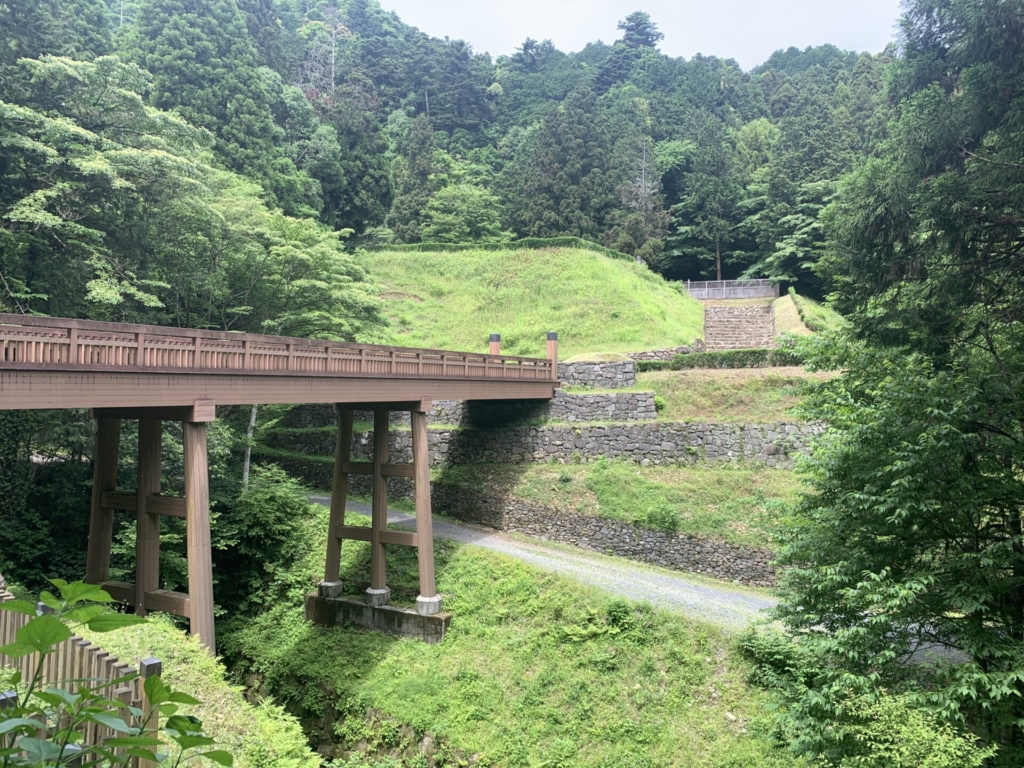
Beyond the wooden bridge, there is an uphill path leading to Goshuden (御主殿:the lord’s residence).
Now, please take a look at this video showing the moment I cross the bridge and continue forward👇
Below the bridge lies a deep moat.
The stone walls are also very impressive.
You can see that the spaces between the stones are tightly filled with packing stones, creating a solid and well-built structure.🪨
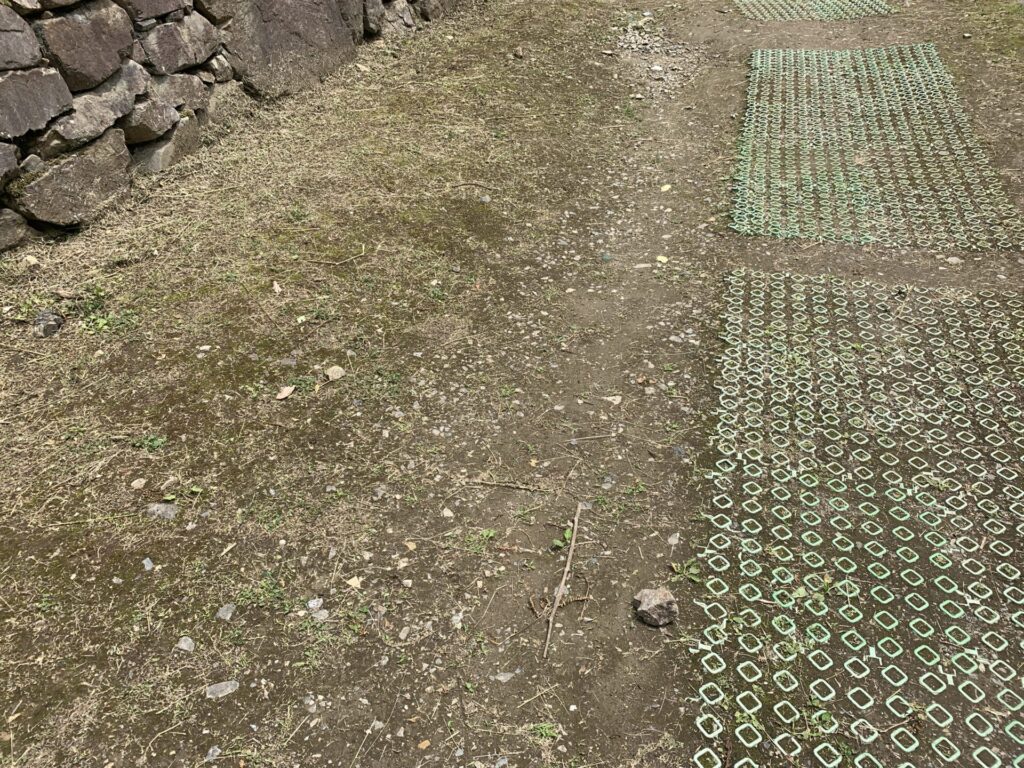
Looking down at my feet here,
I noticed what appeared to be packing stones, probably from the stone walls.
Being able to see things like this is one of the unique pleasures of visiting castle ruins, don’t you think?
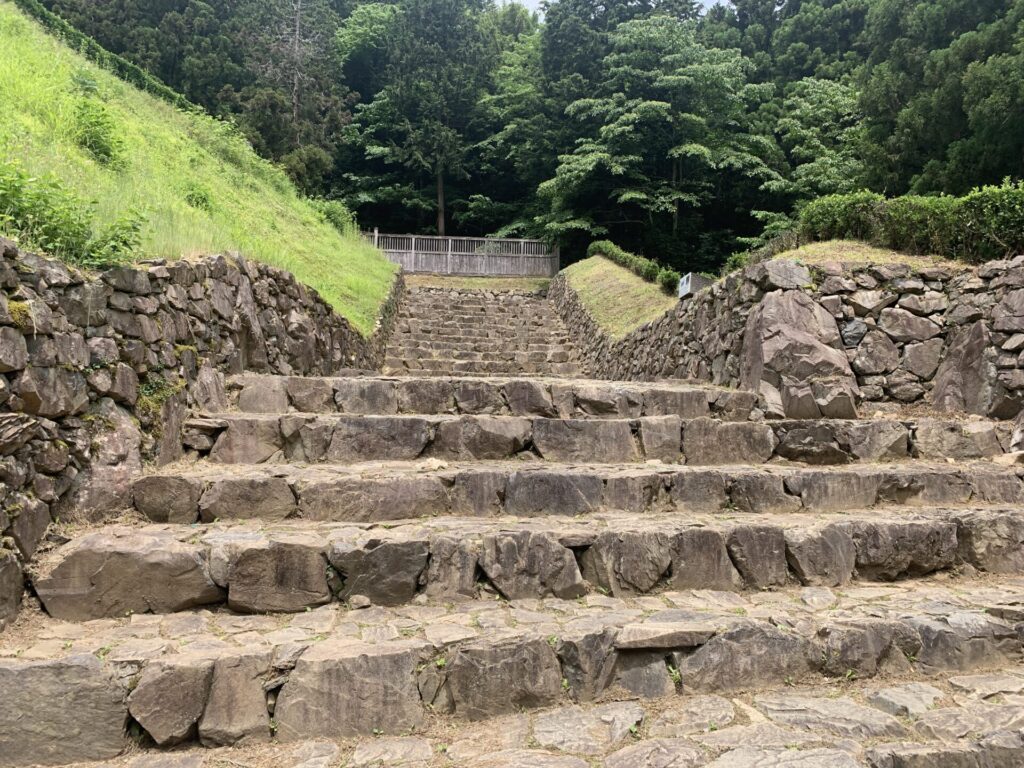
Climbing these stone steps, I finally head toward Goshuden (御主殿:the lord’s residence)!
Even this view alone creates an incredible atmosphere.
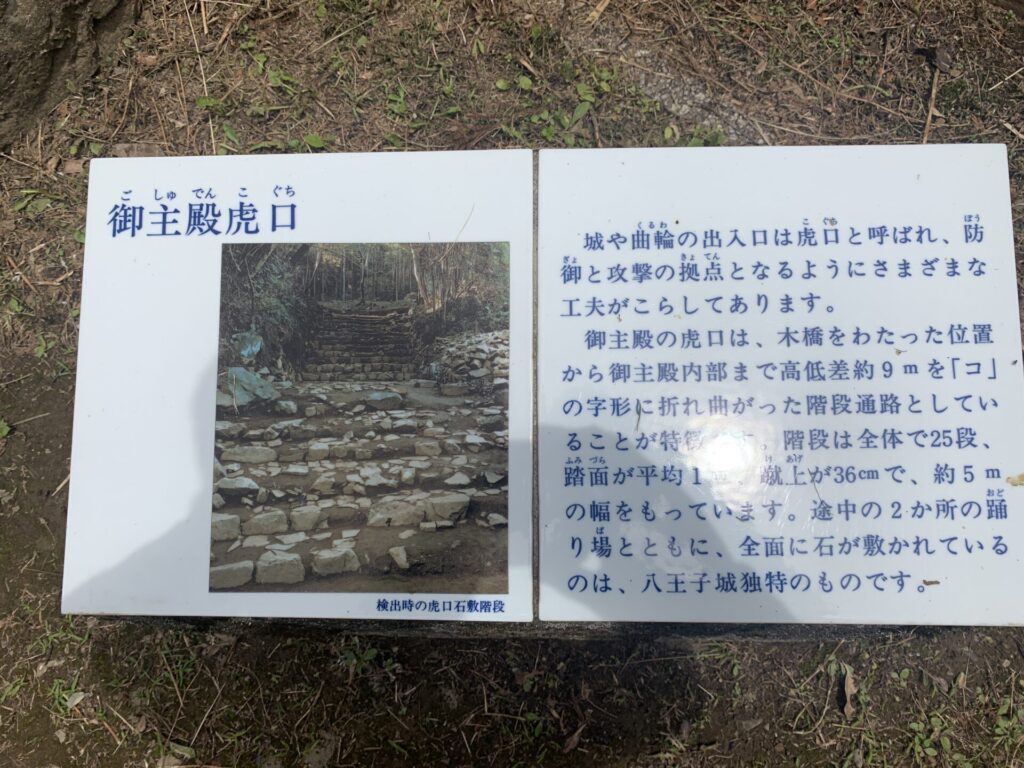
In fact, this stone stairway forms a koguchi (虎口:defensive entrance) designed to prevent enemy soldiers from easily entering the castle.
There is a height difference of about nine meters, and the path bends sharply along the way.
Because of this layout, it would have been extremely difficult for attacking soldiers to climb up.
While struggling to advance, they would have been exposed to attacks from the defending castle soldiers.
Now, please watch the following video to imagine what it might have been like to assault this koguchi.
It may be difficult to see in the video, but each of these stone steps is quite wide in depth.
Because of this, it would have been extremely difficult to rush up the stairs all at once.
This may also have been intentionally designed with defense in mind.
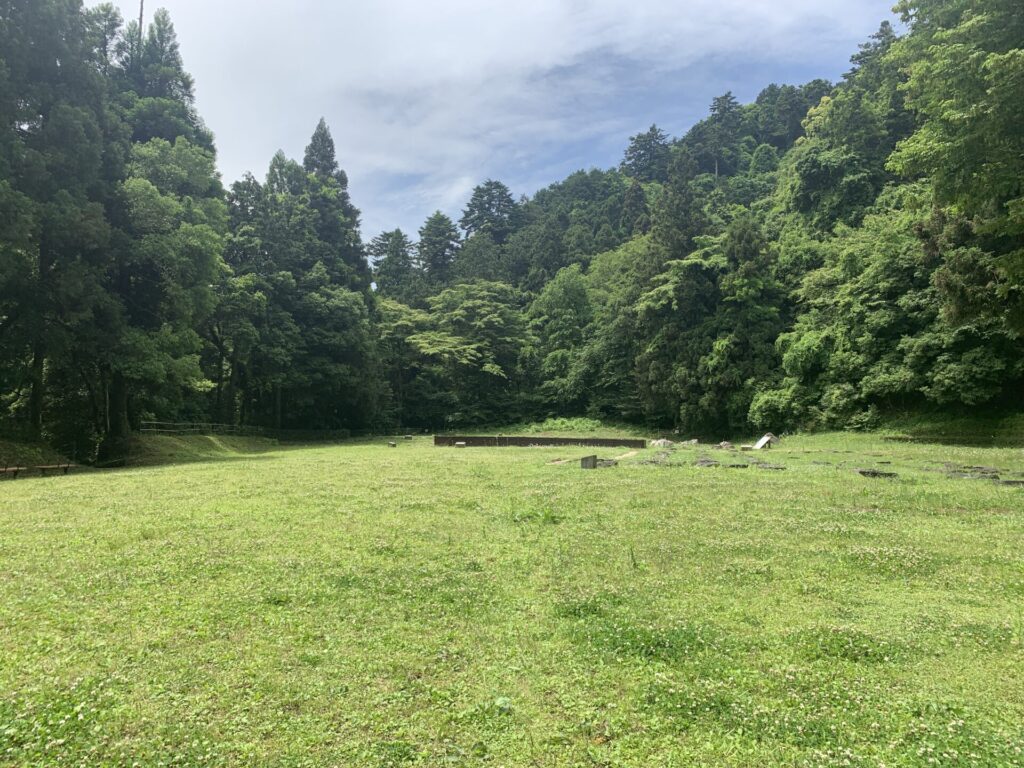
I have finally arrived at Goshuden (御主殿:the lord’s residence)!!
It is surprisingly spacious.
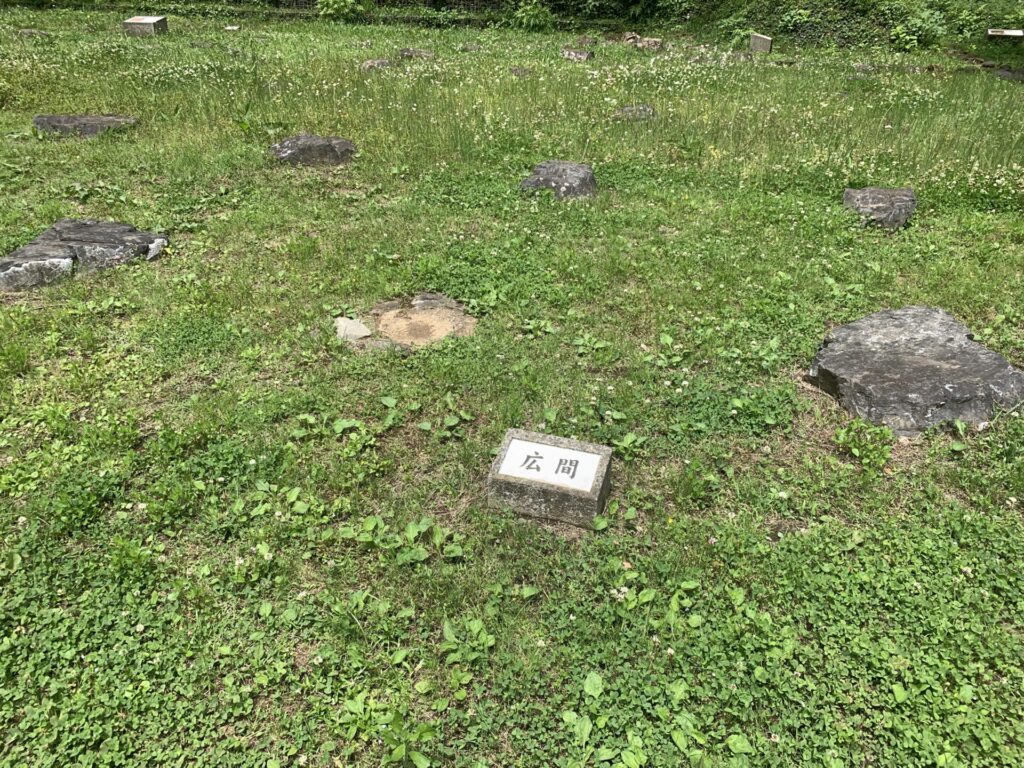
As you can see, the layout of the interior of Goshuden is also displayed here in detail.
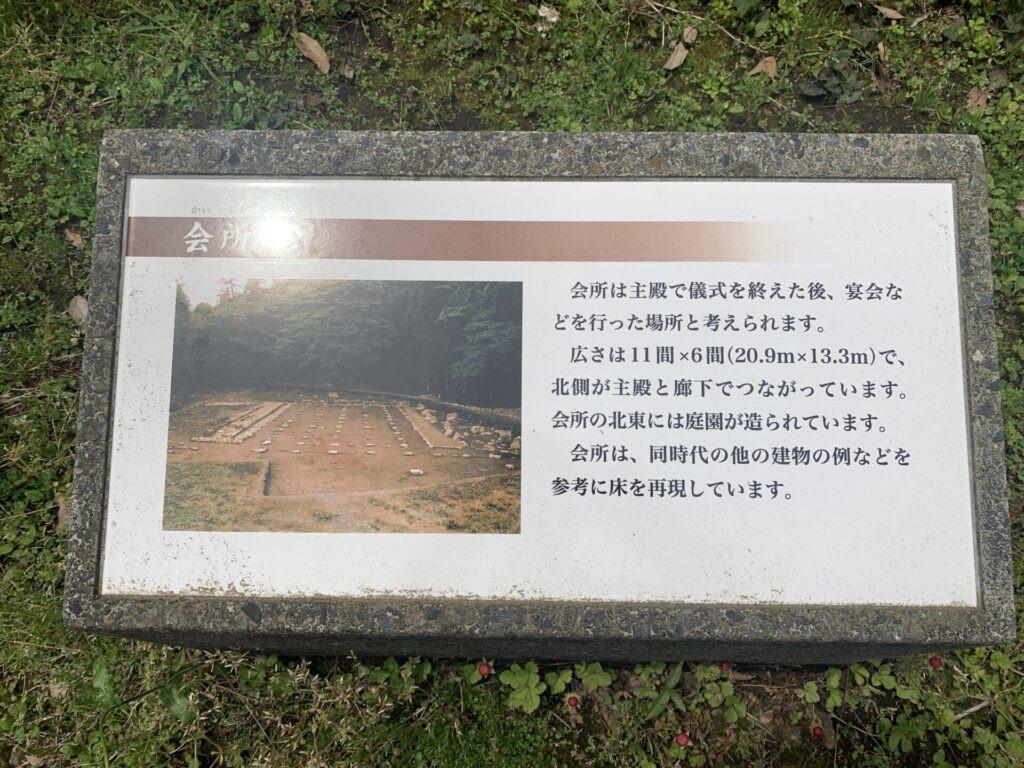
Inside, there is even a space called a Kaisho (会所), which was used for ceremonies and banquets.
I recorded a short video while walking through this Kaisho, so please take a look.👇
Because the walls are no longer there,
it actually makes it easier to understand the overall layout and size of the space.
Each room seems to have been relatively small.
The legend of the “waterfall stained red with blood.”
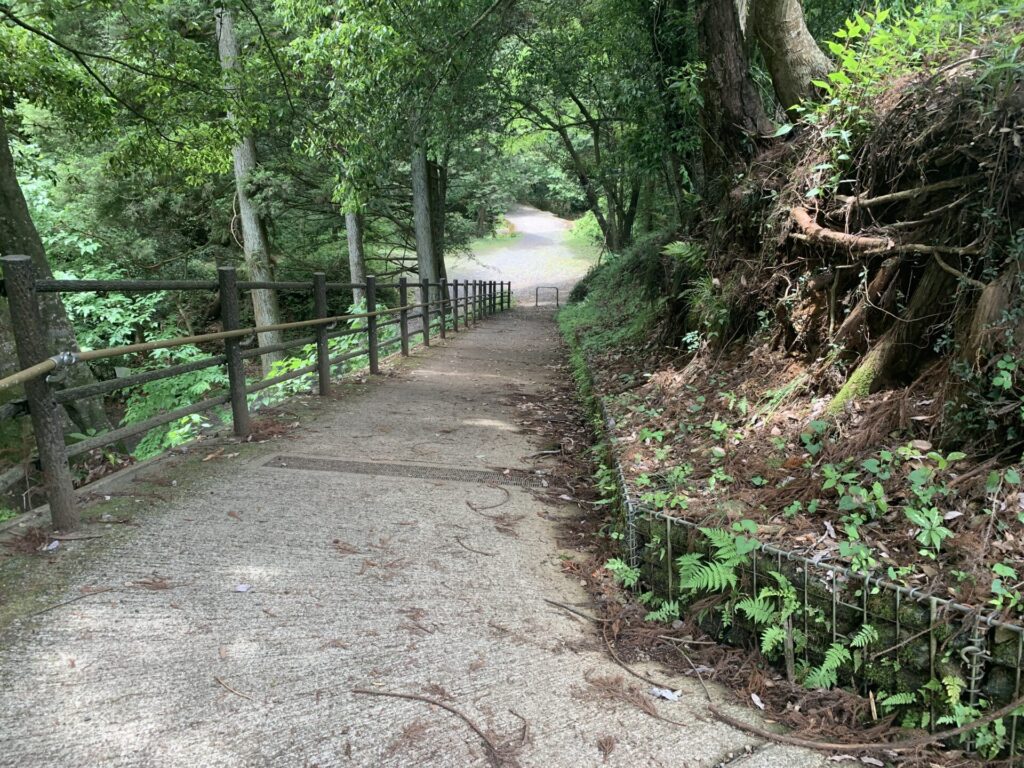
After finishing my exploration of Goshuden, I headed down this path.
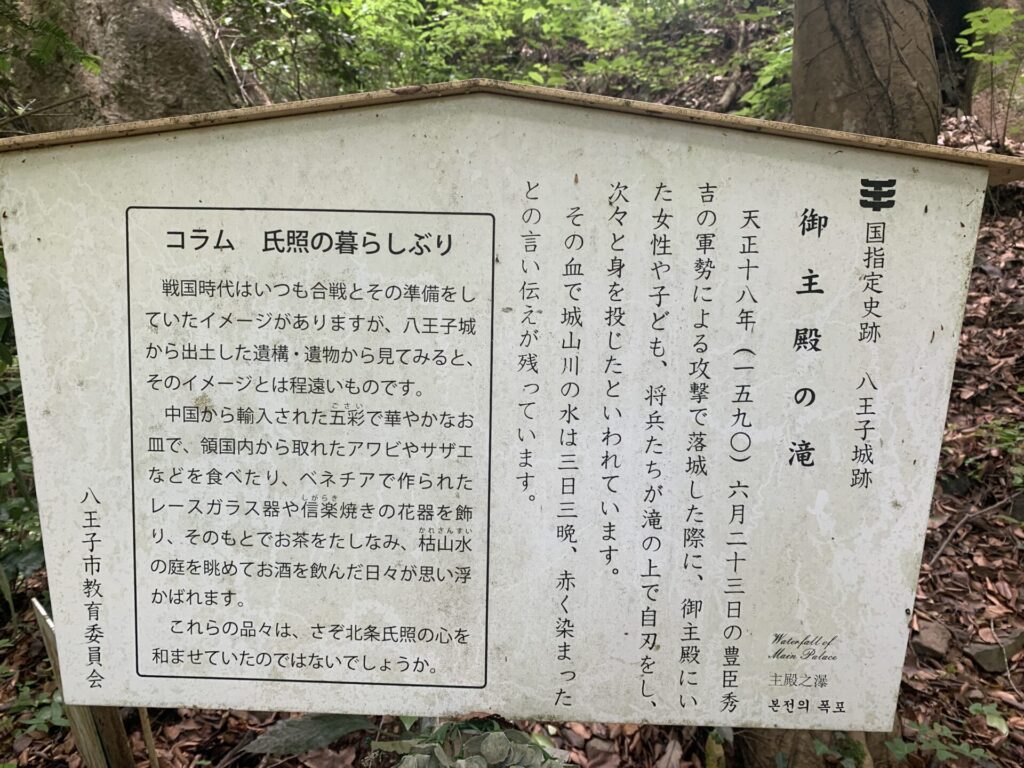
Many fans of the Sengoku period may already know about the “Goshuden Waterfall (御主殿の滝 )”.
When Hachioji-jo fell, it is said that many castle soldiers, along with women and children, took their own lives here.
According to legend, the water of the waterfall turned red with their blood.
I remember once seeing this tragic scene depicted in a historical documentary program.🎥
Now, please take a look at the video showing the waterfall flowing here.👇
There is also a grave here, with offerings placed in remembrance.
Up the slope is Goshuden.
As I watched the water flowing down the waterfall, the tragic scenes I once saw in that historical documentary seemed to come back to mind.😭
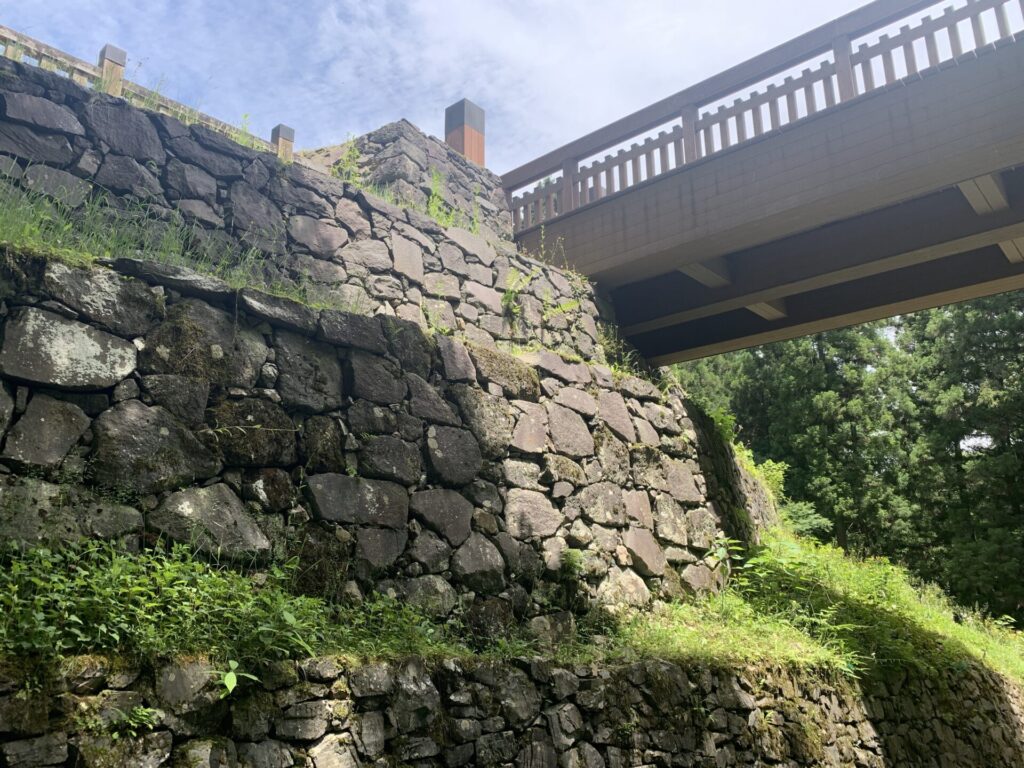
Passing beneath the bridge we crossed earlier,
I now head toward the Honmaru (本丸:main enclosure) at the top of the mountain.
Wow, the stone walls here are truly impressive.✨
I had underestimated this climb…
the path to the Honmaru was quite steep and challenging.
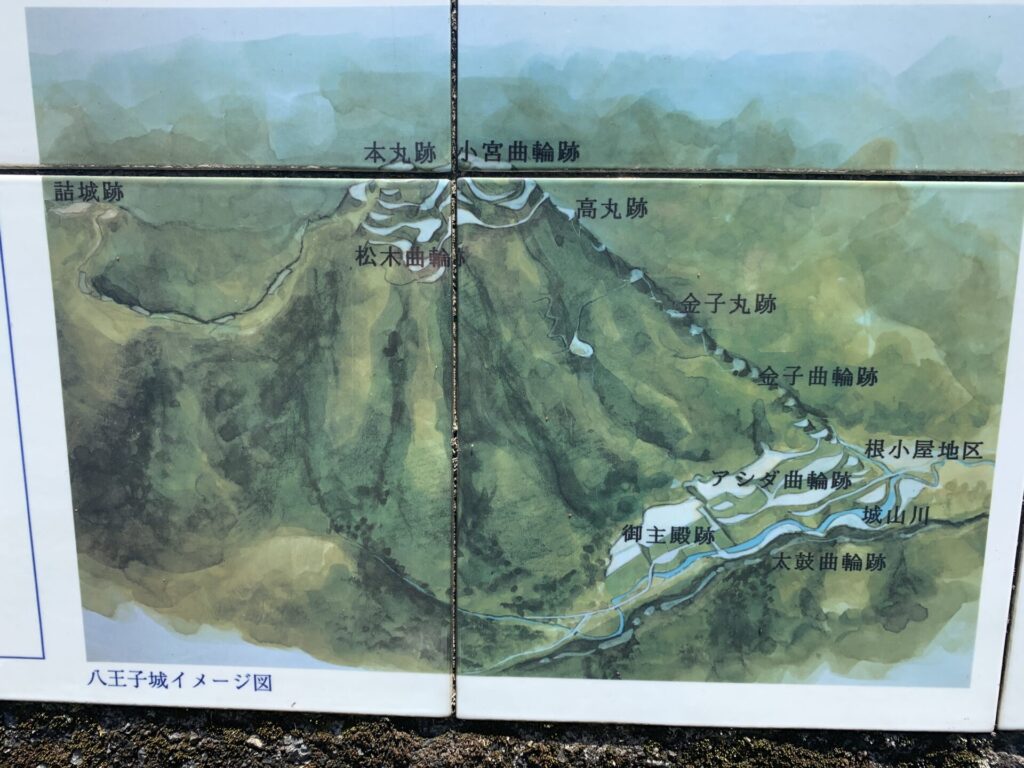
I returned to the first rest area and took a look at the illustrated map of Hachioji-jo.
Even from this image alone, you can tell how steep and rugged the mountain is.
For some reason, though, I had taken it far too lightly…
I would come to regret that decision later. 😓
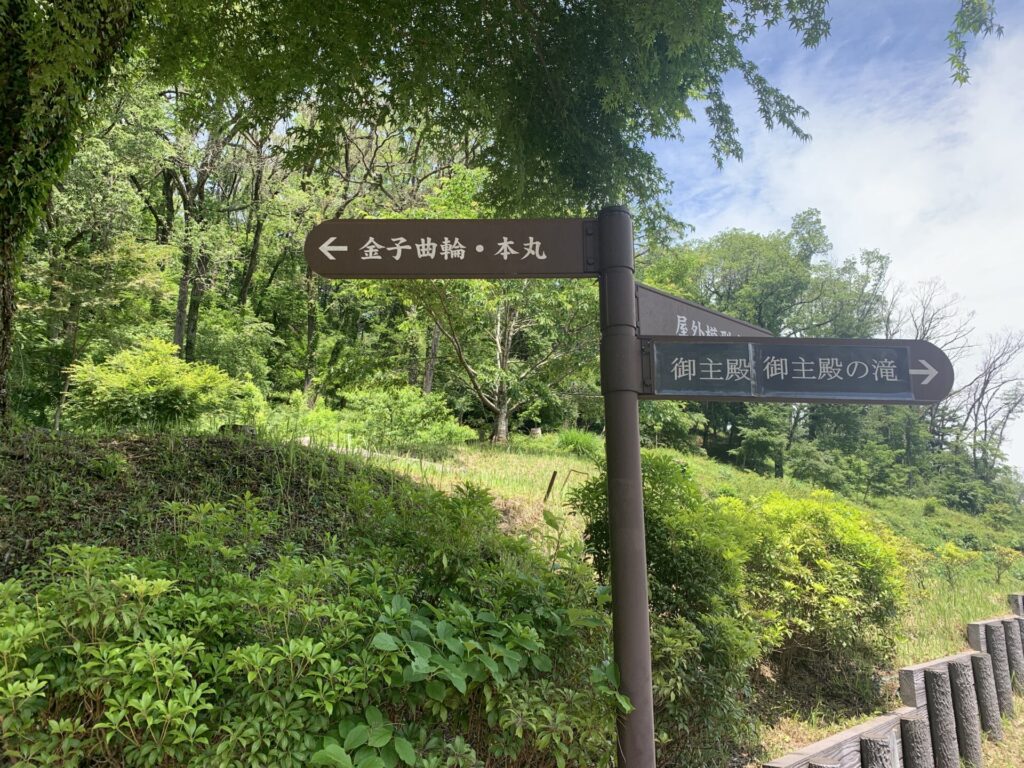
Following the directional signs, I headed toward the Honmaru (本丸:main enclosure) at the mountain summit.
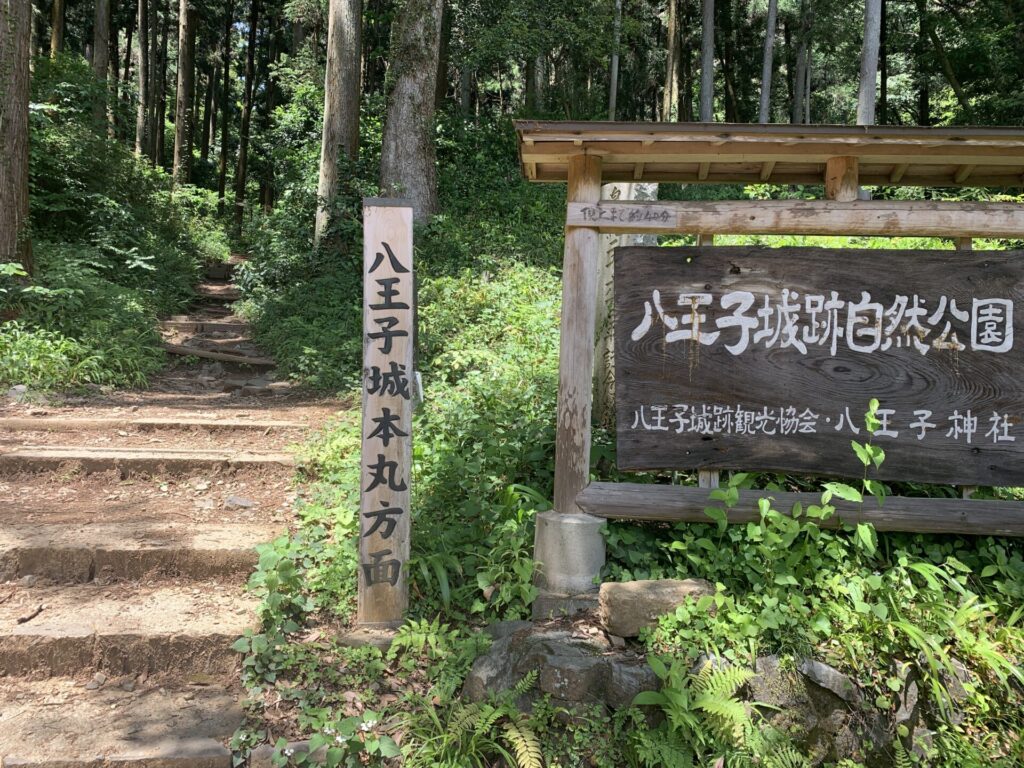
“All right! This is where it begins!”
At that moment, I was still feeling quite confident.✊
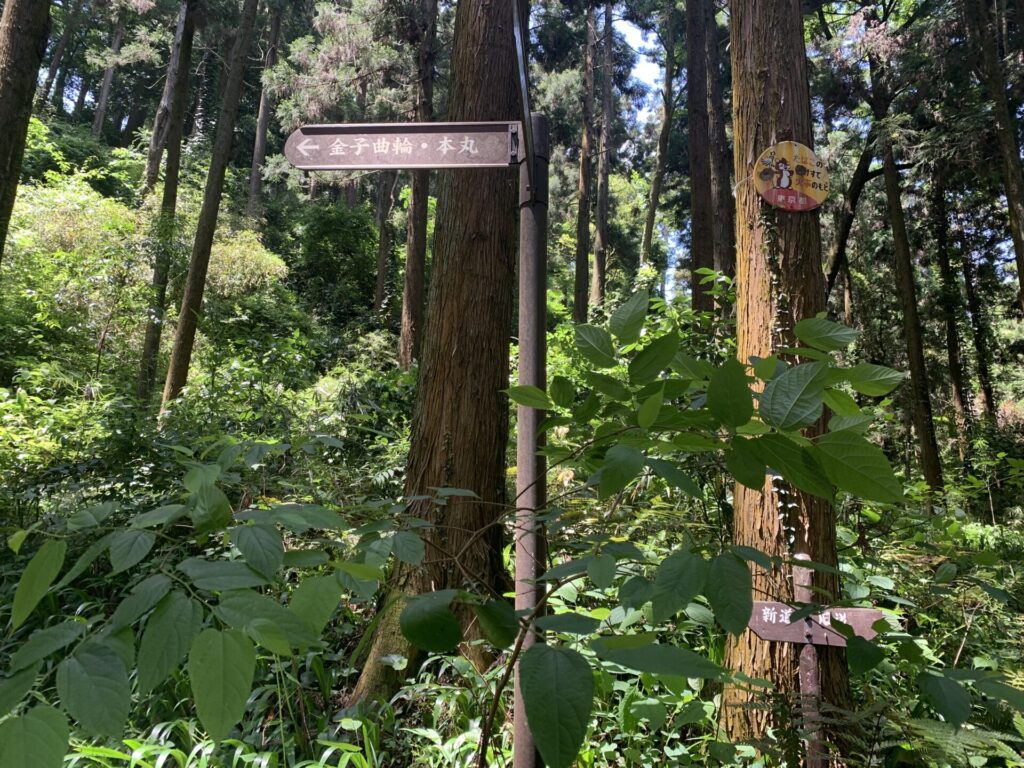
At most castle ruins, you will find directional signboards like this placed at key points.
So it’s usually difficult to get lost.
I’m quite grateful for that.
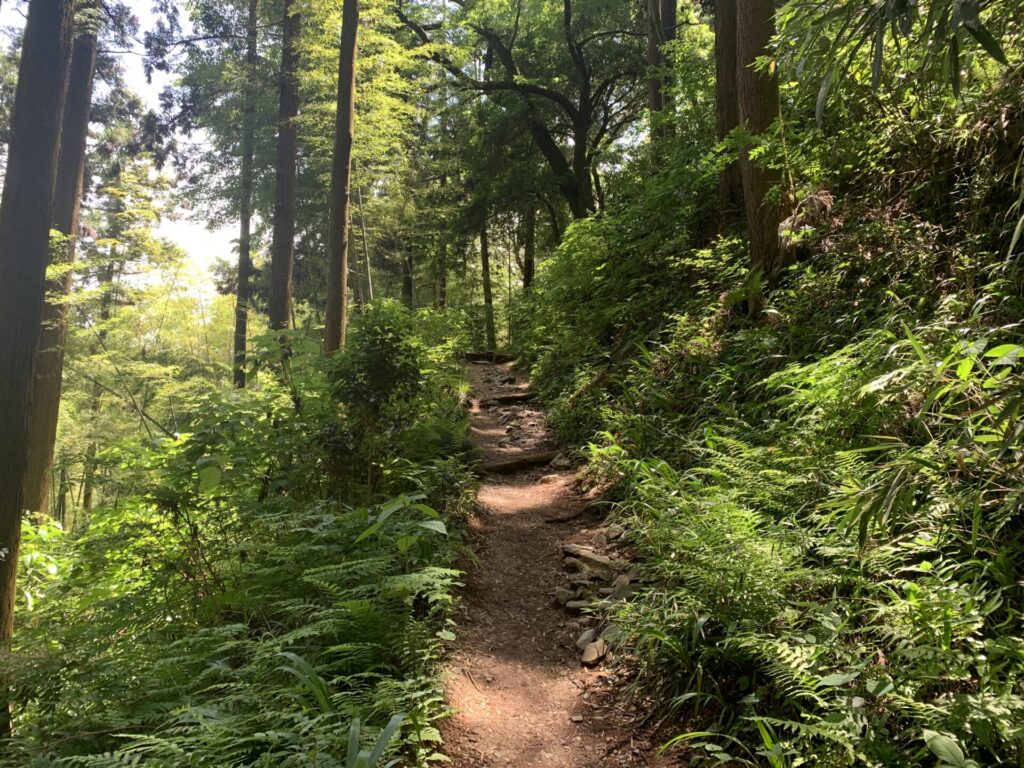
The mountain climb had only just begun…
This area was only the very beginning.
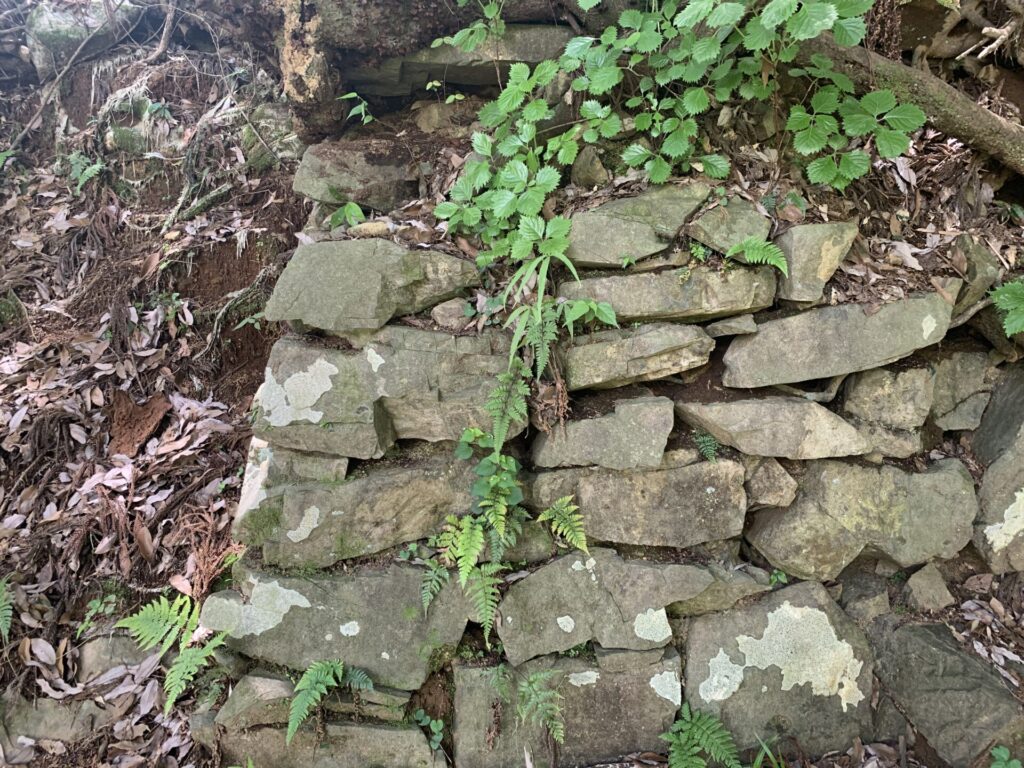
Here and there, you can see what appear to be remains of stone walls.
Perhaps there were once more structures or defensive remains scattered throughout this area.
I also recorded a short video of the mountain trail around here, so please take a look.
The mountain trail is not gentle all the way.
At times there are stone steps like these, and in other places tree roots spread across the path,
making it quite difficult to walk.
Perhaps this terrain also helped slow down attacking soldiers.
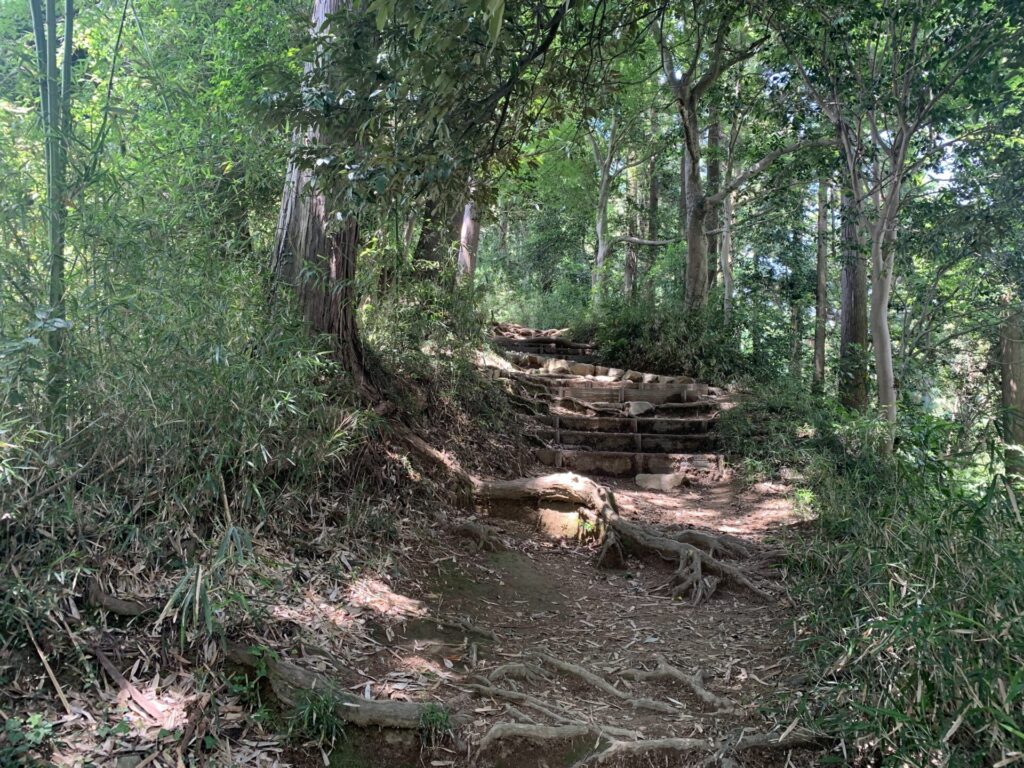
Just like this.
Tree roots spread across the ground under your feet,
and there are also stone steps and wooden stairs along the way.
Little by little, I started to lose my breath.
When climbing a mountain castle, it’s definitely best to come prepared with proper clothing and something to drink.
Lesson learned… 💧
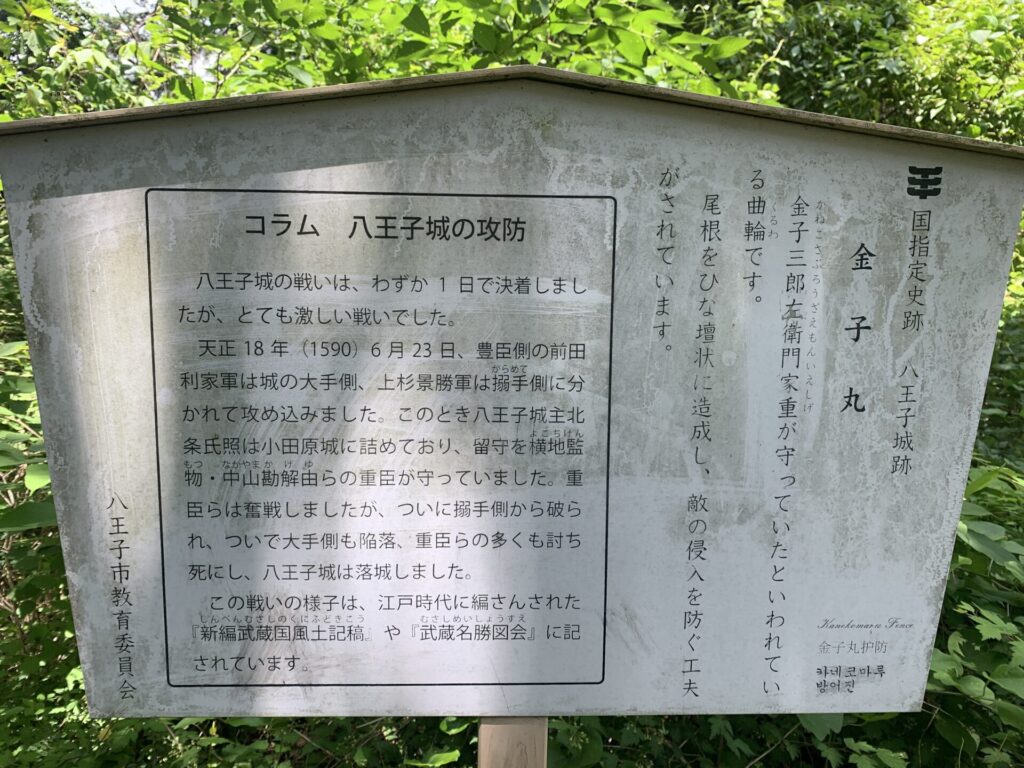
Before long, I arrived at the first kuruwa (曲輪:enclosure), Kaneko-maru (金子丸).
However, from here I could not clearly see what was described as “the ridge being developed in a terrace-like formation”…..
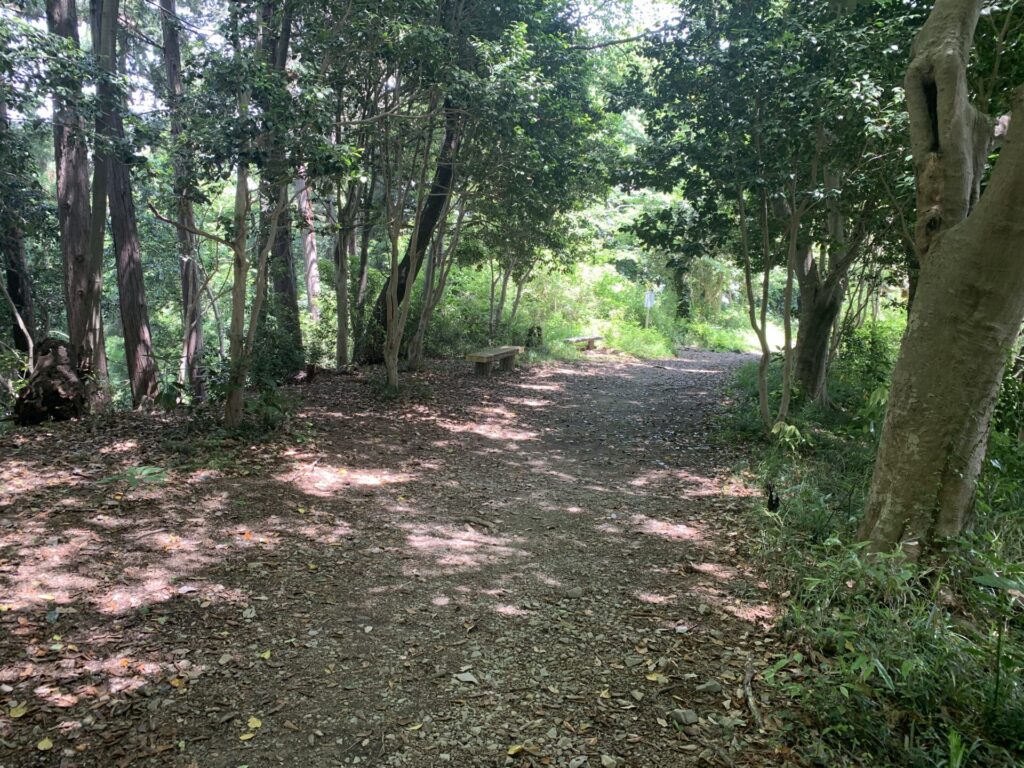
This area was probably Kaneko-maru (金子丸).
Aside from this spot, there were no other open areas along the steep mountain trail.
In battles fought in such a rugged mountain castle, it seems likely that great consideration was given to how to make use of these limited spaces.🤔
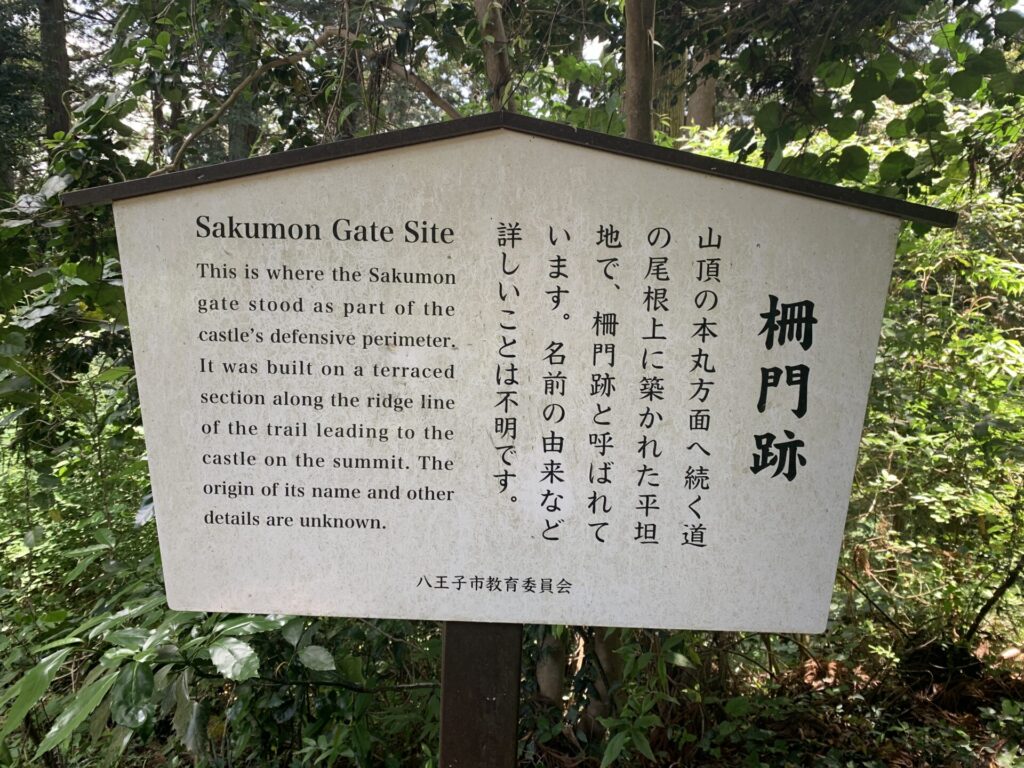
By the time I was quite exhausted and breathing heavily,
I finally reached the site of the Saku-mon (柵門:palisade gate).
Because the mountain path itself is very narrow,
building a gate here must have been highly effective for defensive purposes.
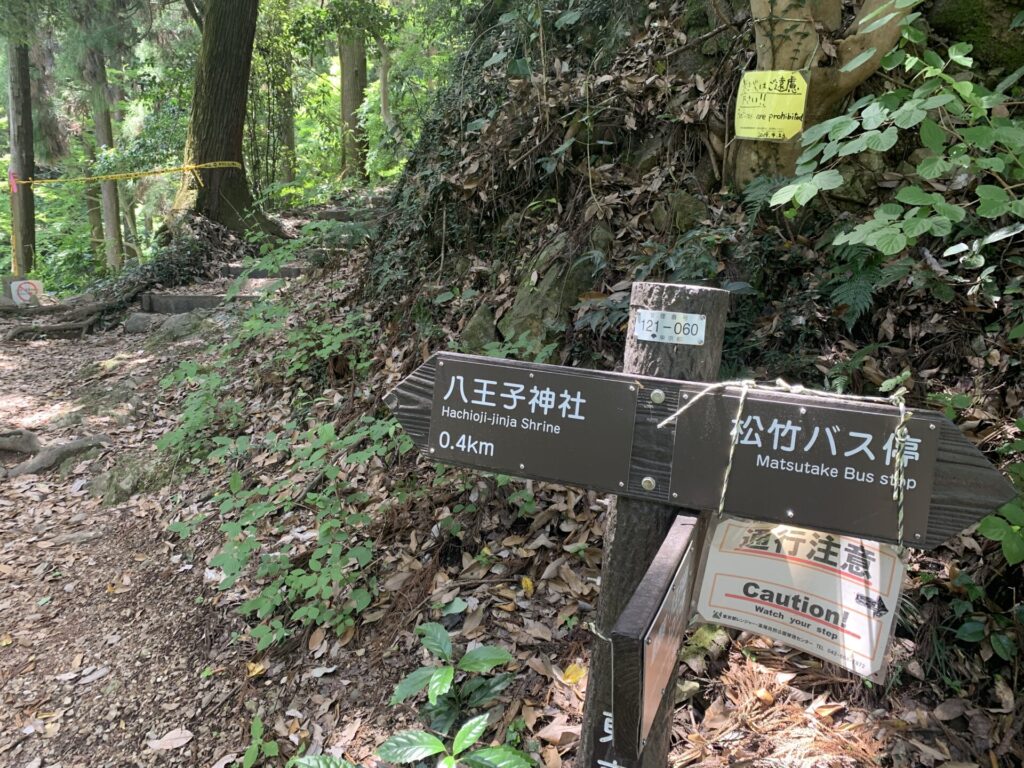
The Saku-mon (palisade gate) was probably located around this area.
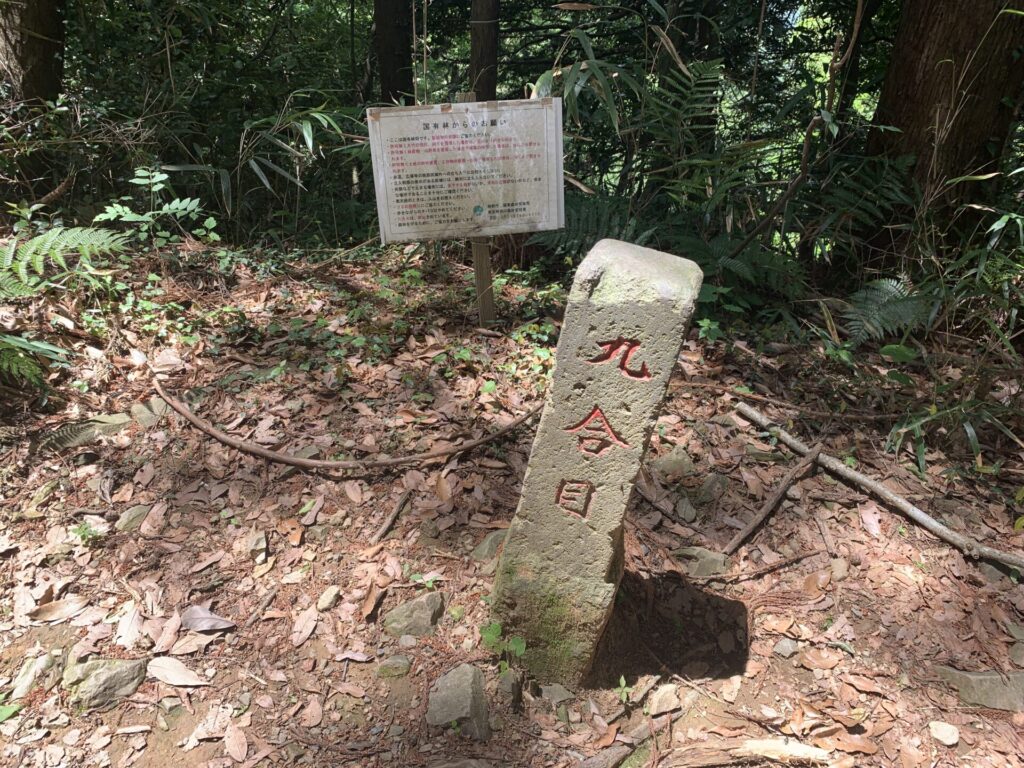
With my heart pounding, I finally made it to what felt like the ninth station of the climb!
“Just a little more to the Honmaru!”
With that thought in mind, I pushed my tired body forward.🚶
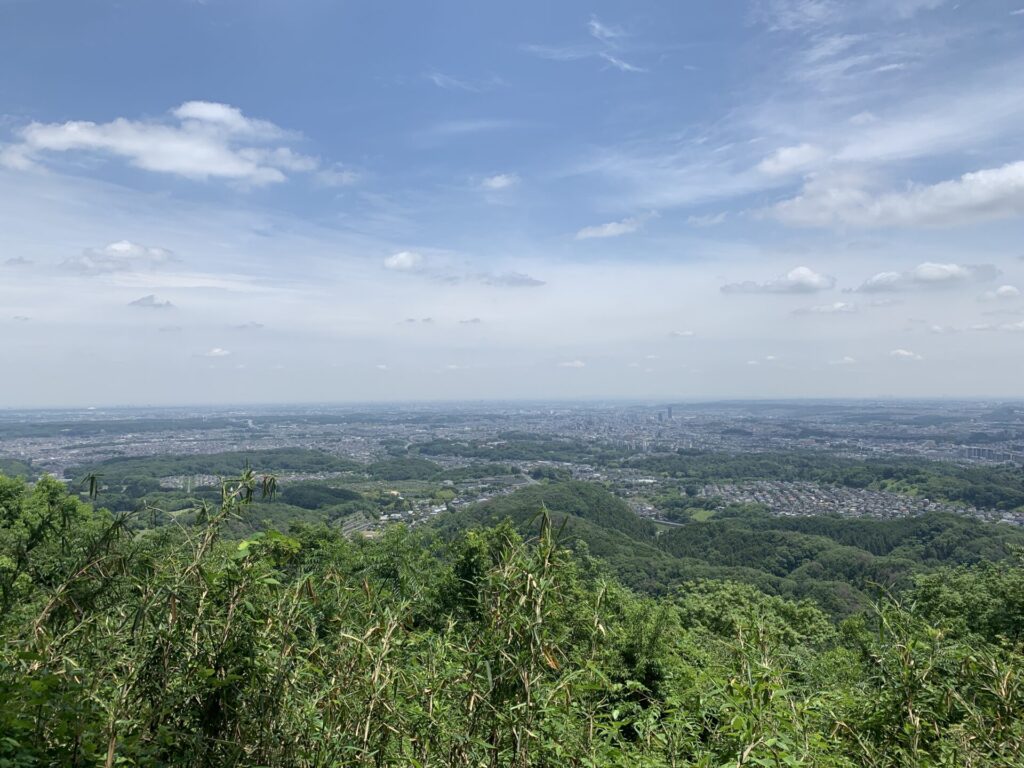
Taking a short break,
I looked down over the city of Hachioji below.
Everyone, please don’t underestimate mountain castle exploration.
(Well… maybe I’m the only one who underestimated it.)
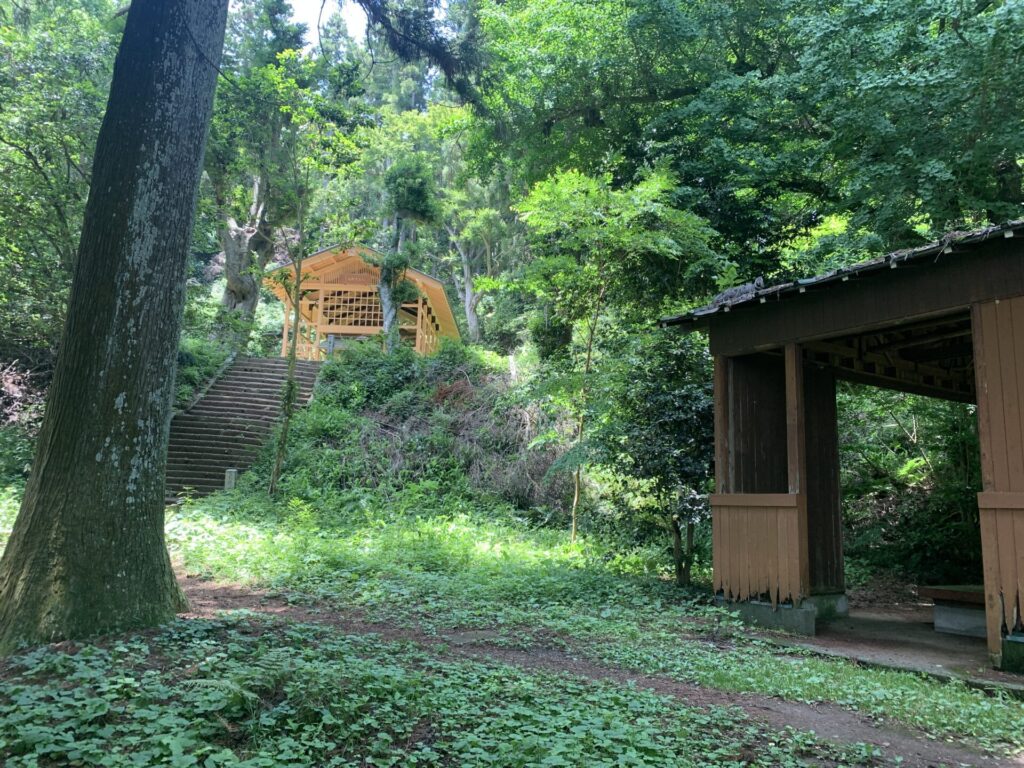
At last, what looked like a shrine at the Honmaru site came into view.
Well done, me… I made it this far.
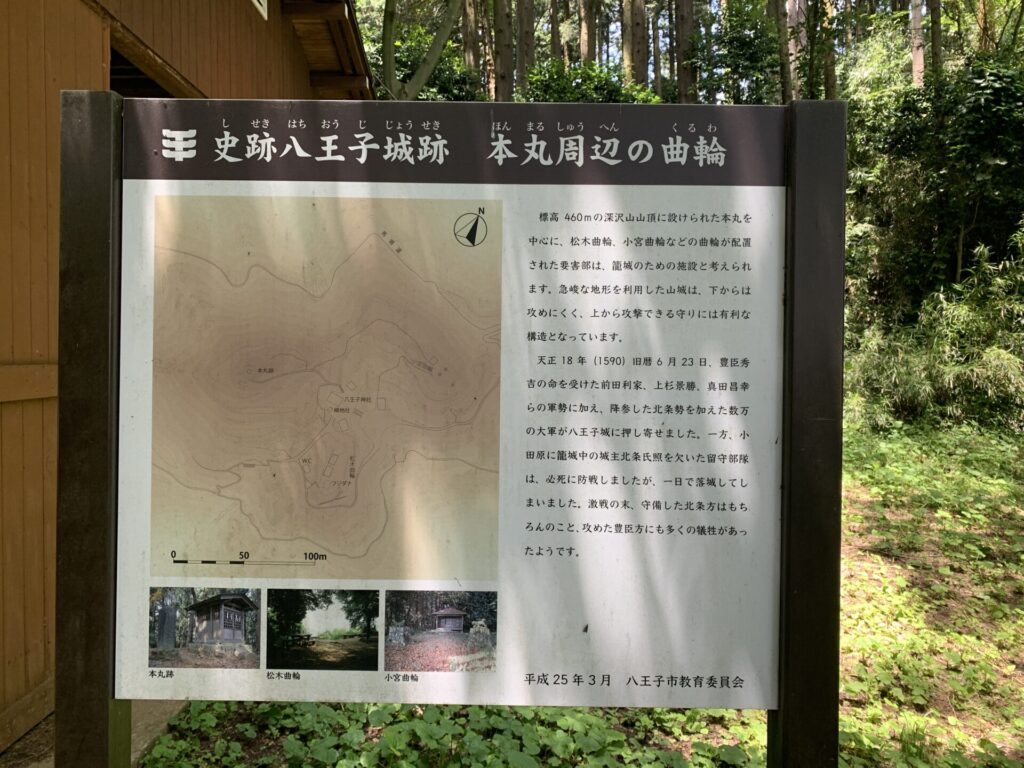
There was also an information board nearby.
It really must have been extremely difficult to attack and climb this castle, while at the same time being very easy to defend.
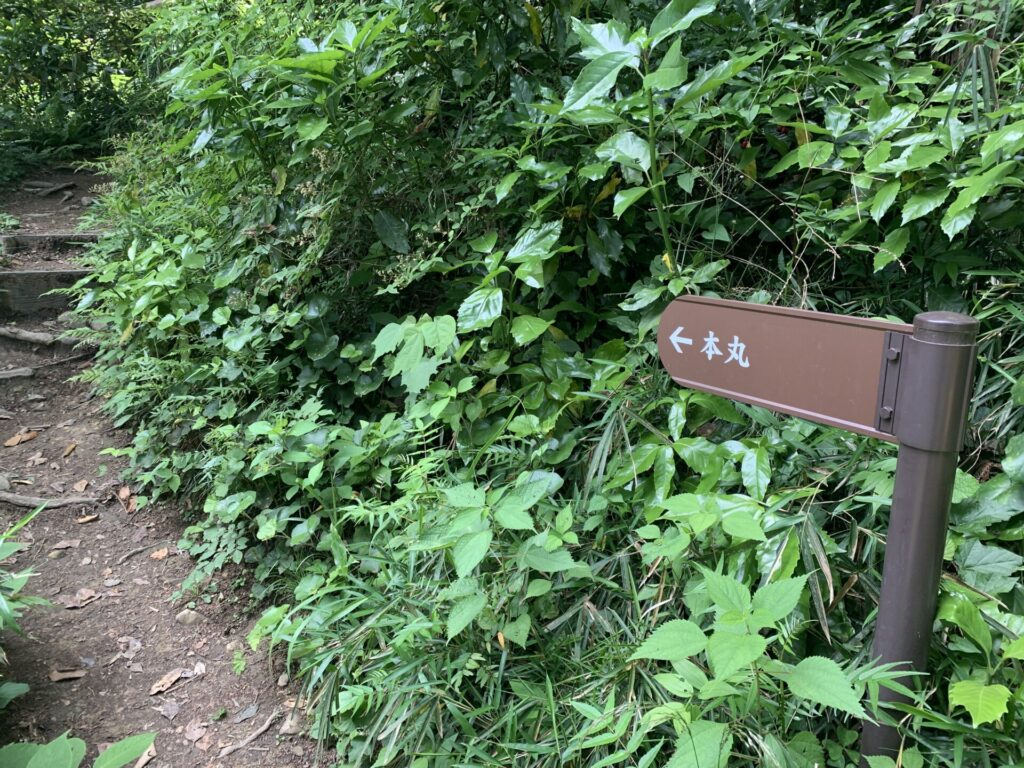
Huh?
As I moved further ahead, I spotted a directional sign pointing to the Honmaru (本丸:main enclosure) !
Ah, I see… this area was still one of the kuruwa (enclosure) surrounding the Honmaru.
Just a little more to go… I’ll keep pushing on!
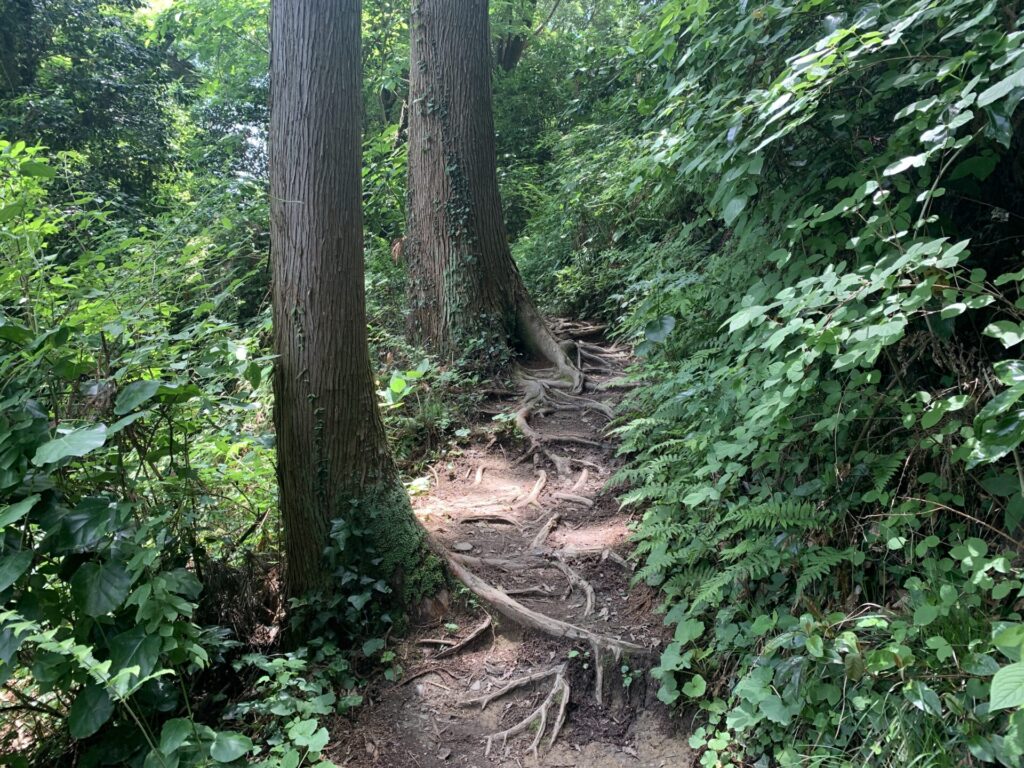
I climbed up a narrow path, barely wide enough for one person to pass.
This time for sure!!
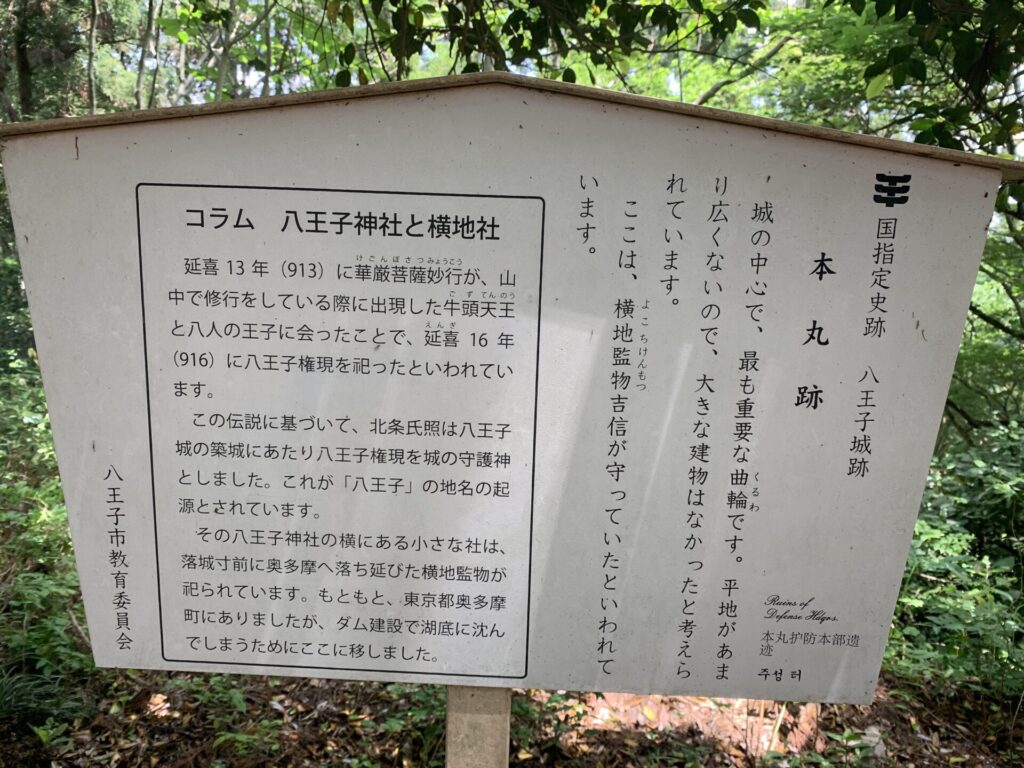
This time, it seems certain.
This must be the central area of the mountain castle.
Indeed, with a mountain castle this steep and rugged, there probably weren’t many open flat areas.
I also learned that Hachioji Gongen, the guardian deity of the castle, is the origin of the name “Hachioji.”
Very interesting.
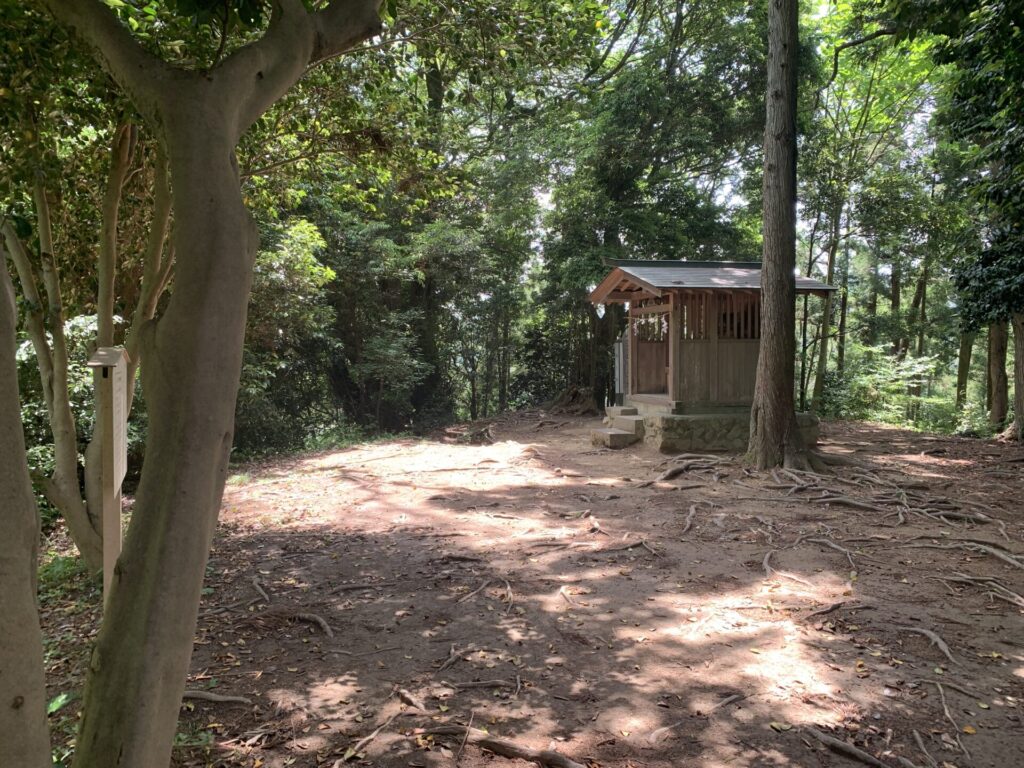
This relatively small flat area appears to be the site of the Honmaru (本丸:main enclosure).
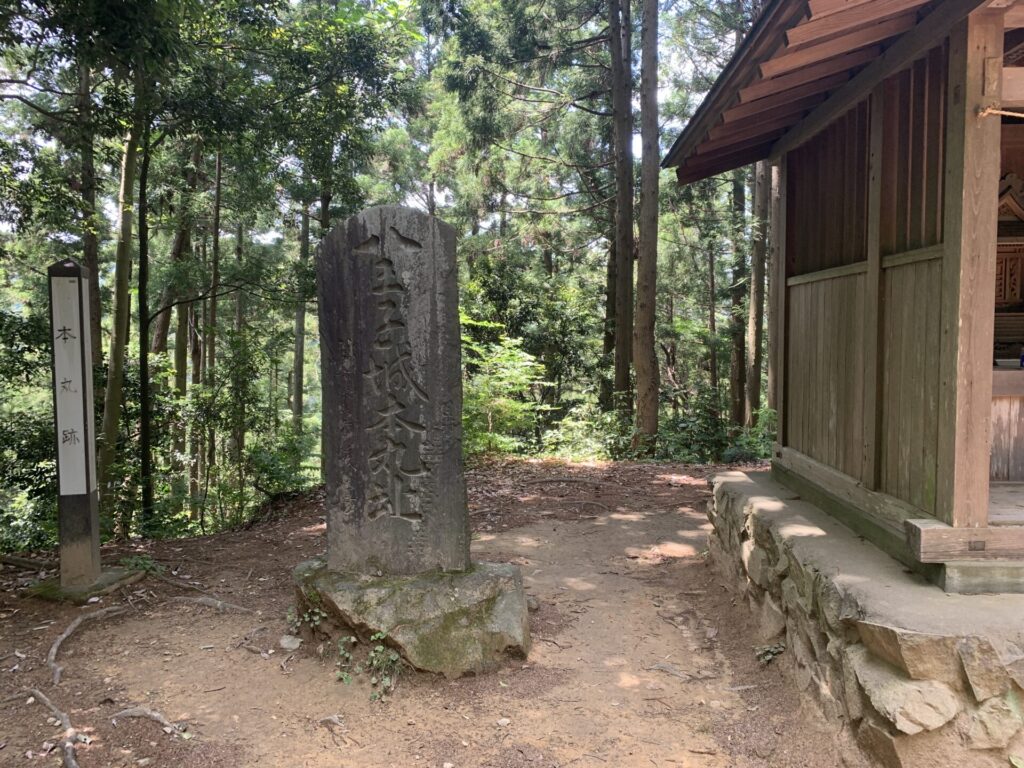
There was also a stone monument marking the“Site of Hachioji Castle Honmaru.”
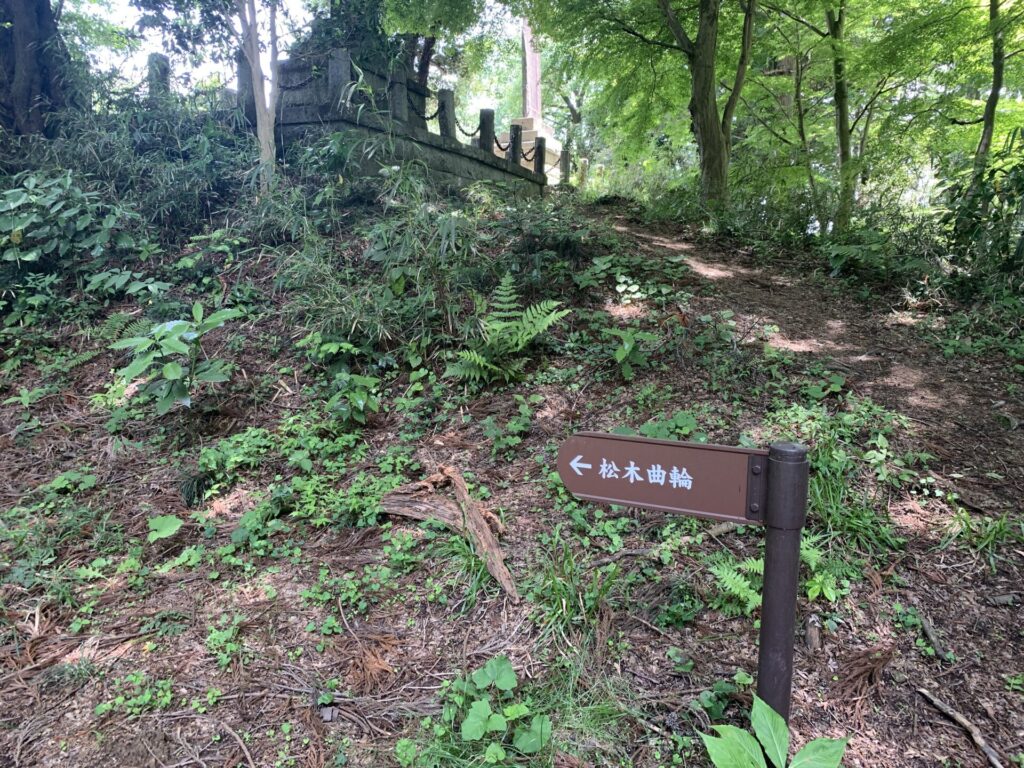
Since I had come all the way up here,
I decided to thoroughly explore Matsuki-kuruwa (松木曲輪) as well.
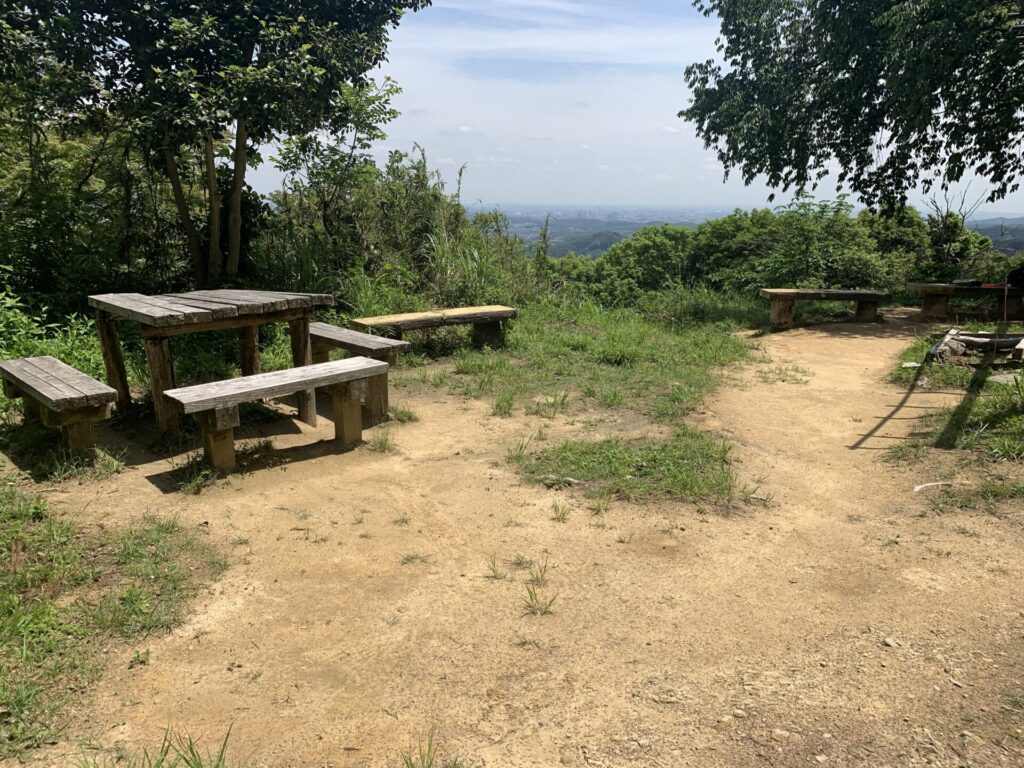
This appears to be Matsuki-kuruwa (松木曲輪).
Aside from the wide view overlooking the mountain below, this area is not particularly large either.
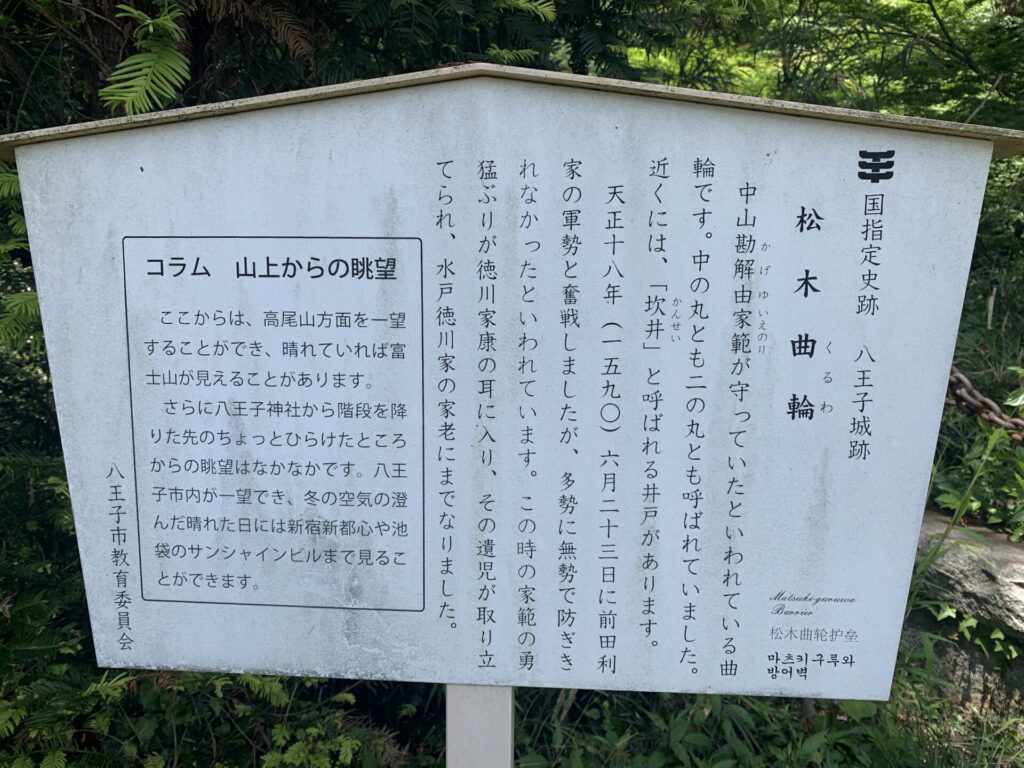
This appears to have been the kuruwa defended by Nakayama, a Hojo retainer whose bravery was admired even by Maeda Toshiie and Tokugawa Ieyasu.
It is said that his surviving child later rose to become a chief retainer of the Mito Tokugawa clan.
He must have been a truly remarkable warrior….
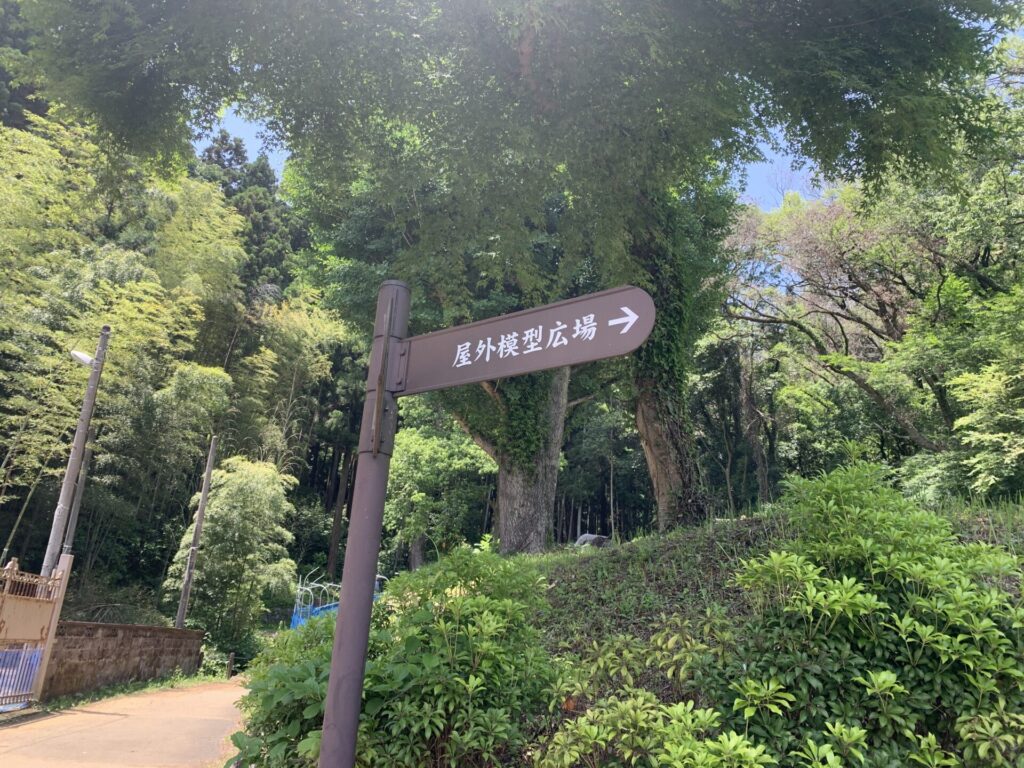
After descending the steep mountain path,
I finally headed to the Outdoor Model Plaza.
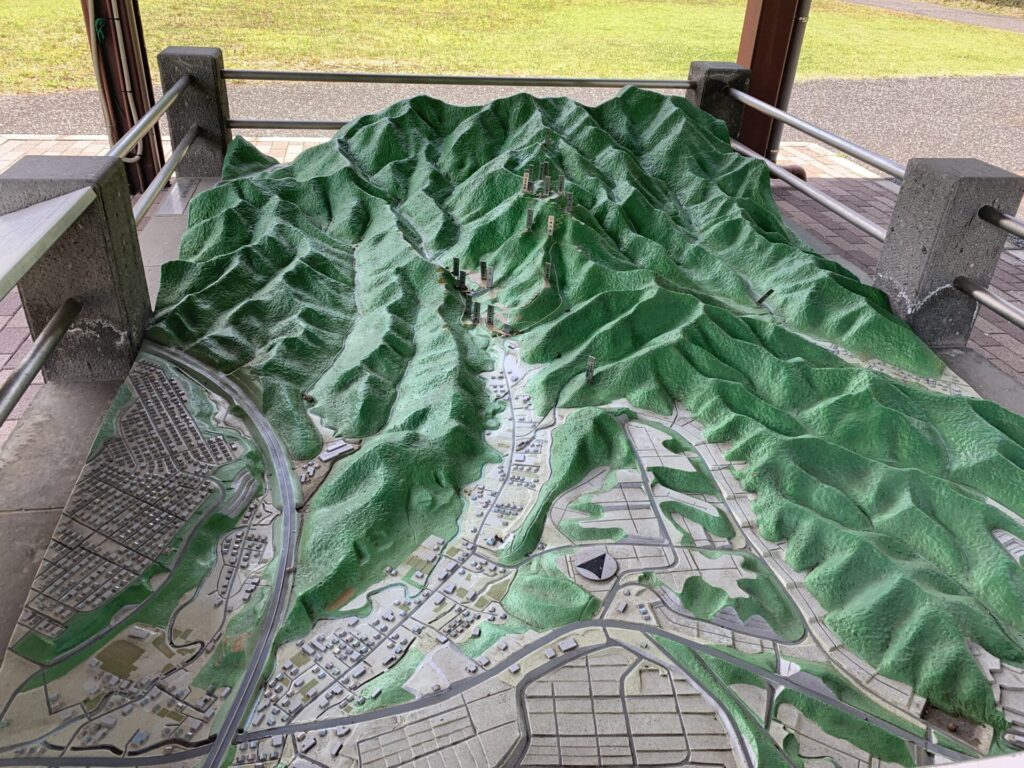
Hmm…
Just looking at this model, you can really see how steep and rugged this mountain castle is.
This time, I was able to experience that firsthand.
I feel like I can now understand, at least a little, how difficult it must have been for attacking soldiers to climb up and assault the castle. 😓
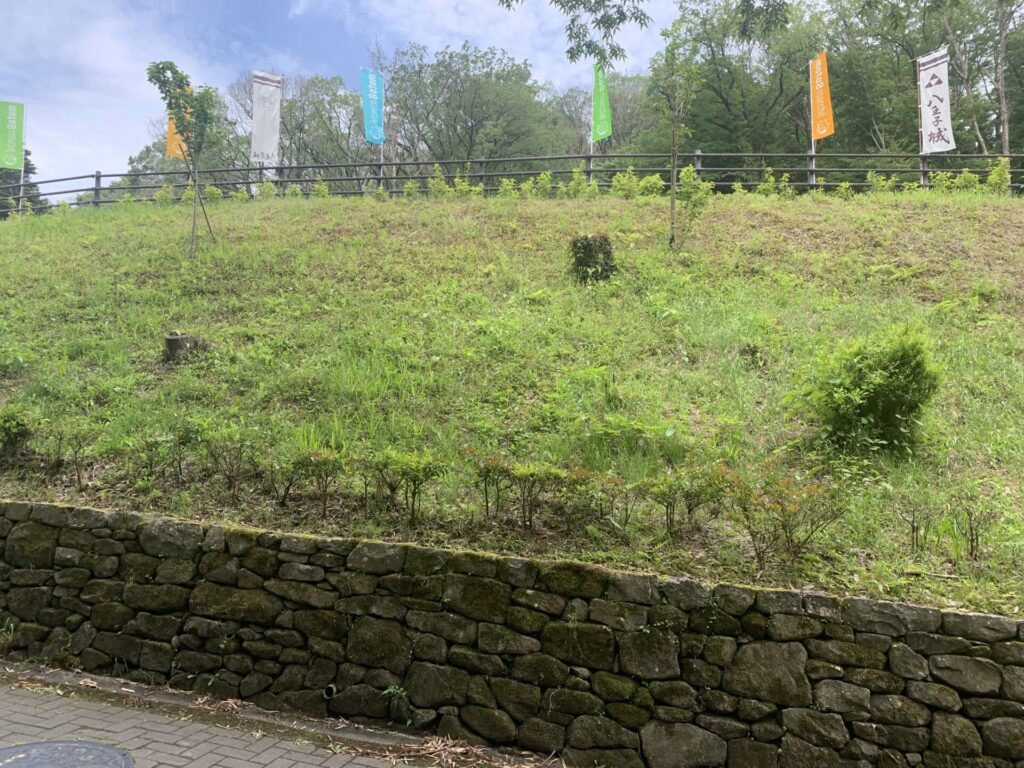
With that, my exploration of Hachioji-jo comes to an end.
Along the way, I may have complained a bit too much about how tough the mountain climb was…
But it truly is impressive that such a strong and well-fortified mountain castle was built on terrain this steep.
Thinking about Takiyama-jo as well, I was once again reminded of the abilities of Hojo Ujiteru.
And of course, the Hojo retainers Nakayama and Kano, who fought bravely and lost their lives here, will not be forgotten.
If this story has sparked your interest even a little, I highly recommend visiting the site yourself.
Just don’t forget to come prepared for mountain hiking!
👇You can also read my article about Takiyama-jo here👇