
Oshi-jo (Gyoda city, Saitama)|Infiltrating the “Floating Castle” Said to Be Impregnable!!, which withstood Ishida Mitsunari’s flood attack
- 1. To the “Floating Castle” that even Ishida Mitsunari failed to conquer with a flood attack!!
- 2. Determined to search for more traces of the castle, I began wandering through the city…
- 3. Mizuki Park, a place that still carries a certain atmosphere of the old castle town…
- 4. While walking through the city, I made an unexpected discovery—Kai-hime!!
- 5. To the Gyōda City Museum!
- 6. I even went to visit the headquarters of the attacking side—Ishida Mitsunari!!
To the “Floating Castle” that even Ishida Mitsunari failed to conquer with a flood attack!!
Hello, this is Shin.
April 27, 2023 (Thursday).
Under a brilliantly clear sky, I have arrived today at Oshi-jo in Gyōda City, Saitama Prefecture!

◉ Castle Type
Flatland castle (Hirajiro)
◉ Cultural Heritage Highlights
◉ Defensive Features & Fortifications
◉ Exploration Difficulty
🟡 Moderate Castles
◉ Estimated Time to walk around
: about 2 hours
◉ Parking
Parking is available at the adjacent Gyoda City Museum (approximately 15 spaces).
about 3 minutes by taxi ( about 15 minutes on foot ) from Gyodashi station, Chichibu railway.🚃
When speaking of Oshi-jo…
During Toyotomi Hideyoshi’s final campaign to unify the country—his assault on the Hōjō clan, rulers of the Kantō region—this castle served as the stronghold of the Narita clan, who sided with the Hōjō.
It is said that Ishida Mitsunari advanced upon this castle with an army of 20,000.
Despite having only about 500 defenders, the castle withstood Mitsunari’s famous “flood attack”,
and its name echoed throughout the land ✨
It is also the setting of the film The Floating Castle (Nobō no Shiro).
I arrived filled with anticipation, eager to see what kind of defensive structure it would reveal…
However, what remains today—reconstructed—is only the three-story turret standing on the site of the main enclosure, along with the surrounding moat and a small section of wall.
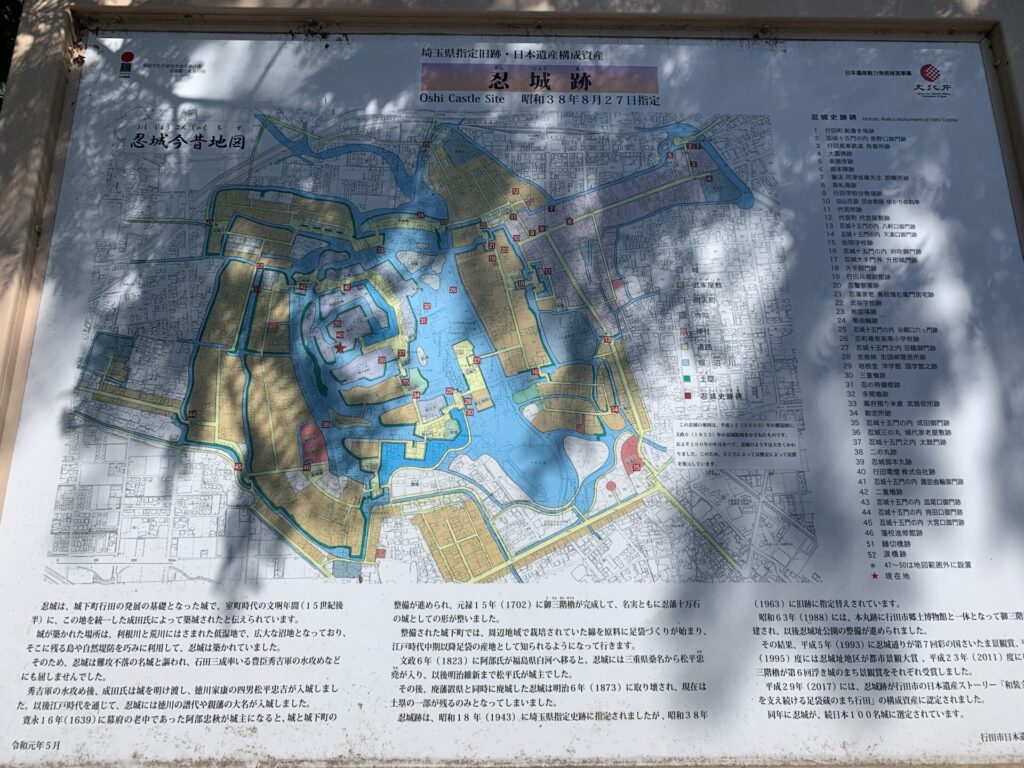
Looking at this map, which compares the original castle layout with the present-day cityscape,
you can see that water once surrounded the central Main Enclosure and Second Enclosure in an intricate network.
Today, however, most of those areas have been replaced by schools and residential neighborhoods.
No way…
Well, I suppose that’s inevitable for a flatland castle (hirajiro)…
With that in mind, I composed myself and began by heading to the Main Bailey ( Honmaru ).
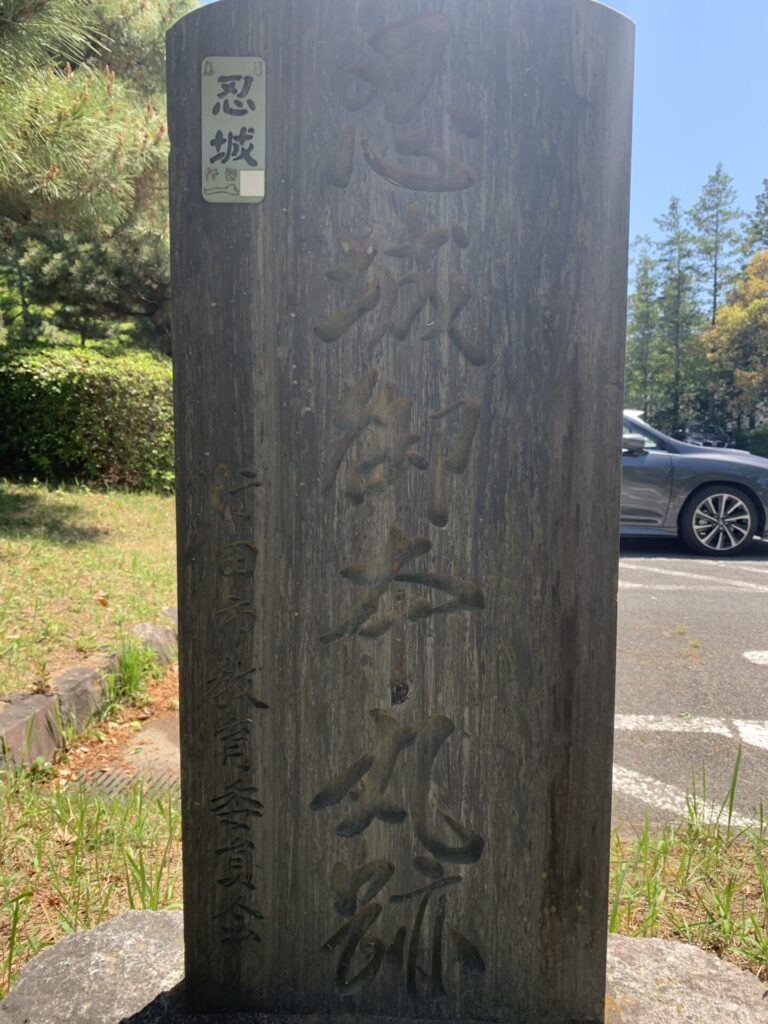
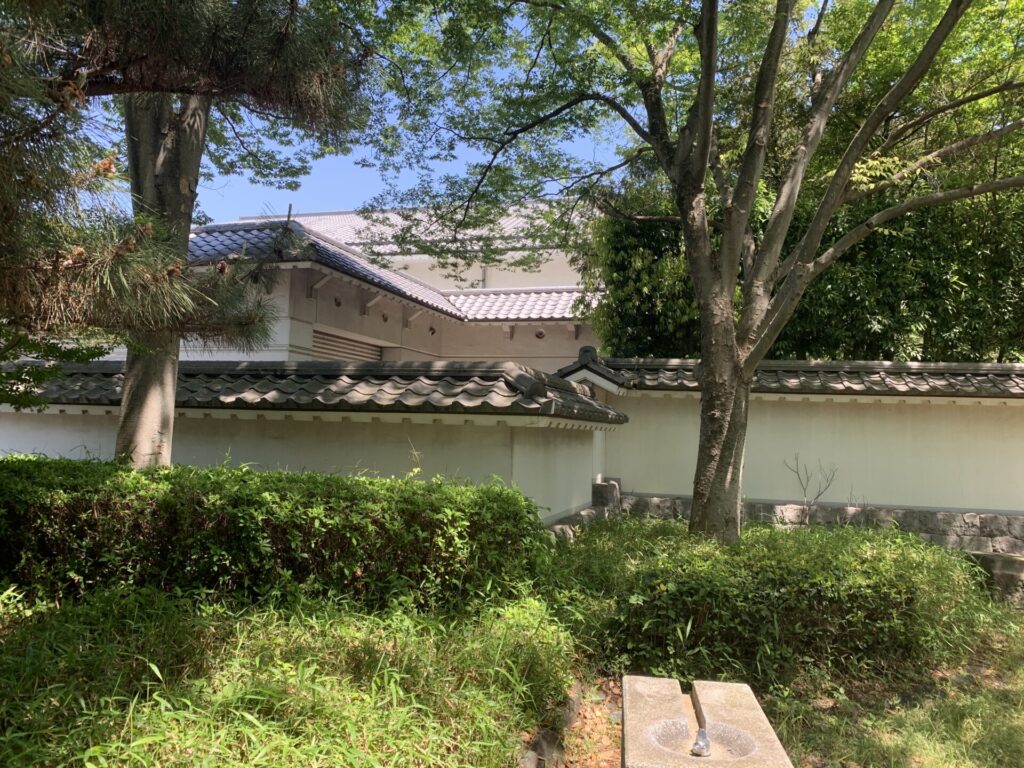
The three-story turret, which serves as the central symbol of the Main Enclosure, has been converted into a museum.
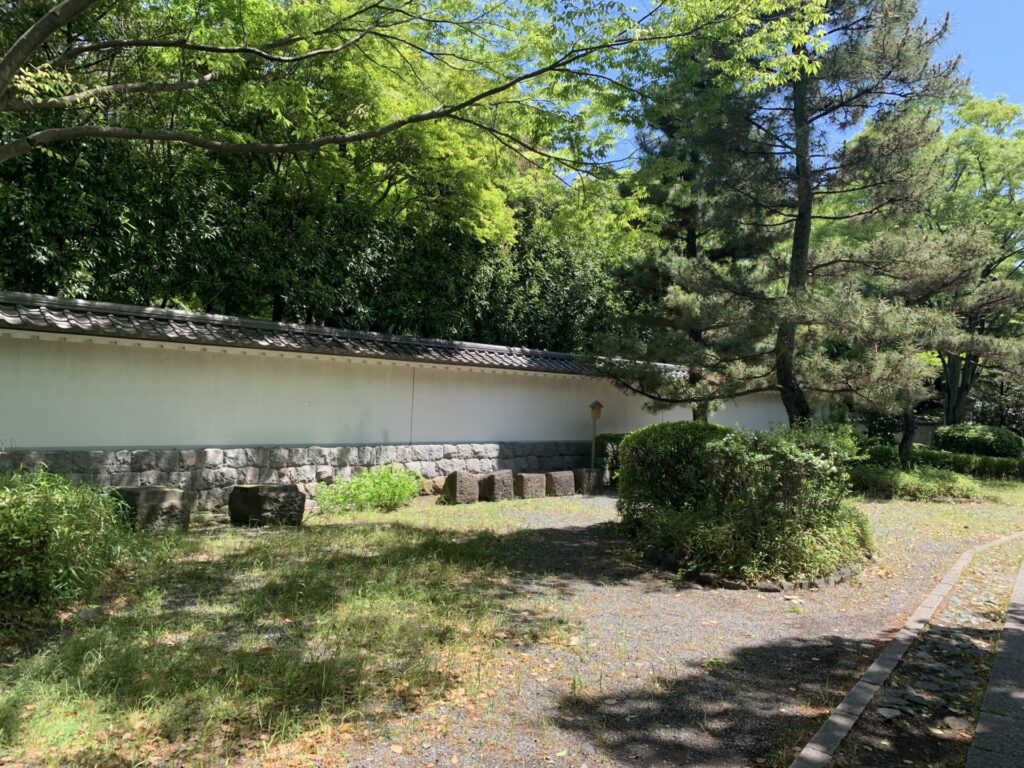
Still—
just gazing at walls like these is enough to stir the heart of any Sengoku enthusiast 😊
I took a short walk inside.
Please enjoy the video below.
The stone paving, the bamboo fences, and even the surrounding bamboo grove—
simply seeing these enclosed within castle walls is enough to lift the spirit.
From here, we pass through the East Gate and take a look at the three-story turret from the outside.
Before passing through the East Gate…
I noticed a large bell tower standing within the castle grounds.
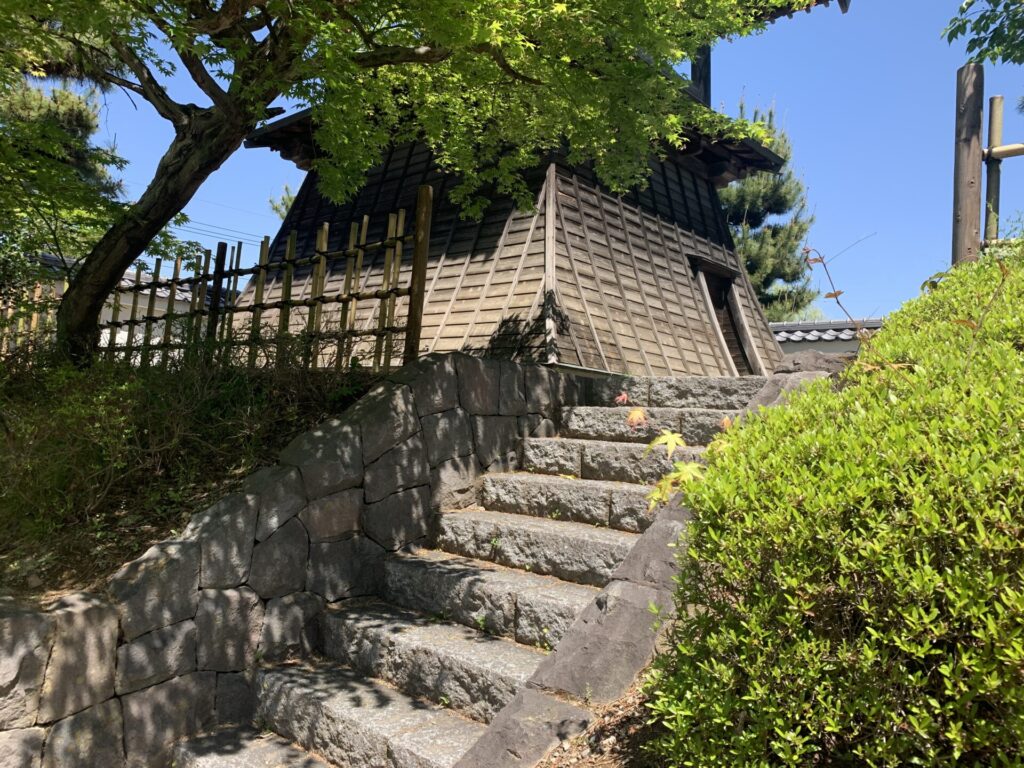
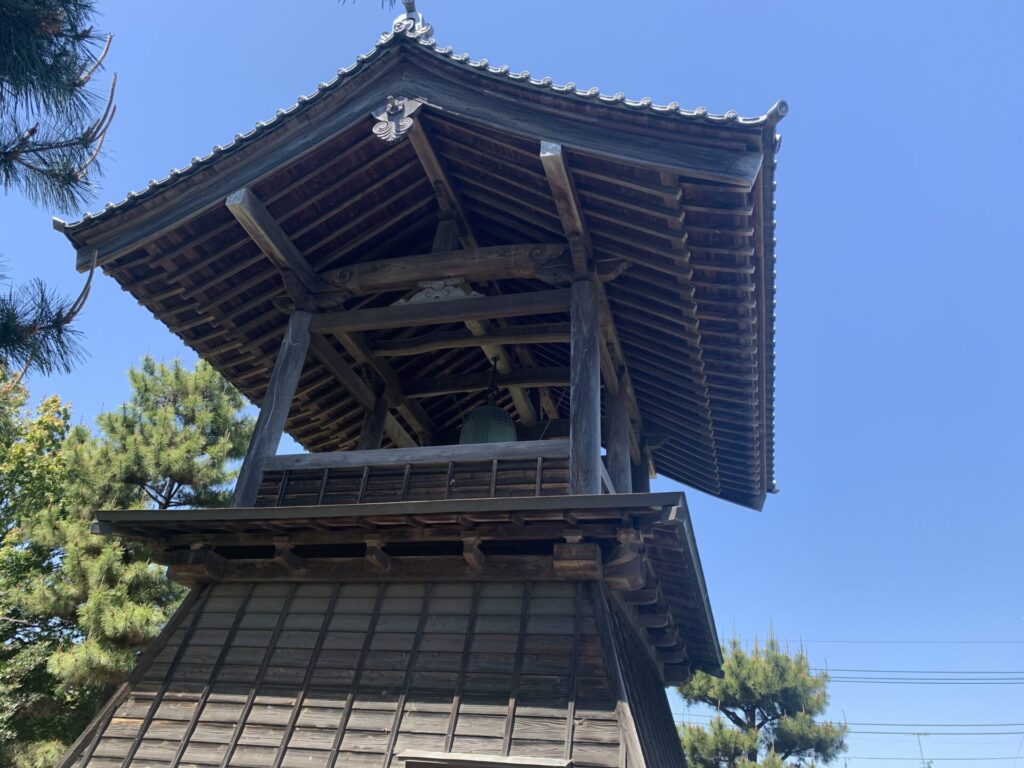
When you climb up,
this is the kind of view you get.
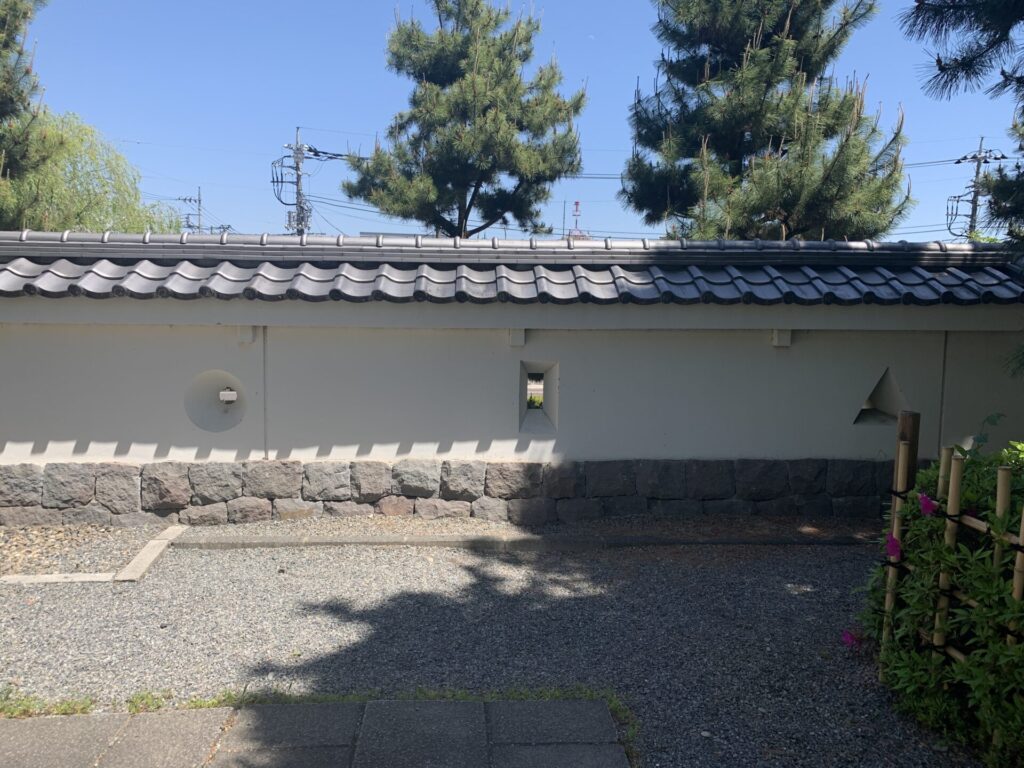
And here you can see various shapes of Teppō-hazama ( 鉄砲狭間:gunports built into the walls ).
One can imagine the castle defenders carefully aiming their matchlock guns through these openings…
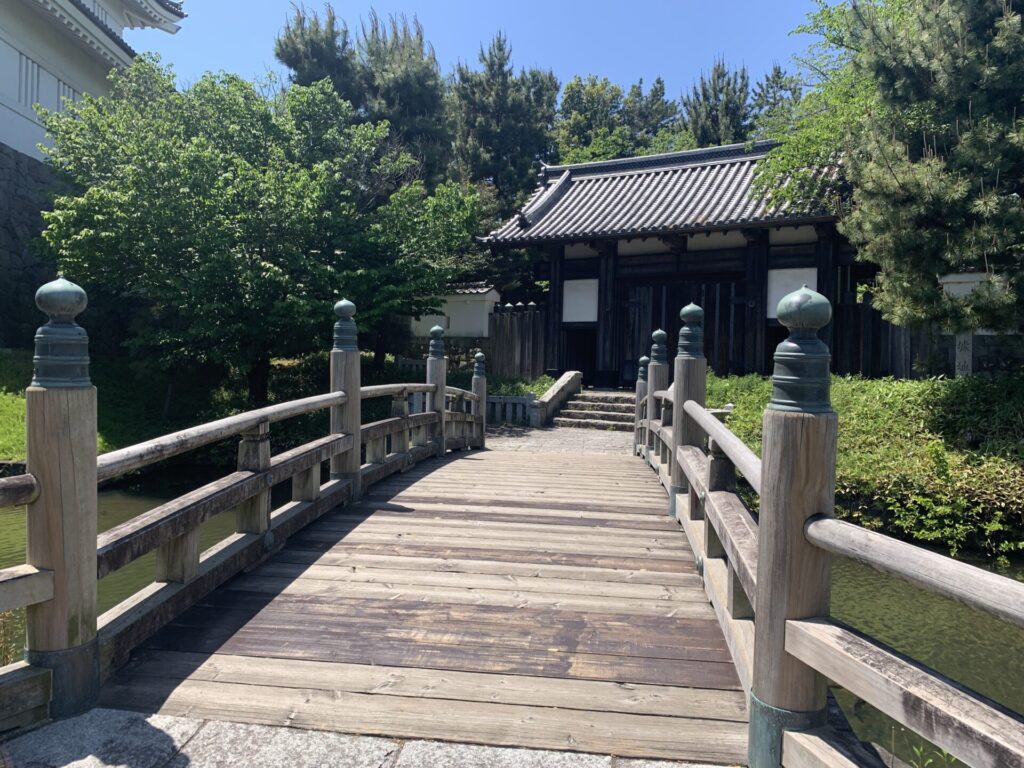
Now, having passed through the East Gate, we step outside.
The structure visible beyond the wooden bridge is the very East Gate we just came through.
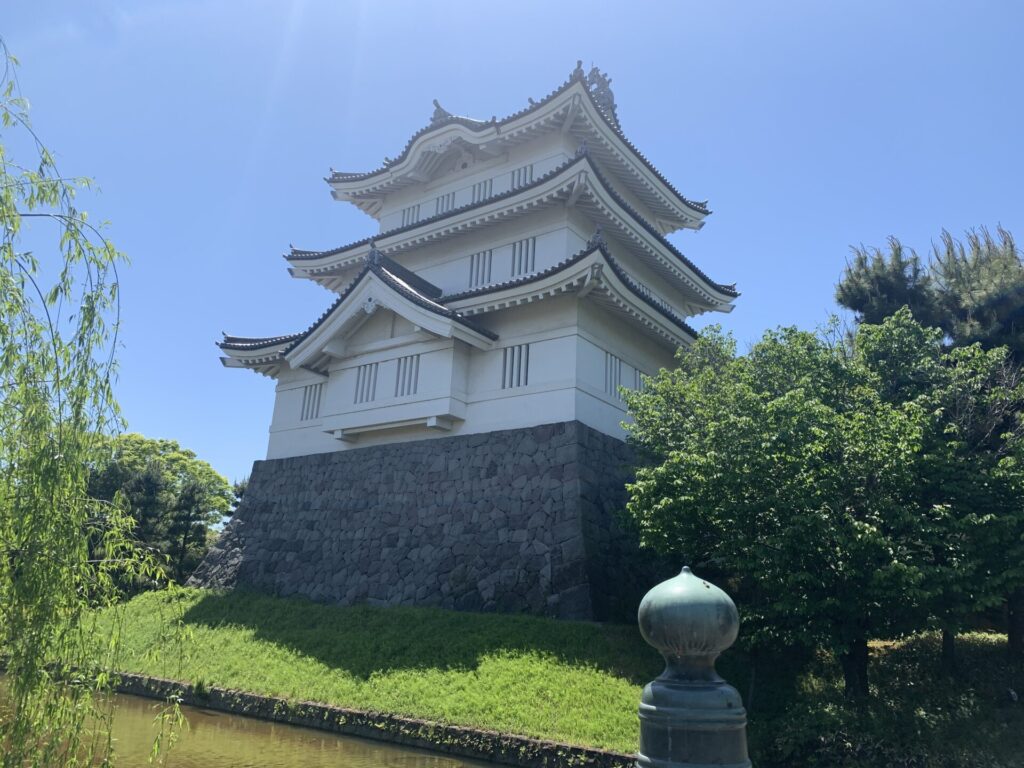
And there it is—the Gosankai-Yagura ( 御三階櫓: three-story turret ) in full view!!
Under the clear blue sky, it stands out beautifully in the sunlight…
Determined to search for more traces of the castle, I began wandering through the city…
“Is the three-story turret really the only remnant…?”
Surely there must be some other place that still preserves a hint of the castle’s former presence.
With that thought in mind, I set off through the streets, Google Maps in hand, hoping to uncover more remnants of the past.
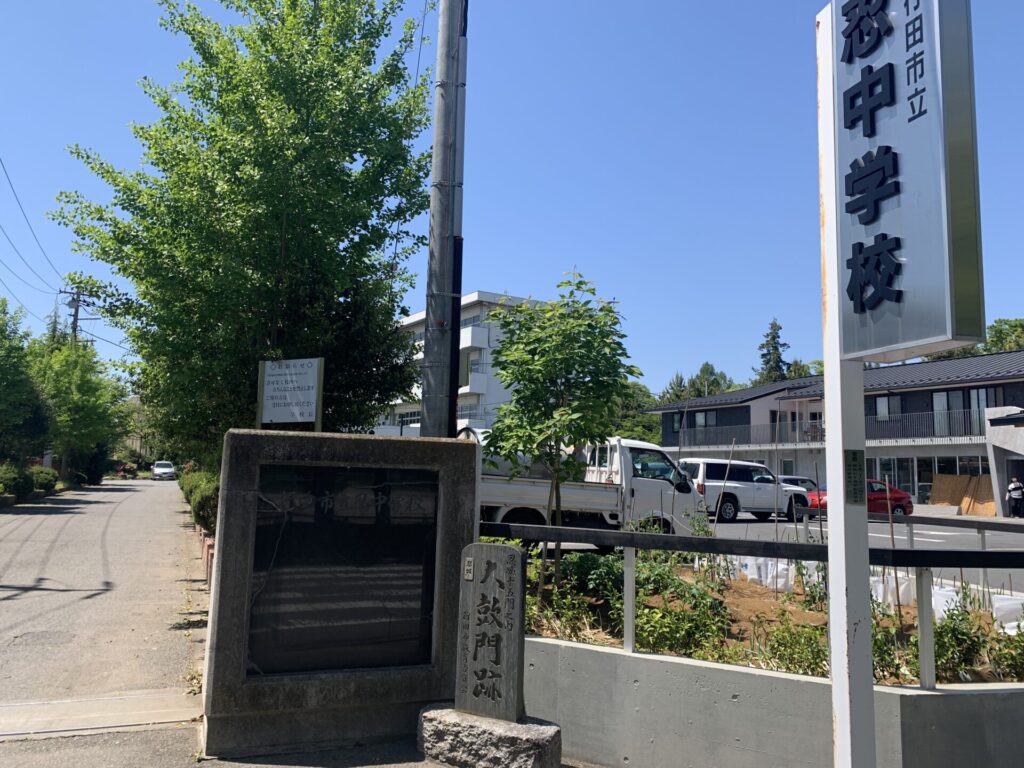
The site of the former Taiko Gate—now occupied by Oshi Junior High School.
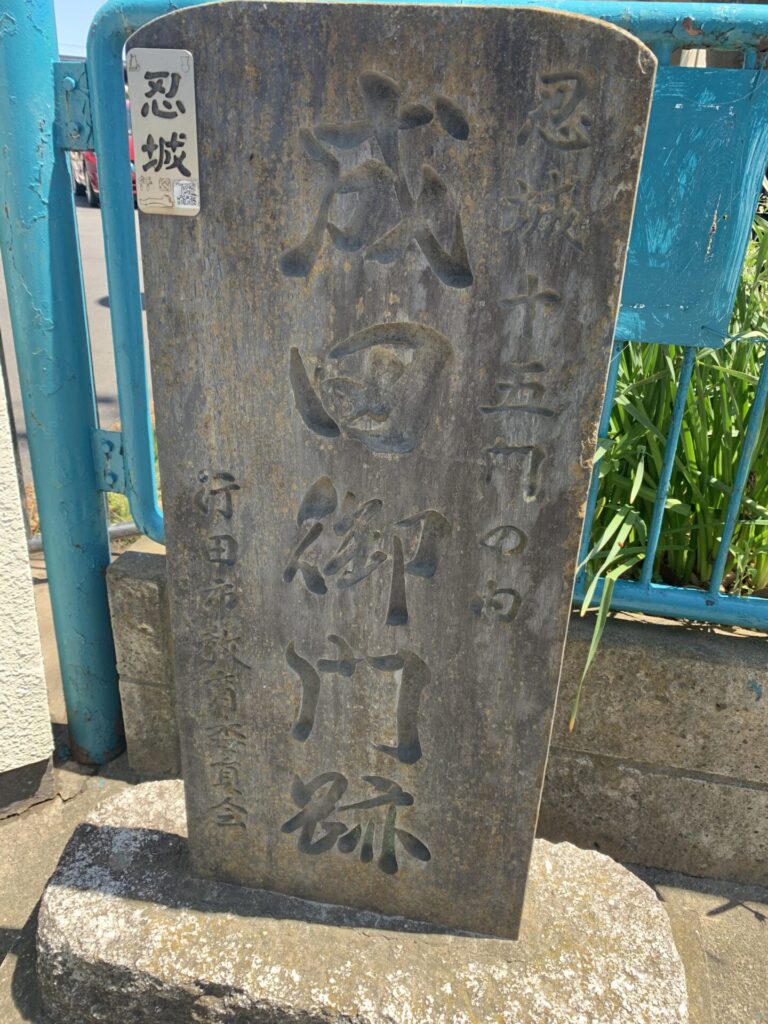
And likewise, the site of the former Narita Gate—now the grounds of Oshi Elementary School.
Unfortunately, almost all of the former castle grounds have been transformed in this way…
Mizuki Park, a place that still carries a certain atmosphere of the old castle town…
From there, guided once again by Google Maps,
I continued walking in search of traces of the former waterways.
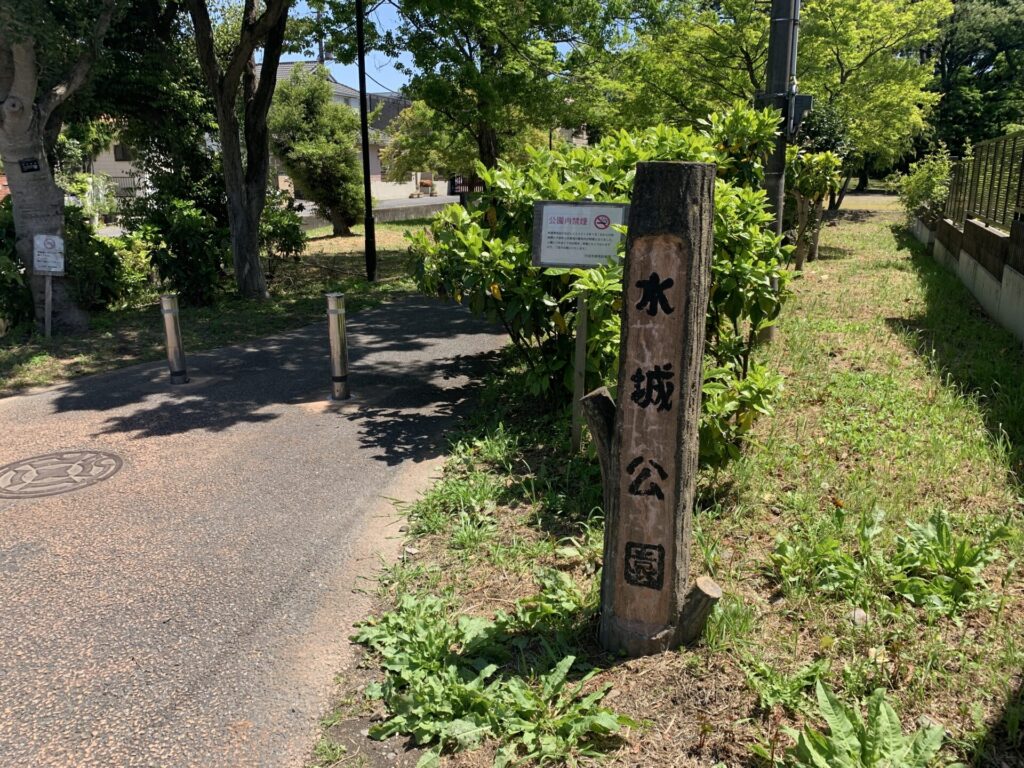
“Mizuki Park ( 水城公園 )” — literally, Water Castle Park?
Well, that’s a name I simply couldn’t ignore. I had to go.
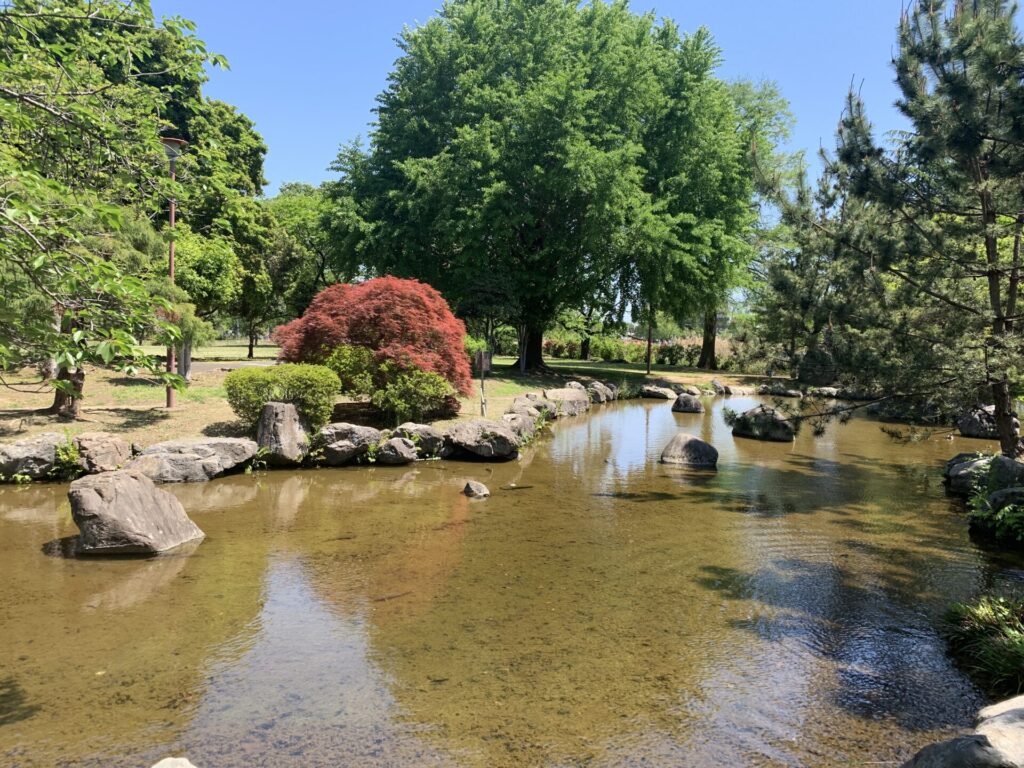
Here’s a snapshot from inside the park.
It’s actually quite spacious.
You can still sense here the lingering trace of a castle once surrounded by water…
And I was so captivated by a small waterfall that I couldn’t resist filming a short video.
With the surrounding area now fully urbanized,
and so few visible remnants of the past remaining,
scenes of nature like this feel all the more moving…
In a way, they sink deeper into the heart, offering a quiet reminder of what once was.
While walking through the city, I made an unexpected discovery—Kai-hime!!
After making a full circuit around Mizuki Park,
I continued strolling through the streets, wondering if I might uncover anything else of interest…
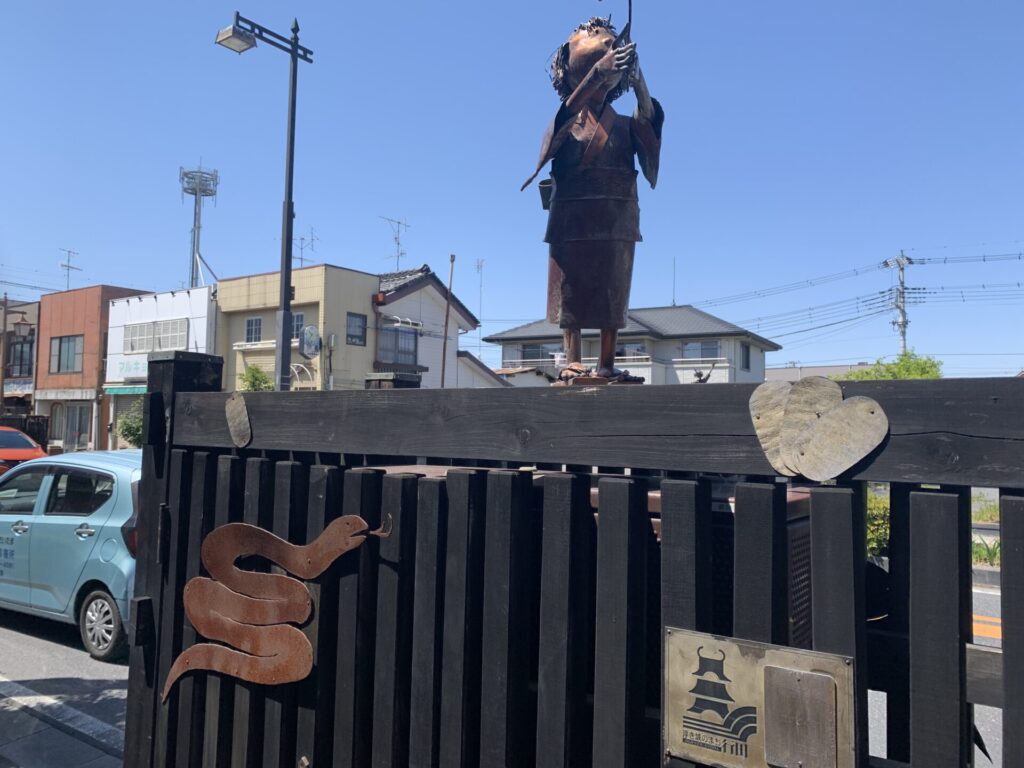
And then—I discovered this!!
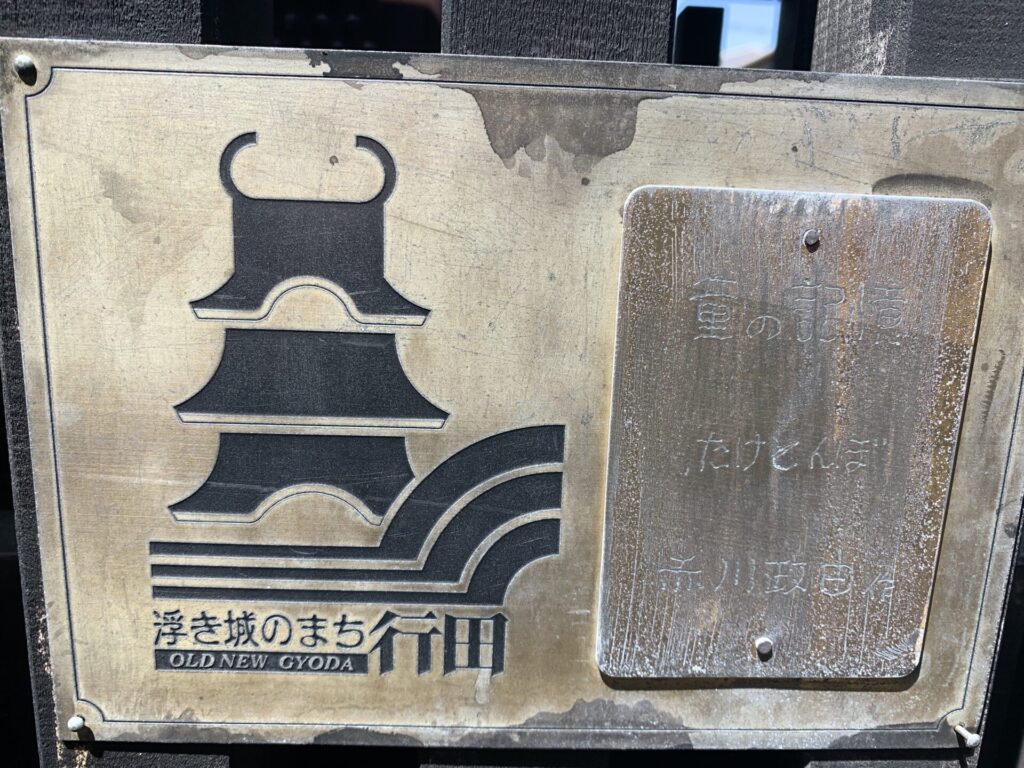
It reads, “Gyōda — The Town of the Floating Castle”.
Oshi-jo, which successfully withstood the mighty Toyotomi army, must surely be a great source of pride for the city.
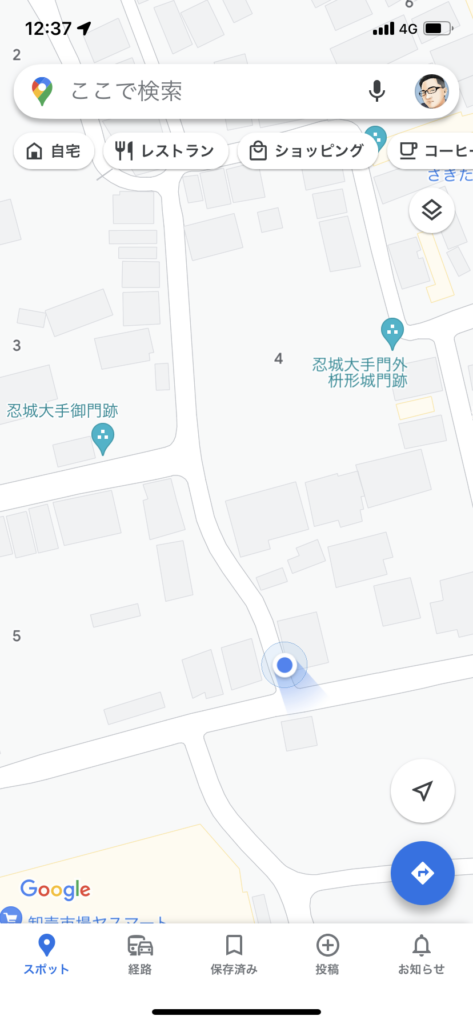
Searching the surrounding area on Google Maps once again,
I noticed markers for the “Site of the Ōte Gate” and the “Site of the Outer Masugata Gate of the Ōte Gate”!
Wondering if there might still be something to see, I headed over to check it out.
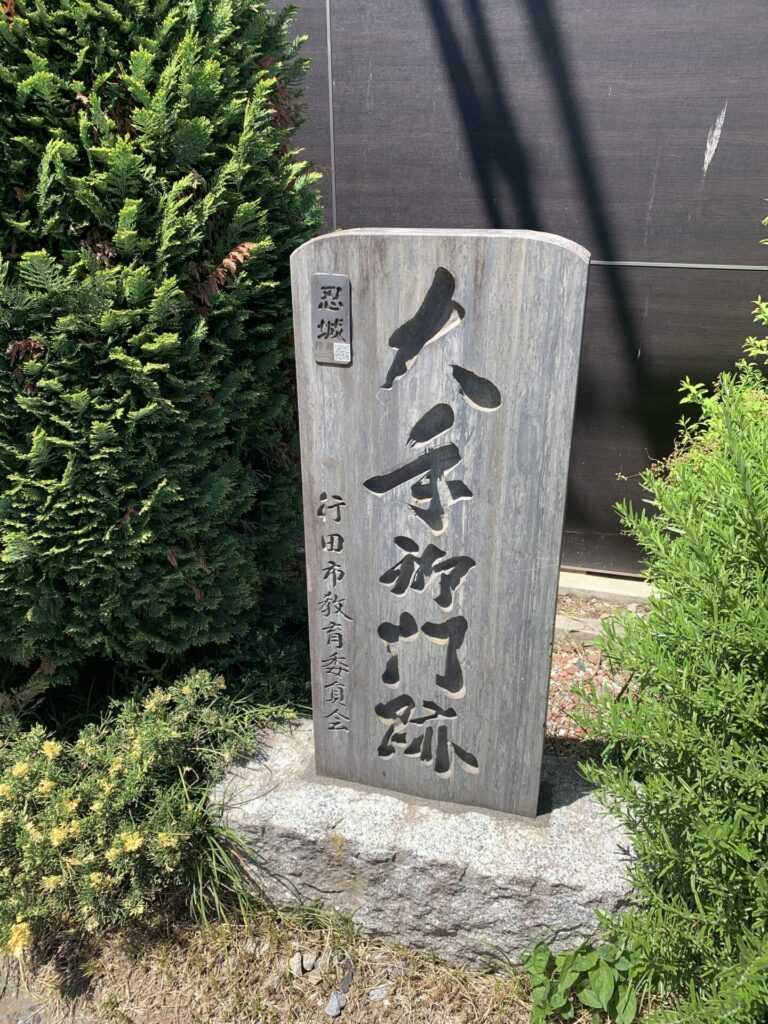
However, as expected, this site too had nothing more than a stone monument.
Since the castle was once abandoned and dismantled, it seems they chose not to reconstruct structures such as the main Ōte Gate.
And as I continued walking through the city…
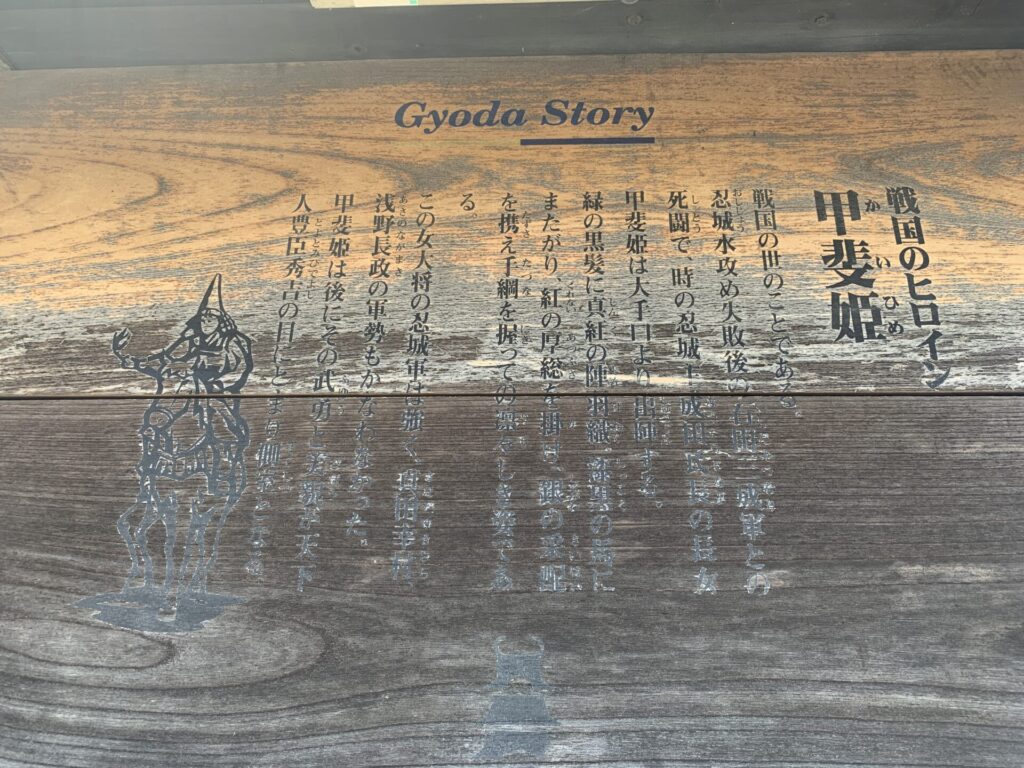
There it was in the middle of the city—“Sengoku Heroine: Kai-hime”!
In the film The “Floating Castle", she was portrayed by Nana Eikura as a courageous female warrior.
I have to admit, I was genuinely delighted by this discovery.
I returned once more to stand before the three-story turret,
and from there, I filmed a video of crossing the wooden bridge and passing back through the East Gate.
It feels a bit different when you see it on video, doesn’t it?
Can you sense the atmosphere—the feeling of crossing the bridge and passing through the East Gate?
To the Gyōda City Museum!
Having explored nearly all the visible remnants of Oshi-jo,
I headed inside the local history museum located within the three-story turret.
(The admission fee for adults is 200 yen.)
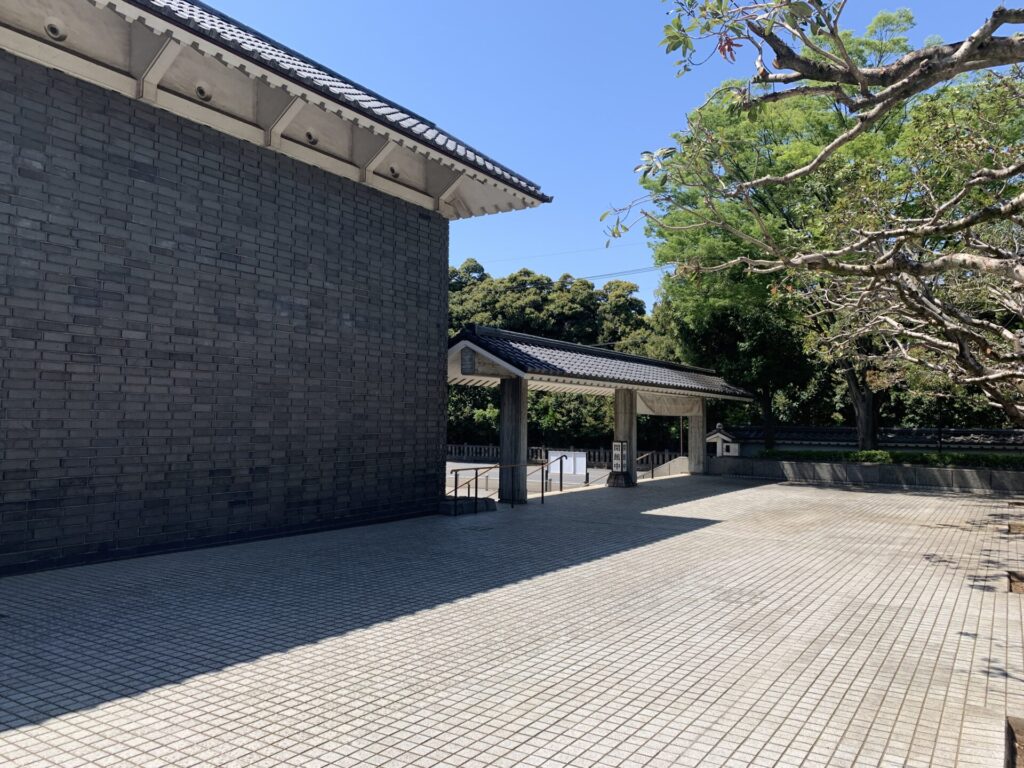
For reference, this is what the exterior of the museum looks like.
It’s quite an impressive structure, wouldn’t you say?
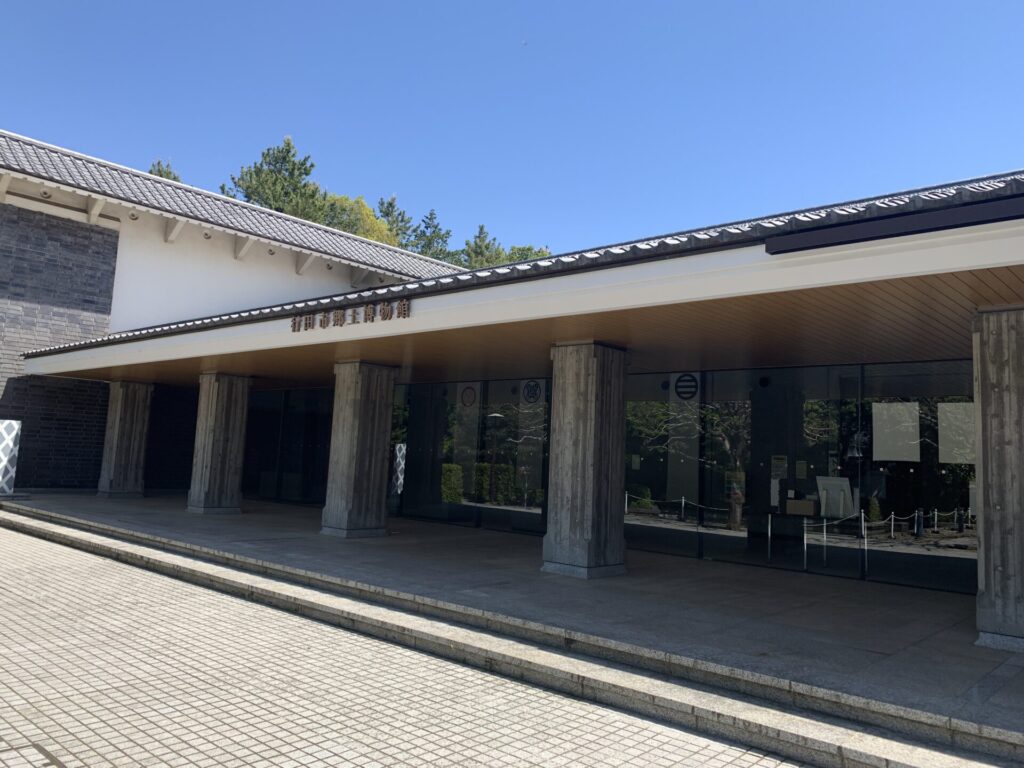
This is the entrance to the museum.
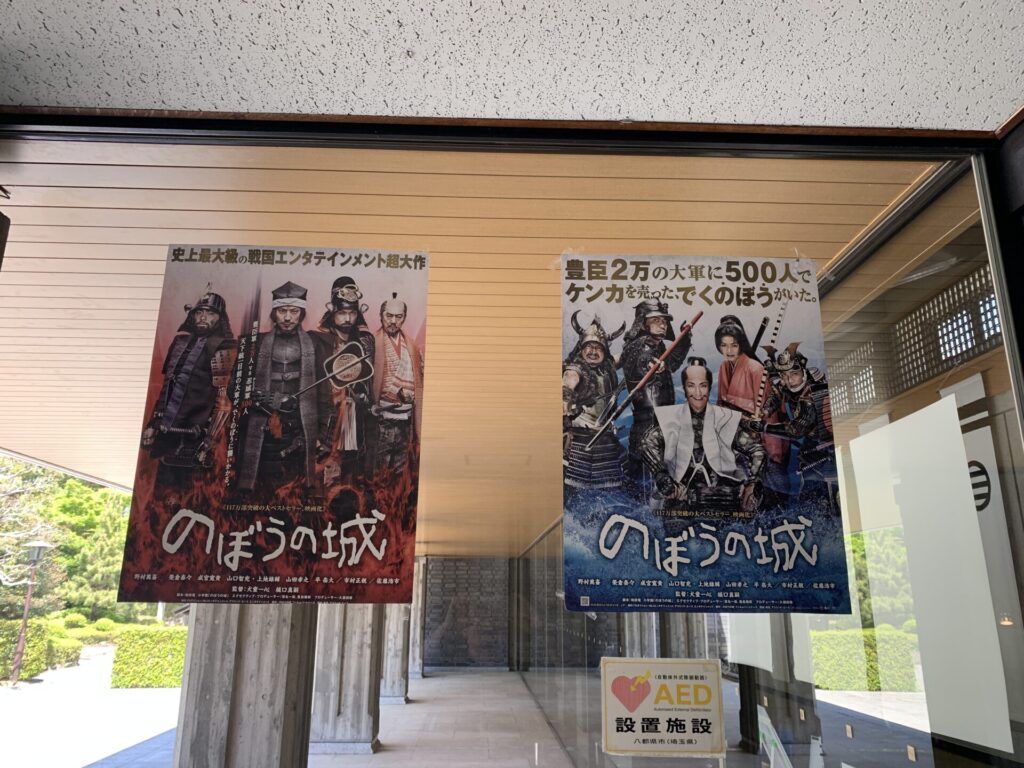
And as soon as you step inside, there it is on the left—a poster for The Floating Castle!
Well, of course they would display it. 😅
But honestly, it’s quite an entertaining film.
If you haven’t seen it yet, I definitely recommend giving it a watch at least once.
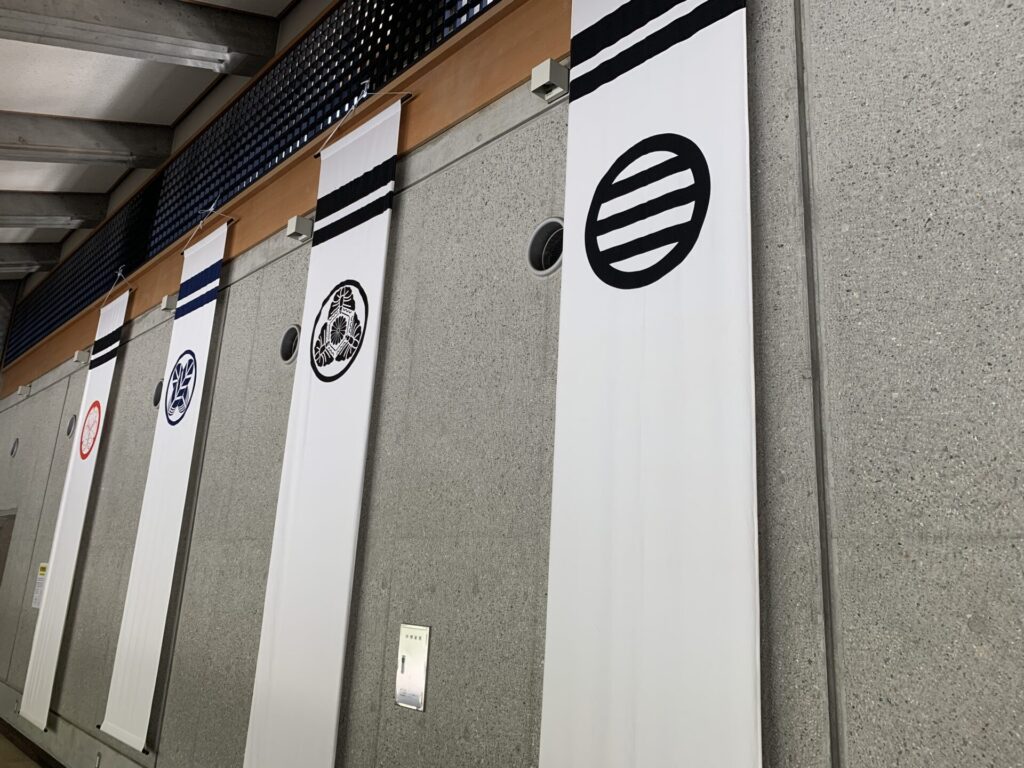
Inside the museum, there was also a display of numerous nobori (war banners) like these.
The one on the far right represents the banner of the Narita clan, the lords of Oshi-jo.
(Unfortunately, from this point onward, most of the exhibits inside the museum were strictly no-photography.)
I even went to visit the headquarters of the attacking side—Ishida Mitsunari!!
To be honest, I had been really looking forward to this visit to Oshi-jo.
In fact, I had even rewatched the film The Floating Castle beforehand.
What kind of remains would I find of the castle that the Narita clan and their retainers had so fiercely defended?
How might Oshi-jo have appeared from the perspective of Ishida Mitsunari, who carried out the flood attack?
I had come fully intending to examine these questions on site…
Yet, to be honest, I felt somewhat underwhelmed.
But just before heading home, something caught my attention.
Zooming out further on Google Maps, I noticed—
“Site of the Ishida Embankment”!!
Yes—the very embankment stretching some 28 kilometers, built by Ishida Mitsunari in his attempt to flood Oshi-jo.
Could this be more promising?!
With renewed excitement, I started the car and headed toward it.
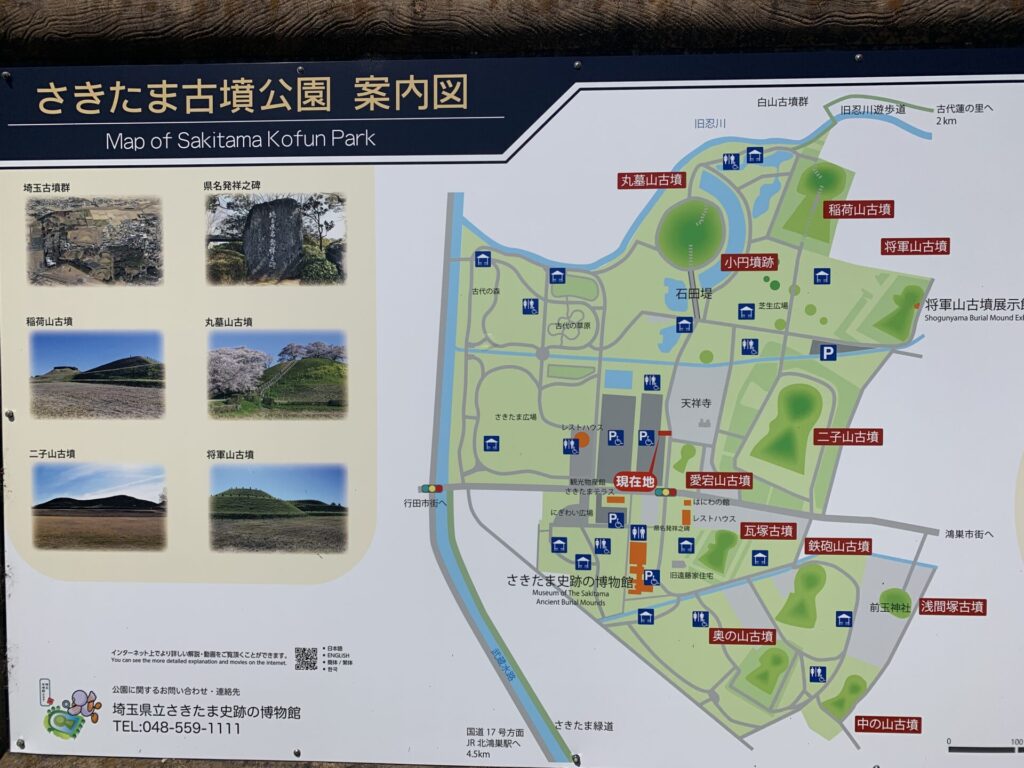
As you can see, I arrived at Sakitama Kofun Park—a vast park filled with numerous massive ancient burial mounds!
(It’s less than a 10-minute drive from the ruins of Oshi-jo.)
For enthusiasts of ancient Japanese history, this site might be far more fascinating than Oshi-jo itself…
But as for me—I barely gave the kofun mounds a glance. 😅
It may be a bit hard to see,
but toward the top of the map, you can spot the label “Ishida Embankment ( 石田堤 )”,
and nearby stands Maruhakayama Kofun ( 丸墓山古墳 )—the very place where Ishida Mitsunari is said to have established his main headquarters!
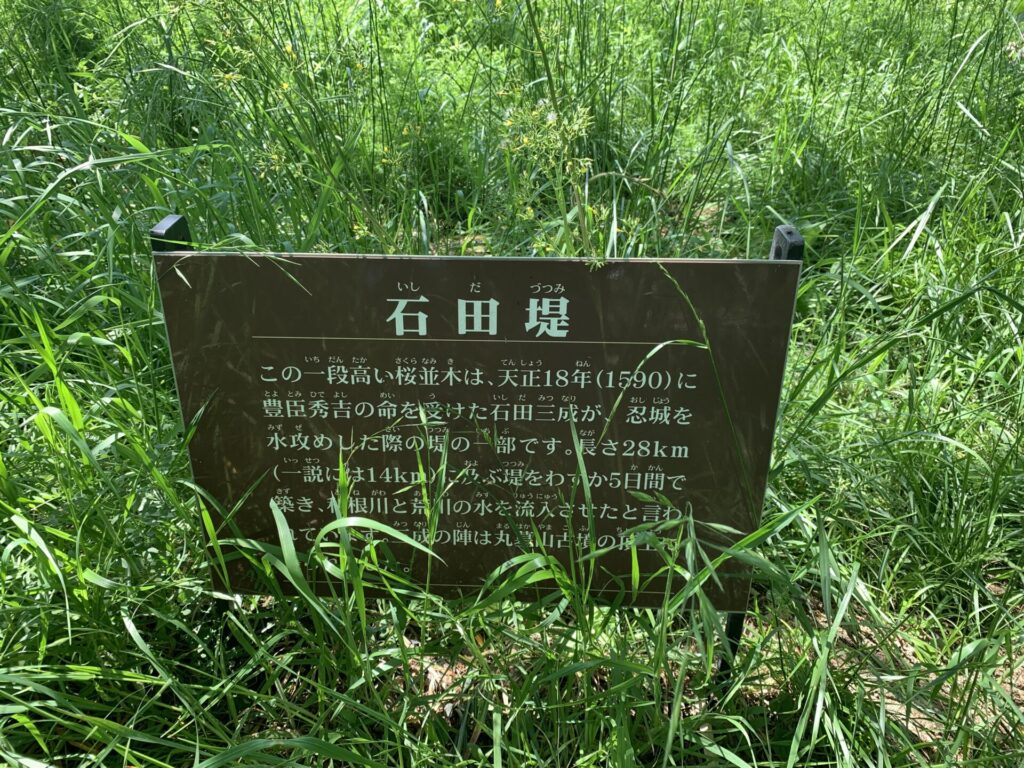
Here it is !!
“The Ishida Embankment ( 石田堤 )”!!
It’s astonishing to think that a 28-kilometer embankment was reportedly constructed in just five days.
The scale of it is almost unbelievable.
This very scene is depicted on a grand scale in the film The Floating Castle.
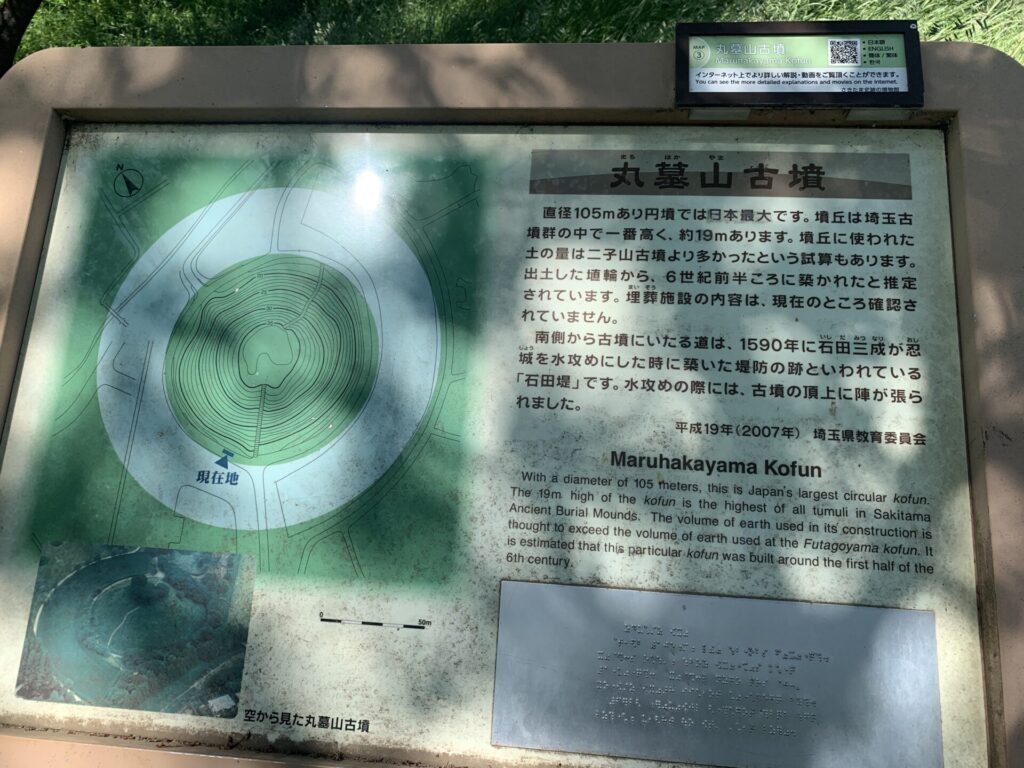
And here it is—Maruhakayama Kofun ( 丸墓山古墳 )!!
It is said that Ishida Mitsunari established his main headquarters at the summit of this mound…
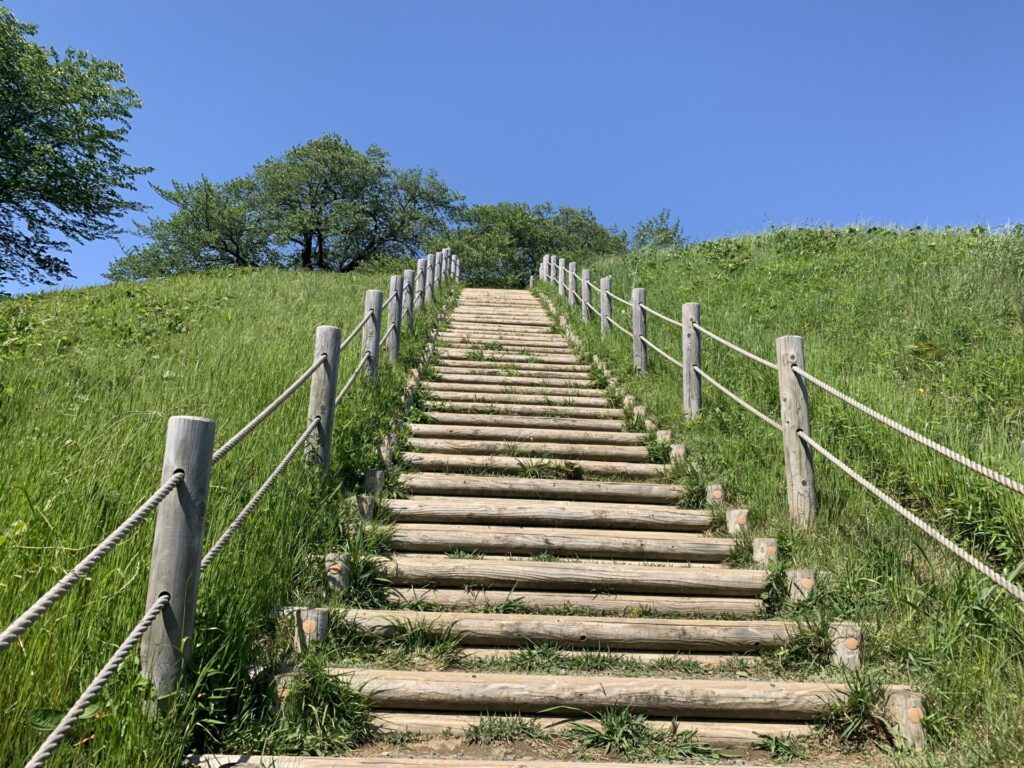
It’s high—very high!
At this elevation, there’s no doubt that the lands around Oshi-jo would have been clearly visible from the summit.
From here, one can easily imagine how Ishida Mitsunari surveyed the castle below while directing his flood attack.
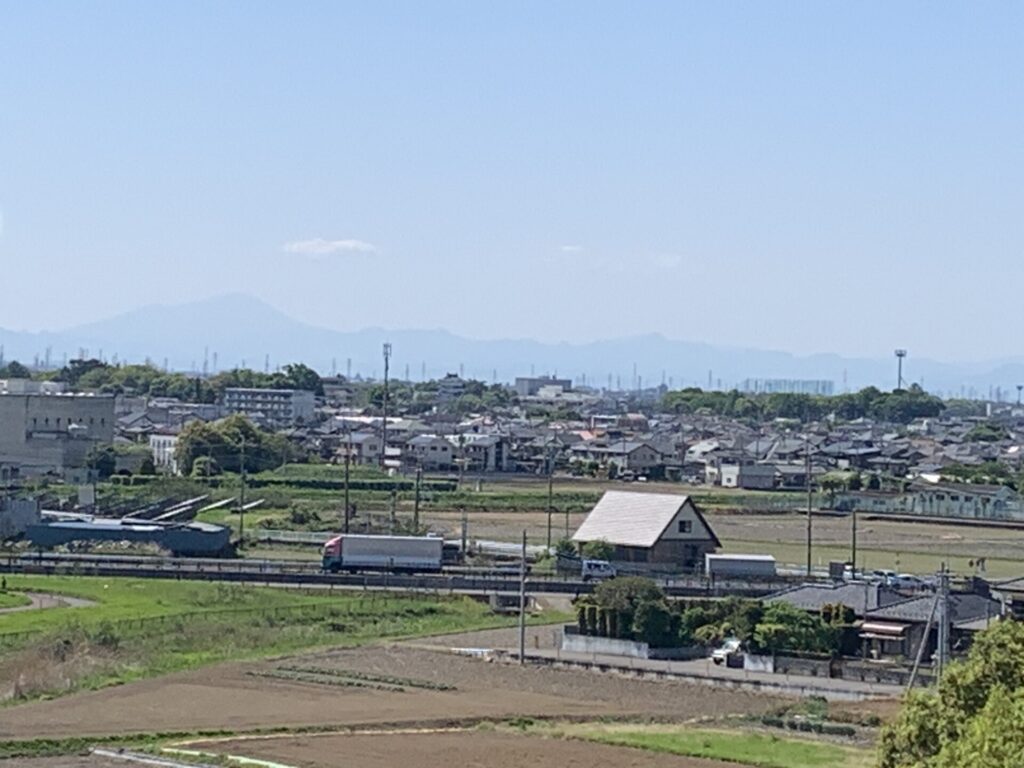
And this is the view looking down over the castle town from the summit.
The three-story turret of Oshi-jo is so far away that it’s barely visible.
(It’s the slightly dark-topped structure near the center of the photo…)
Please take a look at the scene in the short video below as well.
I zoomed in quite a bit while filming—
can you make out the three-story turret near the center?
Of course, back in those days there were no surrounding modern buildings,
so the castle structures would have been far more clearly visible than they are today.
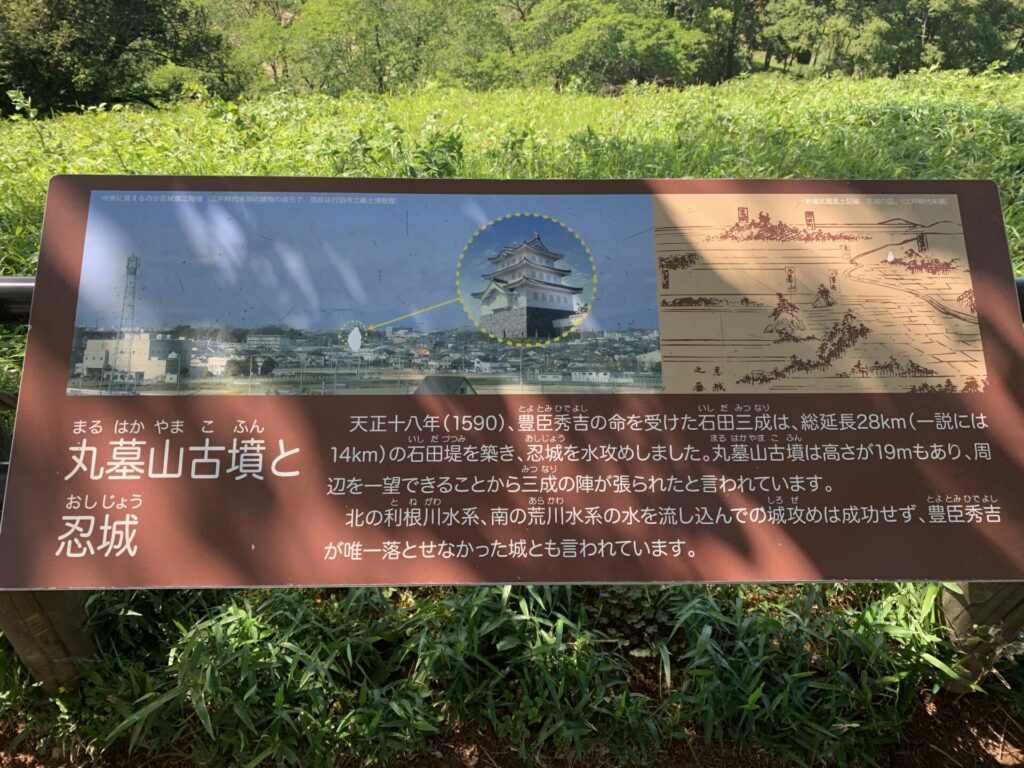
Yes—this is roughly where the turret of Oshi-jo stands.
Can you get a sense of its position from here?
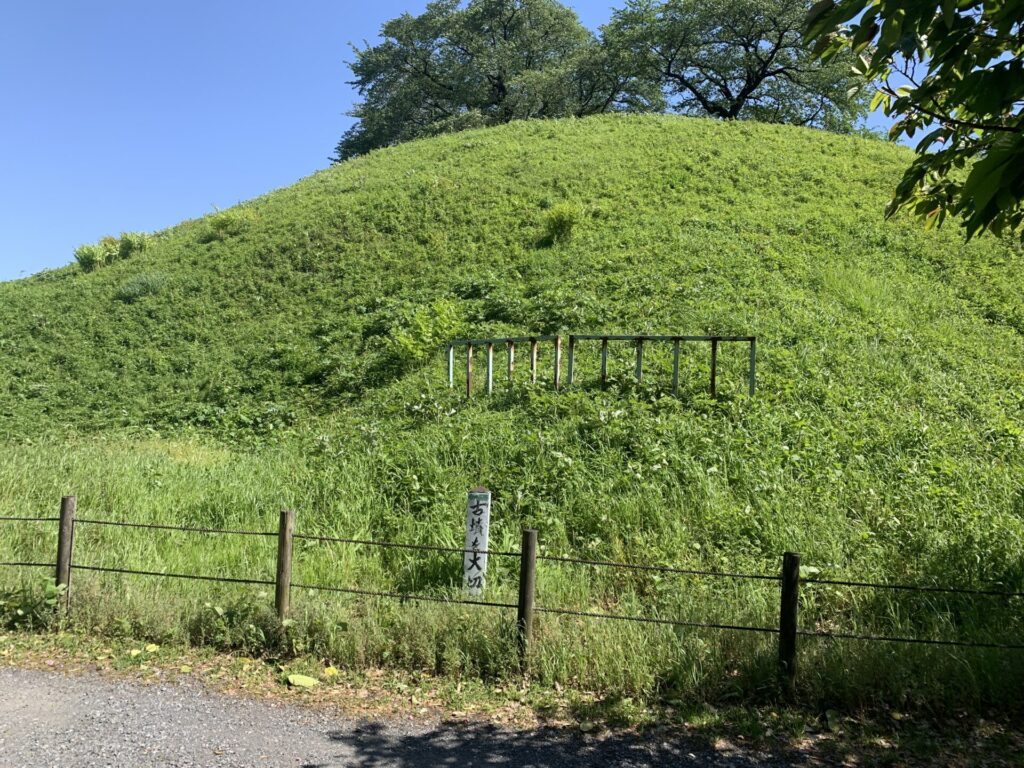
This time, I photographed Maruhakayama Kofun from below.
As you can see, it does have a considerable height.
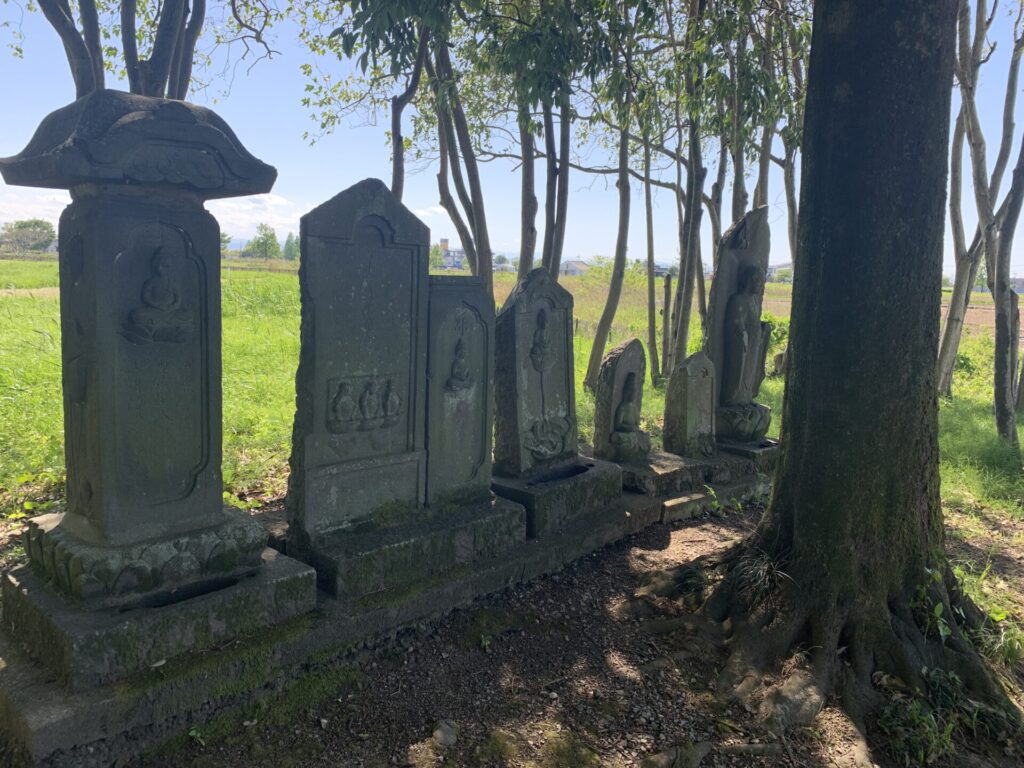
Finally, I photographed a Jizō statue standing near the kofun before heading back.
There is something quietly atmospheric about it, isn’t there?
That concludes my exploration of Oshi-jo.
At first, I was only able to find remains around the Honmaru ( 本丸:Main Enclosure ),
and I must admit, I began the visit feeling a little disappointed.
But in the end—discovering the Ishida Embankment ( 石田堤 )
and standing at the site of the headquarters to look down upon the lands around Oshi-jo—
that made the entire journey worthwhile!!
To all castle enthusiasts and Sengoku history fans,
I sincerely hope this article has brought you even a bit of enjoyment and inspiration.