Oda-jo (Tsukuba city, Ibaraki)|Captivated by Multiple Koguchi and Umadashi
A beautifully maintained castle site — well worth seeing at least once!
Hello, this is Shin.
May 6, 2023 (Saturday).
This was the third castle visit of the day. 🚙
As evening approached and the sun was about to set,
I arrived at Oda-jo (Hitachi, Ibaraki), the stronghold of the Sengoku daimyo, Oda Ujiharu.

◉ Castle Type
Flatland Castle ( Hirajiro )
◉ Cultural Heritage Highlights
◉ Defensive Features & Fortifications
◉ Exploration Difficulty
🔰 Easy Castles
◉ Estimated Time to walk around
: about 1 hour
◉ Parking
Approximately 10 parking spaces available in front of the “Oda Castle Ruins Historical Plaza” museum
About 20 minutes by taxi from JR Tsuchiura Station 🚃
During the Sengoku period, the Oda clan aligned themselves with Uesugi Kenshin, who was advancing into the Kanto region, and opposed the Hojo clan.
However, they later shifted their allegiance to the Hojo and broke away from Kenshin.
Enraged by this, Kenshin is said to have attacked Oda-jo.
The impressive remains are truly worth seeing, and the remarkable umadashi in particular deserve special mention ✨
I often experience this when visiting other castles as well,
but even if you search for “〇〇 Castle Ruins” and drive there, you may have trouble finding a place to park.
First, try looking for a nearby history museum.
If there is one, there is a high probability that parking will be available.
If you find something like a “Castle Ruins Park”, it’s usually best to head for that parking lot.
There is no convenient nearby train station, and from JR Tsuchiura Station,
it takes about 20 minutes by taxi.
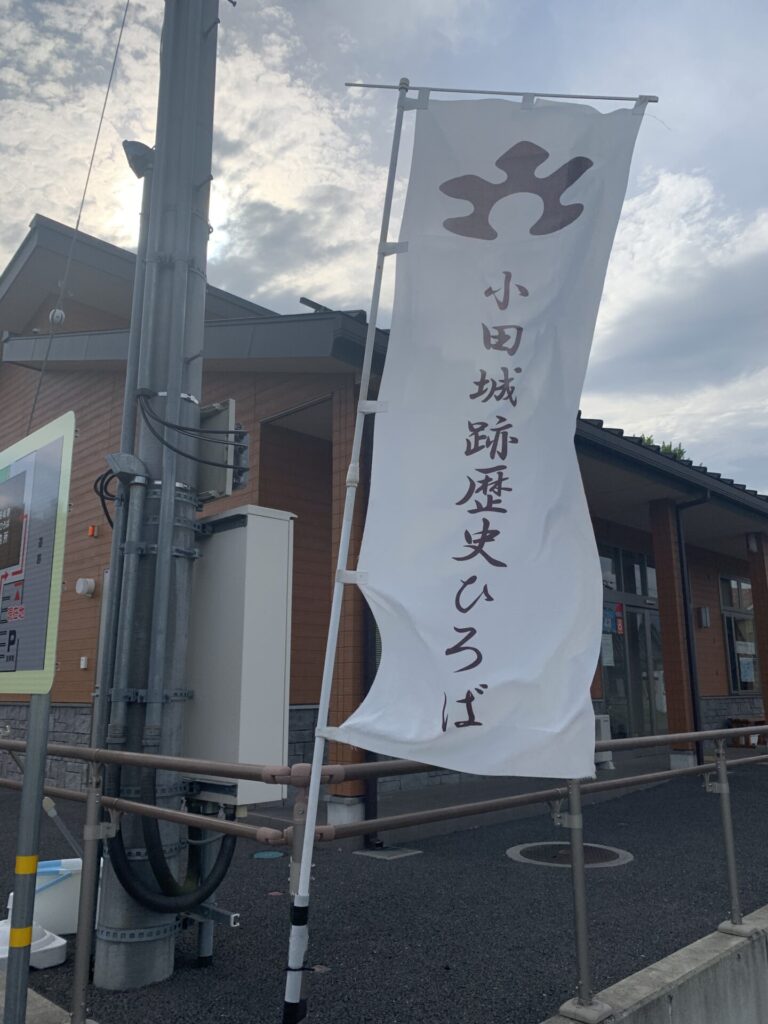
So,
after searching on Google Maps, I found it!
A museum called the “Oda Castle Ruins Historical Plaza”.
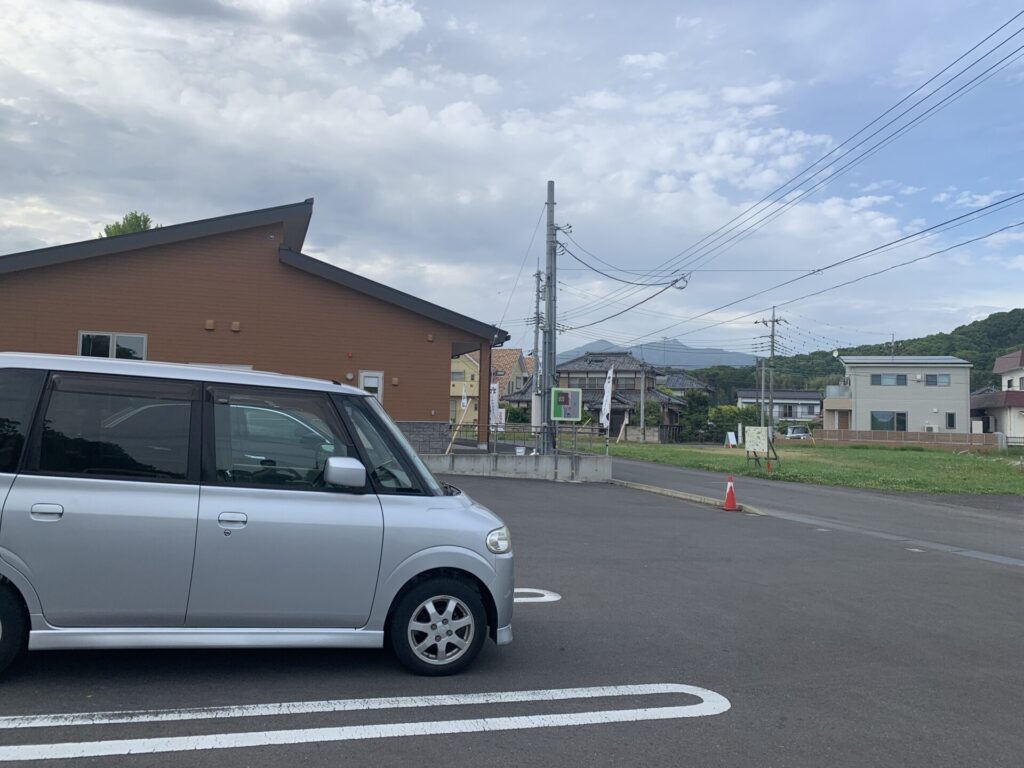
There were about ten parking spaces available.
The woman at the museum reception (an elderly lady) seemed very friendly,
and I almost felt like asking her something about the castle ruins,
but since she was speaking with other visitors, I decided to head straight to the site instead.
The Oda-jo ruins are located quite close to this parking area and can be reached on foot.
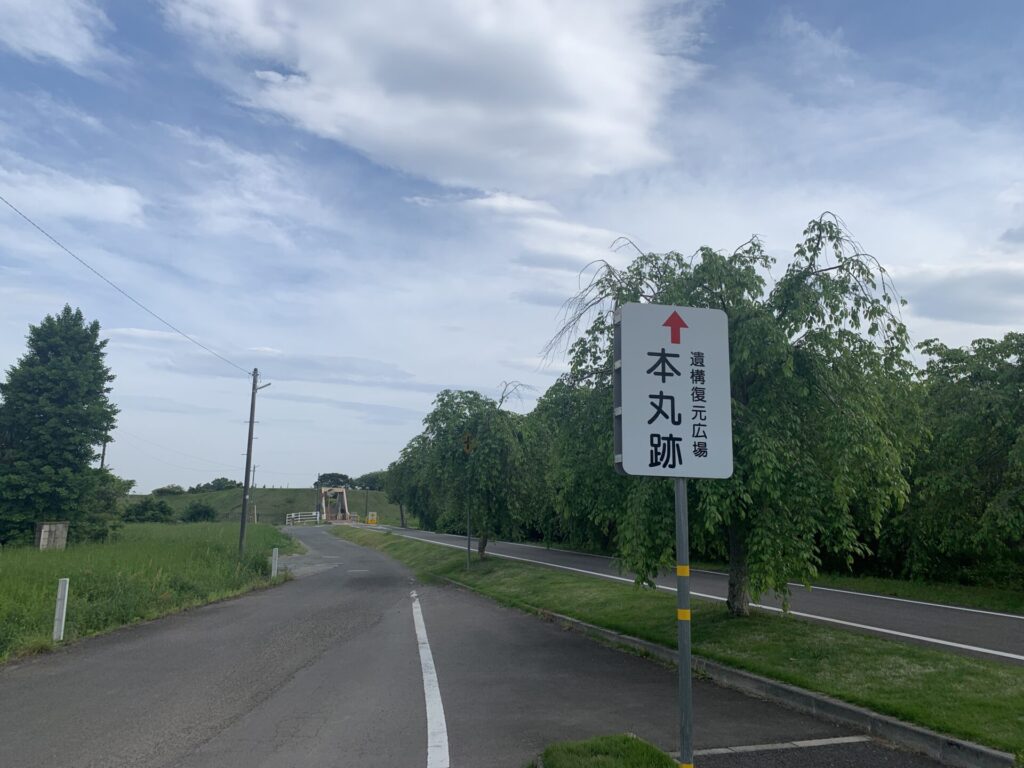
As shown in the photo above, it is located just within sight from the parking area ✨
That small, raised mound visible ahead is the site.
As indicated by the name “Restored Ruins Plaza”, much of it has been reconstructed,
but even so, the beautifully maintained castle site is truly impressive to behold.
You should experience its beauty at least once!
Now then, let’s head to the site!
Let’s take a look at the moat from atop the earthen rampart!
As I approached the small raised mound,
just as I expected, a large Dorui (土塁:earthen rampart ) and Karabori (空堀:dry moat ) came into view.
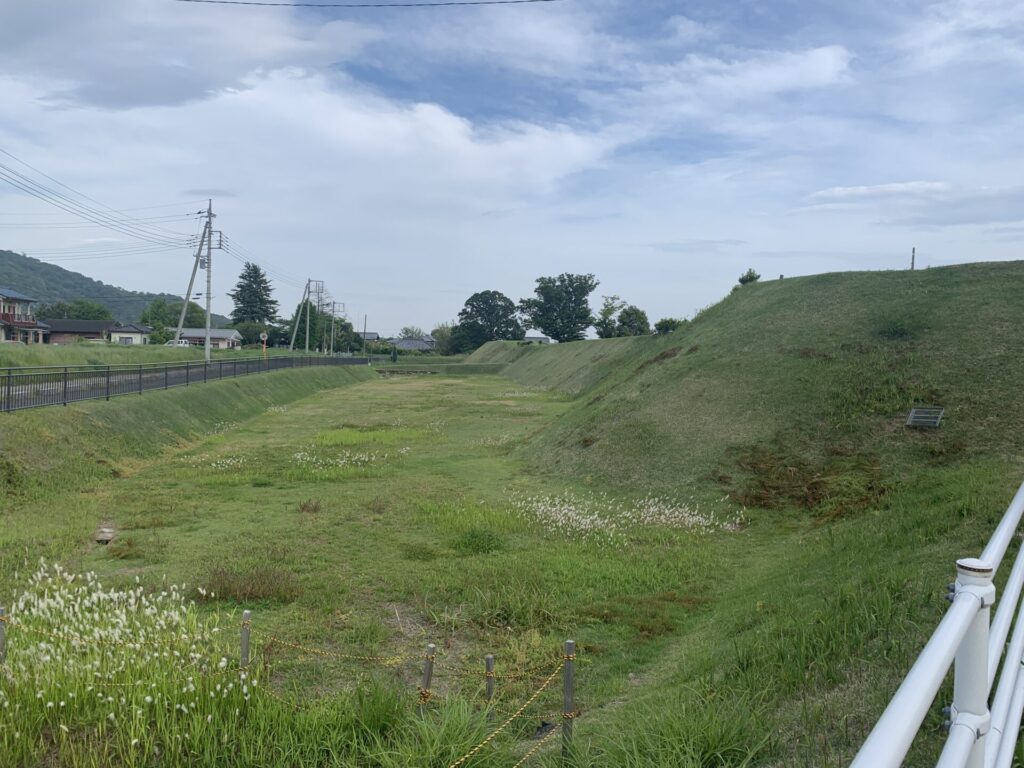
Earthen castles located in the mountains are impressive for the remnants of their natural moats and ramparts,
but these carefully maintained moats and earthen ramparts also draw you in, as their shapes are clearly visible and striking.
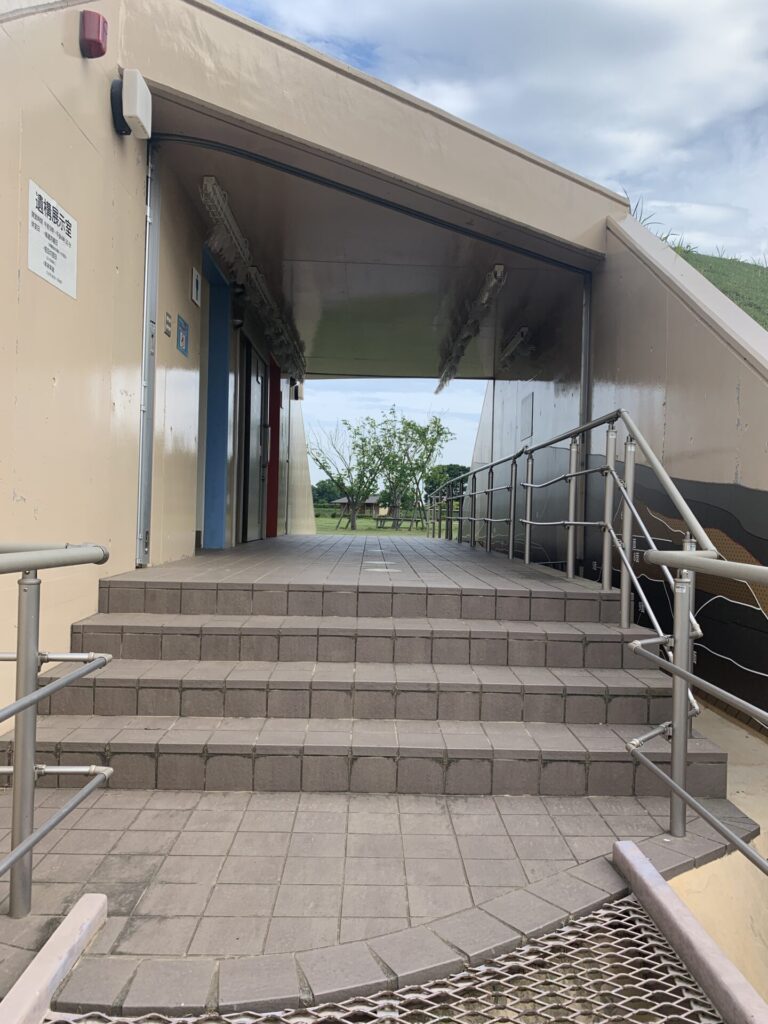
As you can see,
at the Oda-jo ruins, the earthen rampart is shaped like the entrance to a tunnel.
Stylish, isn’t it?
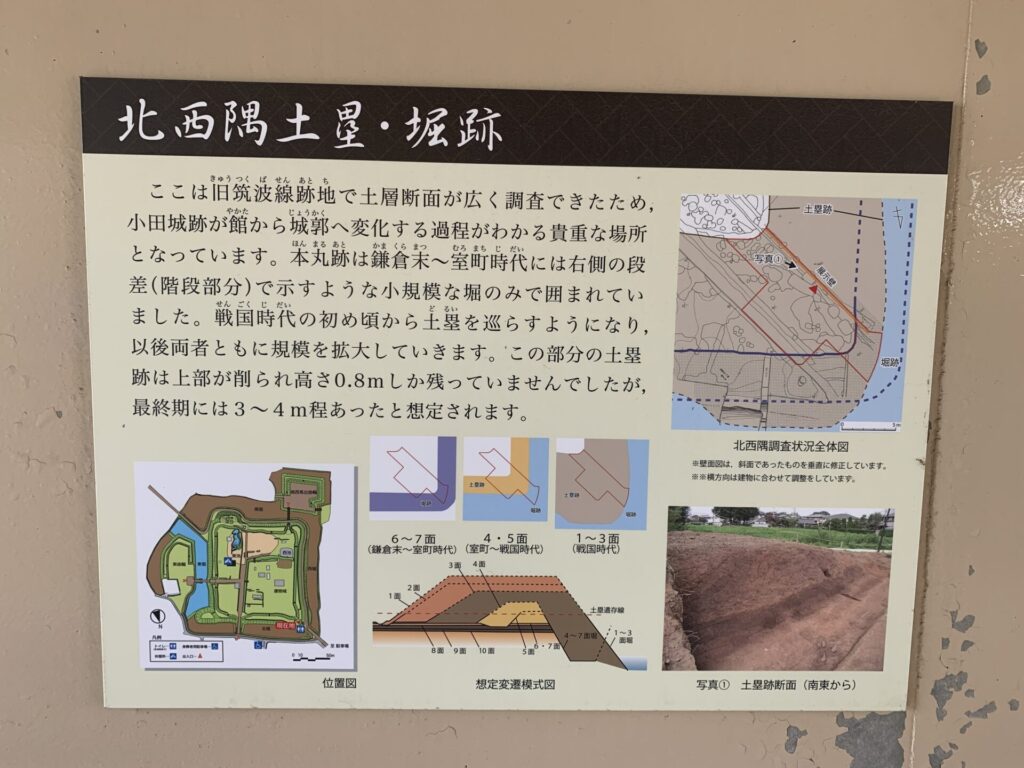
Moreover, not only was a layout map of the castle site displayed,
but also a cross-sectional diagram of the earthen rampart.
It was a good reminder for me that the residences of samurai during the Kamakura to Muromachi periods were, at most,
surrounded by simple fences.
It was only after entering the Sengoku period that defensive structures like earthen ramparts were constructed.
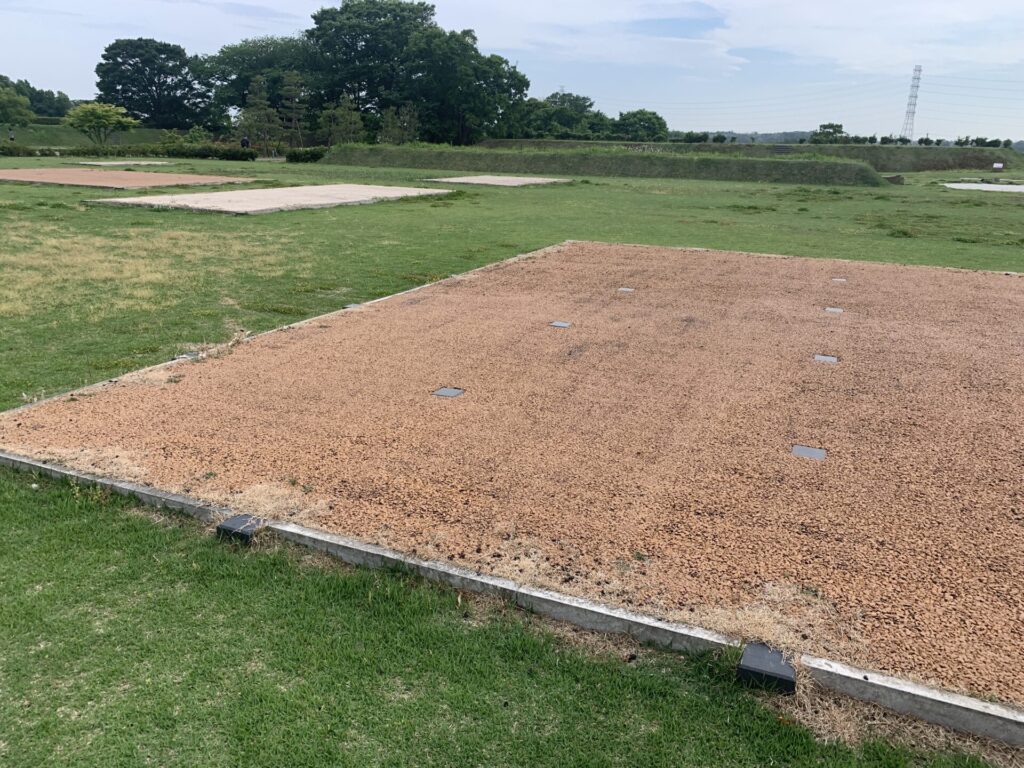
Stepping inside,
I found several neatly maintained enclosures like these.
Each one appears to mark “the site where something once stood”.
While that is interesting in its own way, what truly excites castle enthusiasts are defensive structures such as moats and earthen ramparts.
So I climbed up onto the rampart and filmed the view of the site from there.
Please take a look at the panoramic view from atop the Dorui (土塁:earthen rampart ).
(The wind noise is quite strong—please forgive me 💦)
From the “earthen rampart tunnel,” can you get a sense of the overall view of the castle site,
as well as the depth of the moat (and the height of the rampart)?
Next, I will head toward the various koguchi, the entrances and exits of the castle.
For an explanation of koguchi ( 虎口 ), please refer to the article below.
 https://sengokucastle.com/moroto-jo/
Exploring Multiple Koguchi
The Oda-jo ruins have multiple Koguchi (虎口:defensive gate ),
and I will take a look at them one by one.
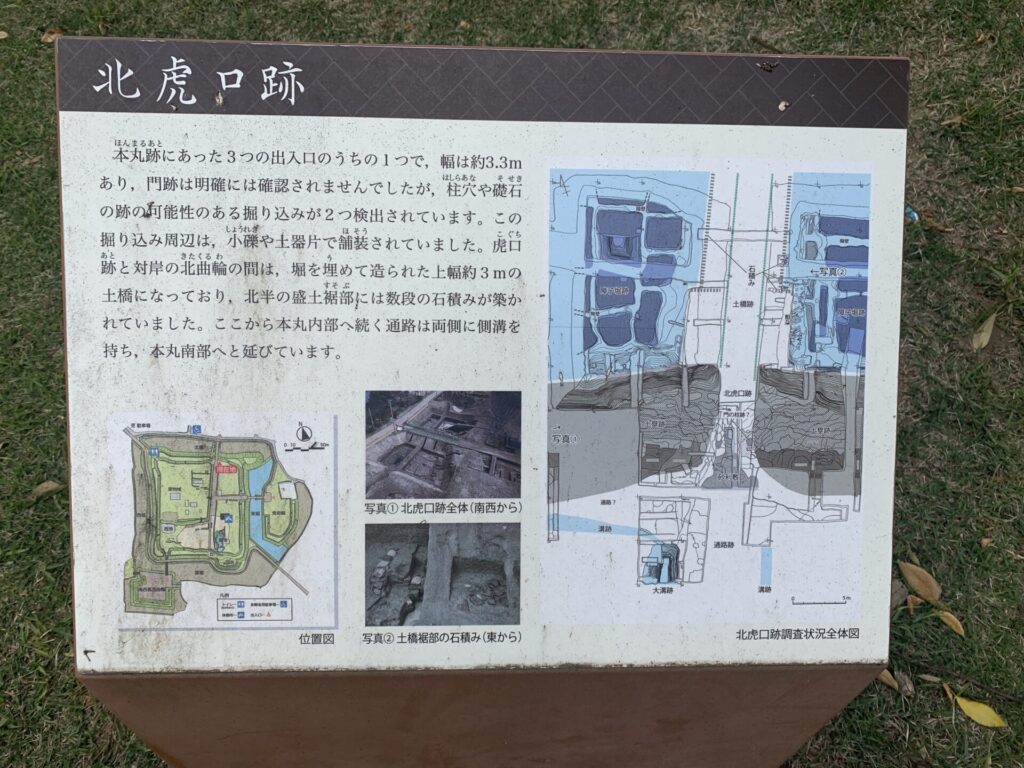
First, the North Koguchi (北虎口).
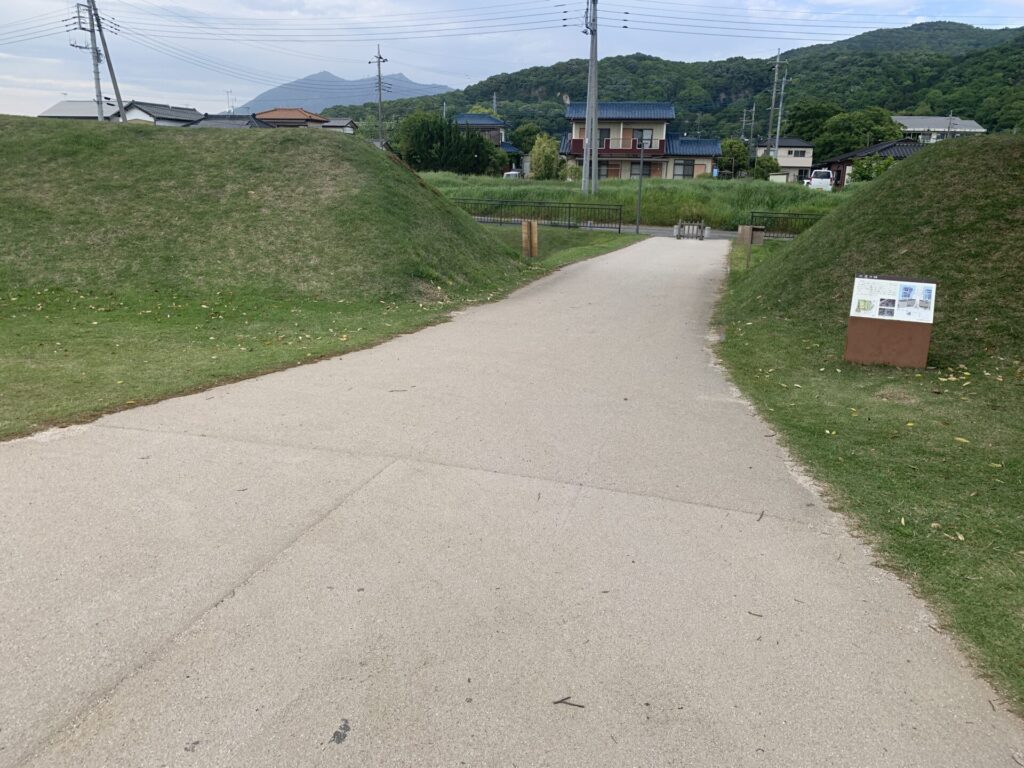
The North Koguchi (北虎口) as seen from inside the castle.
At the time, there was likely a gate here, and the castle soldiers would have passed through it.
Judging from the remains, the path appears to have been almost straight,
which was typical for a Hirajiro (平城), with a bridge built over the moat.
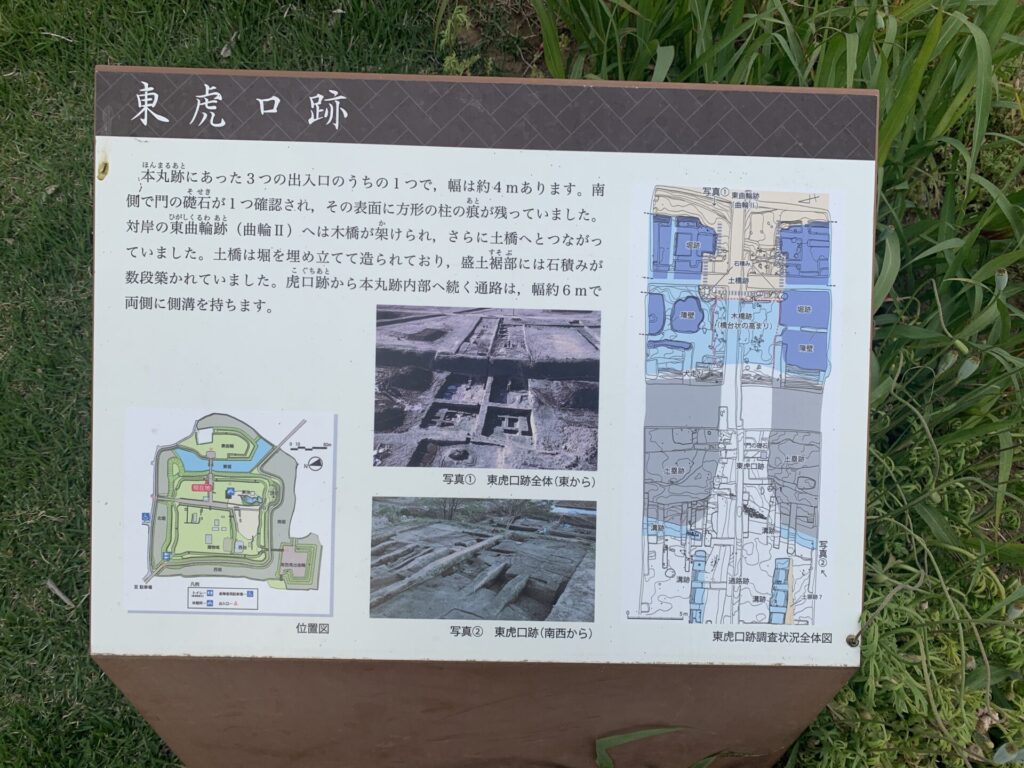
Next, I headed toward the East Koguchi (東虎口).
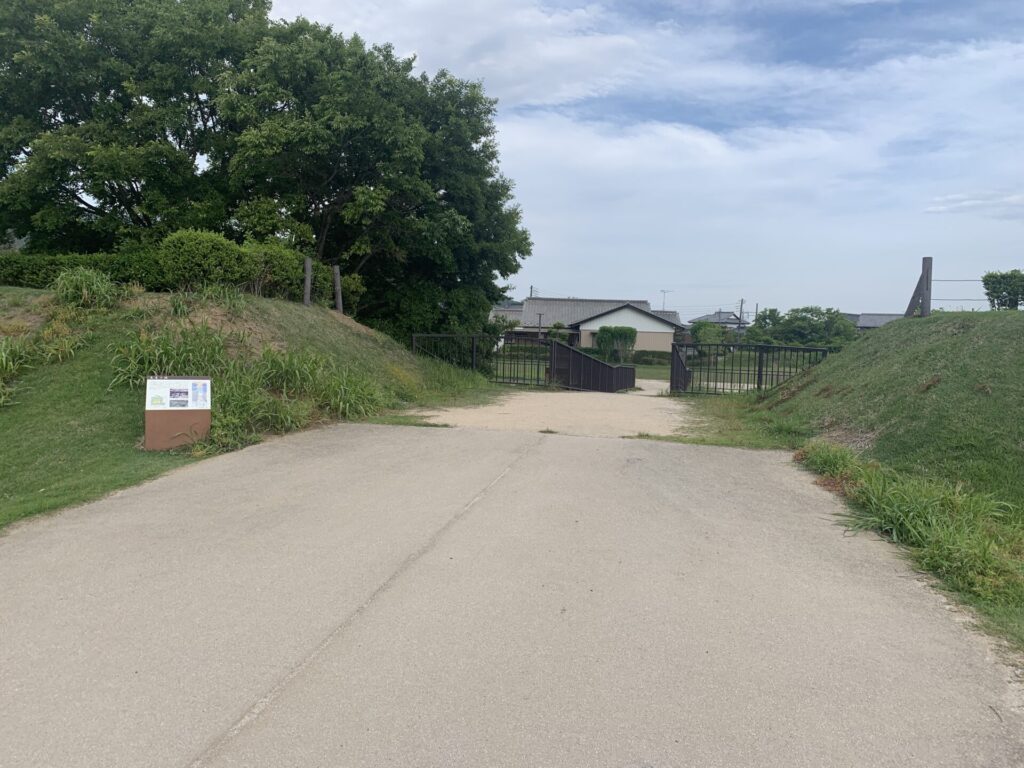
Here as well, a bridge was built over the moat,
and it seems there was a gate around where the information board now stands.
Pausing for a moment, captivated by the umadashi…
Just across the bridge at the East Koguchi, there was an information board about the Oda-jo ruins.
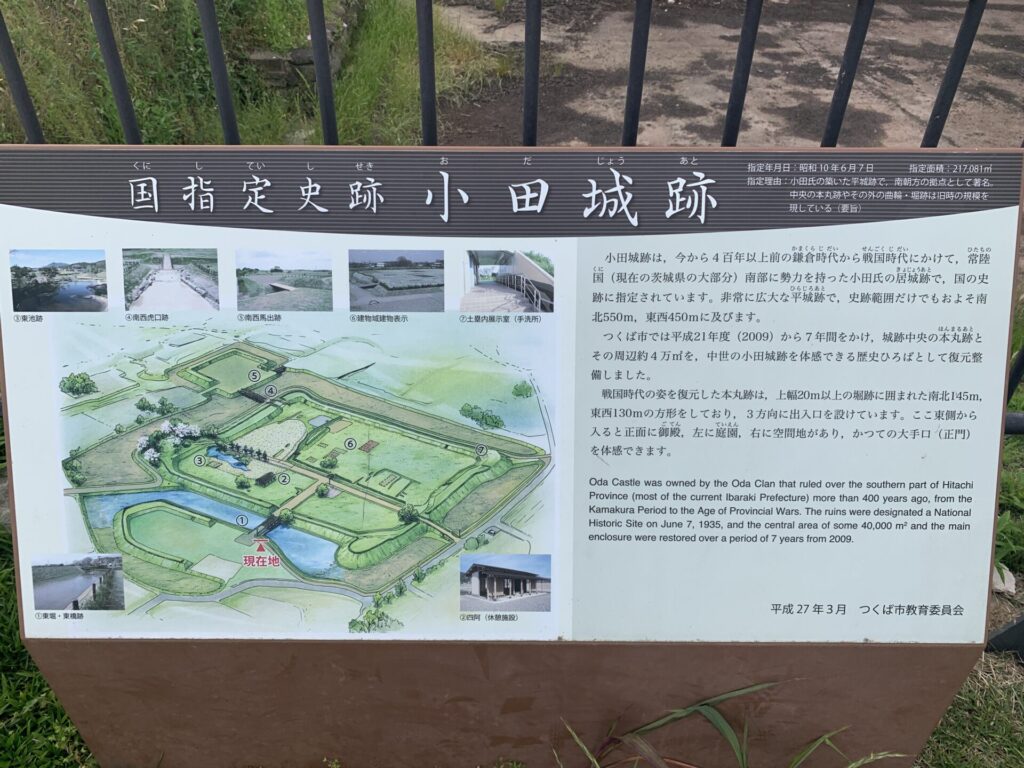
Looking at the layout map on the left, the square-shaped umadashi marked as number ⑤ immediately catches the eye !! ✨
That will be my next destination.
Umadashi (馬出し) is a defensive structure designed to prevent castle soldiers from being counterattacked when launching a sortie from the gate,
and at the same time, it serves as a defensive line to stop enemy troops from charging in all at once.
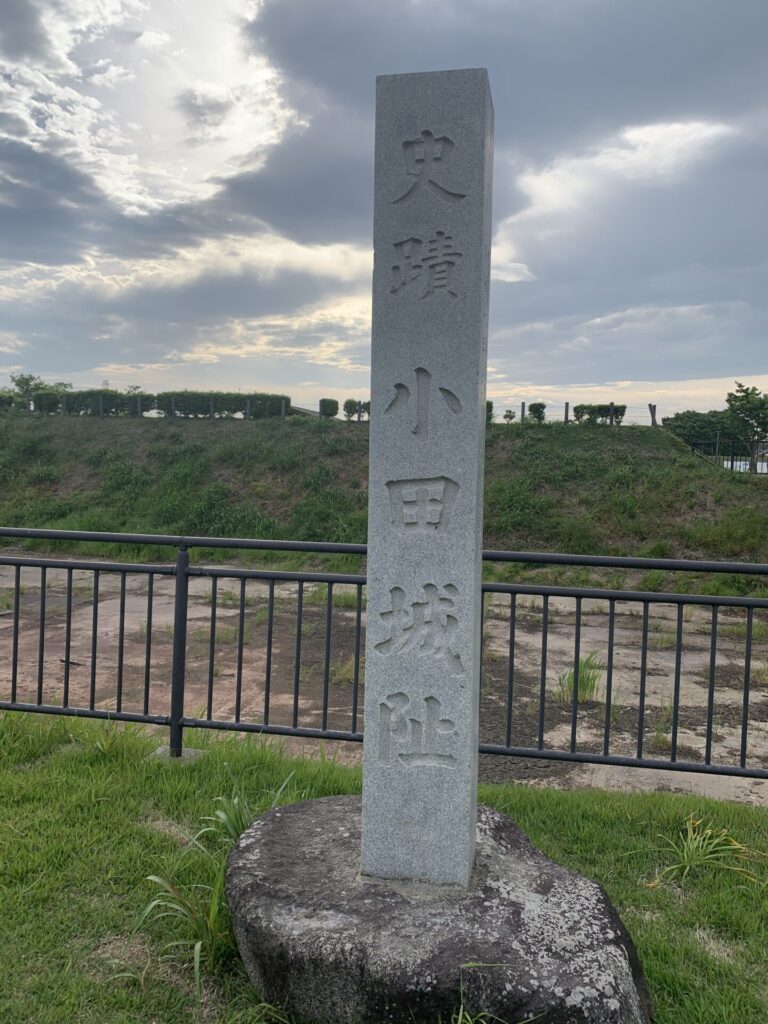
There was also a stone monument like this nearby.
Perhaps it is relatively new,
as it did not give the impression of great age.
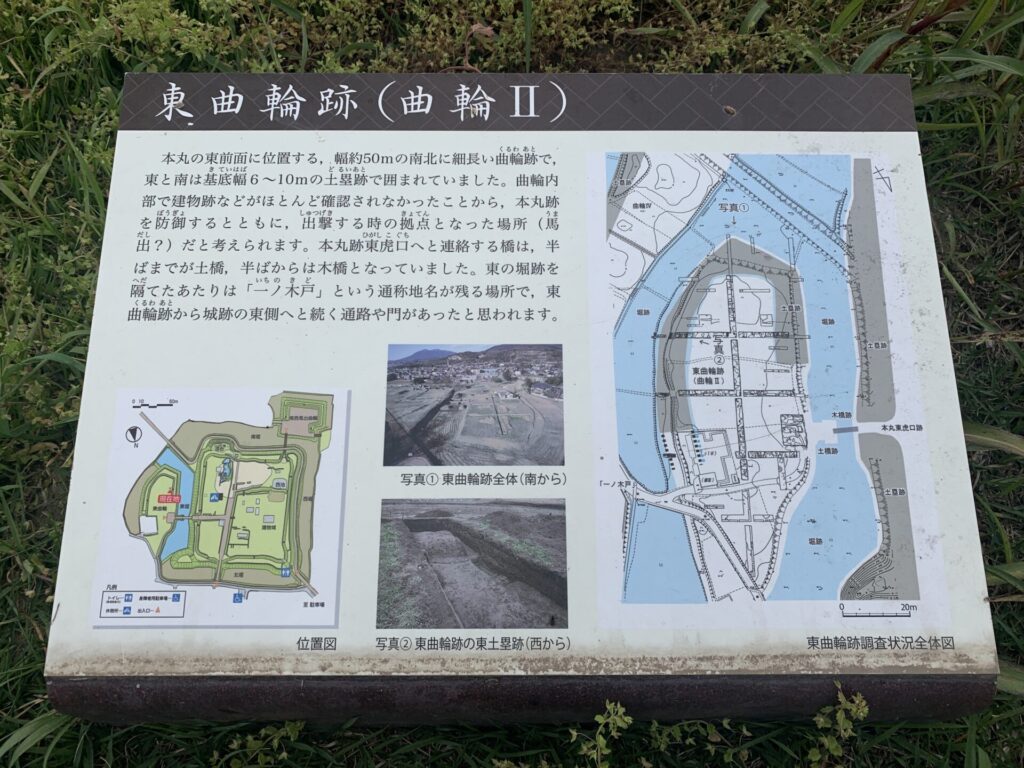
Before heading to the umadashi (馬出し),
I almost forgot about the Higashi Kuruwa (東曲輪:east enclosure ) here!!
In fact, I wonder if this might also have functioned as an umadashi…
Please take a look at the video of this area.
(And please forgive the strong wind noise 💦)
Indeed, Dorui (土塁:earthen rampart ) is of a moderate height,
and if we consider that castle soldiers may have used it as a shield to repel enemy troops, its design certainly makes sense.
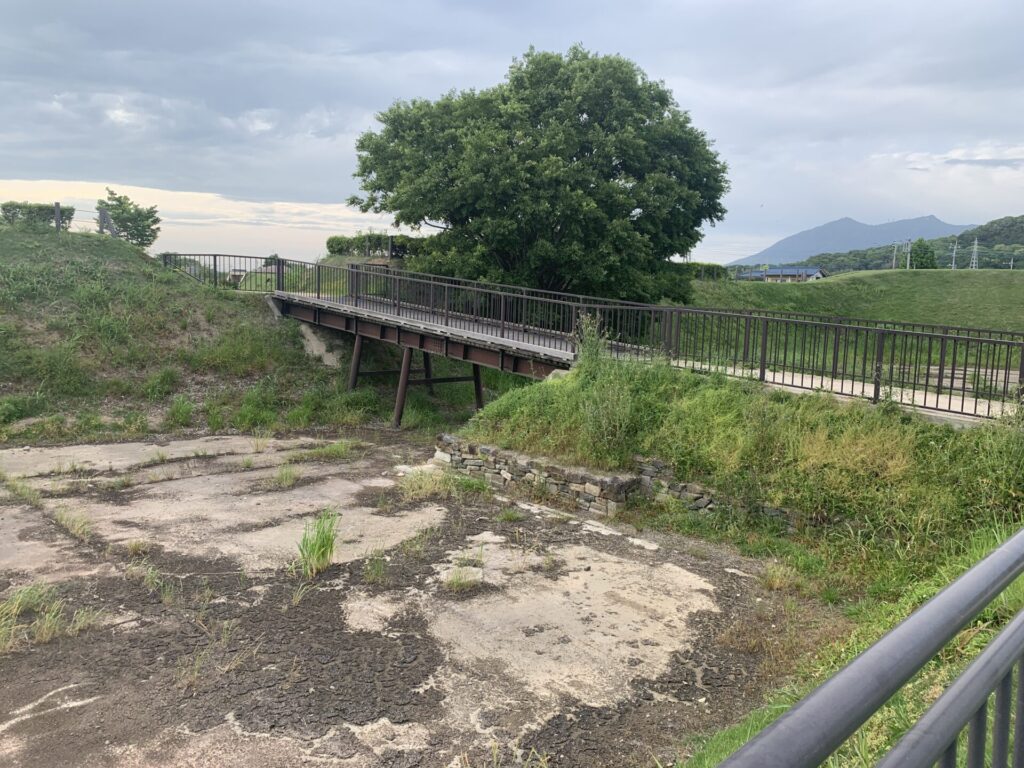
This is the view of the bridge from the Higashi Kuruwa (東曲輪:east enclosure ).
At the time, this appears to have been a water-filled moat.
From here, I crossed back over the bridge and headed toward the umadashi (馬出し) on the southwest side.
Please take a look at the video showing the route from the East Koguchi to the southwestern umadashi.
The wind was really strong that day…
Even so, I think you can see just how expansive the site is.
At the end of this walk lies the third koguchi, and beyond it, the umadashi (馬出し).
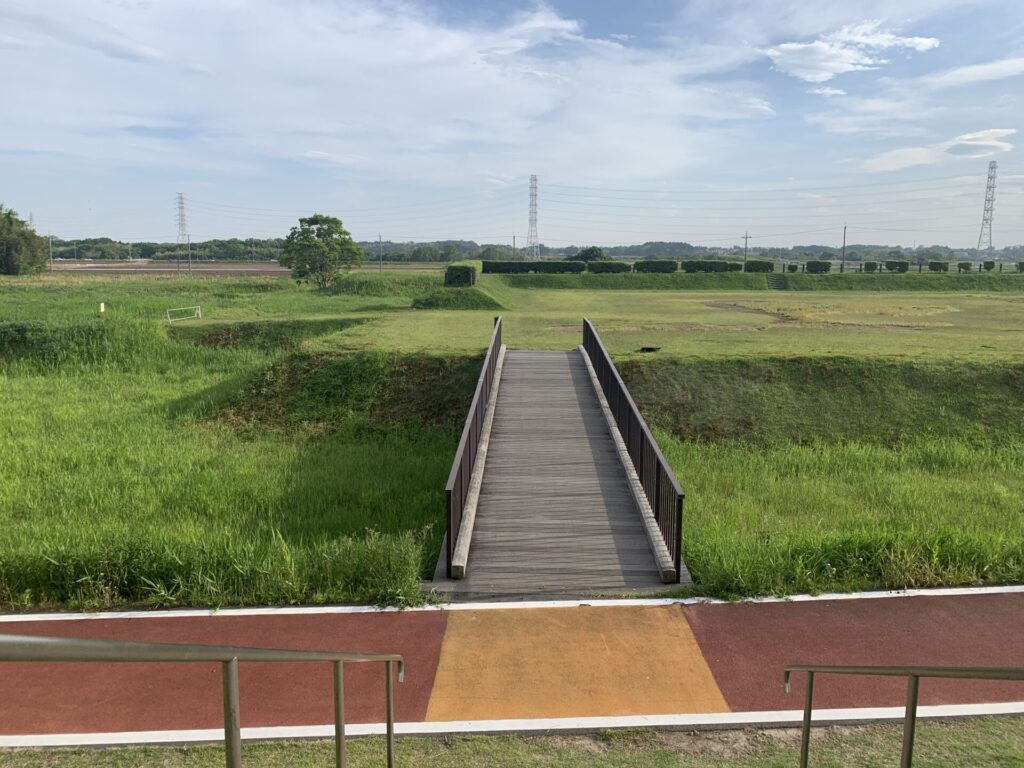
Passing through the southwestern koguchi
(with a pedestrian path in between),
and after crossing the bridge, there it was—the umadashi (馬出し) I had been aiming for!
From this angle alone, the shapes of the moat and earthen ramparts stand out clearly,
stirring the heart of any castle enthusiast !!😊
Now then—into the umadashi (馬出し)!
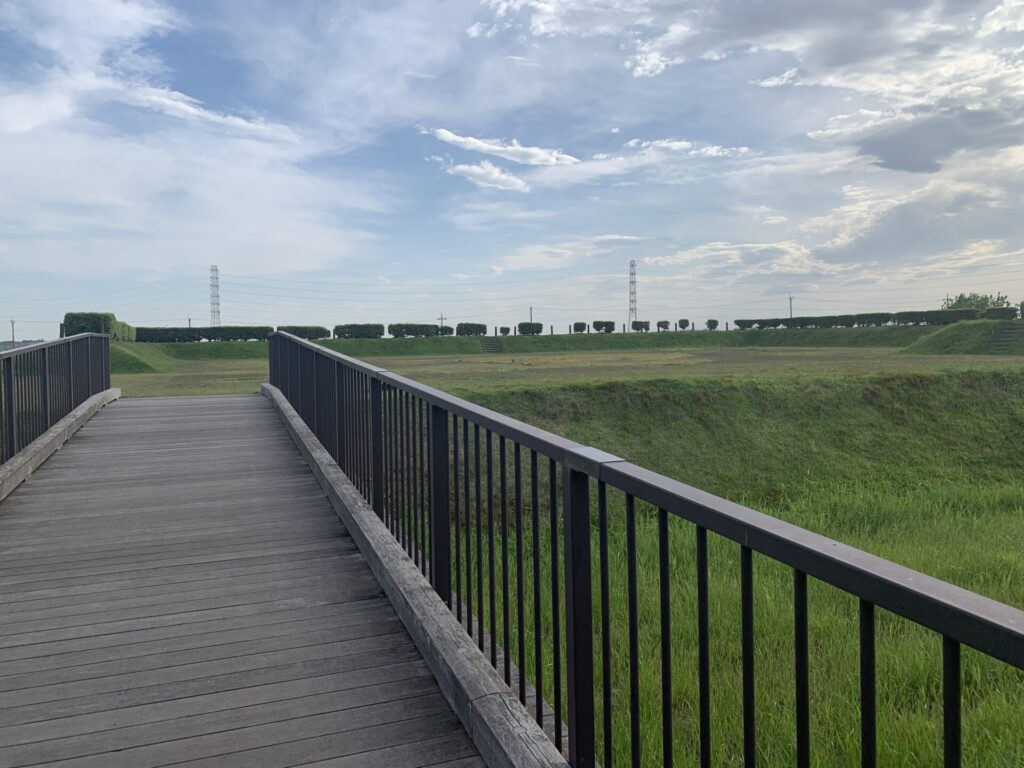
I also filmed while crossing the bridge.
Hmm—this angle is fantastic as well!
It’s quite spacious.
Then, after passing through the interior of the umadashi, I filmed again from a different angle.
Please take a look at the full view of the umadashi.
I climbed up onto the earthen rampart and looked out over the surroundings from there.
It’s quite expansive.
Not as large as the umadashi at Sakura Castle,
but still more than spacious enough.
One can only imagine how many soldiers and horses once passed through here…
For castle enthusiasts and Sengoku fans, the imagination never ends.
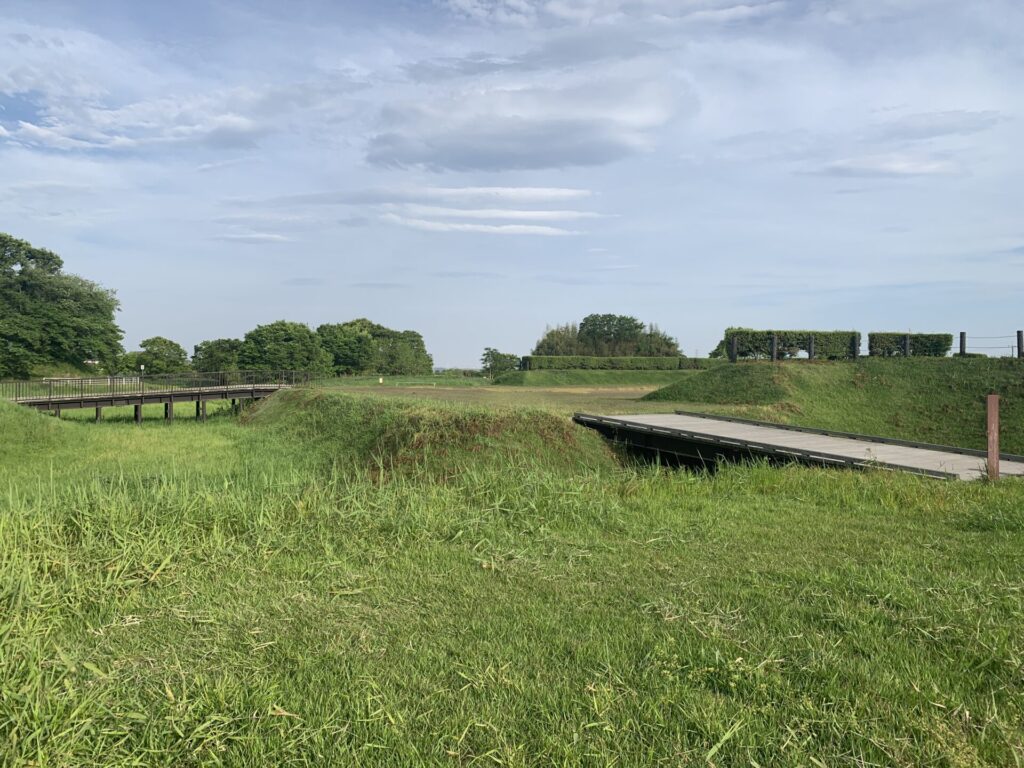
Finally, one more shot of the umadashi from a different angle.
The bridge visible on the left leads to the southwestern koguchi (南西虎口).
With this, I conclude my exploration of Oda-jo.
On this day, I visited three castle sites in a single day, making it a truly fulfilling experience ☀️
Until next time!!
Speaking of umadashi (馬出し), Sakura-jo is also well known!
👇 Please check out this article as well.