
Iwatsuki-jo (Saitama city, Saitama)|Shoji-bori — A Defensive Feature of the Hojo Clan Still Visible Today
An Old Castle Gate Still Standing Today
Hi, this is Shin.
May 31, 2023 (Wed).
This time, I set out for Iwatsuki-jo in Saitama City, Saitama 🚙
Also known as “Hakutsuru-jo”, it was once the residence of the Ota clan during the Sengoku period.
Later, it fell into the hands of the Hojo clan, and was eventually captured during Siege of Odawara by the Toyotomi forces.
◉ Castle Type
Flatland Castle ( hirajiro:平城 )
◉ Cultural Heritage Highlights
◉ Defensive Features & Fortifications
◉ Exploration Difficulty
🔰 Easy Castles
◉ Estimated Time to walk around
: about 1 hour
◉ Parking / Access
About 30 parking spaces are available at the First Parking Lot of Iwatsuki Castle Ruins Park.🚙
Around a 5-minute taxi ride from Iwatsuki Station on the Tobu Urban Park Line.🚃
If you’re visiting by car, the First Parking Lot of Iwatsuki Castle Ruins Park is the closest and most convenient option.
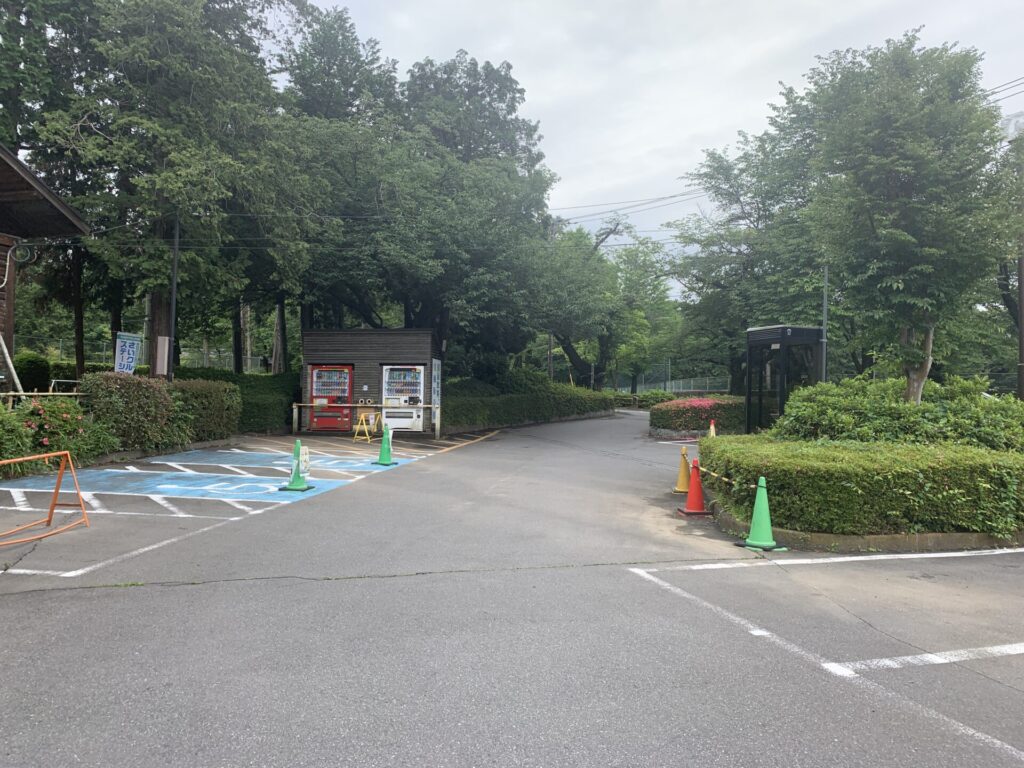
The parking lot looks like this.
The castle ruins and other remains are just a short walk from here.🚶
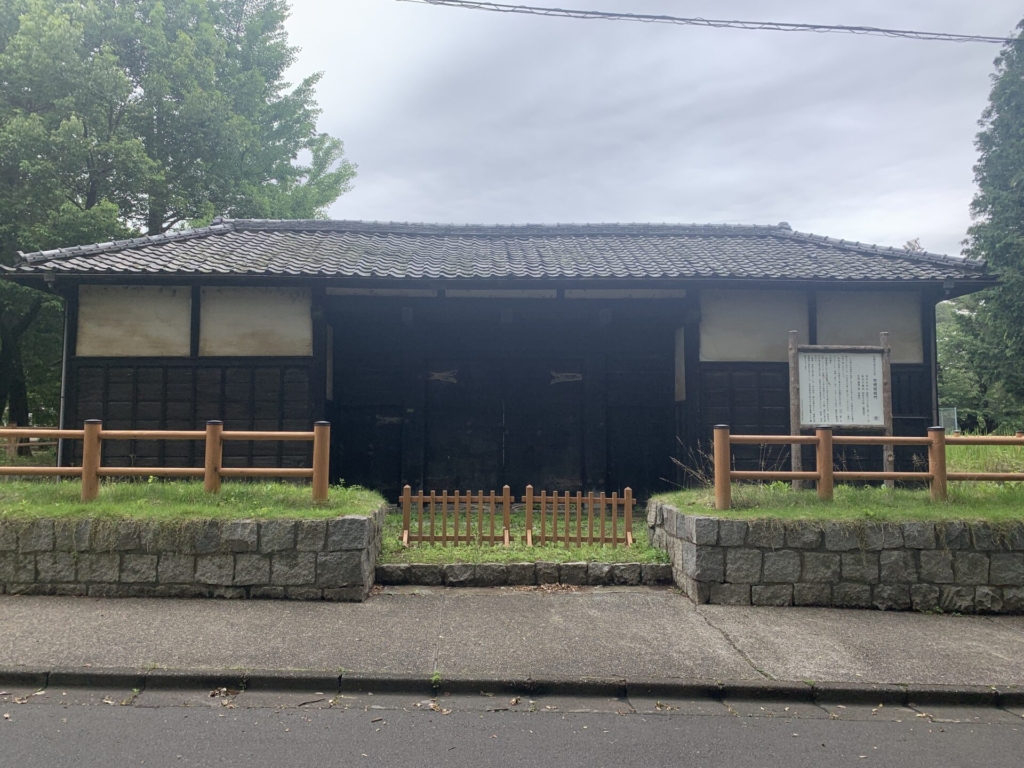
First, what caught my eye was this large castle gate.
It was once used as a service gate for Iwatsuki City Hall and seems to have been relocated several times, but it has now settled here.
It is said to be an original surviving structure.
There are only a handful of original tenshu (castle keeps) still standing in Japan, but when it comes to gates and other structures, quite a few have managed to survive.
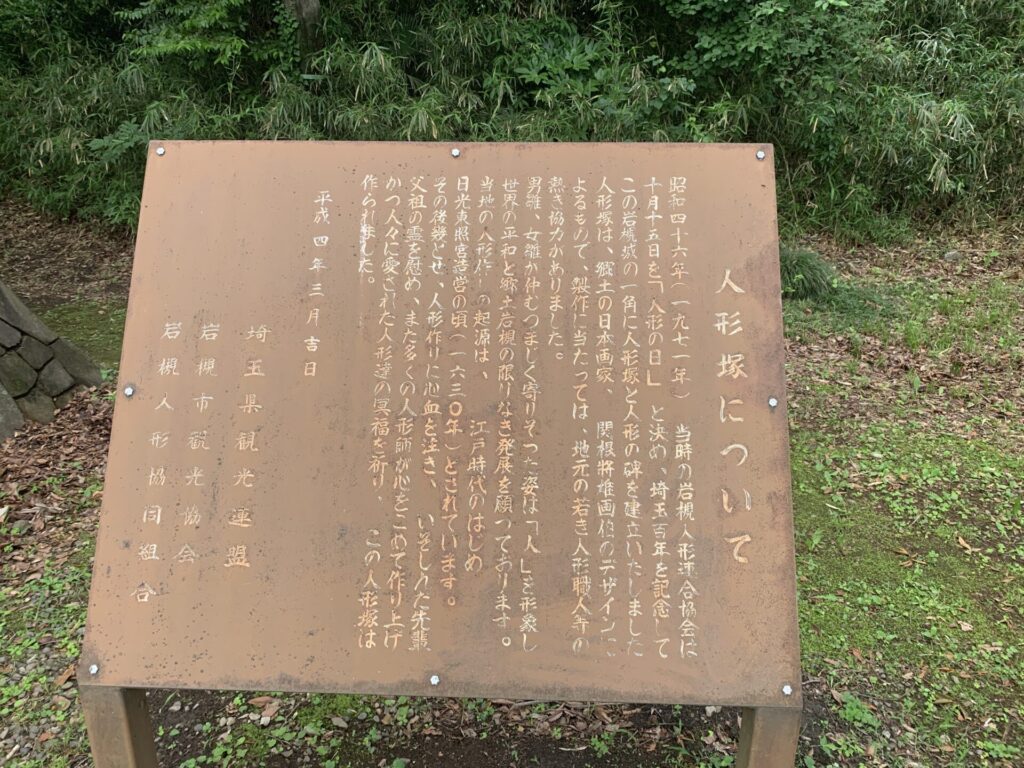
Just across from this valuable gate, there was something called the “Ningyo-zuka” (Doll Mound).
It doesn’t seem to be directly related to Iwatsuki-jo.
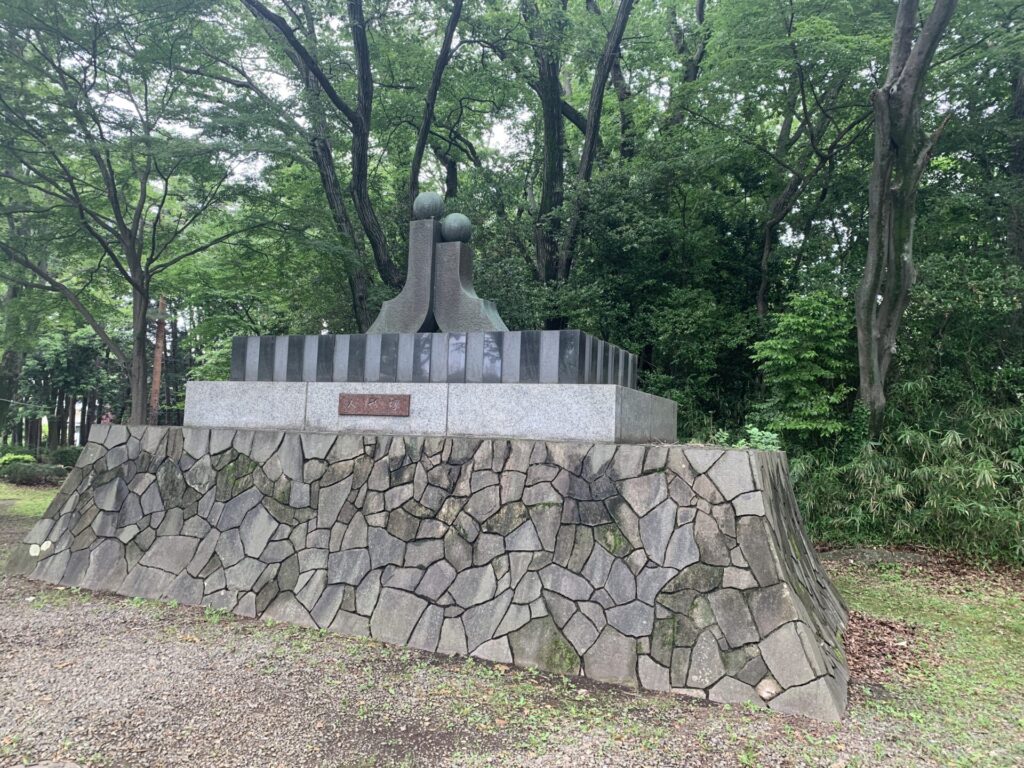
Here is the “Ningyo-zuka” (Doll Mound).
The base kind of looks like a stone wall… which is a bit curious 😅
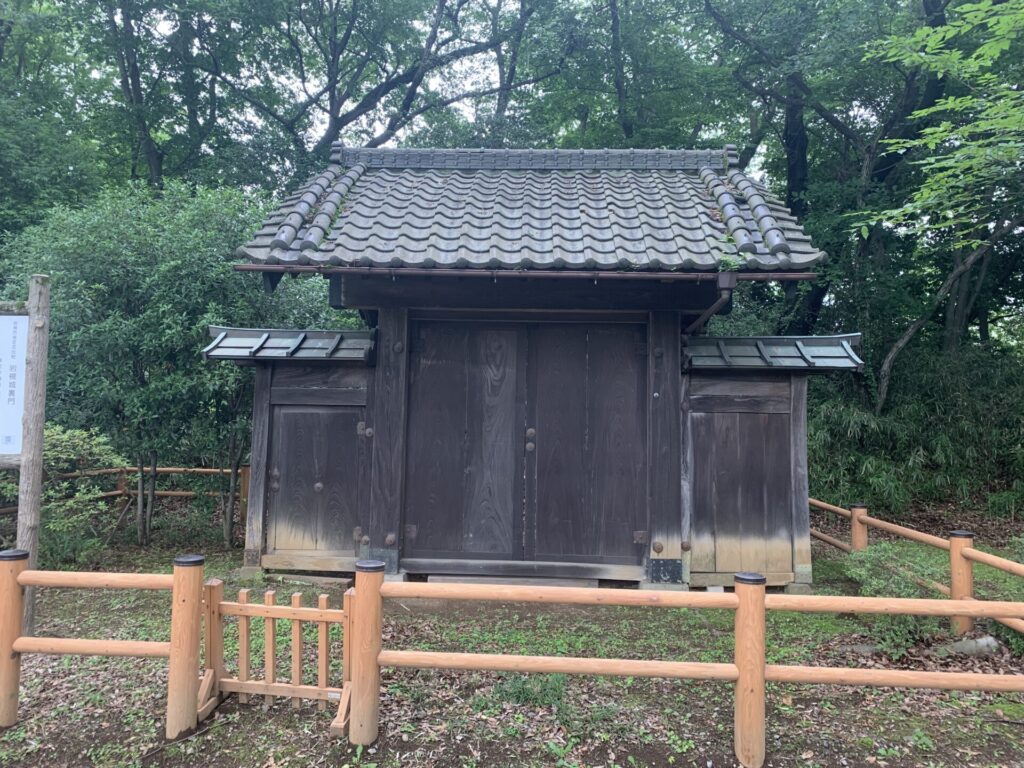
Right next to the “Ningyo-zuka” stands the back gate of Iwatsuki-jo.
This also appears to be a valuable surviving structure.
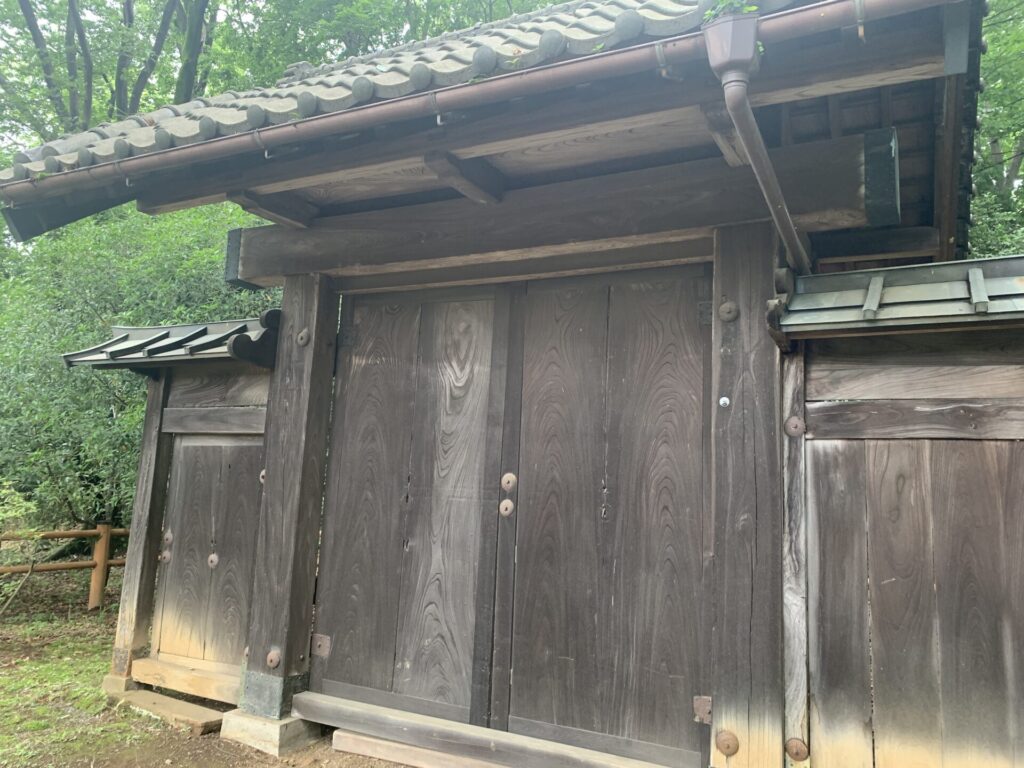
Taking a closer look…
It’s clearly aged, and has a wonderful sense of history.
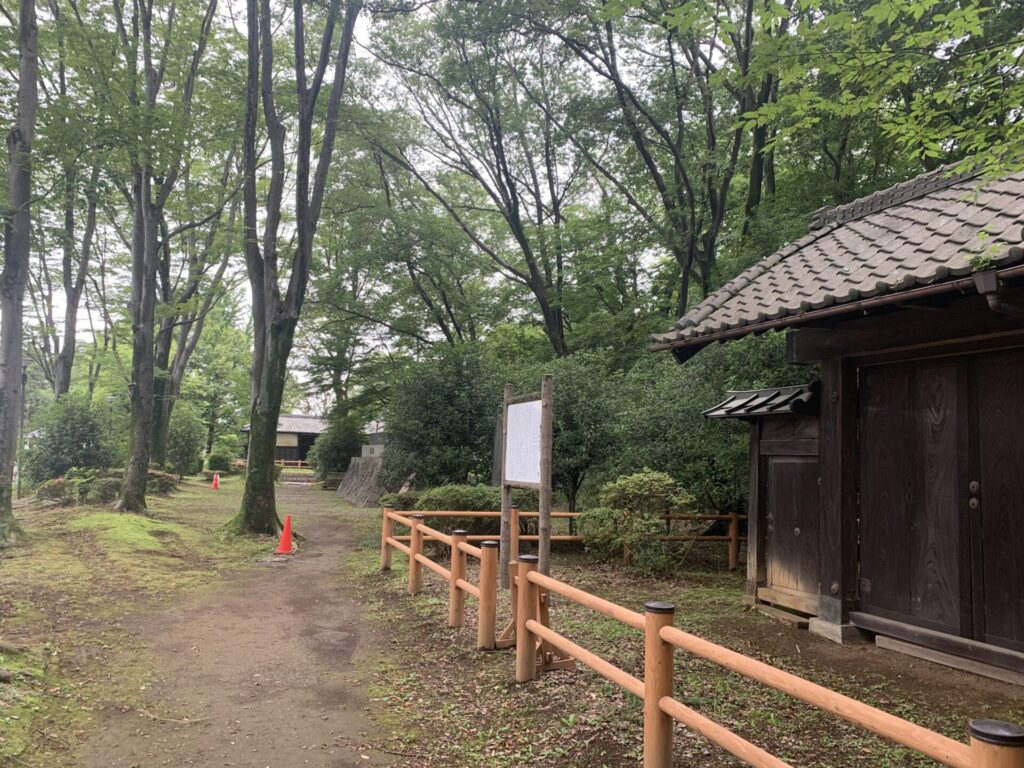
Taken from a short distance near the back gate 📷
From the front, you can see the back gate, then the “Ningyo-zuka” in between, and the main castle gate in the far back.
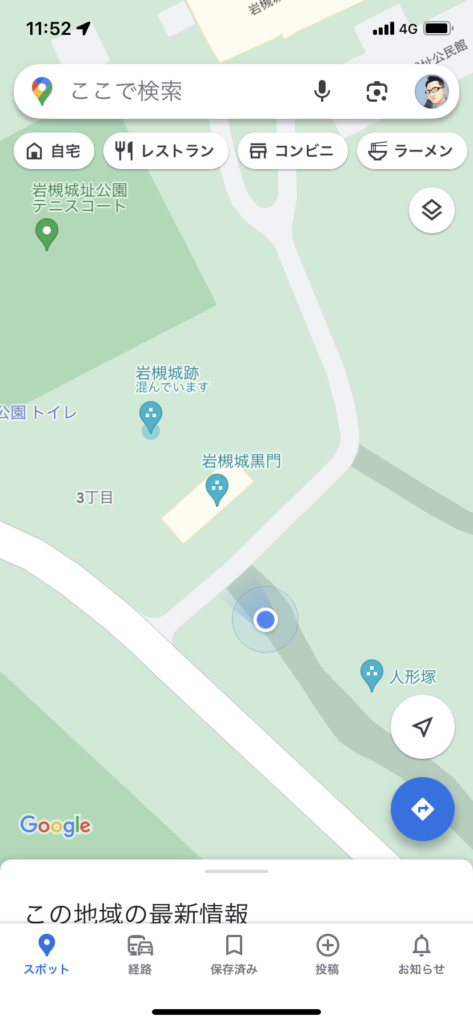
The castle gate is also known as the “Kuro-mon” (黒門:Black Gate).
Checking my location on Google Maps, I head further along the path in search of more remains ✨
Shoji-bori — A Defensive Moat Often Used by the Hojo Clan
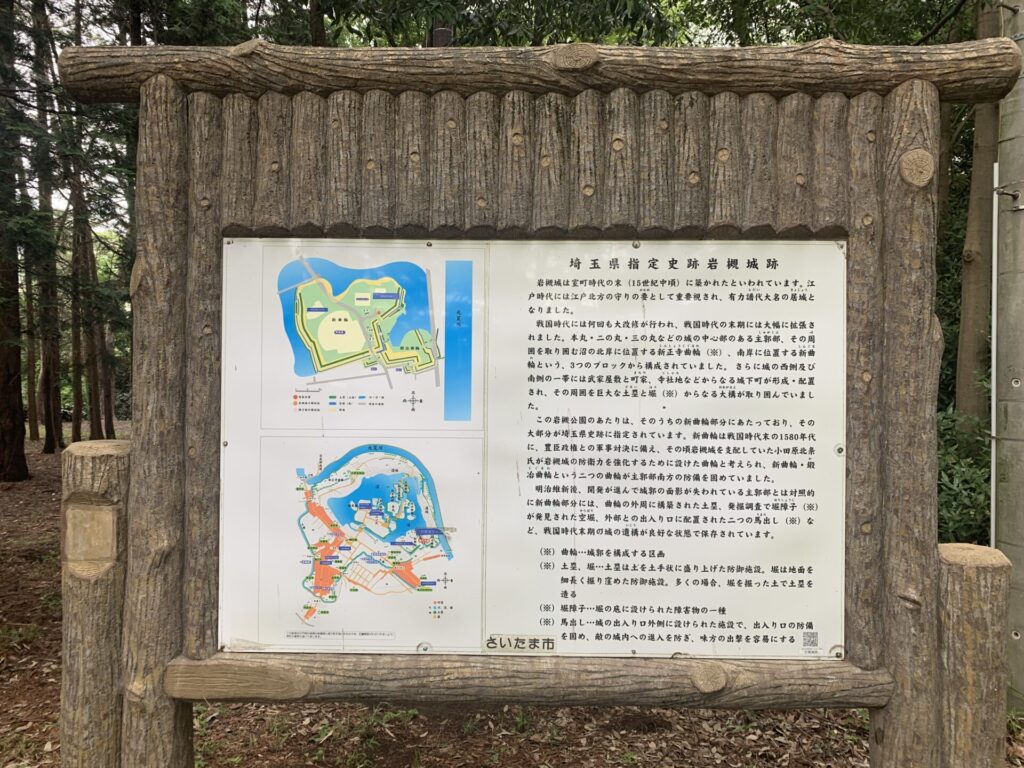
Heading to the right from the “Kuro-mon” (castle gate),
I found an information board and a layout map of the Iwatsuki-jo ruins!
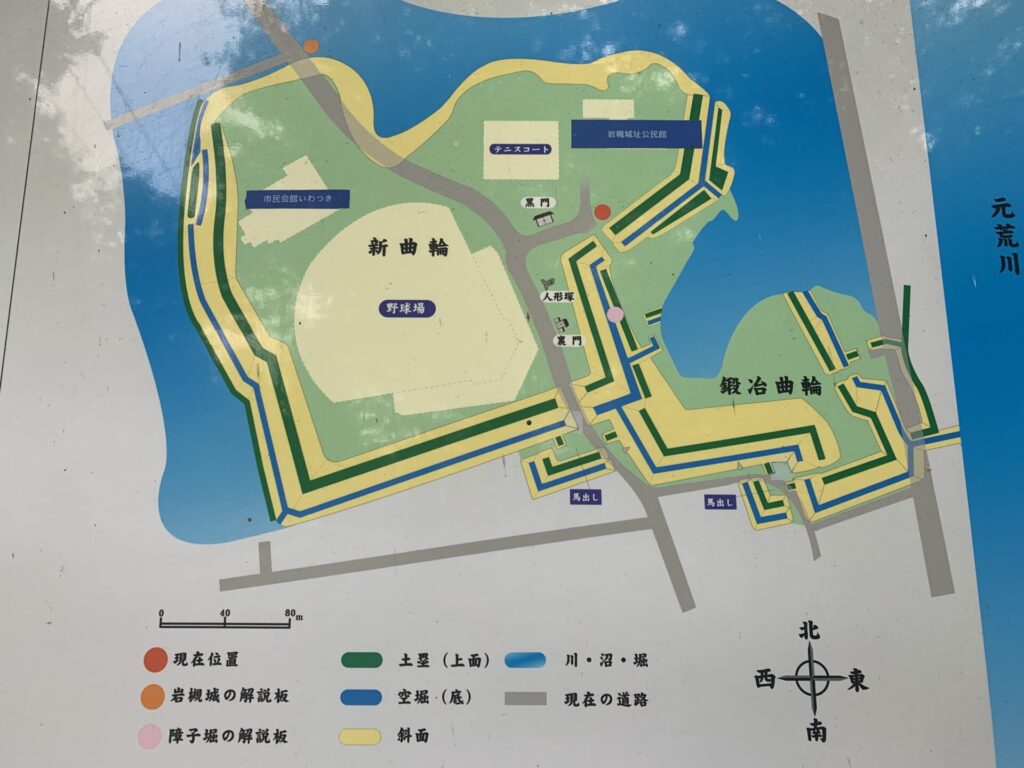
According to this layout map…
Across the road from the Kuro-mon, there is now a baseball field, which used to be an area called the “Shin-kuruwa(新曲輪)”, a defensive space for the castle’s soldiers.
At present, it seems that only the “Kaji-kuruwa(鍛治曲輪)” can still be identified.
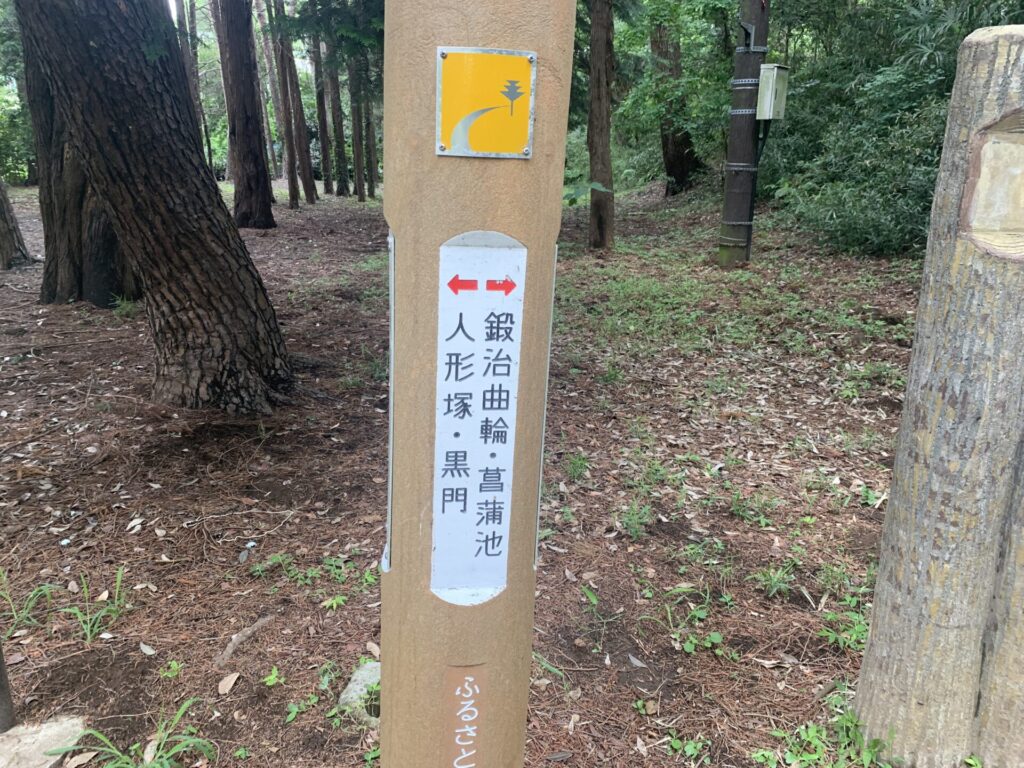
Right next to the information board was this sign.
To get to the “Kaji-kuruwa(鍛治曲輪)”, you head to the right from here.
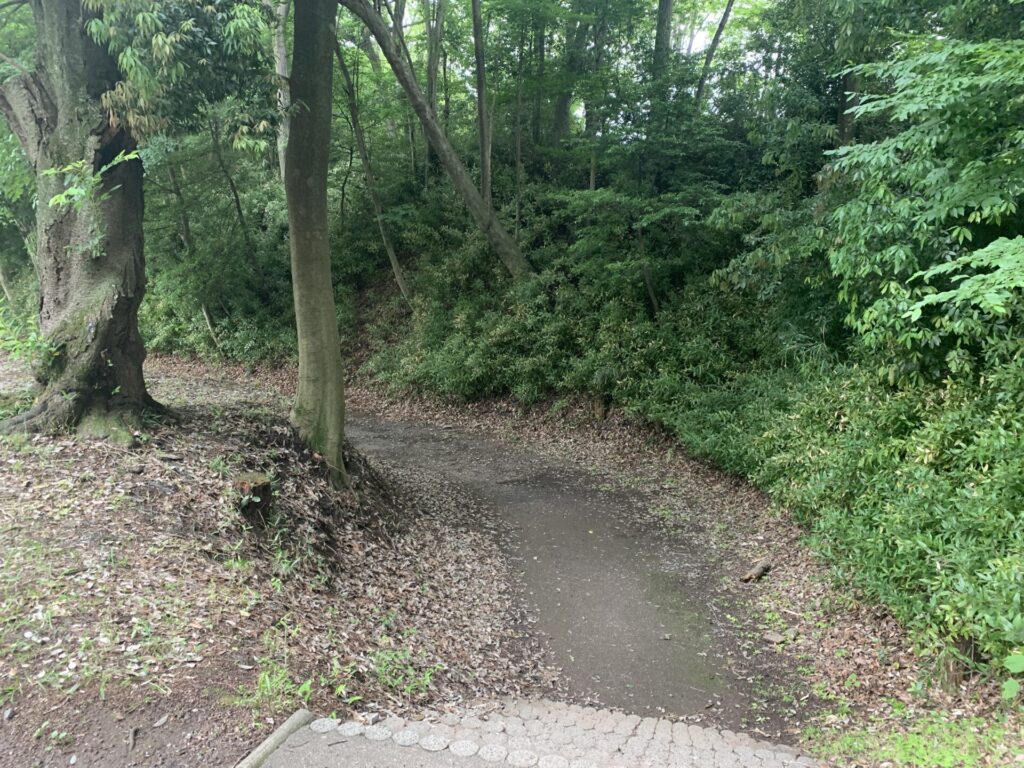
A narrow path that seems to carry the aura of the castle’s remains…
It really gets a Sengoku enthusiast fired up 🔥🔥
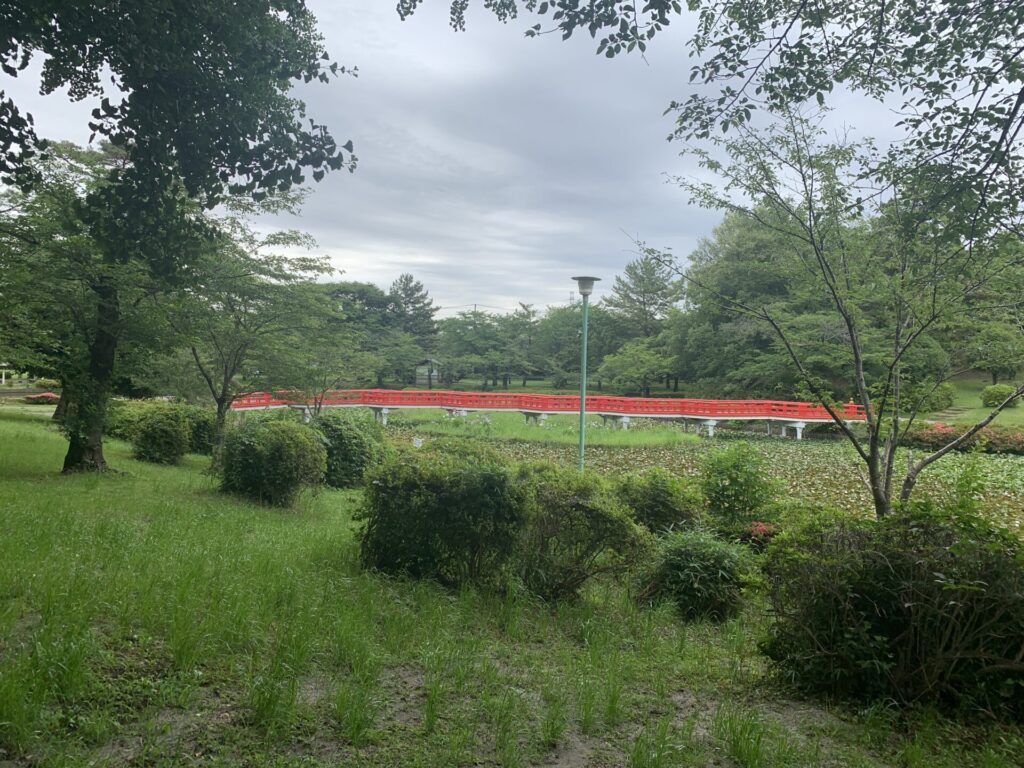
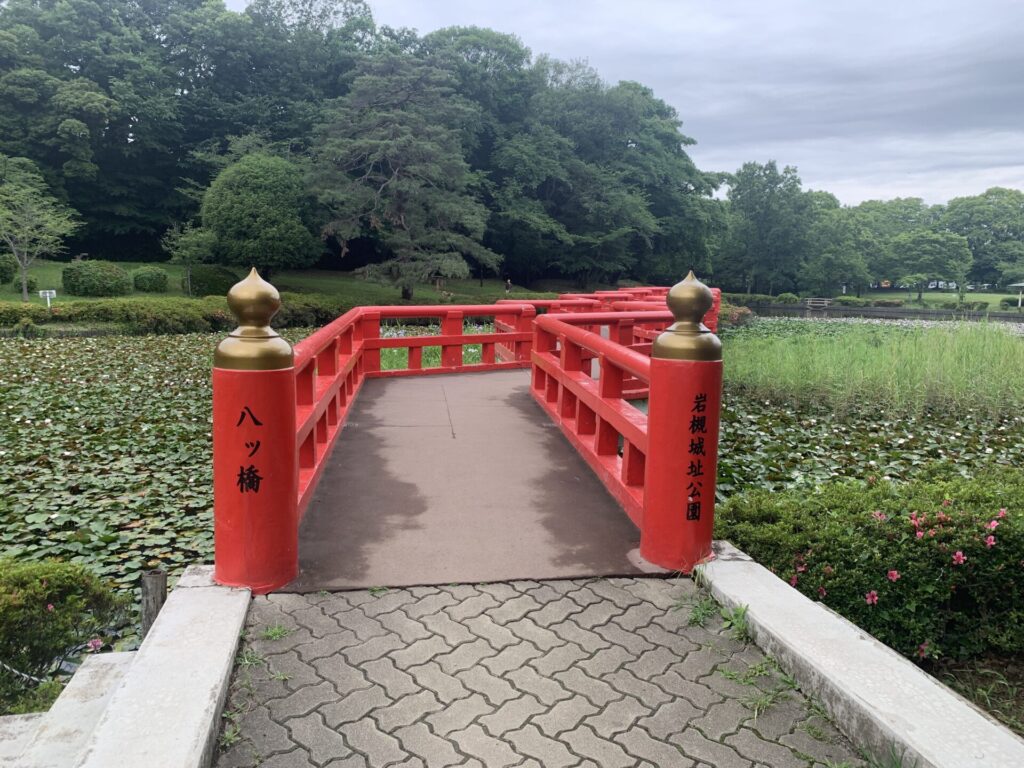
Inside the castle ruins park, there’s a bright red bridge called “Yatsuhashi(八つ橋)”.
It definitely catches our eye.
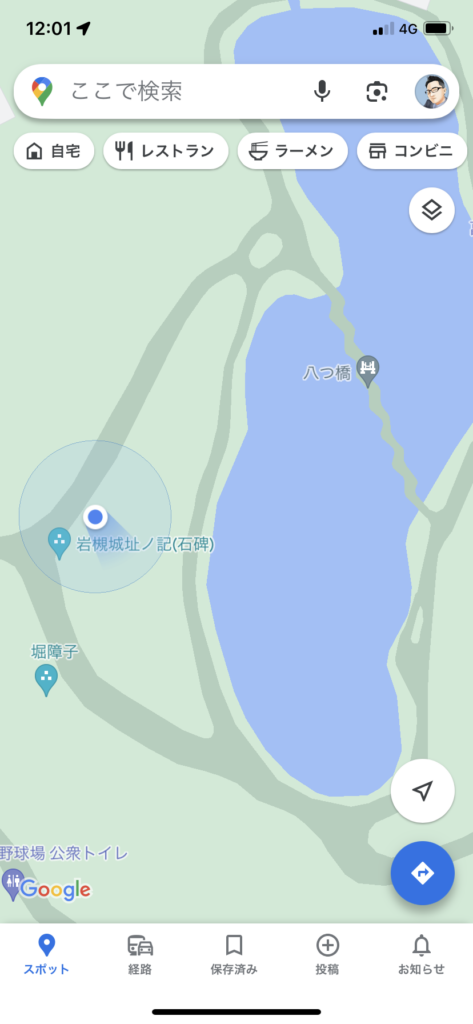
Checking Google Maps…
There’s a “Shoji-bori(障子堀)” nearby!!
Definitely worth checking out!!
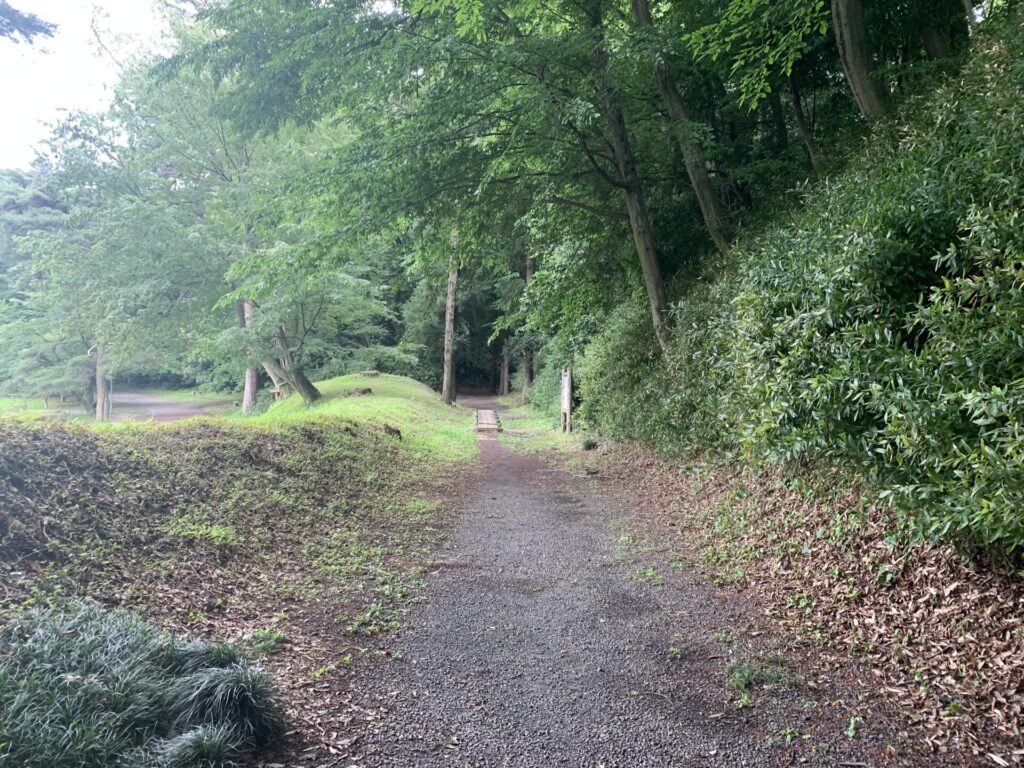
Just as I thought—it was at the end of that path!
That structure ahead looks like a bridge… could that be it?
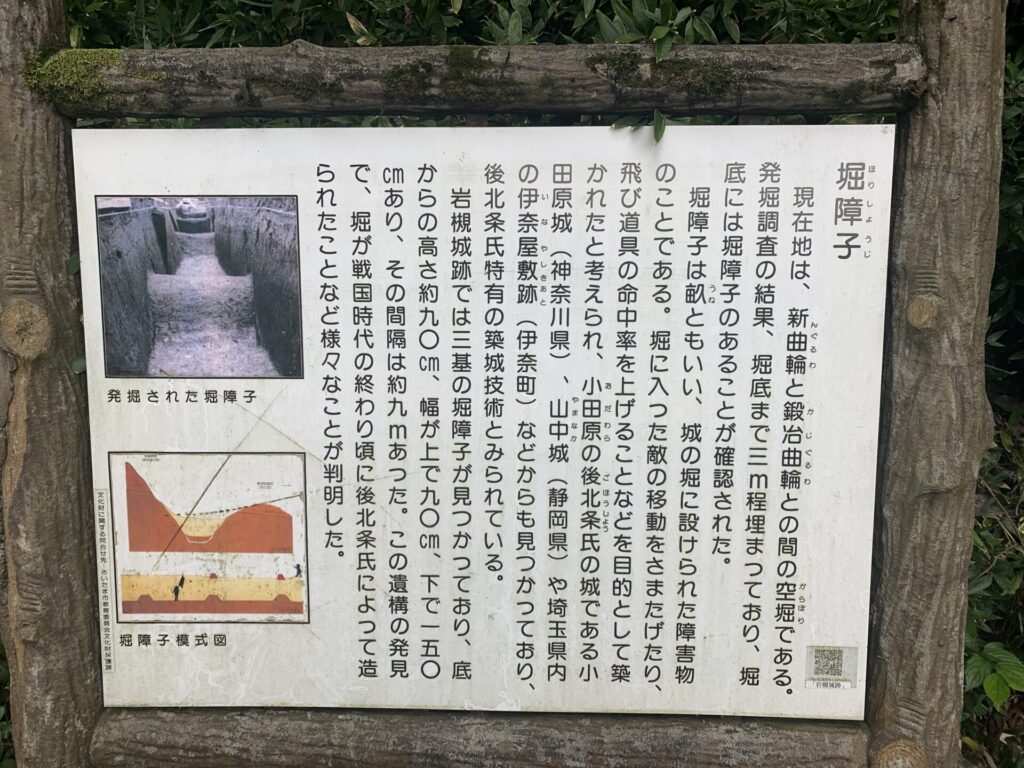
Just as I thought—it was!
It’s labeled “Hori-shoji(堀障子)”, but…
strictly speaking, it should be called “Shoji-bori(障子堀)”.
This was a defensive technique favored by the Hojo clan, where sections of earth were intentionally left within the moat to restrict enemy movement once they entered it.
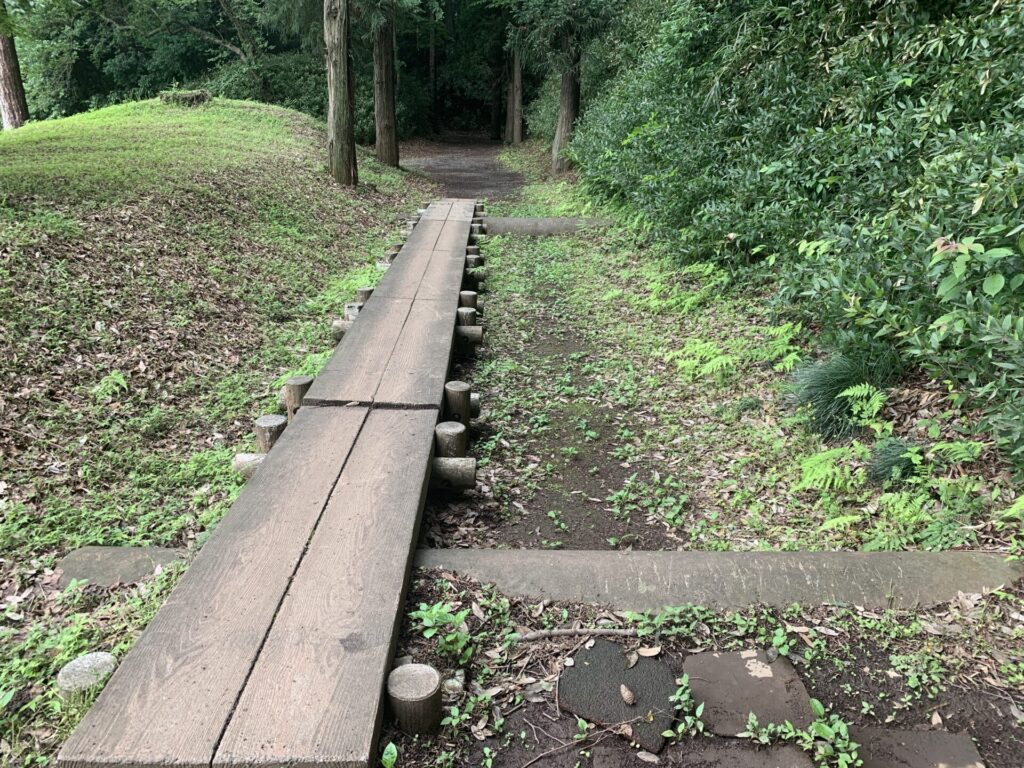
It looks quite different from what I had imagined…
For one thing, it’s not deep enough to really feel like a “moat,”
and it’s hard to clearly see the remaining sections of earth.
Well, if about three meters of it is buried, that might explain it…
I also recorded a video of this “Shoji-bori(障子堀)”, so please take a look.
Hmm…
The front area forms an earthen rampart,
so it does seem like a moat…
But perhaps because about three meters is buried,
it’s still hard to tell exactly which part is the “Shoji-bori(障子堀)”.
The stone monument reading “Hakutsuru Castle Ruins,” along with the spreading remains of the earthen rampart.
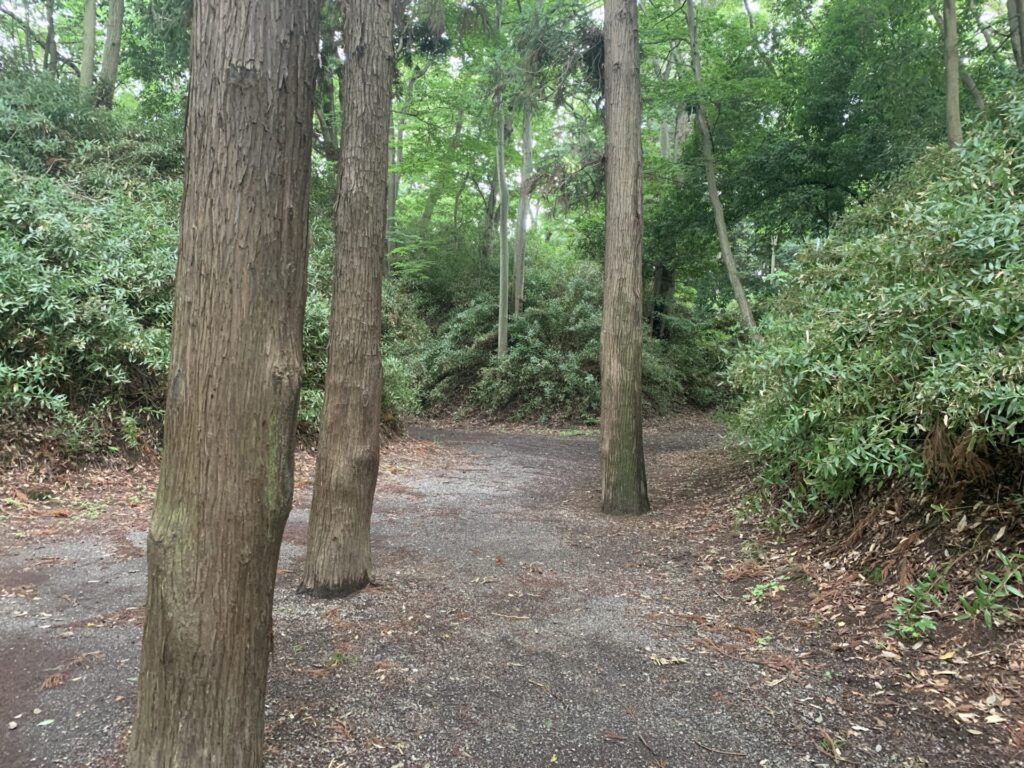
After checking out the “Shoji-bori(障子堀)”,
I continued deeper and deeper along the path.
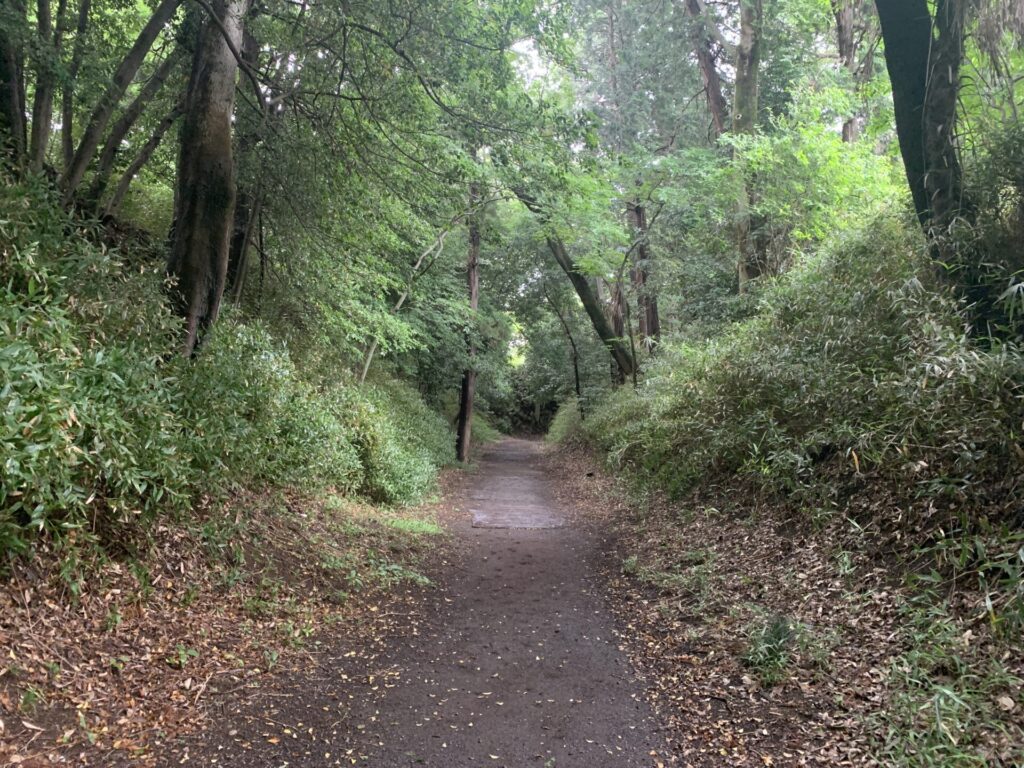
Heading deeper along a path in the park, flanked by earthen ramparts…
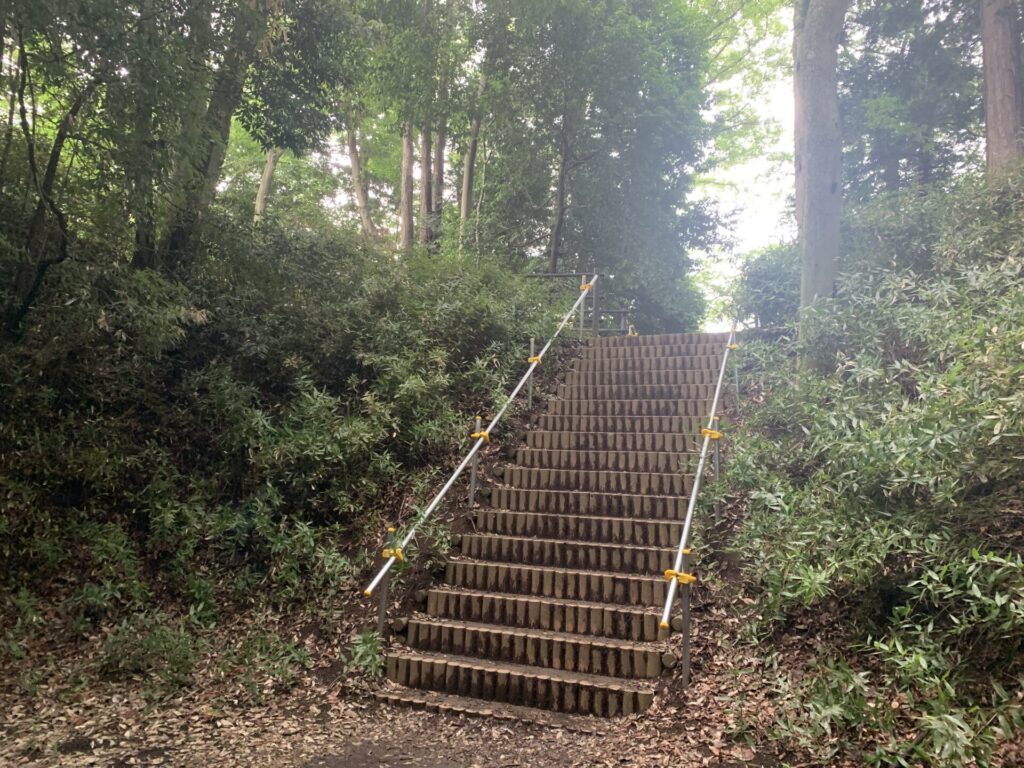
At the end of the path, there were stone steps like these,
and as I climbed them…
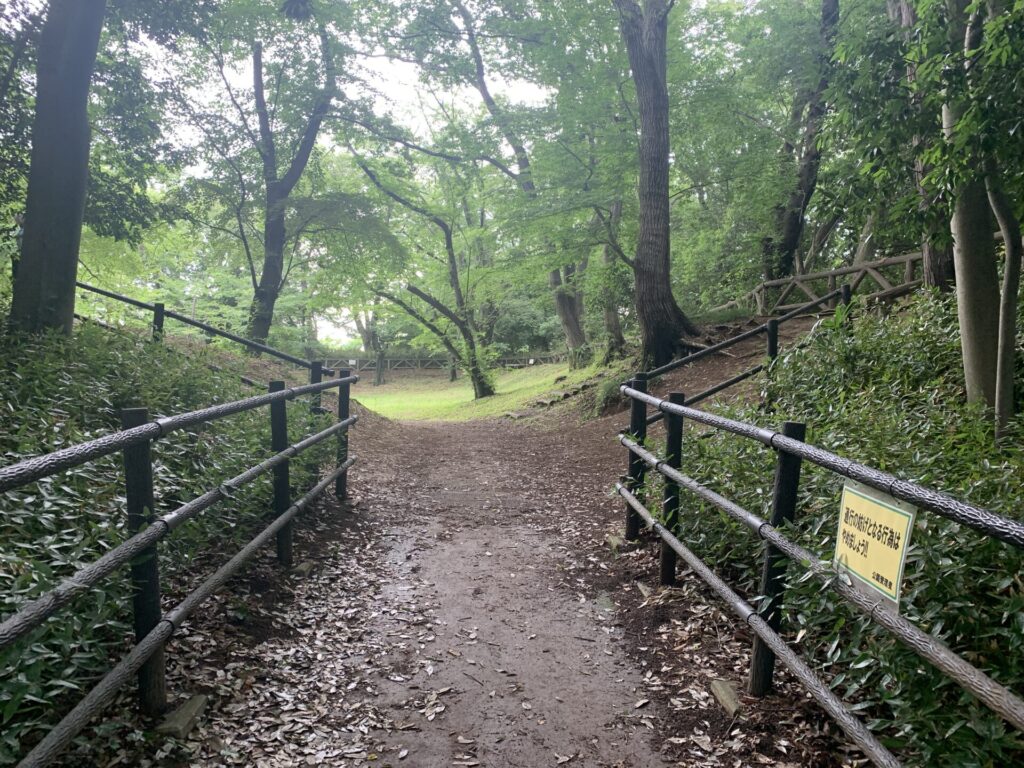
Oh!?
At the top of the stone steps, to the left, there was an open area like this.
It seems to be one of the sections of Iwatsuki-jo.
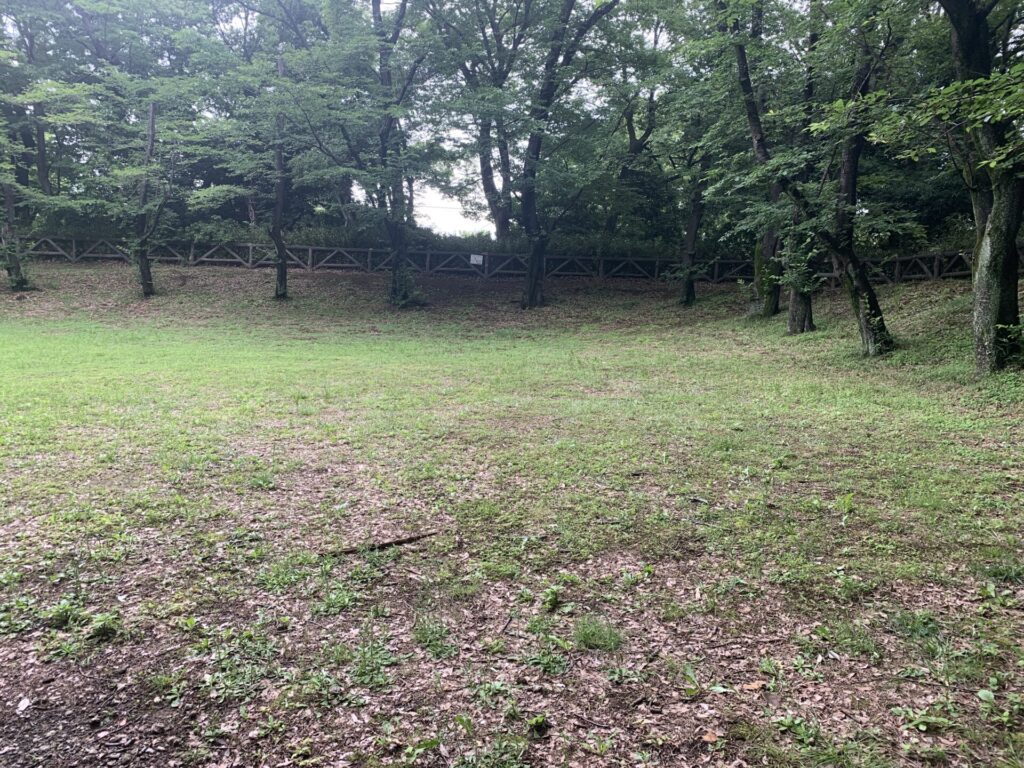
It seems that this is the “Kaji-kuruwa(鍛治曲輪)”.
The area appears to be faintly surrounded by earthen rampart.
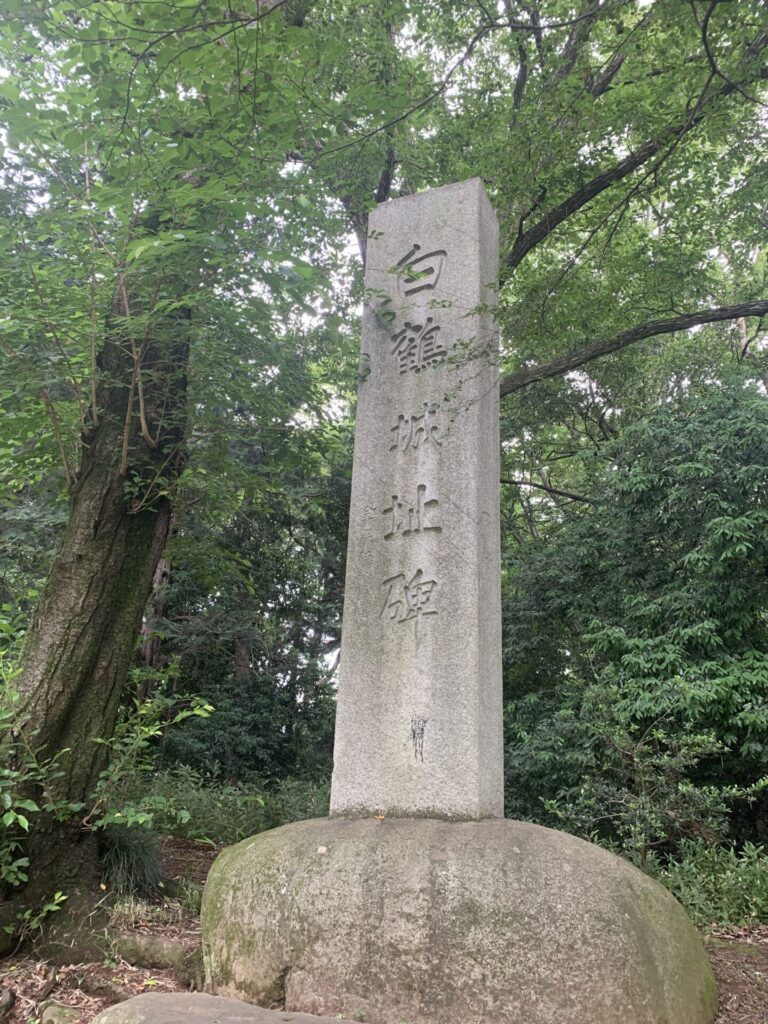
And there’s a stone monument marking “Hakutsuru Castle Ruins(白鶴城址)”, another name for Iwatsuki-jo.
I also recorded a video of this section, the “Kaji-kuruwa(鍛治曲輪)”, so please take a look.
I walked a bit along the path on top of the earthen rampart.
It’s slight, but you can get a sense of the elevation.
Then I headed back into the park,
and made my way to the “Yatsuhashi(八つ橋)” that had caught my attention earlier.
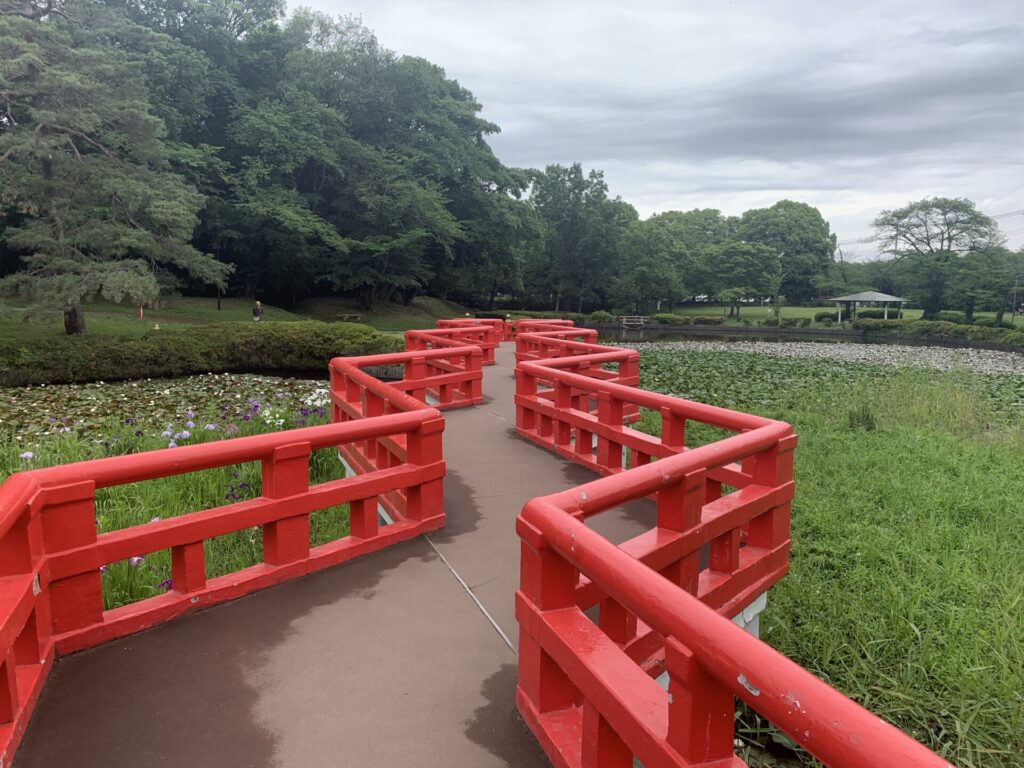
Its distinctive feature is the way it bends countless times like this.
There didn’t seem to be any explanation nearby,
so it’s probably not directly related to the castle ruins.
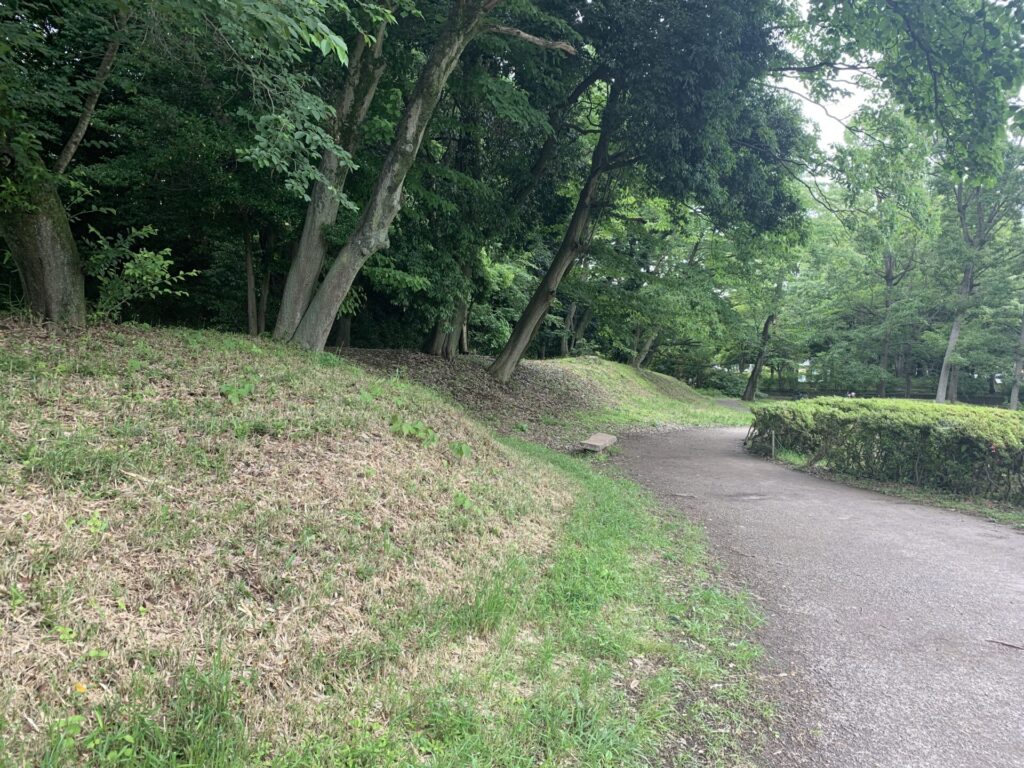
Taking another look around the park…
I noticed remnants of earthen rampart like these.
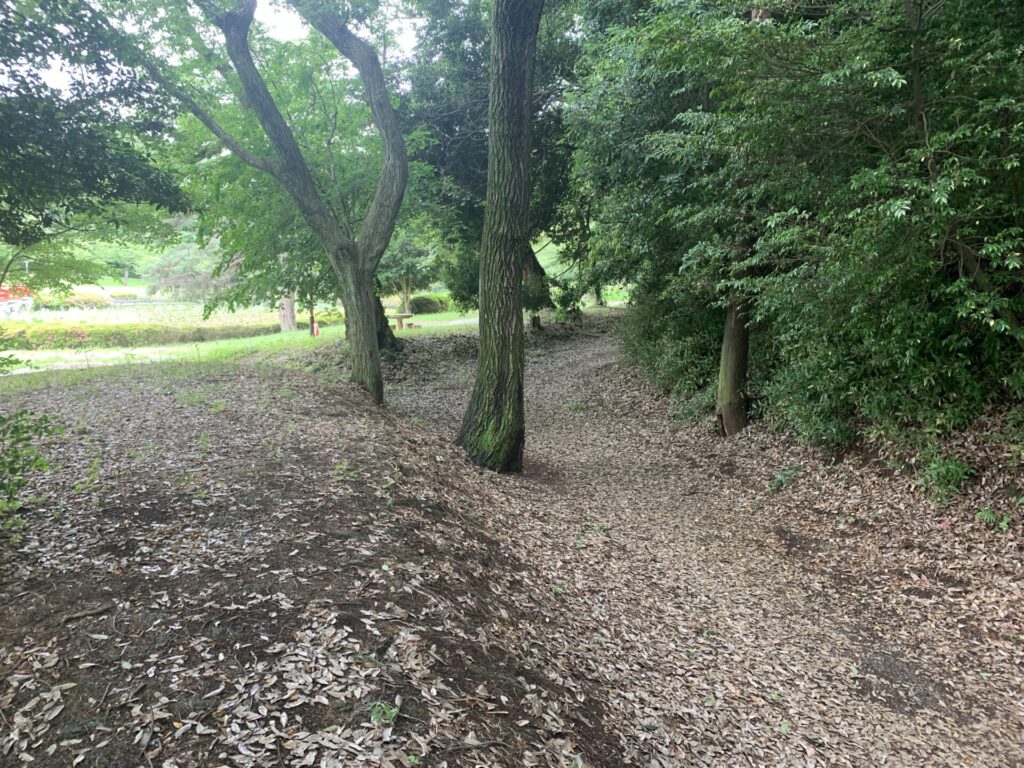
There are also traces that look like a moat.
Aside from the “Shoji-bori(障子堀)” and several earthen ramparts, there aren’t many standout defensive features, which might feel a bit underwhelming for castle enthusiasts…
However, there are cultural remains such as the “Kuro-mon(黒門)”,
so if you’re a castle fan, it’s definitely worth a visit if you’re in the area.
See you in the next article!!