
Usui-jō (Sakura city, Chiba)|The Main Stronghold of the Hara Clan That Repelled the Armies of Uesugi Kenshin
A Bamboo-Grove Hill-and-Plains Castle — Usui-jō
Hello, I’m Shin.
On Friday, April 21, 2023,
the day before, I visited Moroto-jō, located near Lake Inbanuma.
Today, I made my way to Usui-jō, located on the opposite shore of the lake—directly across from Moroto-jō 🚙
Surrounded by dense bamboo groves, Usui-jō is a classic hill-and-plains castle, where natural terrain and defensive design come together in a striking landscape.

◉ Castle Type
Hill-and-plains castle
◉ Cultural Heritage Highlights
◉ Defensive Features & Fortifications
◉ Exploration Difficulty
🔰 Easy Castles
◉ Estimated Time to walk around
: about 1 hour
◉ Parking
Parking is available within Usui Castle Park,
with space for approximately five to six vehicles.
Moroto-jō appears to have functioned as a subsidiary fortification of Usui-jō.
Usui-jō itself was ruled for generations by the Hara clan, but—like Moroto-jō—it came under repeated attack by powerful rivals, including Uesugi Kenshin and Satomi Yoshihiro.
In the end, control of the castle passed into the Tokugawa sphere, and Sakai Ietsugu, a retainer of Tokugawa Ieyasu, became lord of Usui-jō with a fief valued at 30,000 koku.
👇 For more details on Moroto-jō, please see the related article below. 👇
 https://sengokucastle.com/moroto-jo/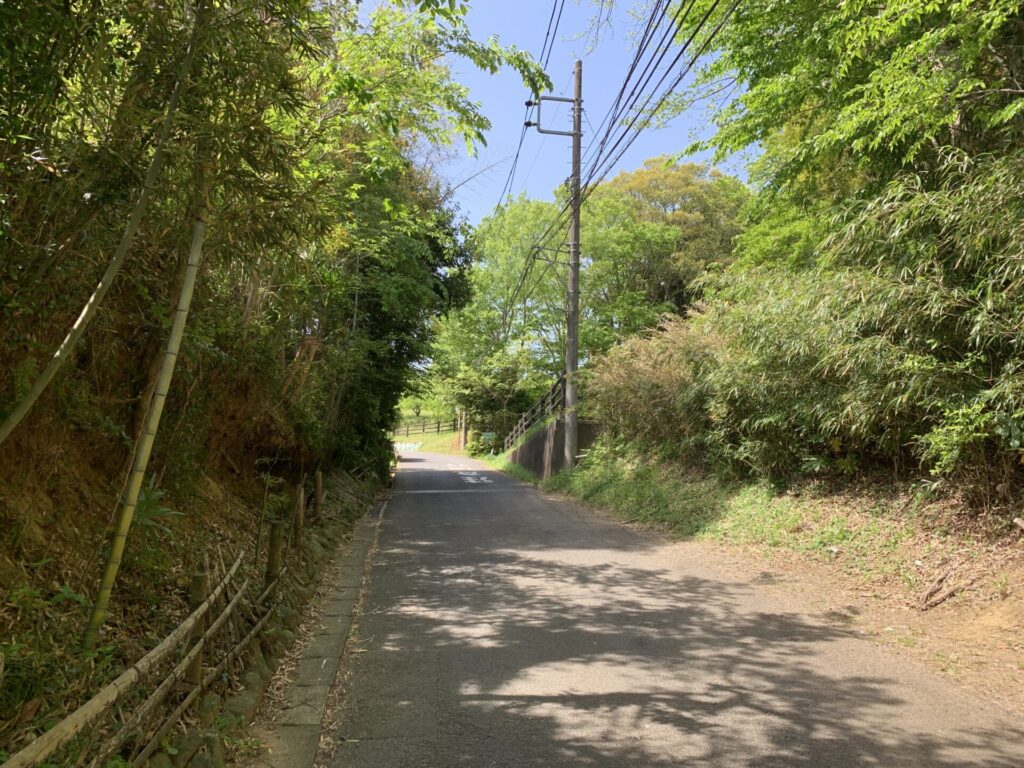
Following Google Maps, I drove on—and soon found myself facing this slope.
It seems that the ruins of Usui-jō lie just beyond this point.
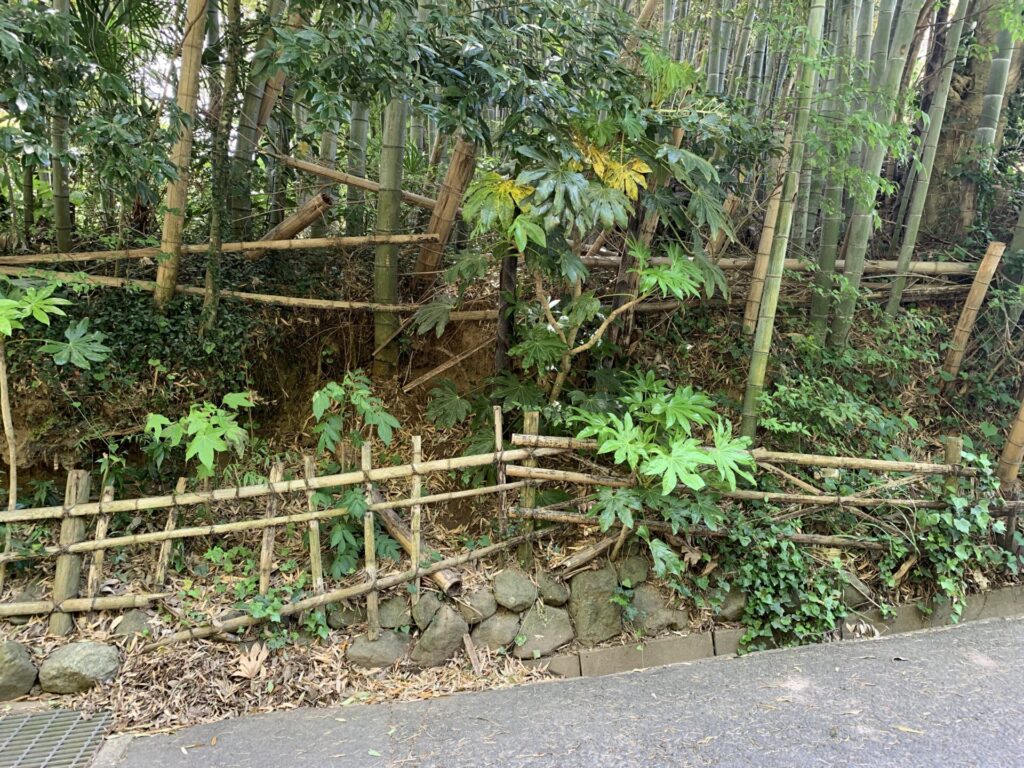
Partway up the slope, I came across a scene like this.
A bamboo fence–like structure sits atop a stone embankment.
I can’t say for certain, but it may well have some connection to Usui-jō and its former defenses.
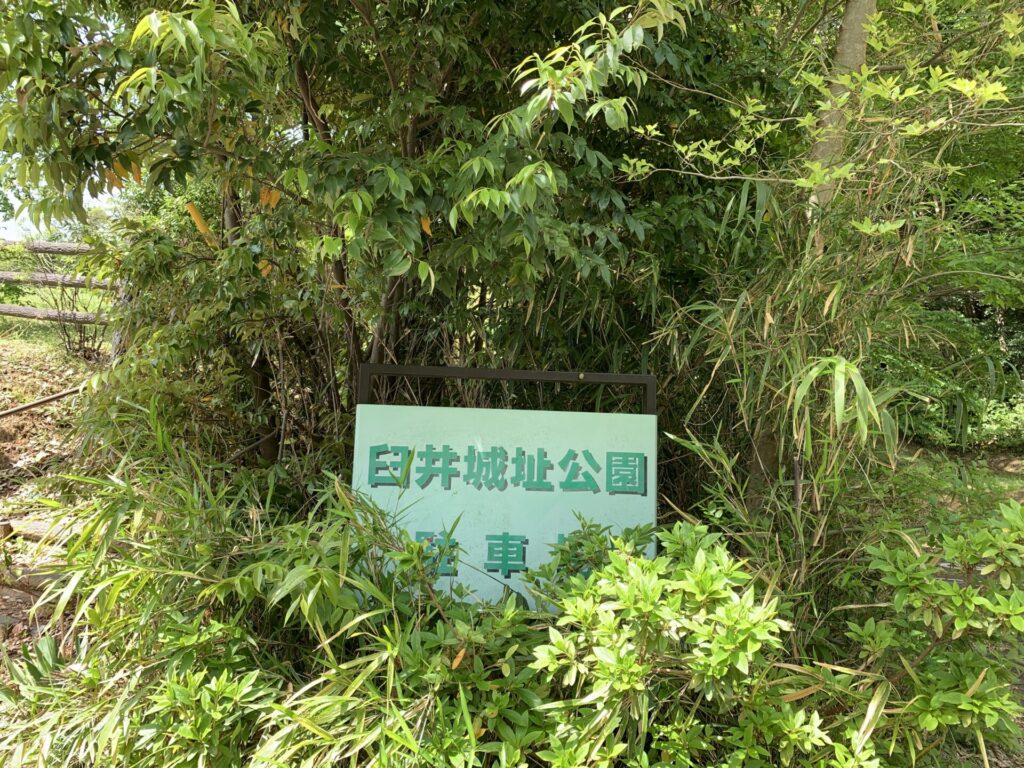
This is the parking area for Usui Castle Park—or rather, the sign marking it.
From here, it’s time to head uphill and begin exploring the traces of Usui-jō itself.
Beyond the parking area, the route continues upward with a set of climbing steps like this.
The elevation isn’t particularly high, but Usui-jō is still classified as a hill-and-plains castle (平山城 hirayamajiro), combining low mountains with flat defensive areas.
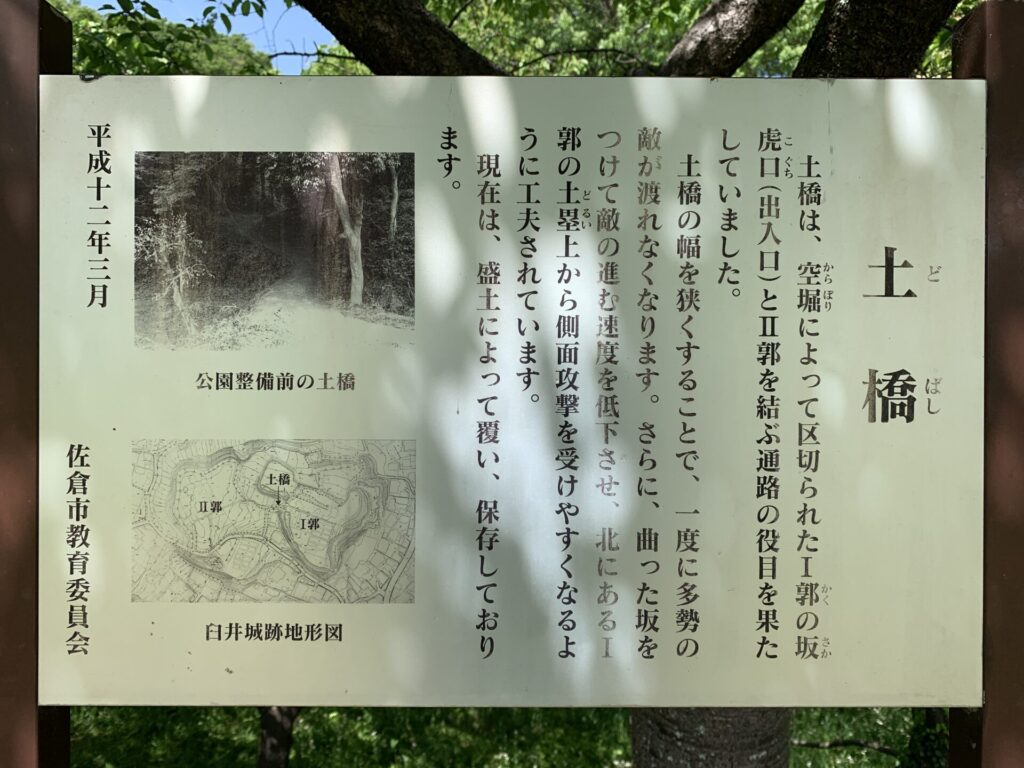
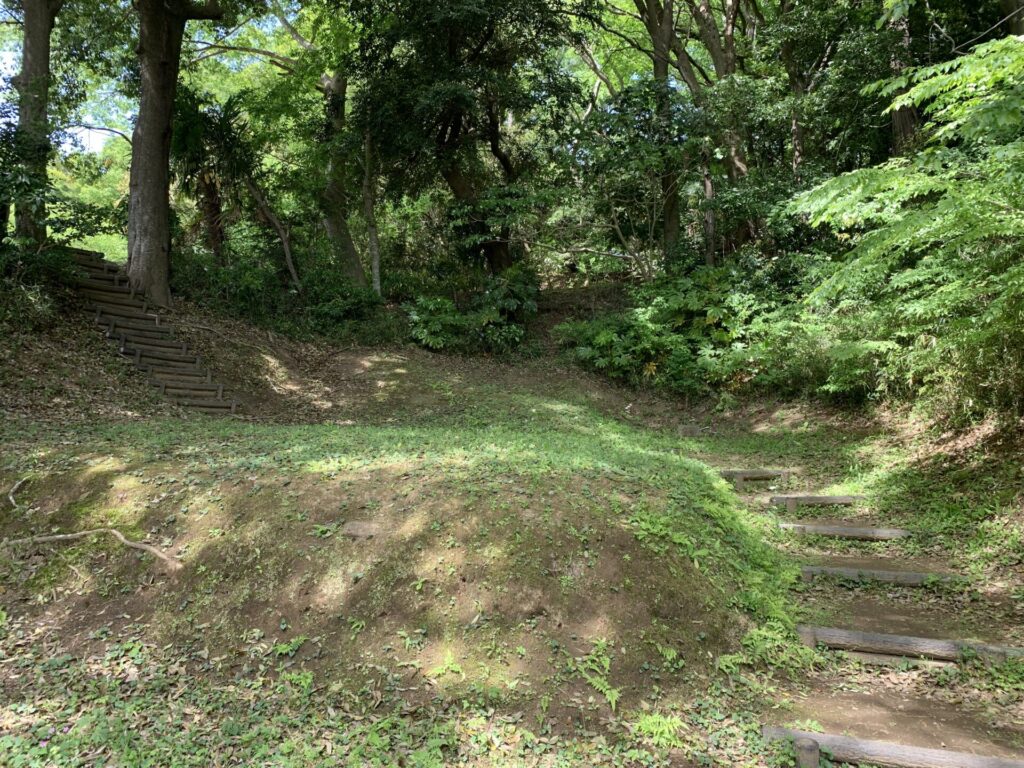
At the top of the climb, I came across an information board like this.
It turns out that I had arrived directly on top of a Dobashi (土橋: earthen bridge).
By narrowing the width of the earthen bridge, defenders could prevent large numbers of enemy troops from crossing at once.
In addition, the approach was designed with a curved slope, deliberately slowing the enemy’s advance and making them vulnerable to flanking attacks from the earthen ramparts of Enclosure I to the north.
Today, the structure has been covered with additional earth and preserved for protection.
A curved approach to reduce the enemy’s speed, followed by flanking attacks from nearby ramparts 🔥
Honestly, for a Sengoku-period history fan, this is incredibly exciting. 😆
I’ll be explaining this feature in more detail later on in a video as well.
It Turns Out There Was Another Way Up!!
I walked around hoping to find other information boards explaining the layout of Usui-jō, but in the end, the only detailed explanation I found was the one about this earthen bridge.
Still, even that alone tells us a great deal about how the castle was designed.
And as I continued walking around the site, I eventually realized something else—
there was actually another route leading up to the castle as well.
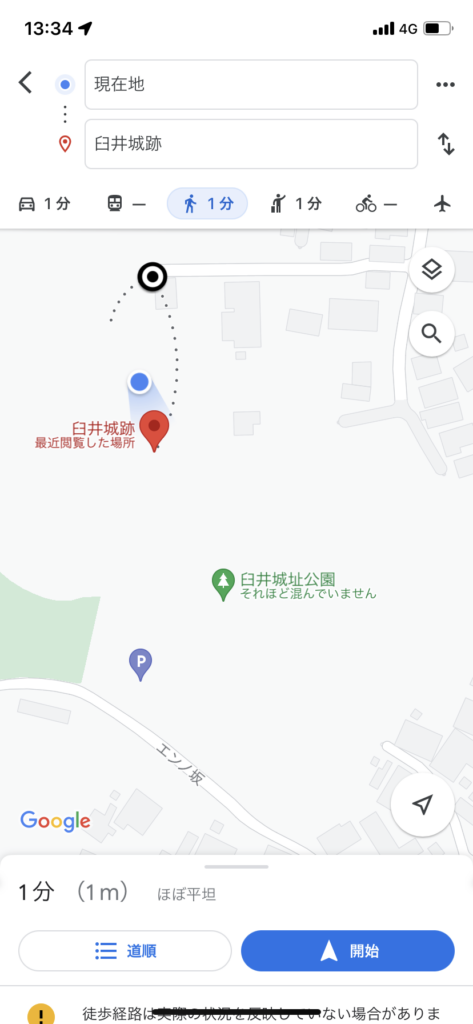
Actually, I had made a pretty big misunderstanding.
As shown on Google Maps above, I had assumed that Usui Castle Ruins were located separately from Usui Castle Park.
Because of that, I once went back down from the park, made a wide detour, and set off to search for what I thought was the “actual” Usui Castle Ruins elsewhere.
From here on, things get pretty confusing… 😓
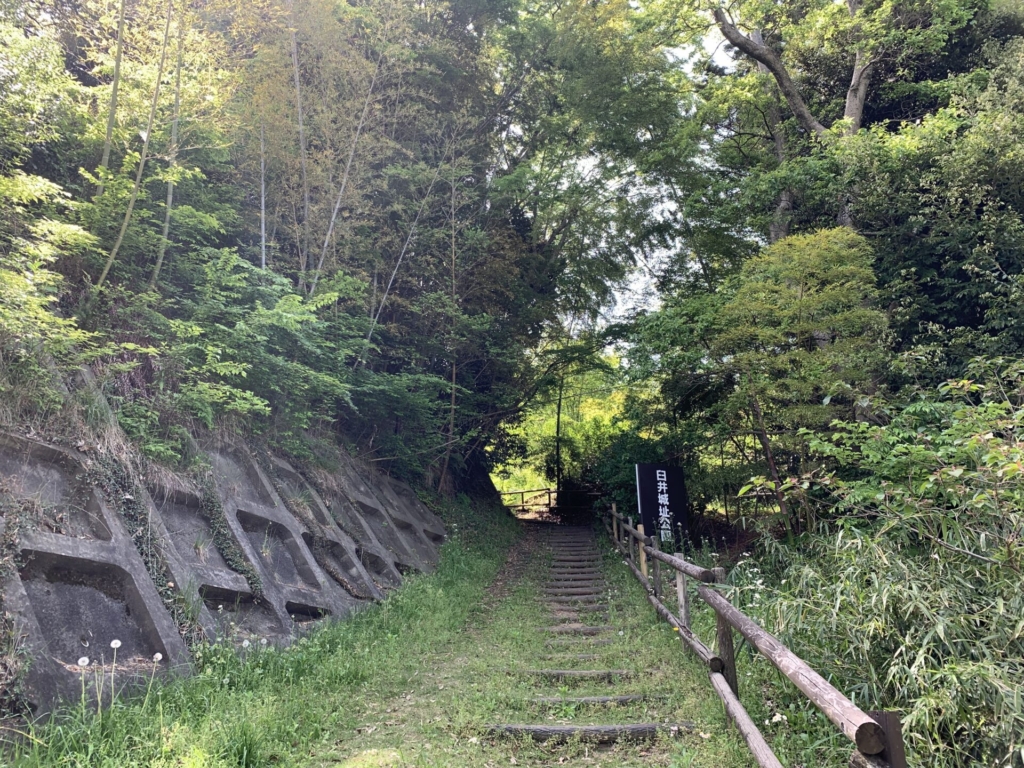
I went back down from the castle park for the moment and returned to the main road.
Then, following Google Maps and walking toward what I believed to be “Usui Castle Ruins,” I ended up arriving here.
And there it was—a proper sign reading “Usui Castle Park.”
Since I was already there, I decided to film a video of the climb up as well.
As you can see, it’s quite a climb.
This route leads up to the same Dobashi (土橋: earthen bridge) I mentioned earlier.
For now, though, I decided to head back down to the road at the base of the hill and continue searching for what I thought was the separate “Usui Castle Ruins.”
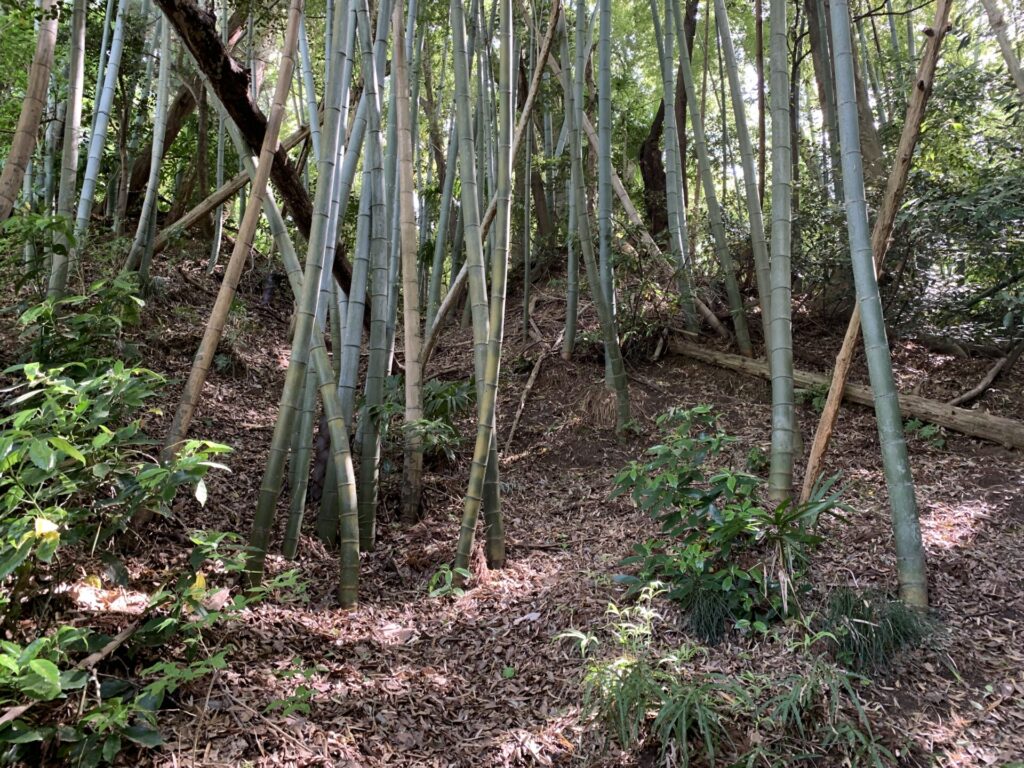
I kept walking, guided by the location shown on Google Maps, and it seemed that the destination was somewhere above this bamboo grove…
Wait—
Do I seriously have to climb up here?
(Of course, in hindsight, I should have realized sooner that a “castle site” often refers to an entire area rather than a single, clearly marked point. 😅)
That realization came a bit late.
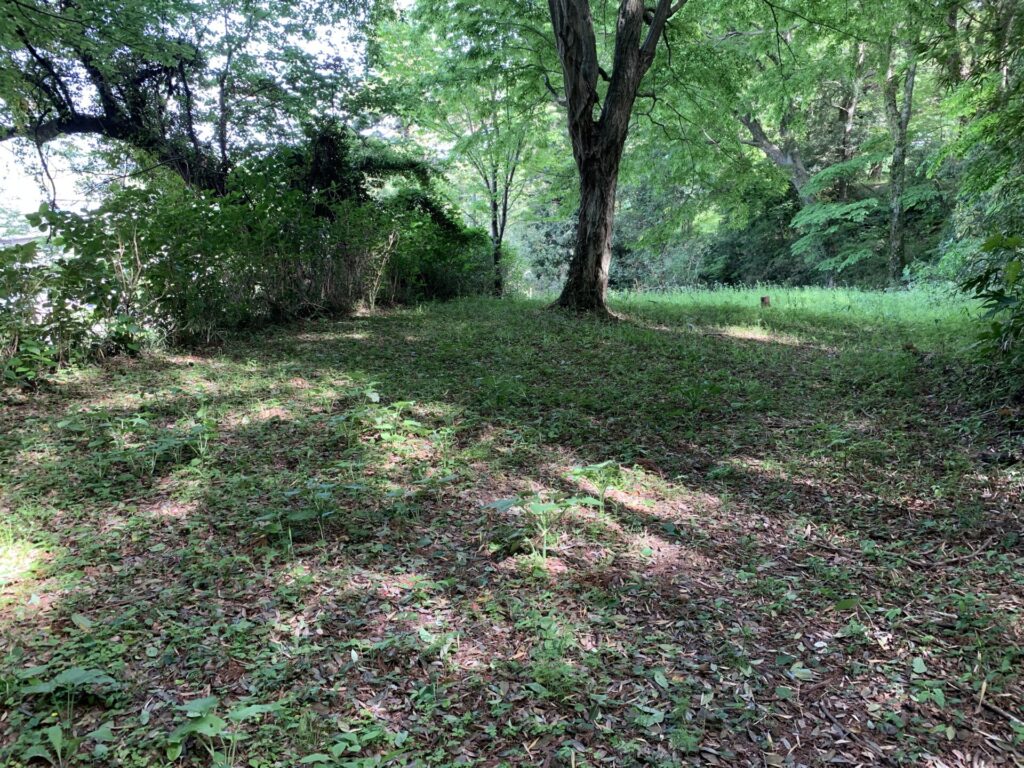
Out of breath and drenched in sweat, I grabbed onto the bamboo and climbed up a pathless slope…
Eventually, I reached this flat terrace.
But somehow, it still didn’t feel like this was the place…
(Seriously—realize it already!) 😅
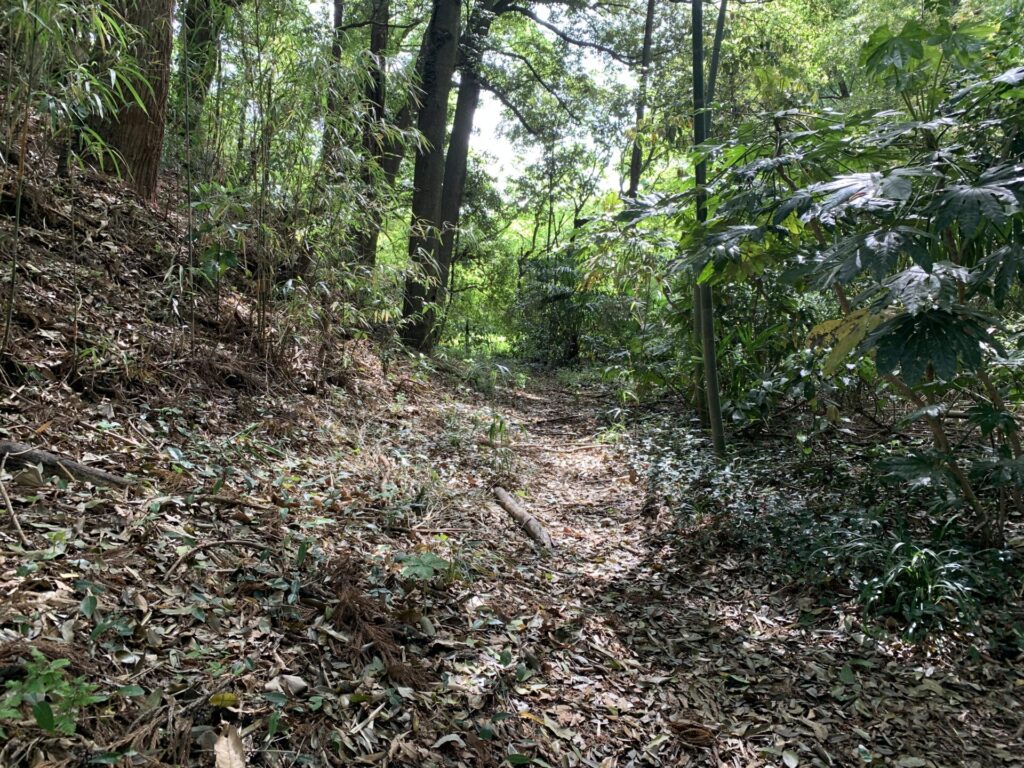
I spotted what looked like a faint path leading upward…
Alright—since I’d come this far, I might as well keep going and climb up!!
(And it’s at this point that I finally start to realize what’s really going on…)
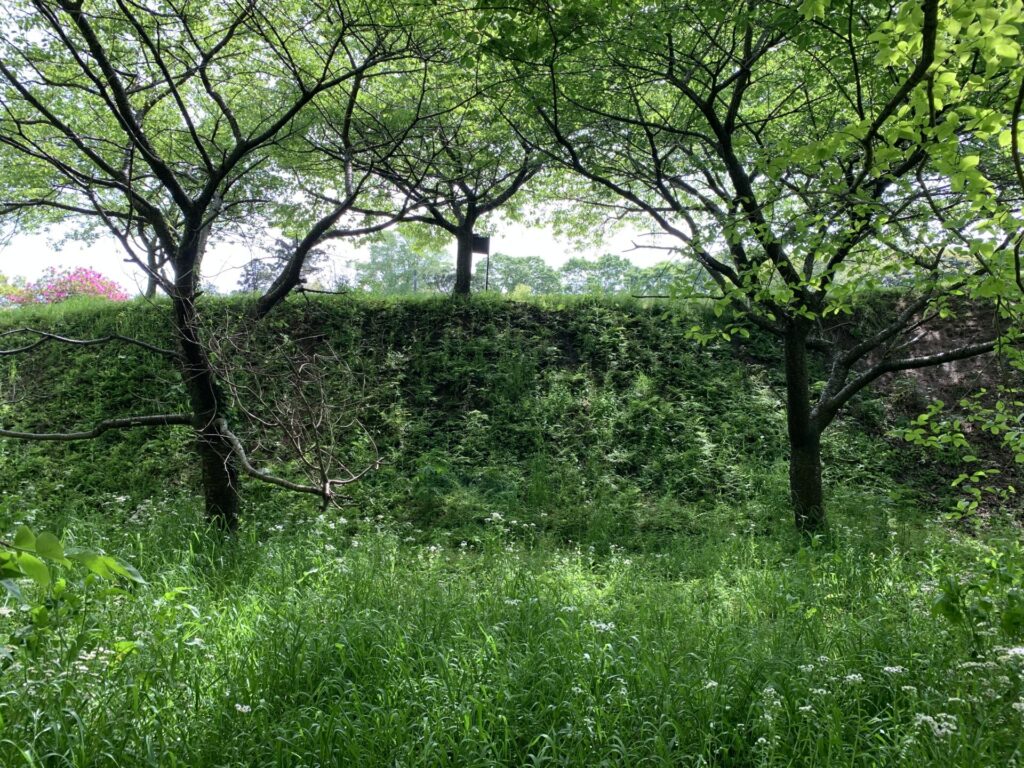
After desperately climbing my way up, I finally reached the spot—
and to my disbelief, I found myself directly below the Dobashi (土橋: earthen bridge) where I had seen that information board earlier.
What the heck!! 😭
With no other choice, I decided to climb up the moat slope from here.
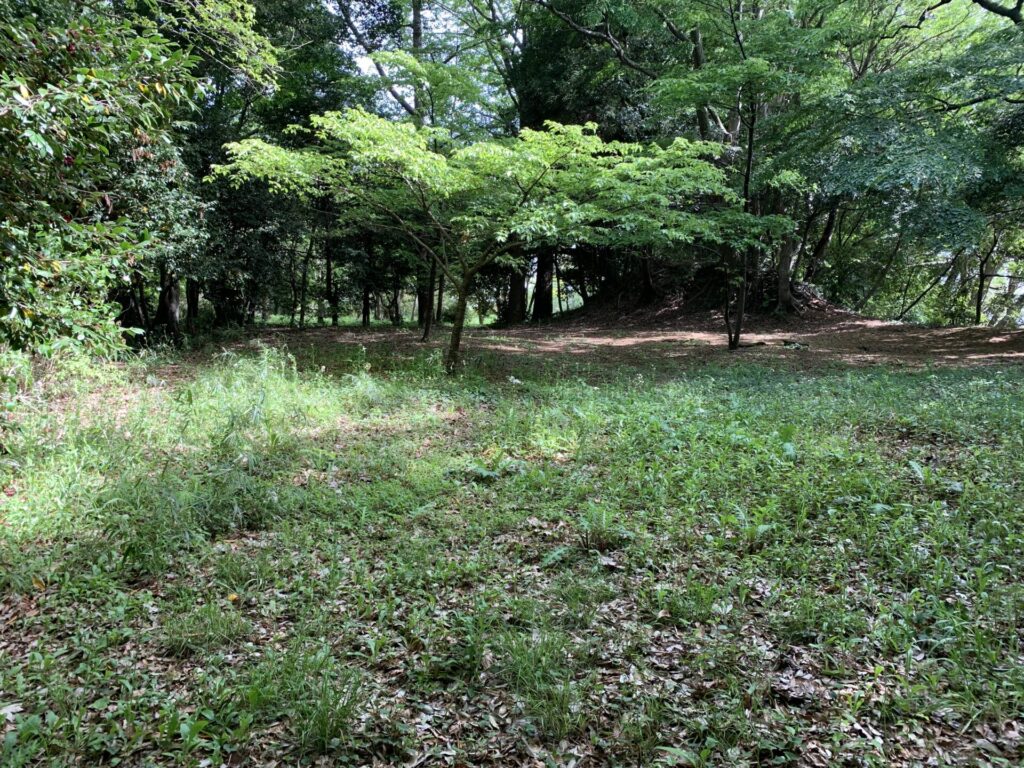
At last, I arrived at the spot that Google Maps had been indicating as “Usui Castle Ruins.”
And only then did it finally sink in.
I’d walked around far more than necessary…
Still, the fact that this point is specifically labeled “Usui Castle Ruins” on the map made me wonder—
could this be the Honmaru(本丸:main enclosure )?
The information board at the earthen bridge didn’t go into that level of detail,
but it did mention the existence of Enclosure I and Enclosure II, and this location appears to lie within part of Enclosure I.
If so, this would correspond to the “First Enclosure”—
in other words, it’s reasonable to consider this area the Honmaru of Usui-jō.
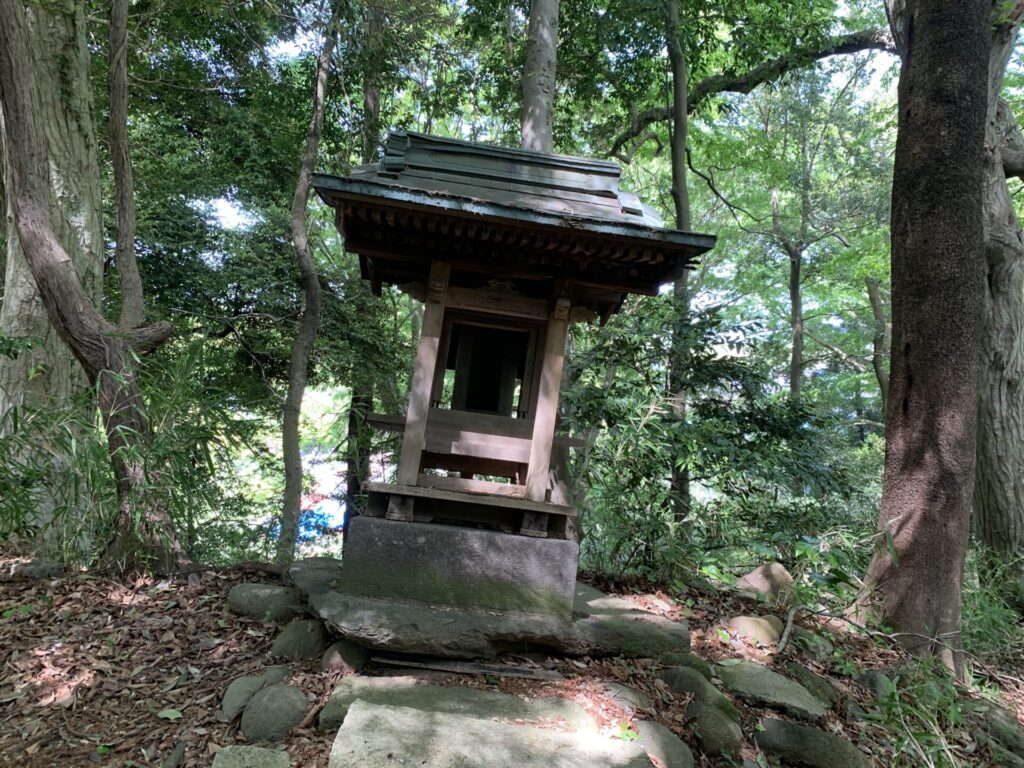
Near this spot—believed to be the Honmaru(本丸:main enclosure )—I also found something like this.
Just as I suspected… right?
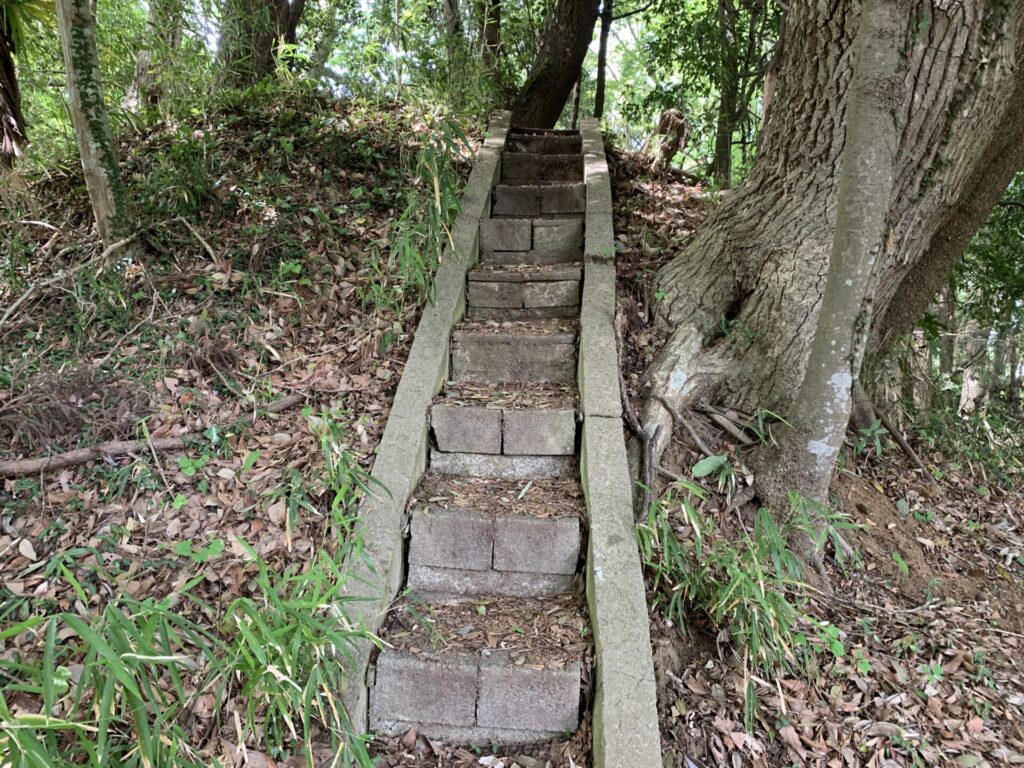
And surrounding what appears to be this First Enclosure (Ichinokuruwa / Honmaru), there is an earthen rampart, complete with a stone stairway leading up to the top.
It’s hard to imagine that stone steps would have been added later just to climb a rampart with nothing of interest on it.
Which makes me think—
this, too, may well date back to the original period of the castle.
(At least… that’s what I’d like to believe.)
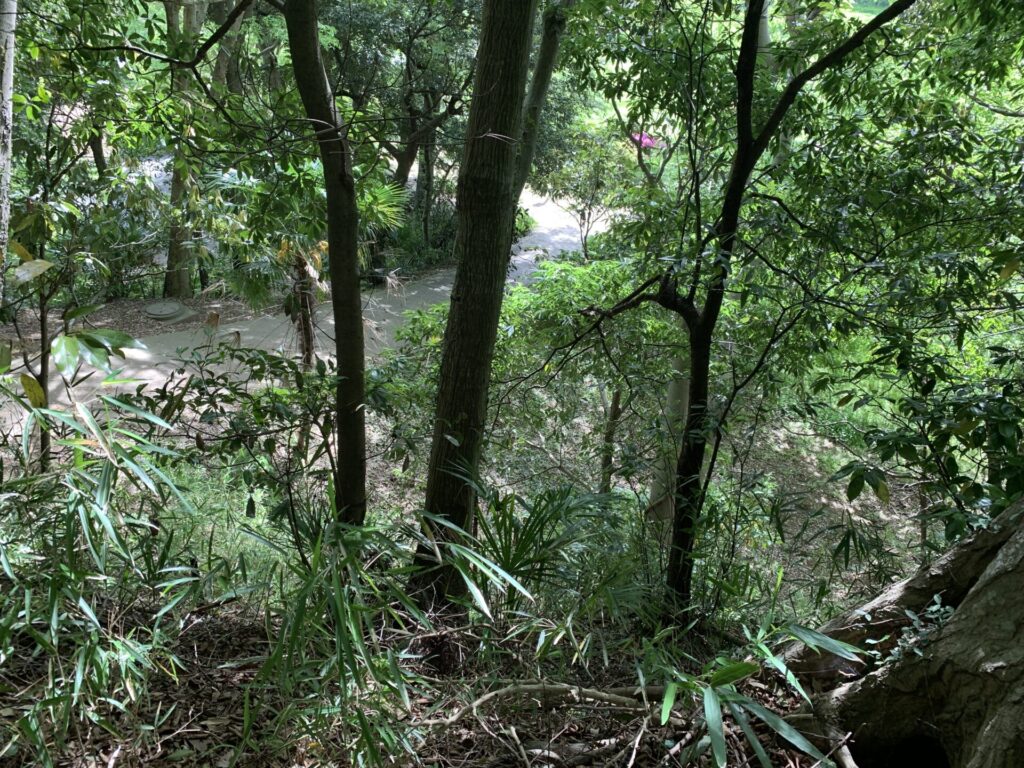
And this is the view looking down at the earthen bridge from the top of the rampart I climbed.
From here, defenders would have been perfectly positioned to pick off enemy soldiers attempting to advance along the approach…
Filming from the Perspective of an Attacking Force
So how would these defensive structures have appeared from the viewpoint of enemy soldiers advancing on Usui-jō?
To find out, I filmed again—this time walking along the earthen bridge itself, imagining the scene through the eyes of those attacking the castle.
What do you think?
The earthen bridge leading to the First Enclosure is slightly winding,
and it also has a gentle upward slope—both of which would have slowed the advance of attacking troops at this very point.
And as if by design, they would then be targeted from the earthen ramparts on the left flank,
struck precisely as their movement faltered.
Terrifying… isn’t it?
As I moved deeper into the First Enclosure, Lake Inbanuma suddenly came into view.
In fact, the First Enclosure opens out into an even broader terrace toward the back,
and beyond it lies a clear view of Lake Inbanuma.
I captured this scene on video as well.
The Honmaru(本丸:main enclosure ) is surprisingly spacious, as you can see here.
As you walk farther toward the back, Lake Inbanuma gradually comes into view.
On the opposite shore lies Moroto-jō, a subsidiary fortification of Usui-jō.
Along the fence line, you can also make out what appears to be a slightly raised earthen rampart, subtle but distinct.
Altogether, it becomes clear that Usui-jō was a very open hill-and-plains castle, making full use of both elevated ground and wide, accessible space.
Whew… I was really worn out by all that walking 💦
You could say I wandered around more than I needed to—but still,
just like Moroto-jō, if you ever have the chance to visit the area around Lake Inbanuma,
this is definitely a site worth stopping by and exploring.
👇 For more on Moroto-jō, please check out the article below. 👇