
Masuo-jo (Kashiwa city, Chiba)|Though its builder and early history remain unclear, it is nonetheless an impressive renkaku-style hilltop castle
- 1. A compact yet impressive hilltop castle that can be explored in under 30 minutes
- 2. At the Koguchi, attackers would likely have been subjected to concentrated fire from above—perhaps from a Yagura positioned overhead
- 3. From the subsidiary enclosure—onward to the main enclosure!
- 4. Strengthening the Castle’s Defense with Koshi-guruwa (Terraced Enclosures)
A compact yet impressive hilltop castle that can be explored in under 30 minutes
Hello, I’m Shin.
On Tuesday, May 2, 2023,
I visited Masuo-jo in Kashiwa City, Chiba Prefecture. 🚙

◉ Castle Type
Hilltop Castle ( Okajiro )
◉ Cultural Heritage Highlights
◉ Defensive Features & Fortifications
◉ Exploration Difficulty
🔰 Easy Castles
◉ Estimated Time to walk around
: about 1 hour
◉ Parking
Parking is available within Matsuo-jo Castle Ruins Park (approximately 5–6 spaces).
About a 25-minute walk from Shin-Kashiwa Station on the Tōbu Urban Park Line🚃
My honest impression after exploring it?
Though compact in scale…
With its Koguchi (虎口:defensive gate complexes), Dorui (土塁:earthen ramparts), Karabori (空堀:dry moats), and Koshi-guruwa (腰曲輪:terraced enclosures),
Masuo-jo offers more than enough to satisfy any enthusiast of earthwork fortifications.
I will now explain each of these defensive features one by one. 🏯
At the Koguchi, attackers would likely have been subjected to concentrated fire from above—perhaps from a Yagura positioned overhead
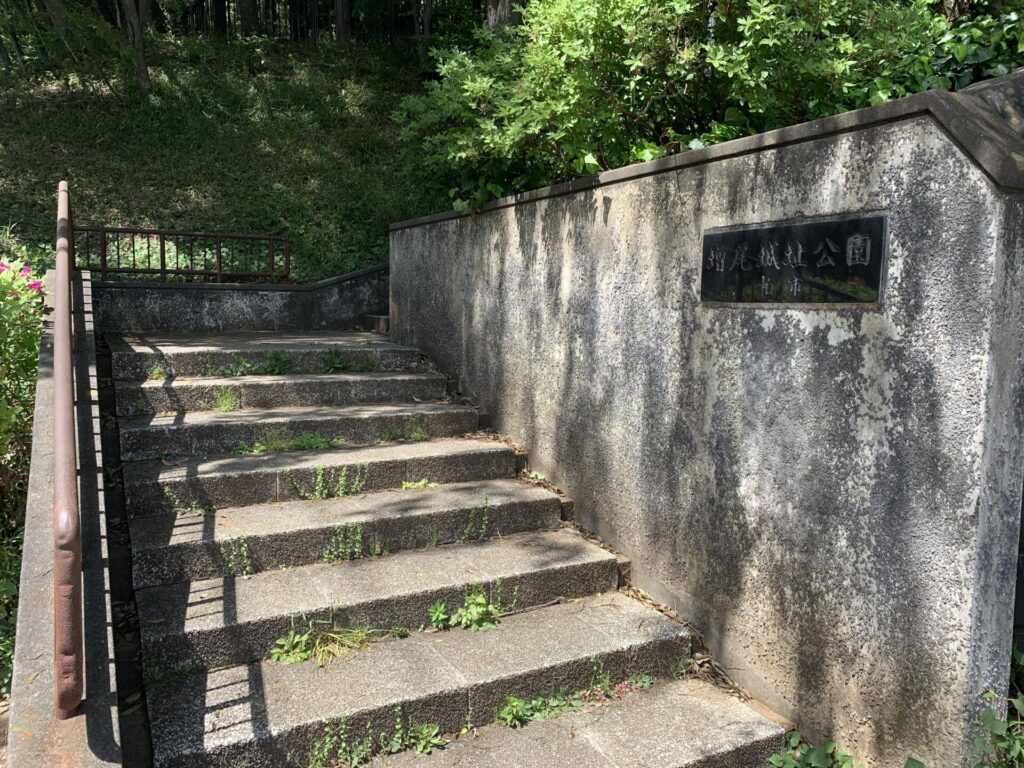
First, I arrived at Masuo-jo Castle Ruins Park,
parked the car in the lot, and began climbing the stone steps.
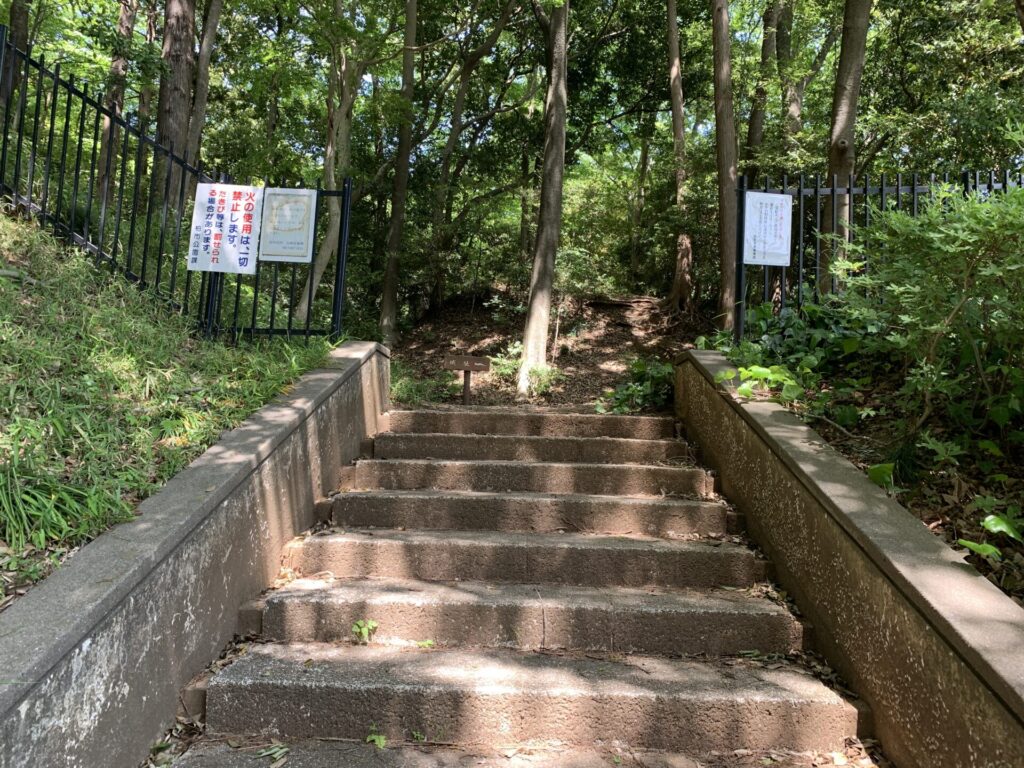
Here, already half-expecting that something interesting might be waiting ahead,
I started filming.
(As it turned out, I had entered a subsidiary enclosure—Fuku-guruwa—through a Koguchi.)
Please check the video below.
At first, I didn’t even realize this stone steps area was a Koguchi (虎口:defensive gate complexes) —I simply walked through it without much thought.
A Koguchi is the fortified entrance of a castle, used by defenders to enter and exit the grounds.
However, allowing enemy forces to pass through easily would defeat its purpose.
For that reason, Koguchi were often intentionally designed with sharp turns to slow an advancing enemy.
In many cases, Dorui (土塁:earthen ramparts) or Yagura (櫓:turrets) were constructed nearby, enabling defenders to launch concentrated attacks from above or from the sides as enemies attempted to pass through.
How careless of me…
In any case, having reached an open, leveled platform, I immediately made my way toward what appeared to be an informational signboard.
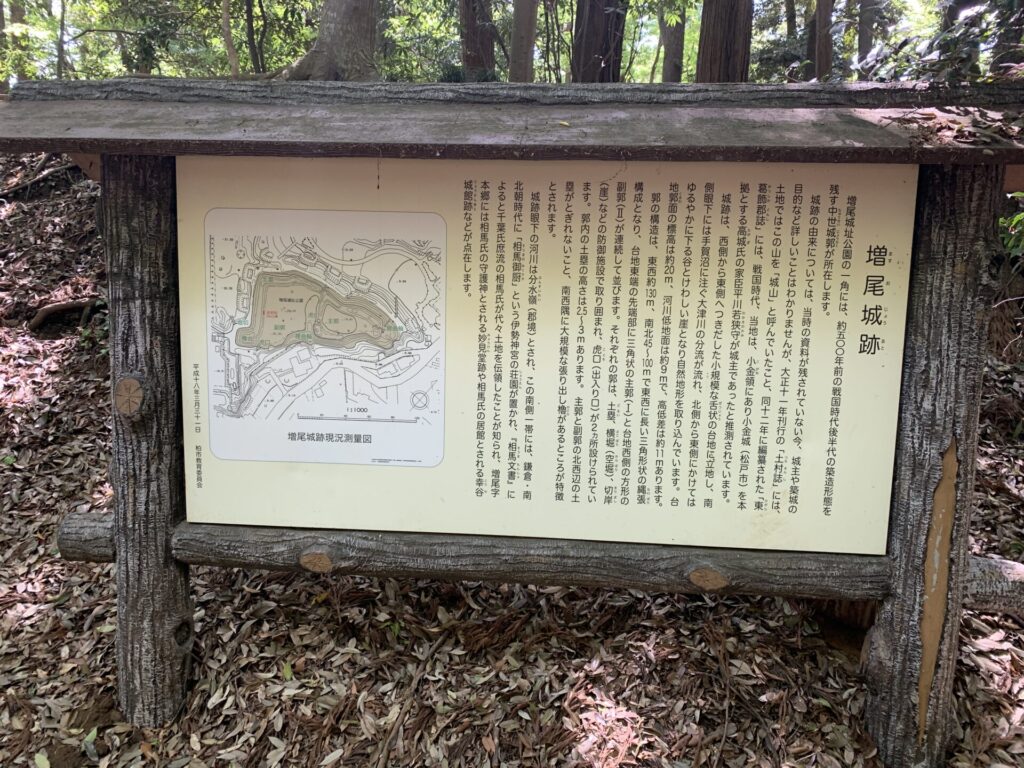
There was an informational sign like this.
It seems that during the Sengoku period, Masuo-jo was controlled by a retainer of the Takagi clan.
However, beyond that, details such as the original builder of the castle and other historical information remain unknown…
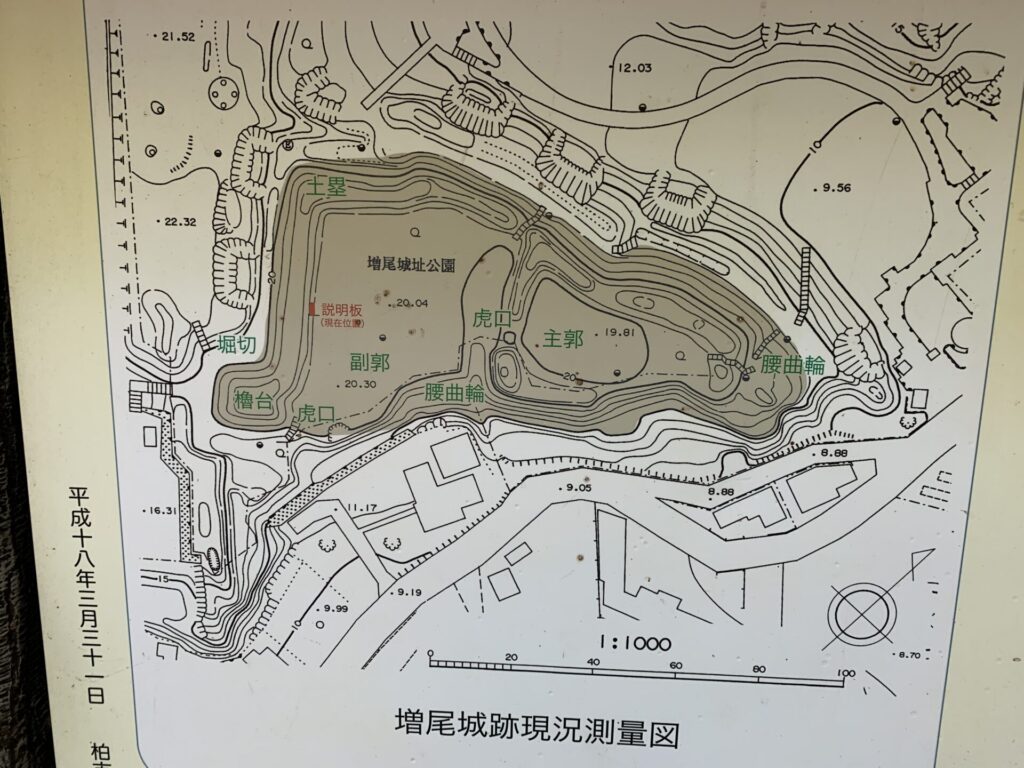
Looking at the layout of Masuo-jo,
it is clearly a renkaku-style hilltop castle (連郭式丘城), composed of a main enclosure (Shukaku:主郭) and a subsidiary enclosure (Fuku-guruwa:副郭) arranged in sequence.
Each enclosure has its own Koguchi (:虎口 fortified entrance), and notably, the Koguchi leading into the subsidiary enclosure includes a Yagura-dai (:櫓台 turret base).
Defenders likely positioned themselves there to fire down upon approaching enemy troops.
Furthermore, both the main and subsidiary enclosures are surrounded by Dorui (:土塁 earthen ramparts), with Koshi-guruwa (:腰曲輪 terraced enclosures) wrapping around their lower slopes.
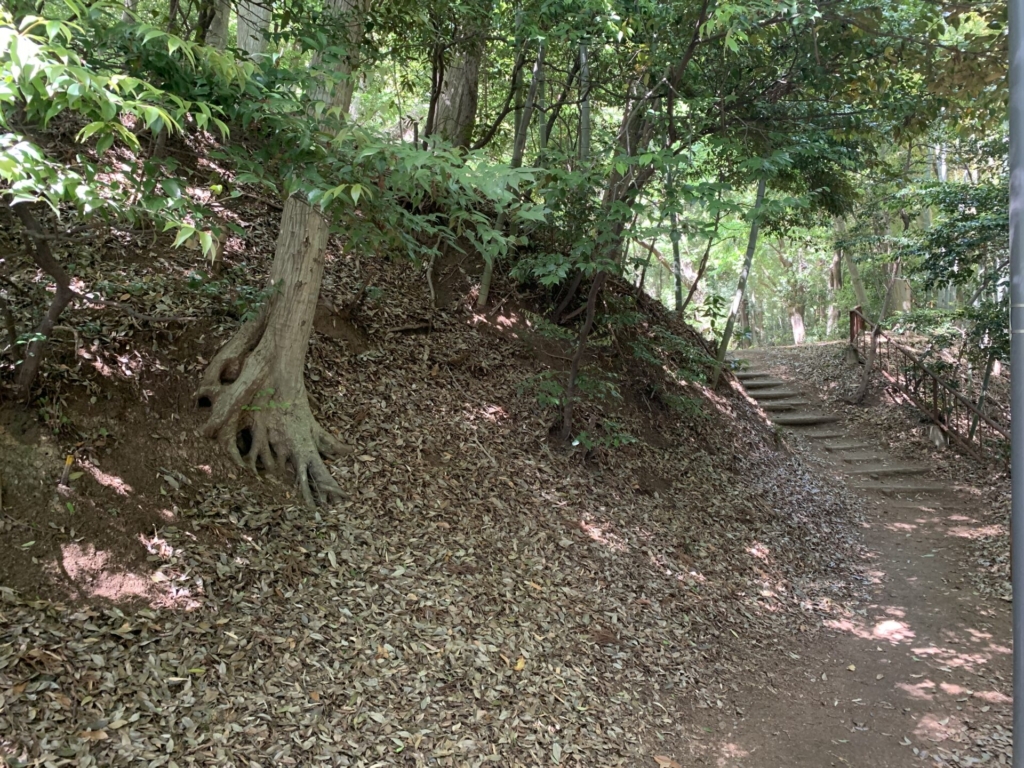
To take another look at the Koguchi, I returned to this point.
Climbing the staircase visible on the right leads up to the subsidiary enclosure (Fuku-guruwa:副郭).
Meanwhile, from the Yagura-dai (櫓台:turret base) that is believed to have stood on the left, defenders would have been able to fire upon advancing enemy troops.
I actually climbed up to the site where the Yagura-dai once stood and filmed the view from above.
What do you think?
If we imagine enemy soldiers advancing through the Koguchi—forced to turn sharply as they climb—this would have been the perfect moment for defenders to rain down fire from the Yagura-dai above.
Moreover, this Yagura-dai was constructed atop a Dorui (土塁:earthen rampart), and that rampart in turn encircled both the subsidiary enclosure and the main enclosure as part of the castle’s defensive system.
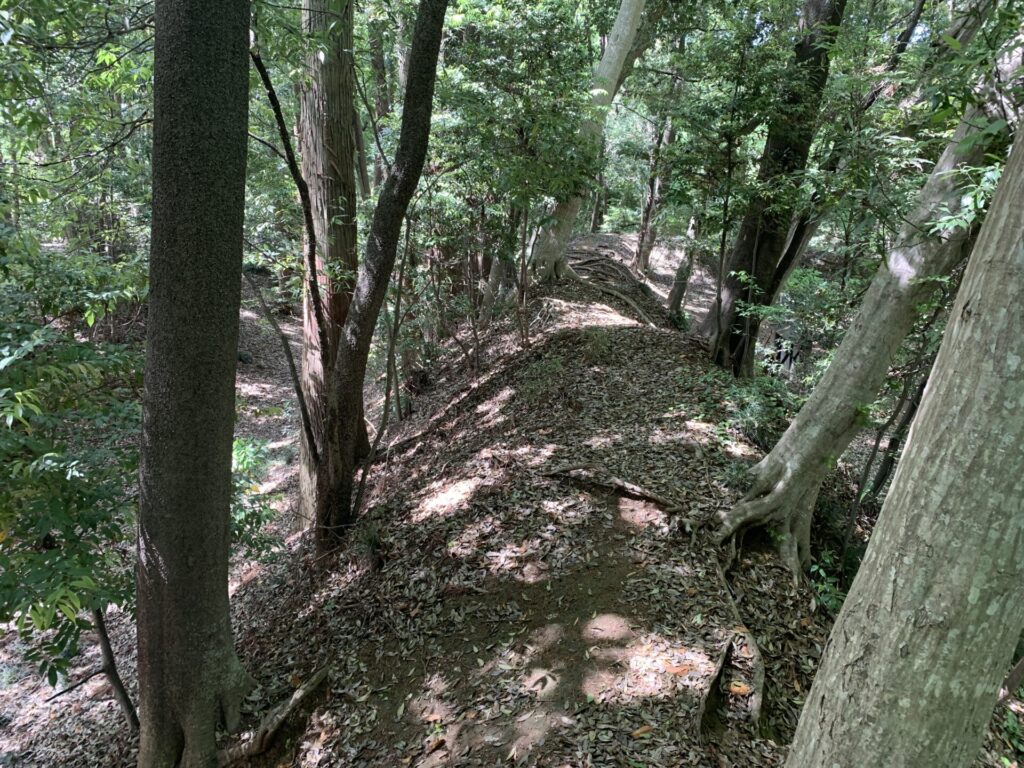
This is the Dorui as seen from the position where the Yagura-dai once stood.
With this rampart at the center, the subsidiary enclosure lies down to the right, and the Karabori (空堀:dry moat) is down to the left.
Even if enemy troops managed to climb out of the moat and attempt an assault uphill, defenders positioned atop the Dorui would have launched their attacks from above.
From the subsidiary enclosure—onward to the main enclosure!
After confirming the view from atop the Yagura-dai (櫓台:turret base),
I returned once more to the subsidiary enclosure, and this time proceeded from there into the main enclosure.
Please take a look in the following video.
As you can see, the subsidiary enclosure is surrounded by Dorui (土塁:earthen ramparts),
and after passing through the narrow Koguchi, the main enclosure is likewise enclosed by Dorui.
Strengthening the Castle’s Defense with Koshi-guruwa (Terraced Enclosures)
Now that I have reached the main enclosure,
let’s take a closer look at the Koshi-guruwa (腰曲輪:terraced enclosures) built to wrap around both the main and subsidiary enclosures.
So, what exactly is a Koshi-guruwa?
Please refer to the following diagram.
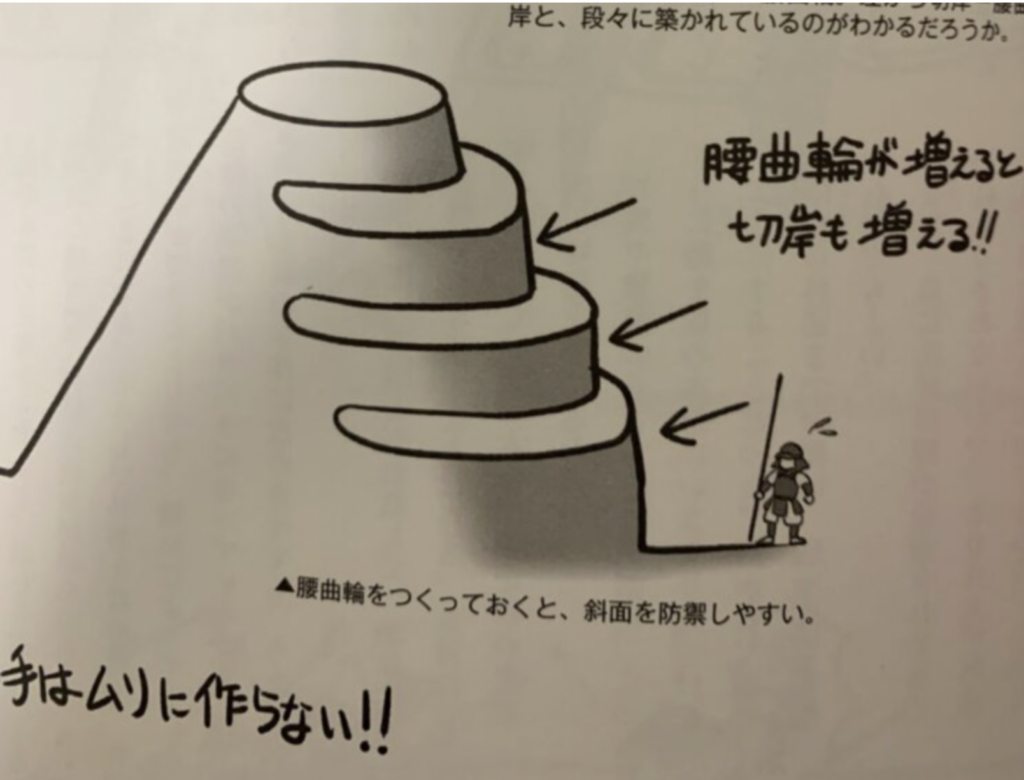
As shown in this diagram, the presence of a Koshi-guruwa (腰曲輪:terraced enclosure) makes it more difficult for enemy troops to climb upward.
At the same time, defenders positioned along the Koshi-guruwa could fire down upon attackers from above.
For reference, this diagram is adapted from a publication by Professor Nishimata, a researcher of Japanese castles and Sengoku history.
First, please take a look at the video filmed from atop the Dorui of the main enclosure, looking down.
Looking down from atop the Dorui,
you can see that there is a considerable height difference between the rampart and the Koshi-guruwa below.
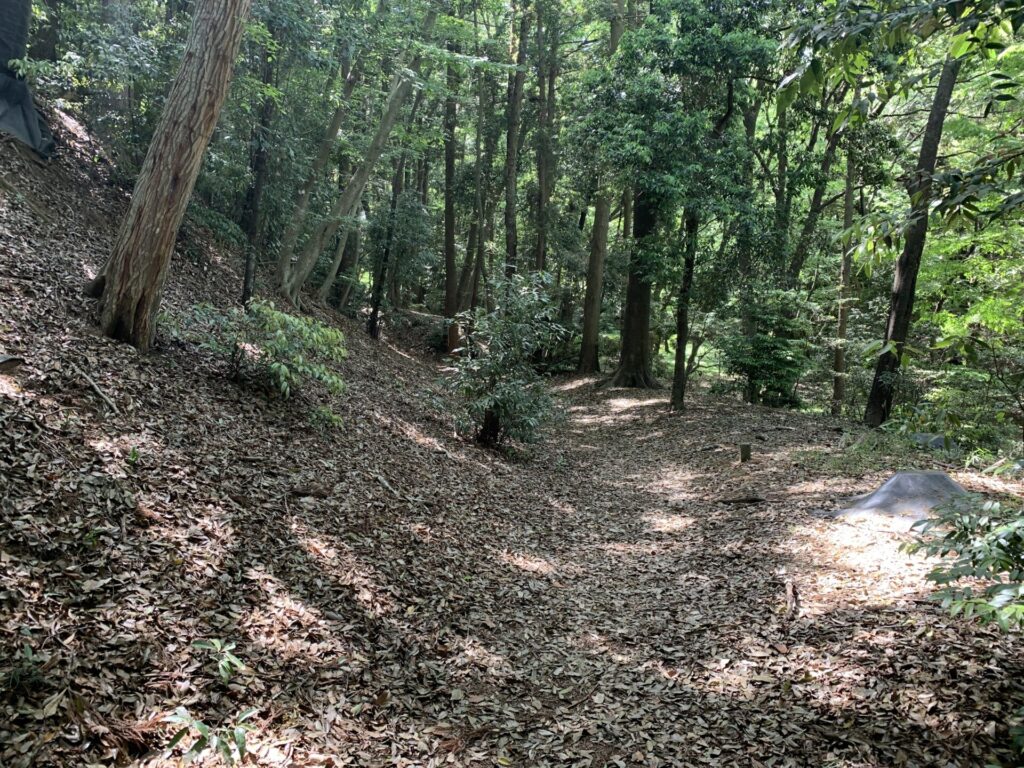
This is the Koshi-guruwa (腰曲輪:terraced enclosure).
Its width appears to be roughly four to five meters.
From here, defenders would have looked down upon enemy troops advancing from even lower ground.
Next, please take a look at the video filmed from the Koshi-guruwa, looking down below.
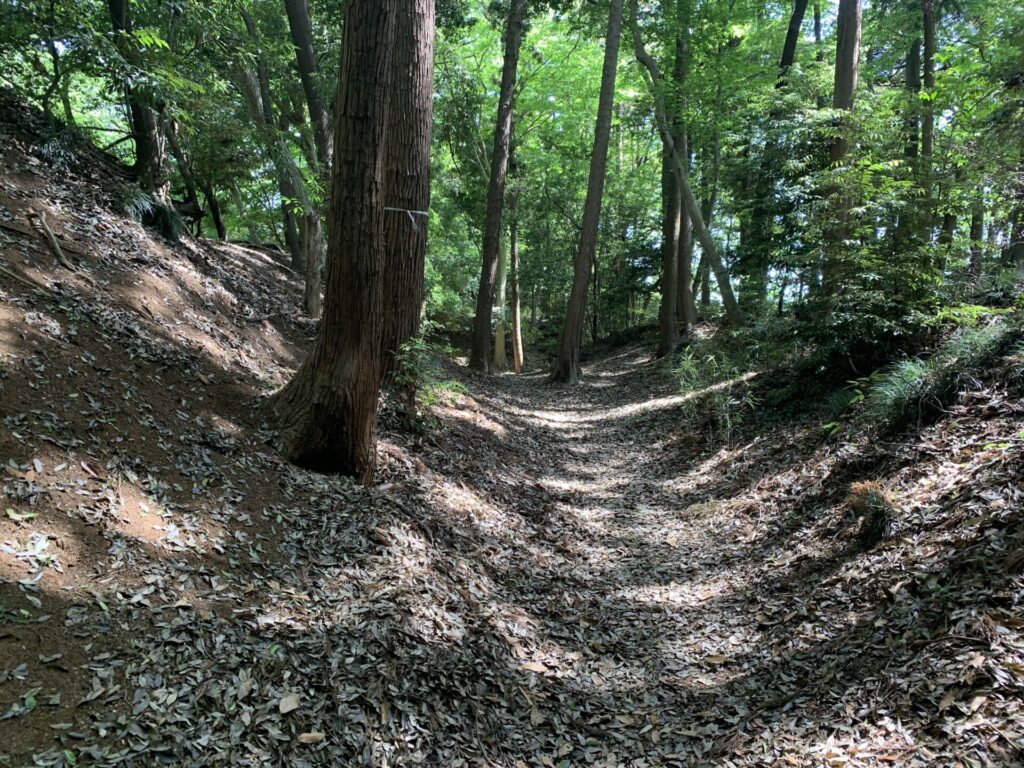
Next, I examined this Karabori (空堀:dry moat).
The Dorui surrounding the subsidiary enclosure can be seen on the left.
Perhaps due to the passage of time and gradual infill, the moat no longer appears to be particularly deep.
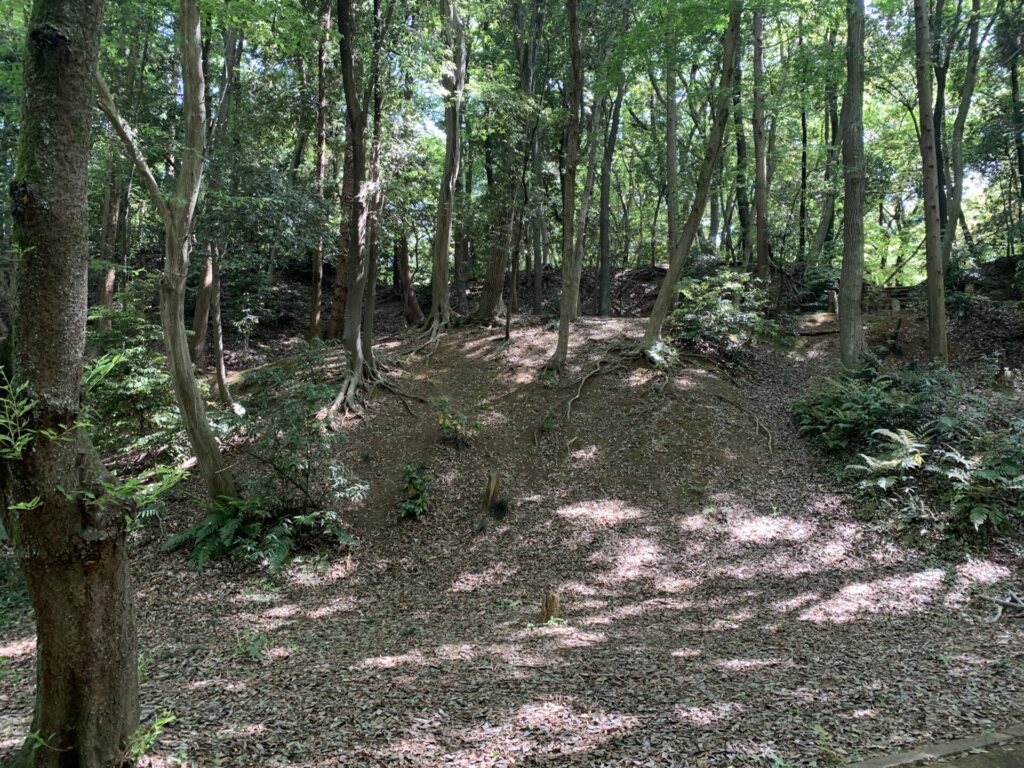
Finally, I made my way down to the lowest level.
Looking up from here, you can see the Koshi-guruwa (腰曲輪:terraced enclosure) partway up the slope,
and above that, the Dorui (土塁:earthen rampart) encircling the main enclosure.
In other words, for enemy troops to reach the main enclosure,
they would first have to overcome the Koshi-guruwa, and then climb past the Dorui.
By that point, they would likely have been overwhelmed by the defenders long before reaching the top.
That concludes this castle exploration.
I look forward to sharing the next visit with you in another article.
Until then. 🏯