
Hachigata-jo (Osato district, Saitama)|Hōjō’s Fierce Resistance to Hideyoshi’s Campaign
- 1. Discover the Charm of Hachigata-jo !!
- 2. First, I was amazed by the vastness of the outer enclosure!
- 3. Stunned by the height of the earthen ramparts… and then on to the site of the main enclosure.
- 4. I encountered the Hōjō clan’s trademark defensive feature, kaku-umadashi (square barbican)!
- 5. A rare type of earthen rampart known as a stone-faced rampart.
Discover the Charm of Hachigata-jo !!
Hello, this is Shin.
As always, I’m still passionate about castle exploration 🏯🔥
May 20, 2023 (Sat).
This time, I came to explore Hachigata-jo (Musashi), located in Saitama Prefecture, which was once one of the strongholds of the Hōjō clan 🏯✨

◉ Castle Type
Hilltop castle ( Hirayamajiro:平山城 )
◉ Cultural Heritage Highlights
◉ Defensive Features & Fortifications
◉ Exploration Difficulty
🟡 Moderate Castles
◉ Estimated Time to walk around
: about 2 hours
◉ Parking
A spacious parking area for about 50 cars at the Hachigata Castle Park parking lot (approx.)
About a 15-minute walk from Orihara Station on the Hachikō Line.🚃
There is a spacious parking area in front of the Hachigata Castle Historical Museum.
I got out of the car right away and began exploring the surrounding area!
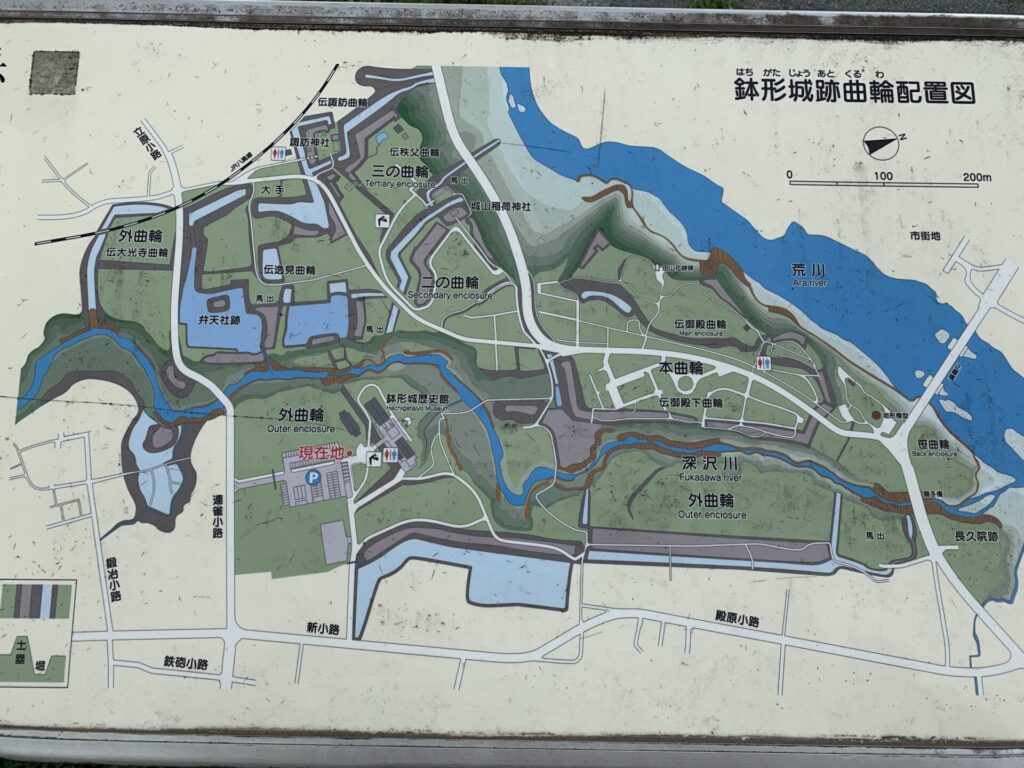
I found a layout map of Hachigata Castle right near the parking lot!
Even from this alone, you can see how many kuruwa (曲輪:enclosures) the castle has.
Then, as I actually walked around and visited the various defensive structures,
I was blown away by the sheer scale of this castle!
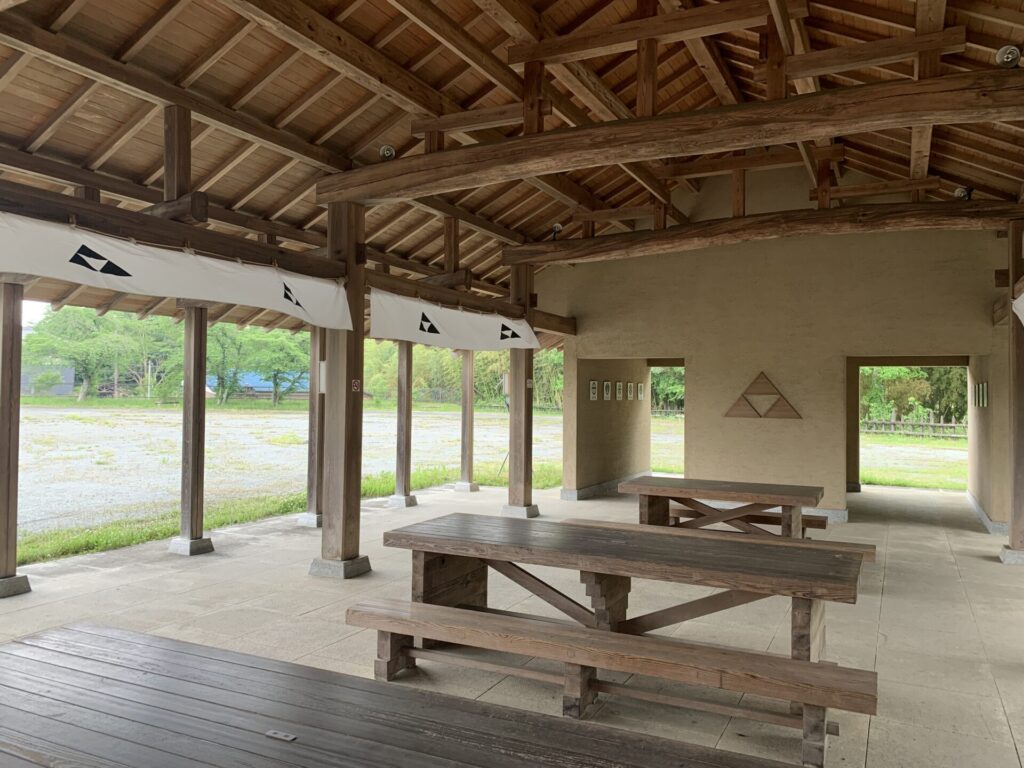
This is a rest area located right near the parking lot.
The Hōjō clan’s family crest looks really cool !!🔥😊
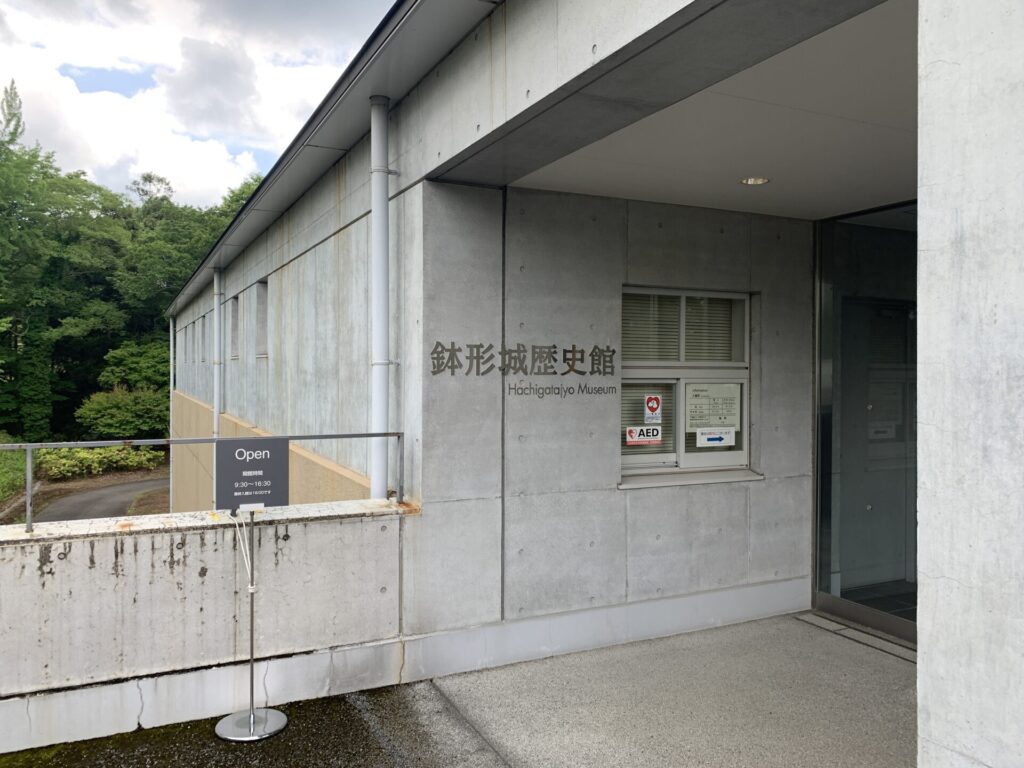
This is the Hachigata Castle Historical Museum, also located just a short walk from the parking lot.
First, I thought I should learn about the history of Hachigata-jo, so I decided to go inside.
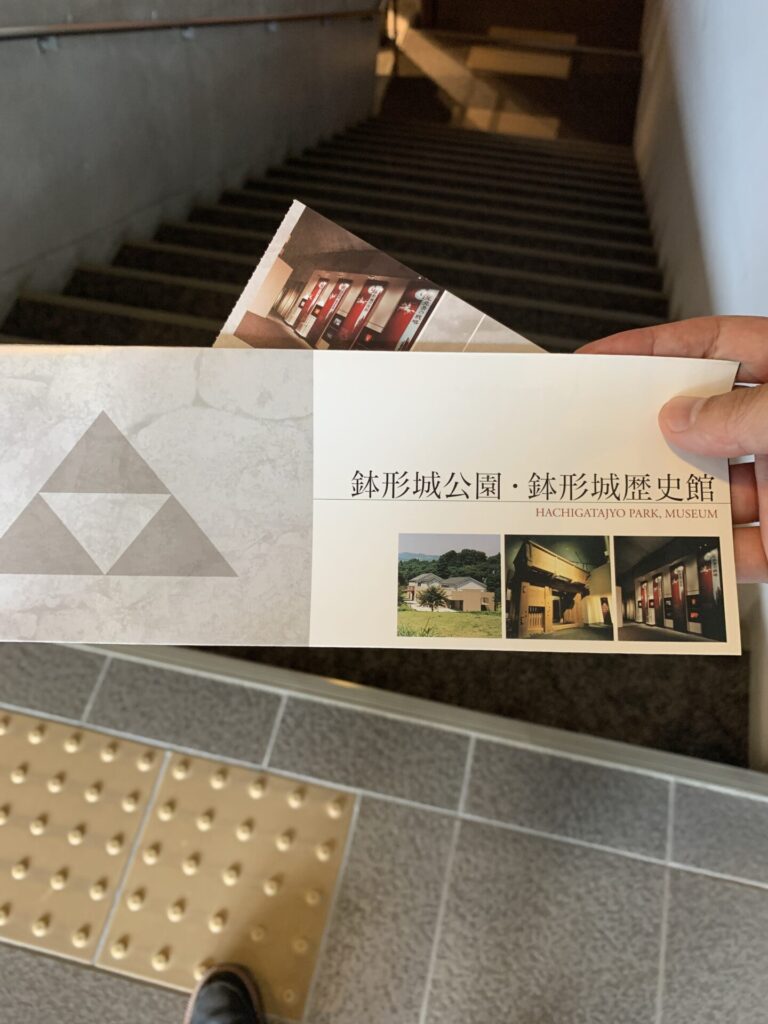
At the reception, I was handed a brochure.
The admission fee was 200 yen per adult.
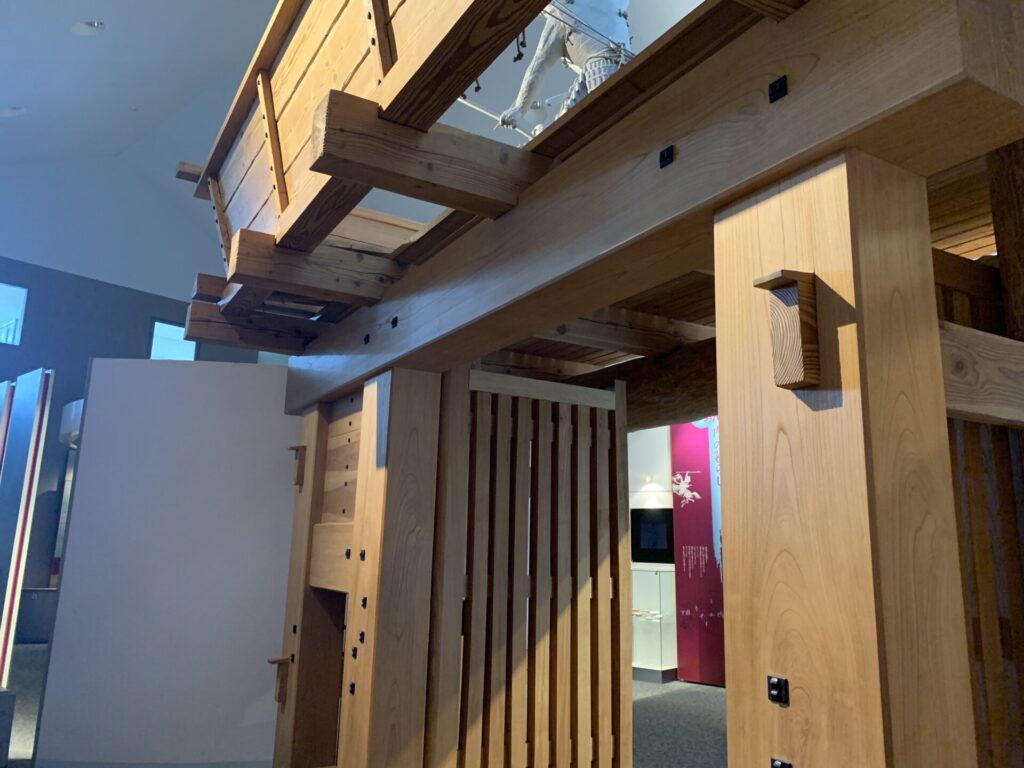
A turret gate welcomed me right at the entrance.
It’s nice to see this kind of creative touch even inside the museum.
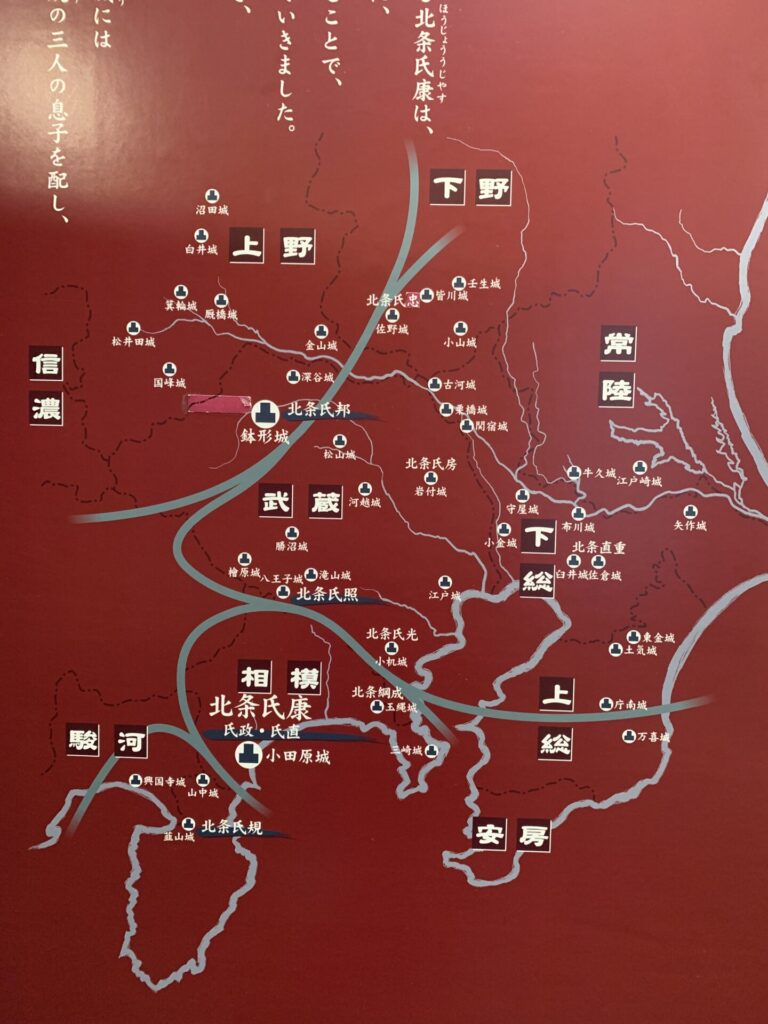
This is a map showing the Hōjō clan’s sphere of influence in the Kantō region during the Sengoku period.
Hachigata-jo was governed by Hōjō Ujikuni, the fourth son of the Hōjō clan leader Hōjō Ujiyasu.
It appears to have been an important defensive stronghold in northern Kantō.
Very educational.
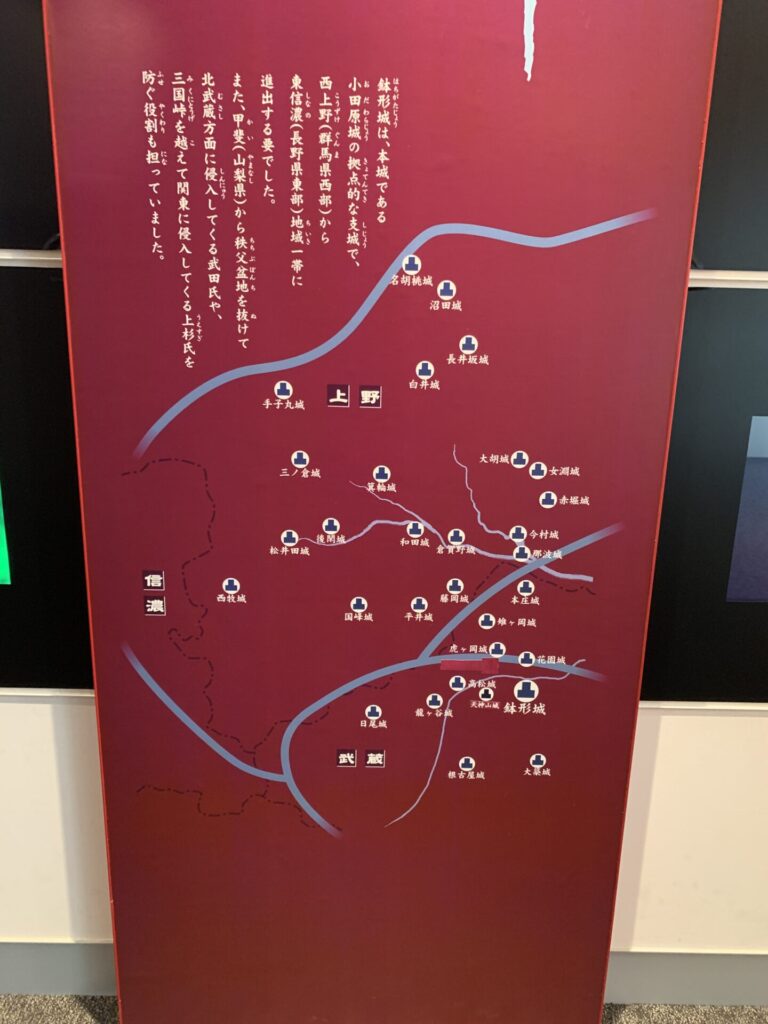
Even before Toyotomi Hideyoshi’s campaign against the Hōjō at Odawara,
the castle had already fought battles against neighboring powers such as the Takeda and Uesugi clans.
It truly was an important defensive stronghold.
During Hideyoshi’s campaign against the Hōjō, the castle was attacked by a force of about 50,000 troops, led by Uesugi Kagekatsu, Maeda Toshiie, and Sanada Masayuki.
Despite this, the defenders reportedly held out in a siege for about one month.
Later, I would come to truly appreciate how formidable this castle was.
Now, let’s actually walk around and take a look at the castle’s defensive structures!!
First, I was amazed by the vastness of the outer enclosure!
After leaving the historical museum,
I began my inspection with the “Sotokuruwa" (外曲輪:outer enclosure).
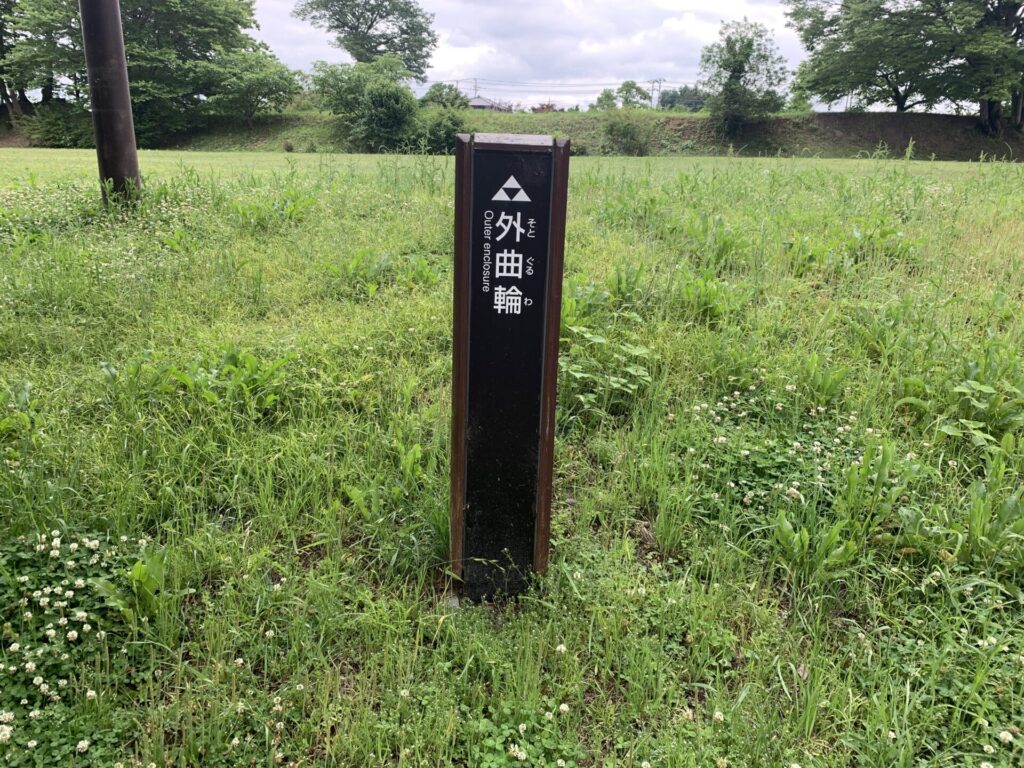
To give you a sense of the size of this outer enclosure and its surroundings, I recorded a video.
Please take a look.
At the beginning, the parking lot in front of the historical museum could be seen on the right.
From this outer enclosure, I will gradually make my way around the castle grounds.
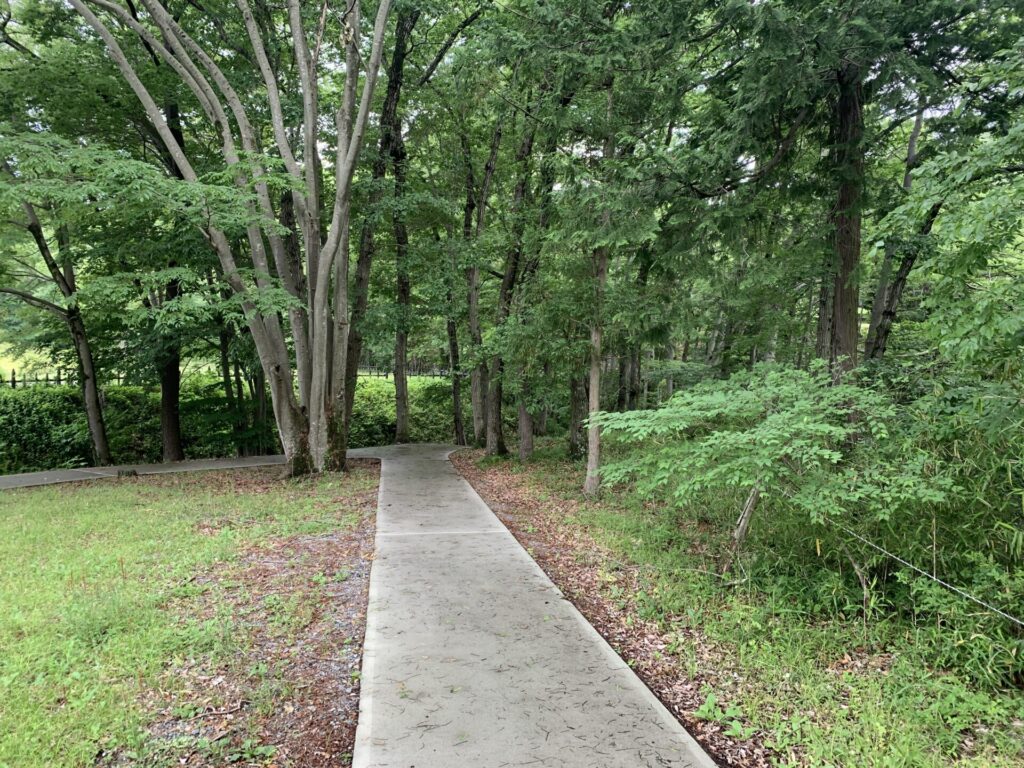
From this path, I will walk around the various enclosures.
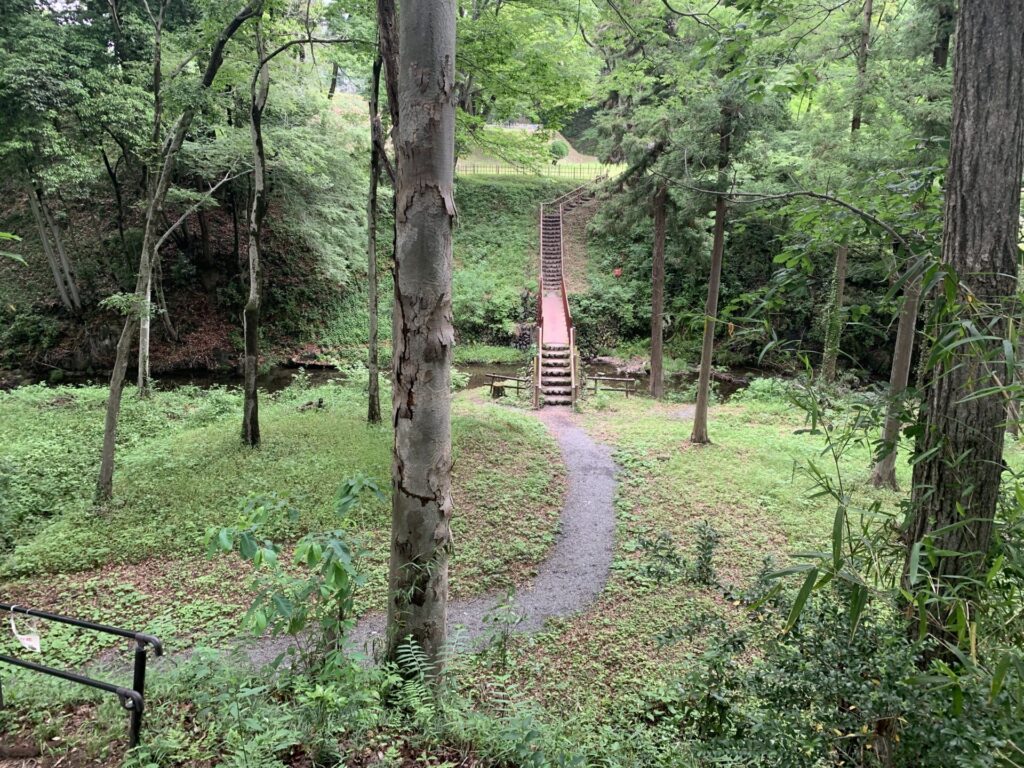
A bridge came into view ahead.
Even this area alone is quite spacious.
Let’s take a look at this area in the video as well.
Now, let’s keep moving deeper into the castle grounds.
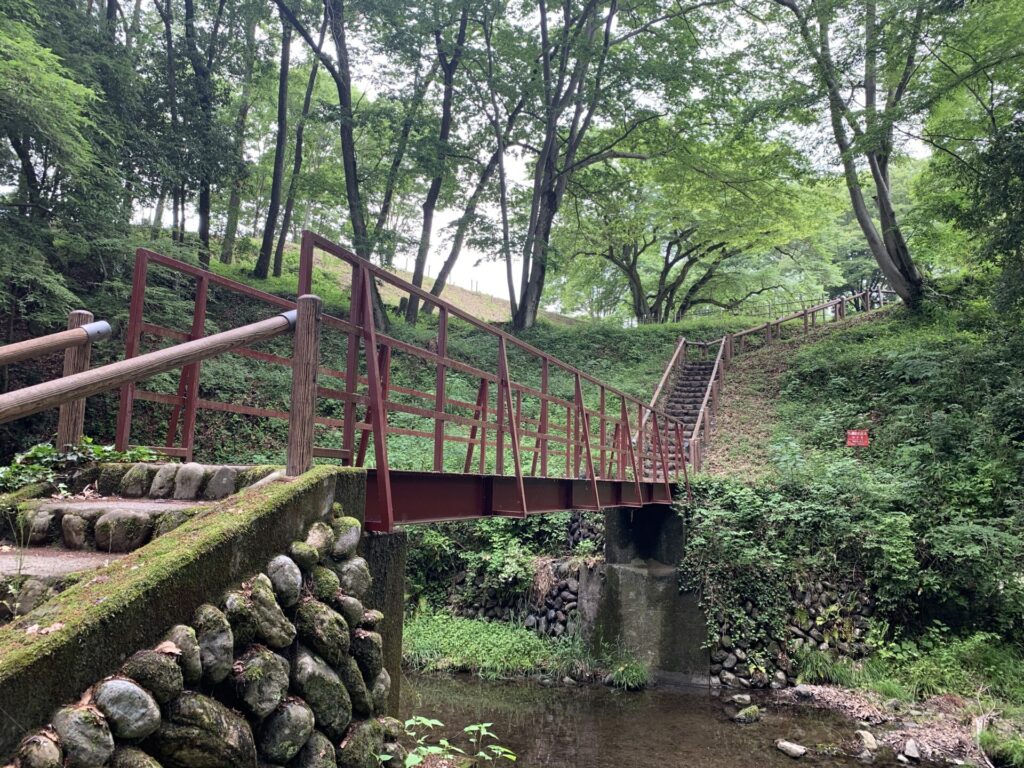
Crossing the bridge, I headed further and further into the castle grounds.
The old stonework in the foreground has a powerful, historic feel.
Stunned by the height of the earthen ramparts… and then on to the site of the main enclosure.
As I continued exploring the various enclosures,
I was also struck by the height of the earthen ramparts (and the depth of the moats) throughout the site.
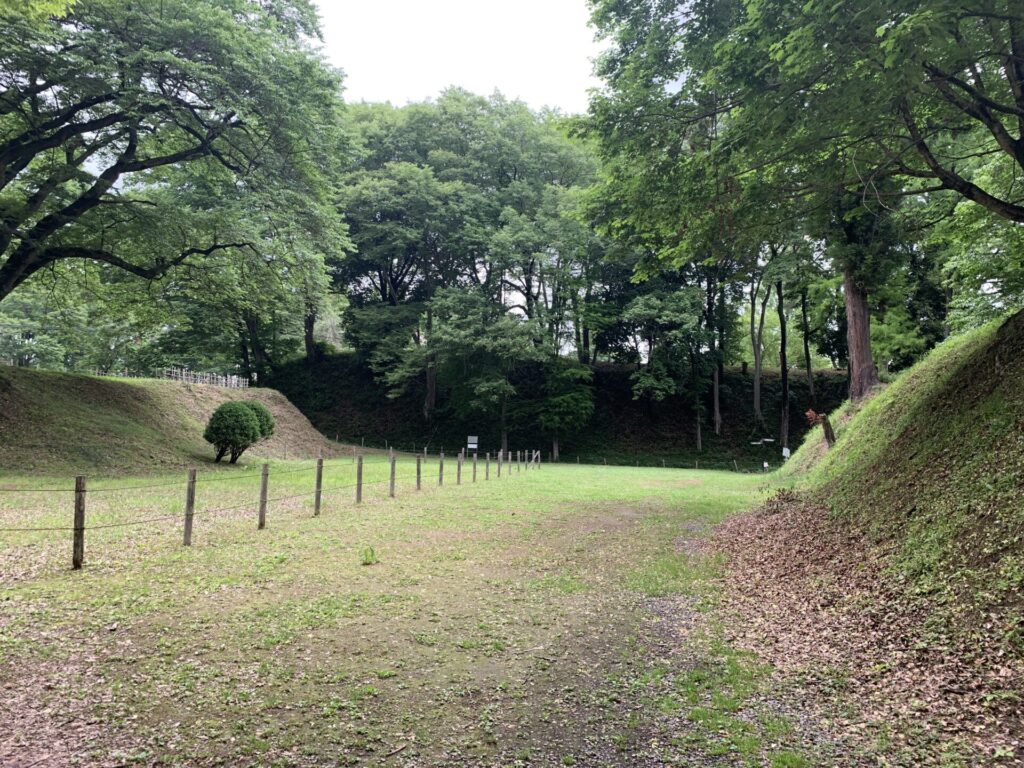
This spot is just after crossing the bridge earlier,
and you can already see notable Dorui (土塁:earthen ramparts) in various places.
However, this is only the beginning.
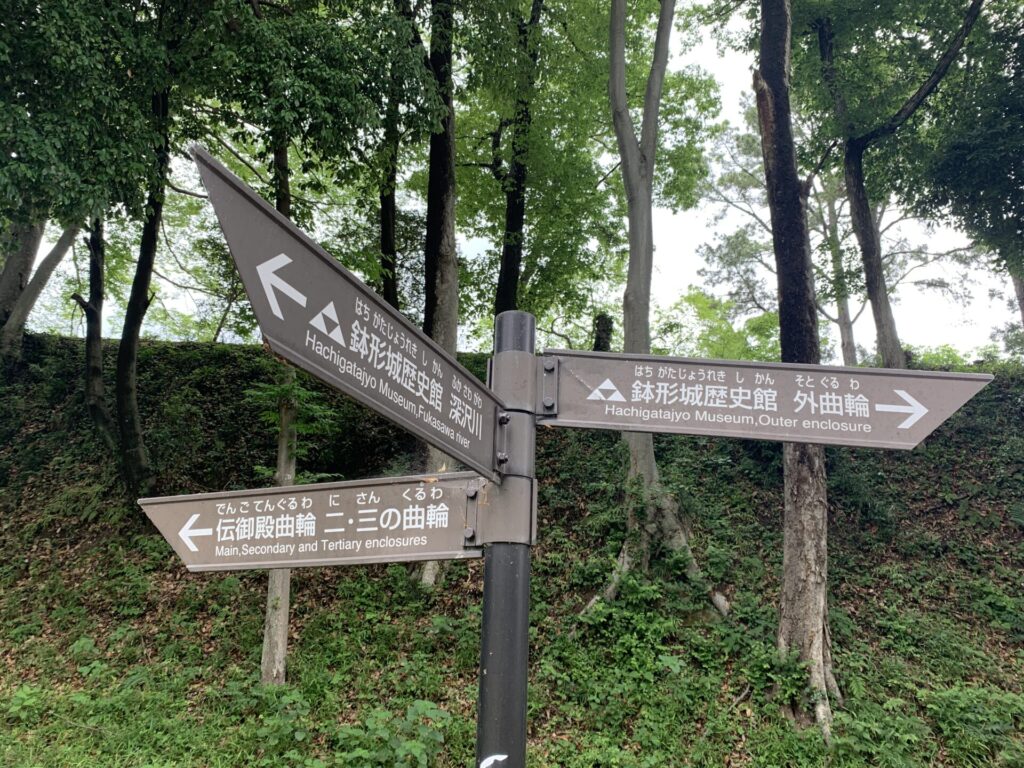
From the outer enclosure,
I next proceeded to the Den-Goten Kuruwa (伝御殿曲輪:main enclosure ) on the left.
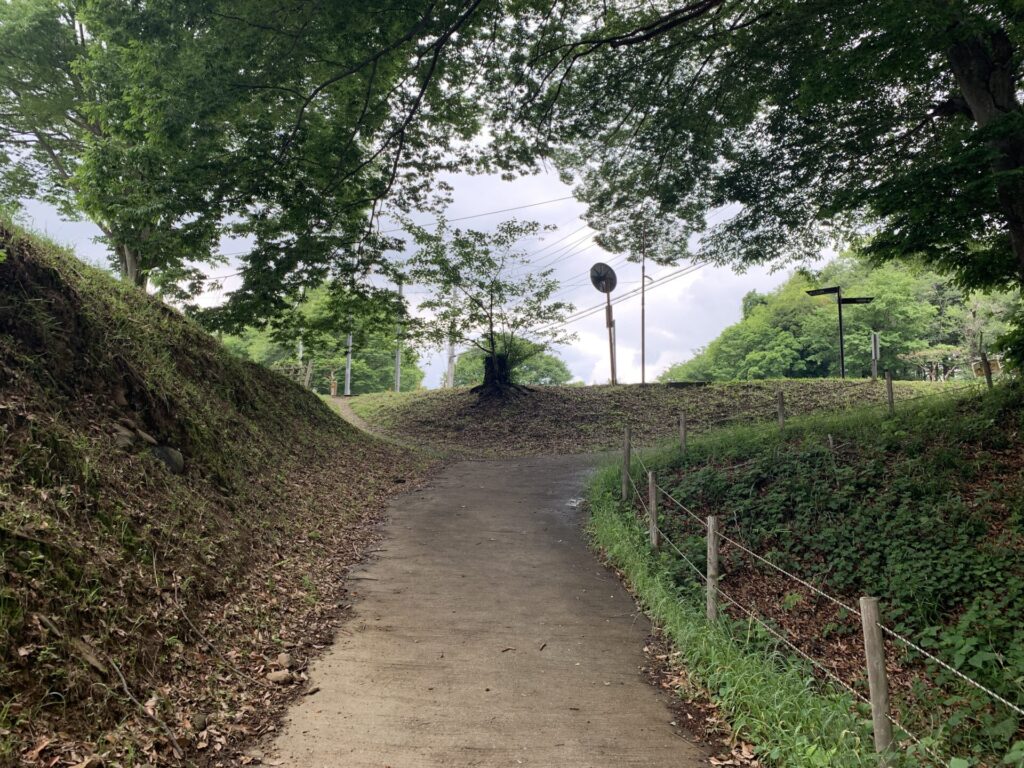
After climbing this slope, you reach a road where cars pass.
Beyond that appears to be the Den-Goten Kuruwa (伝御殿曲輪:main enclosure ) .
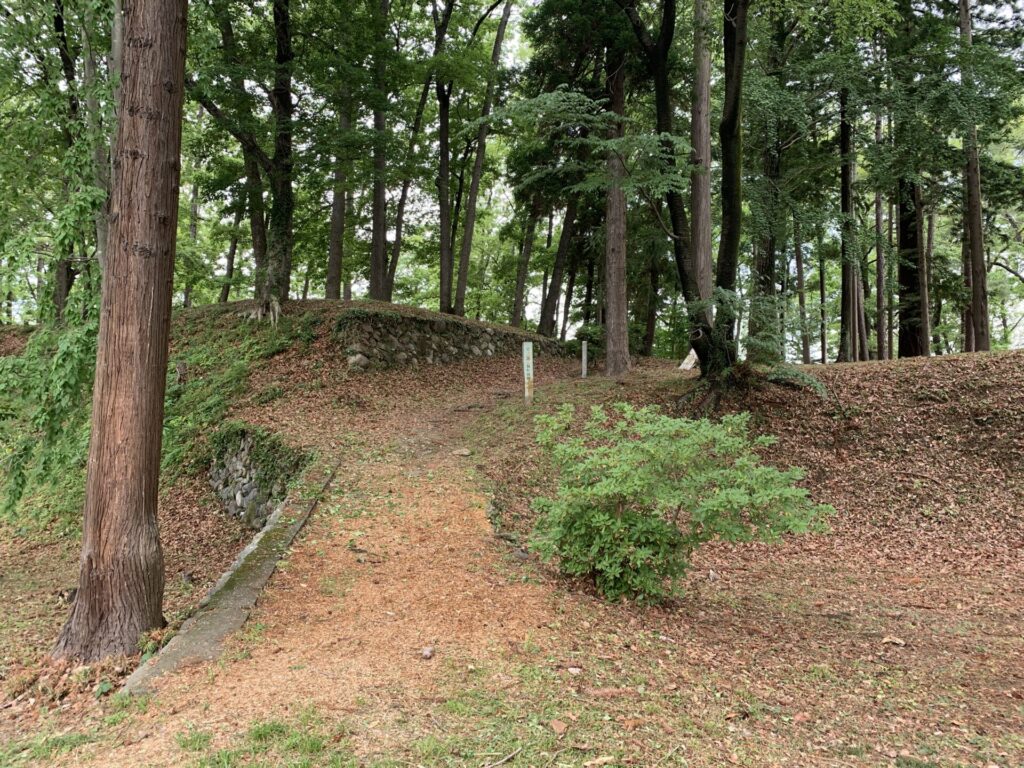
Alright, I crossed the road and came over here.
It’s just ahead from this point.
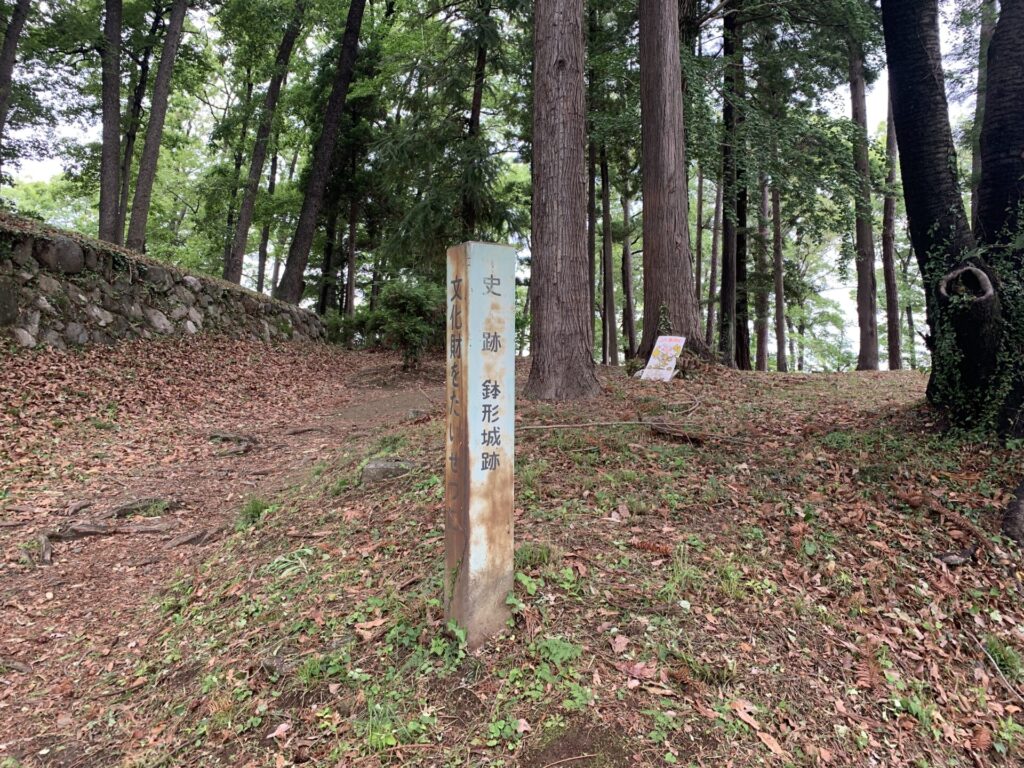
It says “Historic Site: Hachigata Castle Ruins.”
Beyond this point lies the Den-Goten Kuruwa (伝御殿曲輪) ,
which appears to be the location where the main enclosure once stood.
Now, please take a look at the video to see the layout and position of this enclosure.
You can see that the Den-Goten Kuruwa faces the road,
and you can also get a sense of the height of the earthen ramparts.
The inside of the enclosure is quite spacious as well.
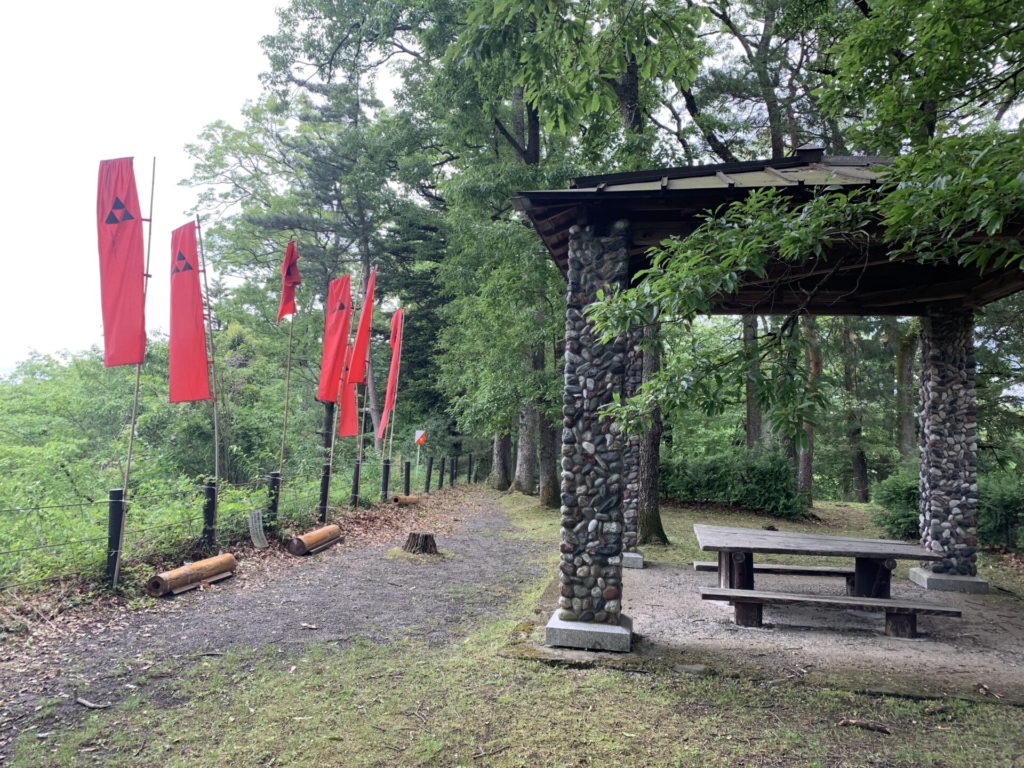
Proceeding to the back right after entering the Den-Goten Kuruwa, you arrive at this spot.
It appears to have been the site of the Honmaru (本丸:main enclosure ).
The Hōjō flags are fluttering in the wind.
I encountered the Hōjō clan’s trademark defensive feature, kaku-umadashi (square barbican)!
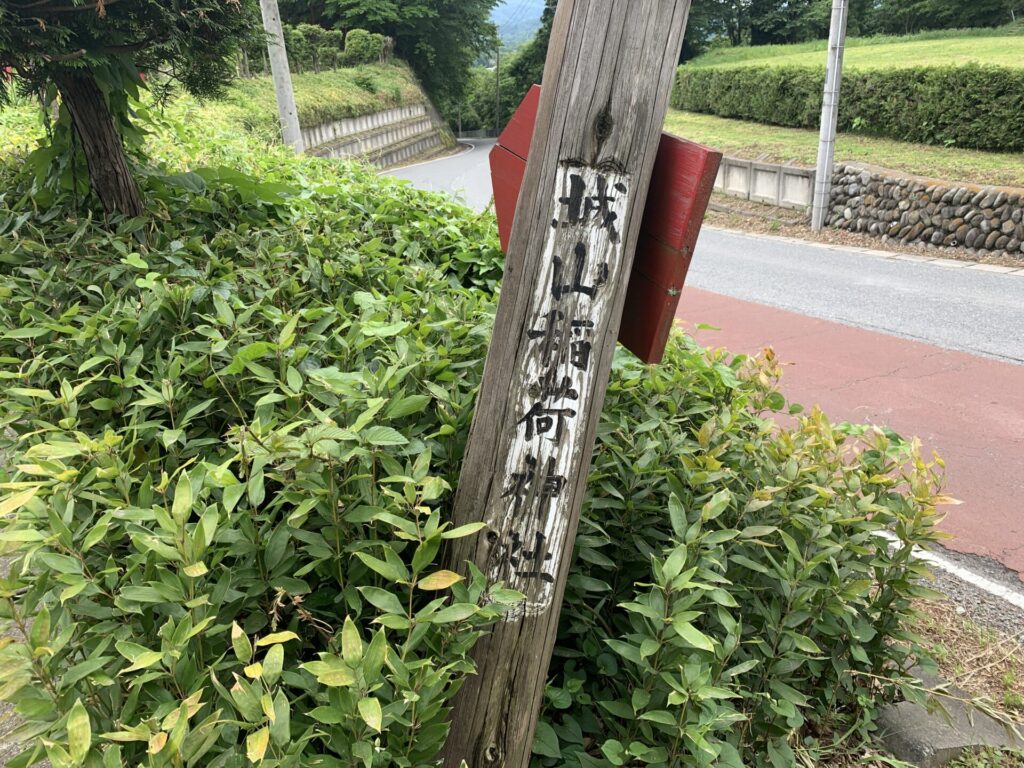
After leaving the Den-Goten Kuruwa,
I crossed the road once again and headed toward Inari Shrine.
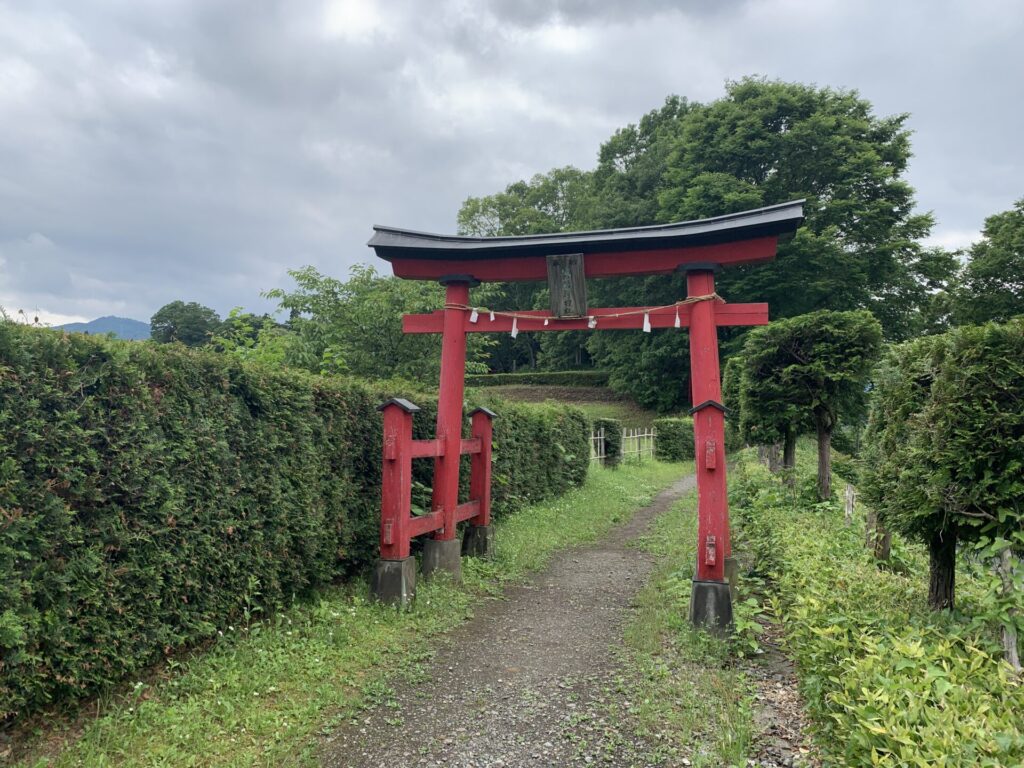
There is a shrine inside here, as well as the Ni-no-Kuruwa (二の曲輪:Second Enclosure).
Here is a video of the Ni-no-Kuruwa.
As you can see from this video,
Ni-no-Kuruwa (二の曲輪:Second Enclosure) is quite spacious as well.
From here, I head toward the shrine.
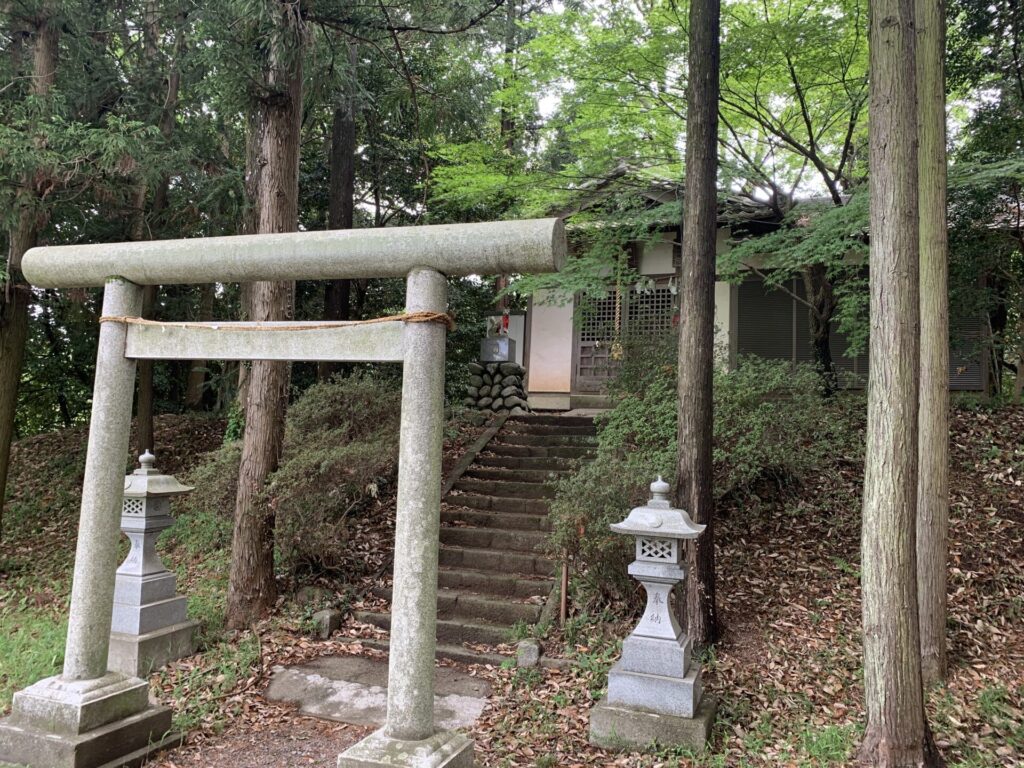
This is Shiroyama Inari Shrine(城山稲荷神社).
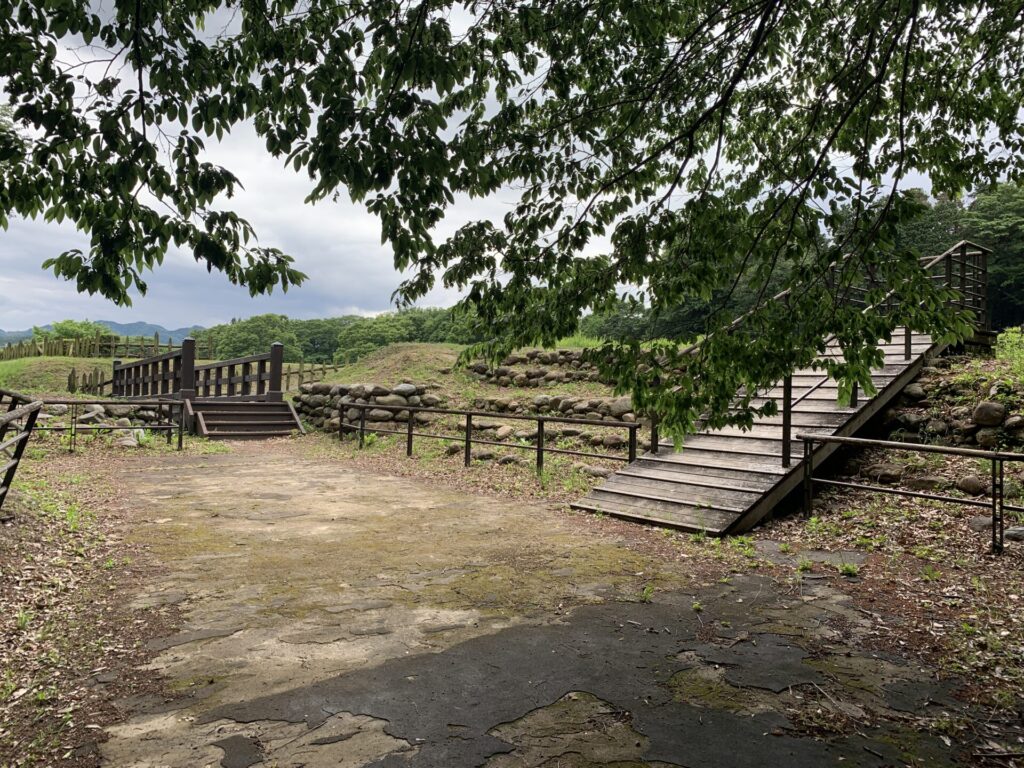
And when I followed the small path behind the shrine…
What is this!?
I realized later that this is the Hōjō clan’s signature defensive structure, the kaku-umadashi (角馬出し:square barbican).
(I will explain the kaku-umadashi later.)
Please take a look at this area in the video as well.
Beneath this bridge runs a deep moat,
and inside it you can also see something like a shōji-bori (障子堀:a type of moat where ridges of earth are intentionally left inside to hinder enemy movement).
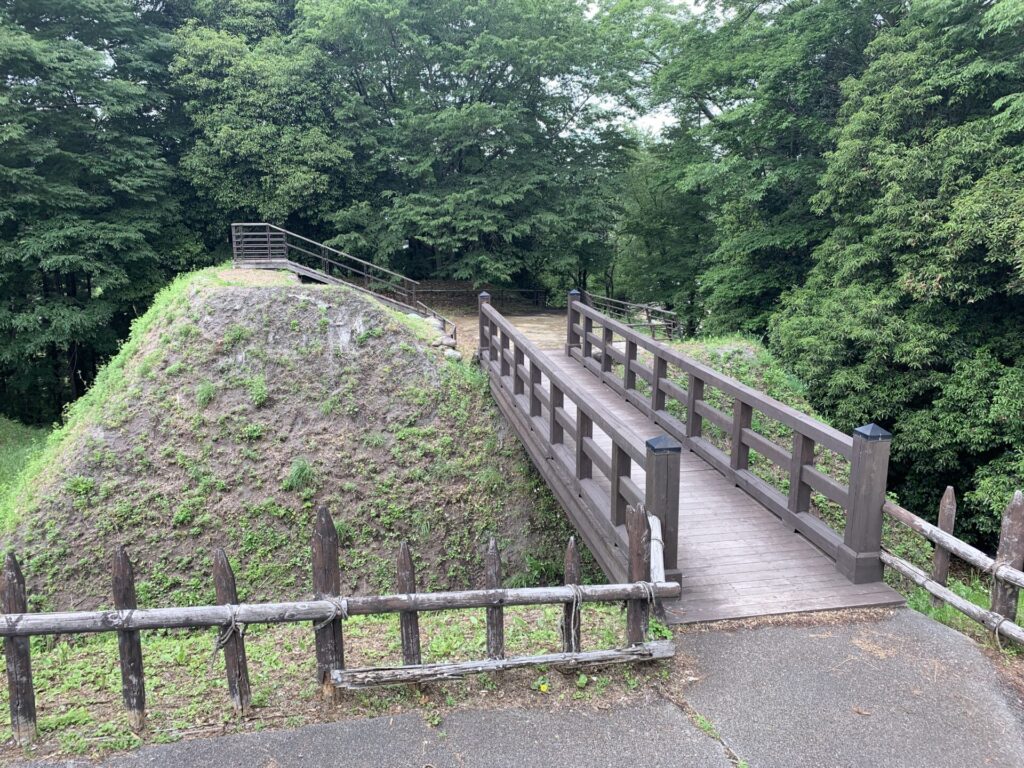
Here is the kaku-umadashi (角馬出し:square barbican) from a different angle.
You can see it just beyond the bridge.
Can you tell that it has a somewhat square shape?
The castle soldiers would wait within this square space, blocking the movement of enemy troops while also concealing the interior of the castle.
This defensive structure was strategically constructed for that purpose.
A rare type of earthen rampart known as a stone-faced rampart.
Now, please take a look at one of the distinctive features of Hachigata-jo—the stone-faced earthen ramparts—in the video.
Relatively small stones are neatly stacked on top of the earthen rampart.
This kind of rampart is quite rare.
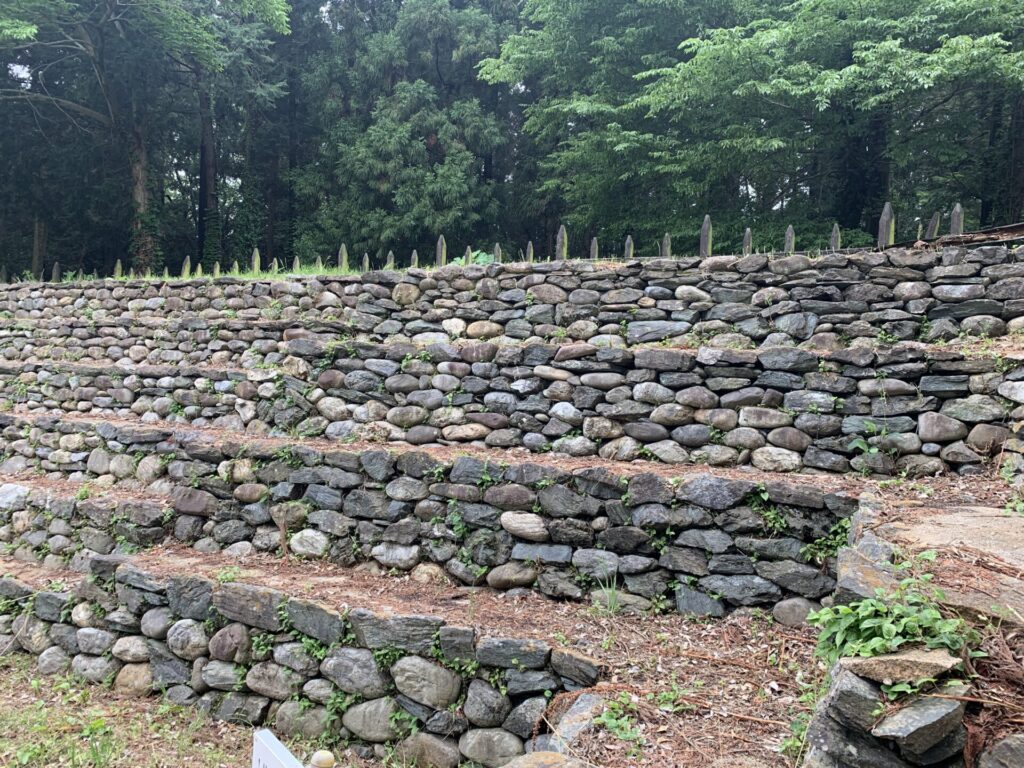
Four neat tiers of stone-faced ramparts can be seen.
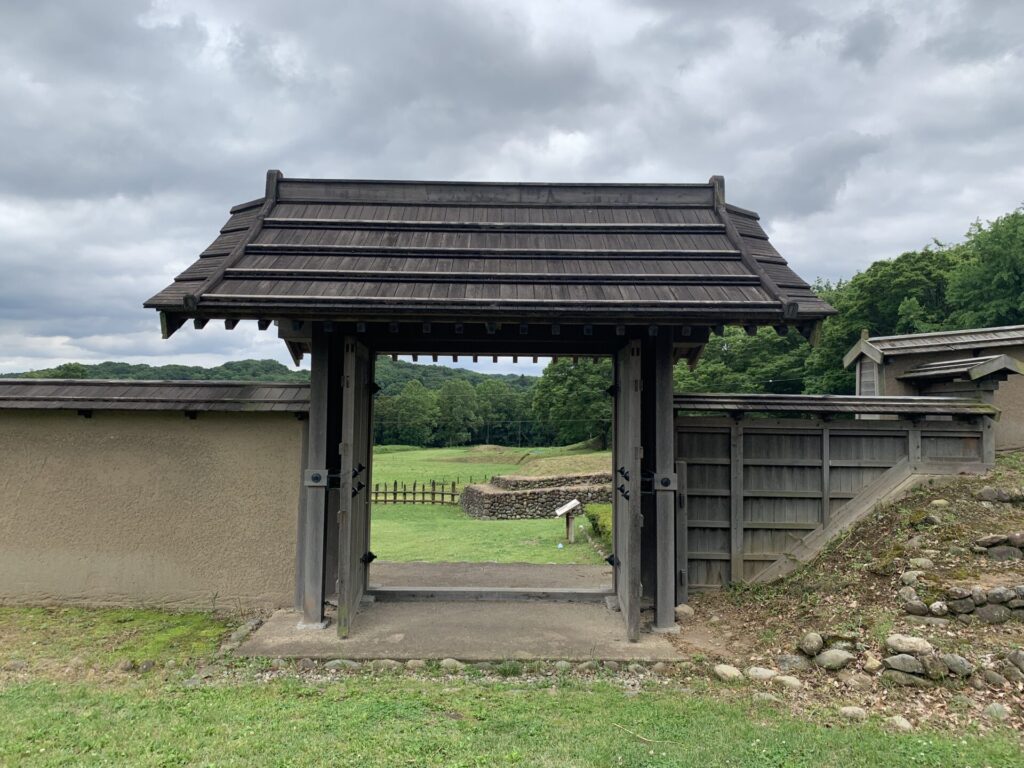
Passing through this gate,
I proceed further to the structures deeper inside.
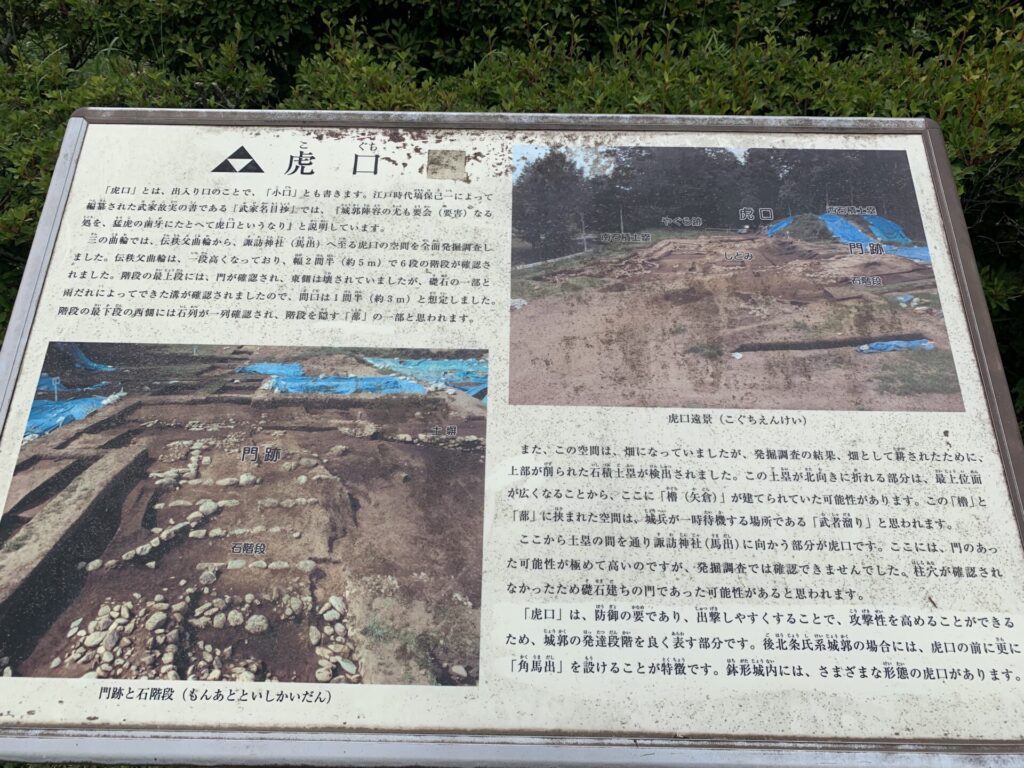
After passing through the gate, there was an information board explaining the koguchi (虎口:defensive entrance).
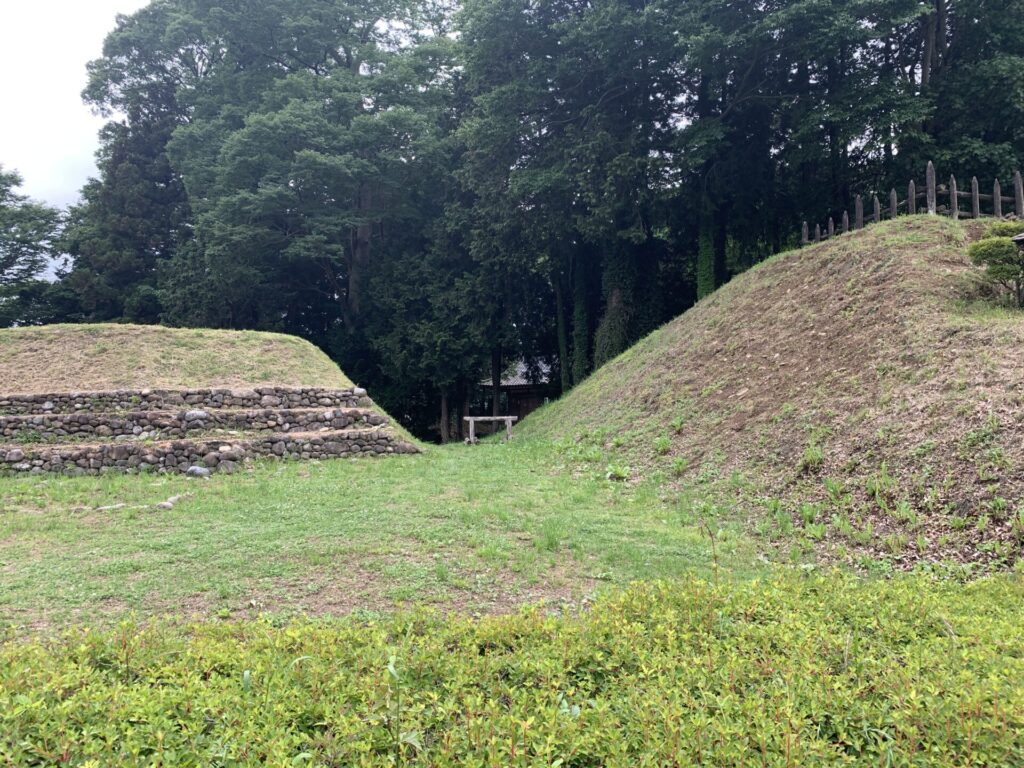
The space in the middle here is the koguchi (虎口:defensive entrance).
It served both to stop the advance of enemy troops and as an entrance and exit for the castle soldiers.
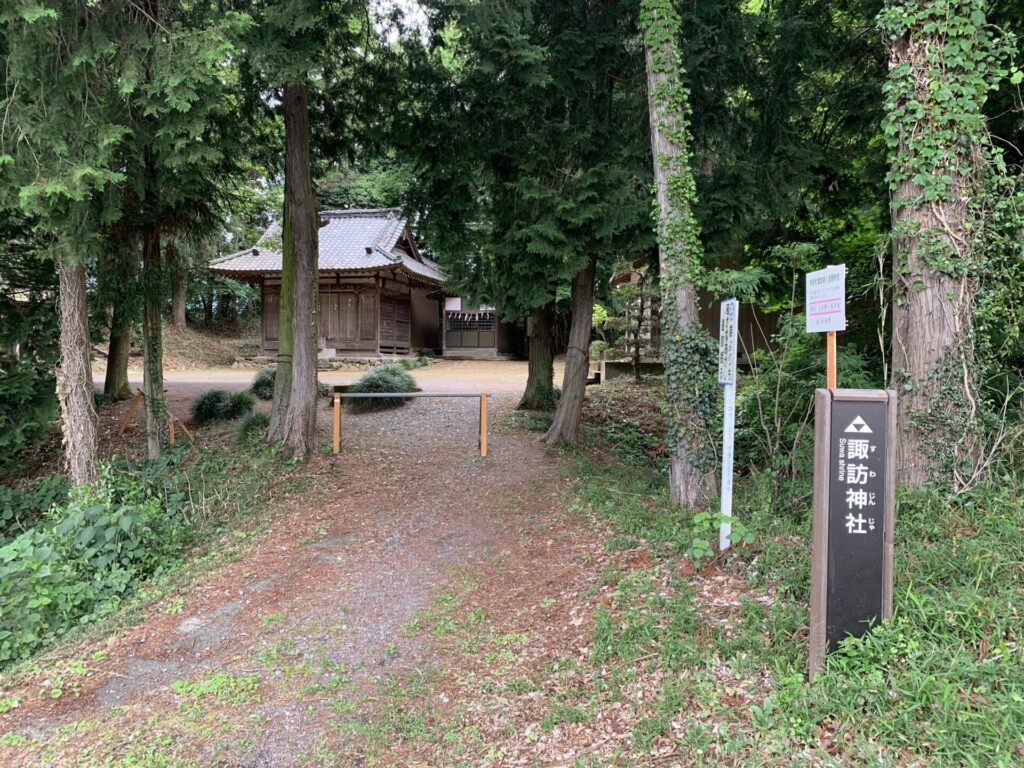
Continuing past the koguchi, there was also Suwa Shrine(諏訪神社)on the right.
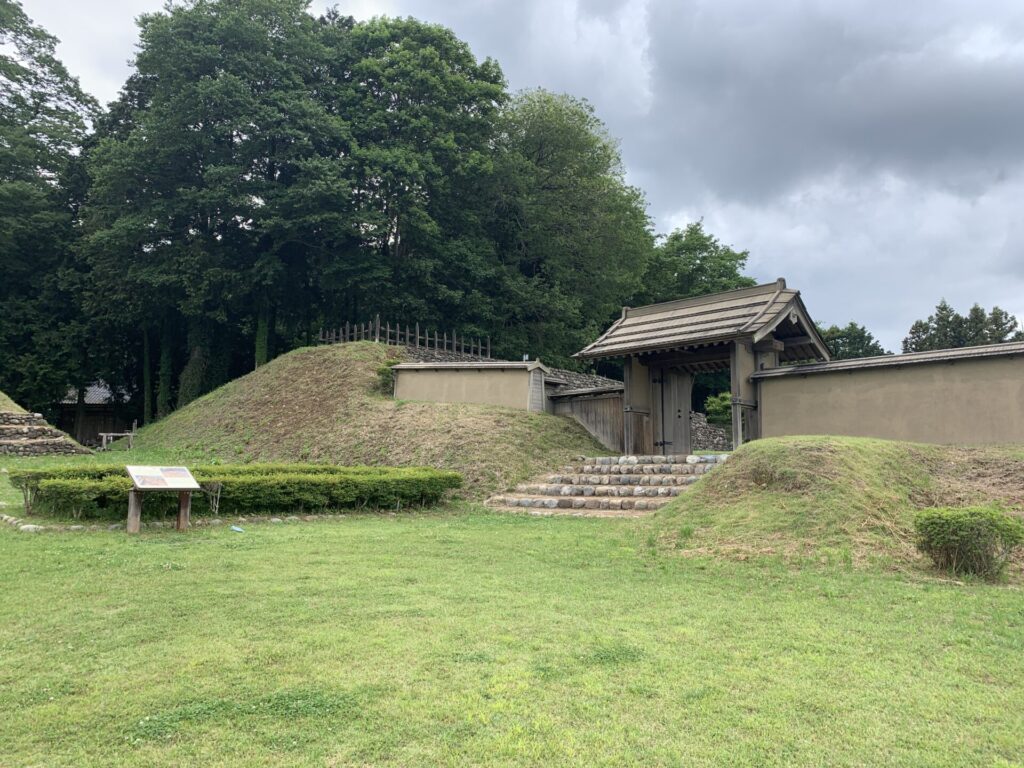
I returned here once again.
The gate structure and earthen ramparts are nicely reconstructed.
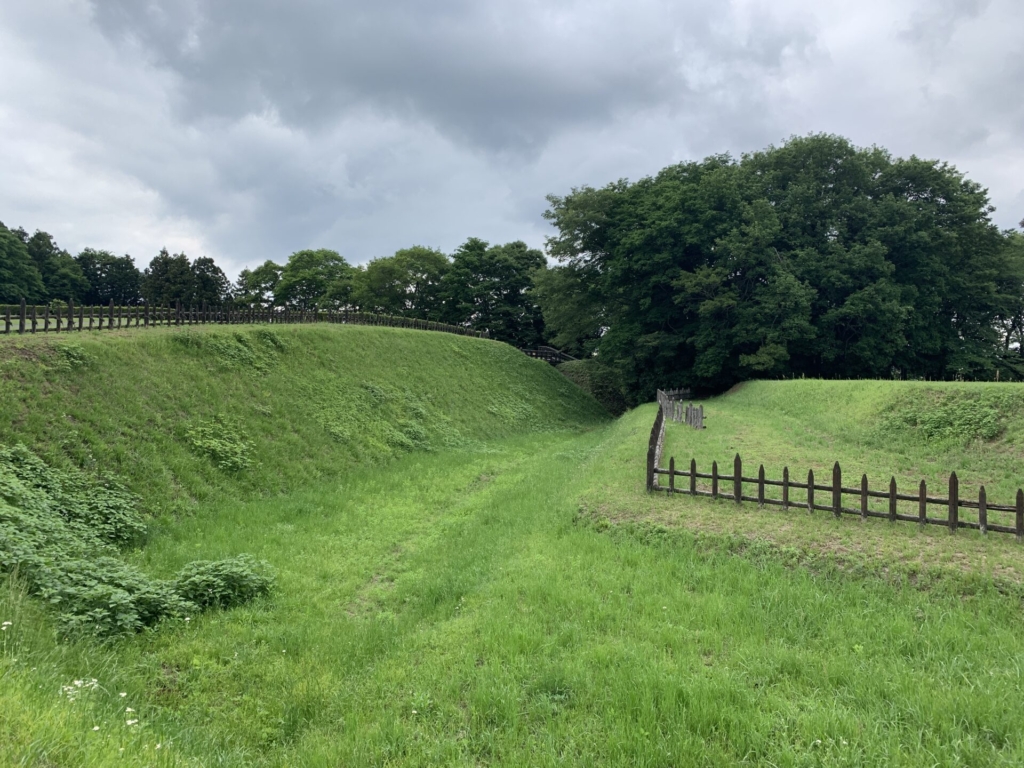
The moats are deep, the earthen ramparts are high,
and above all, it is a castle with a vast site.
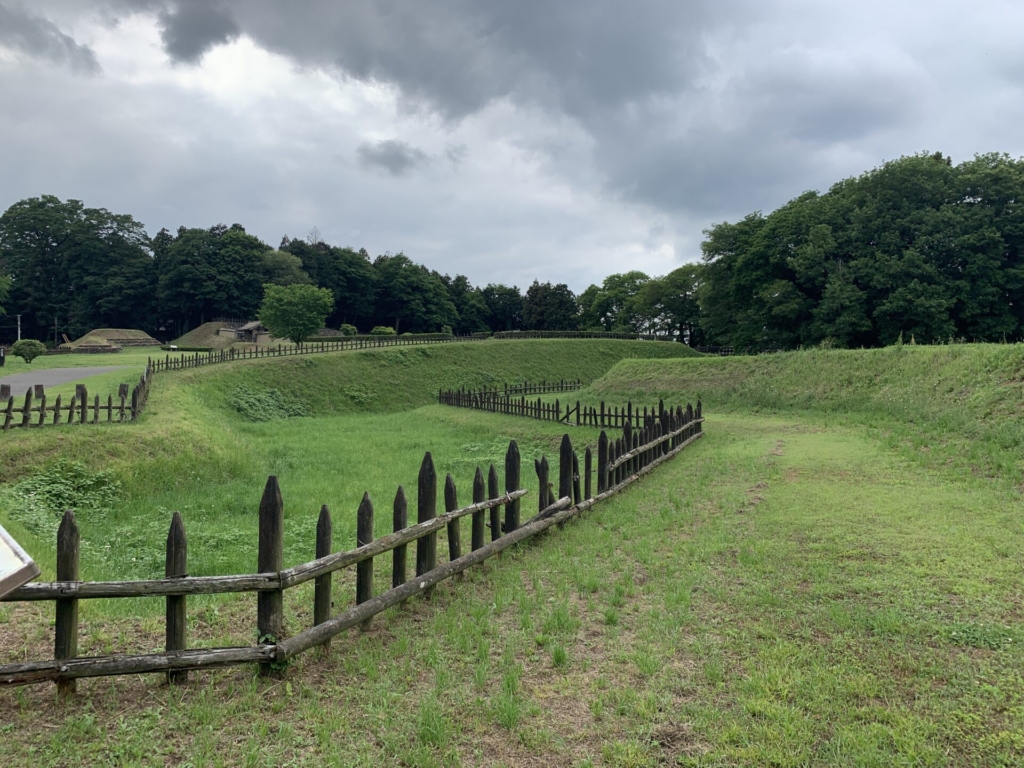
This will be the last photo.
Well, the stone-faced ramparts and the kaku-umadashi were impressive, but above all,
it’s really vast!!
Combined with the depth of the moats and the height of the earthen ramparts,
I can understand how the castle managed to hold off the large Toyotomi forces for a while.
I highly recommend visiting Hachigata-jo at least once in person.
See you again!!🏯