
Inetsuke-jo (Kita ward, Tokyo)|Built by Ōta Dōkan, a Master of Military Strategy
Built by Ōta Dōkan, Who Was Well-Versed in Military Strategy
Hello, this is Shin.
Sunday, June 11, 2023.
This time, I visited Inetsuke-jo in Akabane, Kita Ward, Tokyo. 🚙
◉ Castle Type
Hilltop Castle ( Hirayamajiro:平山城 )
◉ Cultural Heritage Highlights
◉ Defensive Features & Fortifications
◉ Exploration Difficulty
🔰 Easy Castles
◉ Estimated Time to walk around
: about 30 minutes
◉ Parking / Access
Parking spaces for several cars are available at Sōtō Zen Temple Seishō-ji.
About a 5-minute walk from JR East Akabane Station.
I had quite a hard time finding a parking spot… 💦
Honestly, taking the train and walking from the nearby Akabane Station is probably the smarter choice. 😅
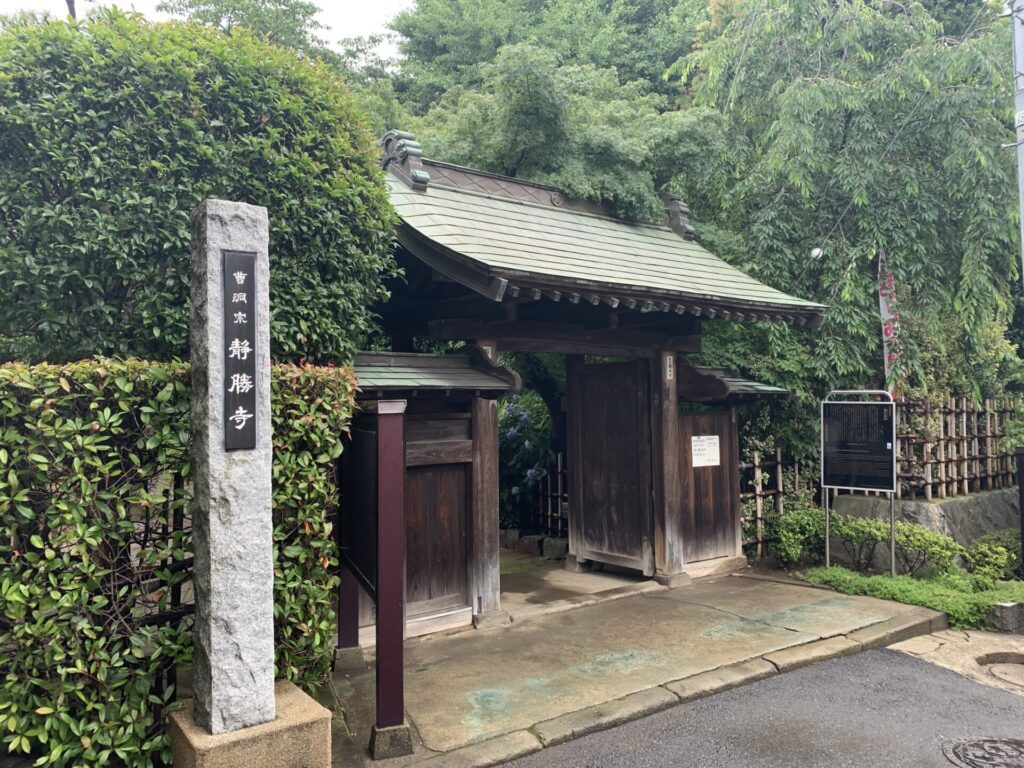
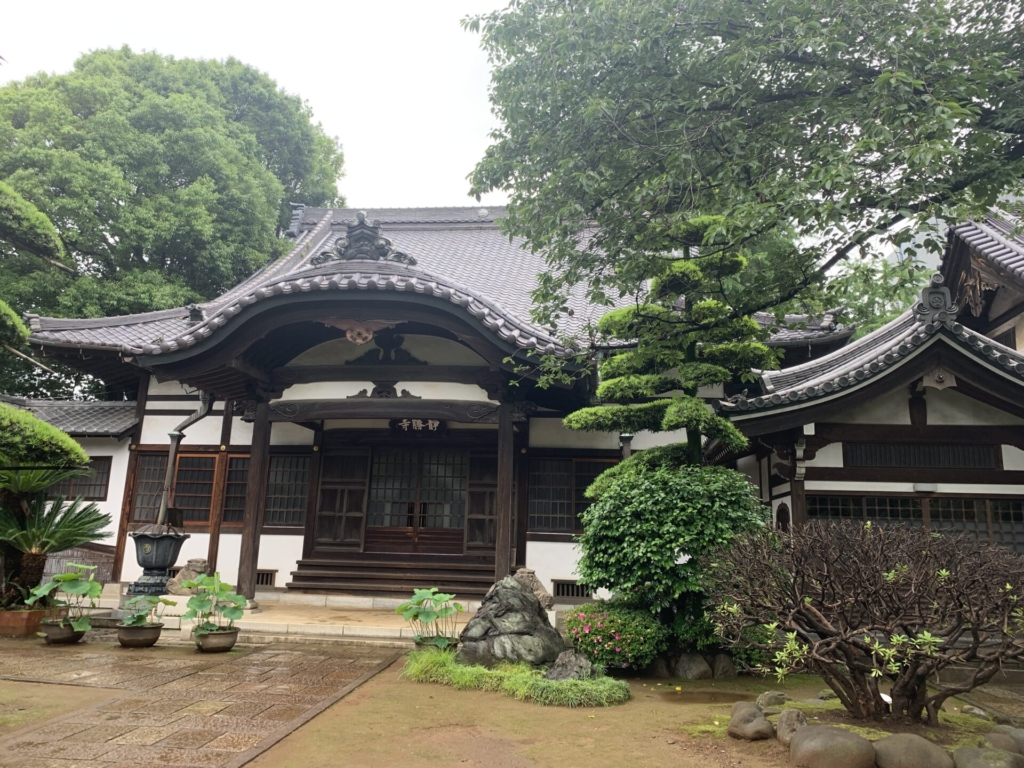
The ruins of Inetsuke-jo are now part of the grounds of Seishō-ji Temple.
The castle was built by the well-known warrior Ōta Dōkan, who was highly skilled in military strategy.
Later, the castle came under the control of the Hōjō clan,
and after the fall of the Hōjō, it was reportedly abandoned by the Tokugawa clan.
The main enclosure of Inetsuke-jo is said to have once stood within these temple grounds, but unfortunately, no visible defensive structures remain today…
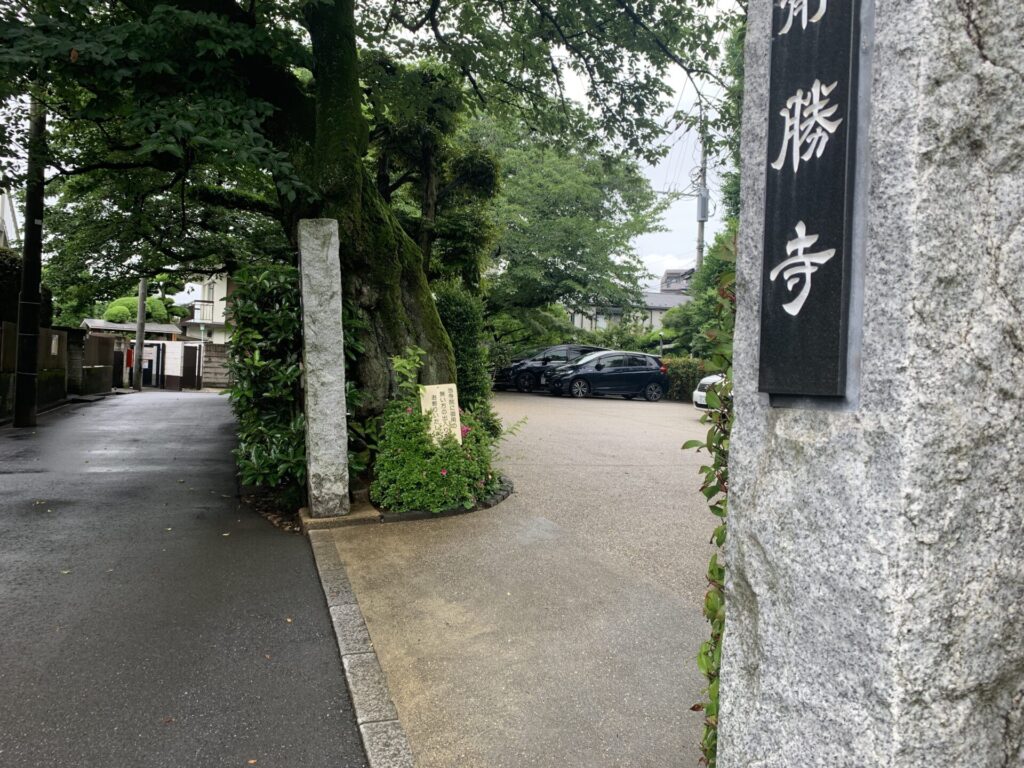
There is a parking area like this right in front of the temple,
but if you visit by car, it’s probably best to park there only as part of visiting the temple itself.
If I remember correctly, there was a sign saying something along the lines of “No parking except for authorized visitors.”
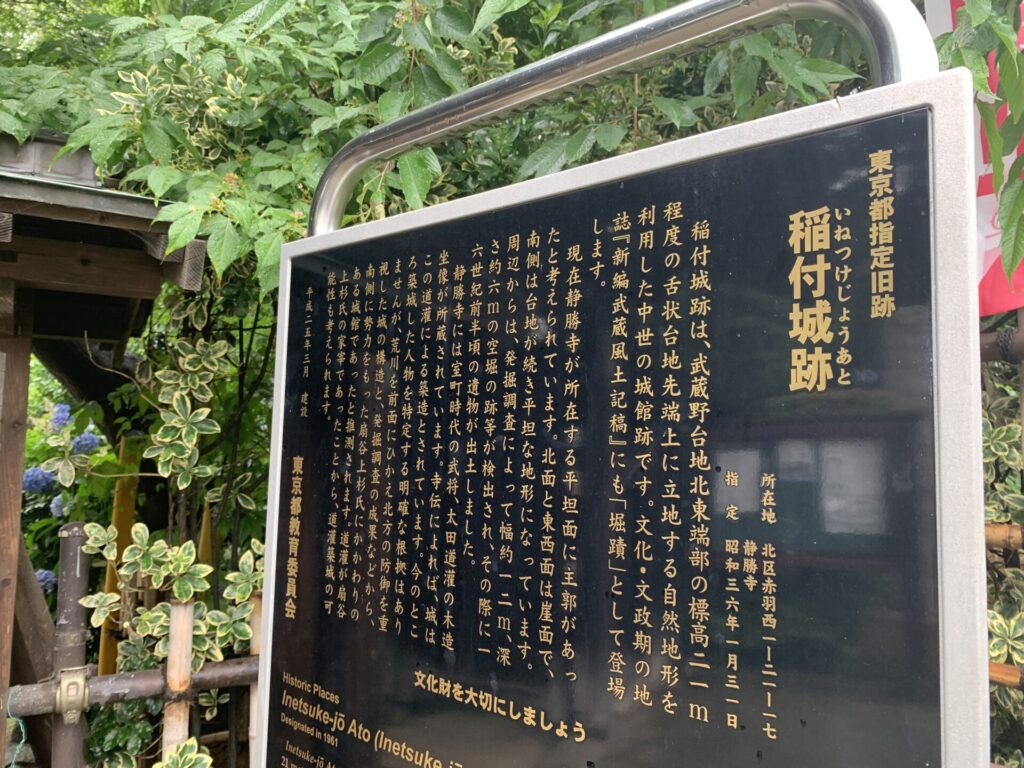
Here is the information board located right in front of Seishō-ji Temple.
Inetsuke-jo was a hirayama-style castle(平山城) built on elevated ground,
and later on, I would come to realize just how skillfully the natural terrain had been utilized.
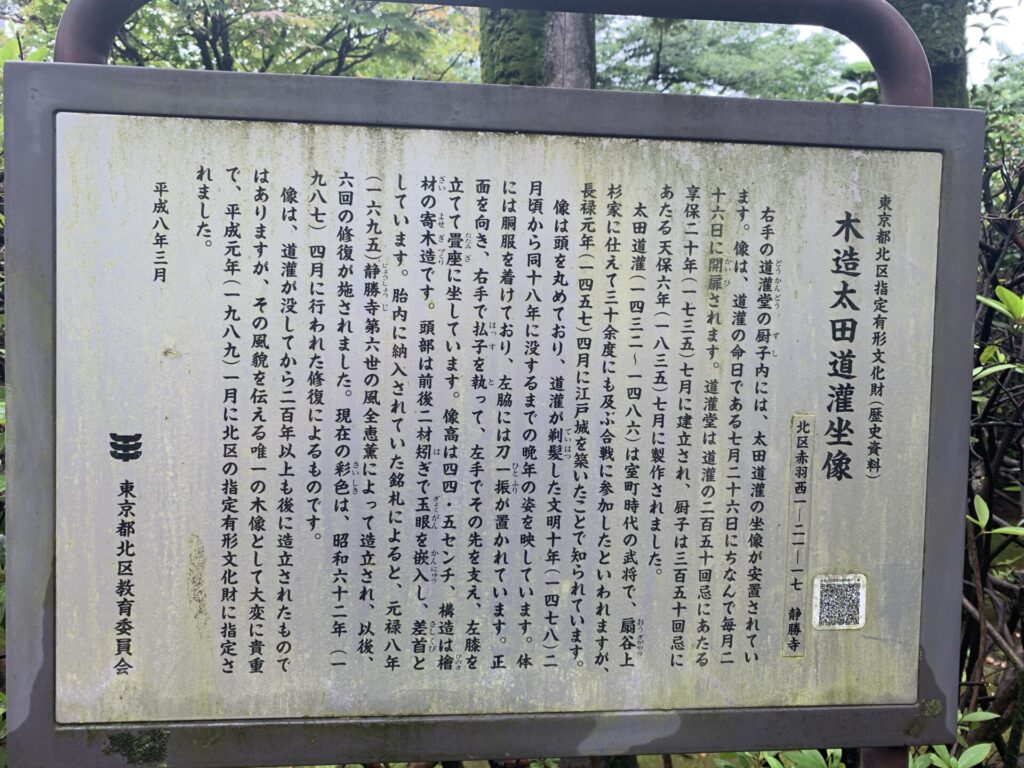
Apparently, a wooden statue of Ōta Dōkan is enshrined here as well.
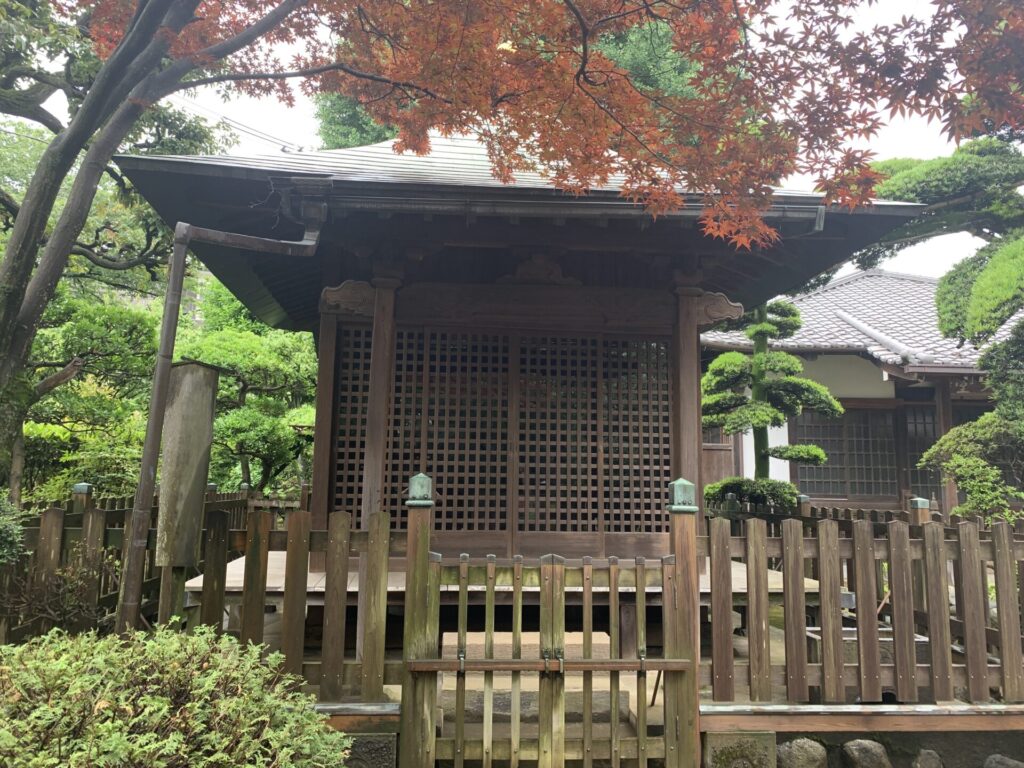
It seems that the wooden statue is enshrined inside here,
but unfortunately, I wasn’t able to see it for myself.
This is the main hall of Seishō-ji Temple.
There seemed to be several people visiting and praying here on this day as well.
At many mountain castles, shrines or temples are often built on the former main enclosure site,
but in places like this, where no other obvious castle remains can be seen,
it’s honestly a bit difficult to truly feel that this was once a castle site.
You Can Truly Feel That the Castle Was Built on Elevated Ground
After taking a look at the temple’s main hall,
I began exploring the surrounding area as usual,
searching for anything else that might hint at the remains of the old castle.
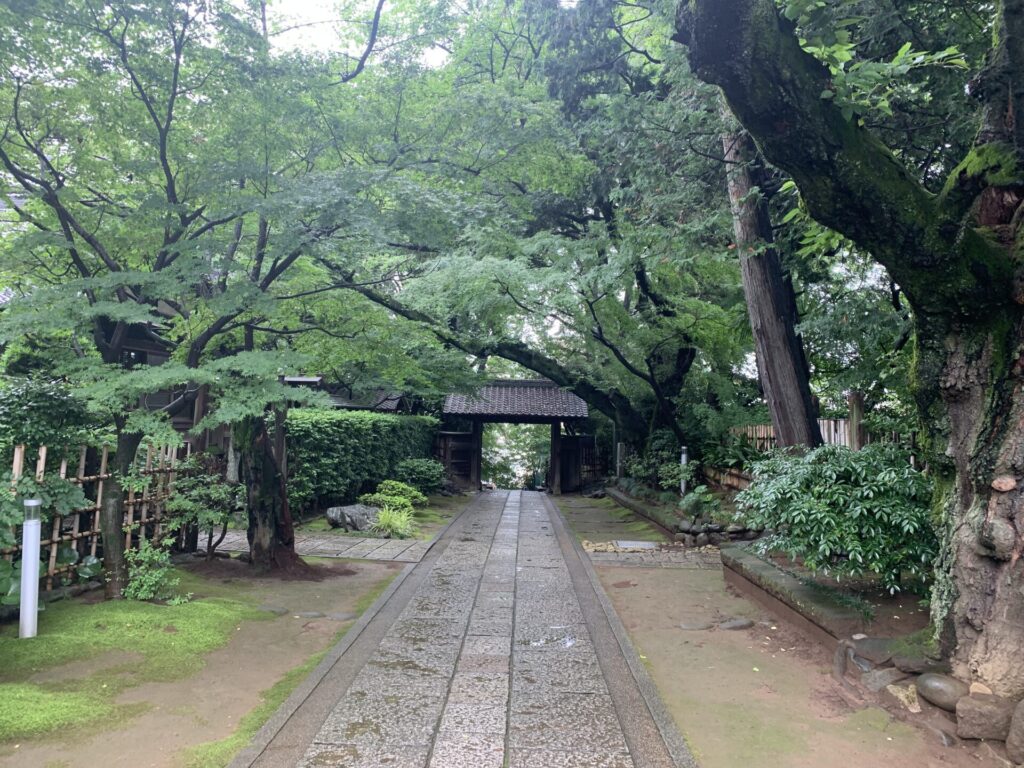
A stone-paved path stretches out in a different direction from the temple entrance.
There are no other paths.
Looks like there’s no choice but to explore further ahead.
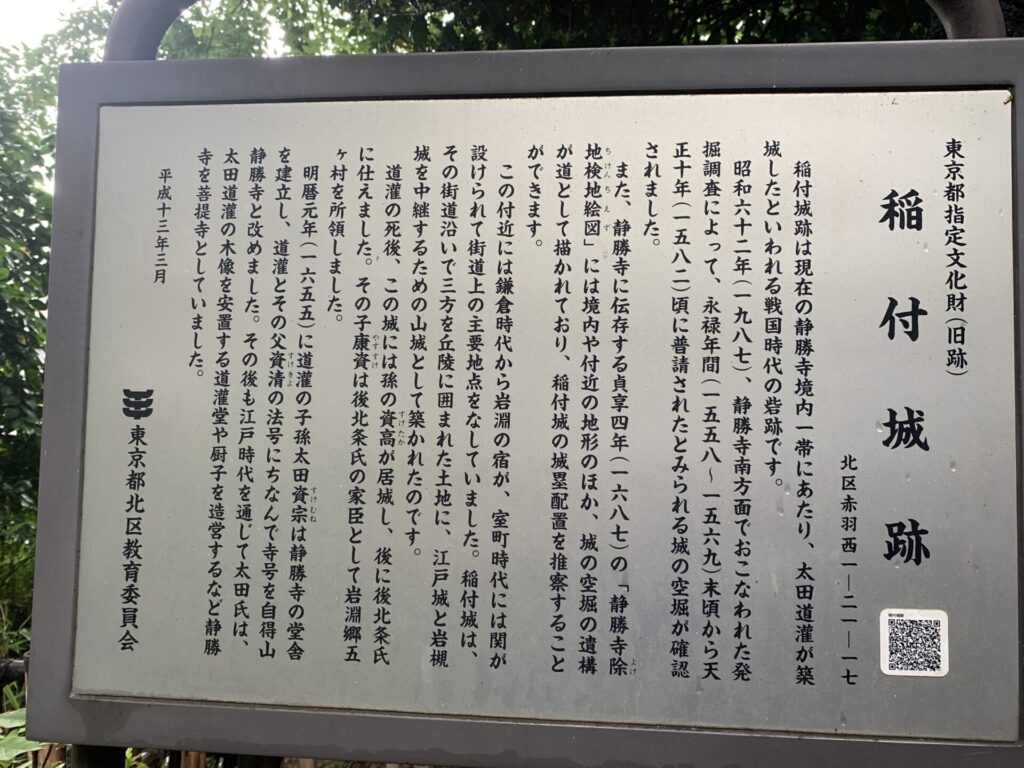
Passing through the gate,
I found an information board about the “Inetsuke-jo Ruins”.
It says that a dry moat was once confirmed on the southern side of the temple grounds…
Unfortunately, I couldn’t manage to find it myself.
My exploration skills still need work. 😓
It also mentions that the castle was built as a stronghold connecting Edo-jo and Iwatsuki-jo.
So it seems Inetsuke-jo once served as a fairly important base in the Kantō region.
👇Please check out the article below for more about Iwatsuki-jo👇
 https://sengokucastle.com/iwatsuki-jo/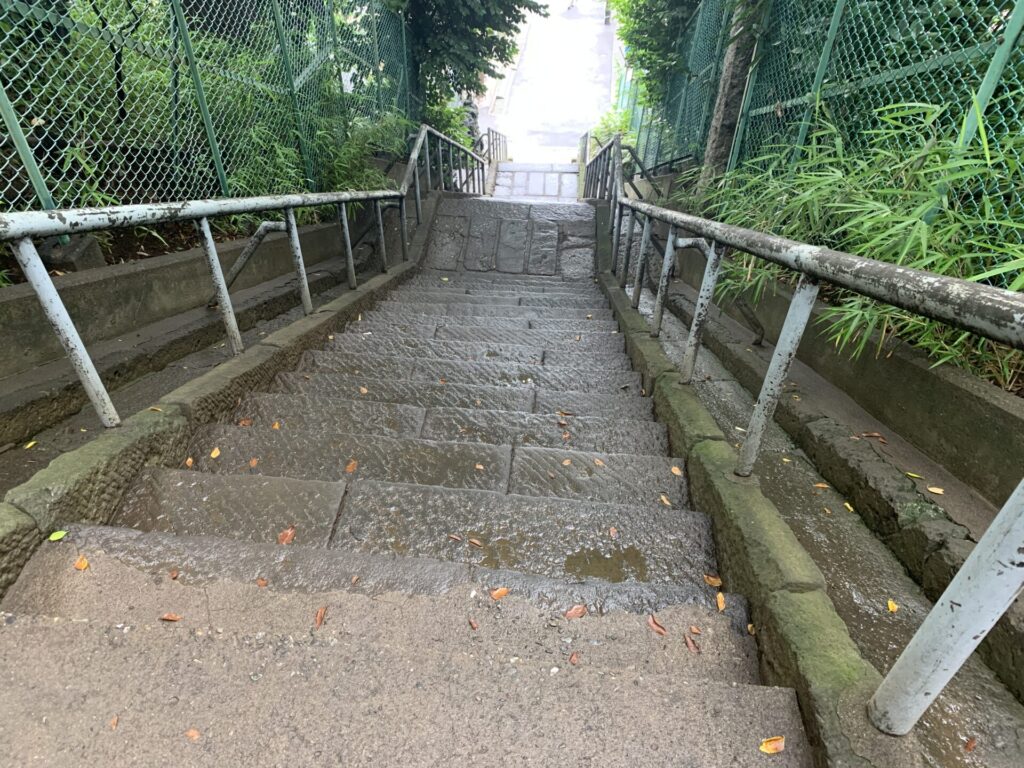
Beyond the gate, there was a steep stone staircase like this.
As you can probably tell just from looking at it,
Inetsuke-jo was clearly a hirayama-style castle built on elevated ground.
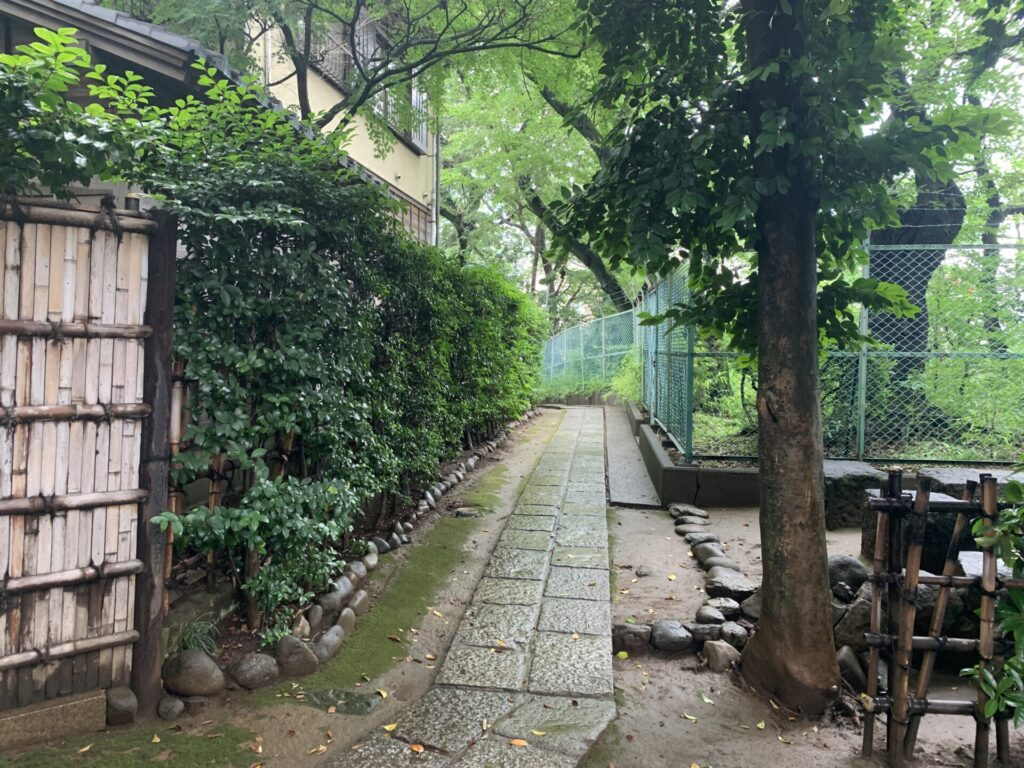
There was also a path extending beside the gate like this,
but there didn’t seem to be anything particularly noteworthy further ahead.
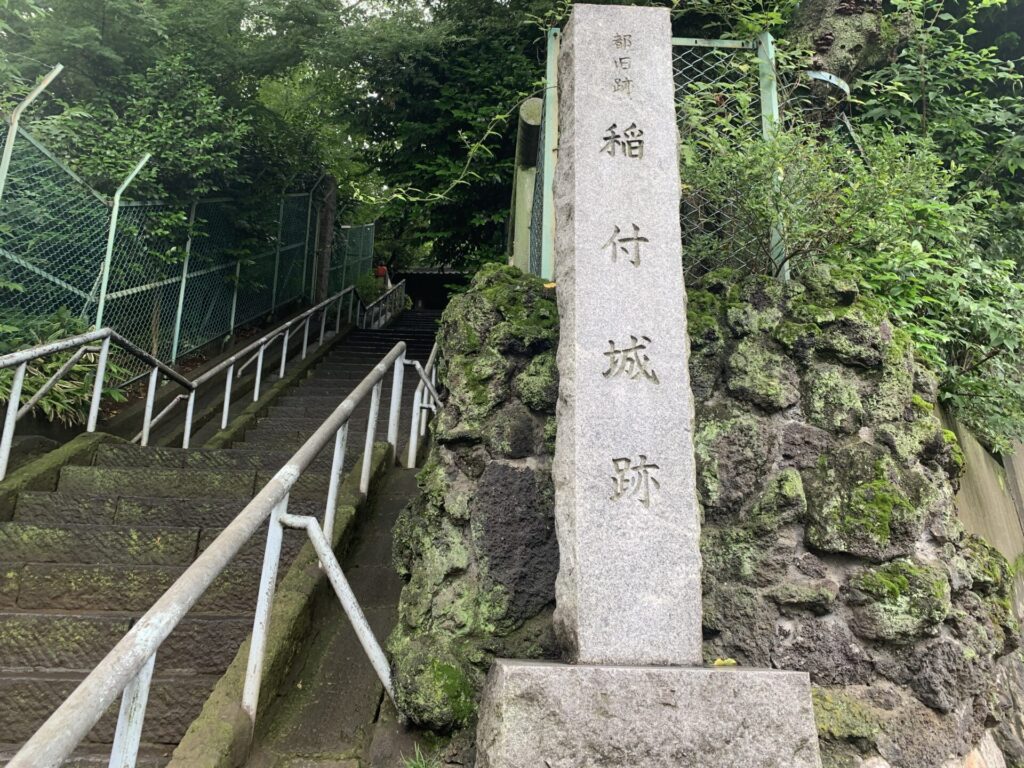
After descending the stone staircase all the way down,
I found a stone monument marking the “Inetsuke-jo Ruins”.
It once again reminded me that this place really was a castle site.
Thinking about it now, I wonder if the stone wall behind the monument might actually date back to that time.
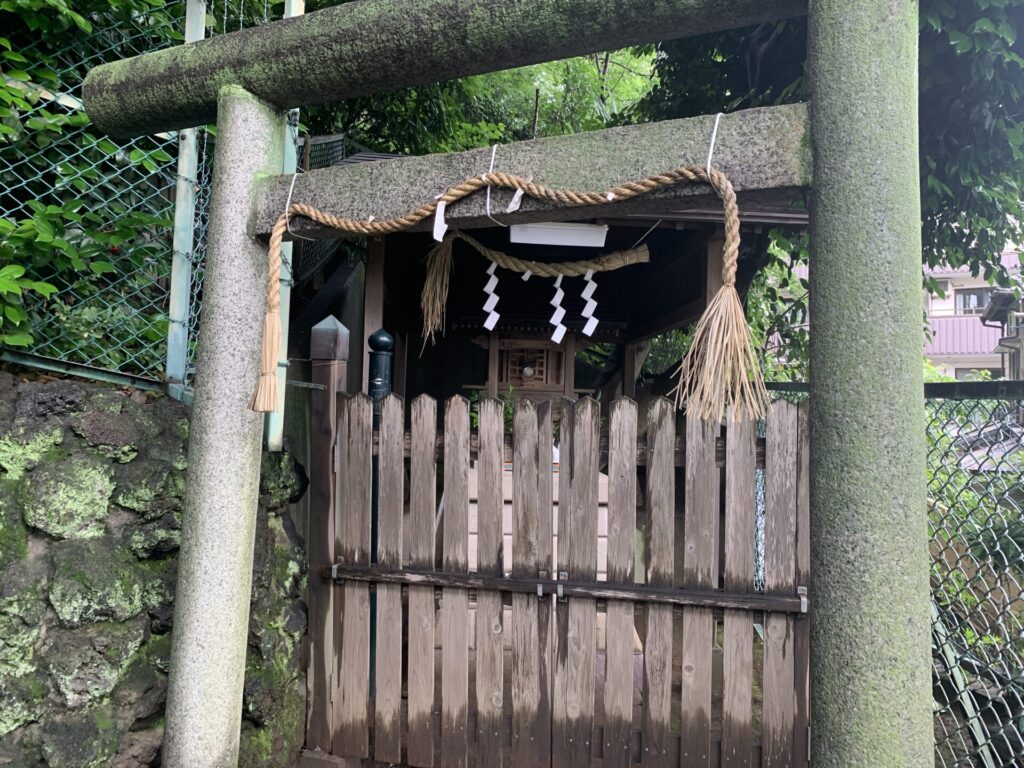
And halfway down the stone staircase,
there was also a small shrine-like structure like this.
To be completely honest, I couldn’t find anything else that clearly pointed to remaining castle ruins.
For those hoping to see an impressive reconstructed keep or examine complex defensive structures, this site may feel a bit underwhelming.
Still, I think there is value simply in realizing that “a castle like this once existed even within Tokyo.”
See you again!!