
Sano-jo (Sano city, Tochigi)|At First Glance, It Doesn’t Look Like a Castle Ruin…A Long North-to-South Renkaku-style Mountain Castle
At first glance, it just looks like an ordinary park…
Hello, this is Shin.
Saturday, June 17, 2023.
This time, I visited Sano-jo in Sano City, Tochigi Prefecture 🚙
During the Sengoku period, it served as the residence of the Sano clan,
who apparently moved here from Karasawayama-jo.
◉ Castle Type
Renkaku-style mountain castle ( renkakushikiyamajiro:連郭式山城 )
◉ Cultural Heritage Highlights
◉ Defensive Features & Fortifications
◉ Exploration Difficulty
🔰 Easy Castles
◉ Estimated Time to walk around
: about 30 minutes
◉ Parking / Access
Parking space for around 5–6 cars available at Shiroyama Park parking lot.
About a 3-minute walk from JR Sano Station.🚃
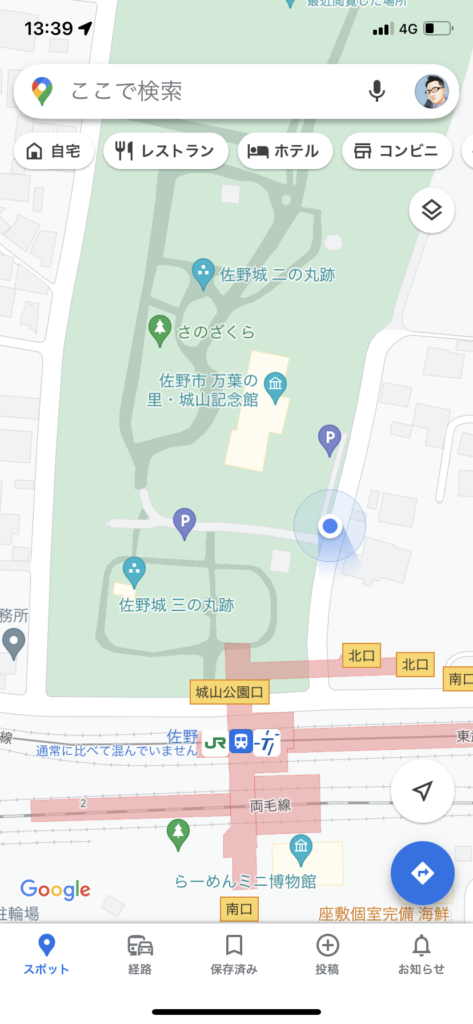
As you can see from the Google Map above,
the ruins of Sano-jo are located very close to JR Sano Station,
so it may be easier to visit by train.
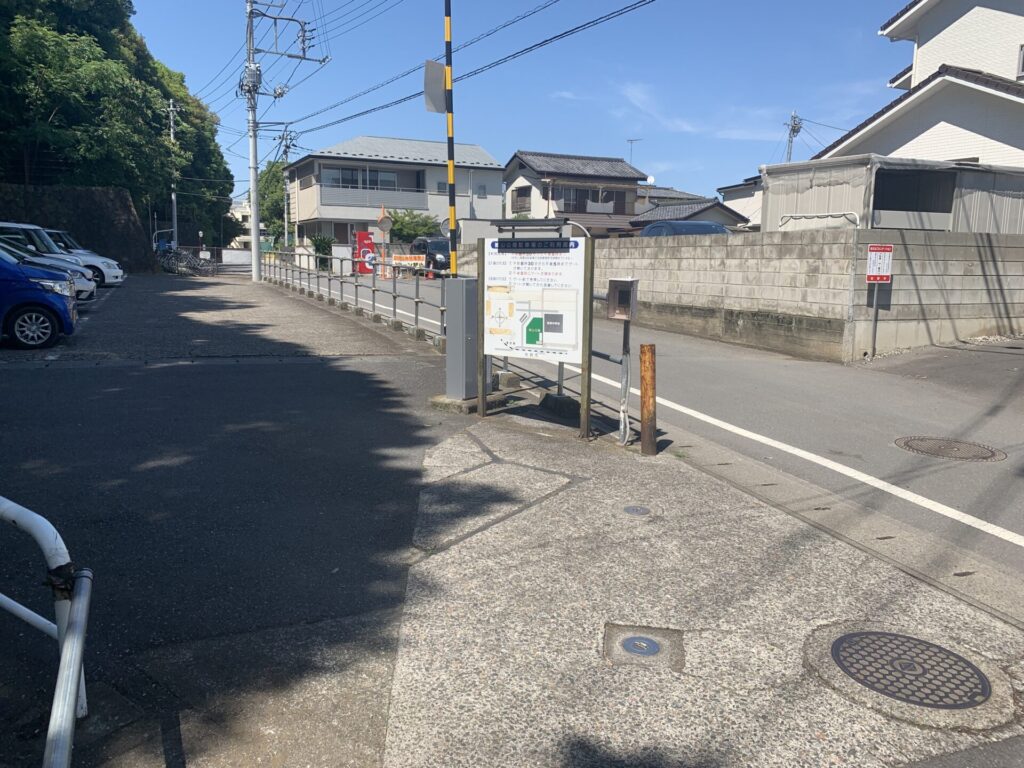
This is the Shiroyama Park parking lot.
If you’re visiting by car, this is probably the easiest access point.
From this parking lot,
the ruins of Sano-jo are just a short walk away.
First, let’s head to the remains of the Sannomaru(三の丸:third enclosure).
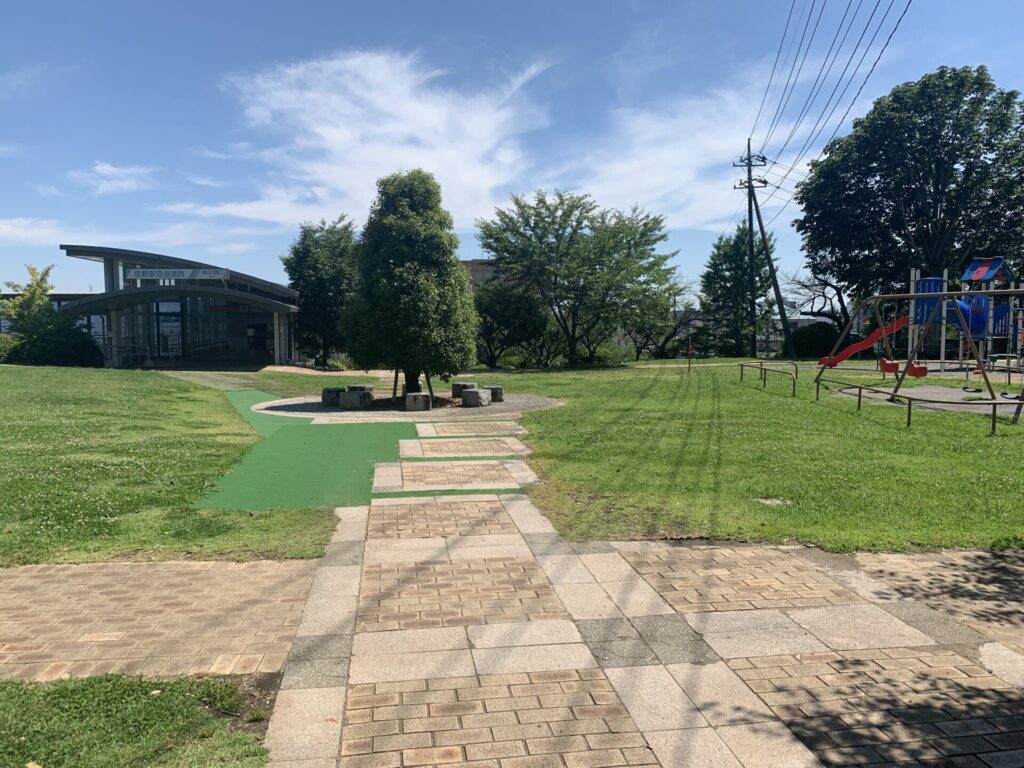
This is the site of the Sannomaru(三の丸:third enclosure).
There is an entrance to JR Sano Station in the back on the left.
On the right, there are playground structures for children,
and at first glance, it just looks like an ordinary park.
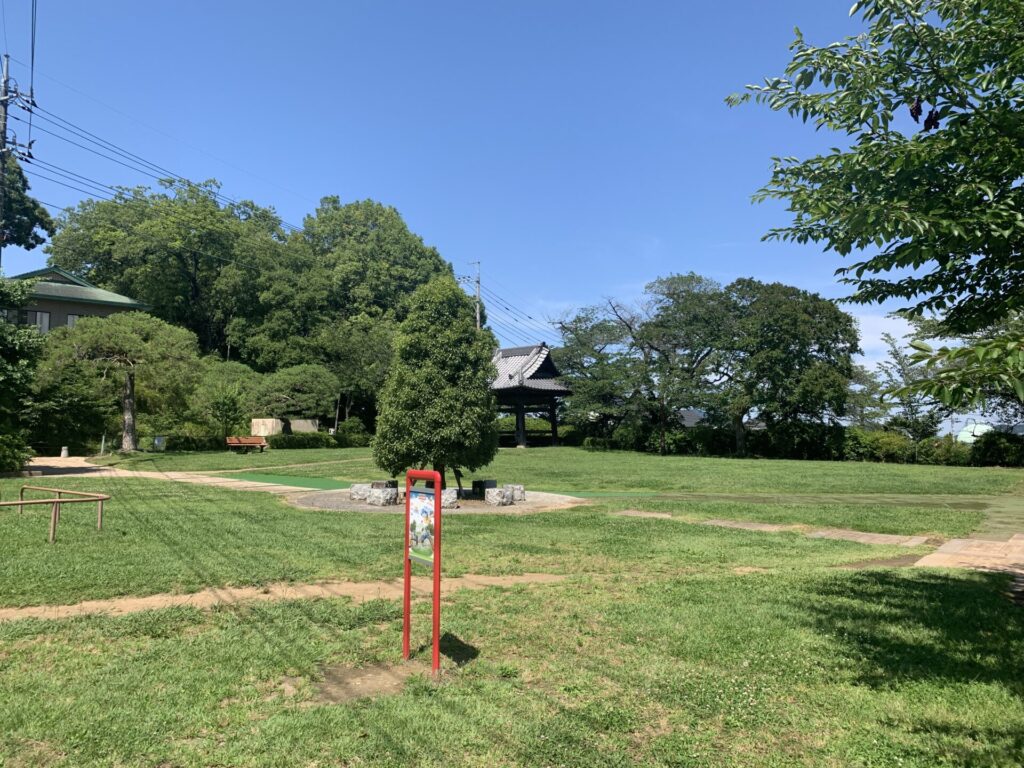
I walked farther in and took a photo from the opposite side.
In the back on the right, you can see something that looks like a turret.
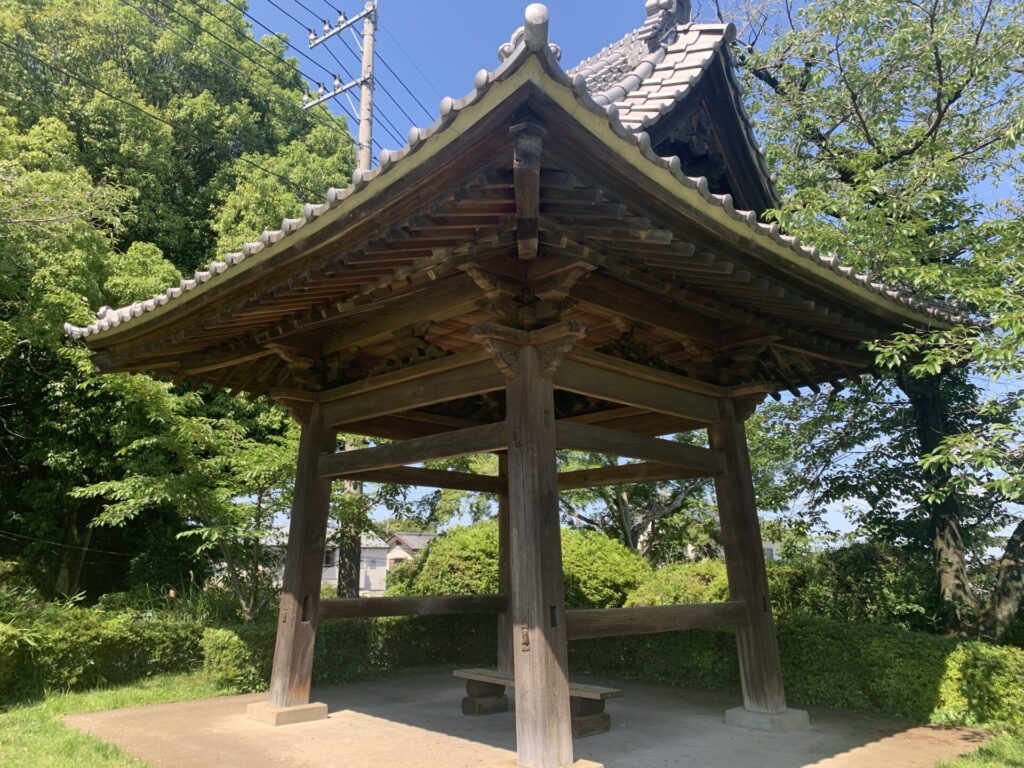
Looking closer,
the wood appears quite old,
but there are no information boards or explanations,
so I have no idea what kind of history it has.
It doesn’t seem related to the castle ruins, though…
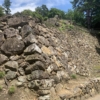
Stone pavement and stone walls inside the Honmaru (main enclosure)
Next, using Google Maps as a guide,
I headed toward the remains of the Ninomaru(二の丸:second enclosure).
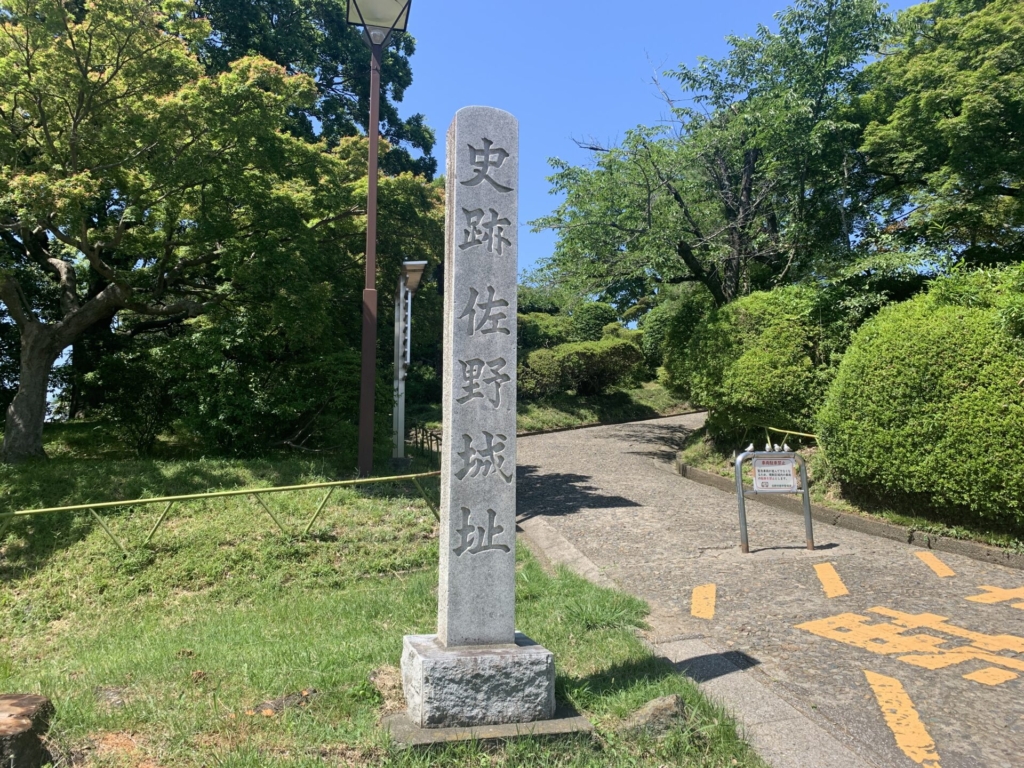
Before heading deeper into the park, I found a stone monument marking the “Site of Sano Castle(佐野城址)”.
Climbing the slope beside it leads to the remains of the Ninomaru(二の丸:second enclosure).
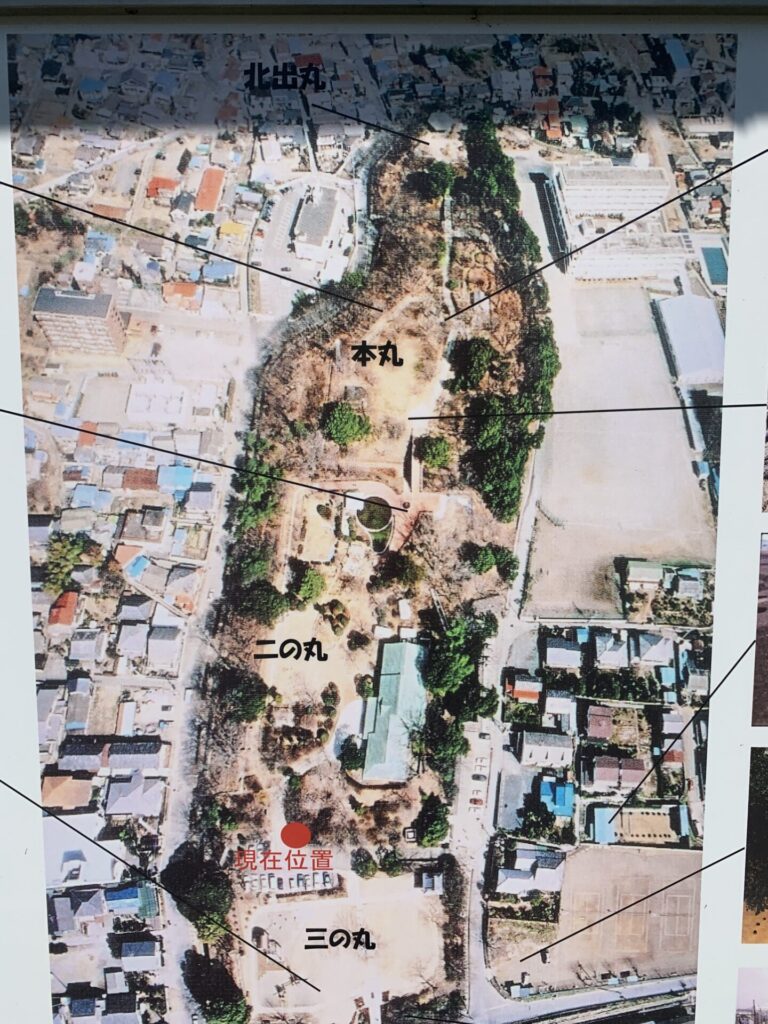
To the right of the stone monument,
there is this castle layout map (information board).
It was a renkaku-style mountain castle, with each kuruwa (enclosure) stretching long from north to south.
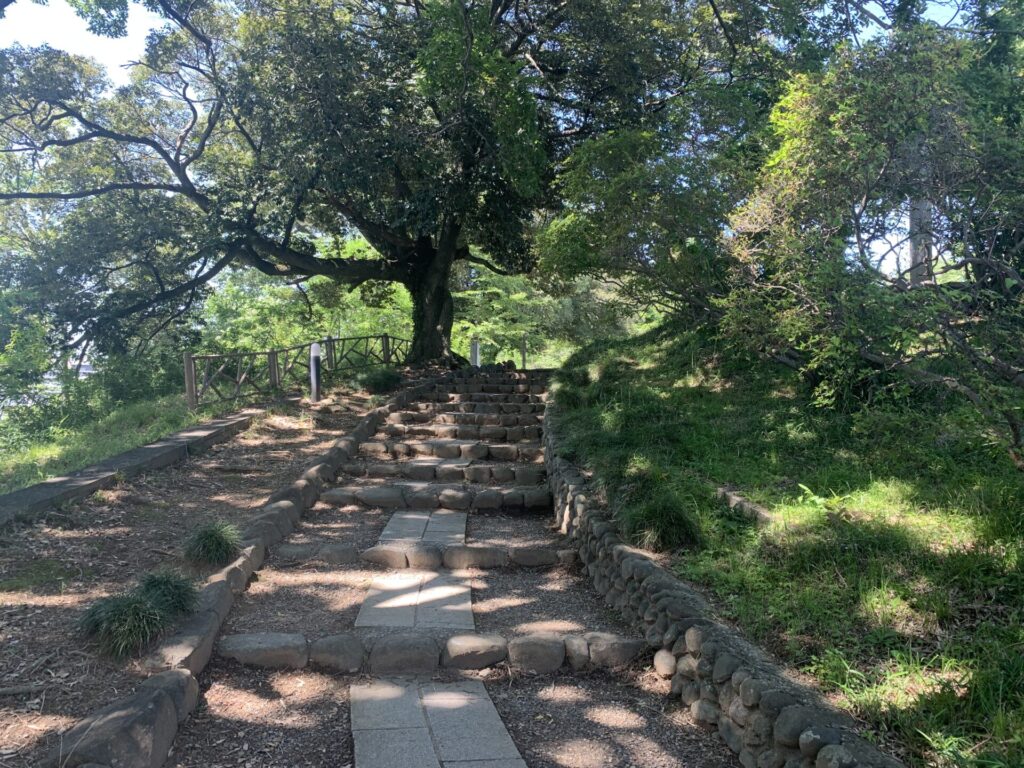
Deeper and deeper into the park,
I climbed these stone steps.
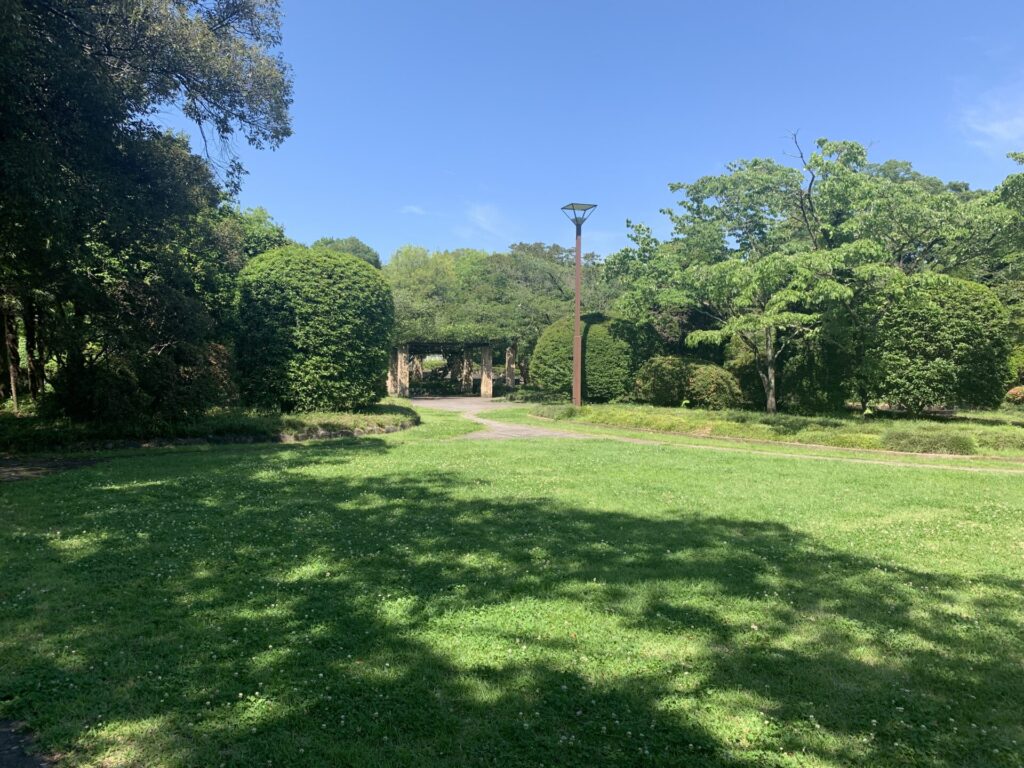
This is the site of the Ninomaru(二の丸:second enclosure).
Can you see just how spacious it is?
Please check it out in the video below.
Other than the large size of the grounds,
there are no particularly noticeable remains.
Without the stone monuments and information boards, we probably wouldn’t even realize this was a castle site…
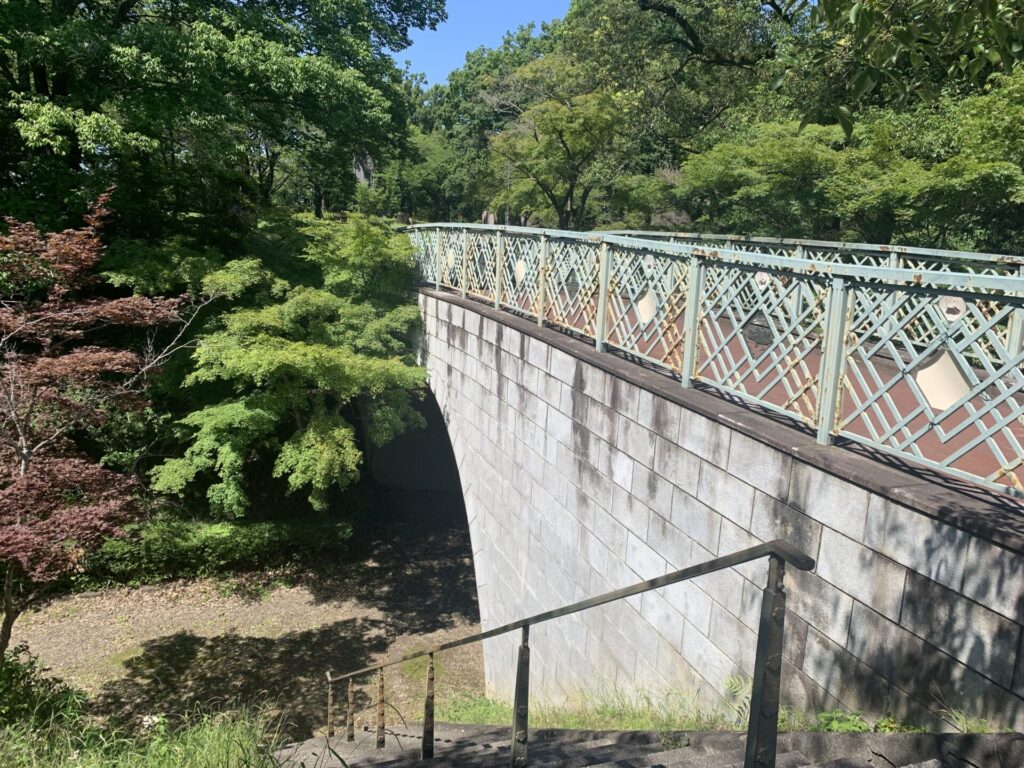
Then, crossing this bridge, I headed to the remains of the Honmaru(本丸:main enclosure).
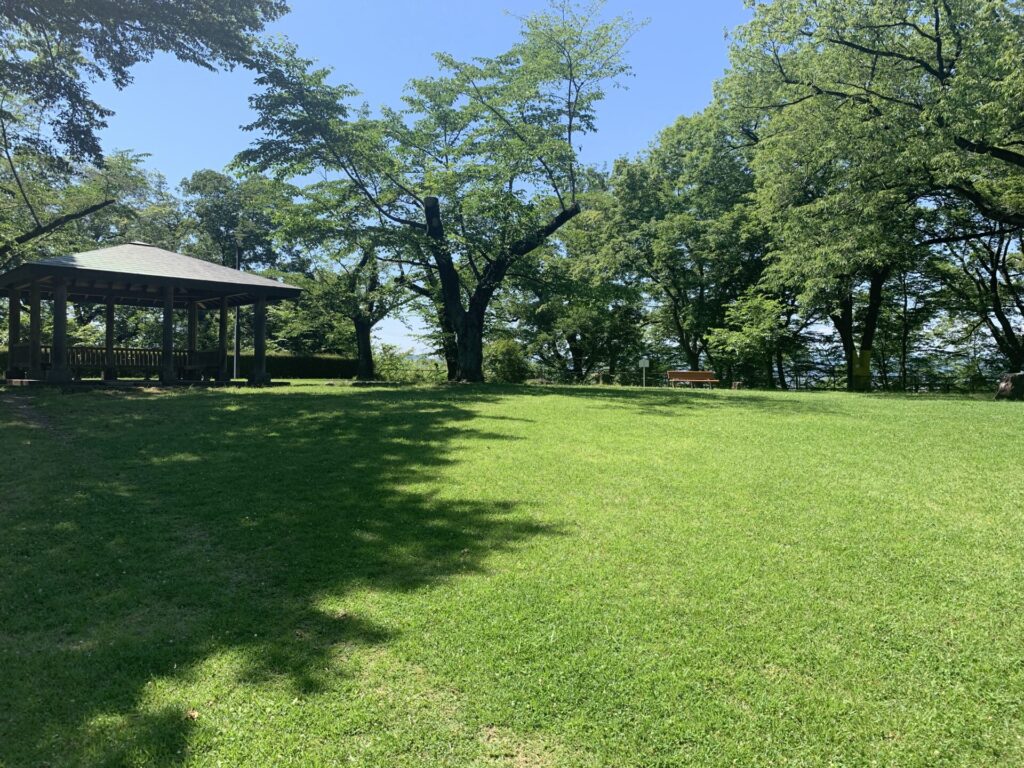
This area is about as spacious as the Ninomaru(二の丸:second enclosure).
I looked around to see if there were any visible remains, and…
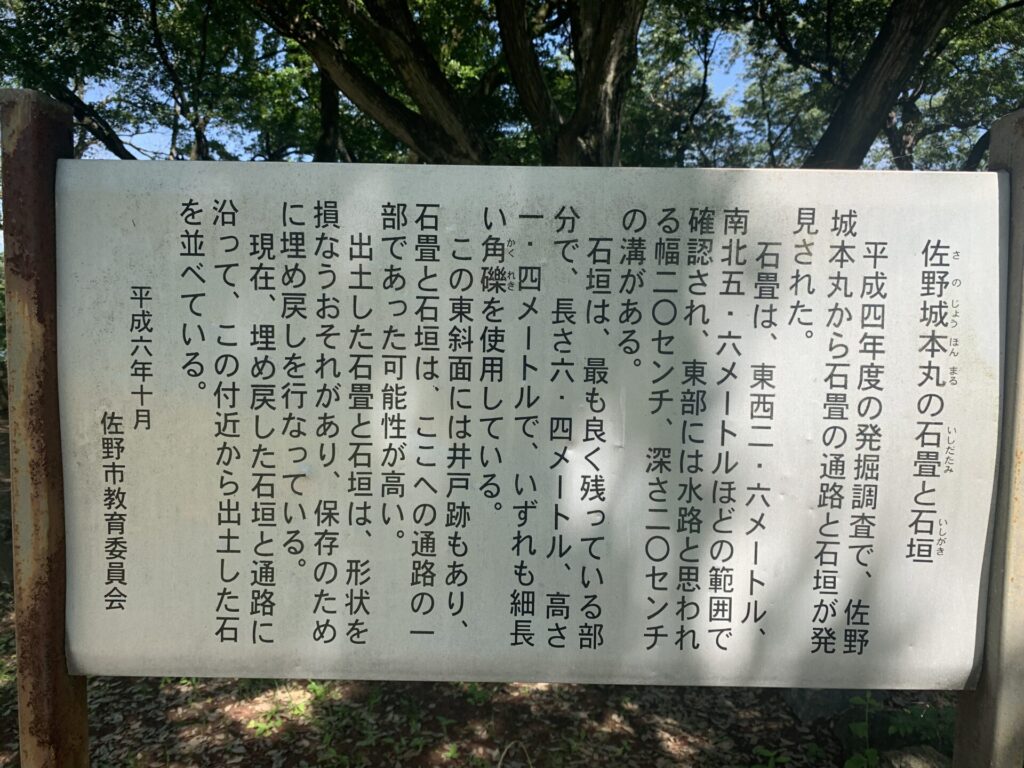
Oh!!
Apparently, there are stone pavements and stone walls here!
But it says they were “reburied”… 😓
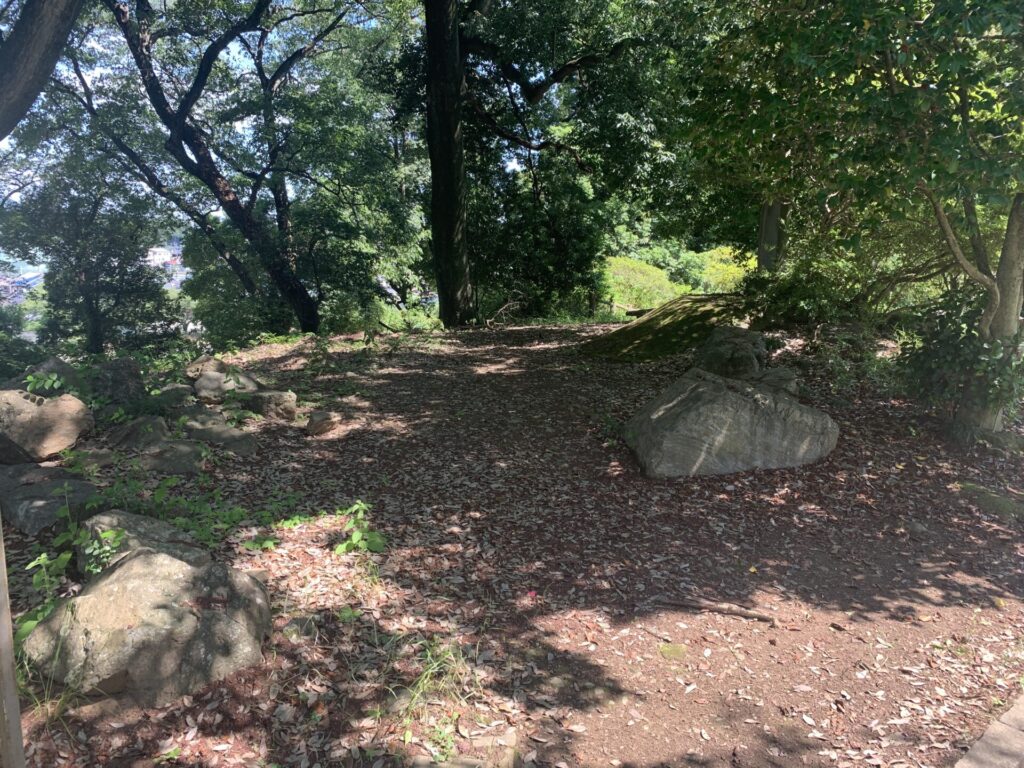
These stones around here are probably the ones that were excavated.
As castle remains, it feels rather underwhelming…
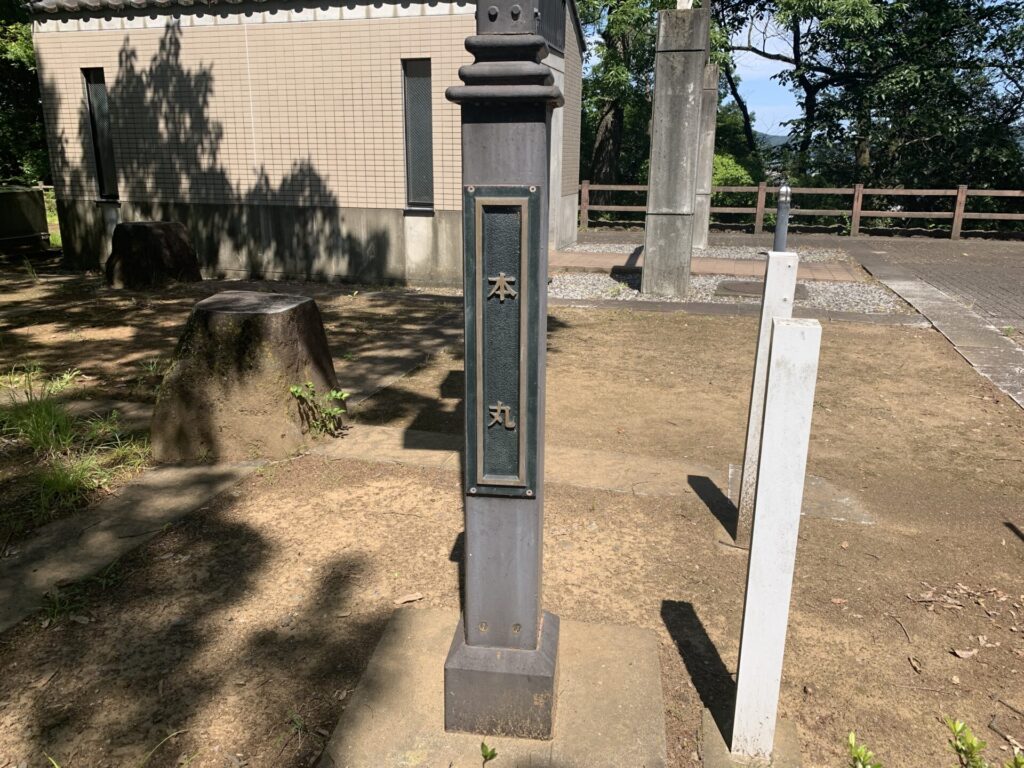
There is also this marker showing that this area was the Honmaru(本丸:main enclosure).
If only something more noticeable had remained, it would have been a bit more enjoyable to explore…
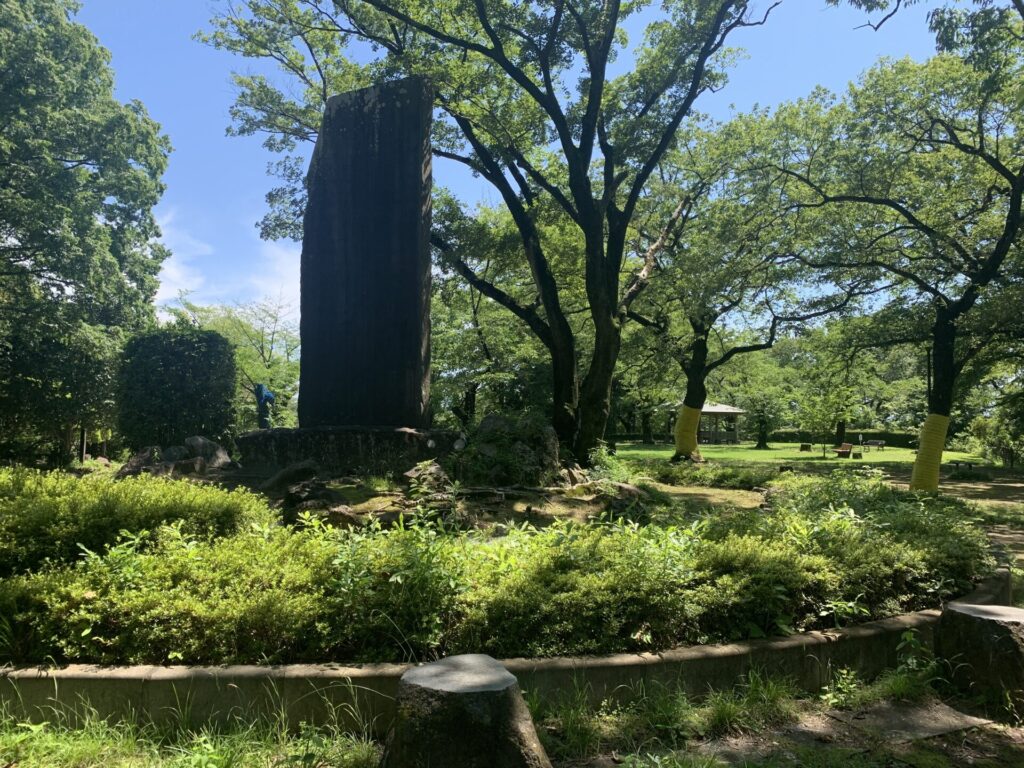
A large stone monument stands in the center of the Honmaru ruins.
I couldn’t read the inscription on it, though.
A Koguchi Entrance? Or a Horikiri Trench?
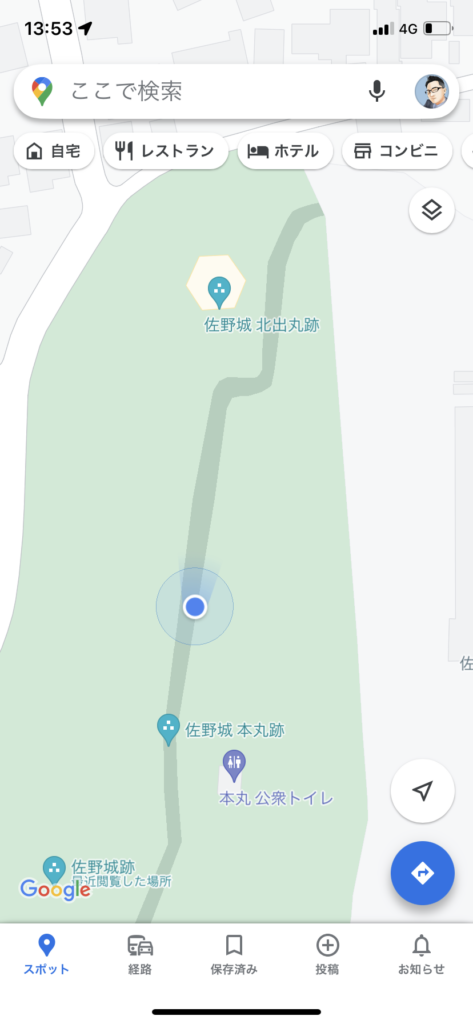
Beyond the Honmaru ruins to the north lies the final kuruwa (enclosure), the remains of the Kita-Demaru(北出丸).
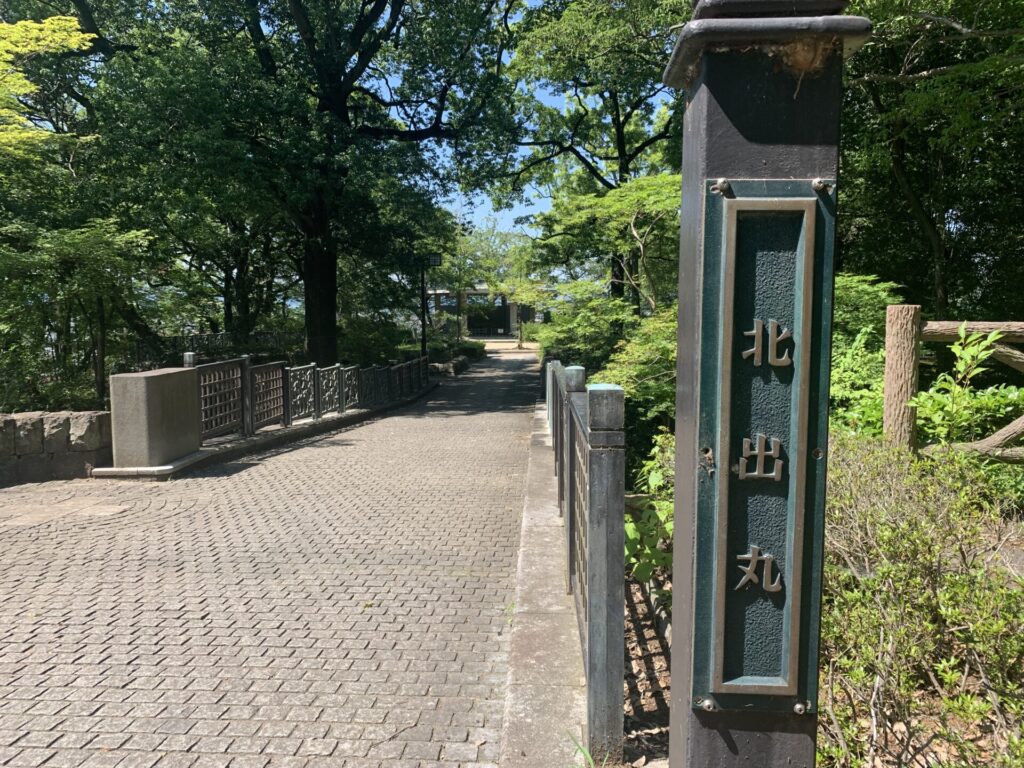
It lies beyond this bridge.
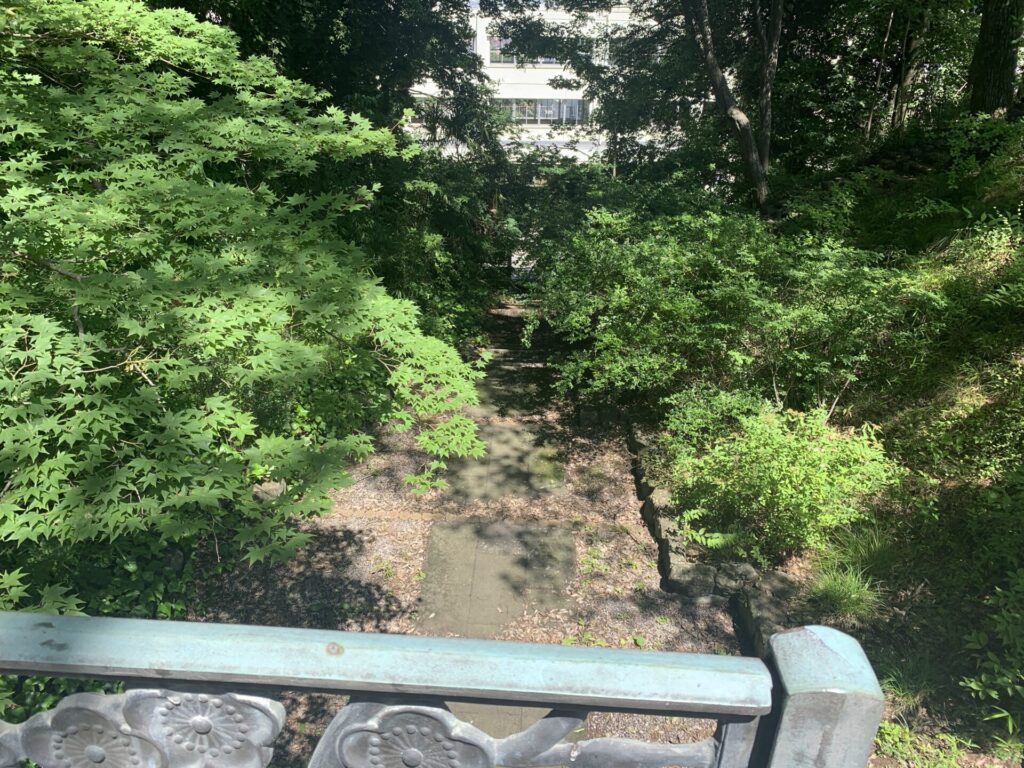
Beneath the bridge, you can see what appears to be a large moat-like depression.
It was probably a moat remains… at least, I’d like to believe so! 😅
Now then, please watch the video of me heading toward the Kita-Demaru(北出丸)ruins.
It’s probably not an original stone wall,
but at last, something that actually looks castle-like has come into view.
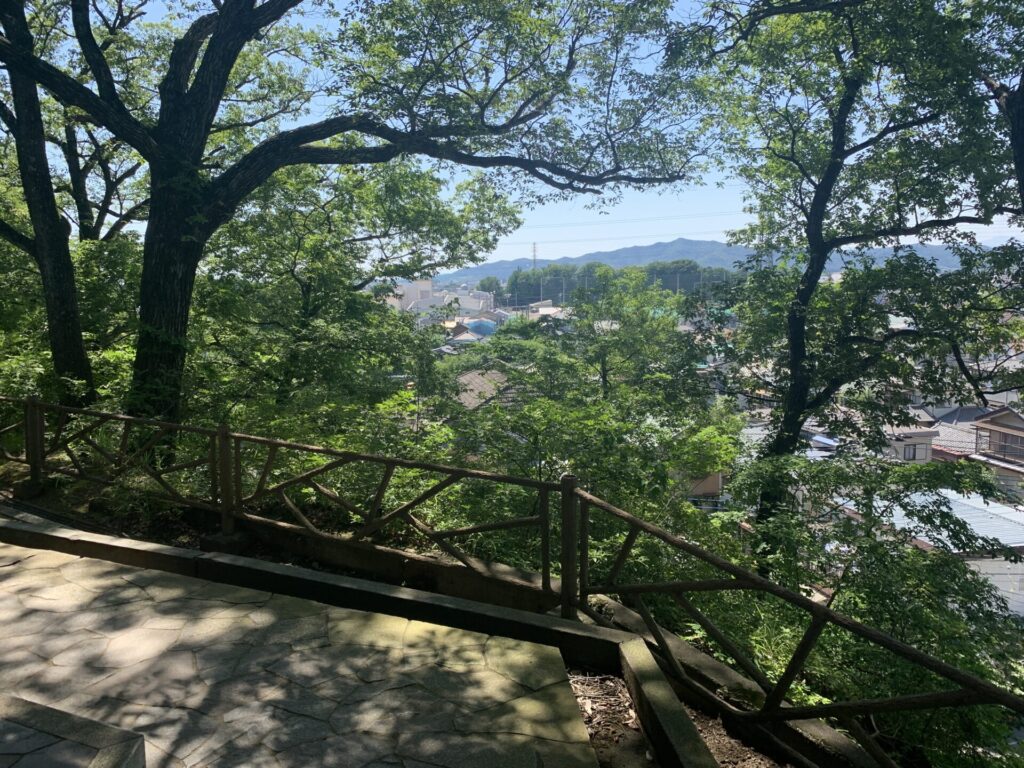
From the edge of the Kita-Demaru(北出丸) ruins, you can overlook the castle town below.
It’s not all that high up, though.
Rather than a true mountain castle, it might be more accurate to call it a hilltop castle.
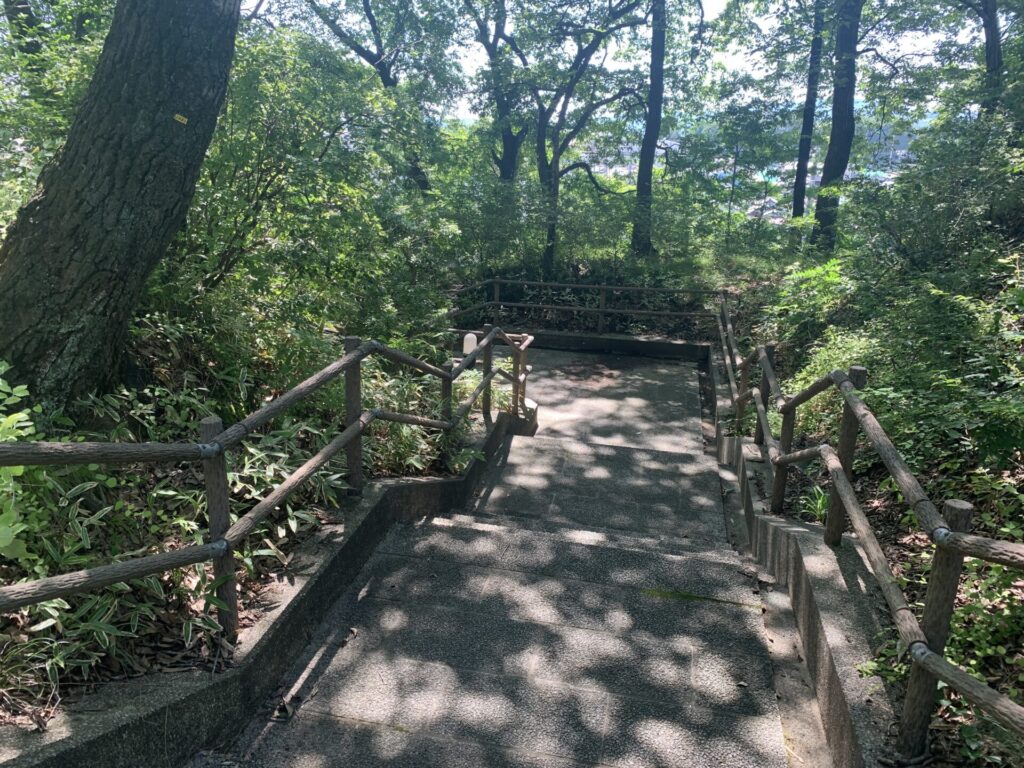
Beside the Kita-Demaru(北出丸)ruins, there was a stone stairway leading downward.
It somehow looked like a koguchi entrance, but…
A koguchi was a defensive structure designed to prevent enemy soldiers from easily advancing into the castle,
with intentionally winding paths and slopes that slowed down an attacking force.
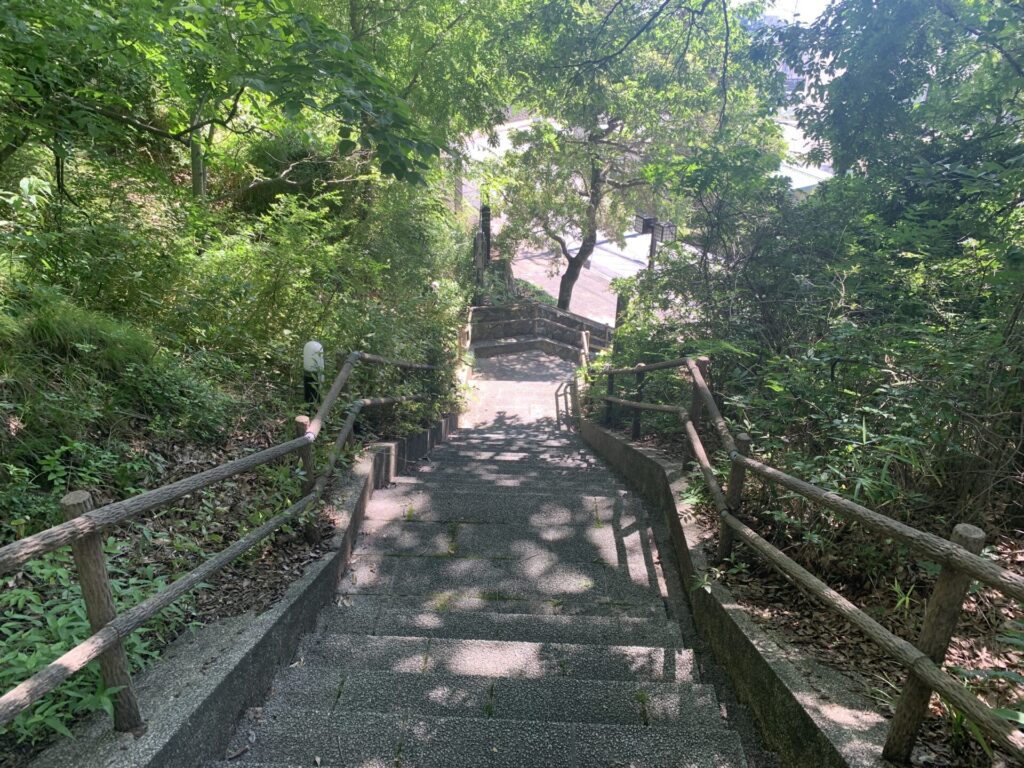
Looking at it from here, you can tell it actually has a fair amount of elevation.
It really does seem to be about the scale of a hilltop castle.
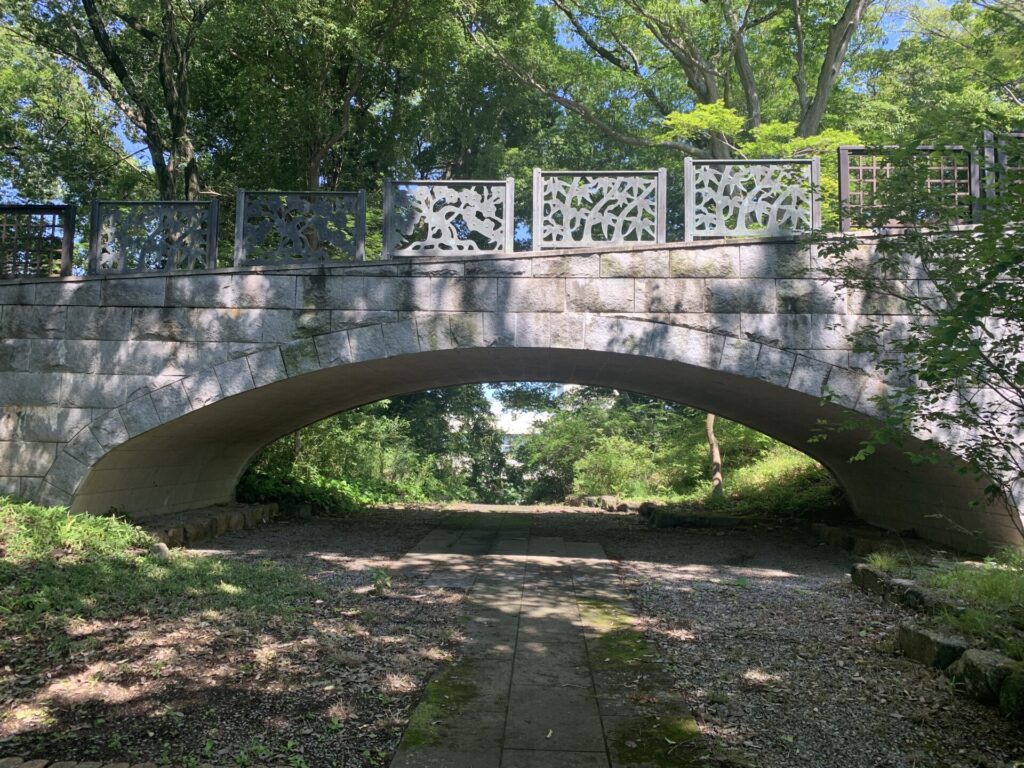
After descending all the way down,
I arrived beneath the bridge connecting the Honmaru ruins and the Kita-Demaru ruins.
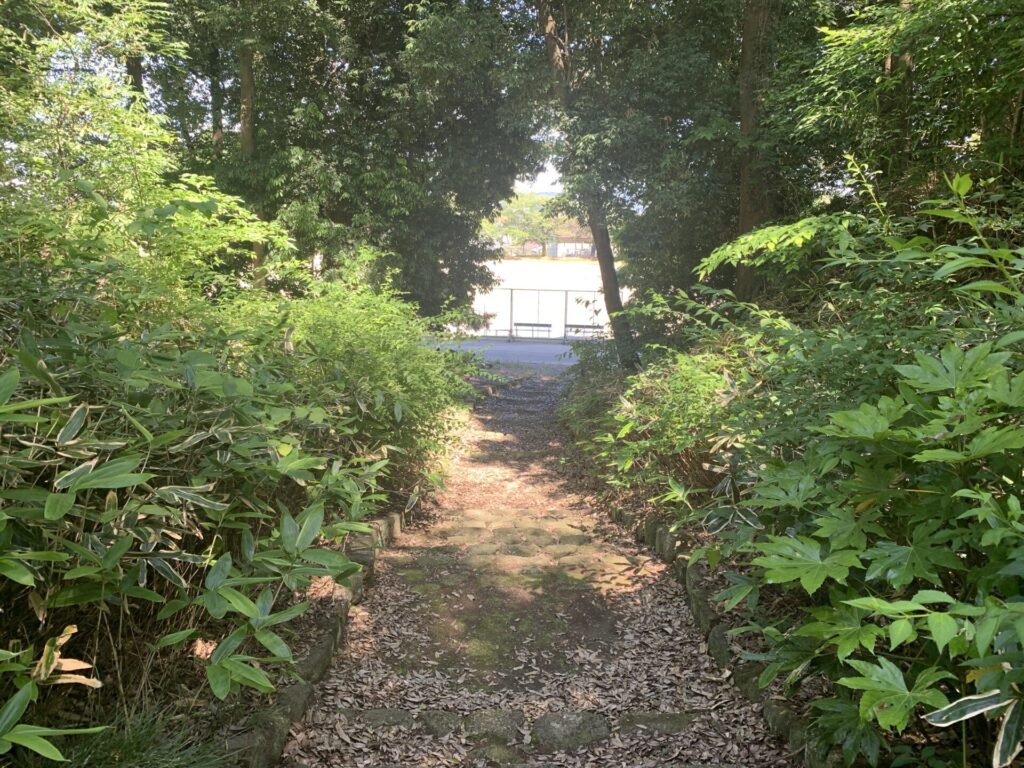
Beyond the bridge, the area looks like this.
Could this be a moat remains, or perhaps a horikiri trench?
At first glance, it seems like an ordinary park, though there are information boards here and there…
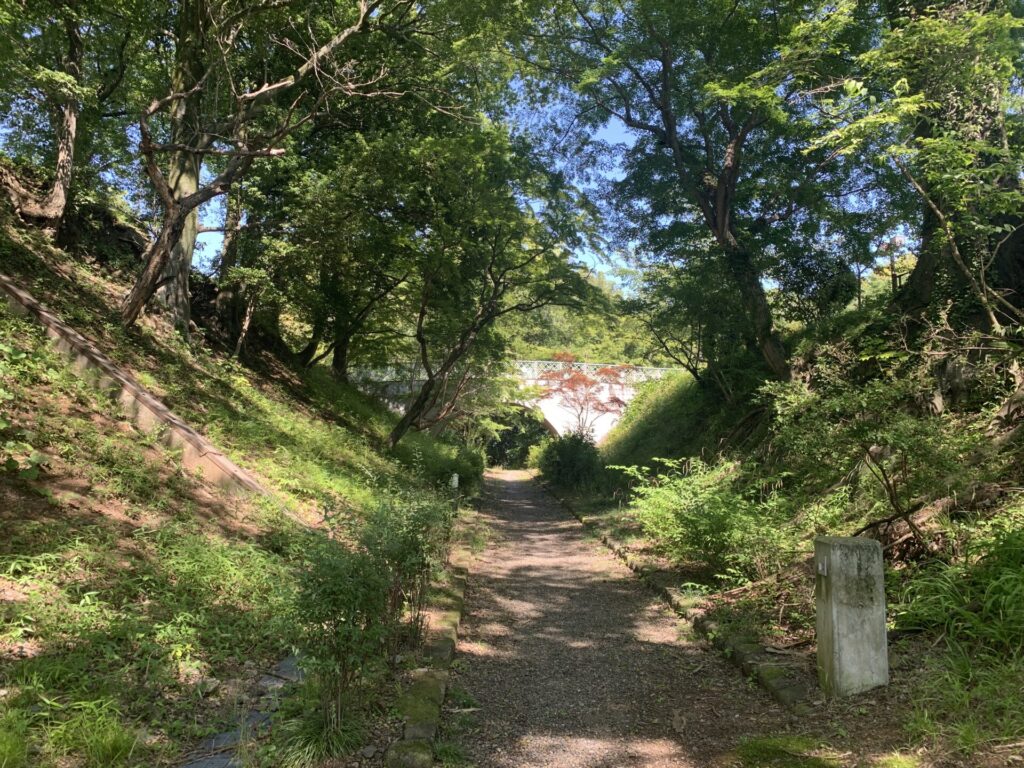
From a bit farther away,
it certainly looks like the remains of a moat.
Since it lies between two kuruwa (enclosure), it’s probably safe to say that’s what it was.
That was about it — there were very few noticeable remains overall,
so castle enthusiasts may find the site somewhat underwhelming.
It’s quite different from Karasawayama-jo, the Sano clan’s former castle.
👇 Check out Karasawayama-jo, one of the “Seven Famous Castles of Kanto(関東七名城)”, here 👇
 https://sengokucastle.com/karasawayama-jo/