
Sakura-jo (Sakura city, Chiba)|Visiting One of Japan’s “Top 100 Castles”
- 1. Walking along the top of the Dorui was surprisingly impressing!!
- 2. The unexpected scale of Umadashi!!
- 3. The Karabori (dry moats) found throughout the site are impressively deep!
- 4. The Ninomaru and Honmaru are also impressively spacious!
- 5. The most astonishing feature of all — the sheer impact of the Demaru!!
- 6. The Final Discovery — Obi-Kuruwa (Belt Enclosure)
Walking along the top of the Dorui was surprisingly impressing!!
Hello, I’m Shin.
On Friday, April 28, 2023,
I visited Sakura-jō, in Sakura City, Chiba Prefecture.

◉ Castle Type
Mountain Castle ( Yamajiro )
◉ Cultural Heritage Highlights
◉ Defensive Features & Fortifications
◉ Exploration Difficulty
🟡 Moderate Castles
◉ Estimated Time to walk around
: about 2 hours
◉ Parking
Parking is available at the adjacent National Museum of Japanese History (ample parking spaces available).
(There is also a parking area near the Yakui-mon Gate.)
Approximately a 25-minute walk from Keisei-Sakura Station.
As one would expect from a site counted among Japan’s “Top 100 Castles”,
Sakura-jo revealed a level of design that far exceeded my expectations.
I will introduce its features one by one.
First, I parked the car and decided to make my approach from the Yakui-mon Gate ( 薬医門 ). 🔥
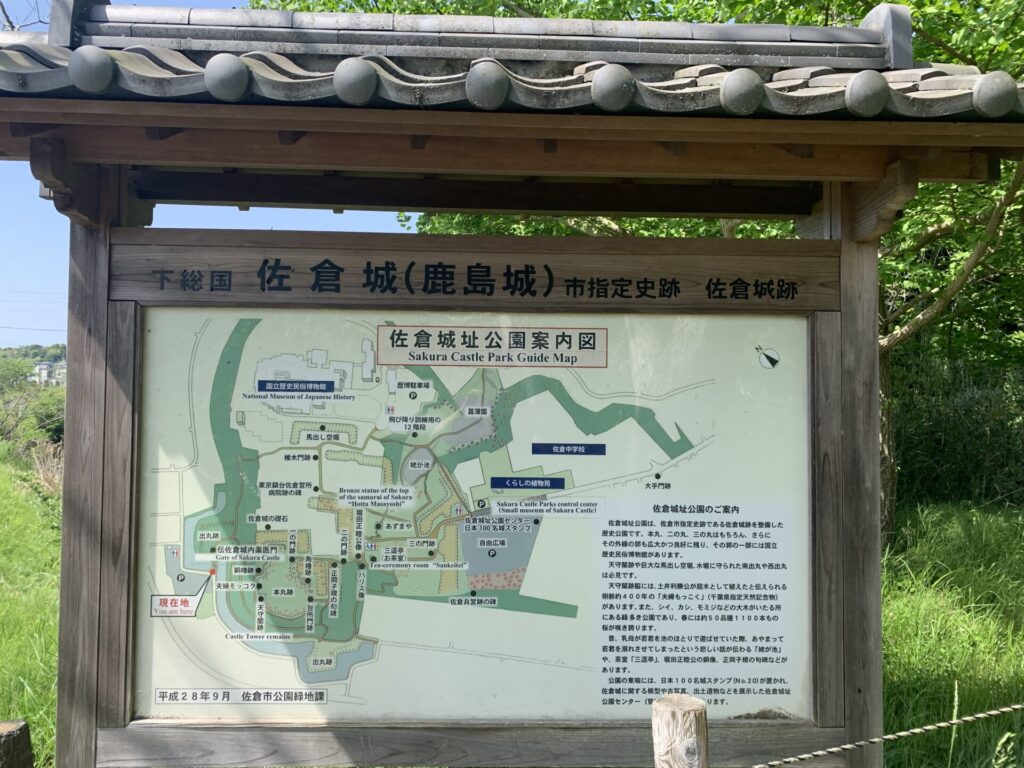
Next to Sakura-jo stands the National Museum of Japanese History,
and there are several parking areas available.
However, if you plan to thoroughly explore the castle ruins,
I would recommend starting your visit from the Yakui-mon Gate ( 薬医門 ).
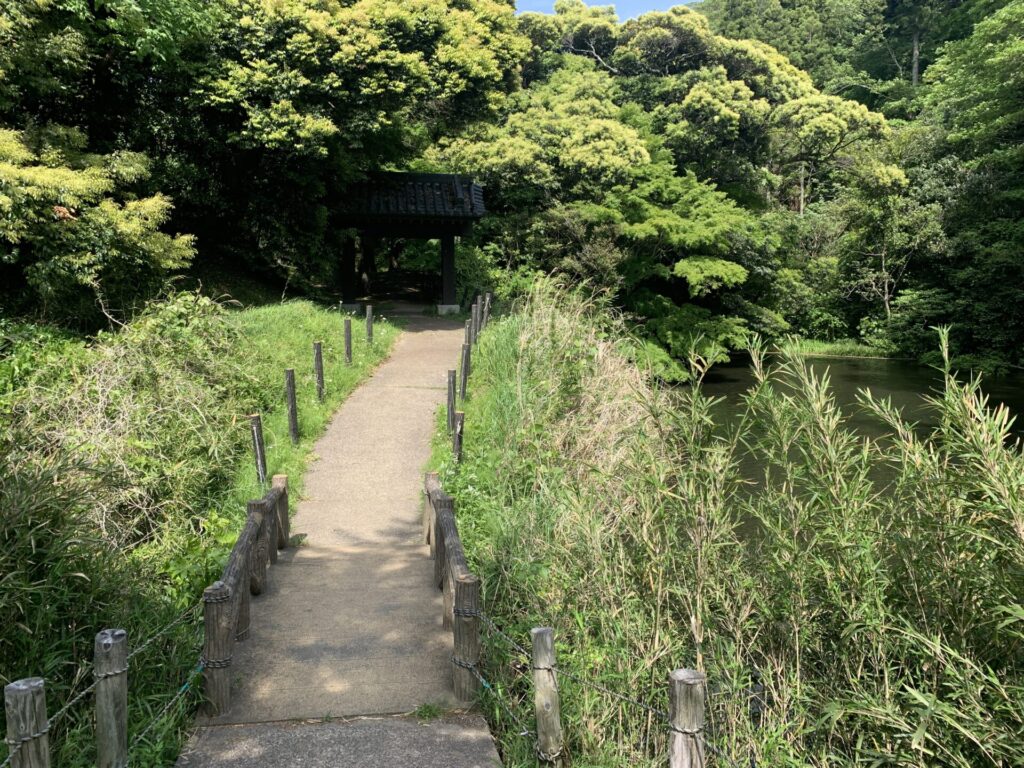
As always, please take a look at the following video, which captures the approach from the Yakui-mon Gate to the moment of entering the castle grounds.
Just beyond the Yakui-mon Gate stands a Dorui ( 土塁:earthen rampart)—
and the craftsmanship of this Dorui is truly impressive.
What struck me even more was how remarkably easy it is to walk along the top of it.
Without thinking, I found myself filming a video from up there, standing on the rampart itself.
As you can see, there is a narrow path along the top of the Dorui, making it very easy to walk.
At Sakura-jo, many of the ramparts are maintained in this way, with walkable paths continuing along their length.
If you ever have the opportunity to visit, I highly recommend taking in the view from the top of the Dorui yourself.
From here, the path begins to climb upward, and I made my way along the wooded slope toward the upper areas of the castle.
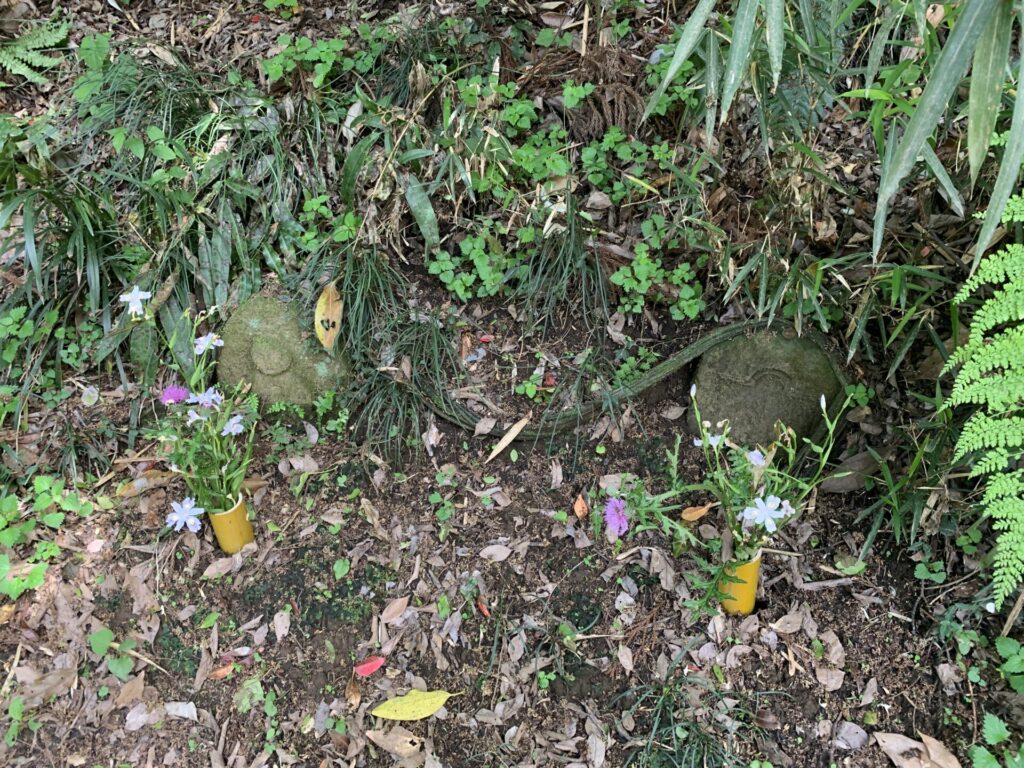
Along the way, I came across a small Jizō statue of uncertain origin.
Fresh flowers had been placed before it.
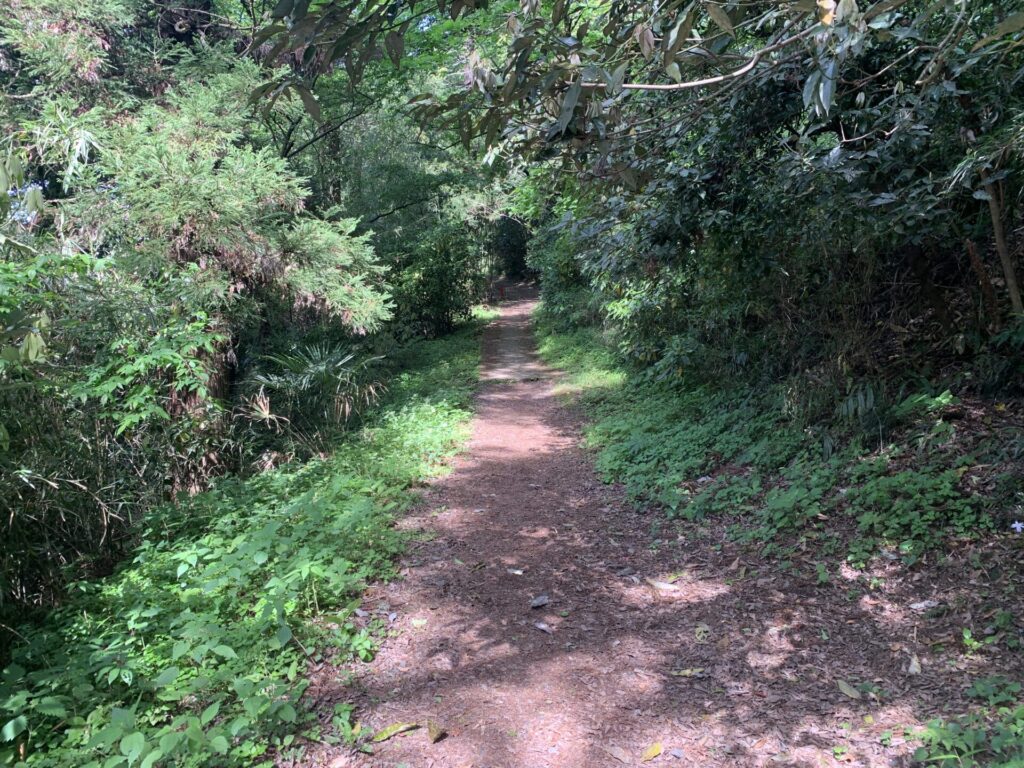
And then there was this bamboo grove.
It’s a scene you encounter very often in the wooded areas of Chiba Prefecture.
(Though, to be honest, it’s certainly not unique to Chiba.)
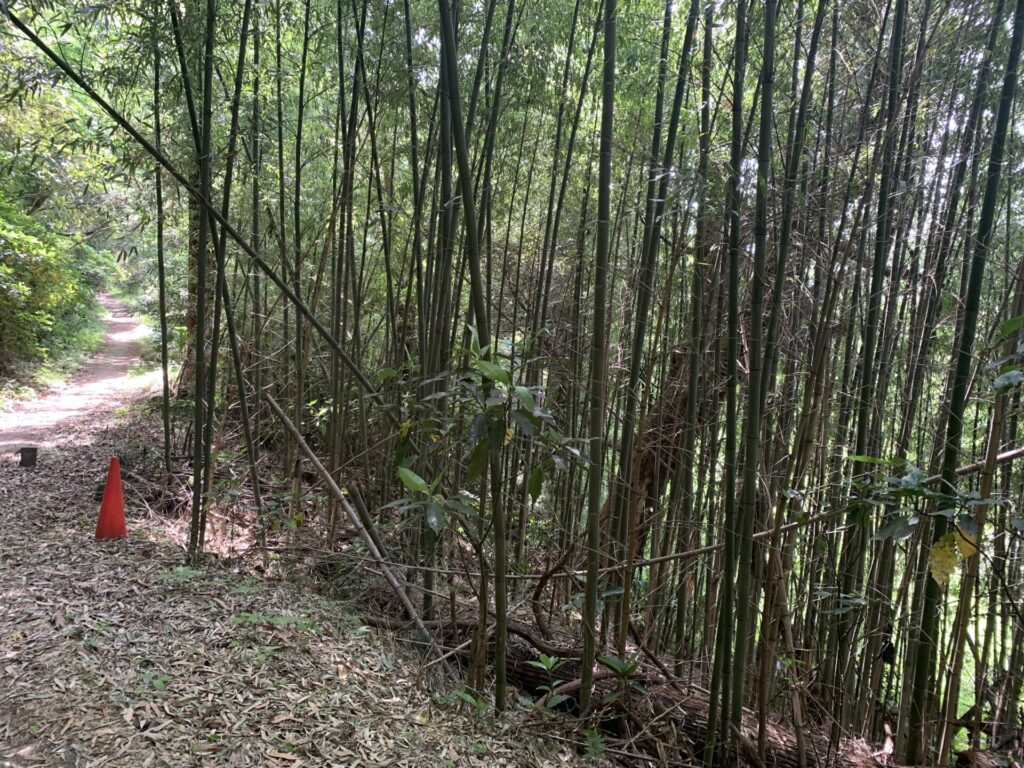
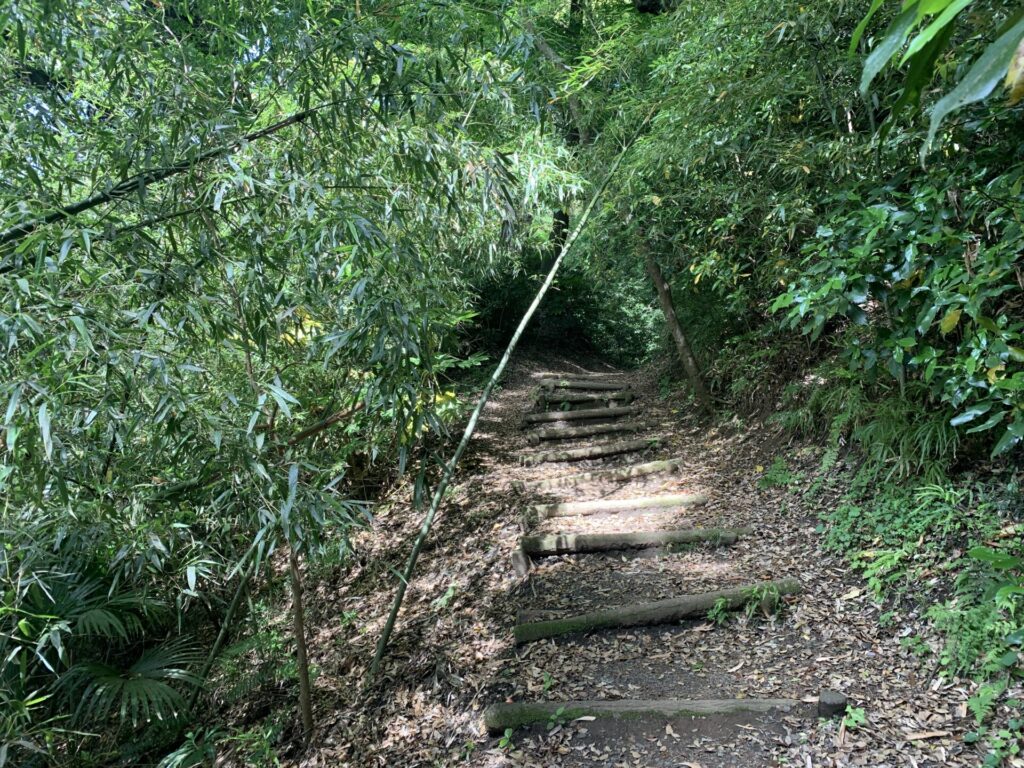
At certain points, the path is almost covered over by leaning bamboo.
Moments like this make you truly feel that you are walking through a mountain castle.
The unexpected scale of Umadashi!!
After climbing the mountain path for a while,
you emerge onto an open, leveled platform.
The first feature you should look for here is the Umadashi Karabori — the dry moat protecting the barbican.
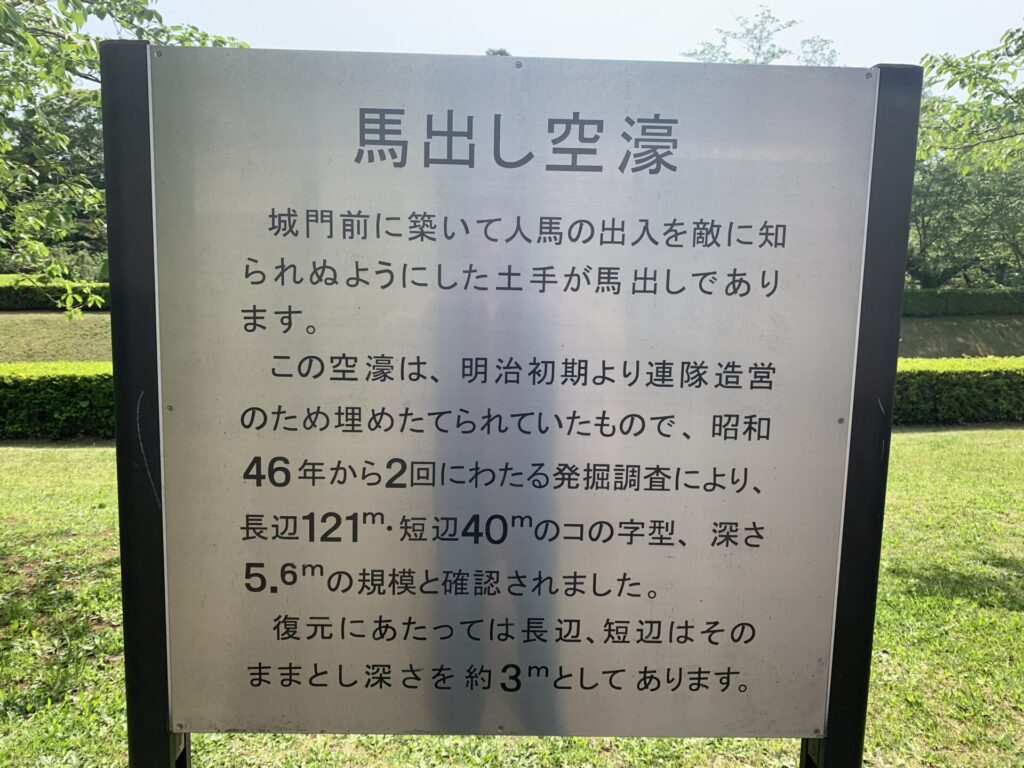
Here is Umadashi ( 馬出し ). 👇
This is widely regarded as one of the most impressive and well-known defensive features of Sakura-jo.
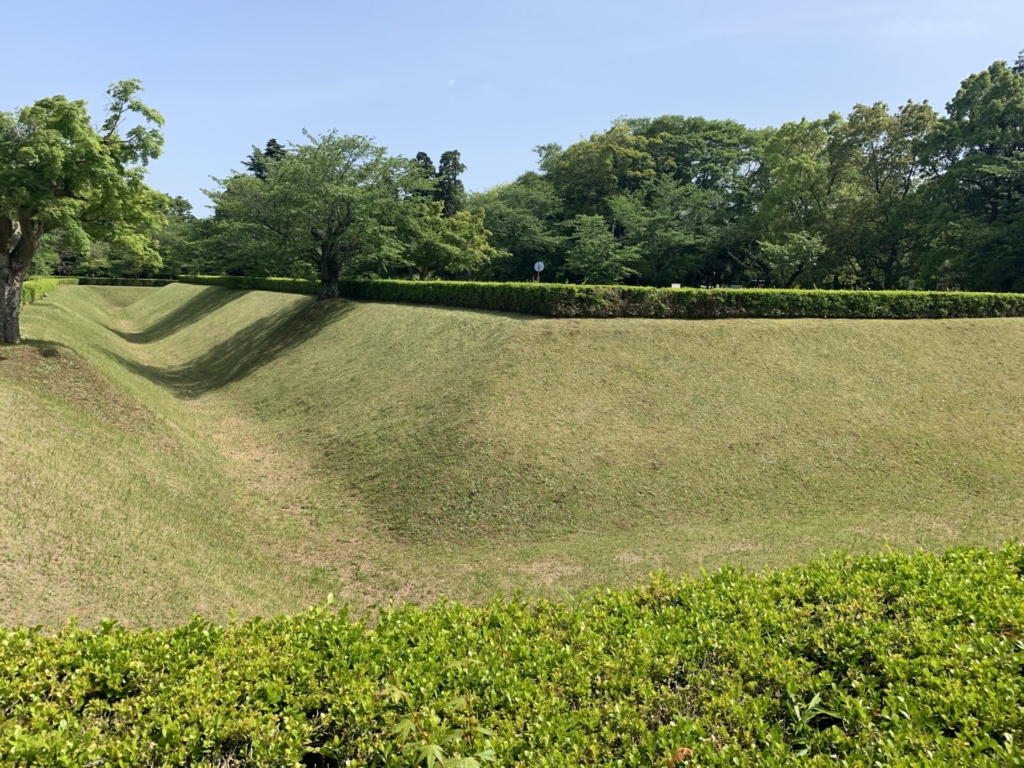
From within the Dorui ( 土塁:earthen rampart) that rises above this moat—now covered with vegetation like this—defenders could launch attacks against approaching enemies.
At the same time, the structure helped conceal the movement of allied troops passing in and out of the gate, preventing their actions from being easily observed by opposing forces.
Right beside this Umadashi stands the National Museum of Japanese History, located almost parallel to the castle grounds.
For anyone who enjoys history, I highly recommend visiting.
The museum features extensive exhibitions covering Japanese history from ancient times to the modern era.
If you take your time exploring the displays, it’s easy to spend three or four hours there without even noticing. 😅
(Admission fee is 600 yen for adults.)
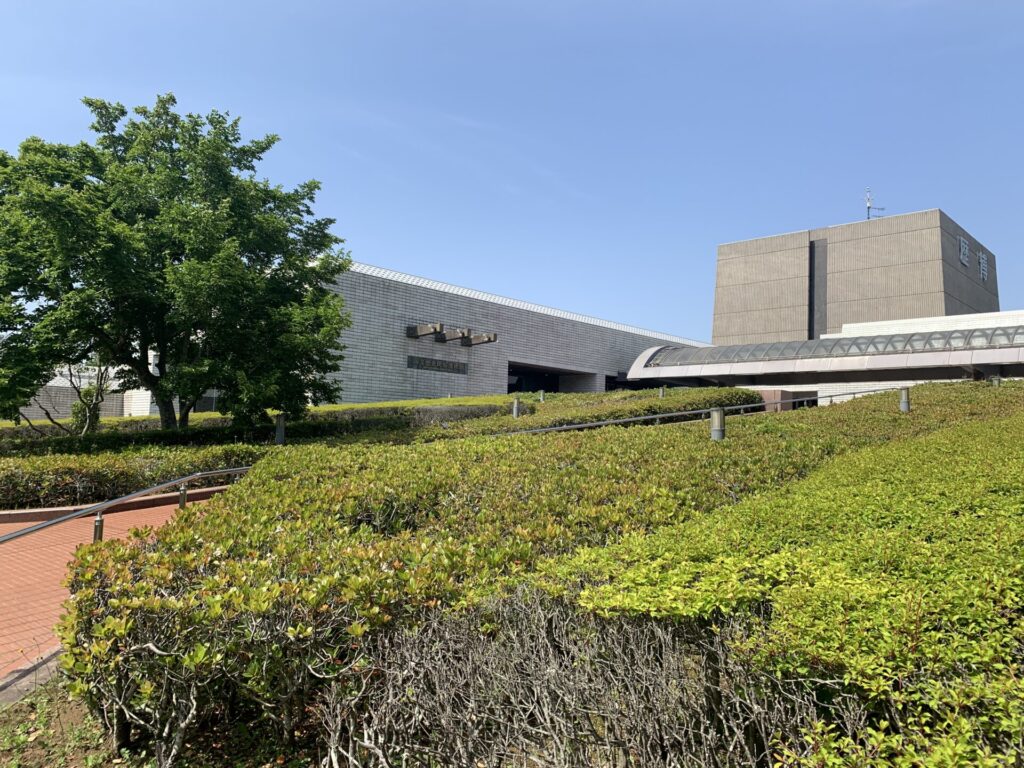
Next, please take a look at this video showing the interior of the Umadashi.
As I mention in the narration, it is remarkably spacious.
Perhaps this area once held enough troops to fill the entire enclosure, ready and waiting within the castle grounds.
Now, let’s take another look at the overall layout of the castle.
From here, we will proceed through the Sannomaru ( 三の丸:Third Enclosure), then the Ninomaru ( 二の丸:Second Enclosure), and finally make our way toward the Honmaru ( 本丸:Main Enclosure). 🔥
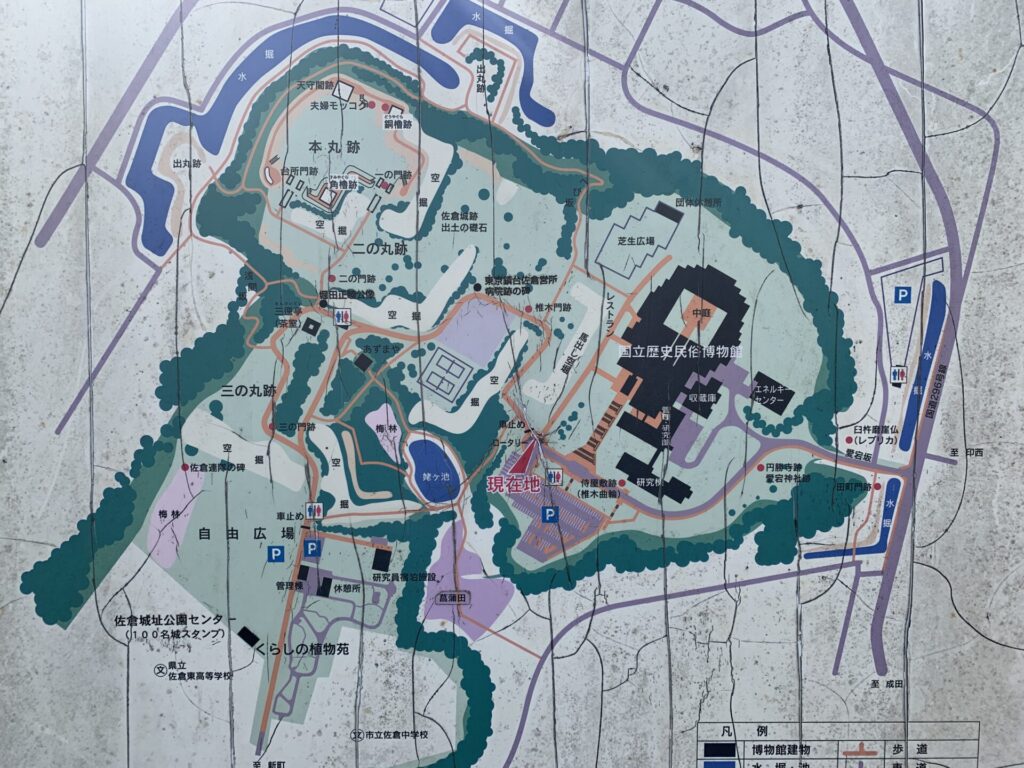
The Karabori (dry moats) found throughout the site are impressively deep!
First, I followed the path toward the Sannomaru ( 三の丸:Third Enclosure).
The grounds are quite expansive, and with the constant ups and downs of the terrain, it can be physically demanding.
(It certainly had me breaking a sweat that day. 💦)
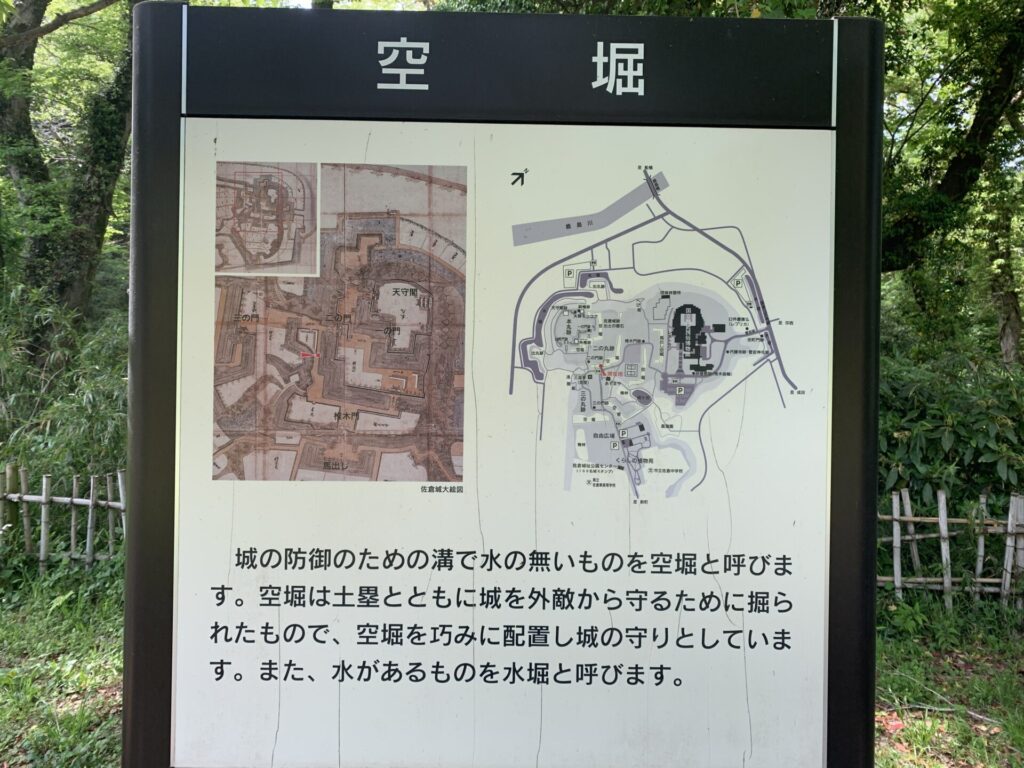
There was even a sign explaining the presence of a dry moat in this area,
so I tried to locate it myself.
However, the site is now thickly overgrown with bamboo,
and it’s difficult to clearly identify the moat from this particular spot.
(When you’re actually standing there, you can sort of make it out—but it’s not immediately obvious.)
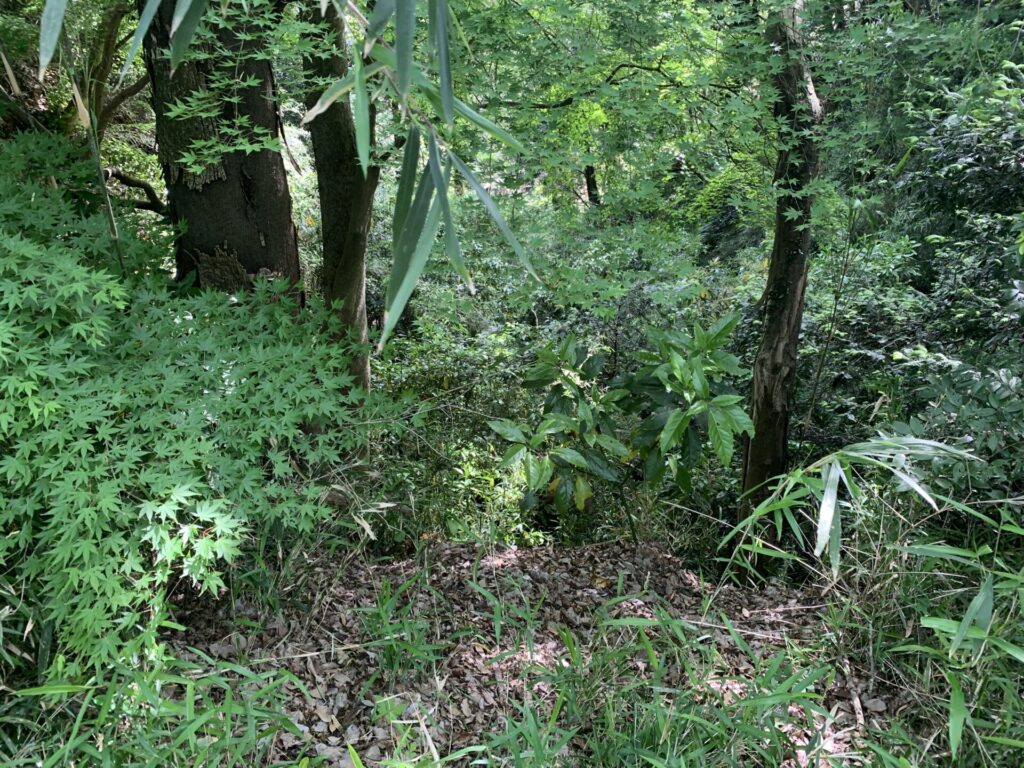
Even when I tried peering down from near the fence to get a better look at the Karabori(空堀), this was the view.
It’s hard to make out clearly, isn’t it?
But I can assure you—the moat is impressively deep.
(It’s difficult to capture in photographs, so this is something you really have to see for yourself on site.)
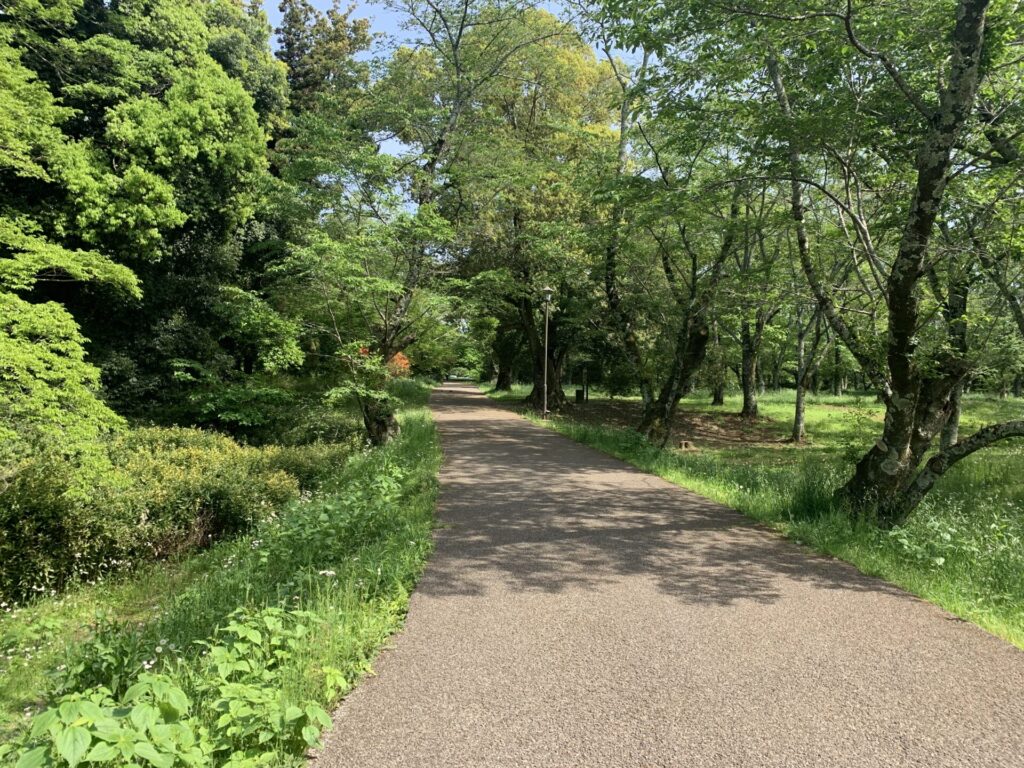
From here, I continued along this path, heading toward the Sannomaru ( 三の丸:Third Enclosure).
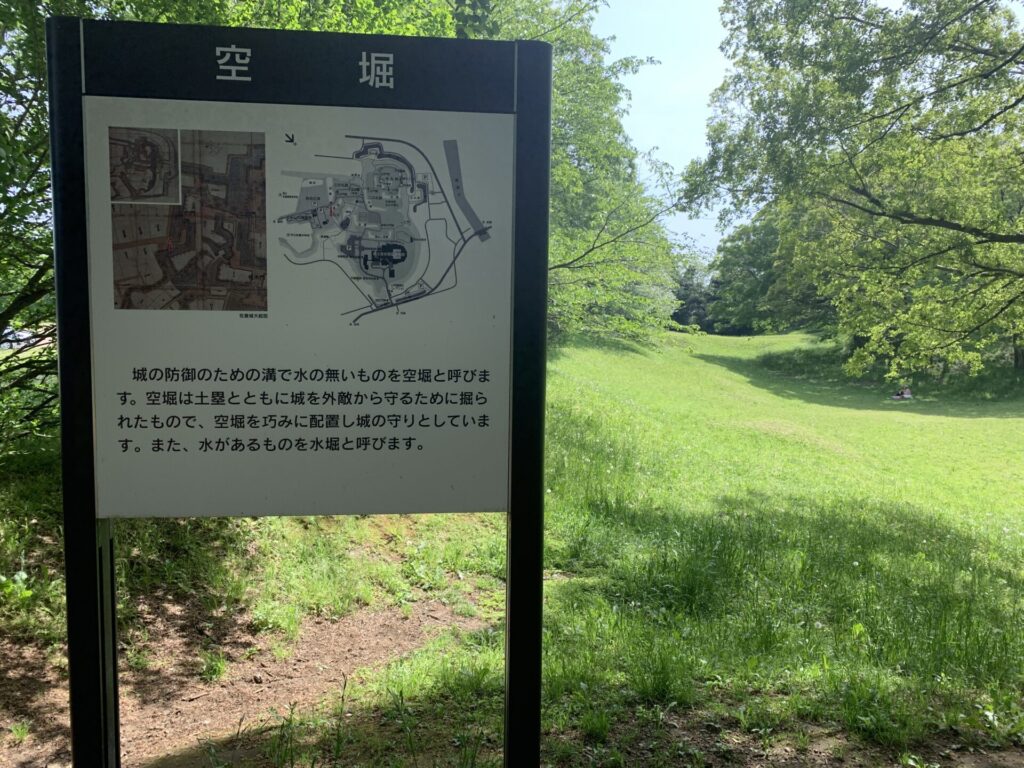
Here, the Karabori ( 空堀:dry moat) is clearly visible.
Today, the remains appear much gentler in shape, but during the Sengoku period it was likely far deeper, with steeper slopes.
On sunny days, it seems that some families even enjoy having picnics inside the dry moat. 😊
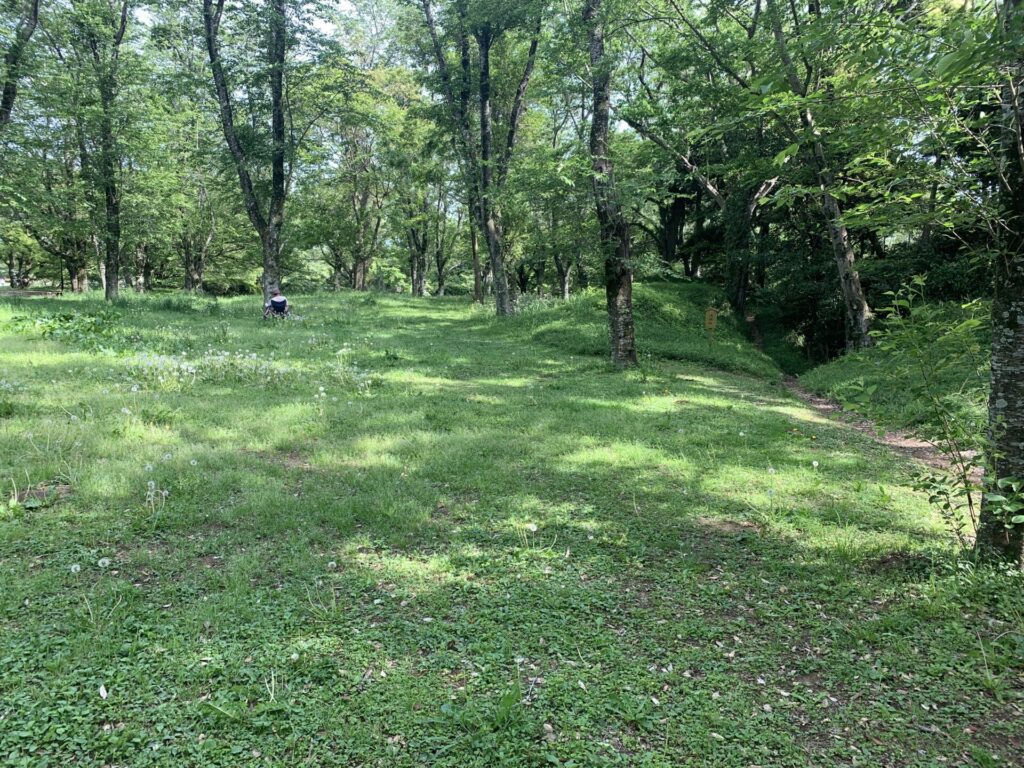
Following the path, I eventually arrived at what appears to be the grounds of the Sannomaru (Third Enclosure).
The Ninomaru and Honmaru are also impressively spacious!
Next, I made my way toward the Ninomaru ( 二の丸:Second Enclosure).
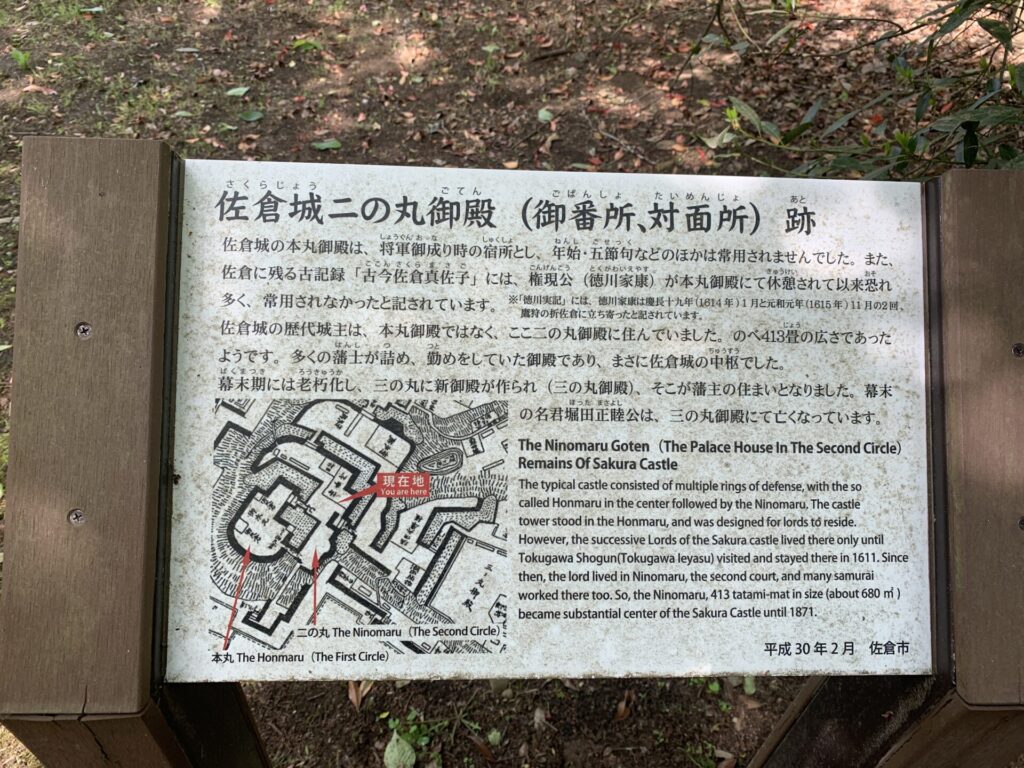
I’ve now arrived at the Ninomaru ( 二の丸:Second Enclosure)!
It’s quite a spacious area, so please take a look at it in the following video.
From this video, I believe you can see just how expansive the area truly is.
Now, let’s head toward the Honmaru ( 本丸:Main Enclosure).
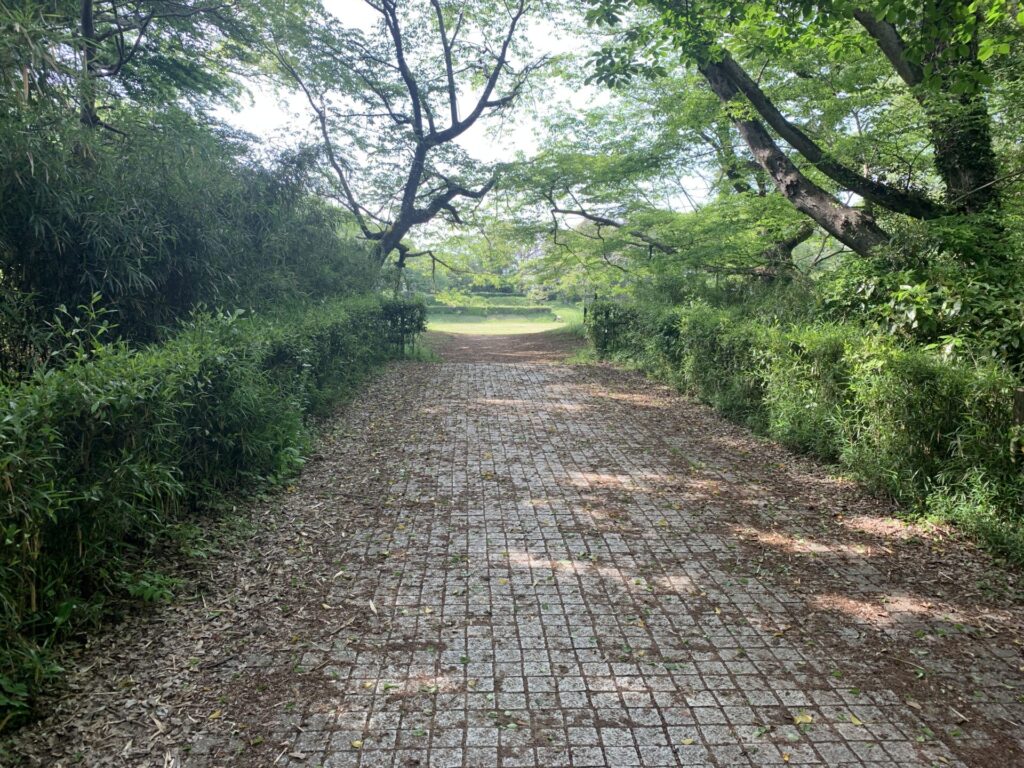
This is the path leading to the Honmaru (Main Enclosure).
Now, onward to the Honmaru!!
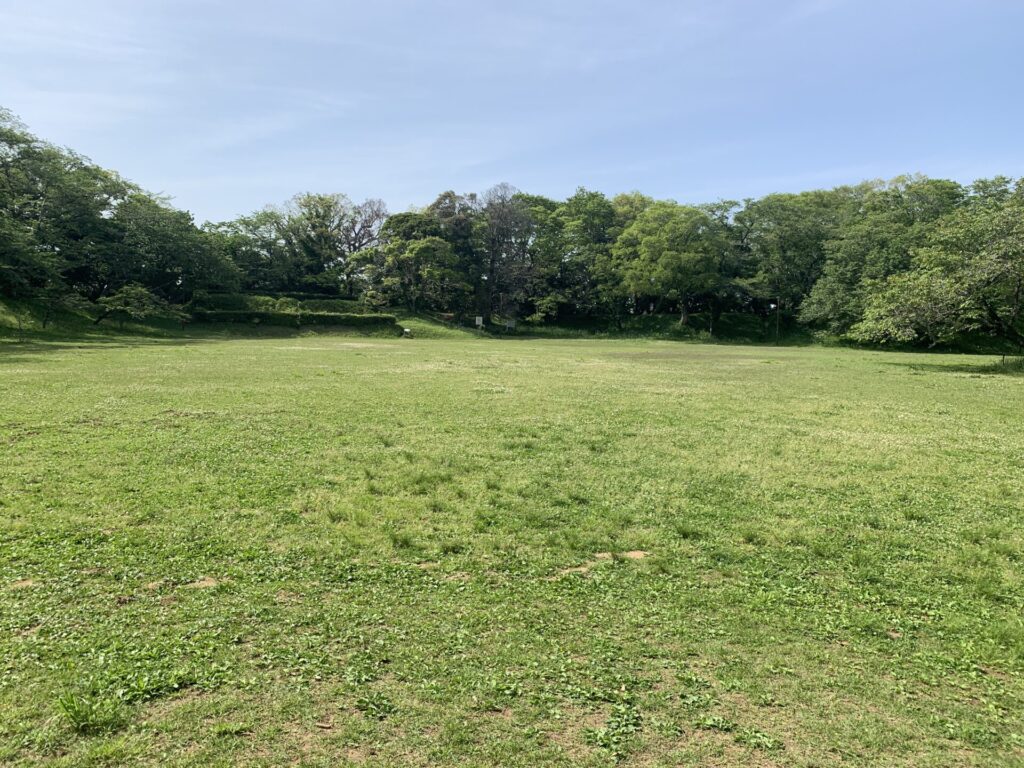
This is the Honmaru ( 本丸:Main Enclosure).
Even from this single photograph, you can sense how expansive it is.
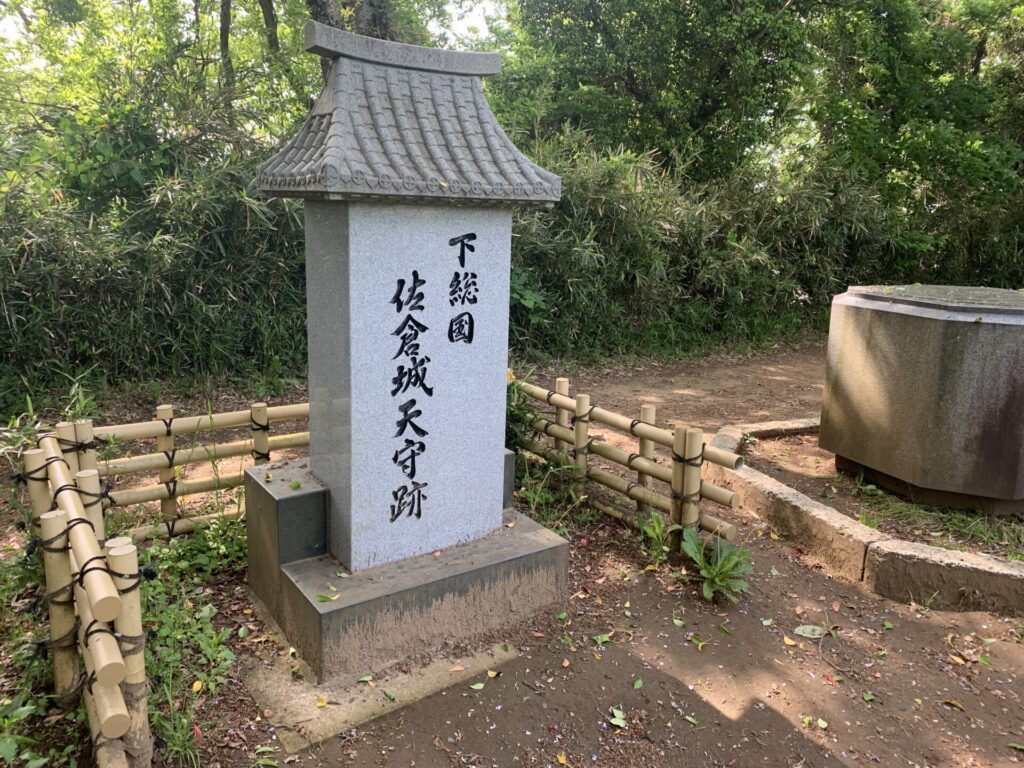
Within the Honmaru, there is also a monument like this.
It appears that this marks the site where the tenshu ( 天守:main keep) once stood.
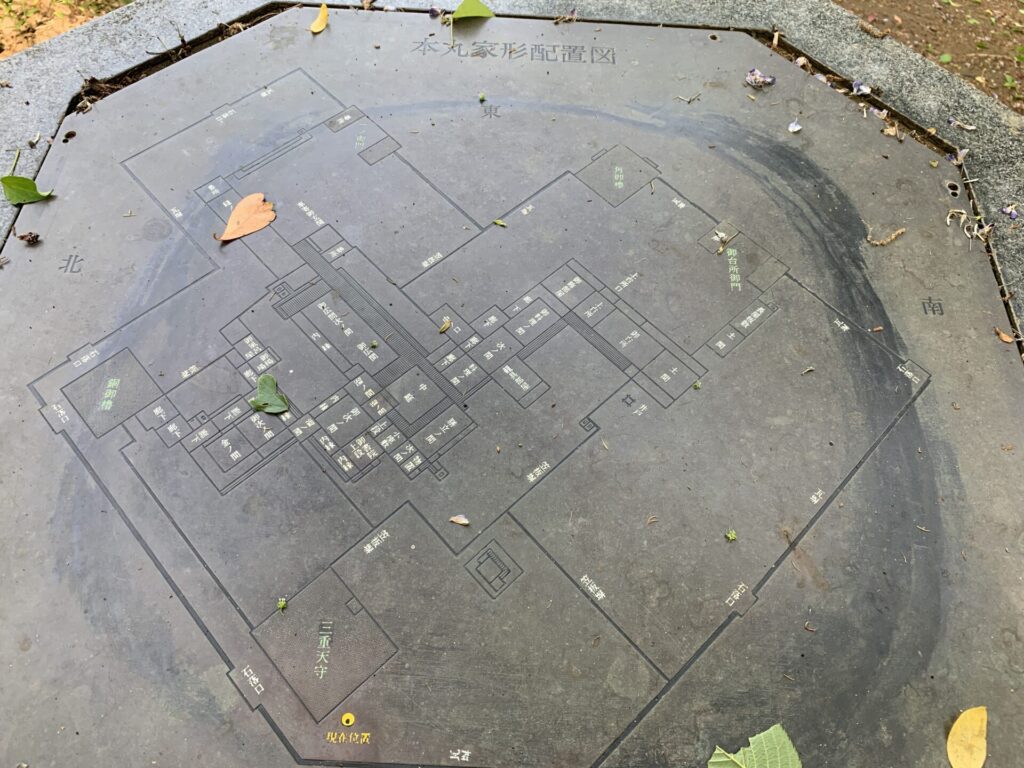
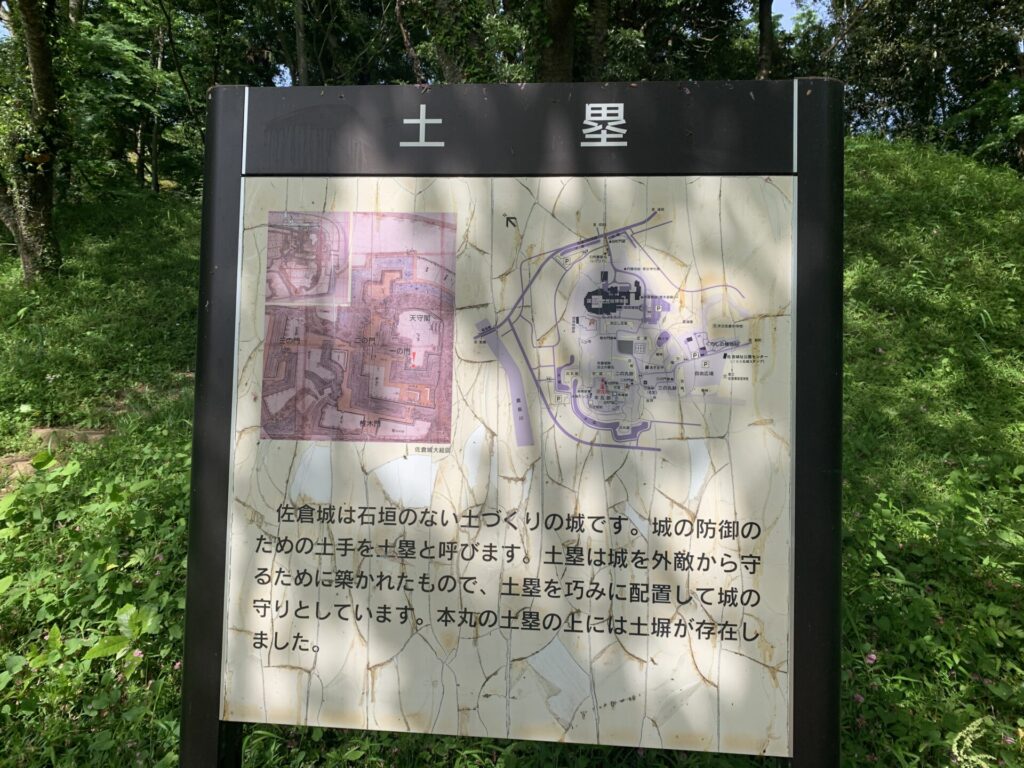
And here is the layout map of the Honmaru.
The yellow dot at the bottom indicates the location of the monument shown earlier.
According to the layout map, this is where the three-story tenshu once stood.
I then climbed slightly higher and filmed the Honmaru from above.
What do you think?
From this angle, I believe you can clearly see just how expansive the Honmaru truly is.
As we saw earlier at the Yakui-mon Gate,
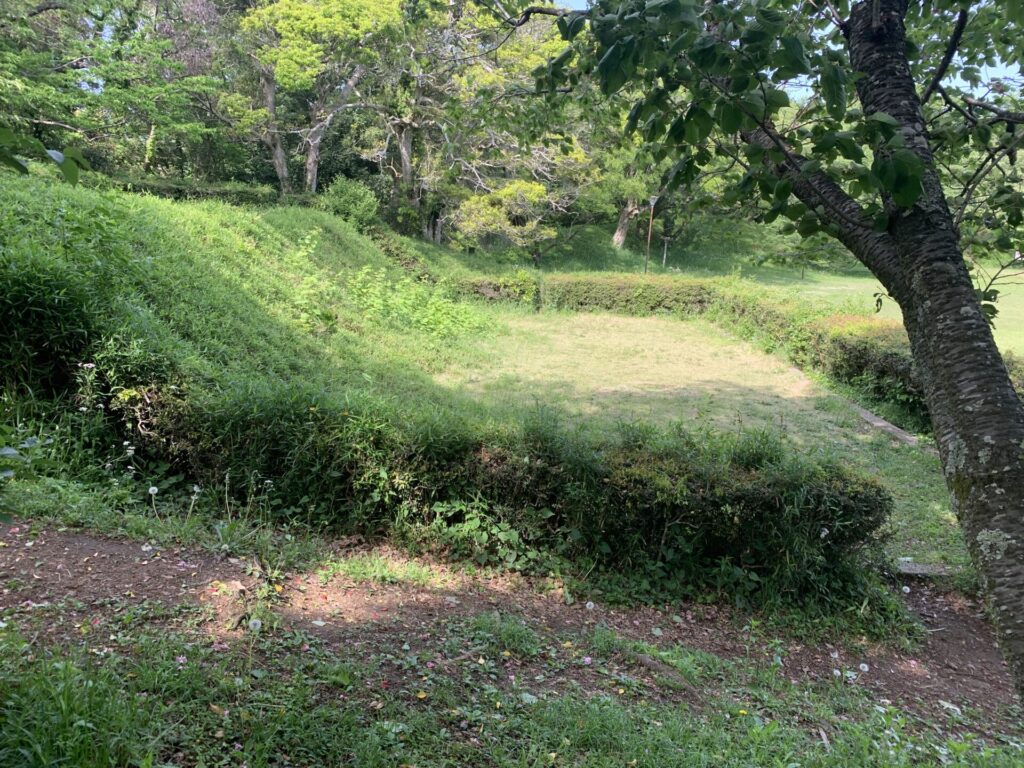
Sakura-jo appears to have been a strongly fortified castle, encircled by substantial Dorui ( 土塁:earthen ramparts).
Now, please take a look at the ramparts surrounding the Honmaru in the following video.
As you can see,
Dorui ( 土塁:earthen ramparts) rise higher than the informational signboard, forming a protective ring around the Honmaru.
During the Sengoku period, the exposed earth would likely have been far more visible, whereas today the ramparts are covered in grass.
Even so, it is clear that they once stood at a considerable height.
The most astonishing feature of all — the sheer impact of the Demaru!!
Having finished exploring the Honmaru, I casually thought to myself,
“Well, I’ll take a quick look at the Demaru before heading home…”
(Assuming, rather arrogantly, that it was just a Demaru.)
That assumption turned out to be a major mistake.
In hindsight, it’s obvious — a Demaru ( 出丸:outer defensive enclosure) holds an extremely important position within a castle’s defensive system.
After all, during the Siege of Osaka, the famous Sanada-maru built by Sanada Yukimura successfully repelled repeated assaults by the Tokugawa forces.
It is well known that this forward defensive position caused tremendous difficulty for Tokugawa Ieyasu himself.
A Demaru is never “just” an outer enclosure.
It is often the frontline —
the place where a castle’s true defensive strength is first revealed.
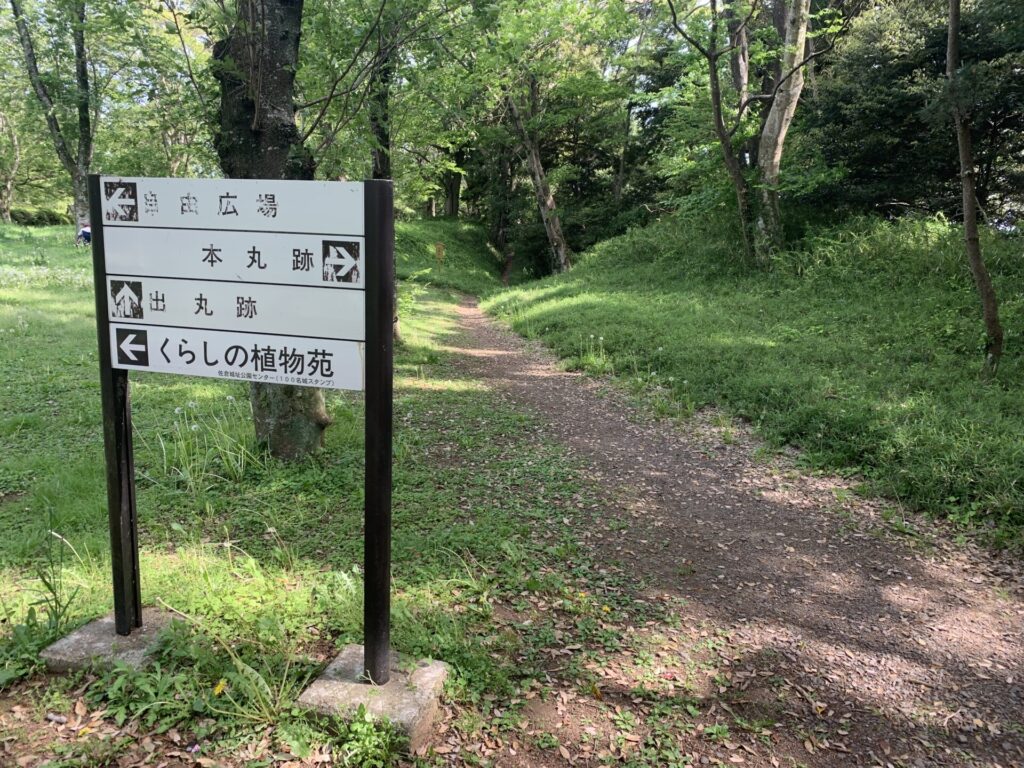
Near the Sannomaru, there is a narrow path like this,
and this is the route that leads to the Demaru ( 出丸 ).
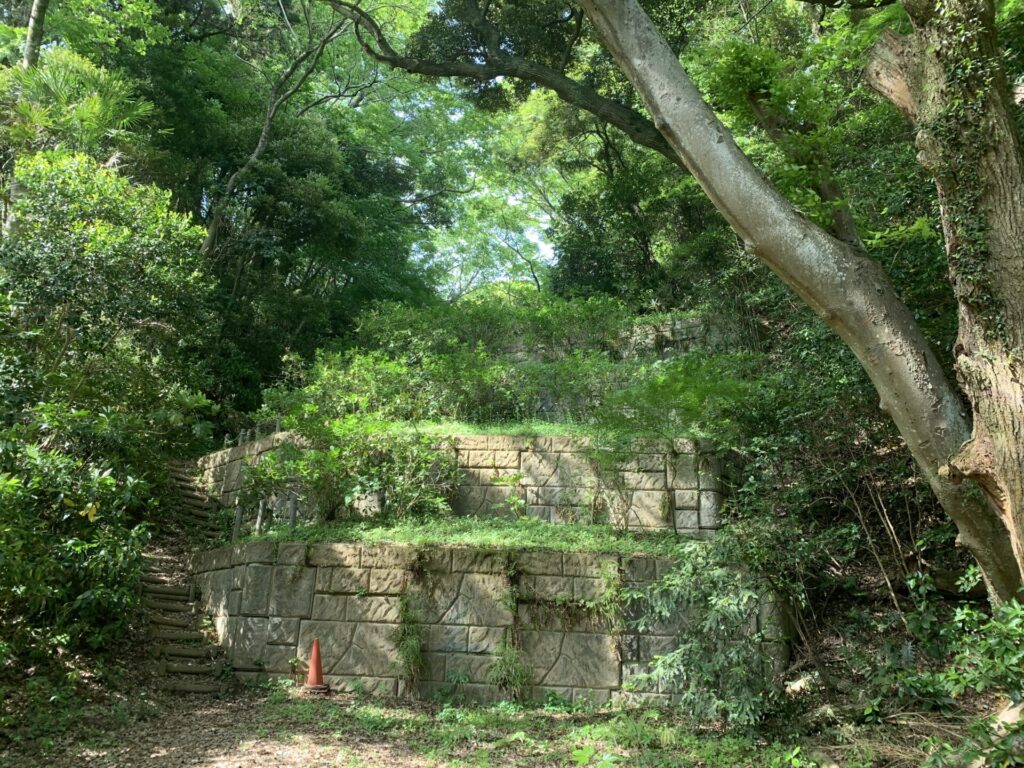
Filming the Demaru ( 出丸 ) from below, this is what it looks like.
The vegetation makes it a little difficult to see clearly, but you can still make out the four-tiered defensive structure.
If defenders were firing down from above, there would have been no escape. 💧
The Final Discovery — Obi-Kuruwa (Belt Enclosure)
After witnessing the impressive Demaru, I thought to myself,
“That’s more than enough — I’m satisfied!”
I was just about ready to head home.
But Sakura-jo wasn’t finished with me yet.
There was still another defensive feature waiting to be discovered —
the Obi-Kuruwa ( 帯曲輪:belt enclosure).
This is one of those structures that can be difficult to fully understand through text or photographs alone.
To grasp it more clearly, an illustrated diagram is far more helpful.
For that purpose, a drawing from the works of Professor Nishimata, a researcher of Japanese castles and Sengoku history, offers an excellent explanation.
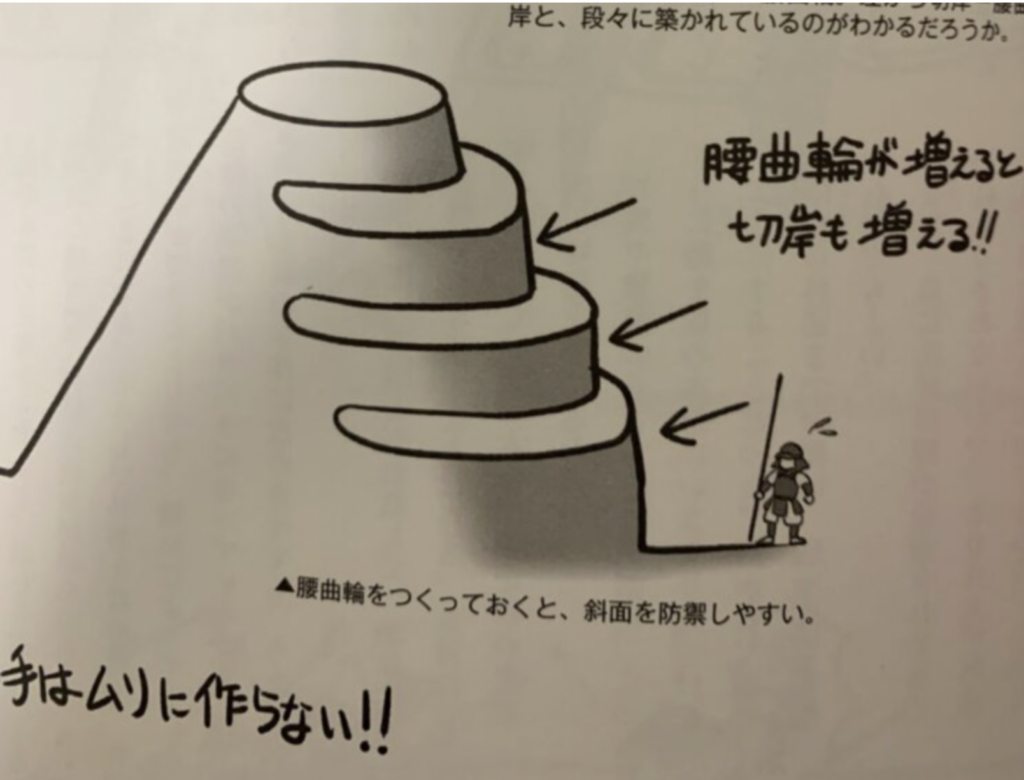
As shown in this diagram,
a Koshi-guruwa ( 腰曲輪:terraced enclosure) built to wrap broadly around the mountainside is referred to as an Obi-Kuruwa ( 帯曲輪:belt enclosure).
The presence of an Obi-Kuruwa makes it far more difficult for attacking forces to climb upward.
Meanwhile, defenders positioned along this enclosure could push back or strike down enemy soldiers from above, using the advantage of elevation to disrupt their advance.
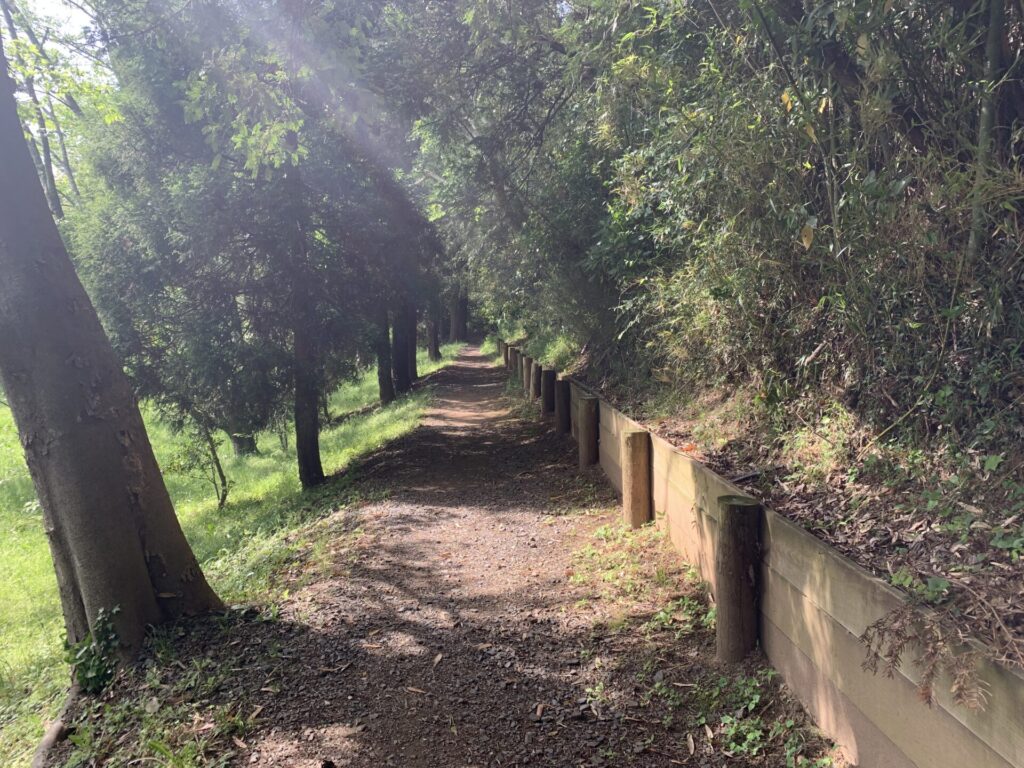
From the Demaru, I followed this path,
making my way toward the Obi-Kuruwa.
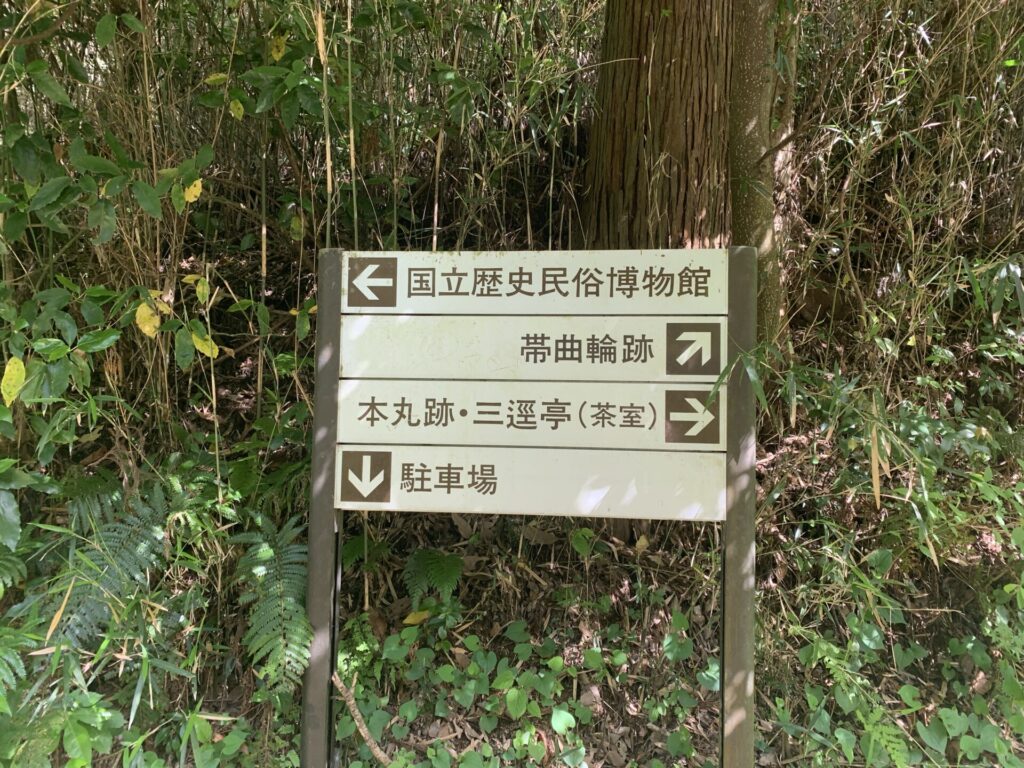
It seems the Obi-Kuruwa lies just above this point…
Time to make the climb.
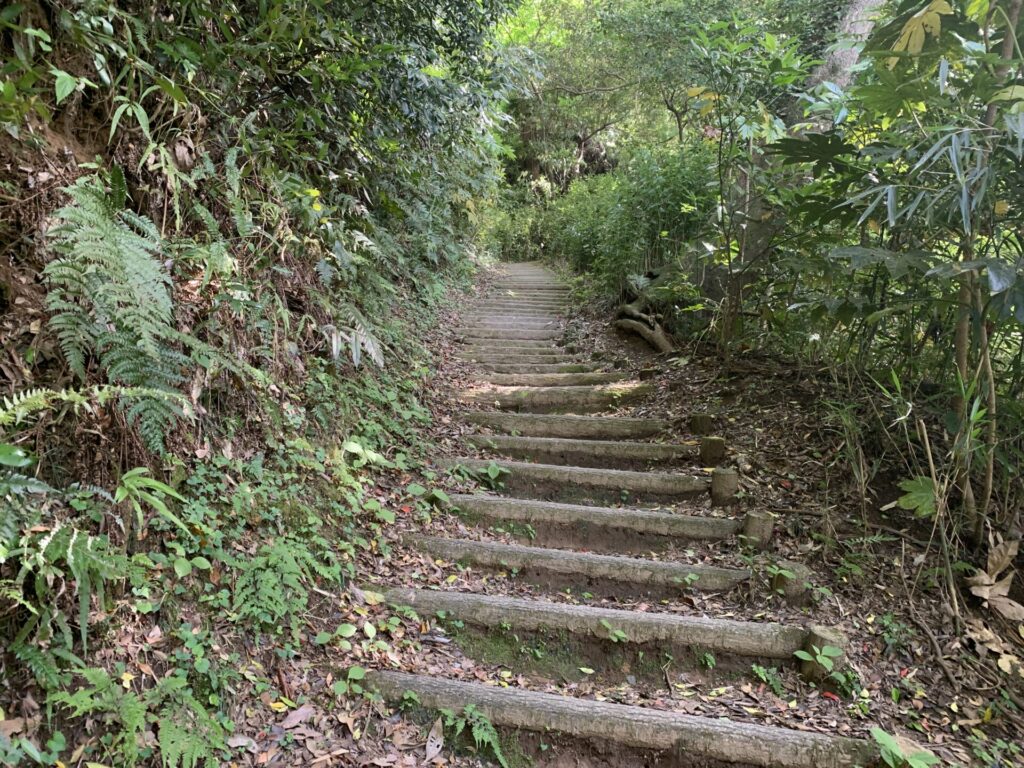
This slope is fairly steep as well…
But this is the final stretch!
(Mountain castles can be surprisingly exhausting. 😅)
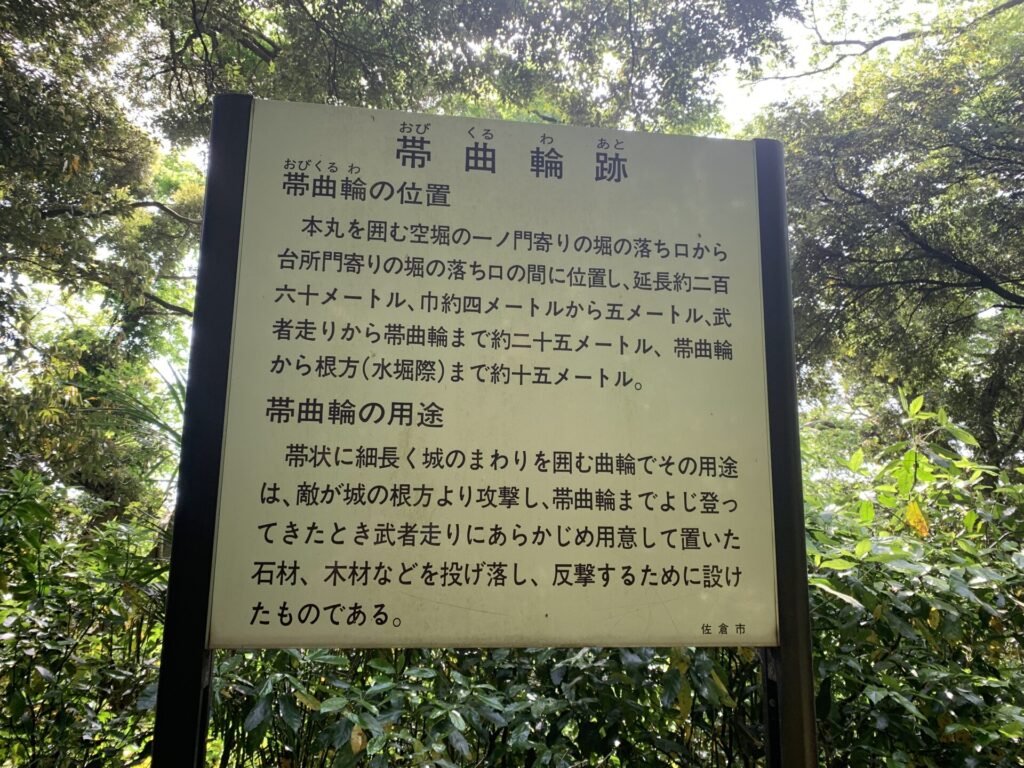
At last, I’ve reached the Obi-Kuruwa ( 帯曲輪 )!
Castle defenders likely took position along this Obi-Kuruwa, which is approximately four to five meters wide,
and from there hurled stones, timber, or arrows down upon enemy troops attempting to climb the mountain.
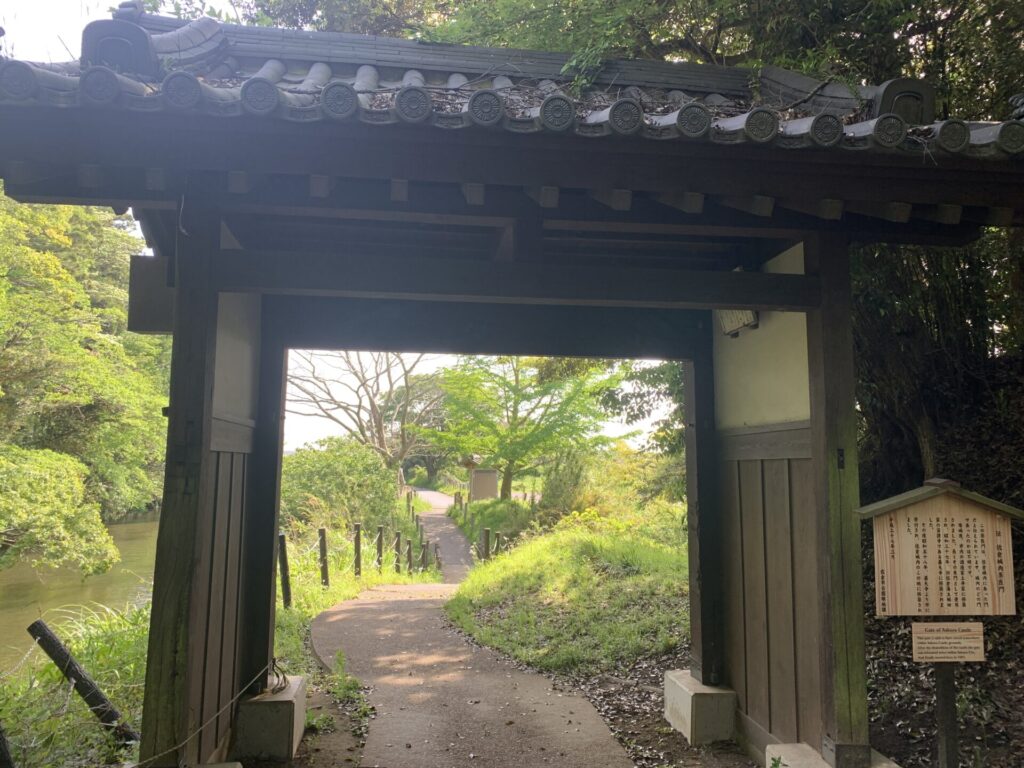
Finally, I passed once more through the Yakui-mon Gate and began my journey home.
Sakura-jo was truly magnificent!!
It absolutely lives up to its reputation as one of Japan’s “Top 100 Castles”.
From the Dorui (earthen ramparts) and Umadashi to the Demaru and Obi-Kuruwa,
I was able to fully experience and examine the castle’s defensive structures in remarkable detail. 🏯